
In Iceland, prohibition signs are distinct visual cues that communicate what drivers are not allowed to do. These signs are critical for maintaining road safety, preventing accidents, and ensuring smooth traffic flow across the country's diverse landscapes. Recognising and obeying them is not only a legal requirement but also fundamental to safe driving practices, especially given Iceland's unique road conditions.
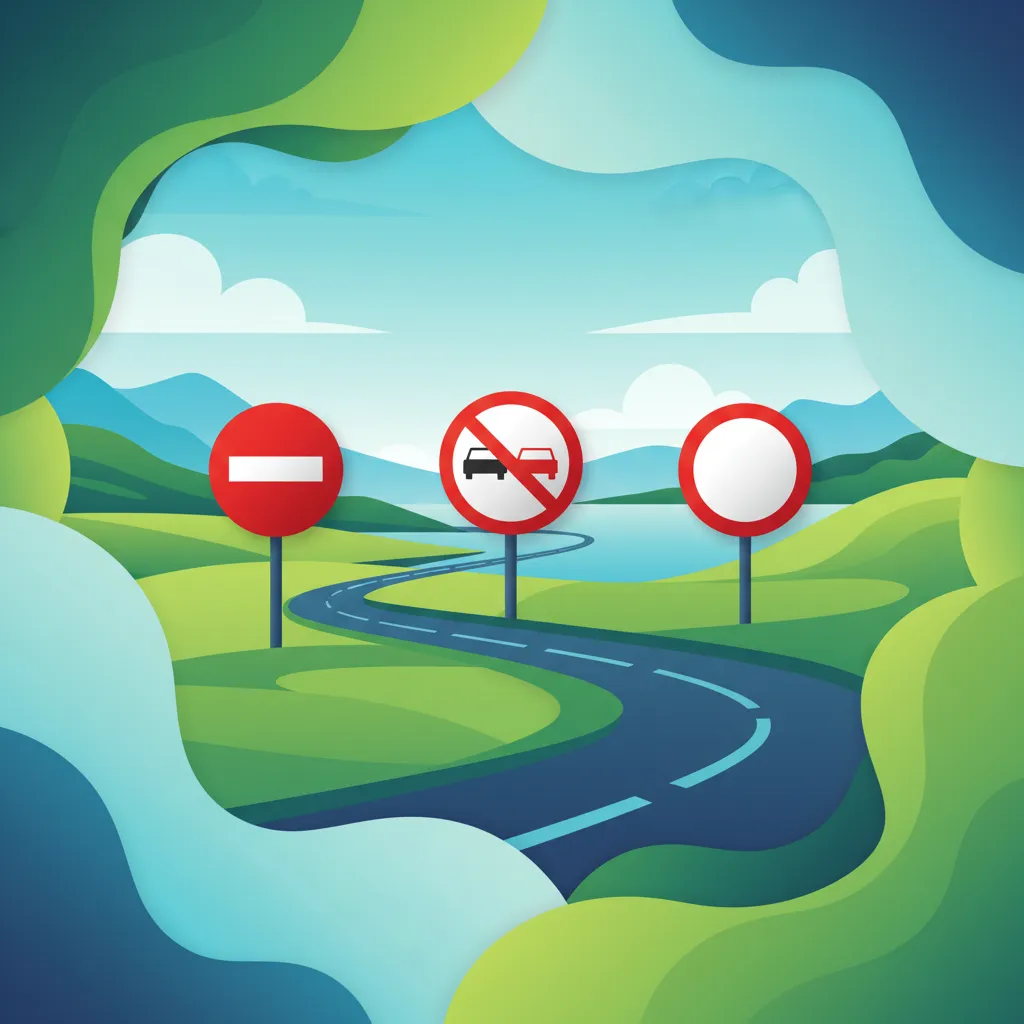
Theory topic content overview
Read the full theory topic guide for Prohibition Signs with structured, easy-to-scan content built for learners in Iceland. This detailed section explains the exact rule, meaning, traffic context, comparison points, and exam logic behind this Icelandic driving theory topic so you can study faster, understand the concept more clearly, and avoid common interpretation mistakes on the theory test.
Prohibition signs, known as bannmerki in Icelandic, are a fundamental category of traffic signs designed to inform drivers about actions they are strictly forbidden to perform. These signs are essential for maintaining road safety, preventing hazardous situations, and ensuring the orderly flow of traffic across all Icelandic roads, from bustling urban areas to remote F-roads.
Visually, prohibition signs are highly distinct, making them instantly recognisable. They typically feature a red circle with a black symbol or text on a white or light-coloured background. The symbol within the circle graphically depicts the prohibited action, making the restriction clear and unambiguous.
These signs are not suggestions; they are legal mandates. Understanding and obeying every Icelandic prohibition sign is paramount for every driver, preventing potential collisions, traffic disruptions, and legal penalties.
The significance of bannmerki extends far beyond just passing your Icelandic driving theory test. They are crucial for several reasons:
While many prohibition signs are universal, their application and particular emphasis often vary by country. In Iceland, you will frequently encounter the following:
306.8 for new signs) is used to restrict access for these road users in specific areas, often for safety reasons or to separate traffic types.Prohibition signs come into effect immediately at the point where they are placed. The restriction they impose typically remains valid until:
Iceland also utilises variable message signs, especially during changing weather conditions. Certain prohibition signs, like speed limits, can dynamically change their display. Pay close attention, as these signs might switch from yellow with black text to black with white text to indicate the new prohibition. Always obey the current displayed restriction.
Learners often confuse prohibition signs with other categories. Knowing the differences is vital:
Understanding these signs in context is crucial for driving safely in Iceland:
Icelandic driving learners often trip up on these aspects:
BannmerkiIceland's road network and environmental considerations give a distinct flavour to prohibition signs. The emphasis on environmental protection is particularly strong; the prohibition against off-road driving is a cornerstone of Icelandic tourism and environmental policy. Drivers must understand that violating this specific prohibition carries severe consequences, both legal and ecological.
Furthermore, the prevalence of single-lane bridges and unbridged rivers (often signposted with warnings) means that 'no overtaking' or specific speed limits near these features are not just general rules but critical safety measures for navigating unique Icelandic infrastructure. The potential for variable prohibition signs due to rapidly changing weather further highlights the need for constant vigilance and adaptability.
BannmerkiProhibition signs in Iceland are clear, concise instructions designed to keep you and other road users safe. Always interpret bannmerki as strict, non-negotiable rules. Pay attention to the visual cues – the red circle – and precisely understand the forbidden action. Your awareness and adherence to these critical Icelandic road signs are fundamental to safe driving, passing your theory test, and protecting Iceland's unique environment.
Prohibition signs in Iceland, known as bannmerki, are traffic indicators with a distinctive red circle design that communicate actions drivers are legally forbidden to perform. These signs enforce road safety, legal compliance, and environmental protection, with specific signs like No Entry (Innakstur bannaður), No Overtaking (Framúrakstur bannaður), and No Stopping serving distinct purposes that learners must differentiate. Iceland's unique landscape makes environmental prohibitions especially important, particularly the strict rules against off-road driving on F-roads. Understanding the visual distinctions between prohibition signs, warning signs (red triangle), and mandatory signs (blue circle), as well as recognizing when prohibitions end, is essential for both safe driving and exam success.
A short set of high-value points that capture the most important ideas from this theory explanation.
Prohibition signs (bannmerki) are mandatory legal restrictions, not suggestions; the red circle visually communicates a non-negotiable rule.
Each symbol inside the red circle represents a specific forbidden action, and learners must know the exact meaning of each sign.
Speed limits on signs are maximum legal speeds, not target speeds; actual safe speeds depend on weather, road conditions, and visibility.
Environmental protection is a unique feature of Icelandic prohibition signs, particularly the strict prohibition against off-road driving.
Prohibition signs take effect immediately at their location and remain valid until cancelled by another sign, a major intersection, or an end-of-restriction sign.
No Parking allows brief stops for passengers or loading; No Stopping (two red diagonal lines) prohibits stopping for any reason, even momentarily.
No Entry shows a white horizontal bar inside the red circle; All Vehicles Prohibited shows a white circle with red border—both restrict entry but differ visually.
Variable message signs in Iceland can dynamically change prohibition signs (like speed limits) based on weather conditions; always obey the current display.
Prohibition signs (red circle) forbid actions, while Mandatory signs (blue circle) require actions—these are opposite principles.
Iceland's unique features like single-lane bridges and F-roads make signs like No Overtaking especially critical for safety.
Confusing No Parking (single red diagonal line) with No Stopping (double red diagonal lines forming an X); these have different legal implications.
Ignoring context such as weather, road surface conditions, or visibility when encountering prohibition signs; the same sign requires different responses.
Underestimating the severity of the off-road driving prohibition, which carries both legal penalties and serious environmental consequences in Iceland.
Assuming the posted speed limit is always the safest speed; Iceland's wind, ice, snow, and gravel sections frequently require speeds well below the limit.
Confusing No Entry (horizontal white bar) with All Vehicles Prohibited (white circle with red border), which are tested frequently on exams.
Start with a short, direct summary of Prohibition Signs before reading the full explanation below.
Prohibition signs are a category of traffic signs that indicate actions forbidden to drivers, such as no entry, no overtaking, or specific speed limits. In Iceland, these signs typically feature a red circle with a black symbol on a white background, clearly communicating legal restrictions designed to prevent dangerous situations and ensure orderly traffic flow. Drivers must always obey them to avoid penalties and ensure safety.
Review the most important terms, rule signals, and traffic concepts linked to Prohibition Signs.
Explore related theory topic pages connected to Prohibition Signs and continue with the next useful rule explanation.
See the common search queries learners use when trying to understand Prohibition Signs in Iceland.

Ready to master Icelandic driving theory? Explore our comprehensive sections. Review road rules, traffic signs, and critical concepts. Build essential knowledge for confident and safe driving in Iceland. Start studying today.
Explore Icelandic Driving TheoryTheory topic content overview
A short set of high-value points that capture the most important ideas from this theory explanation.
Prohibition signs (bannmerki) are mandatory legal restrictions, not suggestions; the red circle visually communicates a non-negotiable rule.
Each symbol inside the red circle represents a specific forbidden action, and learners must know the exact meaning of each sign.
Speed limits on signs are maximum legal speeds, not target speeds; actual safe speeds depend on weather, road conditions, and visibility.
Environmental protection is a unique feature of Icelandic prohibition signs, particularly the strict prohibition against off-road driving.
Prohibition signs take effect immediately at their location and remain valid until cancelled by another sign, a major intersection, or an end-of-restriction sign.
No Parking allows brief stops for passengers or loading; No Stopping (two red diagonal lines) prohibits stopping for any reason, even momentarily.
No Entry shows a white horizontal bar inside the red circle; All Vehicles Prohibited shows a white circle with red border—both restrict entry but differ visually.
Variable message signs in Iceland can dynamically change prohibition signs (like speed limits) based on weather conditions; always obey the current display.
Prohibition signs (red circle) forbid actions, while Mandatory signs (blue circle) require actions—these are opposite principles.
Iceland's unique features like single-lane bridges and F-roads make signs like No Overtaking especially critical for safety.
Confusing No Parking (single red diagonal line) with No Stopping (double red diagonal lines forming an X); these have different legal implications.
Ignoring context such as weather, road surface conditions, or visibility when encountering prohibition signs; the same sign requires different responses.
Underestimating the severity of the off-road driving prohibition, which carries both legal penalties and serious environmental consequences in Iceland.
Assuming the posted speed limit is always the safest speed; Iceland's wind, ice, snow, and gravel sections frequently require speeds well below the limit.
Confusing No Entry (horizontal white bar) with All Vehicles Prohibited (white circle with red border), which are tested frequently on exams.
Start with a short, direct summary of Prohibition Signs before reading the full explanation below.
Prohibition signs are a category of traffic signs that indicate actions forbidden to drivers, such as no entry, no overtaking, or specific speed limits. In Iceland, these signs typically feature a red circle with a black symbol on a white background, clearly communicating legal restrictions designed to prevent dangerous situations and ensure orderly traffic flow. Drivers must always obey them to avoid penalties and ensure safety.
Review the most important terms, rule signals, and traffic concepts linked to Prohibition Signs.
Explore related theory topic pages connected to Prohibition Signs and continue with the next useful rule explanation.
See the common search queries learners use when trying to understand Prohibition Signs in Iceland.
Ready to master Icelandic driving theory? Explore our comprehensive sections. Review road rules, traffic signs, and critical concepts. Build essential knowledge for confident and safe driving in Iceland. Start studying today.
Explore Icelandic Driving TheoryUse this exam-focused revision tip to understand how Prohibition Signs is likely to appear in theory questions for learners in Iceland. This section helps you identify the most testable part of the rule, avoid common traps, and remember the concept more effectively during Icelandic driving theory exam preparation.
When encountering prohibition signs in the Icelandic theory exam, pay close attention to the symbol inside the red circle. Each symbol represents a specific forbidden action. Many learners confuse specific restrictions, so ensure you know the difference between 'No Entry', 'No Overtaking', and 'No Stopping' as these are frequently tested.
Read direct answers to the most common learner questions about Prohibition Signs in Iceland. This FAQ focuses on rule confusion, practical meaning, comparison with similar concepts, and the exact uncertainties that appear most often in Icelandic driving theory revision and exam preparation.
The primary purpose of prohibition signs in Iceland is to indicate actions that are forbidden to drivers, ensuring road safety, preventing conflicts, and regulating traffic flow according to Icelandic law.
Prohibition signs in Iceland typically have a distinctive circular shape with a red border and a black symbol on a white background, making them easy to identify quickly as a restriction.
Common prohibited actions include 'No Entry' (for certain vehicles or directions), 'No Overtaking', 'No Parking', 'No Stopping', and specific speed limits, all tailored to Icelandic traffic conditions.
Yes, a 'Closed Road' sign (Vegur lokaður) in Iceland is a form of prohibition sign, indicating that further travel on that road is strictly forbidden, often due to weather or road conditions.
Yes, ignoring prohibition signs in Iceland can lead to significant legal penalties, including fines, and can contribute to dangerous traffic situations or accidents, especially given unpredictable Icelandic weather and road conditions.
Most prohibition signs apply continuously, but some may include additional panels or symbols to clarify that the restriction applies only during specific times, conditions (e.g., icy roads), or to certain vehicle types.
Warning signs alert drivers to potential dangers ahead, advising caution (e.g., 'slippery road'), while prohibition signs strictly forbid specific actions (e.g., 'no U-turn'). Prohibition signs indicate a mandatory 'do not' rather than a 'be aware'.
Utilize our advanced practice set search to pinpoint the exact Icelandic driving theory topics you need to review. Filter by subject, difficulty, or question type to create a highly effective study plan and ensure you are fully prepared for your official driving licence test in Iceland.