
In Iceland, a priority road, also known as a main road, is designed to ensure a smooth flow of traffic by giving precedence to vehicles traveling on it. This means drivers entering or crossing from side roads must yield the right of way. Recognizing these roads by their specific signs is crucial for maintaining safety and preventing collisions.
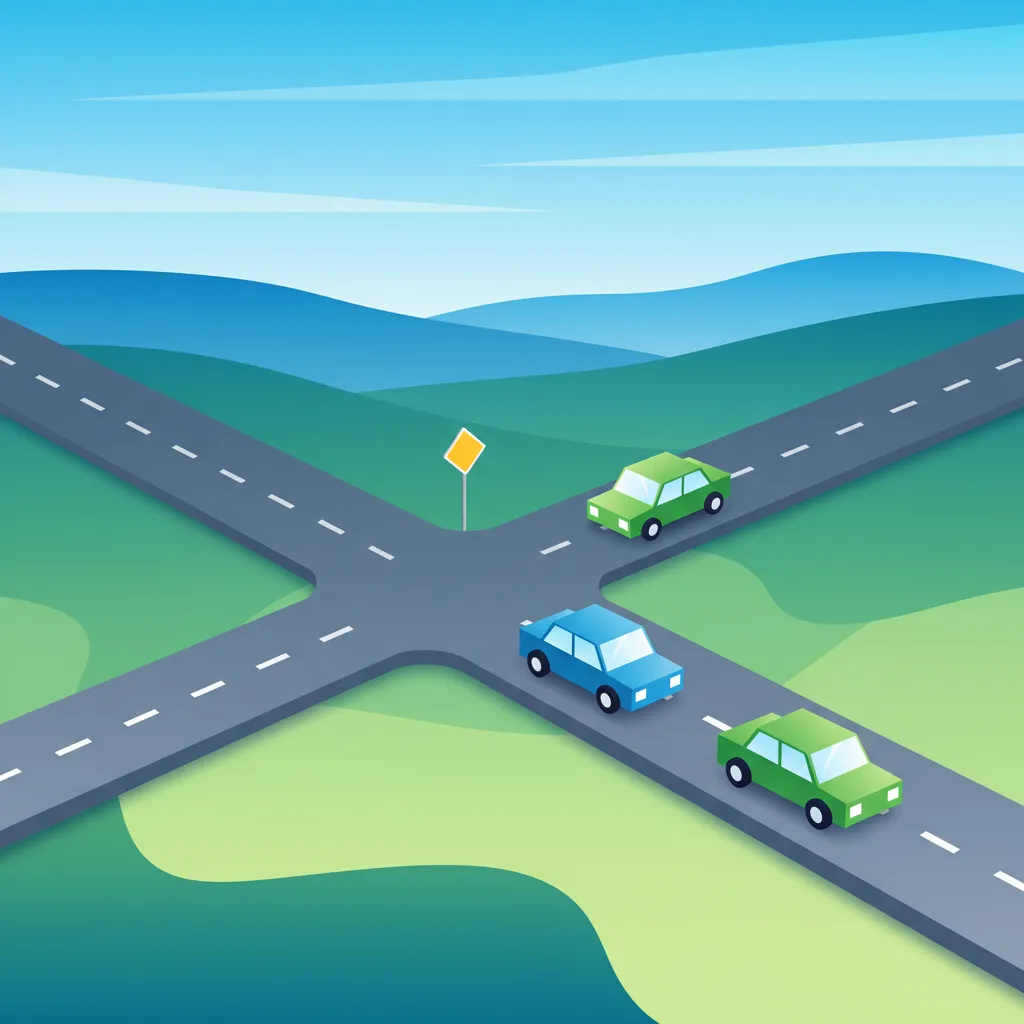
Theory topic content overview
Read the full theory topic guide for Priority Road Rules with structured, easy-to-scan content built for learners in Iceland. This detailed section explains the exact rule, meaning, traffic context, comparison points, and exam logic behind this Icelandic driving theory topic so you can study faster, understand the concept more clearly, and avoid common interpretation mistakes on the theory test.
A priority road in Iceland, often referred to as a main road, is a key concept in traffic law designed to streamline vehicle flow and prevent congestion, especially at intersections. Simply put, traffic already traveling on a priority road has precedence over vehicles entering or crossing from intersecting side roads. This fundamental rule ensures that drivers on major routes can generally continue without stopping, while drivers joining or crossing these routes must yield.
Grasping the rules of priority roads is not just about avoiding fines; it's essential for road safety and a critical part of the Icelandic driving theory exam. Misinterpreting priority can lead to dangerous situations and collisions at junctions.
Priority roads are strategically established to manage traffic efficiently across Iceland's road network, from busy urban centers like Reykjavík to the long stretches of rural routes. Their importance is multifaceted:
The most crucial aspect of navigating priority roads in Iceland is recognizing them through specific traffic signs. These signs communicate right-of-way clearly:
Always scan for these signs well in advance, especially when approaching junctions in Icelandic traffic.
When you encounter an intersection involving a priority road, your actions depend on whether you are on the priority road or entering it:
While priority roads simplify right-of-way, it's vital to understand nuances:
Let's consider how priority rules apply in common Icelandic driving situations:
Theory test candidates and new drivers often stumble on these points:
The core principle of priority roads in Iceland is to establish clear rules for yielding at intersections, improving both safety and efficiency. Always remember:
Mastering these rules is fundamental to driving safely and confidently on Icelandic roads and will be key to your success in the Icelandic driving theory exam.
Priority roads in Iceland are designated main routes where traffic has precedence over vehicles from intersecting side roads, identified by the yellow diamond Sign 206. Drivers on side roads must yield using Give Way (Sign 202) or Stop (Sign 204) signs, while drivers on the priority road must maintain vigilance and proceed with caution even though they have right of way. The 'Main road ends' sign (208) signals when priority ceases and the general right-hand rule takes effect at uncontrolled junctions. Traffic lights and police officers always override priority signage, and pedestrians or cyclists at crossings must be yielded to regardless of vehicle priority status.
A short set of high-value points that capture the most important ideas from this theory explanation.
Traffic on a priority road (marked by yellow diamond Sign 206) has precedence over vehicles entering from side roads
Entering or crossing a priority road always requires yielding to existing traffic on the main road
The 'Main road ends' Sign 208 indicates priority status is about to cease and general right-hand rule applies at the next junction
Traffic lights and police officers directing traffic always override priority road signs
Having priority does not eliminate the need for defensive driving and vigilance at all times
Sign 206 (yellow diamond) = you are on a priority/main road with precedence
Sign 208 (yellow diamond with black diagonal stripe) = priority status ending, prepare for right-hand rule
Sign 202 (white triangle, red border) = Give Way, placed on side roads entering priority roads
Sign 204 (red octagon) = Stop completely, placed on side roads with mandatory full stop
Without any priority signs, Iceland defaults to the right-hand rule: yield to traffic from your right
Assuming absolute right of way on priority roads and driving without caution
Failing to notice the 'Main road ends' sign (208) and misjudging right-of-way at subsequent junctions
Confusing which road the Give Way or Stop signs apply to when entering a priority road
Ignoring that traffic lights or police directions override priority road signs entirely
Not checking thoroughly for fast-approaching traffic from all directions before entering a priority road
Start with a short, direct summary of Priority Road Rules before reading the full explanation below.
A priority road in Iceland is a designated main road where traffic has precedence over vehicles entering from intersecting roads. Drivers on a priority road typically have the right of way, while those entering must yield. These roads are identified by specific priority signs, most notably the yellow diamond sign (sign 206 'Main road'), ensuring smoother traffic flow and clarifying right-of-way at junctions.
Review the most important terms, rule signals, and traffic concepts linked to Priority Road Rules.
Explore related theory topic pages connected to Priority Road Rules and continue with the next useful rule explanation.
See the common search queries learners use when trying to understand Priority Road Rules in Iceland.

Ready to master Icelandic driving theory? Explore our comprehensive sections. Review road rules, traffic signs, and critical concepts. Build essential knowledge for confident and safe driving in Iceland. Start studying today.
Explore Icelandic Driving TheoryTheory topic content overview
A short set of high-value points that capture the most important ideas from this theory explanation.
Traffic on a priority road (marked by yellow diamond Sign 206) has precedence over vehicles entering from side roads
Entering or crossing a priority road always requires yielding to existing traffic on the main road
The 'Main road ends' Sign 208 indicates priority status is about to cease and general right-hand rule applies at the next junction
Traffic lights and police officers directing traffic always override priority road signs
Having priority does not eliminate the need for defensive driving and vigilance at all times
Sign 206 (yellow diamond) = you are on a priority/main road with precedence
Sign 208 (yellow diamond with black diagonal stripe) = priority status ending, prepare for right-hand rule
Sign 202 (white triangle, red border) = Give Way, placed on side roads entering priority roads
Sign 204 (red octagon) = Stop completely, placed on side roads with mandatory full stop
Without any priority signs, Iceland defaults to the right-hand rule: yield to traffic from your right
Assuming absolute right of way on priority roads and driving without caution
Failing to notice the 'Main road ends' sign (208) and misjudging right-of-way at subsequent junctions
Confusing which road the Give Way or Stop signs apply to when entering a priority road
Ignoring that traffic lights or police directions override priority road signs entirely
Not checking thoroughly for fast-approaching traffic from all directions before entering a priority road
Start with a short, direct summary of Priority Road Rules before reading the full explanation below.
A priority road in Iceland is a designated main road where traffic has precedence over vehicles entering from intersecting roads. Drivers on a priority road typically have the right of way, while those entering must yield. These roads are identified by specific priority signs, most notably the yellow diamond sign (sign 206 'Main road'), ensuring smoother traffic flow and clarifying right-of-way at junctions.
Review the most important terms, rule signals, and traffic concepts linked to Priority Road Rules.
Explore related theory topic pages connected to Priority Road Rules and continue with the next useful rule explanation.
See the common search queries learners use when trying to understand Priority Road Rules in Iceland.
Ready to master Icelandic driving theory? Explore our comprehensive sections. Review road rules, traffic signs, and critical concepts. Build essential knowledge for confident and safe driving in Iceland. Start studying today.
Explore Icelandic Driving TheoryUse this exam-focused revision tip to understand how Priority Road Rules is likely to appear in theory questions for learners in Iceland. This section helps you identify the most testable part of the rule, avoid common traps, and remember the concept more effectively during Icelandic driving theory exam preparation.
Pay close attention to priority road signs in exam scenarios, especially the yellow diamond (206) and the 'Main road ends' sign (208). Many questions test your understanding of yielding requirements when entering or leaving a priority road, or when traffic lights override signs. Always scan intersections for these crucial indicators.
Read direct answers to the most common learner questions about Priority Road Rules in Iceland. This FAQ focuses on rule confusion, practical meaning, comparison with similar concepts, and the exact uncertainties that appear most often in Icelandic driving theory revision and exam preparation.
A priority road is a main road where drivers have the legal right of way over traffic approaching from side roads or intersecting streets, unless otherwise indicated by different signs or signals.
Priority roads in Iceland are primarily identified by the yellow diamond-shaped sign with a white border (sign 206, 'Main road'). This sign informs you that you are on a priority road. A sign with a black diagonal line through it (sign 208, 'Main road ends') indicates the end of a priority road.
While you generally have priority, you must always drive carefully and be ready to react. Traffic signals (lights) and police directions always override priority road signs. You must also yield to emergency vehicles with active sirens and lights.
When entering a priority road from a side road, you must give way to all traffic already on the priority road. This means slowing down, being prepared to stop, and only proceeding when it is completely safe and you will not cause priority traffic to brake or swerve.
When a priority road ends (indicated by sign 208), the special right-of-way rules no longer apply. You must then observe general right-of-way rules, such as the right-hand rule, or follow other traffic signs or signals present at the next intersection.
In Iceland, vehicles already within a roundabout always have priority over those entering. While the road leading to a roundabout might be a priority road, the rules within the roundabout itself dictate yielding to circulating traffic, which is a specific form of priority.
Priority road rules are vital at all intersections, but especially so at junctions with limited visibility or on high-speed roads. Understanding them prevents common mistakes, particularly in rural Icelandic areas where roads might suddenly change priority status.
Utilize our advanced practice set search to pinpoint the exact Icelandic driving theory topics you need to review. Filter by subject, difficulty, or question type to create a highly effective study plan and ensure you are fully prepared for your official driving licence test in Iceland.