
This lesson guides you through the system of information signs and destination guidance used across Irish roads. You will learn how to interpret road categories by their specific colour-coding and shapes, a critical skill for both your theory exam and real-world navigation. This knowledge builds on your basic understanding of road signs to help you plan routes and maintain traffic flow effectively.
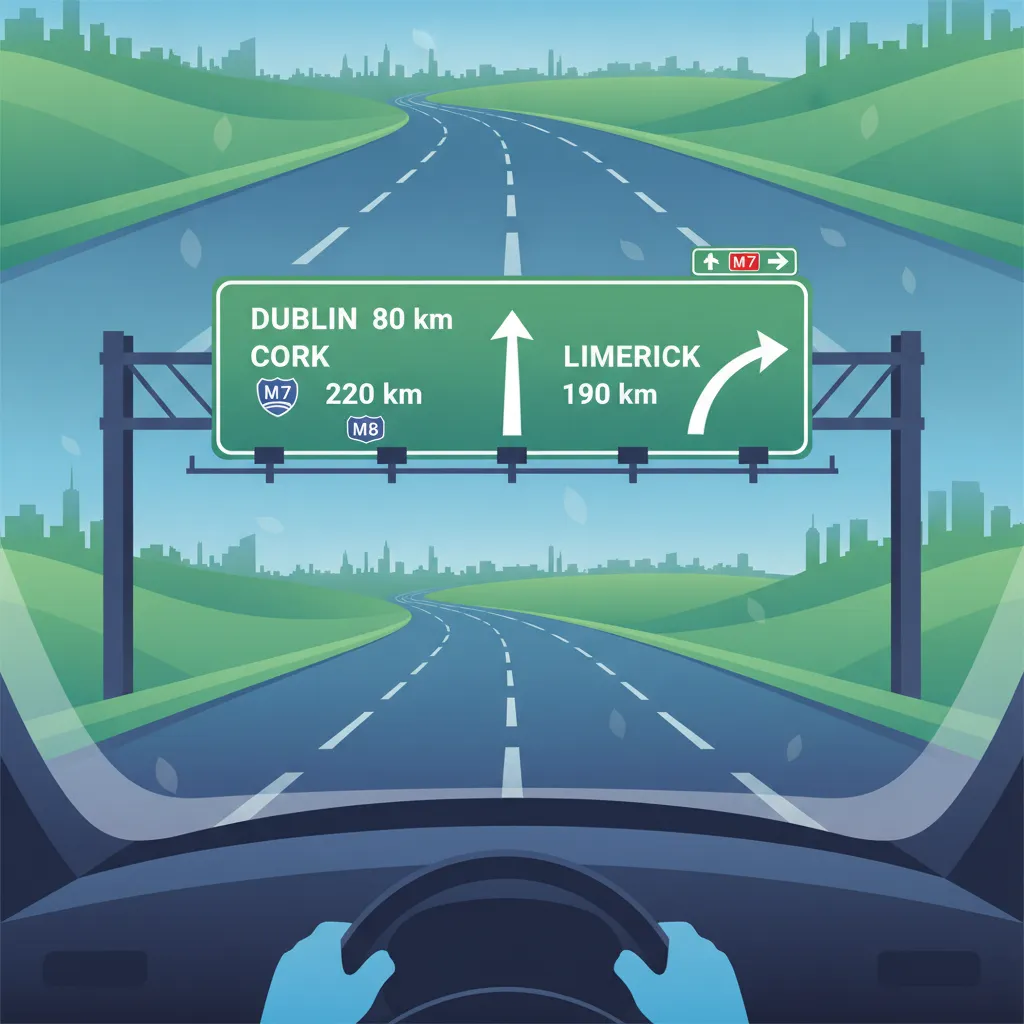
Lesson content overview
Navigating public roads safely requires more than just vehicle control; it demands continuous processing of environmental cues. In Ireland, information signs and destination guidance form the backbone of this communication network. Developed in line with the Road Safety Authority (RSA) guidelines, these signs are designed to help drivers plan routes, select the correct lane in advance, identify local services, and locate destinations efficiently.
For candidates preparing for the Irish Driver Theory Test (Category B), understanding the layout, colour-coding, and symbol systems of these signs is critical. Misinterpreting directional signage is a leading cause of driver distraction, sudden braking, and hazardous lane-swapping, which can lead to collisions on high-speed dual carriageways and motorways. This lesson provides an in-depth analysis of Ireland's information sign system, detailing how to decode route types, interpret directional layouts, and maintain safe driving practices.
Information signs are primarily designed to assist, advise, and guide. Unlike regulatory signs (which are usually circular with red or blue borders and mandate specific actions) or warning signs (which are diamond-shaped and yellow to indicate hazards), information signs are rectangular. Their primary function is to reduce the driver's cognitive workload.
When a driver can read and understand directional signs from a distance, they can position their vehicle in the appropriate lane early and smoothly. This proactive lane selection prevents "panic decisions"—such as cutting across multiple lanes of traffic to make a missed exit—thereby promoting a predictable and safe traffic flow.
In terms of curriculum dependencies, your ability to read information signs is directly linked to your knowledge of:
Ireland uses a highly structured, colour-coded classification system for its road network. This allows drivers to instantly identify the type of road they are travelling on, which in turn dictates the applicable speed limits, vehicle restrictions, and general driving rules.
Motorways represent the highest tier of the Irish road network. All signs directing drivers onto a motorway, or located along a motorway corridor, feature a blue background with white text and symbols.
National Primary and National Secondary roads connect major towns and cities. Signage on these routes features a green background with white text.
Regional roads (prefixed with 'R') and Local roads (prefixed with 'L') connect smaller towns, villages, and rural areas to the national network. These routes use signs with a white background and black text/borders.
Directional signs are placed at strategic intervals ahead of intersections to give drivers adequate time to adjust their lane position and speed.
An Advance Direction Sign is positioned before a junction. It typically presents a simplified map of the upcoming intersection, using arrows to show which lane or exit leads to specific destinations.
A roadside sign placed several hundred metres prior to a junction, detailing the layout of the intersection, the destinations served by each exit, and their respective road classifications.
When approaching an ADS:
To plan your journey and answer Irish Theory Test questions accurately, you must know what the letter prefixes on directional signs stand for:
As traffic approaches complex multi-lane junctions or roundabouts, general directional signs are supplemented by specific lane guidance signs. These signs display vertical arrows corresponding directly to the lanes on the carriage.
Roundabouts are highly common on Irish national and regional routes. Signs approaching a roundabout will show a schematic map of the roundabout, illustrating:
Crucial Roundabout Lane Discipline: Always select your lane before entering the roundabout based on the advance direction sign. If you intend to take any exit past the 12 o'clock position (a right turn), you must approach in the right-hand lane and signal right, unless road markings or signs indicate otherwise.
On high-speed routes like motorways and national dual-carriageways, exit countdown markers are used to help drivers gauge their distance to the deceleration lane.
Driving fatigue is a significant factor in road accidents. Service and amenity signs are designed to help drivers plan rest stops, locate fuel, and identify vital services like hospitals or emergency phones.
These signs are typically rectangular and use simple, universally recognized symbols:
| Symbol / Sign Type | Meaning | Application & Safe Use |
|---|---|---|
| Fuel Pump | Petrol / Diesel / EV Charging station ahead | Plan fuel stops early to avoid breaking down on high-speed roads. |
| Cup & Saucer / Fork & Spoon | Food and refreshments | Essential for managing driver fatigue on long journeys. |
| White 'H' on Blue/Red Background | Hospital with Emergency Dept | Provides directional guidance to the nearest critical care facility. |
| SOS Phone | Emergency roadside telephone | Located along motorways; use these to contact authorities directly as they pinpoint your exact location. |
On motorways, stopping on the hard shoulder is illegal unless it is an absolute emergency. Use the designated motorway service areas indicated by service signs to rest, refuel, or use mobile phones safely.
After passing a major junction, you will frequently encounter Route Confirmation Signs. These signs do not contain arrows; instead, they list upcoming major cities or towns along your current route, along with the distance to them in kilometres.
Understanding the theory is only half the battle; applying it safely on Irish roads is mandatory for passing your driving test and maintaining a clean driving record.
Under Irish traffic law, failing to follow mandatory lane arrows is an offence. If you are in a lane marked with a left-turn arrow on an information sign, you must turn left. Changing your mind at the last second and driving straight ahead disrupts traffic flow and can cause a side-impact collision.
Observe the Sign: Identify the advance direction sign at least 1 kilometre before the exit. Note the exit number and lane configuration.
Check Mirrors & Blind Spots: Assess the speed and position of vehicles behind and beside you.
Signal Early: Indicate left no later than the 300-metre countdown marker (three blue or green stripes).
Position Your Vehicle: Move smoothly into the auxiliary or deceleration lane without cutting off other drivers.
Decelerate Safely: Maintain your speed on the main carriageway until you have fully crossed into the exit slip road, then brake smoothly to match the lower speed limit of the exit ramp.
If you misread an information sign and miss your exit, never brake suddenly, reverse, or make a U-turn on the road.
Errors in route-reading lead to distinct traffic violations and dangerous scenarios:
To build a complete mental model of Irish road safety, link this lesson with:
This lesson covers Ireland's information sign system, which uses colour-coding to classify road types: blue for motorways, green for national roads, and white for local roads. Understanding these colours helps drivers anticipate speed limits, vehicle restrictions, and road conditions before reaching them. The lesson also explains advance direction signs, exit countdown markers, bilingual place name conventions, and safe procedures for lane selection and roundabout navigation. Mastery of this signage system reduces driver distraction, prevents last-minute lane changes, and is essential for both the theory test and safe real-world driving in Ireland.
A short set of high-value points that capture the most important learning from this lesson.
Irish information signs use three main background colours: blue for motorways, green for national roads, and white for regional and local roads.
Route prefixes identify road type (M=motorway, N=national, R=regional, L=local) and determine applicable speed limits and vehicle restrictions.
Advance Direction Signs are placed before junctions to show lane layout and destinations, allowing early lane selection.
Exit countdown markers appear at 300m, 200m, and 100m before motorway exits, with drivers required to signal by the 200m marker.
Bilingual place names appear in Irish (italicised lowercase) above English (UPPERCASE) on green and white directional signs.
Explore all units and lessons included in this driving theory course.
Blue signs mean motorway regulations apply immediately, including restrictions on learner permit holders and vehicles under 50 km/h.
Green signs indicate national roads (typically 100 km/h limit) connecting major towns and cities.
White signs indicate regional (R) or local (L) roads with lower speed limits and narrower carriageways.
On roundabouts, take any exit past 12 o'clock (right turn) from the right-hand lane, signalling right.
Temporary yellow diversion signs override standard green or white directional signs during roadworks or emergencies.
Confusing route numbers with destinations - following the N4 or M50 prefix is more reliable than searching for town names that may be abbreviated.
Assuming all services shown on white signs are open 24/7, particularly in rural areas where facilities may be limited.
Failing to signal by the 200m exit countdown marker on motorways and dual carriageways.
Attempting to cross solid white lines at the last moment to catch a missed exit, which is dangerous and illegal.
Ignoring temporary yellow diversion signs during roadworks, which legally override standard directional signage.
Lesson content overview
A short set of high-value points that capture the most important learning from this lesson.
Irish information signs use three main background colours: blue for motorways, green for national roads, and white for regional and local roads.
Route prefixes identify road type (M=motorway, N=national, R=regional, L=local) and determine applicable speed limits and vehicle restrictions.
Advance Direction Signs are placed before junctions to show lane layout and destinations, allowing early lane selection.
Exit countdown markers appear at 300m, 200m, and 100m before motorway exits, with drivers required to signal by the 200m marker.
Bilingual place names appear in Irish (italicised lowercase) above English (UPPERCASE) on green and white directional signs.
Explore all units and lessons included in this driving theory course.
Blue signs mean motorway regulations apply immediately, including restrictions on learner permit holders and vehicles under 50 km/h.
Green signs indicate national roads (typically 100 km/h limit) connecting major towns and cities.
White signs indicate regional (R) or local (L) roads with lower speed limits and narrower carriageways.
On roundabouts, take any exit past 12 o'clock (right turn) from the right-hand lane, signalling right.
Temporary yellow diversion signs override standard green or white directional signs during roadworks or emergencies.
Confusing route numbers with destinations - following the N4 or M50 prefix is more reliable than searching for town names that may be abbreviated.
Assuming all services shown on white signs are open 24/7, particularly in rural areas where facilities may be limited.
Failing to signal by the 200m exit countdown marker on motorways and dual carriageways.
Attempting to cross solid white lines at the last moment to catch a missed exit, which is dangerous and illegal.
Ignoring temporary yellow diversion signs during roadworks, which legally override standard directional signage.
Explore search topics learners often look for when studying Information Signs and Destination Guidance. These topics reflect common questions about road rules, driving situations, safety guidance, and lesson level theory preparation for learners in Ireland.
Browse additional driving theory lessons that cover connected traffic rules, road signs, and common driving situations related to this topic. Improve your understanding of how different rules interact across everyday traffic scenarios.
Learn the official rules of the road for navigating multi-lane roundabouts, selecting the correct approach lane based on signage, and managing priority when entering and exiting. This guide details how to interpret roundabout lane markings and maintain safe traffic flow in line with RSA requirements.

Navigating multi-lane roundabouts requires precise lane selection, continuous scanning, and timely signaling. This lesson teaches you the 'clock rule' for determining which lane to enter, how to yield to traffic already on the roundabout from your right, and when to activate your left indicator to exit. Mastering these procedures minimizes lane-drift accidents and ensures a seamless flow of traffic on busy roundabouts.
This lesson covers the absolute rules of priority that regulate junctions, roundabouts, and pedestrian crossings in Ireland. It teaches riders when they must yield, who has right-of-way, and how to read Stop and Yield signs correctly. Understanding these priority hierarchies prevents collisions and maintains orderly, predictable movement at busy junctions.

Uncontrolled junctions represent a high-risk scenario because they lack physical signs, lines, or lights to dictate priority. This lesson covers the crucial 'priority to the right' principle, where you must yield to any traffic approaching from your right-hand side. You will learn the importance of reducing your speed, preparing to stop, and verifying the intentions of other drivers at these equal-status crossings.

This lesson provides a comprehensive guide to navigating single and multi-lane roundabouts safely in accordance with the Irish Rules of the Road. It covers correct lane selection on approach, signaling rules for exiting, and maintaining a steady path through traffic. Riders will learn to anticipate lane-changing mistakes made by other drivers and manage the unique banking angles of roundabouts.
This lesson teaches the fundamental principles of priority and right-of-way at controlled and uncontrolled intersections across Ireland. It explains the legal obligations at yield signs, stop lines, and when meeting oncoming traffic turning across your lane. Motorcyclists will learn to carefully verify other drivers' intentions rather than assuming they will yield the correct right-of-way.

Irish driving theory demands that drivers keep to the left-hand side of the road unless overtaking or turning right. This lesson explains how to maintain consistent lane discipline on multi-lane roads, how to perform safe lane changes, and the dangers of drifting. You will learn the safety sequence of checking mirrors, checking blind spots, signalling, and smoothly executing a lane change without disrupting trailing traffic.
Right-of-way rules establish a clear order of precedence when the paths of two or more vehicles cross. This lesson explains how traffic on a major road has priority over traffic emerging from a minor road, and the general rule of yielding to oncoming vehicles when turning right. You will develop a solid understanding of how to approach intersections defensively, assessing speed and distance to make safe decisions.

Stop and yield signs require drivers to surrender right-of-way to crossing traffic, but they command different physical actions. This lesson explains that a stop sign mandates a complete, absolute halt behind the line, whereas a yield sign requires you to slow down and stop only if other traffic is approaching. You will learn how to manage restricted visibility at junctions and how to creep forward safely when clear.
Motorways are designed for safe, high-speed travel, but require strict adherence to lane discipline and specific regulations. This lesson explains that the left lane is for normal driving, while middle and right lanes are strictly for overtaking slower traffic. You will learn how to identify motorway exits, use the hard shoulder during absolute emergencies, and understand the legal restrictions placed on learner permit holders.

Overtaking requires rapid judgment, clear visibility, and precise execution to avoid catastrophic head-on collisions. This lesson guides you through checking oncoming traffic, verifying legal passing zones via road markings, and checking mirrors and blind spots before accelerating. You will learn how to signal your intentions, maintain a safe gap, and return to your driving lane smoothly without cutting up the passed vehicle.
Explore the significance of road markings, lane arrows, and traffic flow management on Irish roads. This lesson explains how to align your vehicle position with overhead information signs and surface markings to ensure safe, legal lane changes and consistent navigation during your driving journey.
Irish driving theory demands that drivers keep to the left-hand side of the road unless overtaking or turning right. This lesson explains how to maintain consistent lane discipline on multi-lane roads, how to perform safe lane changes, and the dangers of drifting. You will learn the safety sequence of checking mirrors, checking blind spots, signalling, and smoothly executing a lane change without disrupting trailing traffic.

The painted lines on the road surface act as continuous instructions to help drivers steer, position, and pass safely. This lesson explains the strict legal prohibitions of crossing solid white lines compared to broken lines, which indicate it is safe to cross if clear. You will also discover the purpose of coloured reflective road studs, known as cat's eyes, which improve safety during night driving and poor visibility.

This lesson explains the critical meanings of solid, broken, and continuous lines painted on Irish road surfaces. It defines the legal rules surrounding bus lanes, bicycle lanes, and yellow box junctions in urban settings. Riders will learn correct lane discipline to ensure their safety and maintain proper separation from surrounding traffic.
Large passenger vehicles must maintain consistent lane positioning to prevent side-swipe incidents and sustain smooth urban traffic patterns. This lesson covers standard lane selection rules, safe overtaking procedures, and how to use designated public transit corridors correctly. Drivers will learn the importance of checking mirrors continuously and planning lane changes well in advance.
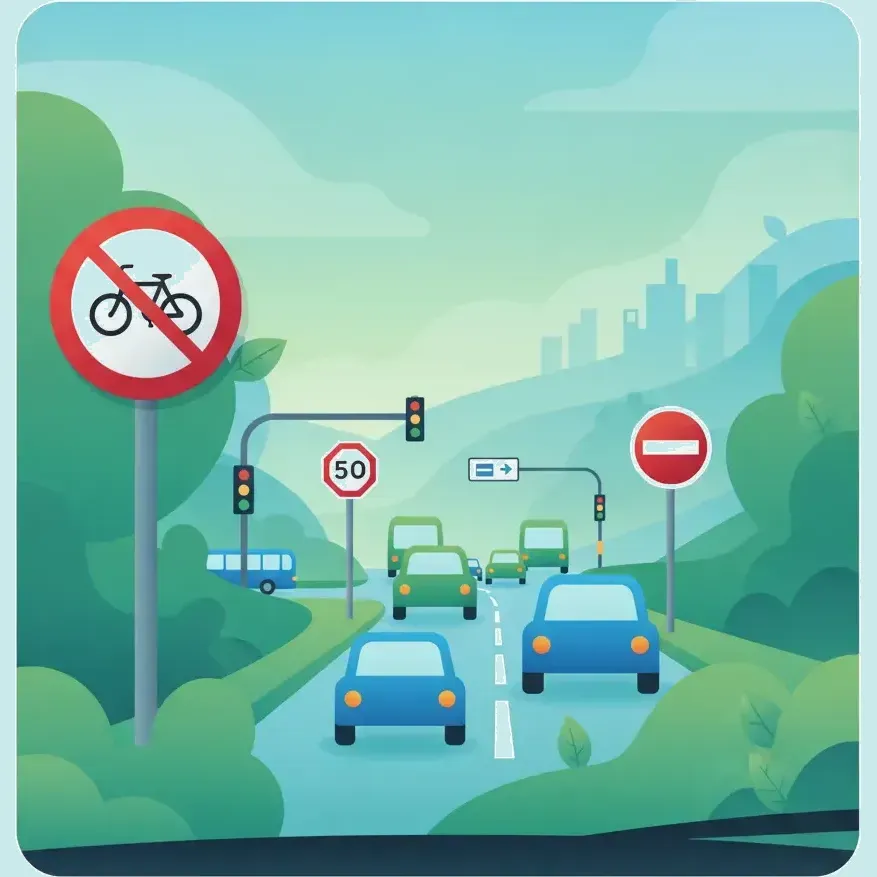
Regulatory signs give clear instructions and legal prohibitions that drivers must obey to prevent accidents and maintain traffic order. This lesson breaks down circular signs with red borders denoting prohibitions, blue circular signs showing mandatory directions, and key safety priorities like stop and yield signs. Failing to obey these specific indicators is a serious traffic offence that can lead to penalty points and immediate fines.
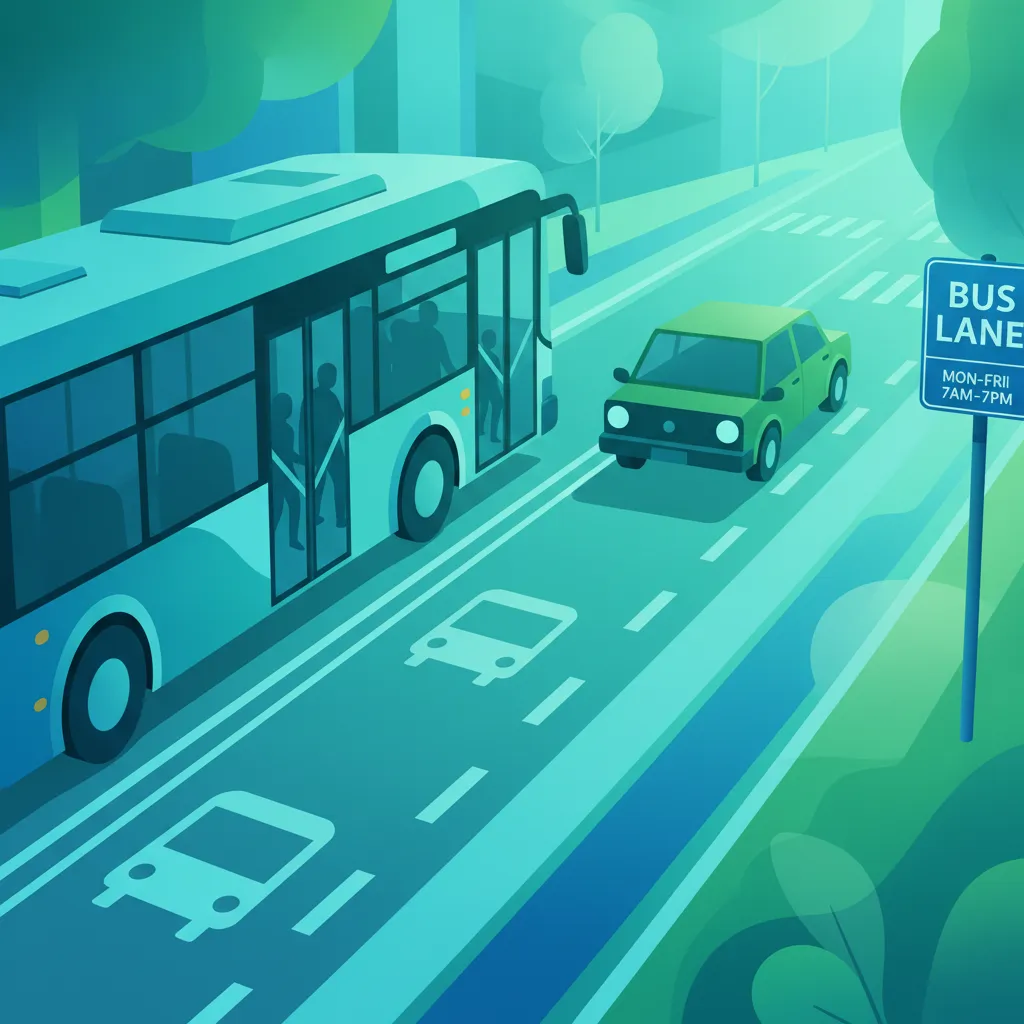
This lesson details the legal operations allowed within Irish bus lanes, including active hours, non-permitted traffic types, and exceptions. Drivers will learn safe approach trajectories for public transport stops, maintaining legal clearance, and navigating curbside hazards safely. The material highlights compliance with local bylaws to guarantee steady, uninterrupted traffic flow and passenger convenience.
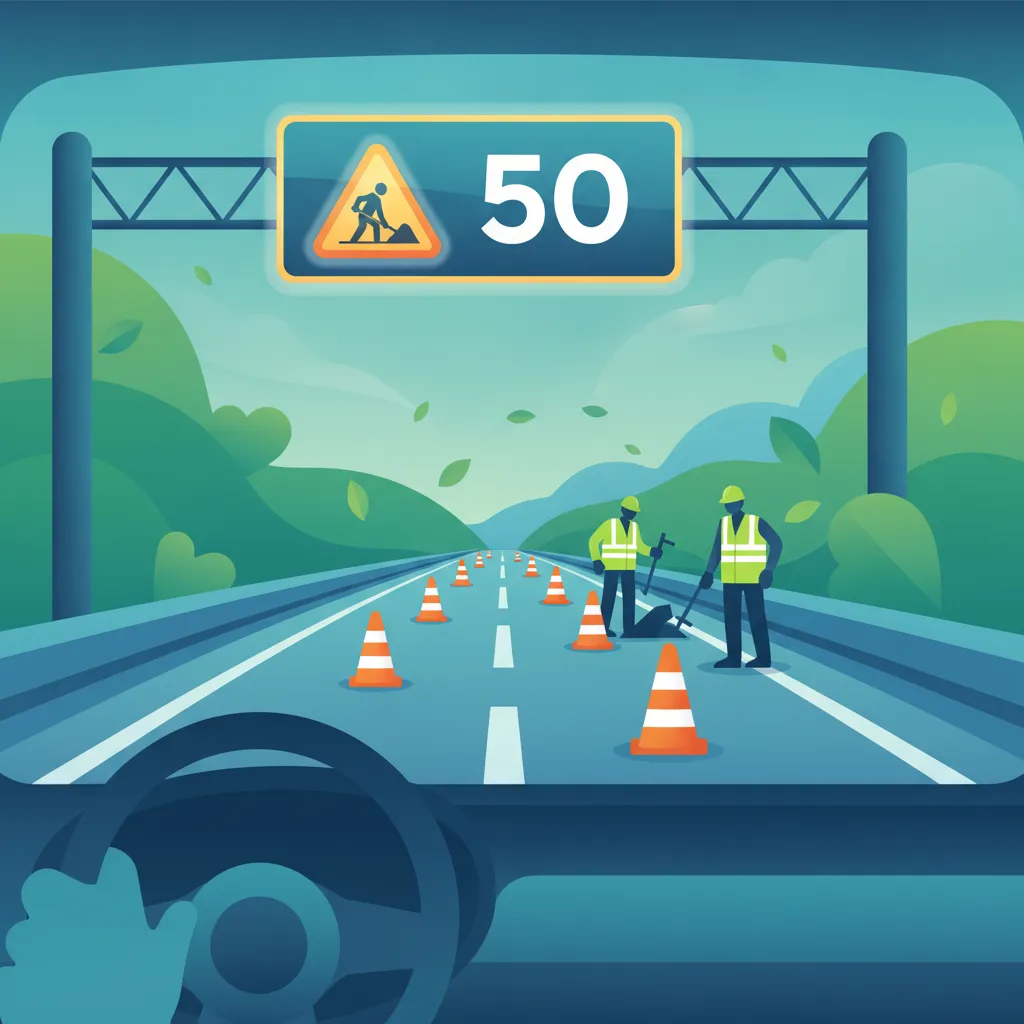
Variable Message Signs and roadwork indicators communicate temporary safety conditions, such as lane closures, heavy delays, or dynamic speed restrictions. This lesson teaches you how to interpret digital overhead gantries, temporary hazard cones, and specific detour layouts often encountered on Irish motorways and regional routes. Adhering to these real-time instructions protects both you and the vulnerable road crews working ahead.

This lesson explains the regulatory meanings of various road markings applied to Irish asphalt, including continuous double white lines and yellow boxes. It details how these markings govern overtaking privileges, lane restrictions, and stopping zones at intersections. Riders will learn to recognize specific surface hazards like wet paint markings, which present severe traction risks for motorcycles.
Motorways are designed for safe, high-speed travel, but require strict adherence to lane discipline and specific regulations. This lesson explains that the left lane is for normal driving, while middle and right lanes are strictly for overtaking slower traffic. You will learn how to identify motorway exits, use the hard shoulder during absolute emergencies, and understand the legal restrictions placed on learner permit holders.
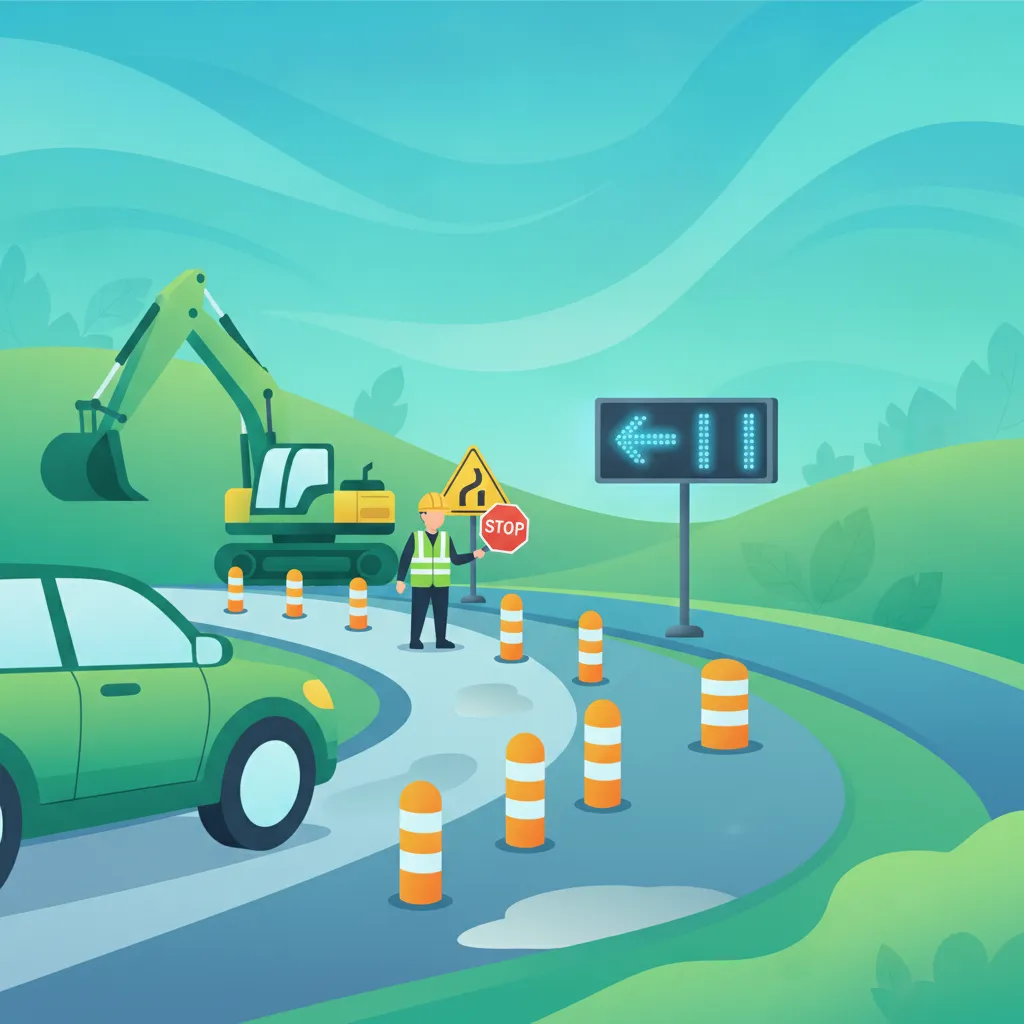
Road construction zones feature dynamic hazards, including changed lane configurations, temporary barriers, and workers near live traffic. This lesson details how to follow temporary signage, navigate narrow chicanes, and obey 'Stop-Go' flag systems or temporary traffic lights. You will understand the legal requirement to obey temporary speed limits, which are strictly enforced to protect both motorists and road crews.
Find clear answers to common questions learners have about Information Signs and Destination Guidance. Learn how the lesson is structured, which driving theory objectives it supports, and how it fits into the overall learning path of units and curriculum progression in Ireland. These explanations help you understand key concepts, lesson flow, and exam focused study goals.
Green signs are primarily used on National Roads, while blue signs are used exclusively for Motorways. These colours help you identify the type of road you are joining and its associated speed limits and restrictions.
Yes, white signs are typically used for local and regional roads. They direct you to smaller towns or local points of interest and generally indicate lower-speed, non-national road routes.
The theory test often uses images of signs to test your awareness of the road ahead. Recognising these signs quickly allows you to anticipate lane requirements, which is a fundamental aspect of safe driving and hazard avoidance.
No, while many directional signs are rectangular, their layout and the inclusion of route numbers (such as N, R, or M prefixes) provide specific information about the road ahead. Learning these prefixes alongside the colours is key to mastering sign reading.
Use the practice question search tool to pinpoint specific topics, road signs, or rules you need to master for your official Driver Theory Test. Refine your study strategy and ensure comprehensive preparation for all aspects of the Irish driving exam. Start your focused revision now and build confidence for your learner permit test.