
This lesson provides a comprehensive guide to safe parking techniques and the legal regulations required for your Category B theory test in Ireland. You will learn the precise rules for street parking, how to interpret parking signs, and the correct procedures for common driving manoeuvres. Mastering these skills is essential for both your theory exam and becoming a safe, responsible road user.
Lesson content overview
Mastering parking is a core requirement for earning your Category B driver's licence in Ireland. Safe, legal parking requires solid spatial awareness, steady vehicle control, and a clear understanding of traffic laws. Poor parking does more than cause inconvenience; it can obstruct vital traffic, endanger vulnerable road users like cyclists and pedestrians, and result in severe penalties under Irish law.
This guide details the physical techniques for parallel curbside parking and reversing into perpendicular parking bays. It also covers Irish parking regulations, including the strict rules for double yellow lines, clearways, disabled spaces, loading bays, and standard parking signs.
Parallel parking is the manoeuvre of parking a vehicle parallel to the kerb, typically in a tight line between two other parked vehicles. On busy urban streets, this skill is essential for maximizing limited space. To complete it safely, you must combine low-speed vehicle control, precise steering inputs, and constant 360-degree observation.
To execute a parallel park safely and smoothly, follow this standard procedure:
Select and Assess: Locate a safe, legal gap that is at least one-and-a-half times the length of your vehicle. Check your mirrors, signal your intention to pull over, and slow down.
Position: Pull up alongside the target vehicle (the car parked in front of your intended space). Maintain a lateral distance of about 1 metre. Align your rear bumper with their rear bumper. Select reverse gear immediately to alert drivers behind you with your reversing lights.
Observe: Perform a full 360-degree observation. Look over your shoulders, check all mirrors, and ensure there are no pedestrians, cyclists, or oncoming vehicles near you.
Begin Reversing: Back up slowly in a straight line. Once your rear axle aligns with the rear bumper of the target vehicle, steer rapidly to the left (towards the kerb) to a full lock or near-full lock.
Establish the Angle: Continue reversing slowly until your car is at roughly a 45-degree angle to the kerb. At this point, your passenger-side door mirror should clear the rear corner of the front car.
Counter-Steer: Straighten the steering wheel as you continue backing into the gap. Once the front nose of your car clears the rear bumper of the target vehicle, steer quickly to the right (away from the kerb) to swing the front of your car into the space.
Straighten and Secure: As your car becomes parallel to the kerb, straighten your wheels. Adjust your position so you are centered between the front and rear vehicles, leaving enough space for both to exit. Apply the handbrake and select neutral.
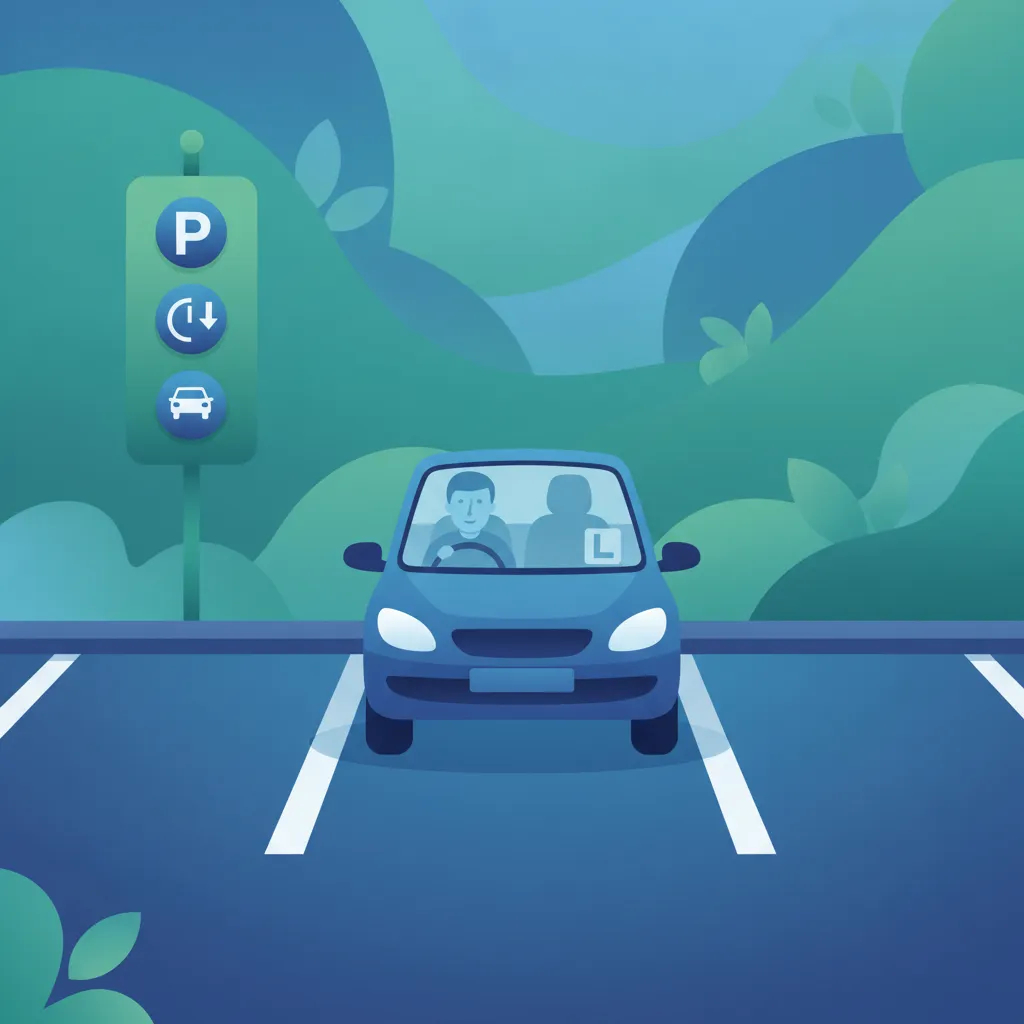
Bay parking involves parking within a designated rectangular or angled space, common in shopping centres, public car parks, and residential zones. You must park fully within the painted lines to avoid obstructing adjacent spaces.
While you can drive nose-first into a perpendicular bay, reversing in is the safest and most recommended method. Reversing into a bay gives you maximum visibility when exiting, as you do not have to back blindly into active traffic or pedestrian pathways.
Positioning: Drive past your target bay, leaving about 1 to 1.5 metres of lateral space between your car and the parked vehicles. Stop when your rear bumper is roughly two to three bays past the one you intend to target (using your reference lines).
360-Degree Scan: Check all mirrors and blind spots. Look out for pedestrians, particularly children, who can easily be hidden behind parked cars.
The Turn: Select reverse gear. Move slowly backwards, and once your reference point (often when the corner of your target bay aligns with your rear side window) is reached, steer quickly to full lock toward the bay.
Monitoring: Watch your side mirrors to ensure your rear wheels clear the vehicles on both sides. Slow down or stop if your angle looks too tight.
Straightening Up: As your car aligns parallel with the white bay markings, quickly straighten the steering wheel. Reverse straight back until you are fully inside the bay, ensuring your front bumper is clear of the traffic lane.
Diagonal bays are usually angled at 45 or 60 degrees to the kerb. These are designed for quick nose-in parking, following the natural flow of traffic.
A parking layout where bays are marked at an angle to the kerb or roadway. Drivers usually enter nose-first and must reverse out with extreme caution, checking both directions for cross-traffic.
When reversing out of a diagonal bay, your view is often blocked by vehicles parked next to you. You must reverse slowly, checking your mirrors and looking over both shoulders until you can see past the adjacent cars.
Road markings tell you where you can and cannot park. Ignoring these markings can lead to fines, penalty points, or having your vehicle towed.
Double yellow lines are painted along the edge of the road to indicate that stopping or parking is prohibited at any time. This rule applies 24 hours a day, 365 days a year, regardless of nearby signage or traffic conditions.
The Drop-Off Exception: You may stop on double yellow lines very briefly to allow a passenger to get in or out of the vehicle, or to load/unload goods. However, you must only do this if it is safe, does not obstruct traffic, and is not explicitly prohibited by local signage. You must never leave the vehicle unattended.
A single yellow line indicates that parking or stopping is restricted during specific hours of the day.
A clearway is a stretch of road where stopping is strictly prohibited during specific hours to keep commuter traffic flowing smoothly.
In a clearway, the prohibition is absolute during the restricted hours:
An End of Clearway sign marks the point where these strict stopping restrictions finish. Beyond this sign, regular parking and stopping rules apply.
Some parking spaces are reserved for specific users to ensure accessibility for disabled drivers or to support business deliveries.
Disabled parking bays are reserved for vehicles displaying a valid Blue Badge (the European Parking Card for people with disabilities). These spaces are placed close to building entrances and amenities to assist drivers or passengers with limited mobility.
Loading bays are designed for goods vehicles loading or unloading heavy items. They are marked with a blue "P" inside a red border on a white background, often accompanied by the word "LOADING".
Even in the absence of yellow lines or signs, parking in certain areas is illegal because it creates hazards, blocks visibility, or obstructs traffic flow. Under Irish law, you must never park in any of the following locations:
A professional driver must adapt their parking methods to changing weather, lighting, and road conditions.
When parking on an incline, gravity introduces a risk of vehicle roll if your brakes fail. You must use your steering wheel and gears to secure the vehicle safely.
Facing Downhill (With a Kerb): Turn your front steering wheels fully toward the kerb. If your brakes fail, the front wheels will roll into the kerb and stop the vehicle. Select reverse gear (manual) or Park (automatic), and apply the handbrake firmly.
Facing Uphill (With a Kerb): Turn your front steering wheels fully away from the kerb. If the vehicle rolls backward, the back of the front tyres will catch the kerb and stop the car. Select first gear (manual) or Park (automatic), and apply the handbrake firmly.
Uphill or Downhill (No Kerb): Turn your wheels fully toward the edge of the road. This ensures that if the vehicle moves, it will roll off the road into the grass or ditch rather than out into the traffic lane.
The rules of parking are designed to protect lives and keep roads efficient.
This lesson covers the essential parking techniques and legal regulations for the Irish Category B theory test, detailing step-by-step procedures for parallel parking between vehicles and reversing into perpendicular and diagonal bays. It explains Irish road markings and restrictions, including the absolute prohibition on double yellow lines, the time-limited nature of single yellow lines, and the strict rules governing clearways, disabled bays, and loading bays. Learners must understand specific distances such as the 5-metre rule from junctions and the 15-metre rule from pedestrian crossings, along with wheel bracing techniques for parking on hills. Mastering these rules is crucial for both passing the theory test and becoming a safe, legally compliant driver on Irish roads.
A short set of high-value points that capture the most important learning from this lesson.
Parallel parking requires reversing at a 45-degree angle, then counter-steering to swing the front into the space while maintaining constant 360-degree observation.
Reversing into perpendicular bays is safer than driving in nose-first because it maximises visibility when exiting into active traffic.
Double yellow lines prohibit stopping or parking at any time 24/7, with no exceptions except brief passenger drop-offs where it is safe.
Parking in a disabled bay without a valid Blue Badge permit carries severe fines and a high risk of towing, regardless of how briefly you stop.
When parking on hills, always turn wheels toward the kerb facing downhill and away from the kerb facing uphill to prevent rollaway.
Explore all units and lessons included in this driving theory course.
Single yellow lines restrict parking only during the hours shown on the accompanying information plate; outside those hours, parking is legal unless causing an obstruction.
On clearways, stopping to drop off passengers or load goods is strictly prohibited during restricted hours, unlike on double yellow lines.
You must park fully within bay lines in car parks; straddling lines obstructs adjacent spaces and may result in a penalty.
At night on roads over 50 km/h with poor lighting, leave your side lights on when parking to alert passing traffic.
Never park within 5 metres of a junction, within 15 metres of a pedestrian crossing approach, or on footpaths and cycle lanes.
Turning the steering wheel too late during parallel parking, causing the car to strike the kerb or swing out too far into the traffic lane.
Parking too far from the kerb (more than 45cm) when parallel parking, which narrows the driving lane and creates a road hazard.
Failing to check the right shoulder blind spot before swinging the front of the car into a parallel parking space, risking collision with cyclists or pedestrians.
Assuming a quick stop on double yellow lines or in a disabled bay is acceptable, when in fact leaving the vehicle unattended at any time is prohibited.
Entering a diagonal bay by reversing in, which reverses the natural flow of traffic and makes exiting more dangerous than necessary.
Lesson content overview
A short set of high-value points that capture the most important learning from this lesson.
Parallel parking requires reversing at a 45-degree angle, then counter-steering to swing the front into the space while maintaining constant 360-degree observation.
Reversing into perpendicular bays is safer than driving in nose-first because it maximises visibility when exiting into active traffic.
Double yellow lines prohibit stopping or parking at any time 24/7, with no exceptions except brief passenger drop-offs where it is safe.
Parking in a disabled bay without a valid Blue Badge permit carries severe fines and a high risk of towing, regardless of how briefly you stop.
When parking on hills, always turn wheels toward the kerb facing downhill and away from the kerb facing uphill to prevent rollaway.
Explore all units and lessons included in this driving theory course.
Single yellow lines restrict parking only during the hours shown on the accompanying information plate; outside those hours, parking is legal unless causing an obstruction.
On clearways, stopping to drop off passengers or load goods is strictly prohibited during restricted hours, unlike on double yellow lines.
You must park fully within bay lines in car parks; straddling lines obstructs adjacent spaces and may result in a penalty.
At night on roads over 50 km/h with poor lighting, leave your side lights on when parking to alert passing traffic.
Never park within 5 metres of a junction, within 15 metres of a pedestrian crossing approach, or on footpaths and cycle lanes.
Turning the steering wheel too late during parallel parking, causing the car to strike the kerb or swing out too far into the traffic lane.
Parking too far from the kerb (more than 45cm) when parallel parking, which narrows the driving lane and creates a road hazard.
Failing to check the right shoulder blind spot before swinging the front of the car into a parallel parking space, risking collision with cyclists or pedestrians.
Assuming a quick stop on double yellow lines or in a disabled bay is acceptable, when in fact leaving the vehicle unattended at any time is prohibited.
Entering a diagonal bay by reversing in, which reverses the natural flow of traffic and makes exiting more dangerous than necessary.
Explore search topics learners often look for when studying Parallel Parking, Bay Parking and Parking Regulations. These topics reflect common questions about road rules, driving situations, safety guidance, and lesson level theory preparation for learners in Ireland.
Browse additional driving theory lessons that cover connected traffic rules, road signs, and common driving situations related to this topic. Improve your understanding of how different rules interact across everyday traffic scenarios.
Understand how parking position and visibility affect road safety at junctions. This lesson explains why strict parking regulations near intersections are vital for maintaining clear sightlines, reducing accident risks, and ensuring that all road users can navigate crossroads and junctions with full visibility of oncoming traffic.
This lesson focuses on the safe approach and execution of turns at T-junctions, staggered intersections, and blind crossroads. It explains the critical mirror-signal-manoeuvre routine and how to select the best position for maximum visibility to cross-traffic. Motorcyclists will learn to identify potential hazards like vehicles pulling out suddenly or turning across their direct path.
This lesson details the sequential steps required to approach and exit junctions safely under the Irish driving rules. It teaches riders how to select the correct lane, utilize mirrors, apply early signals, and reduce speed appropriately. Effective observation strategies are highlighted to help riders identify crossing pedestrians or approaching side traffic.

Uncontrolled junctions represent a high-risk scenario because they lack physical signs, lines, or lights to dictate priority. This lesson covers the crucial 'priority to the right' principle, where you must yield to any traffic approaching from your right-hand side. You will learn the importance of reducing your speed, preparing to stop, and verifying the intentions of other drivers at these equal-status crossings.
Driving at night presents severe challenges due to reduced visibility, driver fatigue, and headlight glare from oncoming vehicles. This lesson teaches you how to manage your headlights, use road edge markers to steer through dark curves, and look away from oncoming bright lights. You will learn to drive within the range of your headlights and remain highly alert for pedestrians or cyclists not wearing reflective gear.
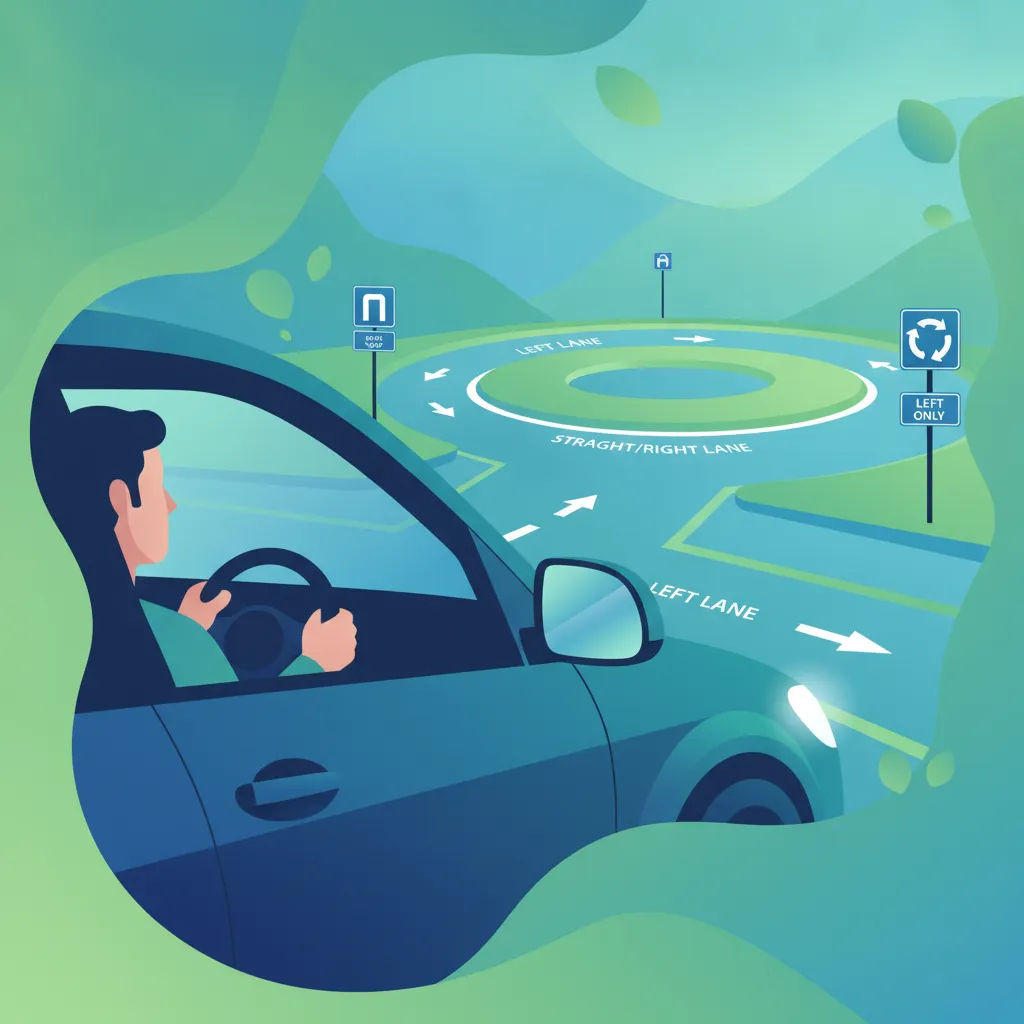
Executing safe turns requires early preparation, correct road positioning, and clear communication with other road users. This lesson focuses on the mandatory Mirror-Signal-Manoeuvre (MSM) routine used across Ireland for turning at cross junctions and navigating roundabouts. You will learn how to choose the correct lane early, adjust your speed, and complete your turn smoothly without cutting corners or blocking trailing vehicles.

The length of a commercial passenger vehicle creates a wide rear-wheel track offset, requiring drivers to swing wide during tight turns. This lesson teaches cornering mechanics, mirror adjustment guidelines, and how to check blind spots for cyclists on the inside lane. Drivers will master intersection control, preventing collisions with stationary street furniture or curbs.
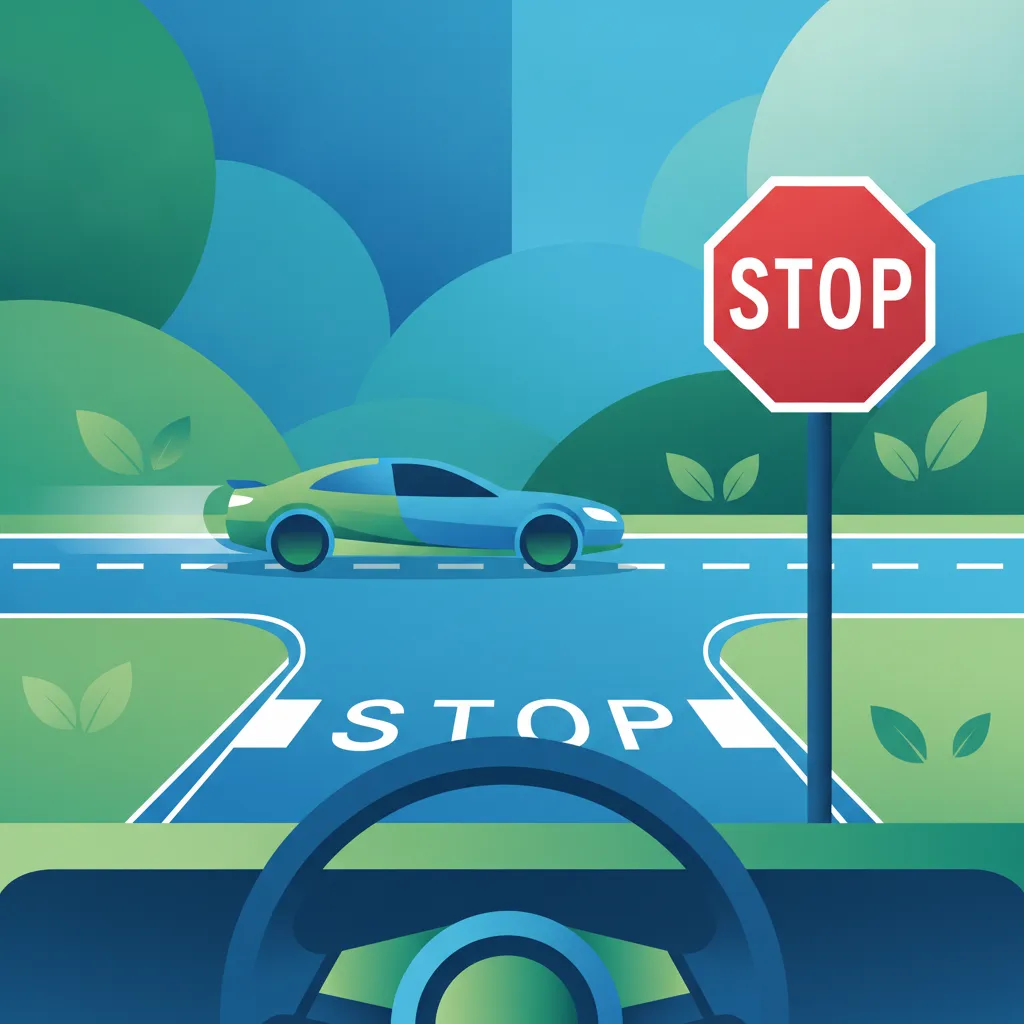
Stop and yield signs require drivers to surrender right-of-way to crossing traffic, but they command different physical actions. This lesson explains that a stop sign mandates a complete, absolute halt behind the line, whereas a yield sign requires you to slow down and stop only if other traffic is approaching. You will learn how to manage restricted visibility at junctions and how to creep forward safely when clear.
This lesson focuses on practical strategies for maximizing a motorcyclist's visibility to other road users in day and night scenarios. It details the effective placement of retro-reflective materials, high-visibility jackets, and the constant use of dipped headlights. Riders will examine how road positioning within their lane dramatically reduces the likelihood of being obscured by other vehicles.
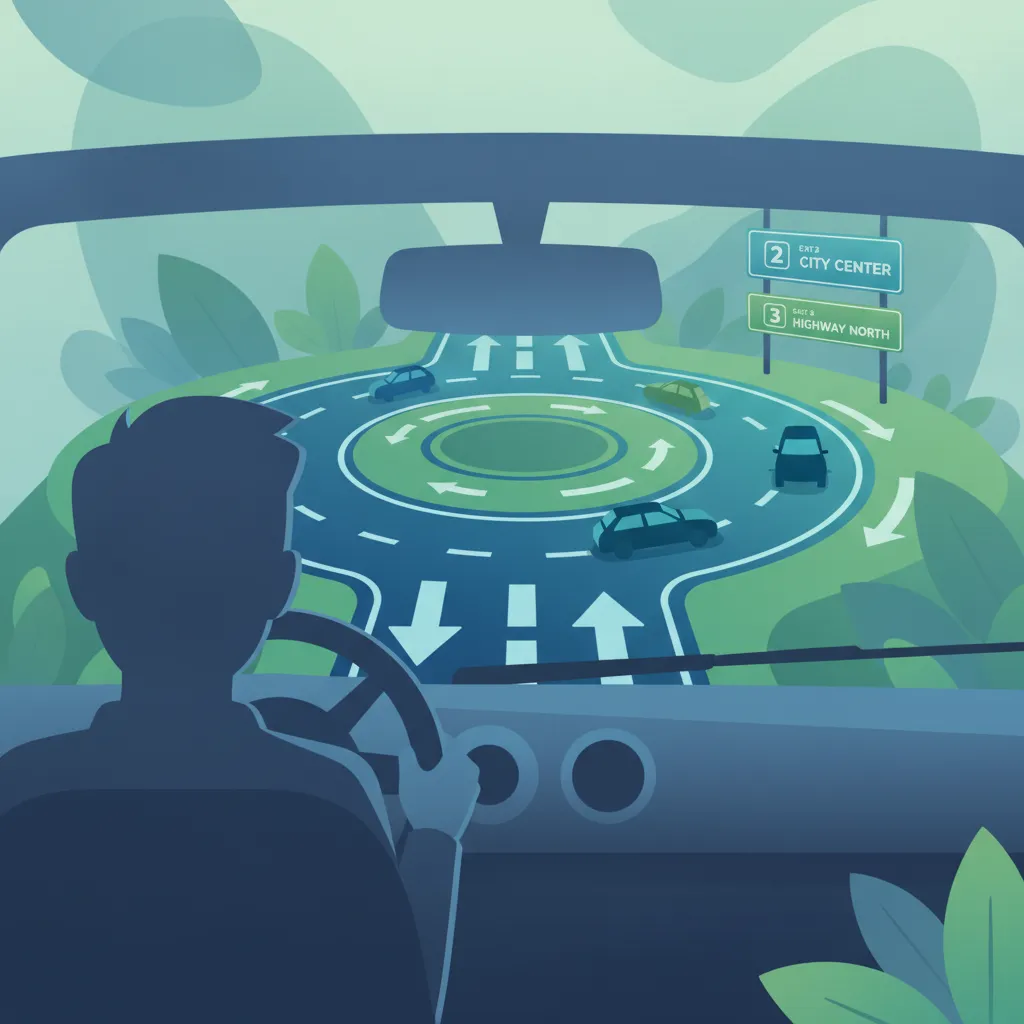
Navigating multi-lane roundabouts requires precise lane selection, continuous scanning, and timely signaling. This lesson teaches you the 'clock rule' for determining which lane to enter, how to yield to traffic already on the roundabout from your right, and when to activate your left indicator to exit. Mastering these procedures minimizes lane-drift accidents and ensures a seamless flow of traffic on busy roundabouts.

Your vehicle's lighting system is crucial for illuminating your path and making your presence and intentions clear to other road users. This lesson explains the legal requirements for using dipped headlights, full beams, fog lights, and hazard signals in Ireland. You will learn when to switch from full to dipped beams to avoid blinding oncoming drivers, and how to perform simple checks to ensure all bulbs are working.
Learn the specific meanings of various road markings and signs found in urban areas. This guide details the rules for double yellow lines, single yellow lines, clearways, and designated parking bays, helping you identify legal stopping zones and avoid common traffic penalties in Irish urban environments.
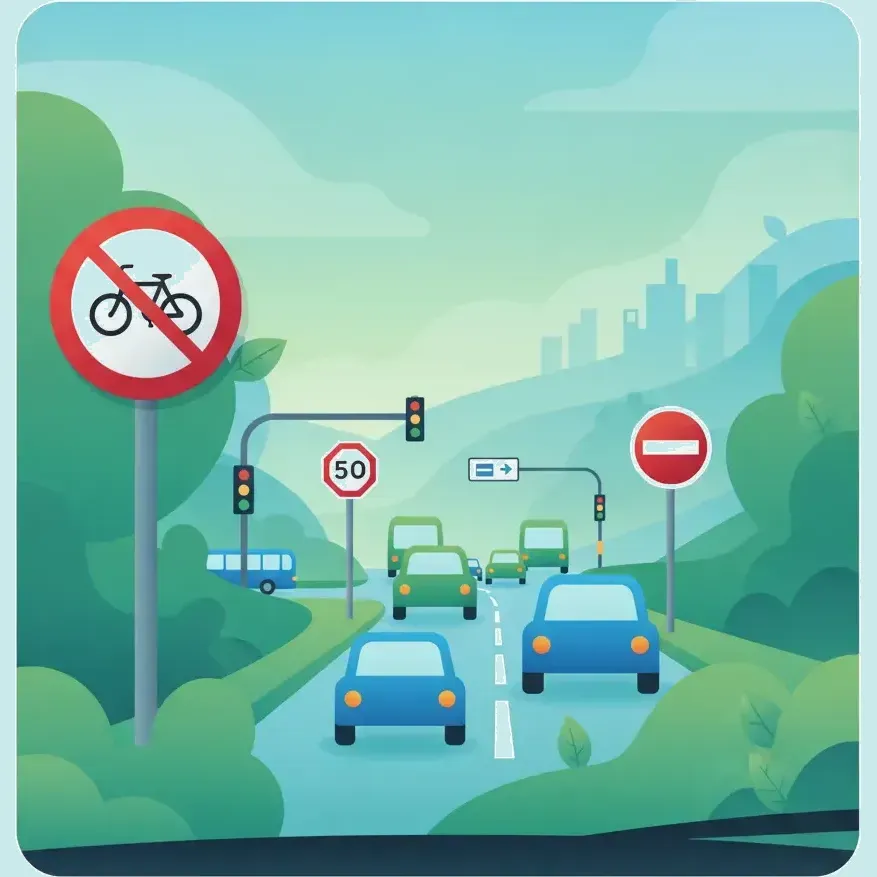
Regulatory signs give clear instructions and legal prohibitions that drivers must obey to prevent accidents and maintain traffic order. This lesson breaks down circular signs with red borders denoting prohibitions, blue circular signs showing mandatory directions, and key safety priorities like stop and yield signs. Failing to obey these specific indicators is a serious traffic offence that can lead to penalty points and immediate fines.
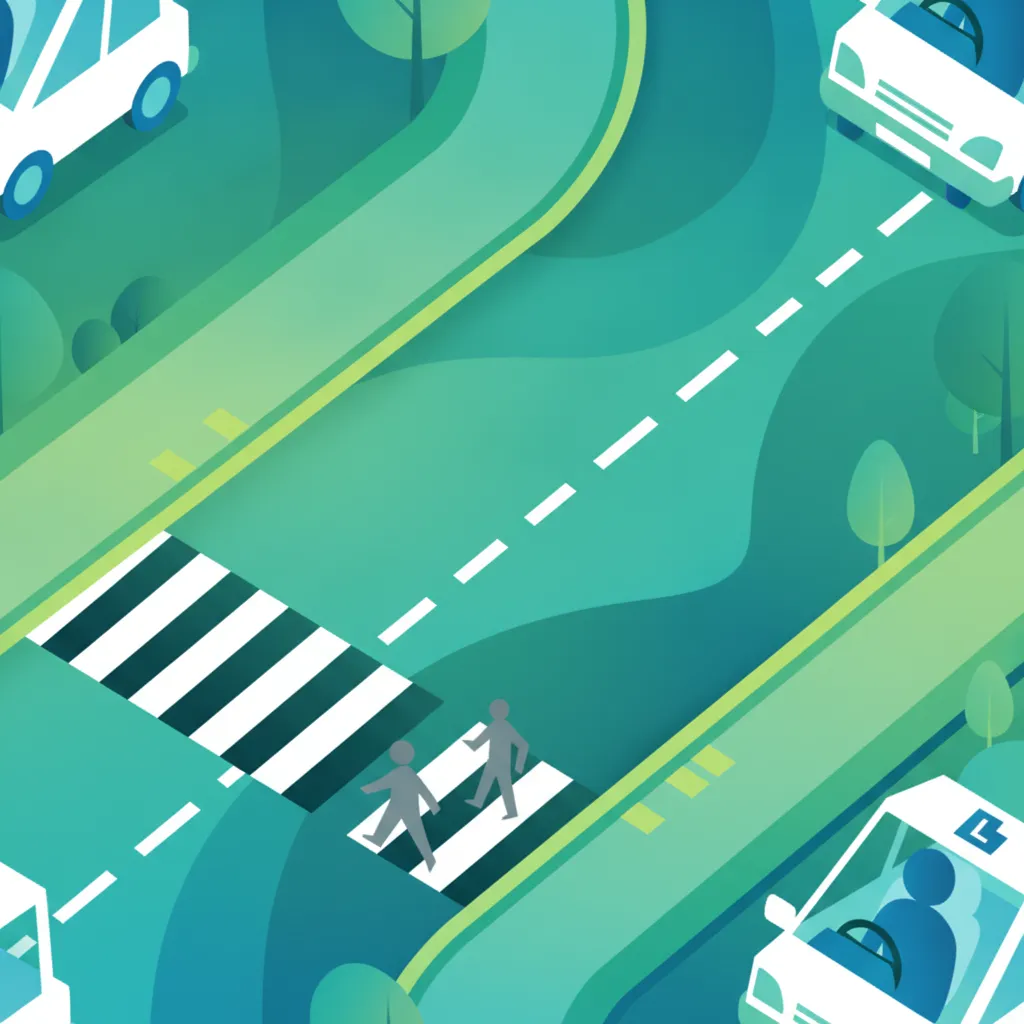
The painted lines on the road surface act as continuous instructions to help drivers steer, position, and pass safely. This lesson explains the strict legal prohibitions of crossing solid white lines compared to broken lines, which indicate it is safe to cross if clear. You will also discover the purpose of coloured reflective road studs, known as cat's eyes, which improve safety during night driving and poor visibility.
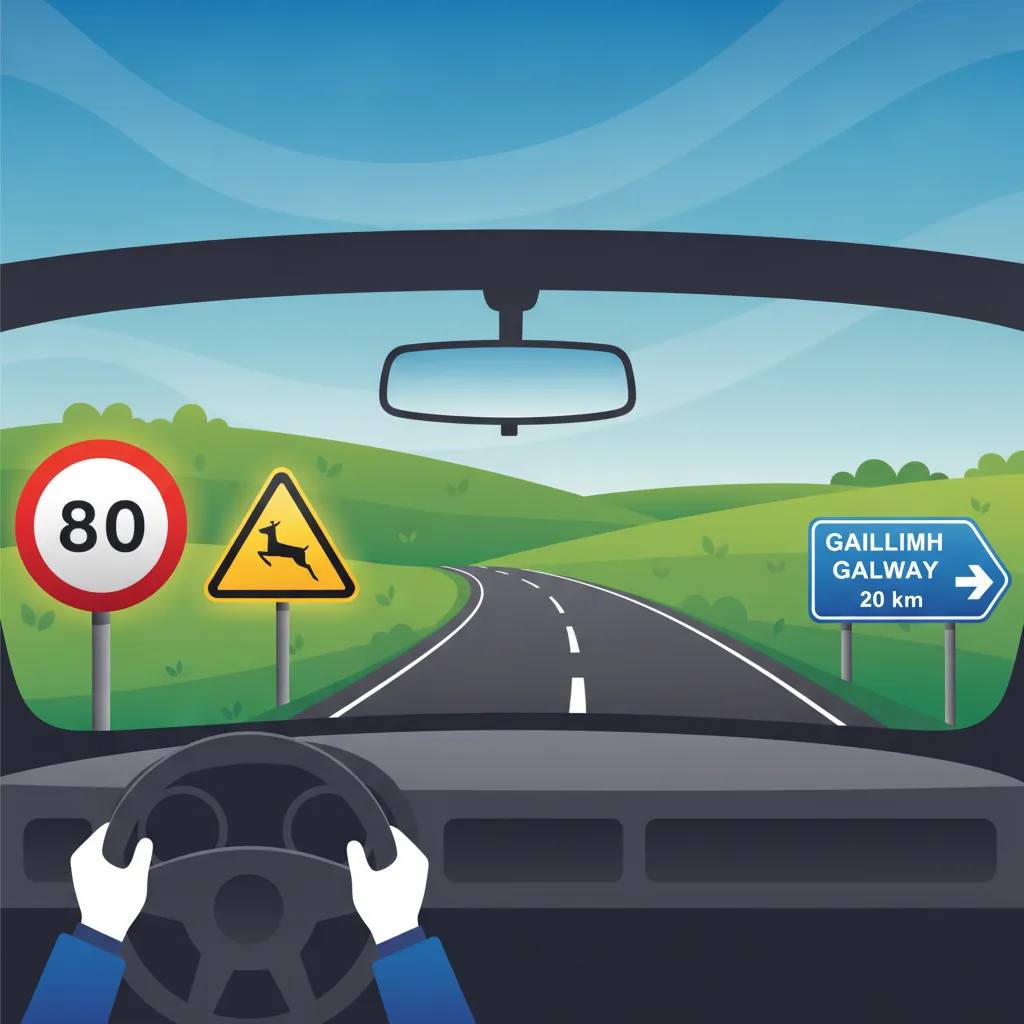
This lesson covers the primary road signs deployed across Ireland, focusing on their shapes, colors, and specific meanings. It details mandatory signs, prohibitive signs, warning alerts for upcoming hazards, and information signs useful for route planning. Category AM riders must recognize these indicators to stay compliant with local traffic laws.
This lesson explains the critical meanings of solid, broken, and continuous lines painted on Irish road surfaces. It defines the legal rules surrounding bus lanes, bicycle lanes, and yellow box junctions in urban settings. Riders will learn correct lane discipline to ensure their safety and maintain proper separation from surrounding traffic.

This lesson explains the regulatory meanings of various road markings applied to Irish asphalt, including continuous double white lines and yellow boxes. It details how these markings govern overtaking privileges, lane restrictions, and stopping zones at intersections. Riders will learn to recognize specific surface hazards like wet paint markings, which present severe traction risks for motorcycles.
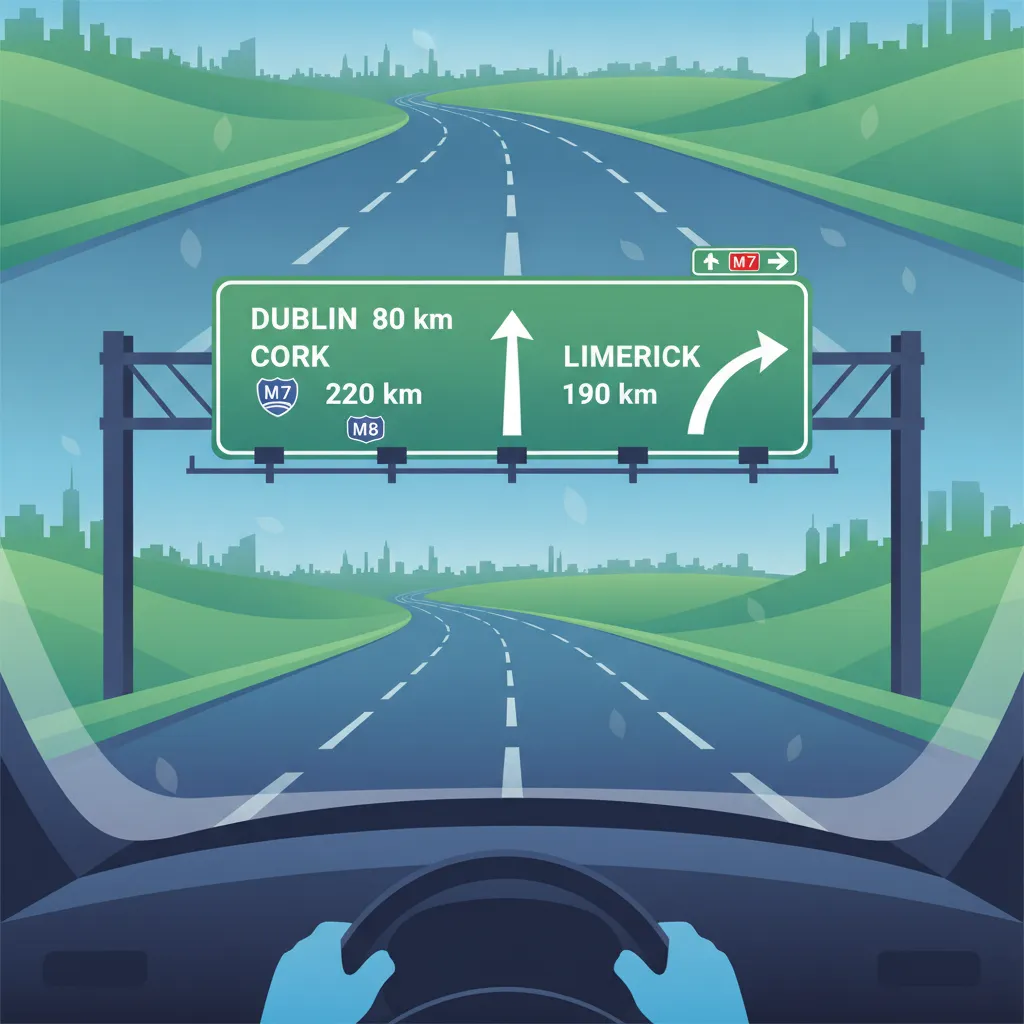
Information signs are designed to help drivers plan routes, select correct lanes, and find destinations or local amenities. This lesson explains the colour-coding system for routes in Ireland, including green for national roads, blue for motorways, and white for local roads. Developing route reading skills using directional signage reduces driver distraction, minimises sudden manoeuvres, and promotes a smoother traffic flow.
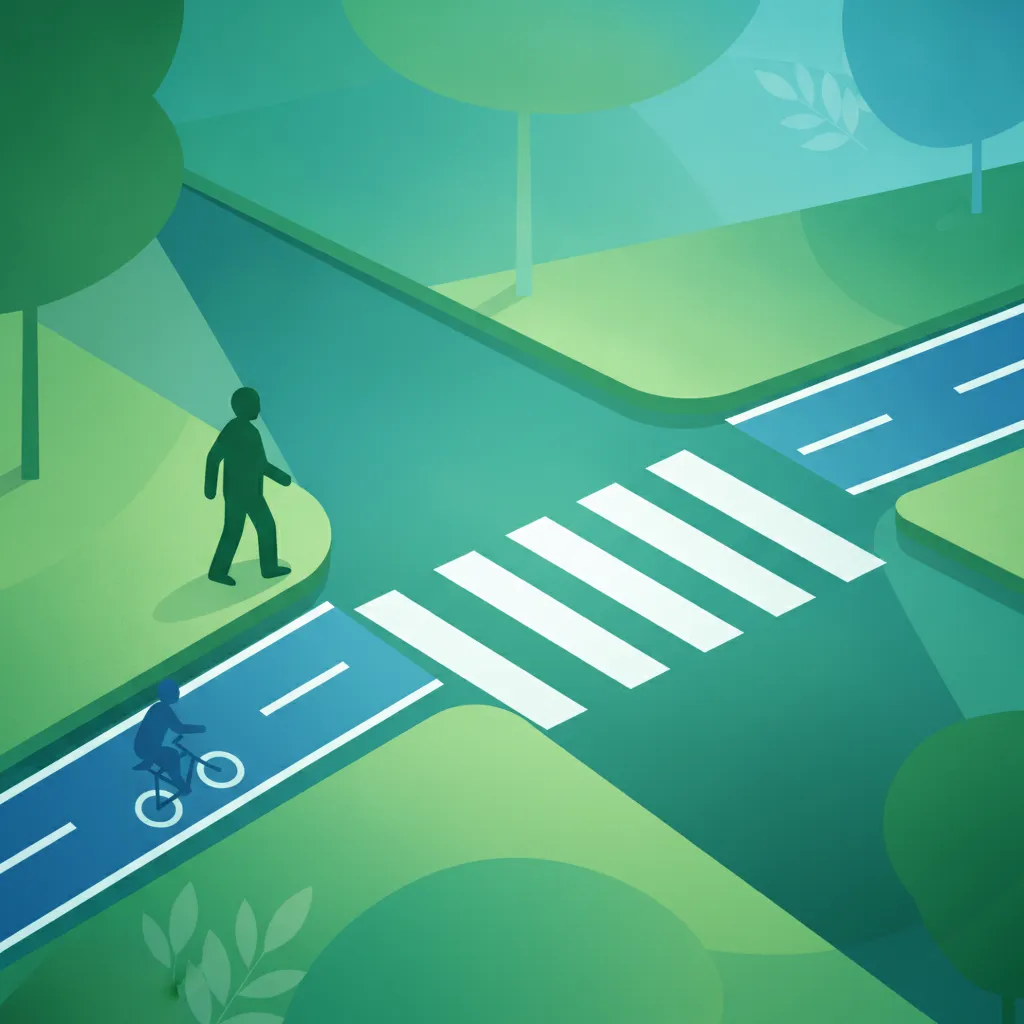
Specific road markings are used to create safety zones for pedestrians and cyclists, requiring extra care from motorists. This lesson explains the markings of zebra, pelican, and toucan crossings, with emphasis on the white zigzag lines that prohibit overtaking and parking. You will also learn about cycle lanes, mandatory versus non-mandatory cycle track markings, and the safety benefits of advanced stop lines at traffic lights.
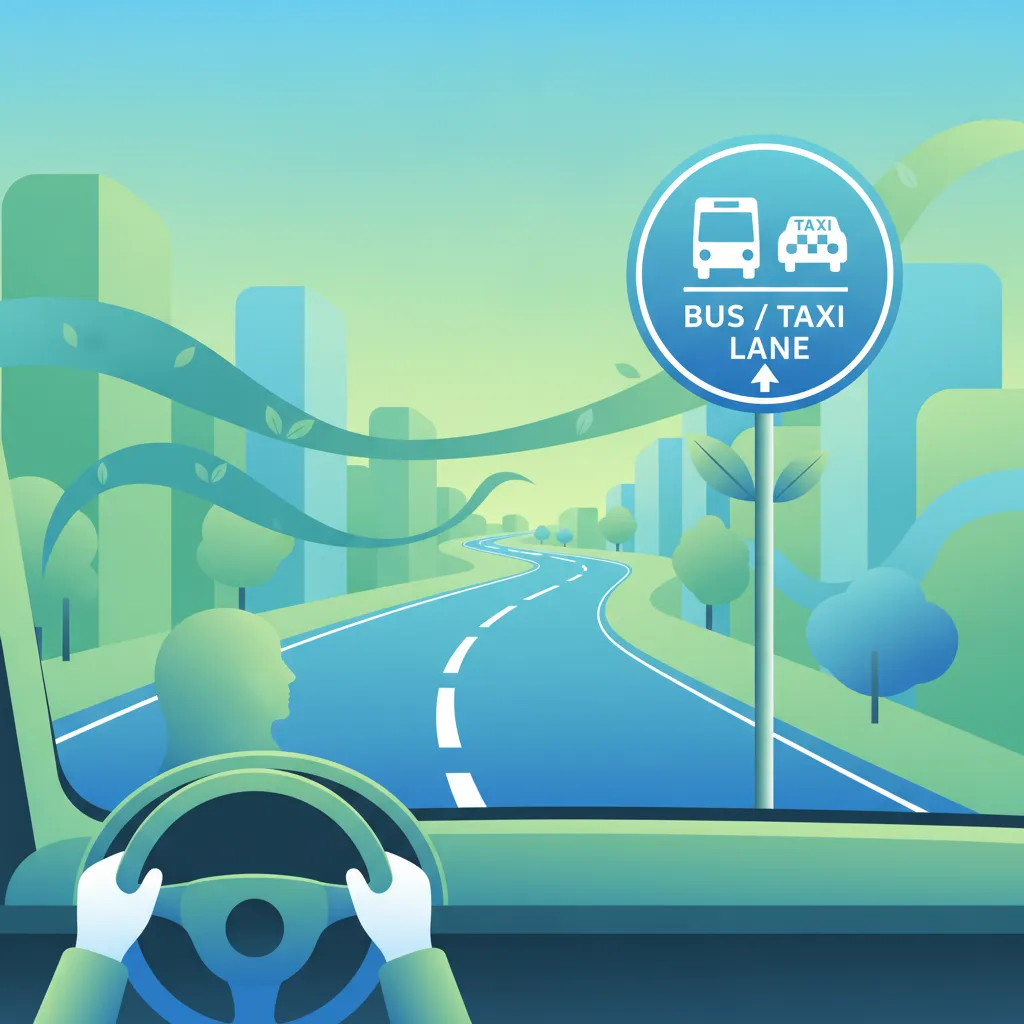
Operating large passenger vehicles requires instant, accurate interpretation of general and specialized Irish road signage to prevent regulatory violations. This lesson covers the precise meanings of clearway signs, bus corridor indicators, low bridge warnings, and weight restriction zones. Drivers will examine how school zone beacons and specific roundabout indicators apply to large vehicle dimensions.
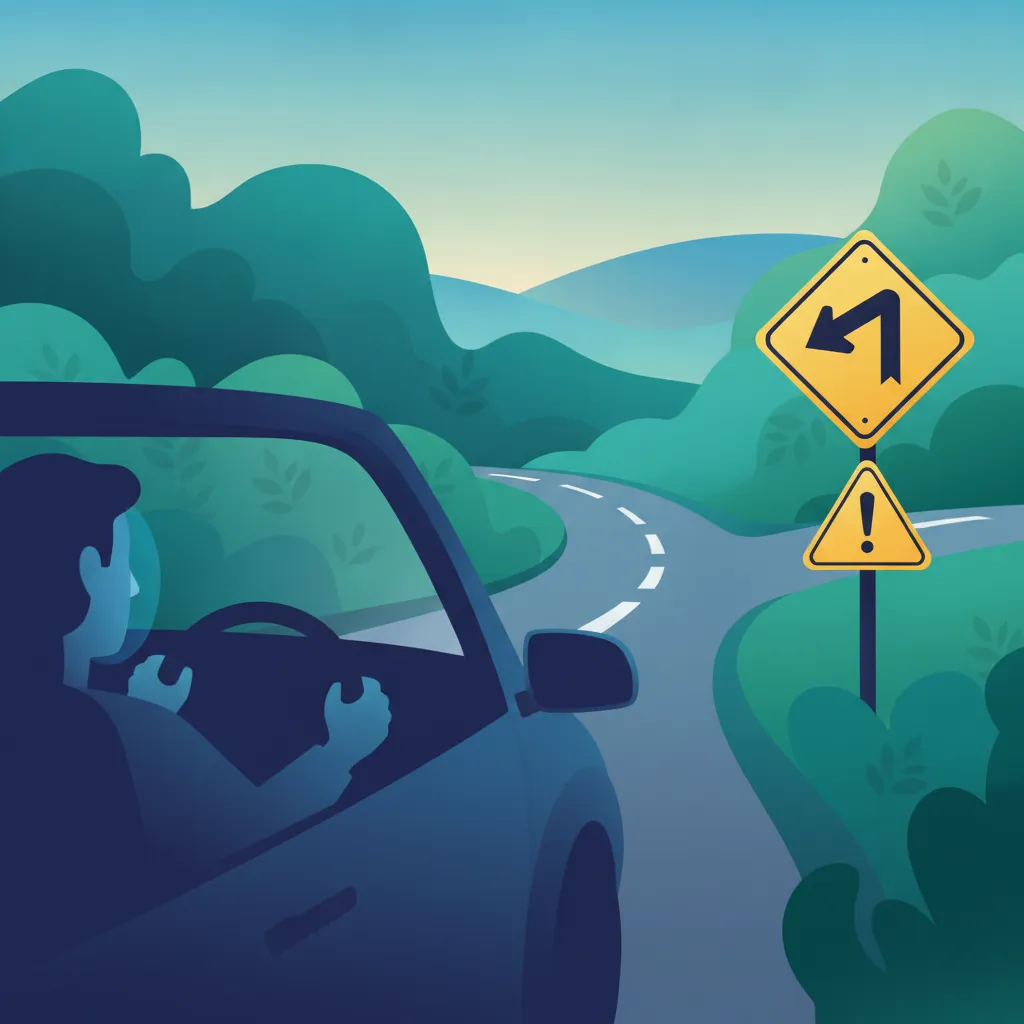
Warning signs in Ireland are typically diamond-shaped with yellow backgrounds and black symbols, indicating potential dangers on the road ahead. This lesson details signs for upcoming sharp bends, narrow roads, steep hills, pedestrian activity, and animal hazards. Learning to spot these warning indicators early allows you to reduce speed safely and adjust your vehicle positioning before encountering the hazard itself.

This lesson outlines how motorcyclists should respond when permanent road signs are dirty, damaged, or hidden by overgrown trees and hedges. It introduces the temporary signage, warning cones, and detour markers commonly deployed at active roadwork zones in Ireland. Riders will learn to read the road ahead defensively, reducing speed when visual information is incomplete or compromised.
Find clear answers to common questions learners have about Parallel Parking, Bay Parking and Parking Regulations. Learn how the lesson is structured, which driving theory objectives it supports, and how it fits into the overall learning path of units and curriculum progression in Ireland. These explanations help you understand key concepts, lesson flow, and exam focused study goals.
No, you must never park on double yellow lines at any time. They indicate a permanent prohibition of parking to ensure traffic flow and safety, and stopping there can lead to fines and penalty points.
A parking bay is designated for general vehicle storage, while a loading bay is reserved specifically for the active loading or unloading of goods. Using a loading bay for standard parking is a traffic offence.
Yes, continuous observation using all mirrors and checking blind spots is mandatory. In the theory test, you must recognize that successful manoeuvring relies on constant vigilance for other road users.
Yes, parking in a designated disabled space is strictly prohibited unless you display a valid European Parking Card for people with disabilities. Unauthorized use is a serious offence.
Use the practice question search tool to pinpoint specific topics, road signs, or rules you need to master for your official Driver Theory Test. Refine your study strategy and ensure comprehensive preparation for all aspects of the Irish driving exam. Start your focused revision now and build confidence for your learner permit test.