
The 2024 reform of the Italian Highway Code, initiated by Law 177/2024, introduces major adjustments to road safety regulations that every driver must know. This overview helps you navigate the new legal landscape, from enhanced administrative sanctions for distraction to updated requirements for micromobility vehicles. Mastering these rules is vital for accurately answering questions in your upcoming theoretical assessment.
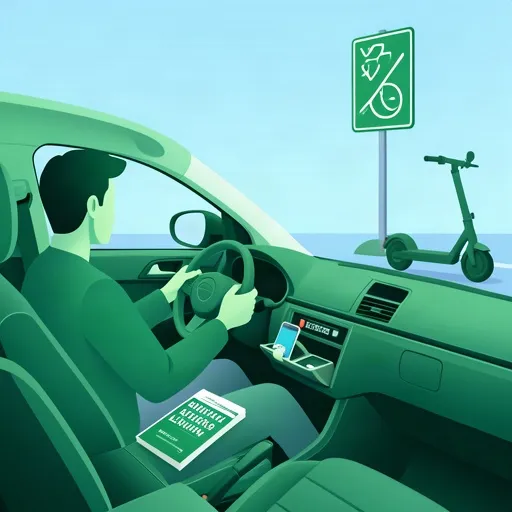
Article content overview
The landscape of Italian road safety underwent a significant transformation with the introduction of Law 177/2024, which brought substantial updates to the Codice della Strada. As of December 14, 2024, these regulations are fully in force, reshaping the legal framework for both new drivers and experienced road users. Understanding these shifts is not only a matter of legal compliance but a fundamental requirement for those preparing for the Italian driving licence theory exam, where questions regarding the updated rules are increasingly common.
The 2024 reform represents a strategic effort to curb road accidents by addressing the most prevalent causes of fatalities: distracted driving, the use of intoxicants, and the lack of accountability in urban micromobility. For the theory exam candidate, it is crucial to recognize that the Codice della Strada (Legislative Decree 285/1992) has been reinforced to prioritize road safety over convenience. Whether you are navigating historic city centers or high-speed motorways, the updated code demands a higher degree of vigilance and a stricter adherence to traffic norms.
One of the most critical aspects of the new law is the update to drug-testing protocols. Under the current regulations, testing for the presence of prohibited substances, particularly cannabis, has been simplified. A positive roadside saliva test is now sufficient to trigger immediate licence suspension, removing the previous legislative requirement to prove that the driver was in a state of manifest impairment. This shift underlines the government's "zero tolerance" stance toward substance use behind the wheel.
For repeat offenders found positive for alcohol, the reform introduces the mandatory installation of an "alcolock" device. This piece of technology prevents the vehicle's engine from starting if it detects any alcohol in the driver's breath. This is a technical development that students should note, as it reflects the integration of new safety technology into the regulatory framework.
The rapid expansion of micromobility in Italian urban environments necessitated a clear legislative response. The 2024 reform mandates that e-scooters must now be identifiable through a dedicated, non-removable adhesive label issued by the Istituto Poligrafico e Zecca dello Stato. This registration-like requirement is designed to facilitate the identification of offenders and enforce accountability for traffic violations.
The use of mobile phones while driving has been a persistent issue, leading to further legislative intervention in the 2024 code. The penalties for distraction-related violations have been increased, with provisions for mandatory licence suspension that can apply from the first instance of a serious infraction. The Codice della Strada now explicitly addresses the dangers posed by dual-ear audio devices, placing tighter restrictions on the use of headphones that isolate the driver from ambient traffic sounds, a key concept in defensive driving.
The following table summarizes the key areas where the 2024 legislative changes impact driver compliance and the theory exam curriculum.
| Violation Category | Previous Status | Current Status (Law 177/2024) |
|---|---|---|
| Mobile Phone Use | Administrative fine | Stricter fines and immediate suspension |
| Drug Driving | Impairment must be proven | Positive saliva test = automatic suspension |
| E-Scooters | No identification required | Mandatory ID label and insurance |
| Alcohol Recidivism | Standard penalties | Alcolock device requirement |
When you sit for your theory exam, expect questions that test your understanding of these specific changes. Examiners are now focusing on the intersection of technology and law—such as knowing how the alcolock operates or understanding the specific documentation required for e-scooter owners. Always remember that the Codice della Strada is dynamic; staying updated with these 2024 revisions is essential for achieving a passing score.
The 2024 reform of the Italian Codice della Strada (Law 177/2024) introduces significant enforcement upgrades while keeping core limits unchanged. The most notable shift is the simplification of drug testing—roadside saliva tests alone can trigger immediate licence suspension. E-scooter users face new mandatory requirements including official identification labels, universal helmet use, and third-party insurance. For drivers, stricter penalties for mobile phone use now allow immediate suspension, and repeat alcohol offenders must install an alcolock device. These changes directly affect theory exam content, particularly the intersection of technology and law.
A short set of high-value points that capture the most important ideas from this article.
Law 177/2024 reform took effect on December 14, 2024, updating the Codice della Strada with stricter enforcement mechanisms
Drug testing now relies on a positive saliva test alone—no need to prove manifest impairment for immediate licence suspension
E-scooters now require mandatory identification labels (targa), helmet use for all ages, and third-party insurance (RCA)
Repeat alcohol offenders must install an alcolock device that prevents engine start if alcohol is detected
Mobile phone use penalties now include immediate licence suspension from the first serious infraction
A positive roadside saliva test for cannabis triggers automatic licence suspension under the zero-tolerance approach
E-scooters are restricted to urban roads with speed limits not exceeding 50 km/h
The fundamental blood-alcohol concentration thresholds remain unchanged—only penalties have been strengthened
Dual-ear audio devices that isolate drivers from ambient traffic sounds are explicitly restricted
Alcolock (alcolock) is a technical device integrated into the vehicle that checks driver breath before allowing engine start
Confusing the removal of the impairment requirement with a lowering of drug-testing standards—the threshold is actually stricter
Believing speed limits or alcohol limits changed—only administrative and criminal consequences were enhanced
Assuming e-scooter helmet requirements vary by age—under the 2024 reform, helmet use is mandatory for all users regardless of age
Forgetting that e-scooters must now carry non-removable identification labels issued by the Istituto Poligrafico e Zecca dello Stato
Overlooking that alcolock applies specifically to repeat alcohol offenders, not first-time violators
Article content overview
A short set of high-value points that capture the most important ideas from this article.
Law 177/2024 reform took effect on December 14, 2024, updating the Codice della Strada with stricter enforcement mechanisms
Drug testing now relies on a positive saliva test alone—no need to prove manifest impairment for immediate licence suspension
E-scooters now require mandatory identification labels (targa), helmet use for all ages, and third-party insurance (RCA)
Repeat alcohol offenders must install an alcolock device that prevents engine start if alcohol is detected
Mobile phone use penalties now include immediate licence suspension from the first serious infraction
A positive roadside saliva test for cannabis triggers automatic licence suspension under the zero-tolerance approach
E-scooters are restricted to urban roads with speed limits not exceeding 50 km/h
The fundamental blood-alcohol concentration thresholds remain unchanged—only penalties have been strengthened
Dual-ear audio devices that isolate drivers from ambient traffic sounds are explicitly restricted
Alcolock (alcolock) is a technical device integrated into the vehicle that checks driver breath before allowing engine start
Confusing the removal of the impairment requirement with a lowering of drug-testing standards—the threshold is actually stricter
Believing speed limits or alcohol limits changed—only administrative and criminal consequences were enhanced
Assuming e-scooter helmet requirements vary by age—under the 2024 reform, helmet use is mandatory for all users regardless of age
Forgetting that e-scooters must now carry non-removable identification labels issued by the Istituto Poligrafico e Zecca dello Stato
Overlooking that alcolock applies specifically to repeat alcohol offenders, not first-time violators
Explore related topics, search based questions, and concepts that learners often look up when studying 2024 Italian Highway Code Changes. These themes reflect real search intent and help you understand how this topic connects to wider driving theory knowledge in Italy.
Find clear and practical answers to common questions learners often have about 2024 Italian Highway Code Changes. This section helps explain difficult points, remove confusion, and reinforce the key driving theory concepts that matter for learners in Italy.
The primary legal framework is the Law 25 November 2024, n. 177, which amends the existing Codice della Strada (Legislative Decree 285/1992).
Yes, under the 2024 reforms, e-scooters must display an official identification label and meet specific insurance and safety requirements to ensure they are easily identifiable.
The law simplifies drug-driving detection; testing positive for specific substances, including cannabis, during a roadside check now triggers immediate licence suspension without needing to demonstrate further impairment.
No, the legal blood alcohol content (BAC) limits remain the same as previously established in the Codice della Strada.
Refine your search or explore related Italian driving theory articles to build a stronger foundation for your exam. Dive deeper into specific traffic regulations, road signs, and practical driving scenarios that are essential for passing your official licence test.