
Navigating parking regulations in Italy requires a clear understanding of how main signs interact with supplementary panels. This guide breaks down the specific rules for time-based restrictions, the use of parking discs, and the legal meaning of terms such as compreso and escluso. Mastering these concepts is vital for both practical driving in Italy and achieving a passing grade on your theory test.
Article content overview
Mastering the rules of parking in Italy is one of the most challenging aspects of the Italian theory exam. The system relies on a combination of primary traffic signs and supplementary panels, which together dictate when, where, and for how long you can leave your vehicle. Understanding these signs is not only essential for avoiding hefty fines in ZTL restricted traffic zones or city centers but is also a frequent source of "trick" questions on the official test.
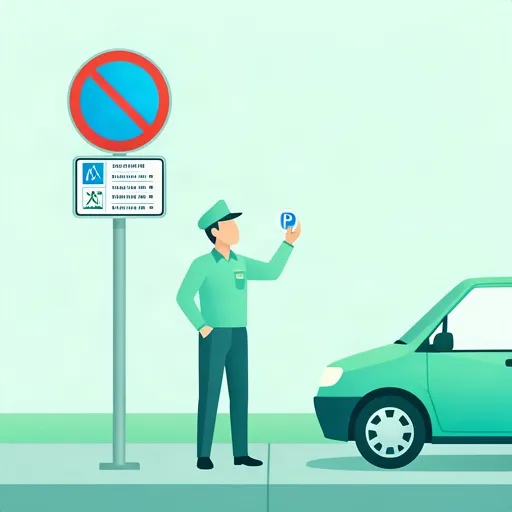
In Italian traffic law, as defined by the Codice della Strada, parking signs follow a clear visual logic. A blue sign featuring the letter "P" marks a designated parking area. Conversely, a circular sign with a blue background and a single red diagonal line indicates a "No Parking" zone (Divieto di Sosta), while a red cross on a blue background indicates a "No Stopping" zone (Divieto di Fermata).
The real complexity of Italian parking regulations lies in the supplementary panels (pannelli integrativi) positioned beneath the main sign. These plates define the scope of the restriction. For example, you will frequently encounter the terms "feriali" and "festivi." It is crucial to remember that "feriali" refers to working days (Monday through Saturday), while "festivi" includes Sundays and public holidays.
When a sign includes the term "escluso," it means the specified category or time is excluded from the restriction. For instance, a sign reading "escluso festivi" under a no-parking rule means that parking is permitted on public holidays. Conversely, "compreso" means that the indicated time or day is included in the regulation.
A 'parchimetro' (parking meter) zone requires payment for the duration of your stay. A 'disco orario' (parking disc) zone is free of charge but requires you to display a cardboard disc showing your arrival time, with a strictly limited stay duration.
A common pitfall in the Italian theory exam involves the validity of these signs. Many students forget that in urban areas, a "No Parking" sign without additional plates is legally valid from 08:00 to 20:00. Outside of these hours, the restriction does not apply unless the sign explicitly states it is a 24-hour prohibition. Always look for the presence of a "24 ore" plate or specific hourly ranges.
Never assume that a parking spot is free just because you do not see a meter. If there is no indication of a 'disco orario' but the area is clearly marked for paid parking, a 'parchimetro' is likely located nearby. Failure to pay is a common cause for vehicle removal (rimozione coatta).
| Term | Meaning in Italian Regulations |
|---|---|
| Feriali | Working days (Monday to Saturday) |
| Festivi | Public holidays and Sundays |
| Disco Orario | Parking disc mandatory to show arrival time |
| Parchimetro | Paid parking zone via meter |
| Escluso | Excluding the specified time/day/category |
| Compreso | Including the specified time/day/category |
Theoretical questions often focus on special categories, such as vehicles for people with disabilities or residents. If you see a sign with a supplementary plate indicating specific vehicle categories, these rules override the general traffic law. For example, vehicles displaying the official disabled parking badge are often exempt from time limits in "disco orario" zones, but you must still comply with the general safety rules of the road.
This guide covers the Italian system of parking signs governed by the Codice della Strada, distinguishing between primary symbols (blue P for parking, red-bordered signs for no stopping/parking) and supplementary panels that define time restrictions. Key terminology includes feriali (weekdays), festivi (Sundays and holidays), and the critical difference between escluso (excluded) and compreso (included) in modifying restrictions. The article clarifies that urban No Parking signs default to 08:00–20:00 validity unless a 24 ore plate is present, and explains the distinction between free disc-parking zones and paid meter zones. Understanding these supplementary time plates and their modifiers is essential for both passing the Italian theory exam and avoiding fines in Italian cities.
A short set of high-value points that capture the most important ideas from this article.
Blue P signs indicate permitted parking unless supplementary panels specify otherwise.
"Feriali" refers to weekdays (Monday–Saturday), while "Festivi" means Sundays and public holidays.
"Escluso" means the specified time or category is excluded from the restriction, while "Compreso" means it is included.
In urban areas, a No Parking sign without time plates is legally valid only from 08:00 to 20:00.
Parking disc (disco orario) zones are free but time-limited; parking meter (parchimetro) zones require payment throughout your stay.
Always check for supplementary panels beneath the main sign before assuming parking rules.
A "24 ore" plate overrides the default 08:00–20:00 validity of No Parking signs in urban areas.
Disabled badge holders are often exempt from time limits but must still follow general safety rules.
"Divieto di Sosta" prohibits parking; "Divieto di Fermata" prohibits any stopping, including brief stops.
When "escluso" or "compreso" appears, it modifies the rule for the specific time, day, or category listed.
Assuming a blue P sign means unlimited parking without checking for supplementary time plates.
Confusing "feriali" to include Sundays, when it only covers Monday through Saturday.
Forgetting that a No Parking sign in urban areas is not valid outside 08:00–20:00 unless otherwise stated.
Assuming no visible meter means free parking, when a parchimetro zone may have the payment device nearby.
Overlooking that special categories (disabled, residents) override general parking restrictions only when explicitly indicated on a supplementary plate.
Article content overview
A short set of high-value points that capture the most important ideas from this article.
Blue P signs indicate permitted parking unless supplementary panels specify otherwise.
"Feriali" refers to weekdays (Monday–Saturday), while "Festivi" means Sundays and public holidays.
"Escluso" means the specified time or category is excluded from the restriction, while "Compreso" means it is included.
In urban areas, a No Parking sign without time plates is legally valid only from 08:00 to 20:00.
Parking disc (disco orario) zones are free but time-limited; parking meter (parchimetro) zones require payment throughout your stay.
Always check for supplementary panels beneath the main sign before assuming parking rules.
A "24 ore" plate overrides the default 08:00–20:00 validity of No Parking signs in urban areas.
Disabled badge holders are often exempt from time limits but must still follow general safety rules.
"Divieto di Sosta" prohibits parking; "Divieto di Fermata" prohibits any stopping, including brief stops.
When "escluso" or "compreso" appears, it modifies the rule for the specific time, day, or category listed.
Assuming a blue P sign means unlimited parking without checking for supplementary time plates.
Confusing "feriali" to include Sundays, when it only covers Monday through Saturday.
Forgetting that a No Parking sign in urban areas is not valid outside 08:00–20:00 unless otherwise stated.
Assuming no visible meter means free parking, when a parchimetro zone may have the payment device nearby.
Overlooking that special categories (disabled, residents) override general parking restrictions only when explicitly indicated on a supplementary plate.
Explore related topics, search based questions, and concepts that learners often look up when studying Understanding Italian Parking Signs. These themes reflect real search intent and help you understand how this topic connects to wider driving theory knowledge in Italy.
Find clear and practical answers to common questions learners often have about Understanding Italian Parking Signs. This section helps explain difficult points, remove confusion, and reinforce the key driving theory concepts that matter for learners in Italy.
Feriali refers to working days, typically Monday through Saturday. Festivi refers to public holidays and Sundays.
A disco orario, or parking disc, is a card showing the time of arrival. You must display it clearly behind your windshield and stay only for the time limit specified on the sign.
Compreso means included, implying the restriction applies to the specified days or times. Escluso means excluded, meaning the restriction does not apply during those specific periods.
No, in Italian towns, a blue P sign without a time plate or disk indication typically signifies a paid parking zone where you must use a nearby parchimetro.
Refine your search or explore related Italian driving theory articles to build a stronger foundation for your exam. Dive deeper into specific traffic regulations, road signs, and practical driving scenarios that are essential for passing your official licence test.