
Understanding how extreme Mediterranean temperatures affect both your vehicle and the road surface is essential for passing the Italian theory exam. This guide details necessary pre-trip inspections, such as monitoring tyre pressure and engine fluids, and outlines the mandatory conduct for handling an overheating vehicle on an autostrada. You will learn to recognize road hazards like surface rutting and gain insight into proper ecoguida practices that keep you safe and compliant on Italian roads.
Article content overview
Driving in Italy during the summer months presents unique challenges that every candidate must understand to succeed in the theory exam and ensure real-world safety. From the blistering temperatures of the southern regions to the demands of mountain passes, the environment directly impacts your vehicle's mechanical health and performance. Mastering these concepts is not just about passing the test; it is about becoming a responsible driver who understands how to manage risks like tyre degradation and engine stress in extreme conditions.
Extreme Mediterranean heat significantly alters the operating conditions of your vehicle. When ambient temperatures soar, the temperature inside a stationary vehicle can reach oven-like levels within minutes. Furthermore, road surface temperatures on exposed asphalt can climb to 70–80°C in regions like Sicily, Calabria, and Puglia. This heat affects everything from fluid viscosity to tyre pressure.
A critical point for theory exam success is understanding the relationship between ambient temperature and tyre pressure. As a rule of thumb, tyre pressure increases by approximately 0.1 bar (roughly 1.5 PSI) for every 10°C rise in ambient temperature. If you set your tyre pressure based on a cool morning measurement and then embark on a long journey, the internal friction and external heat will cause the pressure to rise significantly. Operating a vehicle with tyres that are incorrectly inflated—either under-inflated, which increases friction and heat buildup, or over-inflated due to thermal expansion—dramatically increases the risk of a blowout.
Always check your tyre pressure when the tyres are cold. Adjusting pressure after a long drive on a hot Italian motorway will give you an inaccurate, artificially high reading, leading to dangerous under-inflation once the tyres cool down.
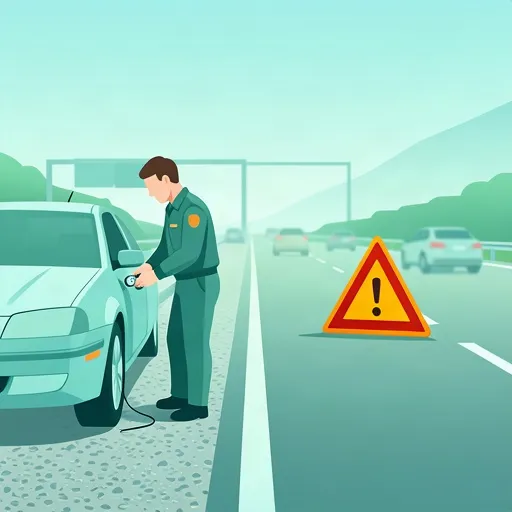
One of the most frequently misunderstood topics in the Italian theory exam is the procedure for dealing with an overheating engine while driving on an autostrada. If your temperature gauge begins to rise or you see steam from the bonnet, you must not pull over on the hard shoulder (corsia di emergenza) unless it is a genuine, unavoidable mechanical breakdown.
If the vehicle is still mobile, the mandatory and safest procedure is to continue to the next area di servizio (service station) or exit the motorway entirely. The hard shoulder is reserved for true emergencies where the vehicle can no longer move. Stopping on the shoulder exposes you and your passengers to the extreme danger of high-speed traffic, and it is a violation of traffic law if you could have reached a safer location.
Beyond vehicle maintenance, summer driving in Italy requires an awareness of road surface deformation, known as ormaiamenti or wheel rutting. On secondary provincial roads (strade provinciali), extreme heat causes the bitumen in the asphalt to soften. Over time, the repeated weight of heavy vehicles, such as trucks and buses, creates deep longitudinal ruts in the road surface.
These ruts are particularly hazardous for motorcyclists and small vehicles, as they can pull the steering or cause a loss of balance. When driving on older provincial routes in southern Italy during July and August, maintain a safe speed and remain alert for these depressions, as they can collect water during sudden summer storms, leading to an increased risk of aquaplaning.
The Italian Ministry of Transport emphasizes ecoguida (eco-driving) not only to reduce emissions but also to extend the life of your vehicle components. During summer, this involves smart use of your air conditioning system. Using the air conditioning system significantly increases fuel consumption, sometimes by as much as 25% in specific conditions.
When driving at low speeds—typically under 50 km/h—it is more efficient to open the windows to cool the cabin. However, at higher speeds, the aerodynamic drag caused by open windows increases fuel consumption more than the air conditioning system does. Therefore, use the AC at motorway speeds, but utilize the internal air recirculation mode to cool down the already-chilled air rather than constantly cooling hot air drawn from outside.
This article addresses the critical intersection of vehicle maintenance and Italian motorway regulations during extreme summer heat. It explains the physics of tyre pressure changes with temperature and the practical rule of checking tyres cold. Learners must understand the strict Italian law distinguishing a genuine breakdown from a mobile overheating vehicle, where only the latter must reach an area di servizio before stopping. The content also covers ormaiamenti road surface hazards specific to southern Italian provincial roads and practical ecoguida techniques that balance comfort with fuel efficiency across different speeds. Italian terminology such as corsia di emergenza, area di servizio, and ecoguida are essential vocabulary for the theory exam.
A short set of high-value points that capture the most important ideas from this article.
Extreme heat causes tyre pressure to increase by approximately 0.1 bar for every 10°C rise in ambient temperature, affecting safety.
The hard shoulder on an Italian autostrada is strictly for immobilized vehicles; a still-mobile overheating vehicle must reach an area di servizio.
Ormaiamenti (wheel rutting) on provincial roads softens asphalt and creates steering hazards, especially for motorcyclists.
Ecoguida practices differ by speed: open windows below 50 km/h, use air conditioning at motorway speeds.
Always check tyre pressure when tyres are cold; a reading taken after hot motorway driving will be artificially high.
Tyre pressure must be measured on cold tyres to avoid dangerous under-inflation after cooling down.
When overheating, switch off AC, turn on the heater to maximum, and reduce engine load before seeking a stop.
Stopping on the corsia di emergenza without being immobilized is a traffic law violation in Italy.
Ormaiamenti are deepest on secondary roads in southern Italy during July and August, collecting water that increases aquaplaning risk.
At high speeds, aerodynamic drag from open windows costs more fuel than the air conditioning system.
Assuming tyre pressure reading is correct after a long hot drive without accounting for thermal expansion.
Pulling onto the hard shoulder for an overheating vehicle that is still mobile instead of continuing to the next service area.
Thinking an overheating engine always requires immediate stopping rather than attempting to reach a safer location first.
Overlooking that provincial roads can develop dangerous surface deformations under summer heat that affect steering.
Using the wrong cooling strategy for the driving context, such as running AC at low speeds or opening windows on the motorway.
Article content overview
A short set of high-value points that capture the most important ideas from this article.
Extreme heat causes tyre pressure to increase by approximately 0.1 bar for every 10°C rise in ambient temperature, affecting safety.
The hard shoulder on an Italian autostrada is strictly for immobilized vehicles; a still-mobile overheating vehicle must reach an area di servizio.
Ormaiamenti (wheel rutting) on provincial roads softens asphalt and creates steering hazards, especially for motorcyclists.
Ecoguida practices differ by speed: open windows below 50 km/h, use air conditioning at motorway speeds.
Always check tyre pressure when tyres are cold; a reading taken after hot motorway driving will be artificially high.
Tyre pressure must be measured on cold tyres to avoid dangerous under-inflation after cooling down.
When overheating, switch off AC, turn on the heater to maximum, and reduce engine load before seeking a stop.
Stopping on the corsia di emergenza without being immobilized is a traffic law violation in Italy.
Ormaiamenti are deepest on secondary roads in southern Italy during July and August, collecting water that increases aquaplaning risk.
At high speeds, aerodynamic drag from open windows costs more fuel than the air conditioning system.
Assuming tyre pressure reading is correct after a long hot drive without accounting for thermal expansion.
Pulling onto the hard shoulder for an overheating vehicle that is still mobile instead of continuing to the next service area.
Thinking an overheating engine always requires immediate stopping rather than attempting to reach a safer location first.
Overlooking that provincial roads can develop dangerous surface deformations under summer heat that affect steering.
Using the wrong cooling strategy for the driving context, such as running AC at low speeds or opening windows on the motorway.
Explore related topics, search based questions, and concepts that learners often look up when studying Summer Driving and Vehicle Maintenance. These themes reflect real search intent and help you understand how this topic connects to wider driving theory knowledge in Italy.
Find clear and practical answers to common questions learners often have about Summer Driving and Vehicle Maintenance. This section helps explain difficult points, remove confusion, and reinforce the key driving theory concepts that matter for learners in Italy.
No, you cannot stop on the motorway hard shoulder for non-emergency situations such as routine engine cooling. If your vehicle is overheating, you must continue driving to the next designated service area (area di servizio) or emergency bay, provided it is safe to do so.
High ambient temperatures cause the air inside tyres to expand, increasing internal pressure. It is important to check your tyre pressure when the tyres are cold to ensure they remain within the manufacturer's recommended range, preventing blowouts during long motorway journeys.
Ormaiamenti refers to the rutting or deformation of the road surface caused by heavy traffic and high temperatures, which soften the bitumen. These ruts can affect steering control and vehicle stability, so drivers should remain vigilant on provincial roads in southern Italy during summer months.
Refine your search or explore related Italian driving theory articles to build a stronger foundation for your exam. Dive deeper into specific traffic regulations, road signs, and practical driving scenarios that are essential for passing your official licence test.