
Understanding the distinct roles of Italian police forces is vital for every driver. This guide details the authority of the Polizia Stradale on motorways and how their interaction with motorists differs from other law enforcement branches, ensuring you are prepared for compliance during routine checks and emergency situations.
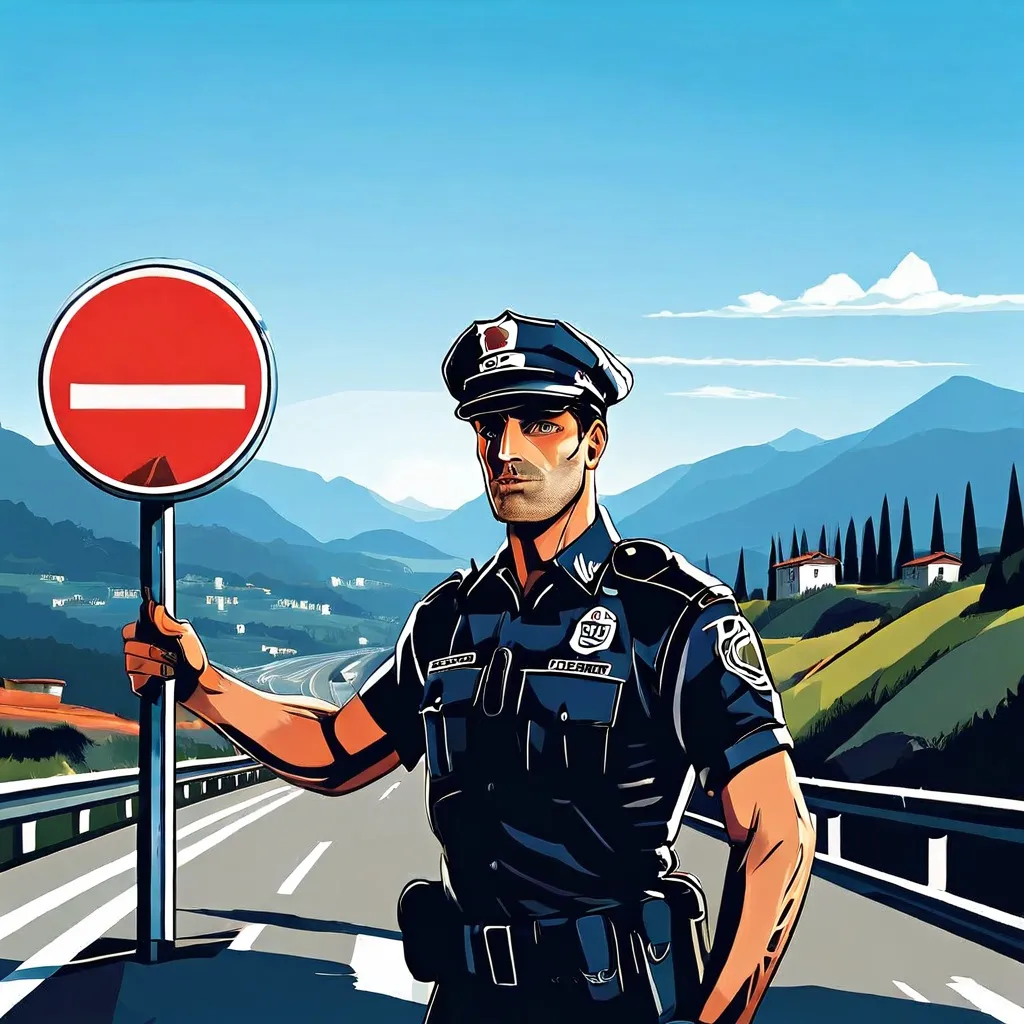
Article content overview
The Polizia Stradale serves as Italy's dedicated highway police force, operating under the Polizia di Stato with primary jurisdiction over the national motorway network and state roads. Understanding the jurisdictional differences between this force, the military Carabinieri, and local Polizia Locale is essential for knowing which authority to expect in different driving contexts. During a roadside stop, drivers must safely pull over, keep hands visible, and present their mandatory documents including the patente di guida and carta di circolazione. Insurance verification is now primarily electronic via the SIC database, but commercial vehicle operators must also provide tachograph records and cargo documentation.
A short set of high-value points that capture the most important ideas from this article.
Polizia Stradale is a specialized branch of the Polizia di Stato dedicated to highway and major state road enforcement
These officers are identifiable by their distinctive dark blue and silver patrol vehicles with a prominent horizontal silver stripe
Three distinct law enforcement bodies operate on Italian roads: Polizia Stradale (highways), Carabinieri (all road types), and Polizia Locale (municipal boundaries only)
During a roadside stop, you must present your patente di guida and carta di circolazione upon request
Refusing to stop when signaled by an officer using the paletta carries severe administrative and legal penalties under the Codice della Strada
Polizia Stradale jurisdiction is limited to autostrade and strade statali (state roads)
Polizia Locale cannot operate on motorways or outside their assigned municipal territory
Carabinieri have full authority to conduct traffic enforcement on any road type, including rural and provincial roads
Vehicle insurance is now verified electronically via the national SIC database, though carrying documentation is still recommended
Commercial vehicle operators face additional inspections including tachograph records and cargo documentation such as CMR notes
Assuming all Italian police forces share the same traffic jurisdiction
Attempting to contact Polizia Locale for incidents occurring on autostrade
Believing insurance documents are unnecessary since verification is electronic
Failing to keep hands visible on the steering wheel when initially stopped
Not understanding that commercial drivers have separate documentation requirements during roadside checks
Article content overview
A short set of high-value points that capture the most important ideas from this article.
Polizia Stradale is a specialized branch of the Polizia di Stato dedicated to highway and major state road enforcement
These officers are identifiable by their distinctive dark blue and silver patrol vehicles with a prominent horizontal silver stripe
Three distinct law enforcement bodies operate on Italian roads: Polizia Stradale (highways), Carabinieri (all road types), and Polizia Locale (municipal boundaries only)
During a roadside stop, you must present your patente di guida and carta di circolazione upon request
Refusing to stop when signaled by an officer using the paletta carries severe administrative and legal penalties under the Codice della Strada
Polizia Stradale jurisdiction is limited to autostrade and strade statali (state roads)
Polizia Locale cannot operate on motorways or outside their assigned municipal territory
Carabinieri have full authority to conduct traffic enforcement on any road type, including rural and provincial roads
Vehicle insurance is now verified electronically via the national SIC database, though carrying documentation is still recommended
Commercial vehicle operators face additional inspections including tachograph records and cargo documentation such as CMR notes
Assuming all Italian police forces share the same traffic jurisdiction
Attempting to contact Polizia Locale for incidents occurring on autostrade
Believing insurance documents are unnecessary since verification is electronic
Failing to keep hands visible on the steering wheel when initially stopped
Not understanding that commercial drivers have separate documentation requirements during roadside checks
Explore related topics, search based questions, and concepts that learners often look up when studying Polizia Stradale Roles and Roadside Stops. These themes reflect real search intent and help you understand how this topic connects to wider driving theory knowledge in Italy.
Find clear and practical answers to common questions learners often have about Polizia Stradale Roles and Roadside Stops. This section helps explain difficult points, remove confusion, and reinforce the key driving theory concepts that matter for learners in Italy.
The Polizia Stradale primarily operates on Italian motorways (autostrade) and state roads (strade statali), focusing on road safety, incident reporting, and traffic law enforcement.
They are a branch of the Polizia di Stato and use distinctive vehicles with a dark blue (blu notte) and silver (argento) livery, featuring a horizontal silver stripe on the side.
You should be ready to present your valid driver's license (patente di guida) and vehicle registration (carta di circolazione). Insurance is now verified electronically via the national SIC database.
The Polizia Stradale has national authority on highways and state roads, whereas the Polizia Locale is restricted to the municipal boundaries of the city or town that employs them.
Refine your search or explore related Italian driving theory articles to build a stronger foundation for your exam. Dive deeper into specific traffic regulations, road signs, and practical driving scenarios that are essential for passing your official licence test.