
Transporting animals safely is a critical aspect of vehicle operation and road safety in Italy, strictly regulated by Article 169 of the Codice della Strada. This guide details the mandatory containment methods, such as approved crates and barriers, and explains why an unrestrained pet is considered a major distraction and safety hazard. You will learn the legal consequences of improper transport and the criteria required to ensure you remain fully compliant with Italian driving theory standards.
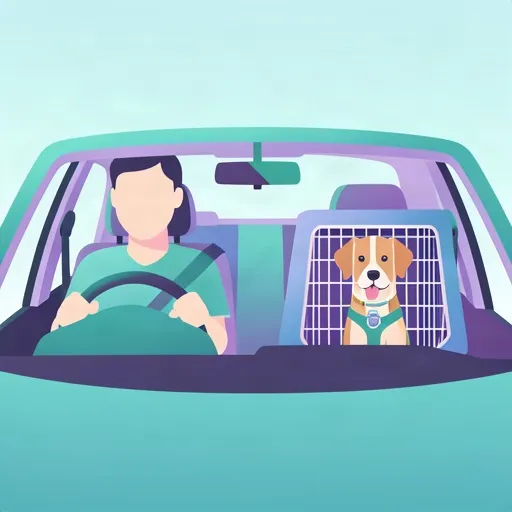
Article content overview
Transporting domestic animals in vehicles is a common necessity for many drivers, yet it is a subject strictly regulated by Italian traffic law. Ensuring you follow the correct procedures is not just a matter of animal welfare; it is a fundamental requirement for road safety and a recurring topic in the Italian driving theory exam. Failure to comply with these regulations can result in significant administrative fines and the deduction of points from your driving licence.
Under Article 169 of the Codice della Strada, the primary concern for the legislator is the safety of the driver and the maintenance of their full freedom of movement. The law stipulates that a driver must always have a clear view and the necessary physical ability to operate the vehicle's controls without obstruction. When an animal is present inside the cabin, it must be contained or secured in a way that prevents it from causing a distraction or interfering with the driver's maneuvers.
The law requires that all animals transported in a motor vehicle must be kept in a condition that avoids any distraction to the driver or any potential obstruction of the vehicle's controls. This mandate applies to the transport of pets of any size.
An unrestrained animal, particularly a dog, roaming freely in the passenger area is legally considered a hazard. If a pet is found in the front passenger seat or on the driver's lap, you are in direct violation of the code, regardless of the animal's size or temperament.
To remain compliant with Italian law, you must use designated equipment to secure your pet. Simply allowing a pet to sit on a seat or in the footwell is insufficient and risky. The following methods are the standard, accepted ways to transport domestic animals in a private vehicle:
If you choose to use a containment system like a crate, ensure it is installed according to the manufacturer’s instructions. If you install a permanent barrier, it may require approval from the local Department for Transport (Dipartimento per i Trasporti Terrestri).
In the context of the Italian driving theory exam, you should understand the physical dangers associated with improper transport. An unrestrained animal can act as a dangerous projectile during an emergency stop or a collision. For example, a medium-sized dog weighing 25 kilograms can exert a force equivalent to hundreds of kilograms during an impact at standard urban speeds, posing a lethal threat to both the animal and the human occupants.
Be aware that allowing your pet to stick its head out of an open car window is strictly prohibited. This behavior not only puts the animal at risk of injury from passing objects or debris but also serves as a distraction to other drivers on the road.
Common exam traps often involve scenarios where the candidate must decide if a specific animal-transport setup is legal. Always look for keywords indicating that the animal is "secured," "in an appropriate cage," or "divided by a barrier." If an option describes an animal as "sitting in the passenger seat" or "held by a passenger," it is almost certainly a violation of the Codice della Strada.
When preparing for your theory exam, keep in mind that the law is designed to ensure the driver remains focused. Whether you are driving in an urban center, on a rural road, or on the autostrada, the rules remain the same. Always prioritize using appropriate restraint systems to keep your pet, your passengers, and yourself safe.
Article 169 of the Codice della Strada mandates that all domestic animals transported in motor vehicles must be properly secured to prevent driver distraction and maintain the driver's freedom of movement. Only three approved methods exist: crash-tested carriers, cargo barriers (divisorio), or seatbelt-attached safety harnesses. Pets are strictly prohibited from the front seat, driver's lap, or having any part of their body outside the vehicle. The regulation exists because unrestrained animals become lethal projectiles during sudden stops or collisions, with even medium-sized dogs capable of generating hundreds of kilograms of force upon impact. Exam questions often test whether you can identify compliant setups versus common violations like pets in the passenger seat or held by a passenger.
A short set of high-value points that capture the most important ideas from this article.
Article 169 of the Codice della Strada requires all animals in vehicles to be contained in a way that prevents driver distraction and maintains the driver's full freedom of movement
Only three methods meet legal requirements: crash-tested crates, cargo barriers (divisorio), or seatbelt-attached safety harnesses
An unrestrained pet in the cabin is a direct code violation regardless of the animal's size or temperament
Pets are absolutely prohibited from the front passenger seat, driver's lap, or having their head out of an open window
In a collision, an unrestrained medium dog can exert impact forces equivalent to hundreds of kilograms, becoming a lethal projectile
The driver's freedom of movement and clear view are the primary legal concerns under Article 169 CdS
Legal transport methods must physically separate the pet from the driver and secure it against movement during travel
Even small pets must be restrained—size does not exempt compliance with Article 169
Permanent cargo barriers may require approval from the Dipartimento per i Trasporti Terrestri
The word 'divisorio' refers to the cargo barrier that separates the boot from the passenger compartment
Assuming small pets or calm animals are exempt from restraint requirements—they are not
Believing that a pet sitting on a seat or in the footwell is adequately secured—it is not
Thinking a pet held by a passenger is compliant—it is still a violation of the code
Allowing a pet's head out of an open window, which is explicitly prohibited and distracts other drivers
Using an unapproved or unsecured carrier instead of a crash-tested one properly mounted
Article content overview
A short set of high-value points that capture the most important ideas from this article.
Article 169 of the Codice della Strada requires all animals in vehicles to be contained in a way that prevents driver distraction and maintains the driver's full freedom of movement
Only three methods meet legal requirements: crash-tested crates, cargo barriers (divisorio), or seatbelt-attached safety harnesses
An unrestrained pet in the cabin is a direct code violation regardless of the animal's size or temperament
Pets are absolutely prohibited from the front passenger seat, driver's lap, or having their head out of an open window
In a collision, an unrestrained medium dog can exert impact forces equivalent to hundreds of kilograms, becoming a lethal projectile
The driver's freedom of movement and clear view are the primary legal concerns under Article 169 CdS
Legal transport methods must physically separate the pet from the driver and secure it against movement during travel
Even small pets must be restrained—size does not exempt compliance with Article 169
Permanent cargo barriers may require approval from the Dipartimento per i Trasporti Terrestri
The word 'divisorio' refers to the cargo barrier that separates the boot from the passenger compartment
Assuming small pets or calm animals are exempt from restraint requirements—they are not
Believing that a pet sitting on a seat or in the footwell is adequately secured—it is not
Thinking a pet held by a passenger is compliant—it is still a violation of the code
Allowing a pet's head out of an open window, which is explicitly prohibited and distracts other drivers
Using an unapproved or unsecured carrier instead of a crash-tested one properly mounted
Explore related topics, search based questions, and concepts that learners often look up when studying Transporting Pets in Italy. These themes reflect real search intent and help you understand how this topic connects to wider driving theory knowledge in Italy.
Find clear and practical answers to common questions learners often have about Transporting Pets in Italy. This section helps explain difficult points, remove confusion, and reinforce the key driving theory concepts that matter for learners in Italy.
No, an unrestrained pet in the front seat is a violation of the Codice della Strada as it creates a significant risk of distraction and obstruction to the driver's movements.
Pets must be transported in an approved cage, a dedicated pet carrier, or in the rear section of the vehicle, provided it is properly separated by a partition net or a solid cargo barrier.
You are subject to an administrative fine and a deduction of penalty points from your driving licence, as the situation is legally classified as an impediment to safe driving.
Yes, provided they are safely contained within a cage, carrier, or partitioned rear compartment in a way that does not interfere with the driver's ability to operate the vehicle.
Refine your search or explore related Italian driving theory articles to build a stronger foundation for your exam. Dive deeper into specific traffic regulations, road signs, and practical driving scenarios that are essential for passing your official licence test.