
Driving in Italy during peak summer months requires specific preparation to comply with the Codice della Strada and ensure passenger safety. This article provides essential knowledge on maintaining vehicle efficiency, interpreting traffic intensity forecasts, and mitigating risks such as heat-induced tyre failure and visibility challenges. Mastering these concepts is vital for both practical road safety and successfully answering hazard-perception questions on your category B theory exam.
Article content overview
Driving in Italy during the summer months is a distinct experience that requires more than just standard navigational skills. Whether you are navigating the dense urban traffic of major cities or embarking on a long-distance journey across the Autostrade, the combination of extreme temperatures and high traffic volumes creates specific safety challenges. Under the Codice della Strada, every driver is responsible for the state of their vehicle and their own psychophysical fitness. Neglecting these aspects during the heat of July and August can lead to mechanical failure, reduced concentration, and increased incident risk.
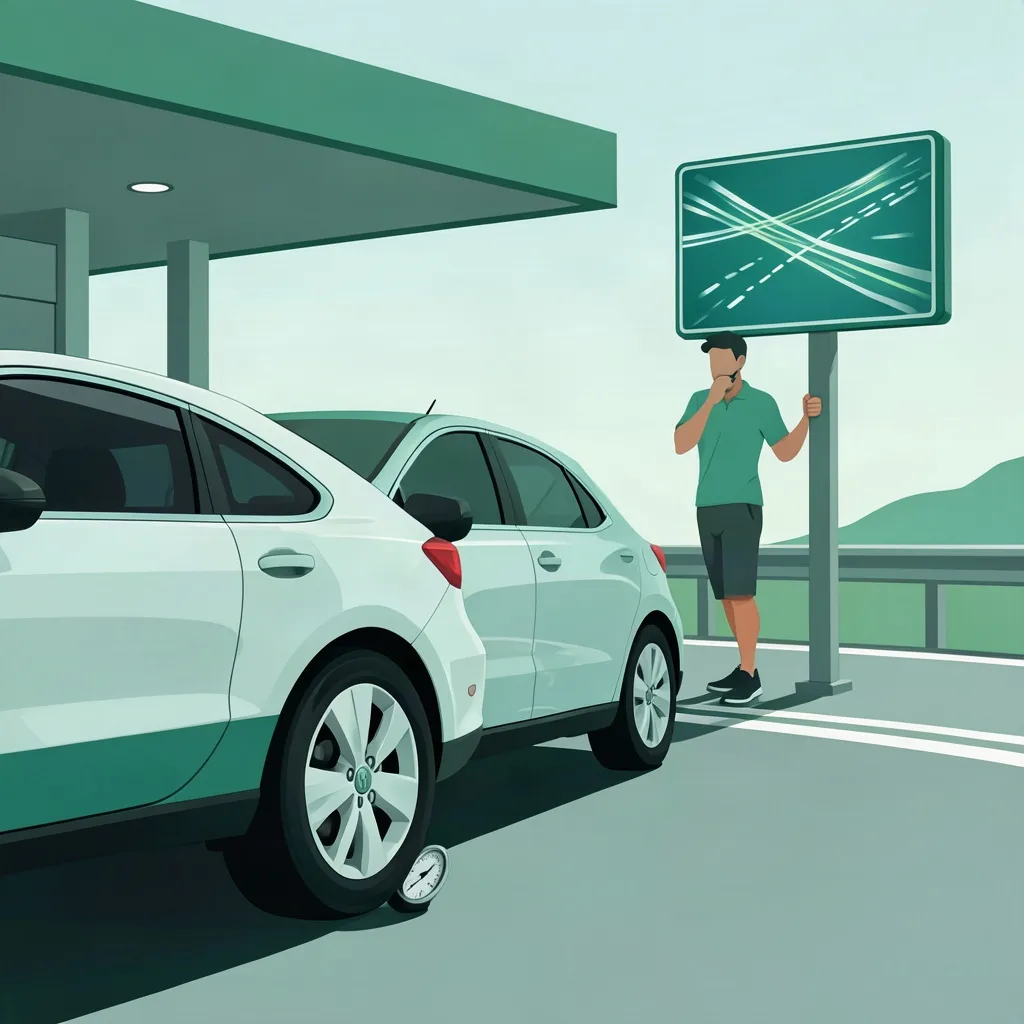
The physical impact of high temperatures on a vehicle is often underestimated by novice drivers. When asphalt temperatures in regions like the Po Valley or Central Italy reach upwards of 70°C, the air inside your tyres expands, significantly increasing internal pressure. If your tyres were already at their maximum recommended limit, this added pressure can lead to structural failure or blowouts.
Always check your tyre pressure early in the morning when the rubber is cold. Relying on readings taken after a few hours of driving will give you false data because the heat generated by friction and the ambient road temperature will mask the true pressure level. Furthermore, ensure that all fluid levels—including coolant and engine oil—are within the manufacturer’s specifications. An overheating engine is a leading cause of vehicle breakdown on Italian motorways, which creates dangerous bottlenecks for other road users.
To manage the massive influx of holiday traffic, Autostrade per l'Italia provides a traffic forecast system commonly known as the "bollino" system. This colour-coded calendar is a vital tool for planning your journey to avoid the most severe congestion. During critical periods, such as the weeks surrounding 1st August and the Ferragosto holiday on 15th August, you will likely encounter "red" or "black" days.
| Forecast Level | Meaning | Advice for Drivers |
|---|---|---|
| Green | Normal traffic flow | Standard journey planning. |
| Yellow | Increased traffic | Anticipate minor delays; check for potential diversions. |
| Red | Heavy congestion expected | High probability of delays; prepare for stop-and-go traffic. |
| Black | Extremely severe traffic | Avoid travel if possible; expect significant, long-lasting queues. |
Sun glare is a notorious hazard for drivers in Italy, particularly when travelling along east-west routes like the A13 or A14. During dawn and dusk, the low angle of the sun can create blinding conditions that render traffic lights and signage difficult to read. Investing in high-quality, polarised sunglasses is not just a comfort measure; it is a critical safety tool that allows you to maintain focus on road markings and the movements of other vehicles.
Fatigue is another silent threat during long summer drives. The Codice della Strada and general safety guidelines strongly advise taking a break at least every two hours. A rest stop is the ideal time to rehydrate, stretch your legs, and allow your cognitive focus to reset. Remember that if you are driving with children or elderly passengers, they may require more frequent stops to handle the heat.
As a student preparing for your Category B licence, you must recognise that safety is a legal obligation. This includes ensuring your vehicle is equipped with a functional emergency kit and that every passenger is wearing a seatbelt. If you feel tired or notice that your concentration is slipping, do not push through the discomfort. Pulling over at the next Area di Servizio is the mark of a responsible, professional driver.
Summer driving in Italy presents unique hazards that go beyond standard driving knowledge, including extreme asphalt temperatures that affect tyre pressure and colour-coded traffic forecasts specific to Italian motorways. Learners must understand how to interpret the bollino system to plan journeys around the heaviest congestion periods, particularly around Ferragosto. Safe summer driving requires checking tyre pressure when cold, maintaining all vehicle fluid levels, wearing polarised sunglasses against sun glare on east-west routes, and stopping at least every two hours to combat fatigue. These practices are not merely recommendations but reflect legal duties under the Codice della Strada regarding vehicle condition and driver psychophysical fitness.
A short set of high-value points that capture the most important ideas from this article.
Tyre pressure must be checked early in the morning when tyres are cold, not after driving, as heat falsifies readings.
The bollino system uses four colour levels (green, yellow, red, black) to warn drivers about expected traffic congestion on Italian motorways.
Drivers must take a rest break at least every two hours during long journeys to prevent fatigue-related errors.
Sun glare on east-west routes like the A13 and A14 is most dangerous at dawn and dusk when it can obscure traffic lights and signage.
Under the Codice della Strada, drivers are legally responsible for their vehicle's condition and their own psychophysical fitness.
Check tyre pressure in the morning before driving; hot asphalt and friction artificially inflate readings.
Black bollino days (extremely severe traffic) should be avoided unless absolutely necessary.
High-quality polarised sunglasses are a safety tool for sun glare, not just a comfort accessory.
Children and elderly passengers require more frequent stops than the standard two-hour interval.
Ferragosto (15th August) is a peak traffic period likely to trigger red or black bollino forecasts.
Checking tyre pressure after driving several hours, which gives falsely low pressure readings due to heat.
Assuming green or yellow bollino days guarantee smooth driving without checking the specific route forecast.
Pushing through fatigue instead of stopping at the next Area di Servizio when concentration slips.
Storing sunglasses in the boot rather than keeping them readily accessible for sudden glare conditions.
Neglecting fluid levels (coolant, engine oil, brake fluid) which are critical for preventing engine overheating in summer.
Article content overview
A short set of high-value points that capture the most important ideas from this article.
Tyre pressure must be checked early in the morning when tyres are cold, not after driving, as heat falsifies readings.
The bollino system uses four colour levels (green, yellow, red, black) to warn drivers about expected traffic congestion on Italian motorways.
Drivers must take a rest break at least every two hours during long journeys to prevent fatigue-related errors.
Sun glare on east-west routes like the A13 and A14 is most dangerous at dawn and dusk when it can obscure traffic lights and signage.
Under the Codice della Strada, drivers are legally responsible for their vehicle's condition and their own psychophysical fitness.
Check tyre pressure in the morning before driving; hot asphalt and friction artificially inflate readings.
Black bollino days (extremely severe traffic) should be avoided unless absolutely necessary.
High-quality polarised sunglasses are a safety tool for sun glare, not just a comfort accessory.
Children and elderly passengers require more frequent stops than the standard two-hour interval.
Ferragosto (15th August) is a peak traffic period likely to trigger red or black bollino forecasts.
Checking tyre pressure after driving several hours, which gives falsely low pressure readings due to heat.
Assuming green or yellow bollino days guarantee smooth driving without checking the specific route forecast.
Pushing through fatigue instead of stopping at the next Area di Servizio when concentration slips.
Storing sunglasses in the boot rather than keeping them readily accessible for sudden glare conditions.
Neglecting fluid levels (coolant, engine oil, brake fluid) which are critical for preventing engine overheating in summer.
Explore related topics, search based questions, and concepts that learners often look up when studying Summer Driving Safety in Italy. These themes reflect real search intent and help you understand how this topic connects to wider driving theory knowledge in Italy.
Find clear and practical answers to common questions learners often have about Summer Driving Safety in Italy. This section helps explain difficult points, remove confusion, and reinforce the key driving theory concepts that matter for learners in Italy.
The 'bollino' is a traffic forecast system using colors to predict traffic intensity. Green represents normal traffic, yellow denotes attention, red indicates heavy congestion, and black signifies extremely severe traffic, often during peak August travel periods.
High asphalt temperatures, which can exceed 70°C, cause air inside tyres to expand. Checking pressure when tyres are cool is vital to prevent over-pressurization and reduce the risk of blowouts during long motorway journeys.
To maintain safety and alertness, it is standard safety practice and strongly advised under the Codice della Strada to take a rest break at least every two hours of driving.
Sun glare is a significant hazard on east-west routes like the A13 and A14 at dawn and dusk. Drivers are advised to use polarized sunglasses and keep the windscreen clean to maintain clear visibility.
Refine your search or explore related Italian driving theory articles to build a stronger foundation for your exam. Dive deeper into specific traffic regulations, road signs, and practical driving scenarios that are essential for passing your official licence test.