
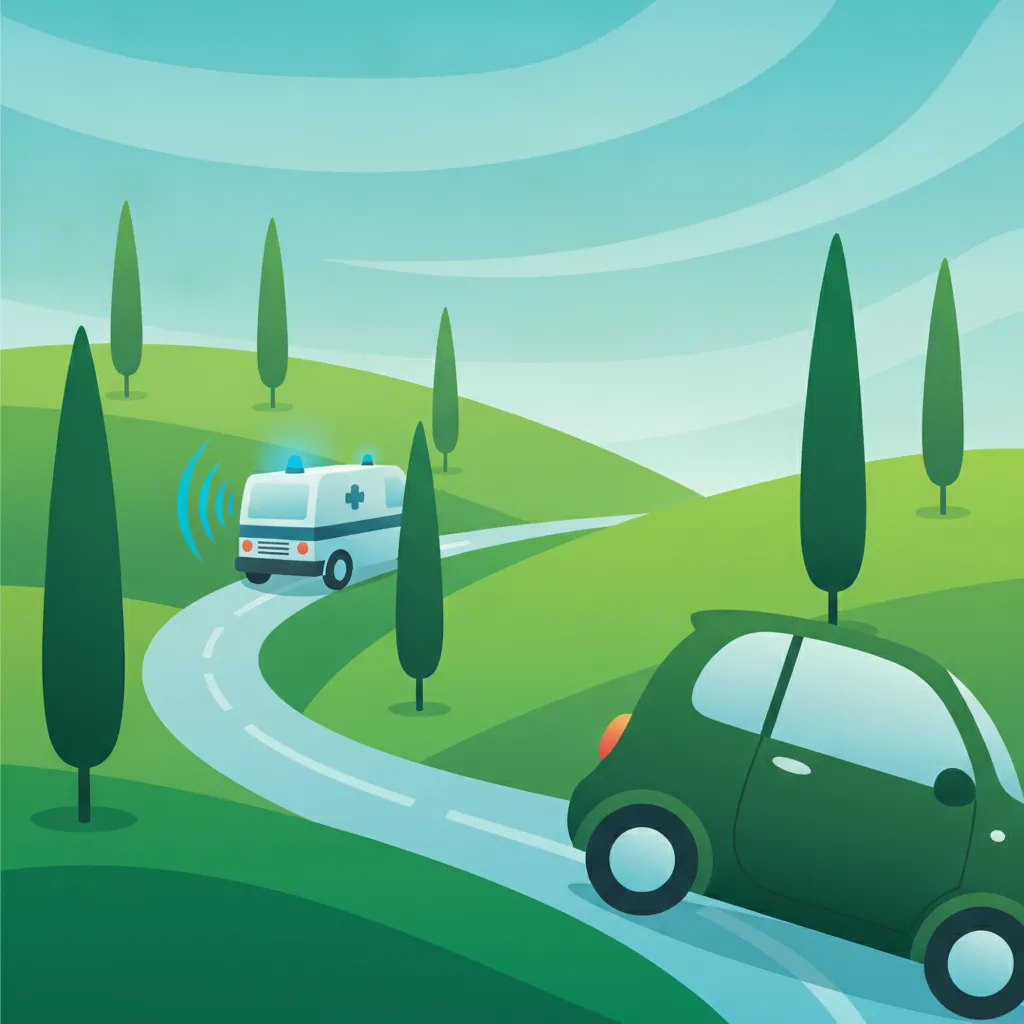
In Italy, certain vehicles are designated as emergency vehicles, including those of the police (Polizia), fire brigade (Vigili del Fuoco), and ambulances (Autoambulanze). When these vehicles are on urgent service and use their distinctive blue flashing lights and/or sirens, all other drivers have a legal duty to grant them immediate right of way. This rule is crucial for public safety and is clearly defined by the Italian Codice della Strada (Highway Code).
Theory topic content overview
Read the full theory topic guide for Emergency Vehicle Priority with structured, easy-to-scan content built for learners in Italy. This detailed section explains the exact rule, meaning, traffic context, comparison points, and exam logic behind this Italian driving theory topic so you can study faster, understand the concept more clearly, and avoid common interpretation mistakes on the theory test.
In Italy, precedenza veicoli di emergenza (emergency vehicle priority) refers to the legal obligation of all other road users to provide immediate, unobstructed passage to designated emergency vehicles when they are on urgent service and using their distinctive signals. This principle is fundamental to road safety and is clearly defined by the Italian Codice della Strada (Highway Code).
Emergency vehicles in Italy include:
These vehicles signal their urgent status by using luce lampeggiante blu (blue flashing lights) and/or a segnale acustico supplementare di allarme (supplementary acoustic alarm or siren). It's crucial for drivers to recognise these signals and understand the required response to ensure public safety and avoid legal penalties.
Understanding and respecting emergency vehicle priority is vital for several reasons:
Your reaction must be immediate, calm, and safe. The goal is always to create an unobstructed path.
agenti del traffico) may also direct emergency vehicles, and their signals override traffic lights.Several factors influence how you should respond:
It's vital to differentiate emergency vehicles from other official vehicles and understand the scope of their exemptions:
corsia di emergenza) is for emergency stops, but in heavy traffic congestion, vehicles must move to create a clear corridor for police and rescue vehicles.Let's look at how these rules apply in typical Italian driving situations:
Italian learners often make the following errors regarding emergency vehicle priority:
The Codice della Strada is explicit about your responsibilities. Article 177 is the primary regulation, emphasizing the need to lasciare libero il passo (clear the way) and to fermarsi (stop) if necessary. The presence of luci lampeggianti blu and/or the segnale acustico supplementare di allarme are the definitive indicators of an emergency vehicle on urgent service.
Italian theory exam questions will often test your judgment in scenarios involving:
Always choose the option that ensures the quickest, safest, and most unobstructed passage for the emergency vehicle.
When driving in Italy, consider the presence of emergency vehicles as a constant possibility. Stay vigilant, listen for sirens, and look for flashing blue lights. Your duty is to:
Your immediate and correct response ensures emergency services can perform their critical duties without hindrance, contributing directly to public safety on Italian roads.
Italian traffic law requires all drivers to immediately yield to emergency vehicles on urgent service displaying blue flashing lights and/or sirens by moving to the right side or stopping if necessary, regardless of traffic signals or lane position. The Codice della Strada Article 177 mandates clearing the way and stopping when needed, with specific procedures for different road types including creating emergency corridors on autostrade during congestion. Emergency vehicles with active signals gain exemptions from normal traffic rules but must still drive prudently, and traffic agent directions override their priority. Common mistakes include hesitating, following too closely behind emergency vehicles, and assuming green lights take precedence. The Anticipate-Assess-Act framework helps drivers respond calmly and effectively while ensuring emergency responders can reach incidents without delay.
A short set of high-value points that capture the most important ideas from this theory explanation.
Emergency vehicles on urgent service with blue flashing lights and/or sirens have absolute right of way on all Italian roads
Drivers must immediately move to the right side or stop when emergency signals are detected, regardless of traffic light status
On multi-lane roads, create a clear corridor by moving right-lane traffic to the right and left-lane traffic to the left
After emergency vehicles pass, you must not follow closely behind them as this is prohibited by Article 177
Emergency vehicle priority applies on all road types in Italy, including urban streets, piazze, and autostrade
Article 177 of the Codice della Strada is the primary law requiring drivers to clear the way and stop if necessary for emergency vehicles on urgent service
The definitive indicators are blue flashing lights (luce lampeggiante blu) and/or sirens (segnale acustico supplementare di allarme)
Emergency vehicles include Polizia, Carabinieri, Guardia di Finanza, Vigili del Fuoco, and Autoambulanze
Traffic agent (agente del traffico) signals override all other rules including emergency vehicle priority
Emergency vehicles with signals may legally exceed speed limits or pass red lights, but must still drive with caution
Panicking and making sudden, unpredictable maneuvers without checking mirrors, creating new hazards
Believing a green traffic light takes precedence over an approaching emergency vehicle's signals
Hesitating or delaying reaction, forcing the emergency vehicle to slow down or change course
Following closely behind an emergency vehicle to 'draft' through traffic, which is illegal and dangerous
Moving over without checking blind spots or adjacent lanes for motorcycles or other vehicles
Start with a short, direct summary of Emergency Vehicle Priority before reading the full explanation below.
When an emergency vehicle with blue flashing lights and/or a siren approaches in Italy, drivers must immediately yield the right of way. This involves safely moving to the side of the road, stopping if necessary, and ensuring the emergency vehicle has an unobstructed path. This rule, mandated by the Italian Codice della Strada, is critical for public safety, allowing responders to reach incidents without delay and is a key area of the driving theory exam.
Review the most important terms, rule signals, and traffic concepts linked to Emergency Vehicle Priority.
Explore related theory topic pages connected to Emergency Vehicle Priority and continue with the next useful rule explanation.
See the common search queries learners use when trying to understand Emergency Vehicle Priority in Italy.

Ready to deepen your knowledge? Explore specific Italian driving theory topics in detail, review challenging concepts, or test your understanding with practice questions. Build confidence for your official Italian driving licence exam by continuously learning and applying these essential road rules.
Explore Italian Driving TheoryTheory topic content overview
A short set of high-value points that capture the most important ideas from this theory explanation.
Emergency vehicles on urgent service with blue flashing lights and/or sirens have absolute right of way on all Italian roads
Drivers must immediately move to the right side or stop when emergency signals are detected, regardless of traffic light status
On multi-lane roads, create a clear corridor by moving right-lane traffic to the right and left-lane traffic to the left
After emergency vehicles pass, you must not follow closely behind them as this is prohibited by Article 177
Emergency vehicle priority applies on all road types in Italy, including urban streets, piazze, and autostrade
Article 177 of the Codice della Strada is the primary law requiring drivers to clear the way and stop if necessary for emergency vehicles on urgent service
The definitive indicators are blue flashing lights (luce lampeggiante blu) and/or sirens (segnale acustico supplementare di allarme)
Emergency vehicles include Polizia, Carabinieri, Guardia di Finanza, Vigili del Fuoco, and Autoambulanze
Traffic agent (agente del traffico) signals override all other rules including emergency vehicle priority
Emergency vehicles with signals may legally exceed speed limits or pass red lights, but must still drive with caution
Panicking and making sudden, unpredictable maneuvers without checking mirrors, creating new hazards
Believing a green traffic light takes precedence over an approaching emergency vehicle's signals
Hesitating or delaying reaction, forcing the emergency vehicle to slow down or change course
Following closely behind an emergency vehicle to 'draft' through traffic, which is illegal and dangerous
Moving over without checking blind spots or adjacent lanes for motorcycles or other vehicles
Start with a short, direct summary of Emergency Vehicle Priority before reading the full explanation below.
When an emergency vehicle with blue flashing lights and/or a siren approaches in Italy, drivers must immediately yield the right of way. This involves safely moving to the side of the road, stopping if necessary, and ensuring the emergency vehicle has an unobstructed path. This rule, mandated by the Italian Codice della Strada, is critical for public safety, allowing responders to reach incidents without delay and is a key area of the driving theory exam.
Review the most important terms, rule signals, and traffic concepts linked to Emergency Vehicle Priority.
Explore related theory topic pages connected to Emergency Vehicle Priority and continue with the next useful rule explanation.
See the common search queries learners use when trying to understand Emergency Vehicle Priority in Italy.
Ready to deepen your knowledge? Explore specific Italian driving theory topics in detail, review challenging concepts, or test your understanding with practice questions. Build confidence for your official Italian driving licence exam by continuously learning and applying these essential road rules.
Explore Italian Driving TheoryUse this exam-focused revision tip to understand how Emergency Vehicle Priority is likely to appear in theory questions for learners in Italy. This section helps you identify the most testable part of the rule, avoid common traps, and remember the concept more effectively during Italian driving theory exam preparation.
In the Italian theory exam, pay close attention to scenarios involving emergency vehicles. Remember that the obligation is to provide a *clear and immediate passage* by moving to the side or stopping safely. Do not follow them closely, and always anticipate their movements, even if they appear to be breaking standard traffic rules.
Read direct answers to the most common learner questions about Emergency Vehicle Priority in Italy. This FAQ focuses on rule confusion, practical meaning, comparison with similar concepts, and the exact uncertainties that appear most often in Italian driving theory revision and exam preparation.
In Italy, emergency vehicles primarily include those belonging to the police, fire brigade, and ambulances, as well as certain public service vehicles when performing urgent duties. They signal their urgent status by using blue flashing lights ('luce lampeggiante blu') and/or an additional acoustic warning device ('dispositivo acustico supplementare di allarme'), as specified in Article 177 of the Codice della Strada.
Upon hearing the siren or seeing blue flashing lights, you must immediately leave a clear passage. Safely move your vehicle as far to the right or left as possible, or stop if necessary, to ensure the emergency vehicle has an unobstructed path. Avoid sudden or unpredictable movements.
Yes, even if you have a green light, you must yield passage to an approaching emergency vehicle. You should stop safely before the intersection if doing so allows the emergency vehicle to pass through without delay. Traffic agents at regulated intersections will also assist.
Under Article 177 of the Codice della Strada, emergency vehicles on urgent service are exempt from most traffic obligations, prohibitions, and limitations when using both blue flashing lights and an acoustic signal. However, they must still act with prudence and diligence, and always obey signals from traffic agents.
Obstructing an emergency vehicle is a serious offense under Italian law. It can result in significant fines and other administrative penalties because it impedes vital rescue or public safety operations, endangering lives and property.
No, it is strictly forbidden by the Codice della Strada (Article 177, Paragraph 3) to follow emergency vehicles closely to gain an advantage in traffic. This practice is dangerous and can impede other emergency responders or create additional hazards.
Start searching now to pinpoint exactly which Italian driving theory topics, road signs, or traffic rules you need to master. Use our advanced filters to build a custom practice session and ensure you're fully prepared for every aspect of your official driving licence exam.