
In Italy, understanding 'dare la precedenza' (giving way or yielding priority) is a core aspect of traffic law. This concept dictates when a driver must allow another road user to proceed first to avoid a collision. It is essential for navigating intersections, roundabouts, and pedestrian crossings correctly, ensuring smooth and safe traffic flow throughout Italy's diverse road network.
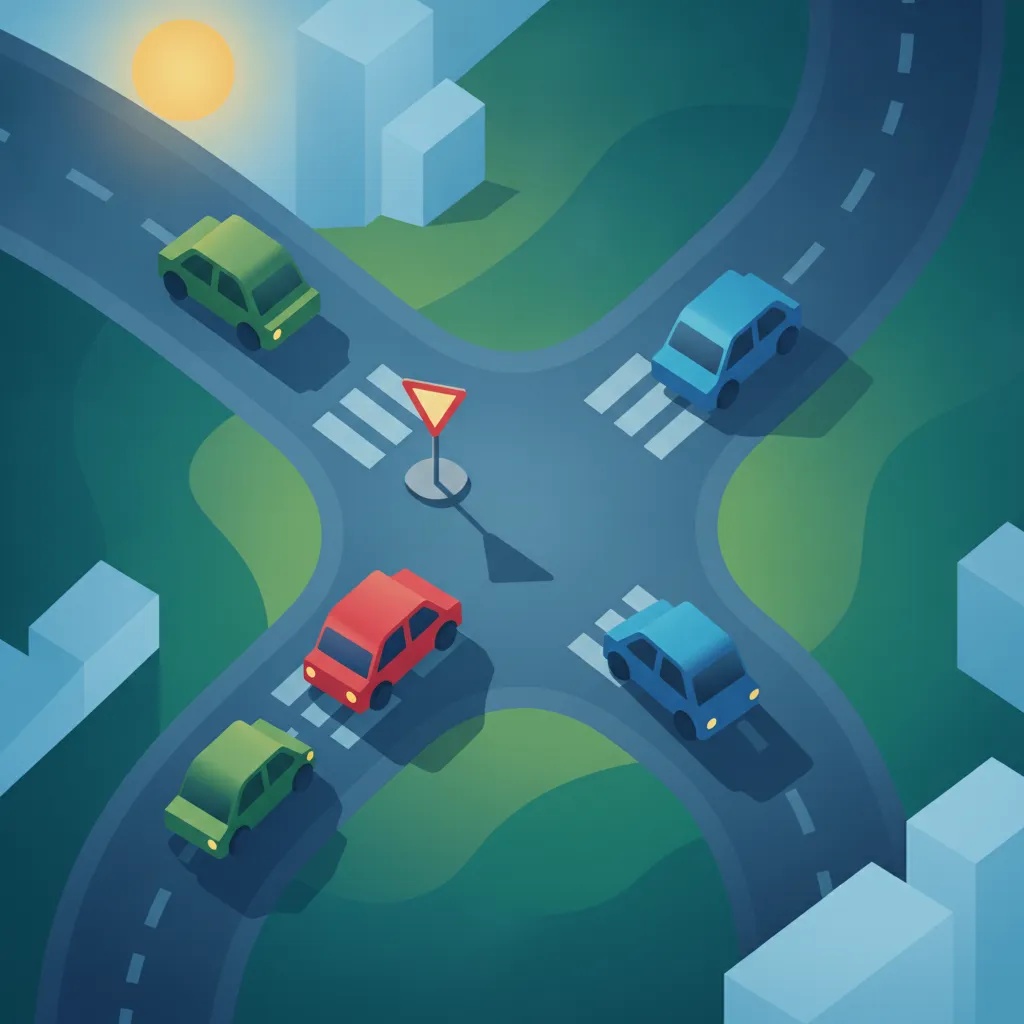
Theory topic content overview
Read the full theory topic guide for Italian Give Way Rules with structured, easy-to-scan content built for learners in Italy. This detailed section explains the exact rule, meaning, traffic context, comparison points, and exam logic behind this Italian driving theory topic so you can study faster, understand the concept more clearly, and avoid common interpretation mistakes on the theory test.
In Italian traffic law, the fundamental concept of "giving way" is known as dare la precedenza. It means a driver must yield, or allow another road user to proceed first, to prevent conflict or a potential collision. This principle ensures the orderly and safe flow of traffic, especially at points where paths converge, such as intersections, roundabouts, and pedestrian crossings.
When you are required to dare la precedenza, you must adjust your speed, and if necessary, stop completely to allow other traffic or pedestrians with priority to pass safely. Failure to do so is a serious offense under the Codice della Strada (Italian Highway Code) and a major cause of road accidents.
Understanding and correctly applying Italian give way rules (norme di precedenza) is not just about passing your driving theory test; it's vital for daily road safety across Italy's diverse road network, from busy urban intersections to rural country roads and motorways.
esame di teoria della patente) places significant emphasis on priority scenarios, especially at intersections. Correctly answering these questions is essential for passing.Italian give way rules follow a clear hierarchy. Drivers must assess the situation in this order:
Stop or Dare precedenza) and road markings dictate priority.Here's a breakdown of common scenarios requiring you to yield in Italy:
In Italy, if an intersection is not regulated by traffic lights, signs, or a traffic agent, the general rule of precedenza a destra (priority to the right) applies. This means you must give way to all vehicles approaching from your right.
This is the inverted triangular sign with a red border and white background (often depicted with a black border in diagrams), meaning "Give Way".
Dare precedenza sign, you must slow down significantly and be prepared to stop. You must ensure that the main road is clear before you proceed. You only stop if there is priority traffic approaching or already on the main road.The octagonal Stop sign, which means "Stop and Give Way," is even more strict.
Dare precedenza, a full stop is mandatory at a Stop sign, regardless of traffic.Priority at roundabouts in Italy can vary depending on the specific signage:
Dare precedenza signs at each entry point, meaning vehicles entering the roundabout must give way to those already circulating within the roundabout. This ensures a smooth flow of traffic.Dare precedenza sign at entry.Pedestrians always have high priority in Italy:
When turning left at an intersection, even if you have a green light, you generally must give way to oncoming vehicles that are proceeding straight or turning right. This is a common rule to prevent head-on collisions at turns.
When merging onto a road (e.g., from an acceleration lane onto a motorway or from a side road onto a main road without priority signs), you must give way to traffic already on the main road. You should adjust your speed to find a safe gap.
This is a critical distinction for Italian learners:
Dare Precedenza (Yield Sign):
Stop (Stop and Give Way Sign):
Italian learners often struggle with give way rules due to their complexity and the interaction of different factors:
precedenza a destra if no other signs or lights are present.Stop sign, instead just slowing down. This is an immediate test failure and dangerous.Dare precedenza signs were noticed.Mastering dare la precedenza requires a systematic approach and constant vigilance. For your Italian driving theory exam and for safe driving in Italy:
Stop, Dare precedenza, priority signs).Stop sign is present, always stop completely.Dare precedenza sign is present, slow down and be prepared to stop if there's priority traffic.The Italian give way rule (dare la precedenza) is a core principle of the Codice della Strada requiring drivers to yield to prevent collisions at intersections, roundabouts, and crossings. Priority follows a strict hierarchy where traffic agents override all else, followed by traffic lights, road signs, and finally general rules—most notably the precedenza a destra rule at unmarked intersections. The inverted triangular 'Dare Precedenza' sign demands slowing and yielding only when necessary, while the octagonal 'Stop' sign requires a mandatory complete halt. Common learner errors include forgetting priority to the right, making incomplete stops, misjudging speeds, and failing to yield to pedestrians, all of which are frequent causes of accidents and test failures.
A short set of high-value points that capture the most important ideas from this theory explanation.
Italian priority follows a hierarchy: traffic agents override all, then traffic lights, then road signs, and finally general rules like precedenza a destra
At unmarked intersections without signs or lights, always yield to vehicles approaching from your right (precedenza a destra)
The inverted triangular 'Dare Precedenza' sign requires slowing and yielding but only stopping if priority traffic is actually present
The octagonal 'Stop' sign mandates a complete standstill before proceeding, regardless of whether traffic is visible
Pedestrians on or clearly approaching a crossing always have priority and must be yielded to by drivers
Precedenza a destra is the default rule at unmarked intersections - always check your right when no signs or lights are present
Stop sign: full halt mandatory even if the road appears empty; Dare Precedenza: slow and stop only if traffic requires it
Roundabouts in Italy typically require giving way to vehicles already circulating inside, indicated by Dare Precedenza signs at entries
When turning left at an intersection, yield to oncoming traffic proceeding straight or turning right
Emergency vehicles with sirens and flashing lights always have unconditional priority
Forgetting precedenza a destra at unmarked intersections and assuming priority when no signs are visible
Performing a rolling stop instead of a complete stop at Stop signs, which is both dangerous and grounds for test failure
Misjudging the speed of approaching priority traffic and pulling out into their path
Failing to yield to pedestrians at crossings, especially when turning into a side street
Blindly following the car ahead without independently assessing priority at the intersection
Start with a short, direct summary of Italian Give Way Rules before reading the full explanation below.
Giving way, known as 'dare la precedenza' in Italy, means yielding to other road users who have priority, allowing them to proceed first. This is required by specific traffic signs like the 'Dare precedenza' (yield) sign, 'Stop' signs, road markings, traffic lights, and general rules at unmarked intersections. Drivers must slow down or stop completely to ensure the safe passage of priority traffic, a fundamental principle of the Italian Highway Code.
Review the most important terms, rule signals, and traffic concepts linked to Italian Give Way Rules.
Explore related theory topic pages connected to Italian Give Way Rules and continue with the next useful rule explanation.
See the common search queries learners use when trying to understand Italian Give Way Rules in Italy.

Ready to deepen your knowledge? Explore specific Italian driving theory topics in detail, review challenging concepts, or test your understanding with practice questions. Build confidence for your official Italian driving licence exam by continuously learning and applying these essential road rules.
Explore Italian Driving TheoryTheory topic content overview
A short set of high-value points that capture the most important ideas from this theory explanation.
Italian priority follows a hierarchy: traffic agents override all, then traffic lights, then road signs, and finally general rules like precedenza a destra
At unmarked intersections without signs or lights, always yield to vehicles approaching from your right (precedenza a destra)
The inverted triangular 'Dare Precedenza' sign requires slowing and yielding but only stopping if priority traffic is actually present
The octagonal 'Stop' sign mandates a complete standstill before proceeding, regardless of whether traffic is visible
Pedestrians on or clearly approaching a crossing always have priority and must be yielded to by drivers
Precedenza a destra is the default rule at unmarked intersections - always check your right when no signs or lights are present
Stop sign: full halt mandatory even if the road appears empty; Dare Precedenza: slow and stop only if traffic requires it
Roundabouts in Italy typically require giving way to vehicles already circulating inside, indicated by Dare Precedenza signs at entries
When turning left at an intersection, yield to oncoming traffic proceeding straight or turning right
Emergency vehicles with sirens and flashing lights always have unconditional priority
Forgetting precedenza a destra at unmarked intersections and assuming priority when no signs are visible
Performing a rolling stop instead of a complete stop at Stop signs, which is both dangerous and grounds for test failure
Misjudging the speed of approaching priority traffic and pulling out into their path
Failing to yield to pedestrians at crossings, especially when turning into a side street
Blindly following the car ahead without independently assessing priority at the intersection
Start with a short, direct summary of Italian Give Way Rules before reading the full explanation below.
Giving way, known as 'dare la precedenza' in Italy, means yielding to other road users who have priority, allowing them to proceed first. This is required by specific traffic signs like the 'Dare precedenza' (yield) sign, 'Stop' signs, road markings, traffic lights, and general rules at unmarked intersections. Drivers must slow down or stop completely to ensure the safe passage of priority traffic, a fundamental principle of the Italian Highway Code.
Review the most important terms, rule signals, and traffic concepts linked to Italian Give Way Rules.
Explore related theory topic pages connected to Italian Give Way Rules and continue with the next useful rule explanation.
See the common search queries learners use when trying to understand Italian Give Way Rules in Italy.
Ready to deepen your knowledge? Explore specific Italian driving theory topics in detail, review challenging concepts, or test your understanding with practice questions. Build confidence for your official Italian driving licence exam by continuously learning and applying these essential road rules.
Explore Italian Driving TheoryUse this exam-focused revision tip to understand how Italian Give Way Rules is likely to appear in theory questions for learners in Italy. This section helps you identify the most testable part of the rule, avoid common traps, and remember the concept more effectively during Italian driving theory exam preparation.
Italian theory test questions frequently present intersection scenarios. Always identify the type of intersection (marked, unmarked, roundabout) and look for signs or traffic lights first. If none are present, remember the 'precedenza a destra' rule (priority to the right). Pay special attention to situations involving pedestrians and emergency vehicles, as they often have specific priority.
Read direct answers to the most common learner questions about Italian Give Way Rules in Italy. This FAQ focuses on rule confusion, practical meaning, comparison with similar concepts, and the exact uncertainties that appear most often in Italian driving theory revision and exam preparation.
Dare la precedenza means 'to give way' or 'to yield priority'. It signifies that you must allow another vehicle or road user to proceed before you, as they have the right of way in that specific situation.
You must give way at intersections when indicated by a 'Dare precedenza' (yield) sign, a 'Stop' sign, a flashing yellow traffic light (indicating caution and yield where required), or generally to vehicles coming from your right at unmarked intersections ('precedenza a destra').
The 'precedenza a destra' (priority to the right) rule applies at unmarked intersections or when other signals (signs, traffic lights) do not specify priority. However, be aware that many intersections in Italy are marked, and these specific rules override 'precedenza a destra'.
At roundabouts in Italy, unless specific signage indicates otherwise, vehicles already circulating within the roundabout generally have priority. Vehicles entering the roundabout must give way to those already inside. However, always look for 'Dare precedenza' signs at the roundabout entrance.
Yes, drivers must give way to pedestrians who are crossing or are about to cross at a designated pedestrian crossing (strisce pedonali). You must slow down or stop to allow them to cross safely. This is a strict rule under the Italian Highway Code.
Both signs require you to give way. However, the 'Stop' sign (Fermarsi e dare precedenza) obliges you to come to a complete halt before the stop line, even if there is no traffic, and then proceed only when safe. The 'Dare precedenza' (yield) sign requires you to slow down and be prepared to stop if necessary to yield to priority traffic, but a full stop is not always mandatory if the way is clear.
Failing to give way is a serious traffic violation in Italy, carrying penalties such as fines and penalty points on your license. More importantly, it is a common cause of accidents and endangers all road users.
Start searching now to pinpoint exactly which Italian driving theory topics, road signs, or traffic rules you need to master. Use our advanced filters to build a custom practice session and ensure you're fully prepared for every aspect of your official driving licence exam.