
Learners often struggle to differentiate between binding regulatory signs and mere safety advice, which can lead to confusion during the official theory exam. This guide clarifies the specific role of Polish B-33 prohibitive signs versus international speed recommendations, helping you distinguish between legal mandates and situational safety advice. You will learn to identify key sign types, understand their legal weight, and recognize why adjusting your speed to road conditions remains a fundamental requirement of the Polish driving system.
Article content overview
For any learner preparing for the Polish driving theory exam, the ability to correctly interpret road signs is the most fundamental skill you can acquire. One of the most common areas of confusion for new drivers is distinguishing between signs that impose a strict legal obligation and those that provide guidance or recommendations. In Poland, speed regulation is governed by strict laws, and misinterpreting these signs does not just lead to exam failure; it poses a significant risk to your safety and your future as a licensed driver.
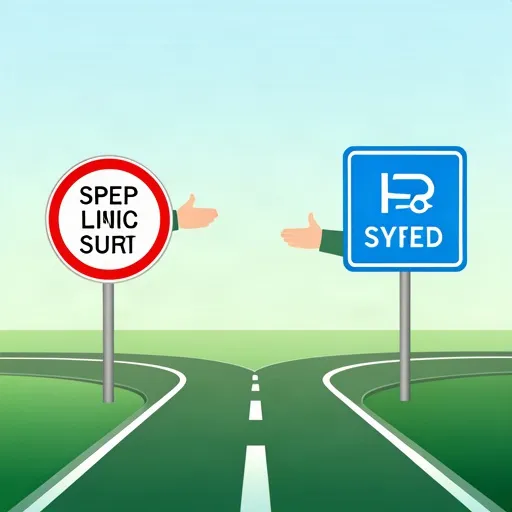
In the Polish road traffic code, speed limits are indicated primarily through prohibitive signs. These signs have a clear, standardized design: a circular shape with a white background, a red border, and a black number in the center. These are the signs that carry the weight of law. When you see such a sign, you are legally required to limit your vehicle's speed to the value shown, unless local traffic conditions dictate that you must drive even slower.
The B-33 sign is a regulatory tool. If you exceed the value shown, you are committing a traffic violation that results in a fine and penalty points. Under Polish law, as defined in Articles 20 and 21 of the Road Traffic Act, these limits are non-negotiable. Furthermore, remember that the B-33 sign typically remains valid until it is canceled by another sign, the end of the speed limit, or an intersection, which is a crucial detail to remember for your theory test.
Drivers often encounter signs when traveling abroad—or occasionally in private, non-public road networks—that appear to set a speed but do not follow the red-bordered circular format. For instance, square or rectangular signs with blue backgrounds and white numbers are frequently used in countries like Germany to suggest a safe, recommended speed.
It is vital to understand that in the context of the Polish theory exam, these advisory signs are not the same as mandatory limits. They serve an informational role, providing a suggestion based on ideal traffic flow and safety conditions. They do not carry the same legal enforcement as the B-33 sign. However, failing to adjust your speed to the actual conditions of the road—even if the speed is technically "allowed"—is a breach of the duty of care that every driver must uphold.
One of the most frequent traps in the Polish theory exam involves the concept of "safe speed." Many questions will present you with a scenario where the speed limit is, for example, 90 km/h, but the road conditions—such as poor visibility, rain, or heavy traffic—are hazardous. You must remember that the limit displayed on a sign is the maximum allowed speed under optimal conditions.
As a driver, you are legally and morally obligated to adjust your speed according to road visibility, surface conditions, and traffic volume. If you drive at the speed limit during dangerous weather and cause an accident, you will be held responsible for failing to exercise "special caution." This principle is a cornerstone of the Polish exam, often tested through situational judgment questions.
| Sign Type | Shape | Color | Legal Status |
|---|---|---|---|
| Mandatory Limit | Circular | White/Red | Legally binding |
| Advisory/Suggested | Square/Rectangular | Blue/White | Informational/Advice |
This guide clarifies the essential distinction between Poland's mandatory B-33 speed limit signs and international advisory speed recommendations. The B-33 sign, recognized by its circular white background with a red border, imposes a legally binding maximum speed that must be obeyed; exceeding it results in fines and penalty points under Polish Road Traffic Act Articles 20 and 21. In contrast, advisory speed signs (typically square or rectangular with blue backgrounds) provide guidance only and carry no legal enforcement. A critical exam principle emphasized is that the posted limit represents the maximum under ideal conditions—drivers must always adjust their speed downward when visibility, weather, or traffic create additional risk, as failing to exercise special caution constitutes a breach of the fundamental duty of care.
A short set of high-value points that capture the most important ideas from this article.
The B-33 sign is a mandatory, legally binding speed limit that must be obeyed under penalty of fines and penalty points.
Advisory speed signs use square or rectangular shapes with blue backgrounds and are recommendations only, not legal requirements.
Posted speed limits represent the maximum speed allowed under optimal conditions, not a target to maintain when conditions are poor.
You must always reduce your speed when visibility, weather, or traffic conditions create additional hazards.
The B-33 sign remains in effect until canceled by another sign, an intersection, or an area entry/exit sign.
B-33 = circular white background with red border and black number = mandatory prohibitive sign.
Advisory/suggested speed signs are square or rectangular with blue backgrounds = informational only.
Under Articles 20 and 21 of the Polish Road Traffic Act, exceeding a B-33 limit is a traffic violation.
Safe speed means controlling your vehicle fully under current conditions, regardless of the posted limit.
Even advisory speeds carry a duty of care—failing to adapt when conditions are dangerous is still a breach of driver responsibility.
Assuming that advisory speed signs (blue square/rectangular) carry the same legal weight as mandatory B-33 limits.
Believing that driving at the posted speed limit is always acceptable, regardless of weather or road conditions.
Forgetting that B-33 signs remain valid through intersections unless another sign explicitly cancels them.
Confusing the visual format of signs and failing to distinguish circular prohibitive signs from rectangular informational ones.
Not reducing speed in hazardous conditions (rain, fog, curves) even when the speed limit appears high.
Article content overview
A short set of high-value points that capture the most important ideas from this article.
The B-33 sign is a mandatory, legally binding speed limit that must be obeyed under penalty of fines and penalty points.
Advisory speed signs use square or rectangular shapes with blue backgrounds and are recommendations only, not legal requirements.
Posted speed limits represent the maximum speed allowed under optimal conditions, not a target to maintain when conditions are poor.
You must always reduce your speed when visibility, weather, or traffic conditions create additional hazards.
The B-33 sign remains in effect until canceled by another sign, an intersection, or an area entry/exit sign.
B-33 = circular white background with red border and black number = mandatory prohibitive sign.
Advisory/suggested speed signs are square or rectangular with blue backgrounds = informational only.
Under Articles 20 and 21 of the Polish Road Traffic Act, exceeding a B-33 limit is a traffic violation.
Safe speed means controlling your vehicle fully under current conditions, regardless of the posted limit.
Even advisory speeds carry a duty of care—failing to adapt when conditions are dangerous is still a breach of driver responsibility.
Assuming that advisory speed signs (blue square/rectangular) carry the same legal weight as mandatory B-33 limits.
Believing that driving at the posted speed limit is always acceptable, regardless of weather or road conditions.
Forgetting that B-33 signs remain valid through intersections unless another sign explicitly cancels them.
Confusing the visual format of signs and failing to distinguish circular prohibitive signs from rectangular informational ones.
Not reducing speed in hazardous conditions (rain, fog, curves) even when the speed limit appears high.
Explore related topics, search based questions, and concepts that learners often look up when studying Mandatory vs Recommended Speed Signs. These themes reflect real search intent and help you understand how this topic connects to wider driving theory knowledge in Poland.
Find clear and practical answers to common questions learners often have about Mandatory vs Recommended Speed Signs. This section helps explain difficult points, remove confusion, and reinforce the key driving theory concepts that matter for learners in Poland.
No, recommended speed signs are informational and advisory. They suggest a safe speed for specific conditions, but exceeding them is not a legal offense and does not result in fines or penalty points.
The primary regulatory sign for speed limits in Poland is the B-33 sign, which is a circular sign with a red border and white background containing a black number.
The Polish theory exam focuses strictly on the Polish Highway Code (PRD). While understanding international conventions is useful for professional driving, you should prioritize your knowledge of the B-series mandatory signs.
Beyond speed limit signs, you are legally required to adjust your speed to current road conditions, including visibility, traffic density, and weather, as emphasized in the Polish theory exam curriculum.
After finding your specific article, continue your targeted learning by exploring related topics or diving deeper into practice questions. Our extensive library ensures you have all the resources needed to confidently prepare for your Polish driving license theory exam. Discover more guides and solidify your understanding of Polish road rules.