
Mastering the rules regarding parking spaces designated for persons with reduced mobility is a key component of the Portuguese theory exam. This guide details the mandatory use of the blue parking permit, the specific legal obligations for drivers, and the significant penalties associated with occupying these spaces without proper authorization.
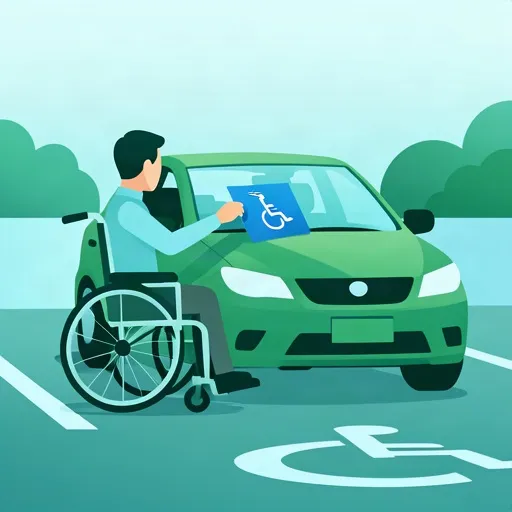
Article content overview
The blue parking permit in Portugal is a personal, EU-standardized card that authorizes use of reserved spaces only when the permit holder is present in the vehicle. A common exam trap involves scenarios where drivers use a permit belonging to an absent family member—this is always prohibited. Reserved spaces display the wheelchair symbol on vertical signs and horizontal markings, and are wider than standard bays for accessibility. Penalties for unauthorized parking include fines and possible vehicle removal. Municipal rules may add requirements but never override the core legal prohibition.
A short set of high-value points that capture the most important ideas from this article.
The blue parking permit is personal and non-transferable—it belongs to the individual, not the vehicle.
The permit holder must be physically present in the vehicle when parking in a reserved space.
Even a brief stop (paragem) in a reserved disabled space without the permit holder is an infringement.
Reserved parking spaces are identified by vertical signs and horizontal road markings featuring the wheelchair symbol.
Municipal rules may add extra requirements but can never override the fundamental prohibition against unauthorized use of disabled spaces.
Permit + person must both be present—the card alone is insufficient for legal parking.
Parking with a family member's permit while that person is elsewhere is illegal.
Reserved spaces are intentionally wider than standard bays to allow wheelchair access.
The blue permit is EU-standardized and issued to individuals with reduced mobility.
Unauthorized parking can result in fines and vehicle removal at the owner's expense.
Assuming the permit belongs to the car rather than to the individual holder.
Believing a 'quick errand' justifies parking briefly in a reserved space without authorization.
Using someone else's blue permit when that person is not in the vehicle.
Confusing paragem (brief stop) with estacionamento (parking)—neither is permitted without authorization.
Misinterpreting municipal exceptions as allowing use of reserved spaces without the permit holder.
Article content overview
A short set of high-value points that capture the most important ideas from this article.
The blue parking permit is personal and non-transferable—it belongs to the individual, not the vehicle.
The permit holder must be physically present in the vehicle when parking in a reserved space.
Even a brief stop (paragem) in a reserved disabled space without the permit holder is an infringement.
Reserved parking spaces are identified by vertical signs and horizontal road markings featuring the wheelchair symbol.
Municipal rules may add extra requirements but can never override the fundamental prohibition against unauthorized use of disabled spaces.
Permit + person must both be present—the card alone is insufficient for legal parking.
Parking with a family member's permit while that person is elsewhere is illegal.
Reserved spaces are intentionally wider than standard bays to allow wheelchair access.
The blue permit is EU-standardized and issued to individuals with reduced mobility.
Unauthorized parking can result in fines and vehicle removal at the owner's expense.
Assuming the permit belongs to the car rather than to the individual holder.
Believing a 'quick errand' justifies parking briefly in a reserved space without authorization.
Using someone else's blue permit when that person is not in the vehicle.
Confusing paragem (brief stop) with estacionamento (parking)—neither is permitted without authorization.
Misinterpreting municipal exceptions as allowing use of reserved spaces without the permit holder.
Explore related topics, search based questions, and concepts that learners often look up when studying Portugal Disabled Parking Rules. These themes reflect real search intent and help you understand how this topic connects to wider driving theory knowledge in Portugal.
Find clear and practical answers to common questions learners often have about Portugal Disabled Parking Rules. This section helps explain difficult points, remove confusion, and reinforce the key driving theory concepts that matter for learners in Portugal.
The permit is strictly linked to the person with reduced mobility. It must be present in the vehicle whenever a reserved parking space is used, regardless of who is driving.
No, it is strictly illegal to use a reserved disabled parking space if the authorized permit holder is not being transported in the vehicle.
Parking in a space reserved for persons with reduced mobility without authorization is a serious regulatory violation in Portugal, resulting in significant fines and potential administrative sanctions.
Yes, the physical EU-standard blue permit must be clearly displayed inside the vehicle while occupying a reserved space to prove that the holder is currently using the vehicle.
If you haven't found what you're looking for, use our powerful article search to explore related topics, refine your understanding of Portuguese road rules, or discover new insights for your IMT driving exam preparation. Continue building your knowledge effectively.