
Navigating high winds is a vital skill for safe driving in Portugal, especially when crossing exposed coastal areas or high-altitude bridges where gusts can cause sudden loss of stability. This guide provides essential techniques for steering, speed management, and handling turbulent airflows caused by large trucks. Mastering these concepts ensures you are well-prepared for the defensive driving scenarios frequently tested in your theory exam.
Article content overview
Driving in Portugal offers scenic routes, but the geography—characterized by expansive coastal stretches and high-altitude infrastructure—presents unique challenges, especially during periods of extreme weather. Understanding how to manage your vehicle in strong crosswinds is not just a practical safety skill; it is a fundamental requirement for passing your IMT theory exam. Whether you are navigating the iconic 25 de Abril bridge in Lisbon or cruising along the coastal A22, knowing how to anticipate and react to wind gusts is critical for maintaining vehicle stability.
Crosswinds pose a significant danger to vehicle stability, particularly when you are driving at higher speeds on motorways or crossing elevated bridges. When a gust hits the side of your vehicle, it can cause a sudden, unintended lateral shift, forcing you out of your lane or, in extreme cases, affecting steering control. Light vehicles, including small city cars and motorcycles, are the most susceptible to these forces because they lack the mass required to resist the lateral push of a strong gust.
High-sided vehicles, such as vans, delivery trucks, and motorhomes, act like a sail, catching significantly more air and experiencing amplified instability. Even when you are driving a standard passenger car, the turbulent wake produced by a large truck can create a sudden "cushion" of air that pushes your vehicle sideways as you overtake it. Always leave extra lateral space when passing high-sided vehicles in windy conditions to account for this localized turbulence.
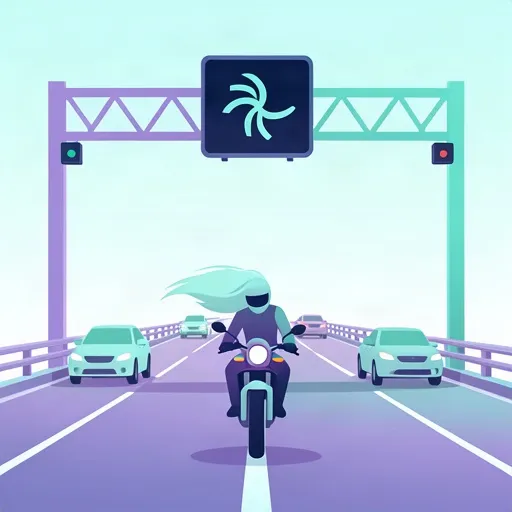
In Portugal, the Código da Estrada mandates that drivers must adapt their speed and driving style to environmental conditions. On major motorways, IMT-regulated electronic information panels are your primary source of real-time safety data. If these signs display wind warnings or indicate reduced speed limits, you are legally obligated to comply. Ignoring these warnings is not only a safety risk but can also lead to heavy fines, especially if an incident occurs as a result of negligence.
When you see a wind warning sign, your immediate reaction should be to reduce your speed proactively. Lower speeds give you more time to react to sudden gusts and improve your tire contact with the road surface, increasing the vehicle's stability. If you are operating a motorcycle or towing a caravan, consider avoiding bridges or high-exposed sections altogether if the wind speeds are reported to be severe, as the risk of losing control is significantly higher for these categories.
Defensive driving in adverse weather requires a heightened level of alertness and specific physical control over your vehicle. When driving across the Vasco da Gama or 25 de Abril bridges, keep both hands firmly on the steering wheel at all times. Avoid sudden, jerky movements, as these can exacerbate the vehicle's instability if a gust hits precisely when you are turning the wheel.
In extreme weather conditions, authorities may restrict access to bridges for specific vehicle types, such as motorcycles or trailers. Always monitor traffic reports on the radio or electronic motorway boards before starting your journey.
Your IMT theory exam will likely test your knowledge of how environmental factors influence road safety. You may encounter questions regarding how to handle a vehicle when passing a large lorry or how to react to specific warning signs on the motorway. Remember that the correct answer in an exam context always prioritizes safety: slowing down, increasing separation distances, and anticipating the behavior of more vulnerable vehicles are the cornerstones of the expected response.
Focus your revision on understanding the difference between legal speed limits and safe driving speeds. In adverse conditions, the "legal" limit is often too high for safety, and the examiner will expect you to recognize that you must adjust your behavior to suit the immediate environment.
Driving in strong crosswinds on Portuguese motorways and bridges requires specific defensive techniques centered on speed reduction, firm steering control, and increased awareness of wind warning signage mandated by the Código da Estrada. Light vehicles and motorcycles are most vulnerable to lateral forces, while high-sided vehicles and large trucks generate dangerous turbulence that can push nearby cars sideways. Learners should memorize the A18 wind warning sign, practice maintaining the 9 and 3 o'clock hand position, and understand that legal speed limits must be lowered in adverse wind conditions. The IMT exam expects candidates to prioritize safety responses over maintaining normal speeds when environmental hazards are present.
A short set of high-value points that capture the most important ideas from this article.
Crosswinds create lateral forces that push vehicles sideways, making light vehicles and motorcycles particularly vulnerable at motorway speeds
Large high-sided vehicles and trucks generate turbulent wakes that can suddenly push nearby cars sideways during overtaking
Electronic wind warning signs on Portuguese motorways are legally mandatory to obey under the Código da Estrada
Reducing speed before entering exposed sections like bridges improves tire grip and gives you more time to react to sudden gusts
Motorcycles and trailer combinations face the highest risk and may be barred from bridges during severe wind events
Keep both hands at the 9 and 3 o'clock steering positions for maximum control during gusts
Wind warning sign A18 indicates sections with crosswind risk requiring reduced speed
Always increase following distance from high-sided vehicles due to their turbulent wake
Expect sudden pressure shifts when exiting tunnels or passing between tall structures on exposed roads
The IMT exam tests whether you recognize that legal speed limits must be adjusted downward in adverse wind conditions
Maintaining normal motorway speed when electronic wind warning signs are displaying reduced limits
Making sudden jerky steering corrections that amplify instability when a gust hits
Attempting to overtake large trucks without allowing extra lateral space for turbulence
Driving a motorcycle across exposed bridges during severe wind warnings when access may be restricted
Failing to monitor electronic motorway panels for updated wind advisories before and during the journey
Article content overview
A short set of high-value points that capture the most important ideas from this article.
Crosswinds create lateral forces that push vehicles sideways, making light vehicles and motorcycles particularly vulnerable at motorway speeds
Large high-sided vehicles and trucks generate turbulent wakes that can suddenly push nearby cars sideways during overtaking
Electronic wind warning signs on Portuguese motorways are legally mandatory to obey under the Código da Estrada
Reducing speed before entering exposed sections like bridges improves tire grip and gives you more time to react to sudden gusts
Motorcycles and trailer combinations face the highest risk and may be barred from bridges during severe wind events
Keep both hands at the 9 and 3 o'clock steering positions for maximum control during gusts
Wind warning sign A18 indicates sections with crosswind risk requiring reduced speed
Always increase following distance from high-sided vehicles due to their turbulent wake
Expect sudden pressure shifts when exiting tunnels or passing between tall structures on exposed roads
The IMT exam tests whether you recognize that legal speed limits must be adjusted downward in adverse wind conditions
Maintaining normal motorway speed when electronic wind warning signs are displaying reduced limits
Making sudden jerky steering corrections that amplify instability when a gust hits
Attempting to overtake large trucks without allowing extra lateral space for turbulence
Driving a motorcycle across exposed bridges during severe wind warnings when access may be restricted
Failing to monitor electronic motorway panels for updated wind advisories before and during the journey
Explore related topics, search based questions, and concepts that learners often look up when studying Driving in Wind and Adverse Weather. These themes reflect real search intent and help you understand how this topic connects to wider driving theory knowledge in Portugal.
Find clear and practical answers to common questions learners often have about Driving in Wind and Adverse Weather. This section helps explain difficult points, remove confusion, and reinforce the key driving theory concepts that matter for learners in Portugal.
You should immediately reduce your speed, maintain a firm grip on the steering wheel with both hands, and prepare for sudden gusts of wind, especially when clearing tunnels or passing large vehicles.
High-sided vehicles and motorhomes have a larger surface area, making them significantly more vulnerable to being pushed sideways or even overturned by strong crosswinds.
Large vehicles like trucks and buses create a turbulent wake. When you pull out to overtake them, you may experience a sudden change in wind pressure, which can cause your vehicle to swerve unexpectedly if you are not holding the steering wheel firmly.
Under severe weather conditions, authorities may implement restrictions, such as closing bridges to high-sided vehicles or imposing temporary speed limits. Always follow the instructions provided by electronic message signs and traffic authorities.
If you haven't found what you're looking for, use our powerful article search to explore related topics, refine your understanding of Portuguese road rules, or discover new insights for your IMT driving exam preparation. Continue building your knowledge effectively.