
Learn how to effectively manage your vehicle when facing sudden gusts and strong crosswinds, which are common on open Portuguese motorways and high-altitude bridges. You will gain a deeper understanding of necessary defensive adjustments, including speed control and steering techniques, to ensure safety when passing large commercial vehicles or emerging from sheltered areas. This knowledge is essential for mastering hazard perception topics covered in the Portuguese driving theory exam.
Article content overview
Driving on Portuguese roads requires more than just understanding the Código da Estrada; it demands an acute awareness of environmental conditions. From the sweeping curves of the A22 in the Algarve to the high-elevation spans of the Vasco da Gama bridge in Lisbon, adverse weather like strong gusts and crosswinds can significantly compromise vehicle stability. For learners preparing for the IMT theory exam, mastering hazard perception in these conditions is not just a practical necessity—it is a core component of defensive driving.
Crosswinds are particularly dangerous when a vehicle moves from a sheltered area into an exposed one. When you exit a tunnel, drive past a large gap in a tree line, or cross a high-altitude bridge, your vehicle may be struck by a sudden force of wind. This lateral force can push a car or motorcycle out of its lane if the driver is not prepared to make subtle, corrective steering adjustments.
The IMT exam frequently tests your understanding of these transitions. As you emerge from areas that shield you from the wind, the sudden pressure differential can catch an unprepared driver off guard. You must maintain a firm, two-handed grip on the steering wheel and keep your speed within a range that allows for immediate reaction if the vehicle is buffeted.
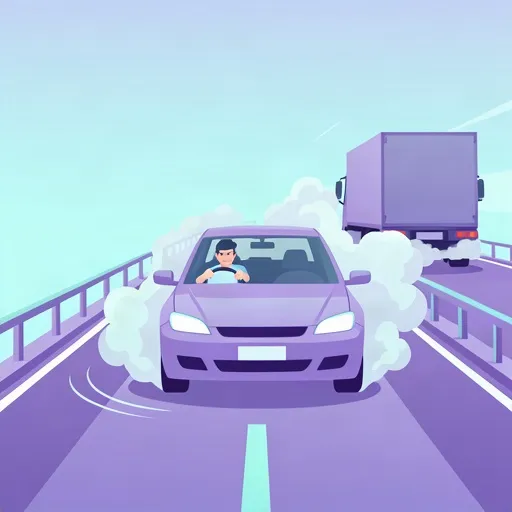
A common, yet often overlooked, hazard is the turbulent wake generated by large commercial vehicles. When you overtake a truck, bus, or large motorhome on a motorway, the vehicle acts as a barrier to the wind. As you pull alongside, you enter a zone of "wind shadow," followed immediately by a area of high turbulence as you pass the vehicle's rear.
This rapid change in air pressure can exert a "pushing" force on your car, potentially pulling it toward or pushing it away from the larger vehicle. If you are riding a motorcycle, this effect is significantly amplified, making it vital to increase your lateral distance when overtaking. Always signal clearly, maintain a steady speed, and be ready to make minor adjustments to your steering to counter the unexpected movement caused by this turbulent wake.
When overtaking high-sided vehicles in windy conditions, be prepared for a sudden "lurch" in your steering as you exit the turbulent wake behind the vehicle. Do not overcorrect; keep your grip firm but relaxed to allow for small, controlled adjustments.
In the context of the Portuguese driving theory exam, safety is prioritized over maximum legal speed. When winds are strong, your "safe speed" is often significantly lower than the posted limit. Reducing your speed reduces the lateral force exerted by the wind on your vehicle’s bodywork, which is particularly important for high-profile vehicles like vans or cars with roof boxes.
The Código da Estrada utilizes specific signs to warn drivers of areas prone to strong lateral winds. Recognizing these early allows you to adjust your driving posture and speed before the danger manifests.
Many students assume that the safest action in high wind is to maintain speed to "cut through" the air. On the contrary, the IMT expects you to demonstrate caution. Answering that you would maintain the speed limit when warned of high winds is a common exam trap. Always prioritize stability and readiness to react. Furthermore, remember that bridges such as the 25 de Abril or Vasco da Gama may impose specific restrictions on high-sided vehicles during extreme weather—always watch for the specific regulatory signs associated with these spans.
This article covers essential defensive driving techniques for managing vehicle stability in strong winds and crosswinds on Portuguese roads, with particular focus on exposed motorways, high-altitude bridges, and the turbulent wake created by heavy goods vehicles. Key skills include maintaining a firm two-handed grip, reducing speed proactively before exposed sections, and increasing lateral distance when overtaking trucks or buses. The content addresses official wind hazard signage recognized by IMT, specific procedural steps for high-wind driving, and common misconceptions that appear in the Portuguese theory exam. Understanding these principles is vital for both road safety and successful completion of the IMT driving theory test.
A short set of high-value points that capture the most important ideas from this article.
Crosswinds are most dangerous when transitioning from sheltered to exposed areas like tunnel exits, bridge decks, and gaps in tree lines
Heavy goods vehicles create a turbulent wake that can suddenly push or pull nearby vehicles, requiring extra caution when overtaking
Reducing speed decreases the lateral wind force on your vehicle, improving stability in gusty conditions
The A25 road sign specifically warns of side wind hazard zones where sudden steering corrections may be needed
High-sided vehicles and motorcycles are particularly vulnerable to crosswind effects and require greater attention
Lateral force from wind increases with speed - slowing down reduces the destabilizing effect on your vehicle
The turbulent wake zone occurs immediately behind large vehicles as you complete an overtake maneuver
Motorcycles experience significantly amplified wind effects compared to cars due to their smaller profile
Variable Message Signs (VMS) on Portuguese motorways display real-time wind warnings and speed restrictions
Specific bridges like Vasco da Gama and 25 de Abril may impose special restrictions on high-sided vehicles during extreme weather
Maintaining or increasing speed to 'cut through' wind - this actually increases lateral force and is a common exam trap
Using only one hand on the steering wheel, which reduces reaction time when a gust strikes
Overtaking large vehicles too closely without anticipating the turbulent wake effect behind them
Waiting until inside an exposed area to reduce speed instead of adjusting beforehand
Overcorrecting the steering when buffeted by a gust, which can destabilize the vehicle's center of gravity
Article content overview
A short set of high-value points that capture the most important ideas from this article.
Crosswinds are most dangerous when transitioning from sheltered to exposed areas like tunnel exits, bridge decks, and gaps in tree lines
Heavy goods vehicles create a turbulent wake that can suddenly push or pull nearby vehicles, requiring extra caution when overtaking
Reducing speed decreases the lateral wind force on your vehicle, improving stability in gusty conditions
The A25 road sign specifically warns of side wind hazard zones where sudden steering corrections may be needed
High-sided vehicles and motorcycles are particularly vulnerable to crosswind effects and require greater attention
Lateral force from wind increases with speed - slowing down reduces the destabilizing effect on your vehicle
The turbulent wake zone occurs immediately behind large vehicles as you complete an overtake maneuver
Motorcycles experience significantly amplified wind effects compared to cars due to their smaller profile
Variable Message Signs (VMS) on Portuguese motorways display real-time wind warnings and speed restrictions
Specific bridges like Vasco da Gama and 25 de Abril may impose special restrictions on high-sided vehicles during extreme weather
Maintaining or increasing speed to 'cut through' wind - this actually increases lateral force and is a common exam trap
Using only one hand on the steering wheel, which reduces reaction time when a gust strikes
Overtaking large vehicles too closely without anticipating the turbulent wake effect behind them
Waiting until inside an exposed area to reduce speed instead of adjusting beforehand
Overcorrecting the steering when buffeted by a gust, which can destabilize the vehicle's center of gravity
Explore related topics, search based questions, and concepts that learners often look up when studying Handling Wind and Gusts in Portugal. These themes reflect real search intent and help you understand how this topic connects to wider driving theory knowledge in Portugal.
Find clear and practical answers to common questions learners often have about Handling Wind and Gusts in Portugal. This section helps explain difficult points, remove confusion, and reinforce the key driving theory concepts that matter for learners in Portugal.
When overtaking a large vehicle, you may experience a 'push' effect caused by the turbulent wake of the truck, which can significantly destabilize your vehicle when you emerge from behind its shelter into the crosswind.
Drivers should reduce speed, maintain a firm grip on the steering wheel with both hands, and prepare for sudden changes in wind resistance when crossing exposed areas like the Vasco da Gama bridge.
Increasing your following distance provides you with more space to react if the vehicle in front of you or your own vehicle is pushed suddenly by a gust of wind, helping to prevent collisions.
If you haven't found what you're looking for, use our powerful article search to explore related topics, refine your understanding of Portuguese road rules, or discover new insights for your IMT driving exam preparation. Continue building your knowledge effectively.