
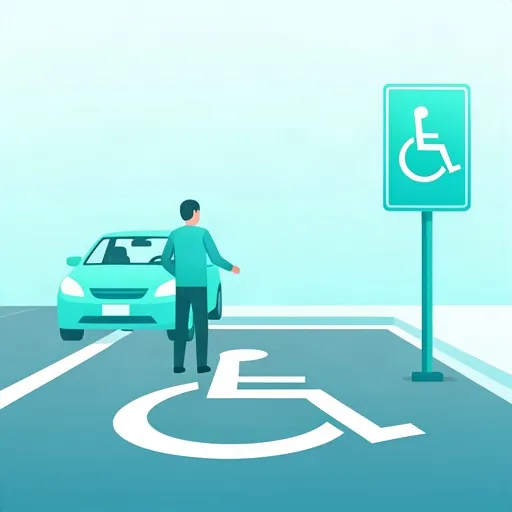
Parking in a space designated for persons with reduced mobility without a valid permit is a serious violation of the Portuguese Highway Code, known as the Código da Estrada. This guide explains why these spaces are protected, the importance of displaying the correct permit, and the legal repercussions of misuse. Mastering these rules is essential for passing the IMT theory exam and ensuring accessibility for those who need it most.
Article content overview
In the context of the Portuguese Código da Estrada, maintaining accessibility is a pillar of safe and considerate driving. Reserved parking spaces for individuals with reduced mobility are not mere suggestions; they are legally protected areas designed to ensure that those with physical limitations can access essential services and facilities safely. For learners preparing for the IMT theory exam, it is vital to understand that unauthorized use of these spots is a serious infraction, subject to administrative fines and, in some cases, additional legal sanctions.
Under Portuguese traffic legislation, parking in a space designated for persons with reduced mobility without displaying the proper, valid permit is strictly prohibited. The permit, which follows the European Union standard blue card format, is personal and non-transferable. It must be prominently displayed on the vehicle's dashboard whenever the space is occupied. A common misunderstanding among new drivers is the belief that a quick stop to drop off a passenger or the temporary absence of an authorized user makes the use of these spaces acceptable. According to the law, the absence of an authorized permit holder does not grant any driver the right to use these restricted spots.
Do not fall for common theory exam traps suggesting that a short duration of parking, or the presence of children or elderly passengers, justifies using a reserved space. If you do not possess and correctly display the official disabled parking permit, occupying these spaces is a violation that results in a fine and, depending on the circumstances, may be classified as a serious or even very serious offence.
The Portuguese Highway Code categorizes parking violations based on the degree of risk they pose to road safety and public accessibility. While simple illegal parking might be considered a standard administrative offence, parking in spaces reserved for individuals with mobility impairments or in specific high-risk zones—such as pedestrian crossings or motorway shoulders—is treated with much greater severity.
An administrative offence or misdemeanor under the Portuguese Road Code, resulting from a breach of traffic rules, which carries penalties such as fines, the loss of points on the driving licence, or temporary bans from driving.
The classification of these offences impacts the penalty incurred. If you occupy a reserved space illegally, you are not only obstructing a vital public resource but are also committing an act that the IMT evaluates strictly. During the theoretical exam, you may encounter questions asking you to identify the nature of these prohibitions. Remember that the protection of these spaces is absolute, and the legal repercussions are designed to act as a strong deterrent against such behavior.
A frequently tested concept is the difference between "stopping" (paragem) and "parking" (estacionamento). While the law allows for brief stopping in certain scenarios, this does not override the specific prohibition of stopping or parking in reserved spaces for people with reduced mobility. If you block such a space, even for a few seconds, you are violating the core principles of the Código da Estrada.
Beyond the fines, respecting these parking zones is a fundamental aspect of becoming a responsible driver. The infrastructure of our cities, including the dimensioning of parking spaces, is engineered to provide equitable access to all citizens. When a driver ignores these regulations, they undermine the social and safety framework that allows vulnerable road users to participate fully in society. As you prepare for your theoretical exam, think of these rules not just as items to memorize, but as essential guidelines for creating a safer, more inclusive driving environment in Portugal.
In Portugal, parking in spaces reserved for persons with reduced mobility without displaying a valid European Union blue parking permit is a serious traffic offence classified as a contraordenação, subject to significant fines and potential licence points deductions. The permit is strictly personal and non-transferable, must be clearly visible on the dashboard, and its holder must be present in or nearby the vehicle; simply transporting someone with reduced mobility does not authorize use of the space when they are absent. The Código da Estrada draws a clear distinction between paragem (temporary stopping) and estacionamento (parking), but both are prohibited in these reserved zones, and even brief blocking of such a space constitutes a violation. Learners preparing for the IMT theory exam must recognise that special circumstances such as quick stops, presence of children or elderly passengers, or the apparent vacancy of the space provide no legal justification for occupying a reserved parking spot.
A short set of high-value points that capture the most important ideas from this article.
Parking in spaces reserved for persons with reduced mobility without a valid blue permit is a serious traffic offence under the Código da Estrada.
The European Union blue parking permit is personal and non-transferable and must be displayed on the dashboard whenever the space is used.
The absence of an authorized permit holder in the vehicle means no driver may use the reserved space, even temporarily.
Parking violations in reserved spaces can be classified as serious or very serious contraordenações, carrying higher fines and points deductions.
Blocking a reserved space even for a few seconds constitutes an infraction, regardless of how brief the stop is intended to be.
The permit (dístico) must be visibly displayed on the dashboard in the European Union blue card format.
Paragem (stopping) is temporary immobilisation for loading or passengers; estacionamento (parking) is any other immobilisation—both are prohibited in reserved spaces.
Contraordenação is an administrative traffic offence that can result in fines, points loss, or driving bans.
A 'quick stop' or presence of children, elderly, or any passenger does not justify using a reserved space without the proper permit.
Reserved spaces are protected under Portuguese law regardless of whether they appear to be in use.
Assuming that a short-duration stop or quick drop-off makes it acceptable to use a reserved space without a permit.
Believing that the disabled parking permit can be used by any family member or driver transporting a person with reduced mobility when that person is not in the vehicle.
Confusing the rules for general illegal parking with the stricter rules for reserved space violations.
Thinking that paragem exceptions apply to reserved spaces, when the prohibition covers both stopping and parking.
Failing to check for vertical or horizontal signs indicating a space is reserved before parking.
Article content overview
A short set of high-value points that capture the most important ideas from this article.
Parking in spaces reserved for persons with reduced mobility without a valid blue permit is a serious traffic offence under the Código da Estrada.
The European Union blue parking permit is personal and non-transferable and must be displayed on the dashboard whenever the space is used.
The absence of an authorized permit holder in the vehicle means no driver may use the reserved space, even temporarily.
Parking violations in reserved spaces can be classified as serious or very serious contraordenações, carrying higher fines and points deductions.
Blocking a reserved space even for a few seconds constitutes an infraction, regardless of how brief the stop is intended to be.
The permit (dístico) must be visibly displayed on the dashboard in the European Union blue card format.
Paragem (stopping) is temporary immobilisation for loading or passengers; estacionamento (parking) is any other immobilisation—both are prohibited in reserved spaces.
Contraordenação is an administrative traffic offence that can result in fines, points loss, or driving bans.
A 'quick stop' or presence of children, elderly, or any passenger does not justify using a reserved space without the proper permit.
Reserved spaces are protected under Portuguese law regardless of whether they appear to be in use.
Assuming that a short-duration stop or quick drop-off makes it acceptable to use a reserved space without a permit.
Believing that the disabled parking permit can be used by any family member or driver transporting a person with reduced mobility when that person is not in the vehicle.
Confusing the rules for general illegal parking with the stricter rules for reserved space violations.
Thinking that paragem exceptions apply to reserved spaces, when the prohibition covers both stopping and parking.
Failing to check for vertical or horizontal signs indicating a space is reserved before parking.
Explore related topics, search based questions, and concepts that learners often look up when studying Parking in Reserved Spaces. These themes reflect real search intent and help you understand how this topic connects to wider driving theory knowledge in Portugal.
Find clear and practical answers to common questions learners often have about Parking in Reserved Spaces. This section helps explain difficult points, remove confusion, and reinforce the key driving theory concepts that matter for learners in Portugal.
No, it is strictly forbidden. The parking permit is personal and the holder must be present in the vehicle for the space to be used legally.
Under the Portuguese Highway Code, parking in a space reserved for persons with reduced mobility without proper authorization is considered a serious infringement with associated fines.
No, the permit specifically allows the use of marked spaces reserved for persons with reduced mobility. General parking prohibitions, such as stopping on pedestrian crossings or in traffic lanes, still apply.
If you haven't found what you're looking for, use our powerful article search to explore related topics, refine your understanding of Portuguese road rules, or discover new insights for your IMT driving exam preparation. Continue building your knowledge effectively.