
The Visão Zero 2030 initiative serves as a roadmap for reducing road fatalities and serious injuries across Portugal by emphasizing the vulnerability of road users. As you prepare for the IMT theory exam, understanding these safety pillars is essential for grasping why specific driving behaviors and traffic rules exist to protect everyone on the road. This guide clarifies the strategic vision behind national policy without introducing changes to your current exam requirements.
Article content overview
The landscape of road safety in Portugal is undergoing a significant transformation driven by the Visão Zero 2030 strategy. As you prepare for your Instituto da Mobilidade e dos Transportes (IMT) theory exam, it is important to understand that road safety is not merely about memorizing traffic rules from the Código da Estrada; it is about adopting a "Safe System" mindset. This strategic roadmap aims to drastically reduce road fatalities and serious injuries by focusing on the shared responsibility between authorities, engineers, and you, the driver.
The core of the Visão Zero 2030 strategy is the 'Safe System' approach. This philosophy acknowledges that human beings are fallible and will inevitably make mistakes while driving. Consequently, the transportation system must be designed to be forgiving, ensuring that these errors do not result in fatal or life-altering consequences. This approach is built upon five foundational pillars that influence modern road safety policy in Portugal.
An ethical approach to road safety that recognizes human error as inevitable. It shifts the burden of safety from the individual driver alone to a multi-layered framework involving safe infrastructure, safe vehicles, and effective emergency response.
The pillars include safe road users, safe infrastructure, safe vehicles, safe speeds, and effective post-crash response. For a learner driver, these pillars explain why we have strict requirements regarding vehicle maintenance, mandatory equipment, and rigorous speed management. When you encounter questions on your theory exam about the importance of wearing a seatbelt or maintaining a safe distance, you are witnessing the application of these safety principles in daily traffic law.
A central focus of the national road safety strategy is the protection of vulnerable road users, specifically pedestrians, cyclists, and motorcyclists. Statistics consistently show that these groups are at the highest risk of severe injury during road accidents. Understanding this vulnerability is a critical part of your IMT theory preparation, as many exam questions will test your ability to recognize and yield to those who lack the protective enclosure of a car body.
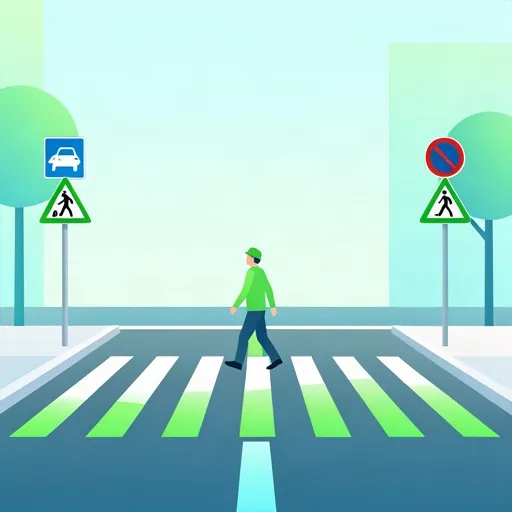
When driving in urban environments, your situational awareness must go beyond just checking for other vehicles. You must actively scan for pedestrians near crosswalks and ensure that your speed allows for an immediate, safe stop if someone steps into the road. This is not just a polite habit; it is a legal requirement under the Código da Estrada designed to support the broader goal of reducing serious accidents.
The Visão Zero 2030 initiative sets the ambitious goal of halving road deaths and serious injuries by 2030. While this is a high-level policy, it directly influences the driving environment you will face. This includes the implementation of traffic calming measures, better-designed roundabouts, and stricter enforcement of alcohol limits, all of which are common topics in the theory exam.
As a new driver, your role is to align your driving habits with these safety goals. This means strictly observing speed limits, especially in school zones or residential areas, and recognizing that road markings are there to guide traffic flow and protect lives. The theory exam will frequently test your knowledge on these aspects, ensuring you understand the practical application of road safety laws.
While Visão Zero 2030 provides the policy framework, your immediate goal is to master the rules defined in the official legislation. Use your study time to connect the "why" behind the rules—such as why speed limits exist in specific urban zones—with the "how" of safe driving. By keeping the safety of others at the forefront of your decision-making, you are already contributing to the national objective of making Portuguese roads safer for everyone.
Visão Zero 2030 is Portugal's national roadmap to halve road fatalities by 2030 using a Safe System approach that acknowledges human fallibility and distributes safety across infrastructure, vehicles, speeds, and emergency response. The strategy places particular emphasis on protecting vulnerable road users such as pedestrians, cyclists, and motorcyclists, explaining why rules like yielding at crossings and maintaining safe speeds exist as legal requirements. Understanding this framework helps you appreciate why the Código da Estrada contains specific provisions, making your IMT theory exam preparation more meaningful than rote memorization. Your role as a driver is to align daily habits with these safety objectives, recognizing that traffic rules protect lives rather than simply imposing restrictions.
A short set of high-value points that capture the most important ideas from this article.
The Safe System approach recognizes human error as inevitable and distributes safety responsibility across infrastructure, vehicles, and emergency response rather than placing the entire burden on drivers.
Portugal's Visão Zero 2030 strategy aims to halve road deaths and serious injuries by 2030 through five interconnected pillars: safe users, safe infrastructure, safe vehicles, safe speeds, and effective post-crash response.
Vulnerable road users—pedestrians, cyclists, and motorcyclists—receive priority protection because they lack the physical protection of a vehicle body during collisions.
Speed limits and vehicle maintenance requirements are direct applications of Safe System principles designed to minimize harm when human errors occur.
Understanding this policy framework helps you see the reasoning behind Código da Estrada rules rather than just memorizing them for the IMT exam.
The Safe System approach has five pillars: safe road users, safe infrastructure, safe vehicles, safe speeds, and post-crash response.
Vulnerable road users include pedestrians, cyclists, and motorcyclists who face the highest risk of severe injury in accidents.
The Código da Estrada establishes the legal rules, while Visão Zero 2030 explains the strategic purpose behind those rules.
Traffic calming measures and stricter alcohol enforcement are practical implementations of the national safety strategy.
Driver vigilance at pedestrian crossings and school zones directly supports the national goal of reducing serious injuries.
Assuming road safety rules exist only to control drivers rather than recognizing the shared system-wide responsibility defined by the Safe System approach.
Overlooking vulnerable road users when scanning intersections and crosswalks, focusing only on other motor vehicles.
Confusing the policy goal (Vision Zero by 2030) with immediate exam requirements, which still follow current Código da Estrada rules.
Forgetting that speed limits are calibrated to the Safe System principle of reducing harm, not just arbitrary numbers.
Treating road safety as purely individual responsibility instead of understanding the multi-layered system designed to protect everyone.
Article content overview
A short set of high-value points that capture the most important ideas from this article.
The Safe System approach recognizes human error as inevitable and distributes safety responsibility across infrastructure, vehicles, and emergency response rather than placing the entire burden on drivers.
Portugal's Visão Zero 2030 strategy aims to halve road deaths and serious injuries by 2030 through five interconnected pillars: safe users, safe infrastructure, safe vehicles, safe speeds, and effective post-crash response.
Vulnerable road users—pedestrians, cyclists, and motorcyclists—receive priority protection because they lack the physical protection of a vehicle body during collisions.
Speed limits and vehicle maintenance requirements are direct applications of Safe System principles designed to minimize harm when human errors occur.
Understanding this policy framework helps you see the reasoning behind Código da Estrada rules rather than just memorizing them for the IMT exam.
The Safe System approach has five pillars: safe road users, safe infrastructure, safe vehicles, safe speeds, and post-crash response.
Vulnerable road users include pedestrians, cyclists, and motorcyclists who face the highest risk of severe injury in accidents.
The Código da Estrada establishes the legal rules, while Visão Zero 2030 explains the strategic purpose behind those rules.
Traffic calming measures and stricter alcohol enforcement are practical implementations of the national safety strategy.
Driver vigilance at pedestrian crossings and school zones directly supports the national goal of reducing serious injuries.
Assuming road safety rules exist only to control drivers rather than recognizing the shared system-wide responsibility defined by the Safe System approach.
Overlooking vulnerable road users when scanning intersections and crosswalks, focusing only on other motor vehicles.
Confusing the policy goal (Vision Zero by 2030) with immediate exam requirements, which still follow current Código da Estrada rules.
Forgetting that speed limits are calibrated to the Safe System principle of reducing harm, not just arbitrary numbers.
Treating road safety as purely individual responsibility instead of understanding the multi-layered system designed to protect everyone.
Explore related topics, search based questions, and concepts that learners often look up when studying Portugal Vision Zero 2030 Strategy. These themes reflect real search intent and help you understand how this topic connects to wider driving theory knowledge in Portugal.
Find clear and practical answers to common questions learners often have about Portugal Vision Zero 2030 Strategy. This section helps explain difficult points, remove confusion, and reinforce the key driving theory concepts that matter for learners in Portugal.
While the specific policy document is not a test subject itself, the principles of safety culture, protecting vulnerable users, and the 'Safe System' approach are deeply integrated into the defensive driving practices expected in your exam.
No, the Visão Zero 2030 is a long-term strategic policy document. Any changes to speed limits or traffic signs are regulated separately through updates to the Código da Estrada, which would be communicated officially by the ANSR.
It is a holistic view of road safety focusing on five pillars: safe users, safe infrastructure, safe vehicles, safe speeds, and effective post-crash response to ensure that no human error leads to a fatal outcome.
It highlights your shared responsibility as a driver to protect vulnerable road users such as pedestrians and motorcyclists, fostering a safer, more proactive driving mindset necessary for both the test and real-world conditions.
If you haven't found what you're looking for, use our powerful article search to explore related topics, refine your understanding of Portuguese road rules, or discover new insights for your IMT driving exam preparation. Continue building your knowledge effectively.