
Understanding upcoming legislative shifts is essential for any learner preparing for the Portuguese theory exam. This overview clarifies how the ANSR and IMT are working to reform traffic laws, ensuring you are aware of how these changes may influence future test content and real-world driving standards.
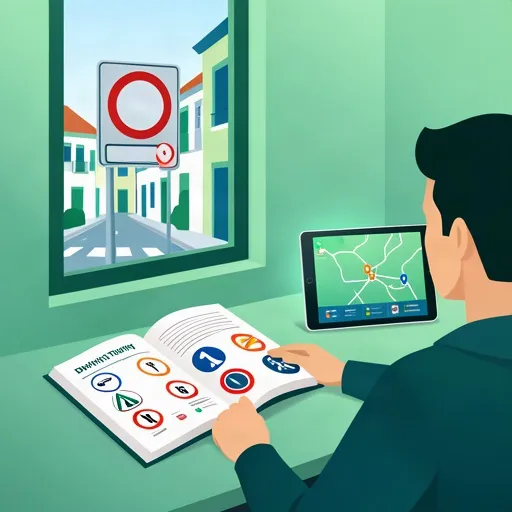
Article content overview
For any student preparing for their driving theory exam in Portugal, staying updated with the Código da Estrada is more than just an academic requirement—it is a fundamental aspect of road safety. Recently, the Portuguese government and the Autoridade Nacional de Segurança Rodoviária (ANSR) have signaled significant plans to modernize the national Road Code. These legislative shifts are intended to address current road safety challenges and modernize traffic norms to reflect new technologies and changing traffic realities.
While the legislative process is ongoing and the exact implementation date of the new regulations remains subject to official announcements, learners should view this as an opportunity to deepen their understanding of how laws are adapted to protect all road users. Understanding the roles of the Instituto da Mobilidade e dos Transportes (IMT) and the ANSR helps learners anticipate how these reforms might eventually integrate into future theory exam content and real-world driving standards.
The impetus for reforming the Código da Estrada stems from a desire to combat the "tragic reality" of road accidents. The authorities are focused on creating a more intuitive and safe environment, particularly for vulnerable road users such as pedestrians, cyclists, and individuals using personal mobility devices. By harmonizing domestic laws with broader European Union safety standards, the government aims to reduce human error and improve the predictability of traffic flow.
Legislative updates often focus on the hierarchy of rules and the protection of vulnerable users. Even if the law changes, the fundamental principles of defensive driving—anticipation, observation, and respect for others—remain the core of the Portuguese theory exam.
In the context of the Portuguese driving license system, the ANSR is primarily responsible for establishing road safety strategies and enforcing traffic legislation, while the IMT oversees the technical and regulatory aspects of driving instruction and testing. When new laws are introduced, the IMT ensures that these changes are reflected in the official study manuals and the bank of questions used in the theory exam.
Learners should remember that while the core curriculum is stable, the exam often tests the ability to apply current rules to specific, nuanced scenarios. If new legislation is passed, the IMT will typically provide a transition period to ensure that training schools and students can adapt their study materials accordingly.
As you study for your theory exam, it is helpful to categorize your knowledge based on the current Código da Estrada. The following concepts are consistently emphasized by the authorities as pillars of safe driving in Portugal:
Effective preparation for the Portuguese driving test requires a comprehensive grasp of road signs. Signs represent the most immediate form of communication between the infrastructure and the driver. Always focus on the distinction between warning signs, mandatory signs, and prohibition signs.
The theory exam is designed to test your knowledge of both the written law and your ability to reason in traffic scenarios. Do not rely solely on memorizing previous exam questions, as the wording can change, and the underlying laws may be updated to reflect current safety directives. Focus on understanding the "why" behind every traffic rule, as this conceptual knowledge will serve you better than rote memorization.
When encountering a complex question about right-of-way, always identify the presence of signs or road markings first. If no signs exist, the general rule of priority to the right is the standard, but always account for special cases like emergency vehicles or trams.
Article content overview
Explore related topics, search based questions, and concepts that learners often look up when studying Upcoming Portuguese Road Code Changes. These themes reflect real search intent and help you understand how this topic connects to wider driving theory knowledge in Portugal.
Find clear and practical answers to common questions learners often have about Upcoming Portuguese Road Code Changes. This section helps explain difficult points, remove confusion, and reinforce the key driving theory concepts that matter for learners in Portugal.
The primary goal is to address serious road safety concerns and modernize traffic legislation to better reflect current road conditions and EU safety standards.
The process is driven by the government in collaboration with the National Road Safety Authority (ANSR) and the Institute for Mobility and Transport (IMT).
While the legislation is in the planning stages, any official updates to the Code will eventually be integrated into the theoretical and practical training modules managed by the IMT.
Authorities have indicated that the process of revising and updating the code is expected to take several months, prioritizing a comprehensive and well-considered approach to road safety.
If you haven't found what you're looking for, use our powerful article search to explore related topics, refine your understanding of Portuguese road rules, or discover new insights for your IMT driving exam preparation. Continue building your knowledge effectively.