
Maintaining a safe distance from the vehicle in front is crucial for preventing collisions. This lesson, part of the 'Speed Limits and Distance Management' unit, teaches you the essential 'three-second rule' and how to adapt your distance in various conditions. It's vital knowledge for your Category B driving theory test and safe everyday driving in Sweden.
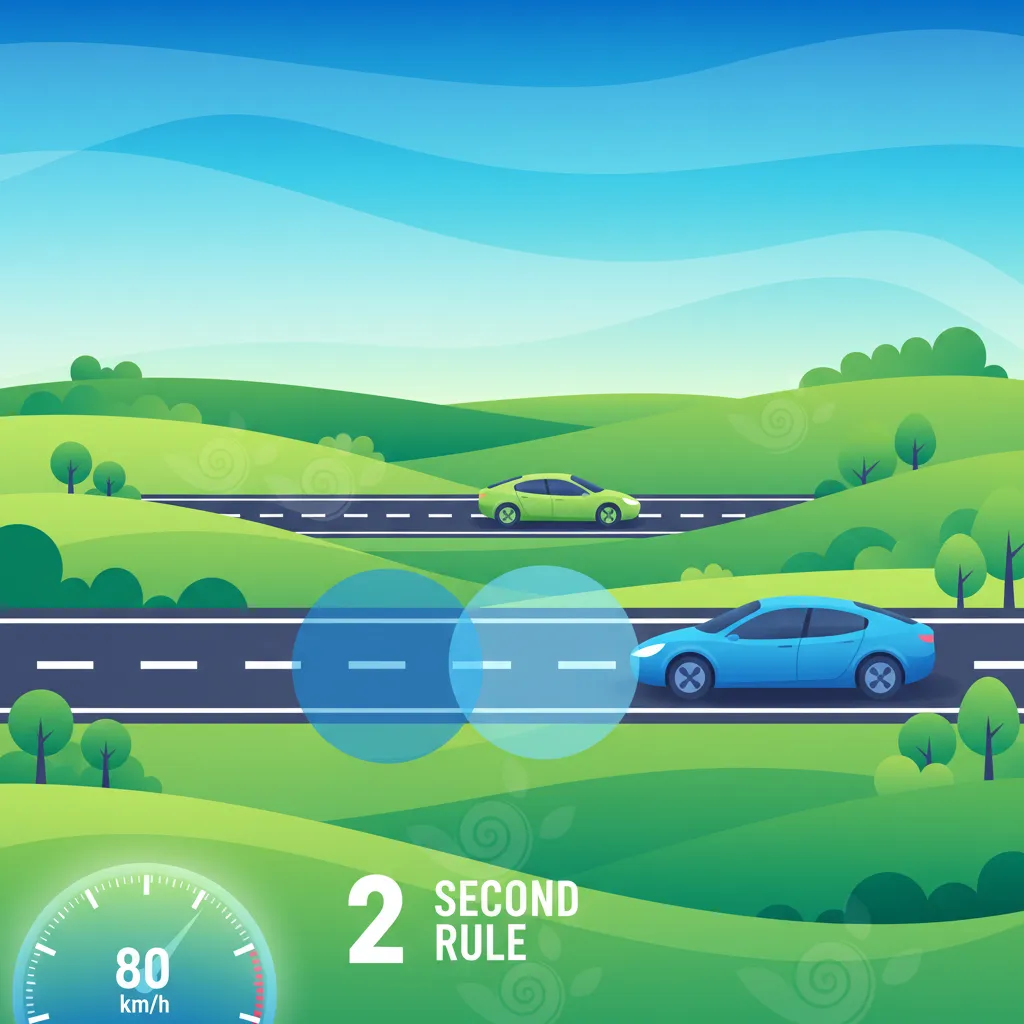
Lesson content overview
Maintaining a safe following distance, known as avstånd in Swedish, is one of the most fundamental principles of defensive driving. It refers to the minimum space you must keep between your vehicle and the one immediately ahead to allow for a safe stop without collision, even if the leading vehicle brakes suddenly. This lesson delves into the practical methods, legal requirements, and crucial adjustments needed to ensure you always maintain an adequate safety buffer on Swedish roads.
A sufficient following distance is not merely a recommendation; it is a critical safety measure and a legal obligation under Swedish traffic law. Rear-end collisions are a common type of traffic accident, often resulting from drivers following too closely. These incidents can lead to serious injuries, significant vehicle damage, and disruptions to traffic flow. By understanding and consistently applying the principles of safe following distance, you significantly reduce the risk of being involved in such an accident.
The core purpose of a safe following distance is to provide you with enough time and space to perceive a hazard, react to it, and bring your vehicle to a complete stop before colliding with the vehicle in front. This concept is directly tied to the physics of stopping distance, which includes both the distance traveled during your reaction time and the distance your vehicle needs to brake effectively. Without this buffer, even a momentary distraction or a sudden stop by the car ahead can quickly lead to a crash.
Swedish law explicitly requires drivers to maintain a safe distance. The Trafikförordning (1998:1276) Chapter 8 § 1 states that a driver must at all times keep a distance that, under the prevailing traffic and road conditions, enables safe stopping without endangering other road users. Failure to comply with this can result in penalties, highlighting its importance not just as a safety measure but also as a legal duty.
The three-second rule is a widely recommended and practical method for determining a safe following distance under normal driving conditions. It provides a dynamic, speed-independent buffer that automatically adjusts the physical distance as your speed increases or decreases. This makes it a versatile tool for maintaining safety on various road types.
Applying the three-second rule is straightforward:
Choose a Fixed Reference Point: As the vehicle ahead of you passes a stationary object on the side of the road or a distinct road marking (e.g., a road sign, a bridge, a utility pole, a shadow), note that point.
Start Counting: Immediately begin counting "one-thousand-one, one-thousand-two, one-thousand-three." Each count should correspond to approximately one second.
Check Your Position: If the front of your vehicle reaches the chosen reference point before you finish counting "one-thousand-three," you are following too closely. You need to increase your distance from the vehicle ahead and repeat the process until you can comfortably count to three seconds.
This method automatically translates to a longer physical distance at higher speeds and a shorter distance at lower speeds, providing a consistent time buffer for reaction and braking. For example:
Practice counting "one-thousand-one, one-thousand-two, one-thousand-three" regularly to ensure your timing is accurate. Distractions can easily lead to a faster, unsafe count.
While the three-second rule serves as a fundamental guideline, it is designed for ideal driving conditions: dry roads, clear visibility, and a standard passenger car. In reality, road and weather conditions, vehicle characteristics, and external factors frequently necessitate an adjusted following distance. This means consciously increasing your time gap to ensure safety.
Several factors reduce your vehicle's ability to stop or your ability to react, demanding a longer safety buffer:
Adverse Weather and Road Conditions:
Vehicle Characteristics:
Following Large Vehicles:
bus, truck, or articulated lorry, your view of the road ahead is obstructed. This delay in seeing potential hazards (e.g., brake lights of a vehicle two cars ahead) requires you to add at least two seconds to your base following distance (total of approximately five seconds), or consider changing lanes if safe to do so.Driver Condition:
Never assume that a modern vehicle with ABS (Anti-lock Braking System) or advanced safety features will eliminate the need for an increased following distance in adverse conditions. These systems assist with control but cannot defy the laws of physics regarding stopping distance on low-friction surfaces.
To truly grasp the importance of safe following distance, it helps to break down the total stopping distance into its constituent parts: perception-reaction distance and braking distance.
The perception-reaction time (PRT) is the interval from when a driver first identifies a hazard to when they physically initiate a response, such as applying the brakes. For an alert and sober driver, this time averages about one second. During this second, your vehicle continues to travel a significant distance, which is your perception-reaction distance.
Factors like fatigue, distraction (e.g., using a mobile phone), stress, and the consumption of alcohol or drugs can dramatically increase this perception-reaction time to 1.5, 2 seconds, or even more. If your PRT doubles, so does the distance you cover before you even start braking, significantly eating into your safety margin.
Braking distance is the distance your vehicle travels from the moment you apply the brakes until it comes to a complete stop. This distance is influenced by several critical factors:
Tailgating (att köra för nära or för kort avstånd in Swedish) refers to the dangerous practice of following another vehicle too closely. It is not only reckless but also illegal under Swedish law. The Vägtrafiklag (1998:1263) Chapter 3 § 3, in conjunction with the Trafikförordning, prohibits driving so close to the vehicle ahead that a collision would occur if the leading vehicle brakes suddenly.
Tailgating carries serious consequences in Sweden:
Beyond the legal ramifications, tailgating is a primary cause of rear-end collisions. It demonstrates aggressive or inattentive driving behavior, increases driver stress, and reduces the safety margin for all road users. Even in slow-moving, congested traffic, the law requires a safe distance proportionate to the speed and prevailing conditions.
The Swedish Transport Agency (Transportstyrelsen) provides comprehensive guidelines to complement the laws regarding safe following distance. While the laws mandate a "safe distance," the guidelines offer practical metrics.
These guidelines are non-binding recommendations but form the basis of driver education and are used by authorities to assess safe driving practices. Adhering to them helps ensure compliance with the broader legal mandate of maintaining a safe distance.
Even experienced drivers can make mistakes regarding following distance. Recognizing these pitfalls is the first step toward avoiding them.
Adaptive Cruise Control (ACC) system to maintain a safe distance in all conditions without manual oversight. Some ACC systems may maintain a constant time gap regardless of adverse weather.The ideal following distance is highly dependent on the specific driving environment and context.
| Condition | Adjustment Required | Reasoning |
|---|---|---|
| Rain (water on road) | Multiply base time by 2 ⇒ 6 seconds | Coefficient of friction drops; braking distance roughly doubles. |
| Snow / Ice | Multiply by 3 ⇒ 9 seconds (or more) | Friction can be very low; stopping distance increases 3-5x. |
| Heavy Fog (visibility < 50m) | Increase gap to 5–6 seconds; use nearer reference point | Limited visual cues; hazard detection time is longer. |
| Nighttime with Dipped Beam | 4 seconds on poorly lit roads | Reduced illumination slows perception. |
| Urban Street (speed ≤ 50km/h) | Minimum 2 seconds acceptable, but increase for vulnerable users | Lower speeds reduce required distance; but pedestrians/cyclists demand extra margin. |
| Motorway (speed ≥ 100km/h) | Minimum 4 seconds dry, 6–8 seconds in rain | High speed amplifies reaction and braking distances. |
| Following Large Vehicle | Add 2 seconds to base (total ≈ 5 seconds) | Obstructed view lengthens hazard detection time. |
| Heavy Load / Trailer | Multiply base time by 2.5 (≈ 7.5 seconds) | Extra mass raises braking distance and inertia. |
| Driver Fatigue / Distraction | Increase gap to ≥ 5 seconds (or more) | Compensate for increased perception-reaction time. |
Adhering to safe following distance principles offers numerous benefits:
Safe following distance is a cornerstone of responsible driving in Sweden. The three-second rule provides a reliable foundation for maintaining a dynamic safety buffer under normal conditions, while the system of adjusted following distances ensures you can adapt to any challenge presented by weather, vehicle load, or visibility. By consistently applying these principles, understanding the underlying physics of stopping, and adhering to the Trafikförordning and Vägtrafiklag, you will significantly enhance your safety and the safety of all road users. Make it a habit to constantly assess your following distance and adjust it proactively, making you a more confident, safer, and responsible driver on Swedish roads.
The three-second rule is the foundation for safe following distance on Swedish roads, providing a dynamic time buffer that translates to approximately 42m at 50 km/h, 75m at 90 km/h, and 100m at 120 km/h. This baseline must be adjusted based on conditions: doubling to 6 seconds in rain, tripling to 9+ seconds in snow or ice, and increasing to 5 seconds when following large vehicles. The lesson explains that total stopping distance consists of perception-reaction distance (averaging 1 second) plus braking distance, which is governed by speed and the coefficient of friction between tires and road surface. Tailgating violates Swedish traffic law and carries legal penalties under Vägtrafiklag Chapter 3 § 3, making proper following distance both a safety requirement and a legal obligation.
A short set of high-value points that capture the most important learning from this lesson.
The three-second rule provides a speed-independent buffer that automatically adjusts physical distance as your speed changes
Adverse conditions require specific increases: double to 6 seconds in rain, triple to 9+ seconds in snow or ice
Tailgating violates Trafikförordning Chapter 8 § 1 and can result in fines and penalty points
When following large vehicles (trucks, buses), add at least 2 seconds to your gap due to obstructed forward view
Total stopping distance equals perception-reaction distance plus braking distance, both of which increase with speed
Explore all units and lessons included in this driving theory course.
At 50 km/h, a three-second gap is ~42m; at 90 km/h it is ~75m; at 120 km/h it is ~100m
Wet roads roughly double braking distance; ice can increase it 3-5 times
Your perception-reaction time averages ~1 second, during which you travel ~14m at 50 km/h and ~25m at 90 km/h
When towing a trailer or carrying heavy loads above 80% payload, aim for approximately 7.5 seconds
The coefficient of friction drops significantly in poor conditions: dry asphalt ~0.7-0.8, wet ~0.4-0.5, ice <0.1
Counting too quickly (saying 'one-two-three' instead of 'one-thousand-one, one-thousand-two, one-thousand-three')
Keeping a standard three-second gap in rain or snow without adjusting for reduced traction
Over-relying on Adaptive Cruise Control without manually increasing the gap in adverse weather
Following large vehicles at a standard three-second distance when the obstructed view requires extra reaction time
Driving while fatigued or distracted while maintaining a standard three-second gap that no longer compensates for slower reactions
Lesson content overview
A short set of high-value points that capture the most important learning from this lesson.
The three-second rule provides a speed-independent buffer that automatically adjusts physical distance as your speed changes
Adverse conditions require specific increases: double to 6 seconds in rain, triple to 9+ seconds in snow or ice
Tailgating violates Trafikförordning Chapter 8 § 1 and can result in fines and penalty points
When following large vehicles (trucks, buses), add at least 2 seconds to your gap due to obstructed forward view
Total stopping distance equals perception-reaction distance plus braking distance, both of which increase with speed
Explore all units and lessons included in this driving theory course.
At 50 km/h, a three-second gap is ~42m; at 90 km/h it is ~75m; at 120 km/h it is ~100m
Wet roads roughly double braking distance; ice can increase it 3-5 times
Your perception-reaction time averages ~1 second, during which you travel ~14m at 50 km/h and ~25m at 90 km/h
When towing a trailer or carrying heavy loads above 80% payload, aim for approximately 7.5 seconds
The coefficient of friction drops significantly in poor conditions: dry asphalt ~0.7-0.8, wet ~0.4-0.5, ice <0.1
Counting too quickly (saying 'one-two-three' instead of 'one-thousand-one, one-thousand-two, one-thousand-three')
Keeping a standard three-second gap in rain or snow without adjusting for reduced traction
Over-relying on Adaptive Cruise Control without manually increasing the gap in adverse weather
Following large vehicles at a standard three-second distance when the obstructed view requires extra reaction time
Driving while fatigued or distracted while maintaining a standard three-second gap that no longer compensates for slower reactions
Explore search topics learners often look for when studying Safe Following Distance (Avstånd). These topics reflect common questions about road rules, driving situations, safety guidance, and lesson level theory preparation for learners in Sweden.
Browse additional driving theory lessons that cover connected traffic rules, road signs, and common driving situations related to this topic. Improve your understanding of how different rules interact across everyday traffic scenarios.
Learn how to adapt your following distance in Sweden during adverse weather conditions like rain and snow. Understand factors like speed, traffic density, and vehicle type that necessitate increased safety buffers on Swedish roads.

This lesson reinforces the core safety principle of adapting your driving to the prevailing weather conditions. You will learn why you must significantly reduce speed in heavy rain to avoid aquaplaning, how strong crosswinds can affect vehicle stability, and why reduced visibility in fog necessitates slower speeds and greater following distances. The goal is to instill a proactive approach to risk management whenever the weather is less than ideal.
This lesson focuses on the high level of caution required when driving in residential areas. You will learn about the rules for special zones like 'gångfartsområde' (walking speed area) and the need to navigate around speed calming measures like speed bumps. The central theme is anticipating unpredictable behavior from residents, especially children, and managing the risks posed by parked cars that severely limit visibility.
This lesson teaches the crucial skill of adapting speed to prevailing conditions, emphasizing that the posted speed limit is a maximum, not a target. It covers various scenarios such as rain, fog, heavy traffic, and poor road surfaces, explaining why reducing speed is essential for maintaining vehicle control and safety. The goal is to cultivate a proactive mindset where the rider constantly assesses risk and adjusts their speed accordingly.
This lesson delves into the physics of stopping a motorcycle, explaining the components of total stopping distance: perception time, reaction time, and braking distance. You will learn practical methods like the 'two-second rule' to maintain a safe following distance and how to adjust this buffer for adverse weather and high speeds. Understanding these concepts is fundamental to avoiding rear-end collisions and having enough space to react to any hazard.

This lesson emphasizes that the posted speed limit is a maximum, not a target. You will learn the principles of situational speed adaptation, which involves adjusting your speed based on factors like visibility, road geometry (curves and hills), traffic density, and potential hazards. The lesson covers specific strategies for managing speed in urban environments with pedestrians, on rural roads with hidden entrances, and on motorways to match the flow of traffic.
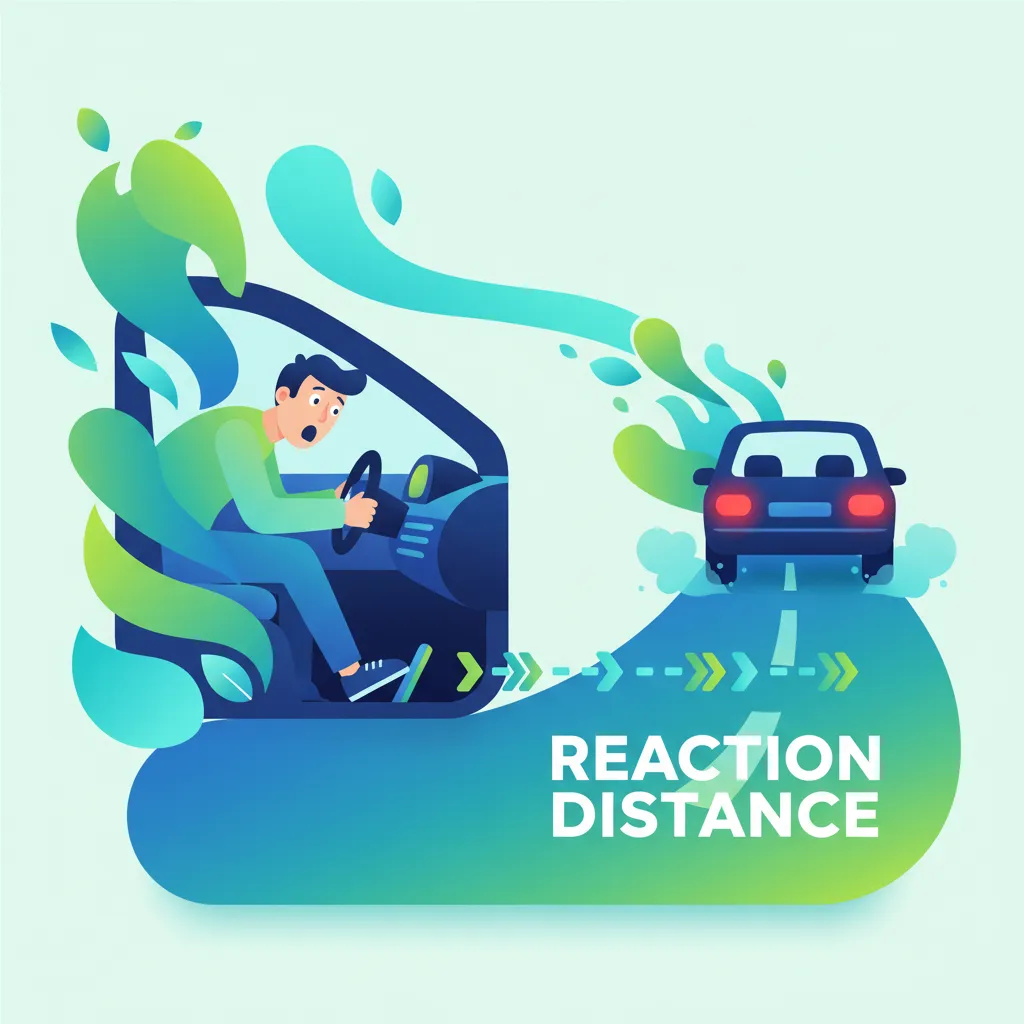
This lesson breaks down the components of the total stopping distance: reaction distance and braking distance. You will learn how your physical and mental state affects reaction time, and how speed, tire condition, and road surface (e.g., ice, rain) influence the distance required to brake to a complete stop. Understanding these physical principles is essential for making safe decisions about speed and following distance in all conditions.

This lesson focuses on the correct use of warning devices to protect an accident or breakdown scene. You will learn to immediately activate your hazard lights (varningsblinkers). The main focus is on the proper placement of the warning triangle, explaining how the distance from the vehicle must be adapted based on the road's speed limit and visibility to give oncoming drivers adequate time to react.

This lesson covers strategies for driving safely when visibility is compromised. You will learn the correct use of different lighting systems: when to use low beams, high beams (helljus), and how to avoid dazzling other drivers. The lesson also explains the specific regulations for using front and rear fog lights and provides techniques for navigating safely in dense fog or heavy precipitation by reducing speed and using the road edge as a guide.
This lesson teaches the crucial skill of adapting your speed to the dynamic and often congested conditions of urban riding. You will learn to modulate your speed smoothly in response to traffic flow, pedestrian activity, and complex intersections to maintain safety and control. Techniques covered include using engine braking effectively, anticipating the actions of other road users, and selecting a speed that maximizes your reaction time in a high-density environment.
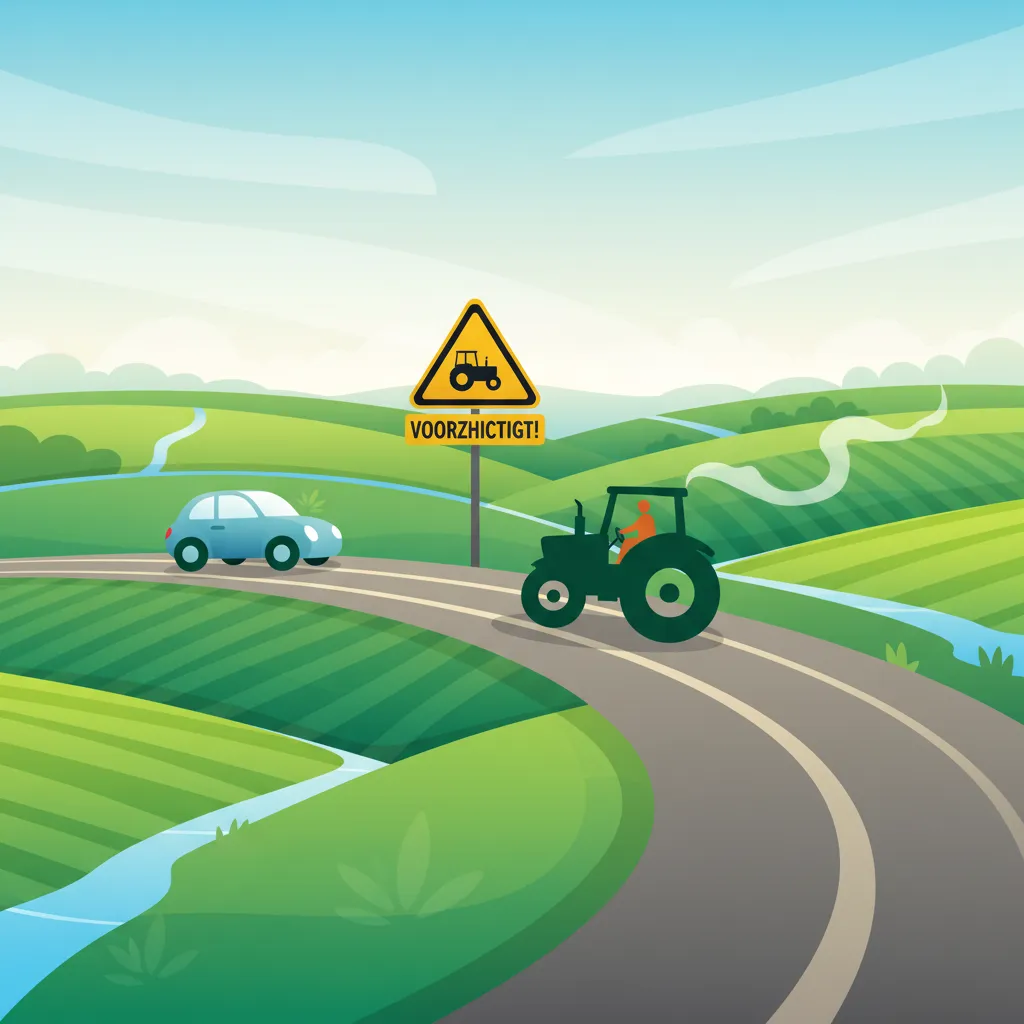
This lesson addresses the specific risks associated with driving on rural roads (landsvägar). You will learn how to manage higher speeds on narrow, winding roads with limited visibility due to curves and hills. The lesson covers procedures for safely overtaking slow-moving agricultural vehicles, managing encounters with oncoming traffic on narrow sections, and being constantly vigilant for wildlife, especially at dawn and dusk.
Explore the fundamental concepts of reaction time and braking distance in the context of Swedish driving theory. Learn how these distances are calculated and their critical role in maintaining safe following distances, especially for category B licence preparation.
This lesson breaks down the components of the total stopping distance: reaction distance and braking distance. You will learn how your physical and mental state affects reaction time, and how speed, tire condition, and road surface (e.g., ice, rain) influence the distance required to brake to a complete stop. Understanding these physical principles is essential for making safe decisions about speed and following distance in all conditions.
This lesson reinforces the core safety principle of adapting your driving to the prevailing weather conditions. You will learn why you must significantly reduce speed in heavy rain to avoid aquaplaning, how strong crosswinds can affect vehicle stability, and why reduced visibility in fog necessitates slower speeds and greater following distances. The goal is to instill a proactive approach to risk management whenever the weather is less than ideal.
This lesson focuses on the high level of caution required when driving in residential areas. You will learn about the rules for special zones like 'gångfartsområde' (walking speed area) and the need to navigate around speed calming measures like speed bumps. The central theme is anticipating unpredictable behavior from residents, especially children, and managing the risks posed by parked cars that severely limit visibility.
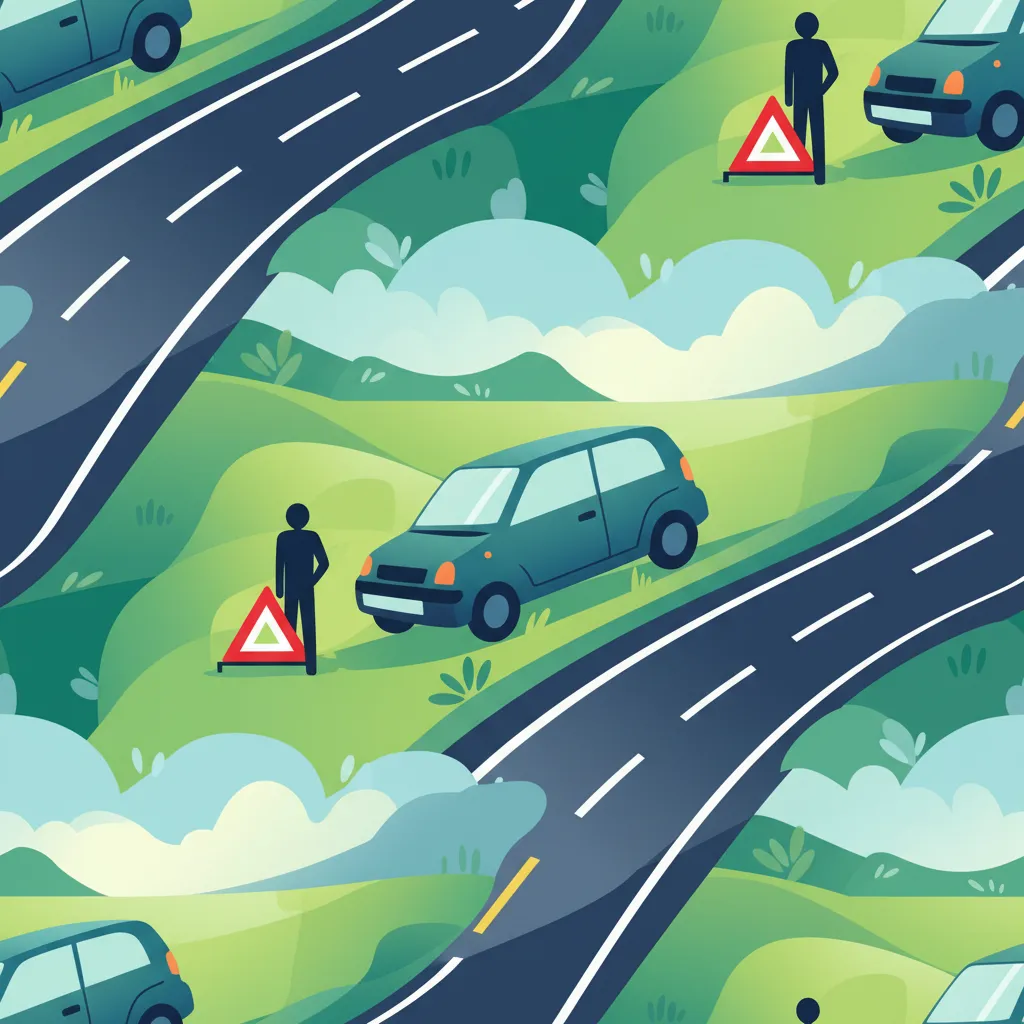
This lesson provides a safety protocol for dealing with a vehicle breakdown. You will learn the importance of trying to move the vehicle as far off the road as possible, preferably onto the shoulder or into an emergency lay-by. The lesson stresses that on high-traffic roads, the occupants' personal safety is the top priority; this involves wearing a reflective vest and waiting for assistance in a safe location away from the vehicle and the flow of traffic.
This lesson focuses on the two most significant actions affecting fuel consumption: acceleration and braking. You will learn that aggressive driving with rapid acceleration and hard braking wastes significant amounts of fuel. The content teaches the technique of gentle, steady acceleration and a forward-planning approach to driving, where you look far ahead to anticipate traffic light changes and slowdowns, allowing you to decelerate by simply releasing the accelerator (motor braking).
This lesson covers the general, nationwide rules that govern where you may and may not park or stop, even without specific signs. You will learn about the prohibitions on stopping near intersections, on pedestrian crossings, and at bus stops. The content clarifies the legal definitions and provides clear guidelines on maintaining safe distances and ensuring that your parked vehicle does not obstruct traffic or create a hazard.
This lesson focuses on the correct use of warning devices to protect an accident or breakdown scene. You will learn to immediately activate your hazard lights (varningsblinkers). The main focus is on the proper placement of the warning triangle, explaining how the distance from the vehicle must be adapted based on the road's speed limit and visibility to give oncoming drivers adequate time to react.
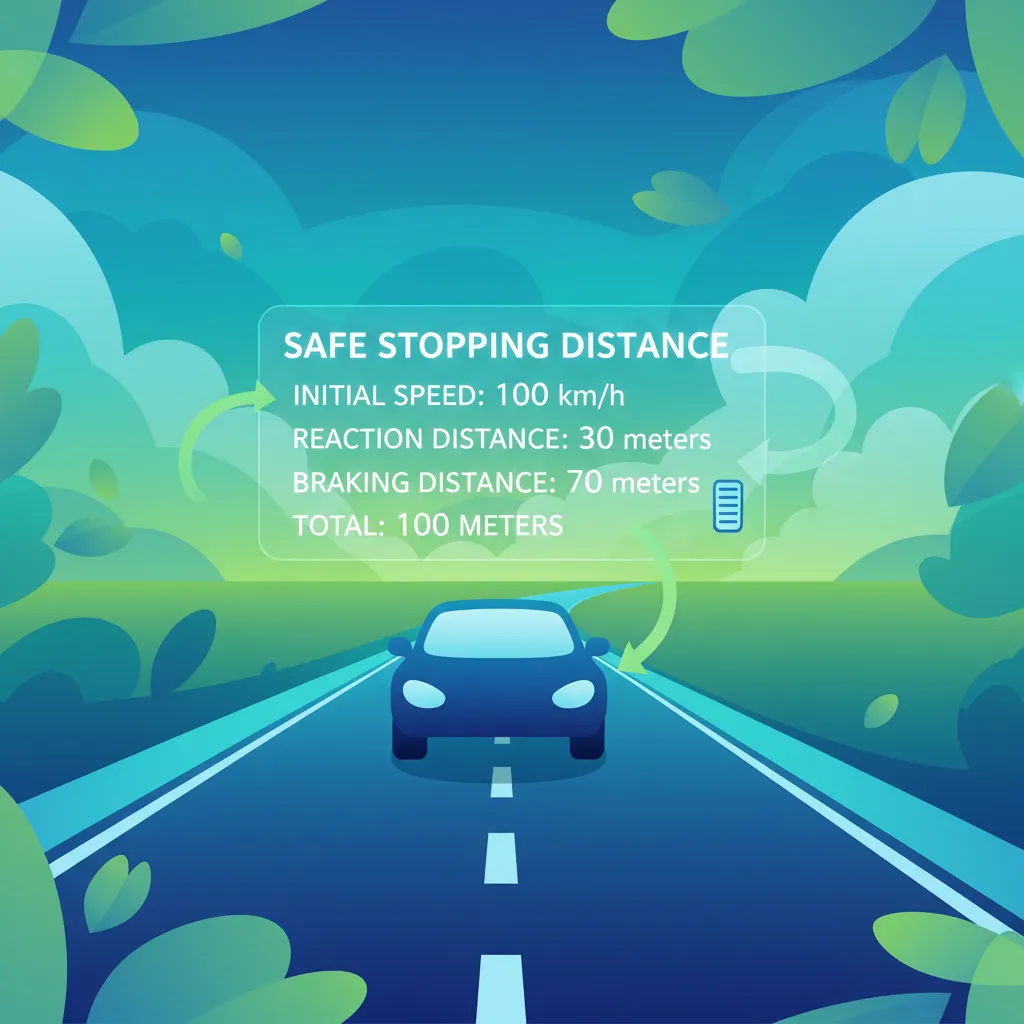
This lesson provides a practical understanding of the physics behind stopping a moped. It breaks down the total stopping distance into two key components: reaction distance (the distance traveled before applying the brakes) and braking distance (the distance covered while braking). Learners will explore how factors like speed, road conditions, and rider alertness dramatically affect these distances.
This lesson provides step-by-step instructions for performing common low-speed maneuvers, including reversing in a straight line, backing around a corner, and various types of parking. You will learn how to use reference points on your vehicle and the surroundings to position the car accurately. The paramount importance of slow speed, continuous 360-degree observation, and being prepared to stop for pedestrians or other vehicles is emphasized throughout.
This lesson delves into the physics of stopping a motorcycle, explaining the components of total stopping distance: perception time, reaction time, and braking distance. You will learn practical methods like the 'two-second rule' to maintain a safe following distance and how to adjust this buffer for adverse weather and high speeds. Understanding these concepts is fundamental to avoiding rear-end collisions and having enough space to react to any hazard.
Find clear answers to common questions learners have about Safe Following Distance (Avstånd). Learn how the lesson is structured, which driving theory objectives it supports, and how it fits into the overall learning path of units and curriculum progression in Sweden. These explanations help you understand key concepts, lesson flow, and exam focused study goals.
The three-second rule is a method to ensure you maintain a safe distance from the vehicle ahead. Pick a fixed point (like a signpost), and when the vehicle in front passes it, start counting 'one thousand one, one thousand two, one thousand three'. If you pass the same point after completing your count, your distance is adequate on dry roads. This allows time to react and brake safely.
You must increase your following distance significantly in adverse conditions. This includes rain, snow, ice, fog, or when driving on slippery surfaces. Also, extend your distance when following large vehicles (trucks, buses) that might obscure your view, or when towing a trailer, as your braking distance will be longer.
The faster you drive, the longer your stopping distance becomes. While the three-second rule provides a constant time gap, it results in a larger physical distance at higher speeds. This is why adapting your speed to conditions and maintaining adequate distance is crucial for safety on all types of roads.
While the three-second rule is a good general guideline, motorcyclists and cyclists can stop much more quickly than cars. It's advisable to maintain an even greater following distance when behind them to allow for their rapid deceleration and to provide them with space to manoeuvre safely.
Theory test questions often present scenarios where you must judge the correct following distance. You might see images of road conditions, vehicle types ahead, or traffic situations, and be asked to select the safest option for maintaining distance, often relating back to the principles of the three-second rule and its necessary adjustments.
Refine your study plan by exploring practice sets on specific Swedish traffic rules, road signs, or driving situations. Use the search to quickly access relevant questions and focus your preparation for the official driving licence theory exam.