

Driving Theory
Learn with Turkish Theory Courses

Motorcycle Theory: Optimal Lane Positioning

Optimal Lane Positioning lesson overview image

In this lesson, learners will discover the principles of optimal lane positioning that enhance both rider visibility and predictability to other road users. The content focuses on selecting the correct lane within various traffic scenarios, such as approaching intersections, navigating curves, and during overtaking. By maintaining appropriate lane placement, riders can minimize blind spots and improve reaction times.

motorcycle theorydefensive ridinglane positioningMTSK examroad safetyA class licence
Motorcycle Theory curriculum

Part of the full Motorcycle Theory curriculum

The Optimal Lane Positioning lesson belongs to the structured Motorcycle Theory curriculum, a complete learning program designed to help learners in Turkey master every key topic required for the Turkish driving theory exam. By studying this lesson, you continue building the knowledge, traffic awareness, and exam readiness developed throughout the units of the curriculum.
motorcycle licenceA1 licenceA2 licenceMTSK examTurkish traffic rulesdefensive ridingtheory exam preproad safetymotorcycle safety
Motorcycle Theory curriculum image

Motorcycle Driving Theory for Turkish Licences

This official preparation curriculum covers all essential theoretical aspects required to pass the Turkish motorcycle driving licence examination. It details the unique legal frameworks, rider responsibilities, protective gear standards, and defensive riding tactics under Turkish road legislation. Aspiring riders of A1, A2, and A category vehicles will develop a safety-first mindset while gaining deep knowledge of the official highway rules.

8 units26 lessons
View curriculum

Why the Optimal Lane Positioning lesson matters

The Optimal Lane Positioning lesson explains one of the most important subjects in the Lane Positioning, Blind Spots, Overtaking and Space Management unit of the Motorcycle Theory curriculum. It focuses on essential exam content that every learner in Turkey needs for the Turkish driving theory exam. Through clear explanations, practical examples, and real traffic situations, this lesson helps you understand how the rules work in practice and strengthens your overall exam preparation.

Browse curriculum
Learning objectives

What you will learn in the Optimal Lane Positioning lesson

Identify the safest lane positions for different traffic and road conditions
Explain how lane positioning improves rider visibility to car drivers
Describe the relationship between lane choice and reaction time at intersections
Recognize how to adjust lane position to account for surface hazards and blind spots
Apply correct positioning principles during overtaking and cornering scenarios
What you will gain

What you will understand after completing the Optimal Lane Positioning lesson

After completing this lesson, you will be able to confidently select the most appropriate path through any traffic scenario, significantly reducing your exposure to hazards. You will understand how to avoid being trapped in blind spots and how to use lane placement to communicate your intentions to other drivers clearly.

In the context of the Turkish theory exam, you will be better equipped to answer scenario-based questions that test your ability to anticipate dangers and maintain a safe riding path. This knowledge will translate directly into better defensive riding habits, ensuring you remain visible and stable on Turkish roads.


Start reading topics
What you will understand after completing the Optimal Lane Positioning lesson
Learners who benefit the most from the Optimal Lane Positioning lesson
Who should study this

Learners who benefit the most from the Optimal Lane Positioning lesson

This lesson is essential for all A, A1, and A2 licence candidates in Turkey. It is particularly helpful for beginners learning to navigate urban traffic and for exam retakers who need to improve their understanding of defensive riding and hazard perception.

View all lesson topics
Questions

FAQs about the Optimal Lane Positioning lesson

Find answers to common questions about the Optimal Lane Positioning lesson, including how it connects to the Lane Positioning, Blind Spots, Overtaking and Space Management unit and the full Motorcycle Theory curriculum. Learn how long the lesson takes, what topics it covers, and how it supports your preparation for the driving theory exam in Turkey.

Why learners trust the Optimal Lane Positioning lesson

Why learners trust the Optimal Lane Positioning lesson

The Optimal Lane Positioning lesson is designed to make complex driving theory topics easier to understand. Content is written in a clear and practical way, aligned with exam expectations in Turkey, and supported by examples that reflect real traffic situations. Whether you are reviewing or starting from scratch, this lesson helps you study efficiently and make steady progress inside the Motorcycle Theory curriculum.

Covers all important concepts linked to this lessonCreated using exam relevant topics from TurkeyEvery topic explained using real world traffic situationsLesson layout that guides you step by stepReflects the latest rules required for the driving theory examStrengthens your preparation for the Turkish theory exam
Start now

More units in the Motorcycle Theory curriculum

Explore additional units that make up the complete Motorcycle Theory curriculum. Each unit focuses on important driving theory subjects, helping learners in Turkey build strong exam knowledge and improve understanding of rules, signs, and traffic behaviour.
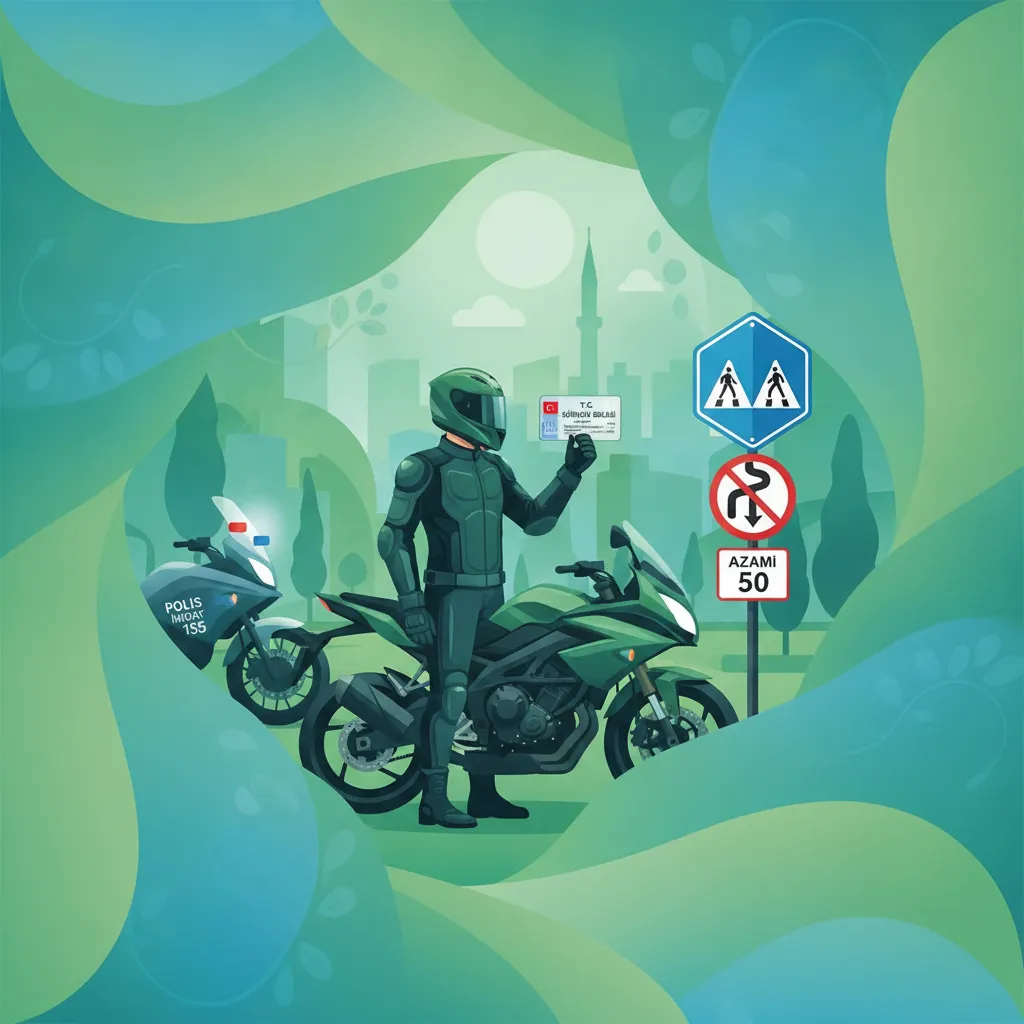
Motorcycle Licence Basics and Rider Responsibility unit image
1

Motorcycle Licence Basics and Rider Responsibility

Learn the legal requirements, licensing categories, and safety responsibilities for motorcycle riders in Turkey to prepare for your theory exam.

5 lessons

Learn more
Protective Equipment, Visibility and Rider Condition unit image
2

Protective Equipment, Visibility and Rider Condition

This unit covers the essential protective equipment, visibility requirements, and physical condition factors critical for safe motorcycling and passing the Turkish theory exam.

3 lessons
Learn more
Turkish Traffic Signs, Markings, Lights and Priority Rules unit image
3

Turkish Traffic Signs, Markings, Lights and Priority Rules

Master the essential Turkish traffic signs, road markings, and intersection priority rules required to pass your motorcycle theory exam and ride safely on public roads.

3 lessons
Learn more
Intersections, Roundabouts, Crossings and Urban Riding unit image
4

Intersections, Roundabouts, Crossings and Urban Riding

Master the art of navigating Turkish intersections, roundabouts, and crossings safely to ace your motorcycle theory exam and improve your urban riding skills.

3 lessons
Learn more
Lane Positioning, Blind Spots, Overtaking and Space Management unit image
5

Lane Positioning, Blind Spots, Overtaking and Space Management

Learn the essential skills for safe motorcycle lane positioning, managing blind spots, and executing legal overtaking maneuvers to pass your Turkish theory exam with confidence.

3 lessons
Learn more
Braking, Cornering, Grip and Motorcycle Control unit image
6

Braking, Cornering, Grip and Motorcycle Control

Master the physics of motorcycle control, including effective braking, stable cornering, and grip management, essential for your Turkish motorcycle theory exam and safe riding.

3 lessons
Learn more
Weather, Road Surfaces, Night Riding and Faster Roads unit image
7

Weather, Road Surfaces, Night Riding and Faster Roads

Learn how to manage your motorcycle safely in challenging weather, on diverse road surfaces, and during night riding to pass your Turkish driving theory test.

3 lessons
Learn more
Risk Behaviour, Emergencies, Penalties and Defensive Riding unit image
8

Risk Behaviour, Emergencies, Penalties and Defensive Riding

Learn to manage rider risk, understand Turkish traffic penalties, and master defensive riding techniques for the official motorcycle theory exam.

3 lessons
Learn more

Start Your Targeted Turkish Theory Practice Now

Use our comprehensive practice search to find exactly the Turkish driving theory questions you need to master. Whether reviewing specific road signs, traffic rules, or first aid scenarios, select your perfect practice set and boost your confidence for the official ehliyet sınavı.

Search Practice Questions by Topic

Explore more content on Turkish driving theory

Turkish road signsAM Moped Theory courseTurkish article topicsMotorcycle Theory courseSearch Turkish road signsGoods Vehicle Theory courseTurkish driving theory homeTurkish road sign categoriesTurkish driving theory topicsSearch Turkish theory articlesTurkish driving theory coursesTurkish B Licence Theory courseTurkish D Licence Theory courseTurkish driving theory articlesTurkish driving theory practiceTurkish practice set categoriesTurkish driving licence proceduresSearch Turkish driving theory practiceTurkish driving theory terminology A–ZTurkish driving theory terms and glossaryHelmet, Visibility and Protective Behaviour unit in AM Moped TheoryLicence Basics and Small Vehicle Responsibility unit in AM Moped TheoryProfessional Licence Scope and Responsibility unit in Goods Vehicle TheoryTurkish Traffic Signs and Traffic Signals unit in Turkish B Licence TheoryMotorcycle Licence Basics and Rider Responsibility unit in Motorcycle TheoryVehicle Size, Weight, Dimensions and Road Space unit in Goods Vehicle TheoryProtective Equipment, Visibility and Rider Condition unit in Motorcycle TheoryCategory B Licence Basics and Driver Responsibility unit in Turkish B Licence TheoryPassenger Safety, Comfort, Accessibility and Driver Conduct unit in Turkish D Licence TheoryPassenger Vehicle Licence Scope and Professional Responsibility unit in Turkish D Licence TheoryOptimal Lane Positioning lesson in Lane Positioning, Blind Spots, Overtaking and Space ManagementSafe Overtaking Practices lesson in Lane Positioning, Blind Spots, Overtaking and Space ManagementBlind Spot Awareness and Management lesson in Lane Positioning, Blind Spots, Overtaking and Space Management