
This lesson guides you through the technical requirements and safety protocols for reversing a vehicle under Turkish traffic regulations. It is a critical component of your Category B theory training, helping you understand how to navigate tight spaces and maneuvers without putting other road users at risk. By mastering these basics, you will be better prepared to handle both the practical demands of driving and the specific questions appearing in the MTSK e-sınav.

Lesson content overview
Reversing is one of the most high-risk maneuvers you will perform as a driver. Because passenger vehicles are designed primarily for forward movement, reversing significantly limits your direct line of sight. This creates large blind spots (kör noktalar) and reduces your ability to react quickly to dynamic hazards.
In the Turkish driving education system, mastering reverse maneuvers is not only crucial for daily driving but is also a strictly graded component of the practical driving test (direksiyon eğitimi sınavı). Candidates must execute precise maneuvers, such as the 25-meter straight reverse (25 metre geri gitme) and the L-shape reverse turn (L park), without hitting curbs or cones.
This lesson provides a comprehensive guide to safe reversing techniques, the physics of steering in reverse, visibility management, and the legal frameworks established under the Turkish Highway Traffic Regulation (Karayolları Trafik Yönetmeliği).
To perform any reversing maneuver safely, you must integrate four fundamental principles: visibility management, speed control, spatial awareness, and continuous observation.
Before you shift into reverse gear (geri vites), you must maximize your field of vision. This requires the correct adjustment of your rearview and side mirrors, coupled with physical head checks to eliminate blind spots. No single mirror or technology can provide a complete view of the area behind your vehicle.
Reversing must always be conducted at a very low, controlled speed—typically a crawl. A lower speed gives you more time to process visual information, adjust your steering, and stop instantly if a pedestrian or obstacle suddenly appears.
Spatial awareness is the ability to judge the position and dimensions of your vehicle relative to its surroundings. When reversing, you must monitor not only where the rear of your car is going but also where the front end is swinging.
A safe driver never assumes that the path behind them will remain clear. You must maintain an active, 360-degree visual scan throughout the entire duration of the maneuver.
The physics of steering in reverse can be counter-intuitive for new drivers. Unlike forward driving, where the front wheels guide the vehicle and the rear wheels follow, reversing turns the rear wheels into the pivot point of the turn.
The operational characteristic where small adjustments of the steering wheel result in rapid, pronounced directional changes at the rear of the vehicle. Because the steering wheels are at the front, turning them causes the front of the car to swing wide in the opposite direction of the turn.
When you turn the steering wheel to the right while reversing, the rear of the vehicle moves to the right. Conversely, turning the steering wheel to the left moves the rear of the vehicle to the left.
However, you must be highly aware of front-end swing:
Failure to monitor this front-end swing is a common cause of collisions with parked vehicles, garage pillars, or nearby pedestrians.
Depress the clutch fully and shift into reverse gear.
Position your right foot gently over the brake pedal, ready to control your speed or stop.
Slowly bring the clutch to the biting point (kavrama noktası) until you feel the vehicle begin to move backward.
Use 'clutch slipping' (yarım debriyaj) to maintain a slow, steady crawl. In most reversing scenarios, you do not need to press the accelerator pedal at all; the engine idle speed is sufficient.
Keep the clutch pedal steady to regulate your speed, and depress it fully if you need to stop quickly.
To reverse safely, you must utilize all available tools to piece together an accurate mental map of your surroundings.
Before starting your journey, your mirrors must be correctly adjusted.
While side mirrors are invaluable for checking your alignment with curbs or parking lines, they have significant limitations. They do not show objects directly behind the trunk or low to the ground near the rear wheels.
A blind spot is any area around the vehicle that cannot be directly seen by looking forward or through the mirrors. When reversing, your largest blind spot is directly behind your rear window, below the line of sight.
Mandatory Safety Rule: You must perform a physical head check (shoulder check) before and during any reversing maneuver. Relying solely on mirrors is a dangerous driving habit and a major cause of collisions with children, low walls, and posts.
To perform a physical head check, turn your upper body and head to look directly through the rear side windows and the back window. This physical movement shifts your perspective and reveals hazards that are completely invisible in your mirrors.
Modern Category B vehicles are frequently equipped with backup cameras and acoustic parking sensors. While these driving aids are highly beneficial, they must be used correctly.
The Golden Rule: Technology is an aid, not a replacement. You must combine rearview camera displays with active mirror checks and physical shoulder checks.
Executing a safe reverse requires a systematic, disciplined approach. Use the following protocol every time you prepare to back up.
Secure the vehicle: Bring the car to a complete stop, keep your foot firmly on the brake pedal, and ensure you are not blocking active traffic flows unnecessarily.
Perform a 360-degree sweep: Look ahead, check all three mirrors, and look over both shoulders. Check for pedestrians, cyclists, or approaching vehicles.
Engage reverse gear: Press the clutch (for manual) or brake (for automatic) and shift into reverse. This action automatically illuminates your white reverse lights (geri vites lambası), alerting other road users of your intention to move backward.
Position your body: If reversing straight, turn your body slightly to the right, place your right hand on the back of the passenger seat (if comfortable), and look directly through the rear window. Keep your left hand at the 12 o'clock position on the steering wheel for stable, single-handed steering control.
Release the brake and move slowly: Keep your speed at a crawl. Continuously scan your mirrors and glance forward to ensure the front-end swing of your vehicle is not creating a hazard.
Stop and secure: Once the maneuver is complete, press the brake, shift into neutral or park, and engage the parking brake.
Under the Turkish Highway Traffic Law (Karayolları Trafik Kanunu), reversing is heavily regulated to ensure public safety. Violations can result in traffic fines, penalty points, and immediate failure during the practical driving test.
Turkish Traffic Regulations (Geri Gitme Kuralları): According to national traffic laws, drivers must not reverse or perform U-turns on one-way streets, highways, or expressways, except under specific, legally defined exemptions (such as parking or returning to a safe point when a road is completely blocked).
You are generally prohibited from reversing on a one-way street. The only exception is when you are actively parking your vehicle into a designated space (e.g., parallel parking), and this must be done without endangering or obstructing oncoming traffic. You cannot reverse down a one-way street simply because you missed a turn or a house number.
Reversing, turning around, or stopping on Turkish motorways (Otoyol) is strictly illegal. If you miss an exit on an otoyol, you must continue driving to the next available exit. Reversing on the shoulder of a highway is extremely dangerous due to high speed differentials and carries severe legal penalties.
You must not reverse your vehicle near or within intersections, pedestrian crossings (yaya geçitleri), or school zones. These areas feature high volumes of vulnerable road users who may not anticipate a vehicle moving backward.
While there is no single numerical speed limit explicitly written for reversing in every scenario, the law dictates that the speed must be "low enough to allow complete control and safe stopping under any condition" (generally interpreted as a crawl, or under 20 km/h).
Understanding where other drivers fail can help you avoid dangerous situations. Here are the most common errors committed during reverse maneuvers:
A professional driver adapts their reversing technique to the surrounding environment and current weather conditions.
Wet or icy roads significantly increase your stopping distance, even at low speeds. Raindrops, condensation, or snow on your rear window and side mirrors can distort your vision.
Reversing at night is highly challenging because standard white reverse lights (geri vites lambası) provide limited illumination.
Carrying heavy cargo or passengers can obstruct your view through the interior rearview mirror. Towing a light trailer completely changes the steering dynamics of reversing.
To pass your Turkish driving license theory exam (MTSK e-sınavı), you should be familiar with the following technical terms and their definitions:
To solidify your understanding, study these practical scenarios and how a safe Category B driver handles them.
You are preparing to back out of your driveway onto a suburban street. There are hedges on both sides of the driveway, blocking your view of the sidewalk.
During your Turkish practical driving test, the examiner asks you to perform the 25-meter straight reverse maneuver.
This lesson teaches the essential safety protocol for reversing a vehicle under Turkish traffic law, emphasizing that reversing significantly limits visibility due to vehicle design and requires strict adherence to mirror checks, blind spot observations via shoulder turns, and extremely low crawl speeds. Learners must understand that reversing is prohibited on highways, expressways, and one-way streets (except for parking), and that technology aids like rearview cameras supplement but never replace systematic visual scanning. The core skill involves managing front-end swing while continuously monitoring mirrors and performing physical head checks to detect vulnerable road users, particularly children, pedestrians, and cyclists who may approach from blind spots.
A short set of high-value points that capture the most important learning from this lesson.
Safe reversing requires integrating four core principles: visibility management, speed control, spatial awareness, and continuous observation
When reversing, turning the steering wheel right moves the rear of the vehicle right, but causes the front to swing left and vice versa
Mirrors alone cannot eliminate all blind spots; physical shoulder checks are mandatory before and during reversing
Reversing on Turkish highways (Otoyol), expressways, and one-way streets is strictly prohibited except when parking
Modern driving aids like rearview cameras and parking sensors supplement but never replace mirror checks and shoulder inspections
Explore all units and lessons included in this driving theory course.
The front of the vehicle swings opposite to the turning direction when reversing, requiring constant monitoring of both ends
Turkish traffic law prohibits reversing near pedestrian crossings (yaya geçidi), intersections, and school zones
Reverse speed must be extremely low (crawl speed) to allow instant stopping if a hazard appears
When reversing straight, turn your body toward the right, place your right hand on the passenger seat, and look through the rear window
The white reverse lights (geri vites lambası) automatically illuminate when reverse gear is engaged to warn other road users
Relying solely on the rearview camera while ignoring side mirrors and physical blind spot checks, leaving the vehicle vulnerable to unseen hazards
Reversing at excessive speed, which makes steering unstable and dramatically increases stopping distance
Failing to monitor front-end swing when turning sharply, causing side-swipe collisions with parked vehicles or nearby obstacles
Neglecting to clear condensation, rain, or ice from mirrors and rear windows before reversing in adverse weather conditions
Assuming the path behind will remain clear throughout the maneuver instead of maintaining continuous 360-degree observation
Lesson content overview
A short set of high-value points that capture the most important learning from this lesson.
Safe reversing requires integrating four core principles: visibility management, speed control, spatial awareness, and continuous observation
When reversing, turning the steering wheel right moves the rear of the vehicle right, but causes the front to swing left and vice versa
Mirrors alone cannot eliminate all blind spots; physical shoulder checks are mandatory before and during reversing
Reversing on Turkish highways (Otoyol), expressways, and one-way streets is strictly prohibited except when parking
Modern driving aids like rearview cameras and parking sensors supplement but never replace mirror checks and shoulder inspections
Explore all units and lessons included in this driving theory course.
The front of the vehicle swings opposite to the turning direction when reversing, requiring constant monitoring of both ends
Turkish traffic law prohibits reversing near pedestrian crossings (yaya geçidi), intersections, and school zones
Reverse speed must be extremely low (crawl speed) to allow instant stopping if a hazard appears
When reversing straight, turn your body toward the right, place your right hand on the passenger seat, and look through the rear window
The white reverse lights (geri vites lambası) automatically illuminate when reverse gear is engaged to warn other road users
Relying solely on the rearview camera while ignoring side mirrors and physical blind spot checks, leaving the vehicle vulnerable to unseen hazards
Reversing at excessive speed, which makes steering unstable and dramatically increases stopping distance
Failing to monitor front-end swing when turning sharply, causing side-swipe collisions with parked vehicles or nearby obstacles
Neglecting to clear condensation, rain, or ice from mirrors and rear windows before reversing in adverse weather conditions
Assuming the path behind will remain clear throughout the maneuver instead of maintaining continuous 360-degree observation
Explore search topics learners often look for when studying Reversing Safely. These topics reflect common questions about road rules, driving situations, safety guidance, and lesson level theory preparation for learners in Turkey.
Browse additional driving theory lessons that cover connected traffic rules, road signs, and common driving situations related to this topic. Improve your understanding of how different rules interact across everyday traffic scenarios.
Learn the theory behind standard parking manoeuvres including parallel and perpendicular parking. Understand the required vehicle positioning, spatial awareness, and steering techniques for executing safe parking maneuvers while maintaining control according to Turkish highway traffic regulations and official driving education standards for Category B license candidates.
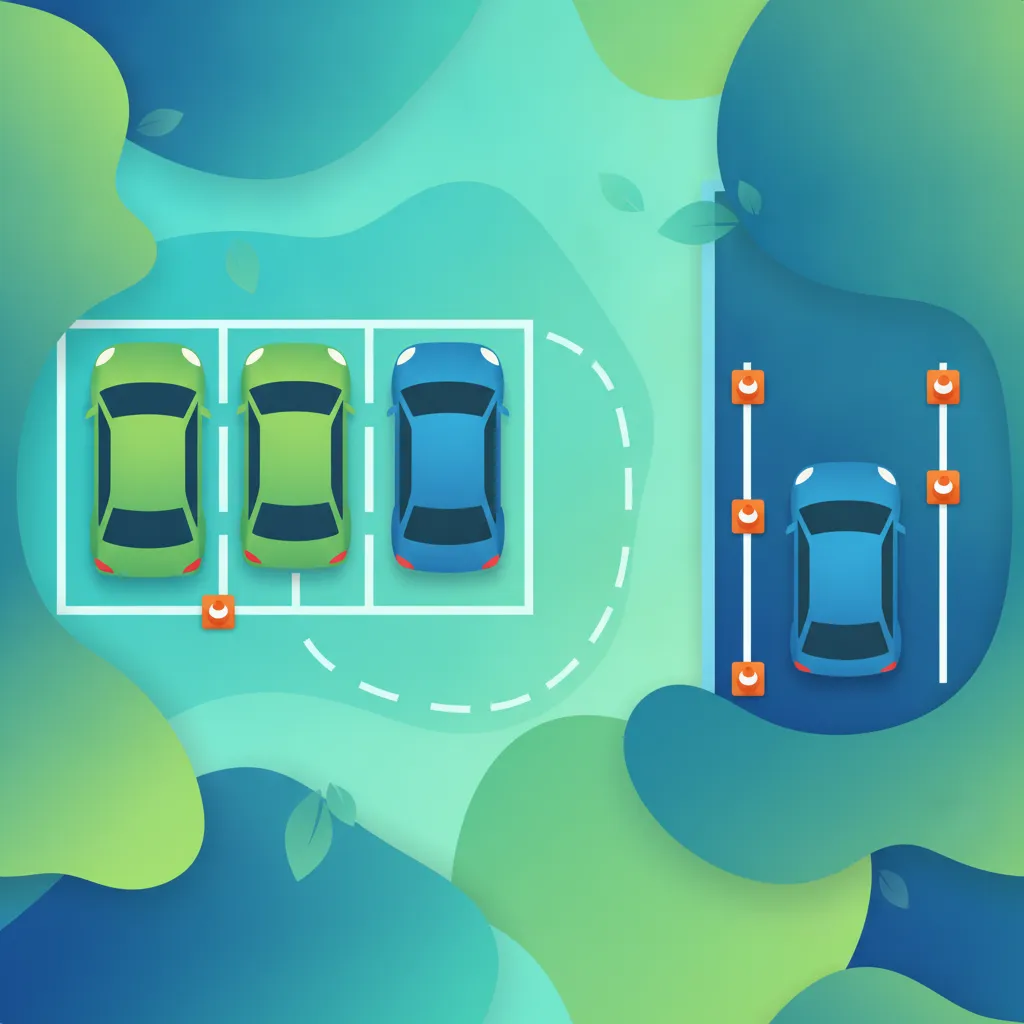
This lesson focuses on the techniques and procedures for parallel and perpendicular parking. Topics include approaching the parking space, positioning the vehicle, and executing the manoeuvre safely. Learners will explore the differences between parallel and perpendicular parking, as well as the importance of proper vehicle alignment and distance management.

This lesson covers the techniques and safety considerations for docking a goods vehicle in loading areas and performing precision parking maneuvers. Learners will learn how to align the vehicle correctly, use reverse gears effectively, and communicate with spotters when necessary. Emphasis is placed on maintaining situational awareness, checking for obstacles, and ensuring secure dock operations.
Explore the principles of hazard perception and anticipation to become a more proactive driver. Understand how to scan for vulnerable road users, interpret traffic environments, and respond effectively to potential dangers on the road based on the Turkish highway code and defensive driving theory principles.
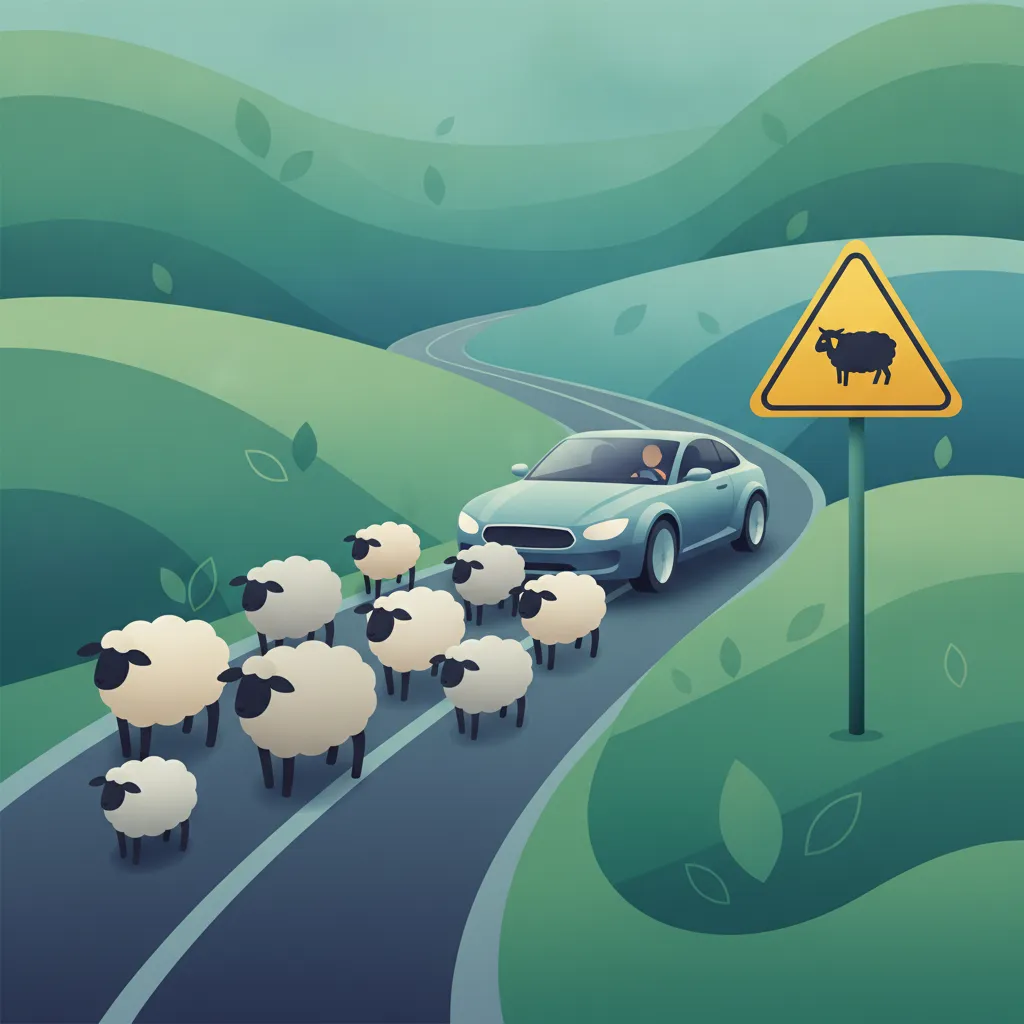
This lesson explores the challenges of encountering animals, including livestock and wildlife, on rural roads. Learners will understand the importance of recognizing animal crossing signs, anticipating animal behavior, and adjusting speed accordingly. The lesson also covers strategies for avoiding collisions with animals, such as maintaining a safe distance.

This lesson explores the hazards characteristic of rural roads, including narrow paths, lack of lighting, slow agricultural vehicles, and sharp curves. It teaches drivers how to anticipate blind corners, adjust speed, and pass slow-moving tractors safely. Motorists will learn to remain highly alert for unexpected roadway obstructions.
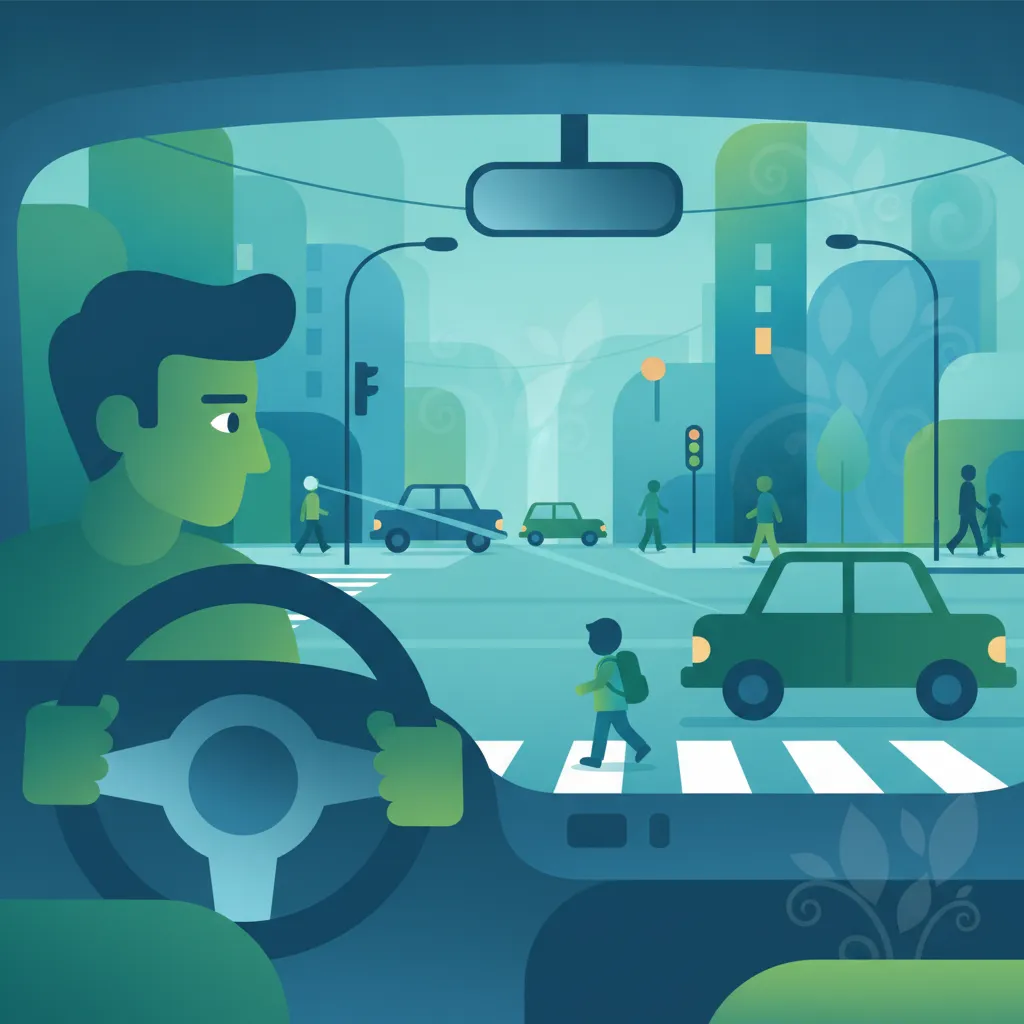
This lesson explores the critical skill of hazard identification and anticipation while driving. Topics include recognizing potential risks in traffic, road conditions, and environmental factors. Learners will develop skills in anticipatory driving to proactively address hazards before they become dangerous. Real-world examples illustrate how to maintain vigilance.
Find clear answers to common questions learners have about Reversing Safely. Learn how the lesson is structured, which driving theory objectives it supports, and how it fits into the overall learning path of units and curriculum progression in Turkey. These explanations help you understand key concepts, lesson flow, and exam focused study goals.
No. Reversing, performing a U-turn, or stopping on motorways is strictly prohibited under Turkish traffic law, except in emergency cases or when authorized by traffic officers. Expecting this question on your exam is common.
The most important step is to perform a 360-degree check of your surroundings. You must ensure that no pedestrians, cyclists, or other vehicles are behind you or moving into your path before you shift into reverse.
Generally, you should use your reverse lights which activate automatically when you select the reverse gear. Hazard lights are meant for warning others of danger or a breakdown, not for standard reversing maneuvers.
You should reverse at a walking pace or slower. Keeping your speed minimal ensures you have total control over the vehicle and can stop instantly if a hazard suddenly appears behind you.
Use our comprehensive practice search to find exactly the Turkish driving theory questions you need to master. Whether reviewing specific road signs, traffic rules, or first aid scenarios, select your perfect practice set and boost your confidence for the official ehliyet sınavı.