
Driving demands your full and undivided attention at all times. Using a mobile phone introduces dangerous distractions, diverting your focus from the road. This section explains the different ways a phone can distract you, how it impairs your ability to drive safely, and why adhering to these rules is vital for preventing accidents in Türkiye.
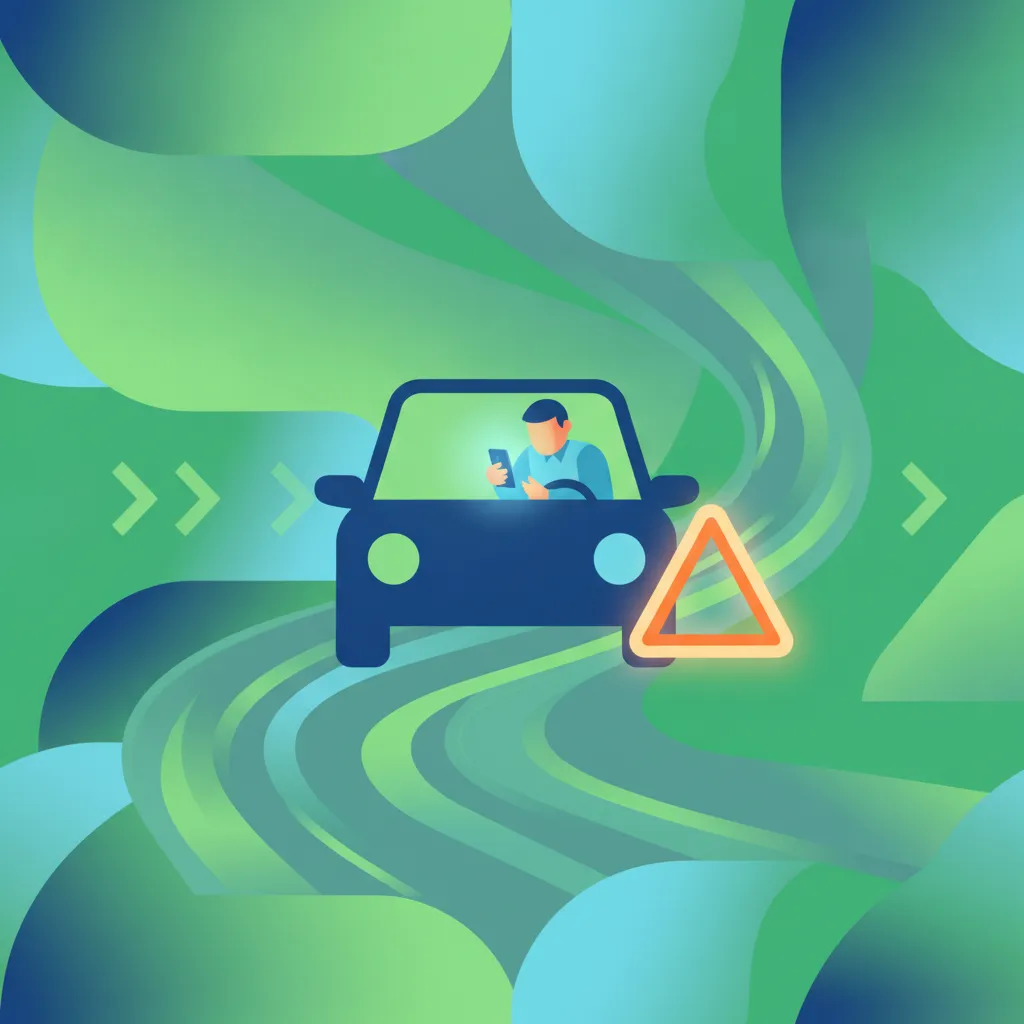
Theory topic content overview
Read the full theory topic guide for Mobile Phone Distraction with structured, easy-to-scan content built for learners in Turkey. This detailed section explains the exact rule, meaning, traffic context, comparison points, and exam logic behind this Turkish driving theory topic so you can study faster, understand the concept more clearly, and avoid common interpretation mistakes on the theory test.
Driving a vehicle, whether in bustling Istanbul traffic or on a quiet Anatolian highway, demands your absolute and undivided attention. Using a mobile phone while driving is one of the most significant and preventable causes of road accidents in Türkiye because it directly fragments your attention, severely impacting your ability to react safely and perceive hazards.
This dangerous activity diverts your focus from the critical task of driving in three distinct, yet often overlapping, ways: visually, manually, and cognitively. Understanding these types of distraction is crucial not only for your safety but also for success in the ehliyet sınavı (Turkish driving license exam), where questions about driver distraction are common.
Mobile phone use creates a multi-layered distraction, making it incredibly hazardous. Each type of distraction alone is dangerous, but they often occur simultaneously, compounding the risk.
This occurs when your eyes leave the road to look at your phone. Even a brief glance can be catastrophic. Whether you're checking a notification, reading a message, or simply looking at the screen, your eyes are not on the traffic ahead, the rearview mirror, or the road signs. In just two seconds at 90 km/h (a common speed limit on many Turkish intercity roads), your vehicle travels 50 meters—the length of a professional swimming pool—completely blindly.
Manual distraction happens when you remove one or both hands from the steering wheel to hold, dial, text, or manipulate your mobile phone. This reduces your control over the vehicle, making it difficult to steer accurately, signal, or react quickly to unexpected events. For example, trying to hold a phone and shift gears or operate other vehicle controls simultaneously is extremely risky.
Perhaps the most insidious form, cognitive distraction occurs when your mind is preoccupied with a phone conversation, a text message, or an app, even if your hands are on the wheel and your eyes are technically on the road. Your brain is processing information from the phone call or message rather than fully focusing on identifying hazards, anticipating traffic flow, or making critical driving decisions. This mental diversion significantly slows your processing speed and decision-making capabilities.
The combined effect of visual, manual, and cognitive distraction from mobile phone use creates a dangerous cocktail of impaired driving skills, directly increasing the risk of accidents:
ehliyet sınavı often tests your understanding of this direct link.trafik işaretleri (traffic signs). This makes you vulnerable to unexpected events.Türk Trafik Kanunu)In Türkiye, using a handheld mobile phone while driving is strictly prohibited. This rule is a cornerstone of Türk Trafik Kanunu (Turkish Traffic Law) and is enforced to prevent serious accidents. The law's intent is clear: to ensure drivers maintain full control and attention to the road.
Violations result in fines and potentially penalty points, depending on the specific circumstances and repeat offenses. For your ehliyet sınavı, you must know that this prohibition is in place specifically due to the severe risks of distraction and impaired reaction time.
While Turkish law generally permits hands-free phone use (e.g., via Bluetooth or integrated car systems), it's vital for drivers in Türkiye to understand that "hands-free" does not mean "distraction-free."
Cognitive distraction persists even when your hands are on the wheel and your eyes are on the road. Engaging in a complex conversation, particularly one that is emotionally charged or requires significant mental effort, diverts cognitive resources away from driving. Your brain simply cannot process both the conversation and the dynamic road environment at optimal levels simultaneously. The risk, though reduced compared to handheld use, is still present, affecting your tehlike algısı (hazard perception).
Many drivers, including new learners in Türkiye, often make critical errors in judgment regarding mobile phone use:
Consider these scenarios common on Turkish roads where mobile phone use can turn critical:
yol ver (give way) signs, fail to check your blind spot for motorcycles, or struggle to choose the correct exit lane, causing confusion and risk for other drivers.The message from Turkish Driving License Theory and ehliyet sınavı preparation is clear: Driving requires 100% of your attention, 100% of the time. Every moment your eyes, hands, or mind are diverted by a mobile phone increases the risk of an accident and endangers not only yourself but also other road users in Türkiye.
Prioritize safety over convenience. Put your phone away, silence notifications, and focus entirely on the road. This habit is not just about passing your ehliyet sınavı; it's about being a responsible, safe driver for life.
Using a mobile phone while driving in Türkiye creates visual, manual, and cognitive distractions that significantly impair reaction time, hazard perception, and vehicle control. Under Türk Trafik Kanunu, handheld phone use is strictly prohibited due to these dangers. Even hands-free conversations cause cognitive distraction, as the brain cannot optimally process both a phone conversation and the dynamic road environment simultaneously. Real-world Turkish scenarios—such as missing pedestrians at crossings on Ankara streets or failing to react to sudden stops on motorways like the D-100—illustrate how quickly distraction leads to dangerous situations. The core message is that safe driving requires 100% attention, and any phone use compromises that attention regardless of whether the device is handheld or hands-free.
A short set of high-value points that capture the most important ideas from this theory explanation.
Mobile phone use creates three types of distraction: visual (eyes off road), manual (hands off wheel), and cognitive (mind off driving)
Even a brief glance at your phone is dangerous—at 90 km/h, your vehicle travels 50 meters in just 2 seconds completely blind
Cognitive distraction persists even with hands-free devices because your brain cannot fully process both a conversation and driving simultaneously
The combination of all three distraction types dramatically slows reaction time and increases stopping distance
Using a handheld mobile phone while driving is strictly prohibited under Turkish traffic law (Türk Trafik Kanunu)
The three pillars of distraction are visual, manual, and cognitive—they often occur together, compounding risk
Reaction time impairment directly increases stopping distance, leaving less room to avoid collisions
Hands-free does not mean distraction-free—cognitive load from conversation diverts mental resources from driving
Turkish law prohibits handheld phone use specifically because of the severe risk these distractions pose
Distracted drivers lose situational awareness and may miss subtle hazard cues like pedestrian crossings or merging vehicles
'Just a quick glance'—even one second of distraction at high speed covers a dangerous distance blind
'I only use it at red lights'—full attention is still needed to react when traffic starts moving or emergencies occur
'I can multitask'—human brains rapidly switch between tasks rather than truly multitasking, reducing efficiency in both
Underestimating the cumulative effect—drivers often fail to recognize how the three distraction types compound each other
Thinking stationary driving makes phone use safe—delayed reactions when lights change or traffic moves can cause rear-end collisions
Start with a short, direct summary of Mobile Phone Distraction before reading the full explanation below.
Using a mobile phone while driving is highly dangerous because it causes visual, manual, and cognitive distraction. This means your eyes, hands, and mind are taken away from the critical task of driving, significantly slowing your reaction time to hazards. Even hands-free conversations can impair focus, increasing the risk of collisions and making it a serious traffic offense in Türkiye.
Review the most important terms, rule signals, and traffic concepts linked to Mobile Phone Distraction.
Explore related theory topic pages connected to Mobile Phone Distraction and continue with the next useful rule explanation.
See the common search queries learners use when trying to understand Mobile Phone Distraction in Turkey.

Dive deeper into specific Turkish driving theory topics like traffic signs, first aid, or vehicle mechanics. Each section offers clear explanations to enhance your understanding of official traffic legislation and prepare you effectively for every aspect of your upcoming ehliyet exam in Türkiye.
Explore Turkish Driving Theory TopicsTheory topic content overview
A short set of high-value points that capture the most important ideas from this theory explanation.
Mobile phone use creates three types of distraction: visual (eyes off road), manual (hands off wheel), and cognitive (mind off driving)
Even a brief glance at your phone is dangerous—at 90 km/h, your vehicle travels 50 meters in just 2 seconds completely blind
Cognitive distraction persists even with hands-free devices because your brain cannot fully process both a conversation and driving simultaneously
The combination of all three distraction types dramatically slows reaction time and increases stopping distance
Using a handheld mobile phone while driving is strictly prohibited under Turkish traffic law (Türk Trafik Kanunu)
The three pillars of distraction are visual, manual, and cognitive—they often occur together, compounding risk
Reaction time impairment directly increases stopping distance, leaving less room to avoid collisions
Hands-free does not mean distraction-free—cognitive load from conversation diverts mental resources from driving
Turkish law prohibits handheld phone use specifically because of the severe risk these distractions pose
Distracted drivers lose situational awareness and may miss subtle hazard cues like pedestrian crossings or merging vehicles
'Just a quick glance'—even one second of distraction at high speed covers a dangerous distance blind
'I only use it at red lights'—full attention is still needed to react when traffic starts moving or emergencies occur
'I can multitask'—human brains rapidly switch between tasks rather than truly multitasking, reducing efficiency in both
Underestimating the cumulative effect—drivers often fail to recognize how the three distraction types compound each other
Thinking stationary driving makes phone use safe—delayed reactions when lights change or traffic moves can cause rear-end collisions
Start with a short, direct summary of Mobile Phone Distraction before reading the full explanation below.
Using a mobile phone while driving is highly dangerous because it causes visual, manual, and cognitive distraction. This means your eyes, hands, and mind are taken away from the critical task of driving, significantly slowing your reaction time to hazards. Even hands-free conversations can impair focus, increasing the risk of collisions and making it a serious traffic offense in Türkiye.
Review the most important terms, rule signals, and traffic concepts linked to Mobile Phone Distraction.
Explore related theory topic pages connected to Mobile Phone Distraction and continue with the next useful rule explanation.
See the common search queries learners use when trying to understand Mobile Phone Distraction in Turkey.
Dive deeper into specific Turkish driving theory topics like traffic signs, first aid, or vehicle mechanics. Each section offers clear explanations to enhance your understanding of official traffic legislation and prepare you effectively for every aspect of your upcoming ehliyet exam in Türkiye.
Explore Turkish Driving Theory TopicsUse this exam-focused revision tip to understand how Mobile Phone Distraction is likely to appear in theory questions for learners in Turkey. This section helps you identify the most testable part of the rule, avoid common traps, and remember the concept more effectively during Turkish driving theory exam preparation.
Remember for the ehliyet sınavı: Mobile phone use while driving primarily increases accident risk by impairing your reaction time and hazard perception due to visual, manual, and cognitive distractions. Focus on understanding these specific types of distraction, as they are often tested.
Read direct answers to the most common learner questions about Mobile Phone Distraction in Turkey. This FAQ focuses on rule confusion, practical meaning, comparison with similar concepts, and the exact uncertainties that appear most often in Turkish driving theory revision and exam preparation.
Mobile phones cause visual distraction (looking away from the road), manual distraction (taking hands off the wheel), and cognitive distraction (mind wandering from driving, even during hands-free calls).
Any form of distraction from a mobile phone, whether visual, manual, or cognitive, significantly delays a driver's ability to perceive and react to hazards, increasing the distance traveled before braking.
Turkish traffic law typically permits hands-free phone use. However, while it eliminates manual distraction, cognitive distraction from a conversation can still impair your focus and reaction time, making it less safe than no phone use at all.
Using a mobile phone without a hands-free system while driving in Türkiye is a traffic offense. Violators are subject to administrative fines as stipulated by the Turkish Highway Traffic Law. Beyond legal consequences, the greatest risk is causing an accident.
Questions about mobile phone use while driving frequently appear in the Turkish ehliyet sınavı because it is a leading cause of accidents. The exam tests your understanding of distraction, its dangers, and responsible driving behavior.
While using a GPS is necessary, interacting with a phone for navigation, especially inputting destinations or adjusting routes while driving, can cause significant visual and manual distraction. It is safest to set your GPS before starting your journey.
Even a short 2-second glance at a phone at highway speeds (e.g., 90 km/h) means your vehicle travels approximately 50 meters (the length of half a football field) without your full attention, during which critical hazards can emerge.
Use our comprehensive practice search to find exactly the Turkish driving theory questions you need to master. Whether reviewing specific road signs, traffic rules, or first aid scenarios, select your perfect practice set and boost your confidence for the official ehliyet sınavı.