
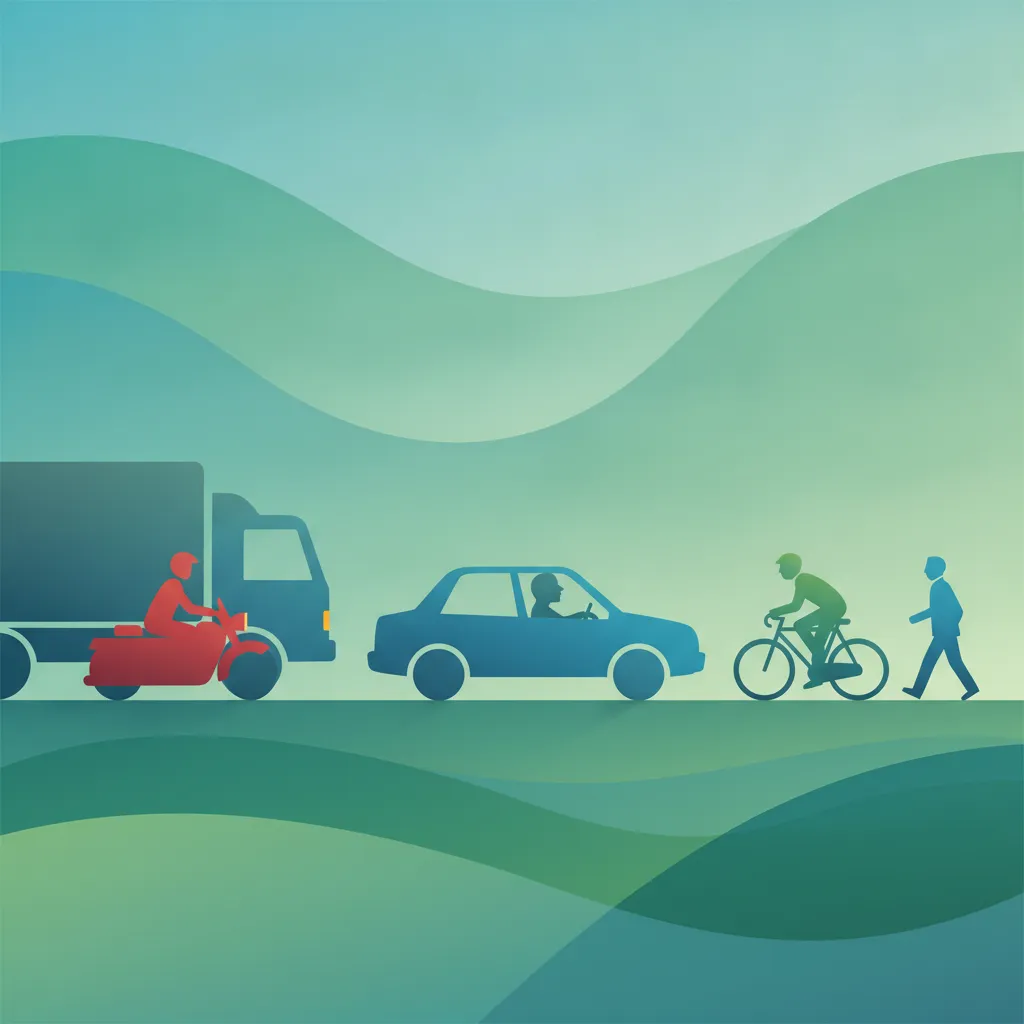
Roads are dynamic shared spaces. This section explains how drivers in Türkiye must adjust their behavior when encountering pedestrians, cyclists, motorcyclists, and larger vehicles. Learn to identify vulnerabilities, maintain safe distances, and anticipate actions to ensure everyone's safety. Mastering these interactions is key to safe driving and success in your driving theory exam.
Theory topic content overview
Read the full theory topic guide for Sharing the Road with structured, easy-to-scan content built for learners in Turkey. This detailed section explains the exact rule, meaning, traffic context, comparison points, and exam logic behind this Turkish driving theory topic so you can study faster, understand the concept more clearly, and avoid common interpretation mistakes on the theory test.
"Sharing the road" is a fundamental principle in driving theory and practice in Türkiye, referring to the driver's responsibility to interact safely and cooperatively with all other road users. This includes not just other cars, but crucially, also pedestrians, cyclists, motorcyclists, and larger vehicles like buses and trucks. It's about adapting your driving behaviour to account for their specific characteristics, vulnerabilities, and needs to prevent accidents and ensure smooth traffic flow. For the ehliyet sınavı (Turkish driving exam), understanding these interactions is paramount.
Türkiye's roads are dynamic and diverse, presenting a complex mix of traffic conditions, from bustling urban centres to intercity highways. The emphasis on sharing the road safely stems from several critical factors:
Trafik kuralları (traffic rules) in Türkiye are designed to enforce safe interaction, with specific regulations regarding priority, safe distances, and overtaking for different road user types.The term "vulnerable road users" primarily refers to pedestrians, cyclists, and motorcyclists. They are at the highest risk of serious injury or fatality in an accident due to their lack of protective enclosure.
Pedestrians are the most vulnerable group. In Türkiye, drivers must always be exceptionally cautious around them.
Cyclists are common on Turkish roads, from city streets to country roads. They are less visible than cars and can be unstable.
Motorcyclists are fast, often less visible, and offer little protection. Their smaller size means they can be easily overlooked.
While not vulnerable in the same sense, large vehicles like buses (otobüsler) and trucks (kamyonlar/tırlar) present unique challenges due to their size, weight, and limited visibility.
Regardless of the road user, several core principles guide safe interaction on Turkish roads:
kör nokta kontrolü (blind spot check) by looking over your shoulder, in addition to checking your mirrors.Learners preparing for the ehliyet sınavı and new drivers in Türkiye often make these mistakes regarding road sharing:
yaya geçitleri or assuming pedestrians will wait for them.Mastering the art of sharing the road safely is not just about passing your ehliyet sınavı; it's about developing a responsible and defensive driving mindset essential for real-world driving in Türkiye. Always remember that the driver of the larger, more protective vehicle bears a greater responsibility for the safety of others. Be observant, be predictable, and always be prepared to yield or adjust your actions to ensure everyone can reach their destination safely. Prioritise safety over speed, and always err on the side of caution when vulnerable road users are present.
Safe road sharing in Turkish traffic requires drivers to adapt their behavior based on the specific vulnerabilities of pedestrians, cyclists, motorcyclists, and large vehicles. Pedestrians always have priority at marked crossings, cyclists require at least 1.5 metres of space when passed, and motorcyclists demand extra attention at intersections due to their reduced visibility. Large vehicles like buses and trucks create extensive blind spots and require significantly longer braking distances, so drivers must perform thorough mirror and shoulder checks before any maneuver. The driver of the larger, more protective vehicle bears greater responsibility for the safety of all road users, making vigilance and caution essential for both exam success and real-world driving in Türkiye.
A short set of high-value points that capture the most important ideas from this theory explanation.
Drivers carry greater responsibility to protect vulnerable road users who lack protective enclosures in collisions
Pedestrians, cyclists, and motorcyclists each require specific precautions due to their distinct vulnerabilities and characteristics
Always give cyclists at least 1.5 metres of space when overtaking and treat them as you would another vehicle
Large vehicles have extensive blind spots on all sides; if you cannot see their mirrors, they cannot see you
Intersections are high-risk zones where drivers must always check twice for motorcyclists before turning
Minimum 1.5 metres lateral distance when passing cyclists
Large vehicles require much more space to turn and stop; never squeeze alongside them
Pedestrians at marked crossings (yaya geçitleri) have absolute priority to cross
Motorcyclists can be hidden in blind spots despite being visible in mirrors; always perform shoulder checks
Children, elderly, and cyclists may move unpredictably or be affected by wind, road debris, and vehicle slipstreams
Assuming mutual visibility - believing that if you can see a motorcyclist or cyclist, they can see you too
Passing cyclists too closely without providing the legally required safe distance
Relying solely on mirrors without performing head or shoulder checks for blind spots
Failing to stop at marked pedestrian crossings when pedestrians are waiting or crossing
Underestimating braking distances needed for large vehicles and following too closely behind them
Start with a short, direct summary of Sharing the Road before reading the full explanation below.
Sharing the road safely means adapting your driving to the presence and characteristics of all road users, especially vulnerable ones like pedestrians and cyclists. Drivers must maintain increased awareness, provide ample space, and anticipate actions to prevent collisions. This includes recognizing blind spots around motorcycles and large vehicles, and understanding specific rules that apply in Türkiye for protecting non-motorized traffic.
Review the most important terms, rule signals, and traffic concepts linked to Sharing the Road.
Explore related theory topic pages connected to Sharing the Road and continue with the next useful rule explanation.
See the common search queries learners use when trying to understand Sharing the Road in Turkey.

Dive deeper into specific Turkish driving theory topics like traffic signs, first aid, or vehicle mechanics. Each section offers clear explanations to enhance your understanding of official traffic legislation and prepare you effectively for every aspect of your upcoming ehliyet exam in Türkiye.
Explore Turkish Driving Theory TopicsTheory topic content overview
A short set of high-value points that capture the most important ideas from this theory explanation.
Drivers carry greater responsibility to protect vulnerable road users who lack protective enclosures in collisions
Pedestrians, cyclists, and motorcyclists each require specific precautions due to their distinct vulnerabilities and characteristics
Always give cyclists at least 1.5 metres of space when overtaking and treat them as you would another vehicle
Large vehicles have extensive blind spots on all sides; if you cannot see their mirrors, they cannot see you
Intersections are high-risk zones where drivers must always check twice for motorcyclists before turning
Minimum 1.5 metres lateral distance when passing cyclists
Large vehicles require much more space to turn and stop; never squeeze alongside them
Pedestrians at marked crossings (yaya geçitleri) have absolute priority to cross
Motorcyclists can be hidden in blind spots despite being visible in mirrors; always perform shoulder checks
Children, elderly, and cyclists may move unpredictably or be affected by wind, road debris, and vehicle slipstreams
Assuming mutual visibility - believing that if you can see a motorcyclist or cyclist, they can see you too
Passing cyclists too closely without providing the legally required safe distance
Relying solely on mirrors without performing head or shoulder checks for blind spots
Failing to stop at marked pedestrian crossings when pedestrians are waiting or crossing
Underestimating braking distances needed for large vehicles and following too closely behind them
Start with a short, direct summary of Sharing the Road before reading the full explanation below.
Sharing the road safely means adapting your driving to the presence and characteristics of all road users, especially vulnerable ones like pedestrians and cyclists. Drivers must maintain increased awareness, provide ample space, and anticipate actions to prevent collisions. This includes recognizing blind spots around motorcycles and large vehicles, and understanding specific rules that apply in Türkiye for protecting non-motorized traffic.
Review the most important terms, rule signals, and traffic concepts linked to Sharing the Road.
Explore related theory topic pages connected to Sharing the Road and continue with the next useful rule explanation.
See the common search queries learners use when trying to understand Sharing the Road in Turkey.
Dive deeper into specific Turkish driving theory topics like traffic signs, first aid, or vehicle mechanics. Each section offers clear explanations to enhance your understanding of official traffic legislation and prepare you effectively for every aspect of your upcoming ehliyet exam in Türkiye.
Explore Turkish Driving Theory TopicsUse this exam-focused revision tip to understand how Sharing the Road is likely to appear in theory questions for learners in Turkey. This section helps you identify the most testable part of the rule, avoid common traps, and remember the concept more effectively during Turkish driving theory exam preparation.
The Turkish driving theory exam often tests your ability to identify correct actions when encountering vulnerable road users. Remember that pedestrians and cyclists always require extra caution and space, especially at intersections or when visibility is poor. Never assume they have seen you or will act predictably.
Read direct answers to the most common learner questions about Sharing the Road in Turkey. This FAQ focuses on rule confusion, practical meaning, comparison with similar concepts, and the exact uncertainties that appear most often in Turkish driving theory revision and exam preparation.
It refers to a driver's responsibility to safely interact and coexist with all other road users, including pedestrians, cyclists, motorcyclists, and larger vehicles, by adapting their driving behavior.
They lack the protection of a vehicle's bodywork and are at much higher risk of serious injury in a collision, making drivers legally and morally responsible for exercising extra caution.
Drivers must always provide sufficient lateral space when passing cyclists, ensuring they have room to maneuver safely and are not put at risk by sudden wind gusts or road imperfections, as per Turkish traffic regulations.
Be extra vigilant for motorcyclists, as their smaller size can make them harder to see, especially in blind spots. Always check your mirrors and blind spots carefully before changing lanes or turning.
Large vehicles like buses and trucks have extensive blind spots around them where the driver cannot see other vehicles. Avoid driving in these "no-zones" to ensure you are visible to their drivers.
Drivers play a crucial role by being patient, cooperative, and predictable. Anticipating actions and giving way when necessary helps create a safer environment for everyone in Turkish traffic.
Yes, under Turkish traffic law, drivers must yield to pedestrians who are crossing or are about to cross at marked pedestrian crossings, ensuring their safe passage.
The Turkish driving theory exam (ehliyet sınavı) includes scenario-based questions about interacting with various road users, checking your understanding of priority, safe distances, and appropriate driver behavior in different situations.
Use our comprehensive practice search to find exactly the Turkish driving theory questions you need to master. Whether reviewing specific road signs, traffic rules, or first aid scenarios, select your perfect practice set and boost your confidence for the official ehliyet sınavı.