
Right of way rules define which road user has the legal priority to proceed first, preventing conflicts and ensuring smooth traffic flow. In Türkiye, these rules are governed by specific legislation and apply to various situations from complex intersections to pedestrian crossings. This page will clarify how to determine priority based on traffic signs, signals, and general rules of the road.
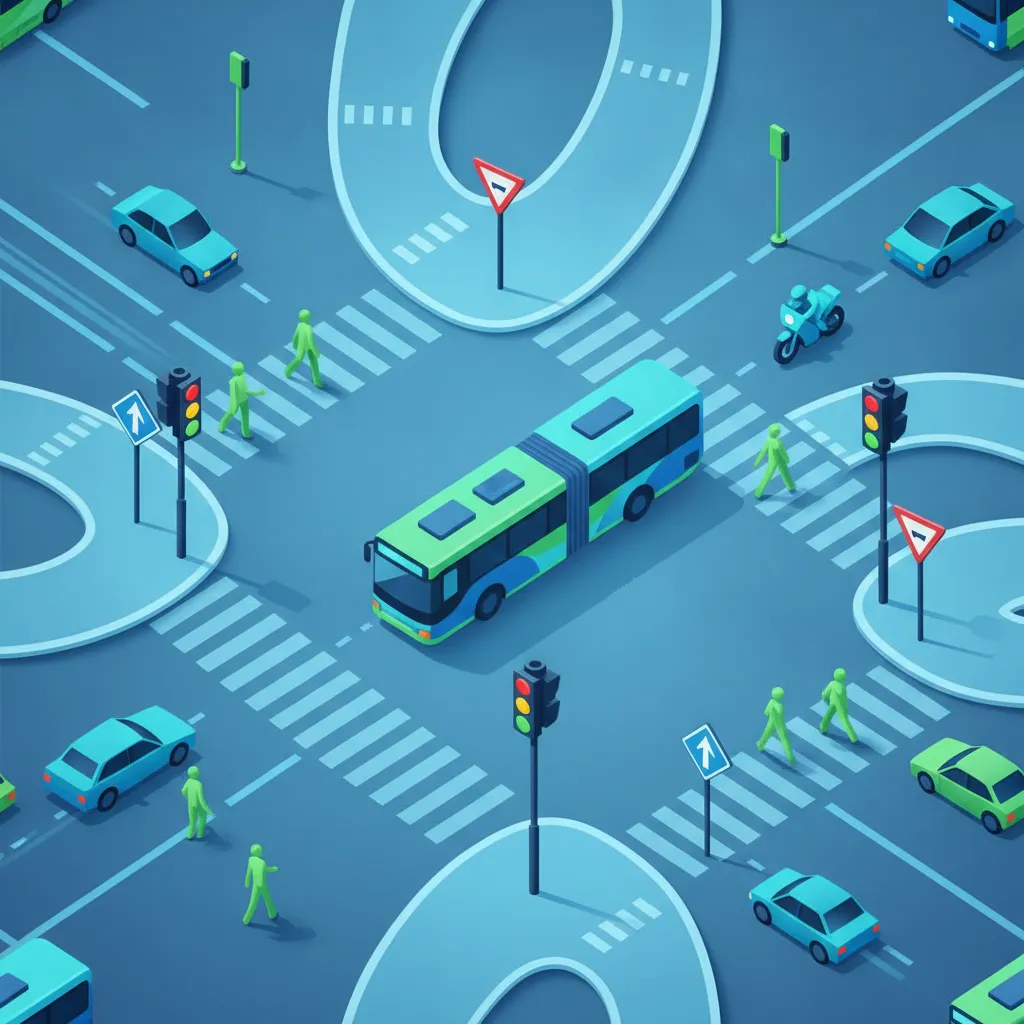
Theory topic content overview
Read the full theory topic guide for Right of Way Rules with structured, easy-to-scan content built for learners in Turkey. This detailed section explains the exact rule, meaning, traffic context, comparison points, and exam logic behind this Turkish driving theory topic so you can study faster, understand the concept more clearly, and avoid common interpretation mistakes on the theory test.
Right of way (or priority) is a fundamental traffic concept that dictates which road user has the legal authority to proceed first at points where traffic paths intersect or merge. It's a set of rules designed to prevent collisions and ensure the smooth, predictable flow of vehicles and pedestrians on the road. Understanding right of way means knowing when you must yield to others and when you can confidently proceed.
In Türkiye, these rules are a cornerstone of safe driving and are extensively covered in the ehliyet driving theory exam. They apply everywhere, from complex urban intersections to quiet residential streets and motorways.
Misunderstanding right of way rules is a leading cause of accidents and a common source of stress for new drivers. For learners in Türkiye, accurately applying these rules is vital because:
ehliyet sınavı) features numerous questions testing your ability to identify the correct priority in various scenarios. A solid grasp of these rules is essential for passing.When approaching any potential conflict point on the road in Türkiye, a driver must determine priority by following a strict hierarchy. This is your decision-making order:
When traffic officers, lights, signs, and markings do not specify priority, the following general rules apply in Türkiye:
This is a cornerstone of Turkish traffic law for uncontrolled intersections (where there are no signs, signals, or markings). At such intersections, you must yield to vehicles approaching from your right.
When merging onto a main road (e.g., from an acceleration lane onto a motorway), you must yield to traffic already on the main road. The responsibility is on the merging driver to find a safe gap and adjust speed.
On narrow, steep roads where two vehicles cannot pass simultaneously, the vehicle travelling uphill generally has priority, and the vehicle travelling downhill must yield and, if necessary, reverse to allow the uphill vehicle to pass.
Pedestrians, cyclists, and mobility scooter users are considered vulnerable.
priority from the right rule.Learners often struggle with specific right of way scenarios, particularly those frequently tested in the ehliyet sınavı. Common mistakes include:
Right of way in Türkiye is about understanding a clear hierarchy: traffic officers first, then lights, then signs, then general rules. Always actively scan for these indicators as you approach any junction or potential conflict point. When in doubt, especially at uncontrolled intersections, remember the fundamental Turkish rule: yield to vehicles approaching from your right. Prioritizing safety and acting predictably are key to mastering right of way for both your driving test and real-world Turkish traffic.
Right of way in Turkish traffic is determined by a clear hierarchy: traffic officers first, then working traffic lights, then regulatory signs, and finally general rules when nothing else is present. At uncontrolled intersections, the fundamental Turkish rule is to yield to vehicles approaching from your right. Left-turning vehicles must always yield to oncoming traffic, while pedestrians at designated crossings have absolute priority. Emergency vehicles with flashing lights and sirens must never be blocked. Understanding these distinctions is essential for both safe driving and passing the ehliyet theory exam.
A short set of high-value points that capture the most important ideas from this theory explanation.
Right of way follows a strict hierarchy: traffic officers override all, then traffic lights, then regulatory signs, then road markings, and finally general traffic rules.
At uncontrolled intersections with no signs or signals, you must always yield to vehicles approaching from your right.
When turning left, you must yield to oncoming traffic going straight or turning right, regardless of green lights.
Pedestrians crossing at designated crossings and those clearly intending to cross have priority over all vehicles.
Emergency vehicles with flashing lights and sirens have absolute priority, requiring you to safely pull over and stop immediately.
The 'Yol Ver' sign requires slowing and yielding but stopping only if necessary, while 'Dur' requires a complete stop regardless of traffic.
At uncontrolled intersections, the fundamental Turkish rule is priority from the right regardless of road size or straight-line intent.
Trams generally have priority over other road users when crossing roads in Türkiye.
On steep narrow roads where both vehicles cannot pass, the vehicle going uphill has priority over the one going downhill.
Assuming they have priority at an uncontrolled intersection because they are going straight or the other road looks smaller.
Confusing the 'Yol Ver' (Give Way) sign with the 'Dur' (Stop) sign, leading to incorrect stopping behavior.
Failing to yield to oncoming traffic when making a left turn, thinking the green light grants unconditional right to turn.
Assuming pedestrians will wait instead of recognizing they have priority at designated crossings.
Ignoring emergency vehicles with sirens or failing to pull over quickly enough to give them passage.
Start with a short, direct summary of Right of Way Rules before reading the full explanation below.
Right of way is a fundamental traffic concept that dictates which vehicle or road user has priority to move before others at points of potential conflict, such as intersections or merging lanes. In Türkiye, priority is determined first by traffic signals and signs. If these are absent, general rules, like yielding to traffic from the right at uncontrolled intersections, must be applied to ensure safety and compliance with ehliyet exam requirements.
Review the most important terms, rule signals, and traffic concepts linked to Right of Way Rules.
Explore related theory topic pages connected to Right of Way Rules and continue with the next useful rule explanation.
See the common search queries learners use when trying to understand Right of Way Rules in Turkey.

Dive deeper into specific Turkish driving theory topics like traffic signs, first aid, or vehicle mechanics. Each section offers clear explanations to enhance your understanding of official traffic legislation and prepare you effectively for every aspect of your upcoming ehliyet exam in Türkiye.
Explore Turkish Driving Theory TopicsTheory topic content overview
A short set of high-value points that capture the most important ideas from this theory explanation.
Right of way follows a strict hierarchy: traffic officers override all, then traffic lights, then regulatory signs, then road markings, and finally general traffic rules.
At uncontrolled intersections with no signs or signals, you must always yield to vehicles approaching from your right.
When turning left, you must yield to oncoming traffic going straight or turning right, regardless of green lights.
Pedestrians crossing at designated crossings and those clearly intending to cross have priority over all vehicles.
Emergency vehicles with flashing lights and sirens have absolute priority, requiring you to safely pull over and stop immediately.
The 'Yol Ver' sign requires slowing and yielding but stopping only if necessary, while 'Dur' requires a complete stop regardless of traffic.
At uncontrolled intersections, the fundamental Turkish rule is priority from the right regardless of road size or straight-line intent.
Trams generally have priority over other road users when crossing roads in Türkiye.
On steep narrow roads where both vehicles cannot pass, the vehicle going uphill has priority over the one going downhill.
Assuming they have priority at an uncontrolled intersection because they are going straight or the other road looks smaller.
Confusing the 'Yol Ver' (Give Way) sign with the 'Dur' (Stop) sign, leading to incorrect stopping behavior.
Failing to yield to oncoming traffic when making a left turn, thinking the green light grants unconditional right to turn.
Assuming pedestrians will wait instead of recognizing they have priority at designated crossings.
Ignoring emergency vehicles with sirens or failing to pull over quickly enough to give them passage.
Start with a short, direct summary of Right of Way Rules before reading the full explanation below.
Right of way is a fundamental traffic concept that dictates which vehicle or road user has priority to move before others at points of potential conflict, such as intersections or merging lanes. In Türkiye, priority is determined first by traffic signals and signs. If these are absent, general rules, like yielding to traffic from the right at uncontrolled intersections, must be applied to ensure safety and compliance with ehliyet exam requirements.
Review the most important terms, rule signals, and traffic concepts linked to Right of Way Rules.
Explore related theory topic pages connected to Right of Way Rules and continue with the next useful rule explanation.
See the common search queries learners use when trying to understand Right of Way Rules in Turkey.
Dive deeper into specific Turkish driving theory topics like traffic signs, first aid, or vehicle mechanics. Each section offers clear explanations to enhance your understanding of official traffic legislation and prepare you effectively for every aspect of your upcoming ehliyet exam in Türkiye.
Explore Turkish Driving Theory TopicsUse this exam-focused revision tip to understand how Right of Way Rules is likely to appear in theory questions for learners in Turkey. This section helps you identify the most testable part of the rule, avoid common traps, and remember the concept more effectively during Turkish driving theory exam preparation.
Many ehliyet exam questions test your ability to correctly identify priority in complex intersection scenarios. Always look for traffic signs, signals, and road markings first. If none are present, remember the fundamental Turkish rule: yield to vehicles approaching from your right. Watch out for questions involving vulnerable road users, as their priority can be a common trick point.
Read direct answers to the most common learner questions about Right of Way Rules in Turkey. This FAQ focuses on rule confusion, practical meaning, comparison with similar concepts, and the exact uncertainties that appear most often in Turkish driving theory revision and exam preparation.
In Turkish traffic, 'right of way' refers to the legal right of a driver or road user to proceed before others in specific situations, especially where paths intersect or merge. It's about determining who has priority.
Traffic signs (like 'Stop' or 'Give Way') and traffic lights are the primary determinants of right of way in Türkiye, overriding general rules. Always obey these signals first, as they clearly indicate who has priority.
At an intersection without traffic signs, signals, or markings in Türkiye, the general rule is that vehicles approaching from the right have priority. You must yield to traffic coming from your right.
Pedestrians generally have priority at designated pedestrian crossings (zebra crossings) when they intend to cross or are already crossing. Drivers must slow down and stop if necessary to allow pedestrians to cross safely. However, pedestrians must also act responsibly and not step into traffic unexpectedly.
Right of way means you are allowed to proceed first. Yielding means you must wait and allow other road users (who have the right of way) to pass before you proceed. They are two sides of the same coin in traffic priority.
When merging onto a main road or changing lanes, drivers must typically yield to vehicles already on the main road or in the lane they wish to enter. The merging driver must adjust their speed and find a safe gap to enter the traffic flow without impeding others.
Yes, public transport vehicles like buses often have specific priority in certain situations, such as when departing from a bus stop in an urban area. Drivers should be aware of and respect these rules to ensure smooth public transportation.
Use our comprehensive practice search to find exactly the Turkish driving theory questions you need to master. Whether reviewing specific road signs, traffic rules, or first aid scenarios, select your perfect practice set and boost your confidence for the official ehliyet sınavı.