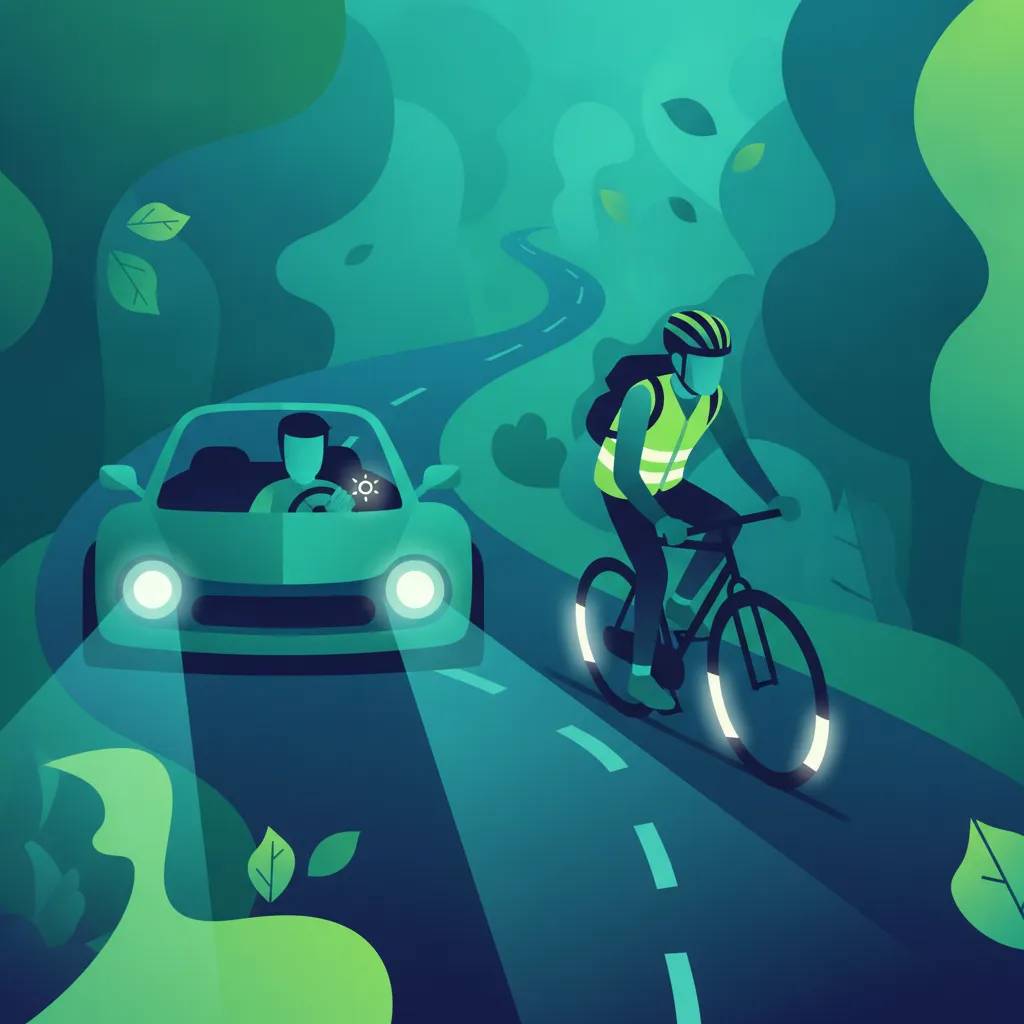
This lesson explores the essential role of lights and reflectors in keeping you visible as a small vehicle rider. It covers the legal requirements and best practices for using lighting systems and high-visibility gear to ensure you are seen by other drivers on French roads.
Lesson content overview
Operating a light motorized vehicle—such as a 50cc scooter, a light moped, or a light quadricycle—requires a deep understanding of road safety dynamics. Because of their compact size and slender profiles, Category AM vehicles are inherently less conspicuous than passenger cars or commercial trucks.
To compensate for this physical disadvantage, French road traffic law, the Code de la route, enforces strict rules regarding vehicle lighting and reflective equipment. Adhering to these rules is not merely a legal obligation to avoid penalties; it is a critical defensive riding strategy that directly influences your survival on the road.
In road safety, conspicuity refers to how easily a vehicle or rider can be detected by other road users. For Category AM riders, the safety mantra is voir et être vu (to see and be seen).
Due to the phenomenon of "inattentional blindness," drivers of larger vehicles often look in the direction of oncoming traffic but fail to cognitively register smaller objects like scooters. Proper illumination and reflective materials dramatically reduce this cognitive gap by creating high-contrast visual cues.
When your visibility increases, other drivers can spot you from a much greater distance. This extra distance translates directly into valuable seconds of reaction time. For instance, at 50 km/h, a car travels nearly 14 metres every second. An extra 30 metres of detection distance gives an oncoming driver two full additional seconds to react, brake, or steer clear of your path.
Under French law, the front headlight is your primary tool for navigating in low-light environments and signaling your presence during the day.
The low-beam headlight system designed to project a asymmetric light pattern that illuminates the road ahead (typically up to 30 meters) without dazzling oncoming road users.
According to Article R311-4 of the Code de la route, front dipped beam headlights must be functional and used continuously from sunset to sunrise. Additionally, they must be switched on during the day whenever atmospheric visibility is reduced, such as during heavy rain, snowfall, or dense fog.
Running with only parking lights (feux de position) at night is highly illegal and dangerous. It does not provide sufficient illumination for you to see hazards, nor does it make you sufficiently visible to others.
Modern Category AM vehicles utilize different bulb technologies:
You must ensure that your front headlight is clean and correctly aligned. A headlight aimed too high will dazzle oncoming drivers, creating a temporary blindness hazard that increases your risk of a head-on collision. A headlight aimed too low limits your forward vision, reducing your stopping sight distance.
While front lights help you see and navigate, your rear lighting array protects you from rear-end collisions—one of the most common accident profiles for mopeds in urban environments.
Under Article R311-6, your vehicle must feature at least one steady red rear light visible from the back. This light must remain illuminated whenever your front headlights are active.
Simultaneously, your vehicle must have an operational stop light (feu stop). This light illuminates with a significantly higher intensity the moment you apply either the front or rear brake lever. It serves as an immediate visual warning to drivers behind you that you are decelerating.
The rear registration plate (plaque d'immatriculation) must be illuminated by a dedicated white light. This ensures that your license plate is legible from a distance of at least 20 metres at night. Failing to maintain this light is a common point of inspection during roadside police checks.
To combat daytime collisions, modern safety standards emphasize the use of continuous daytime illumination.
Dedicated front lamps that automatically turn on when the engine starts, specifically designed to make the vehicle highly visible in bright daylight without consuming excessive energy.
For newer Category AM vehicles equipped with factory-installed Daytime Running Lights (DRLs), their operation is mandatory. These lights are engineered to improve your detection distance by oncoming traffic.
If your older vehicle does not feature automatic DRLs, you should manually switch on your dipped beam headlights (feux de croisement) during the daytime. This practice is strongly recommended under French road safety guidelines and is mandatory in many European jurisdictions to maintain a uniform visual signature for motorized two-wheelers.
Fog, snow, and torrential rain create severe visual challenges. Standard headlights can reflect off the water droplets in fog, creating a white wall of glare that worsens your visibility.
According to Article R311-4, fog lights may only be activated when atmospheric conditions severely limit visibility—specifically when visibility drops below 100 metres.
Using fog lights in clear weather is strictly illegal. Because of their intense brightness and wide beam pattern, they cause severe glare for other drivers, which can lead to temporary blindness and secondary accidents. You must switch them off immediately when weather conditions normalize.
Active lights rely on your vehicle's electrical system, but passive retroreflective elements function independently, relying on the light emitted by other vehicles.
Unlike standard reflective surfaces that scatter light in all directions, retroreflective materials contain thousands of microscopic glass beads or prisms. These structures reflect light directly back toward its source (the headlights of an approaching car), making the material appear incredibly bright to the driver of that car.
Standard Reflection:   Light Source ---> [ Surface ] ---> Scattered Light (Dimmer)
Retroreflection:       Light Source ---> [ Retroflector ] ---> Directly Back to Source (Very Bright)
In France, all helmets must comply with strict safety certification standards.
Acquire a helmet certified under European standard ECE 22.05 or ECE 22.06.
Ensure that four retroreflective adhesive strips are permanently attached to the helmet: one on the front (forehead), one on the rear, and one on each side (left and right).
Each strip must have a minimum surface area of 18 cm² and must be highly visible under headlight illumination.
Regularly inspect these adhesive strips for peeling, dirt, or fading, as worn-out elements lose their retroreflective capabilities.
While reflective jackets or vests are not universally mandatory for Category AM riders at all times of the day, you must carry a high-visibility yellow vest (gilet de haute sécurité) under your seat or in your storage compartment. This vest must be put on immediately in the event of an emergency breakdown or an unplanned stop on the side of the road.
Additionally, choosing riding jackets and pants with integrated retroreflective piping is highly recommended for daily transit, especially during twilight and dawn hours.
To maintain a standardized "visual language" on public roads, the French Code de la route strictly dictates the colors permitted for every type of vehicle light.
Any modification of these colors is a serious infraction.
Installing aftermarket colored bulbs (such as neon blue, green, or purple headlights) is illegal. These modifications confuse other road users regarding your direction of travel, reduce your actual night-vision capabilities, and will result in heavy fines, points docked from your permit (if applicable), and immediate vehicle immobilization.
Your lighting strategy must change dynamically depending on where and when you ride.
Even during a bright summer day, you must switch on your dipped beam headlights (feux de croisement) immediately upon entering a tunnel. Tunnels present a sudden transition from high to low light, causing temporary vision loss for all drivers. Your headlights ensure you remain visible during this transition.
Twilight is one of the most dangerous times to ride. The human eye struggles to adjust as natural daylight fades, yet streetlights may not be fully active. You must activate your dipped beam headlights early. Do not wait for complete darkness to turn them on.
In heavy rain, the tires of trucks and cars kick up a fine mist of water spray. This spray dramatically reduces visibility. Even in the middle of the day, you must activate your dipped beams to cut through the mist and ensure drivers behind and ahead can identify your silhouette.
To pass your Category AM official exam, memorize these essential legal and practical safety standards:
| Principle | Legal Source | Operational Rule | Consequence of Failure |
|---|---|---|---|
| Mandatory Headlights | Article R311-2 & R311-4 | Dipped beams must be on from sunset to sunrise, in tunnels, and in poor weather. | Fine, potential vehicle immobilization, and high collision risk. |
| Rear & Stop Lights | Article R311-6 | Red rear light and functional stop light must activate reliably. | Rear-end collision risk; fine for defective safety equipment. |
| Fog Lights Limit | Article R311-4 | Use only when visibility is < 100m; switch off in clear weather. | Fine for dazzling other road users. |
| Reflective Helmet | Article R311-5 / ECE Standards | Four reflective bands required (front, back, sides). | Helmet non-compliance fine; reduced side-impact visibility. |
| Color Uniformity | Article R311-8 | White/yellow front, red rear, amber indicators. No custom colors. | Immediate fine and vehicle seizure. |
Explore all units and lessons included in this driving theory course.
Lesson content overview
Explore all units and lessons included in this driving theory course.
Explore search topics learners often look for when studying Enhancing Visibility: Lights and Reflectors. These topics reflect common questions about road rules, driving situations, safety guidance, and lesson level theory preparation for learners in France.
Browse additional driving theory lessons that cover connected traffic rules, road signs, and common driving situations related to this topic. Improve your understanding of how different rules interact across everyday traffic scenarios.
Learn to detect hazards earlier by improving your observation skills and spatial awareness. This theory guide explains how to identify potential dangers before they occur, building on visibility concepts to help you react effectively to complex road conditions and changing traffic flows in France.
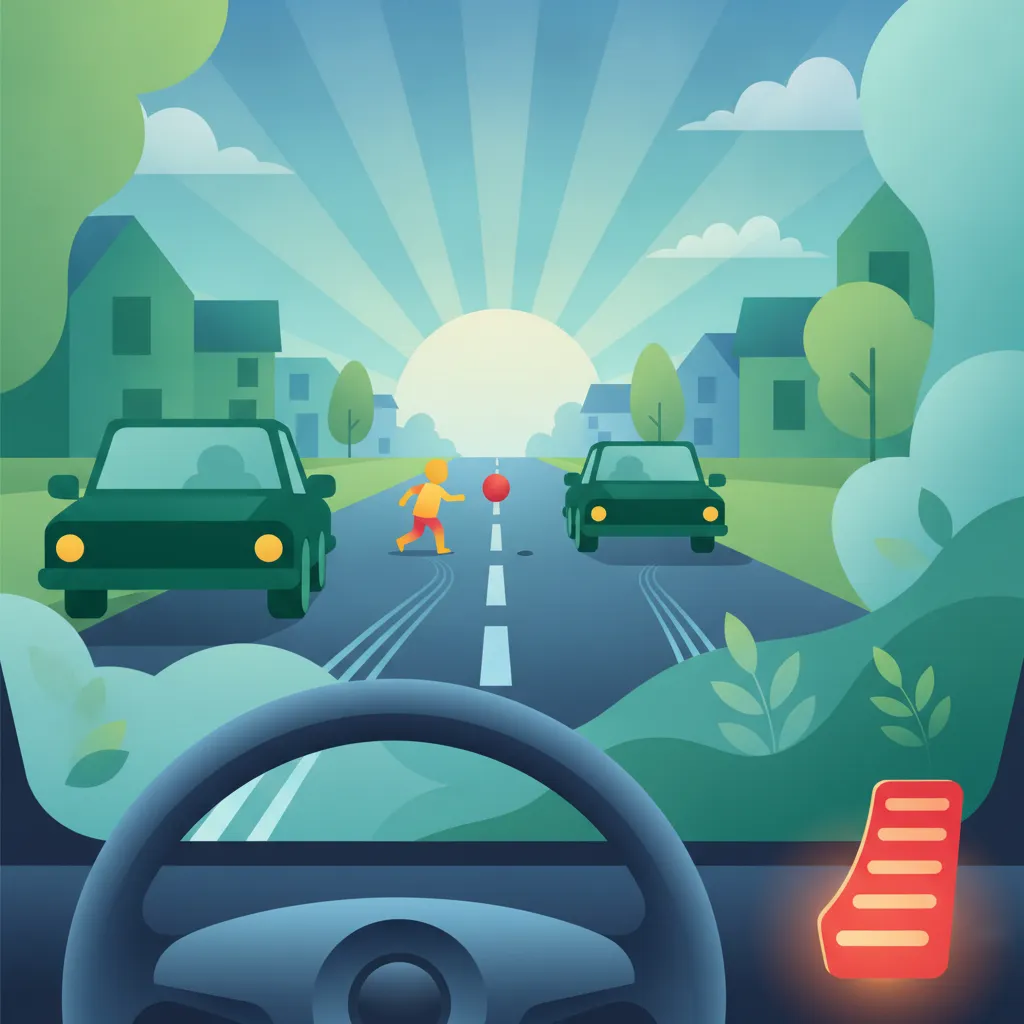
Learners will develop the ability to anticipate potential hazards on the road, enhancing reaction times and defensive riding strategies. The lesson emphasizes constant scanning, early identification of threats such as sudden stops, pedestrian crossings, or unexpected lane changes, and appropriate response measures. By cultivating proactive risk assessment, AM riders can significantly reduce accident likelihood.
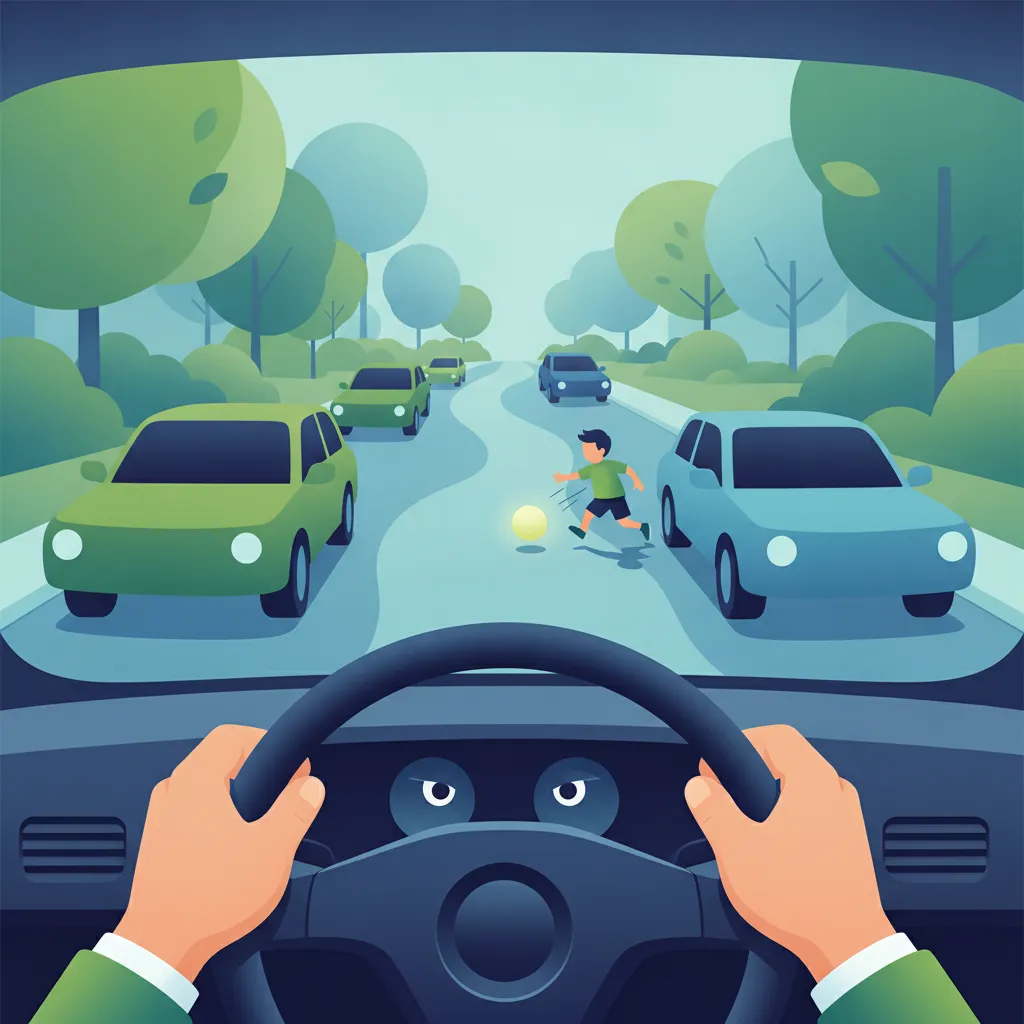
Proactive drivers scan the road constantly, detecting potential dangers before they turn into real-world emergency situations. This lesson teaches scanning techniques, the use of rear-view mirrors, and the interpretation of visual cues from other road users. You will learn to anticipate hazards like child play near roads, merging vehicles, and sudden lane changes, helping you drive defensively.
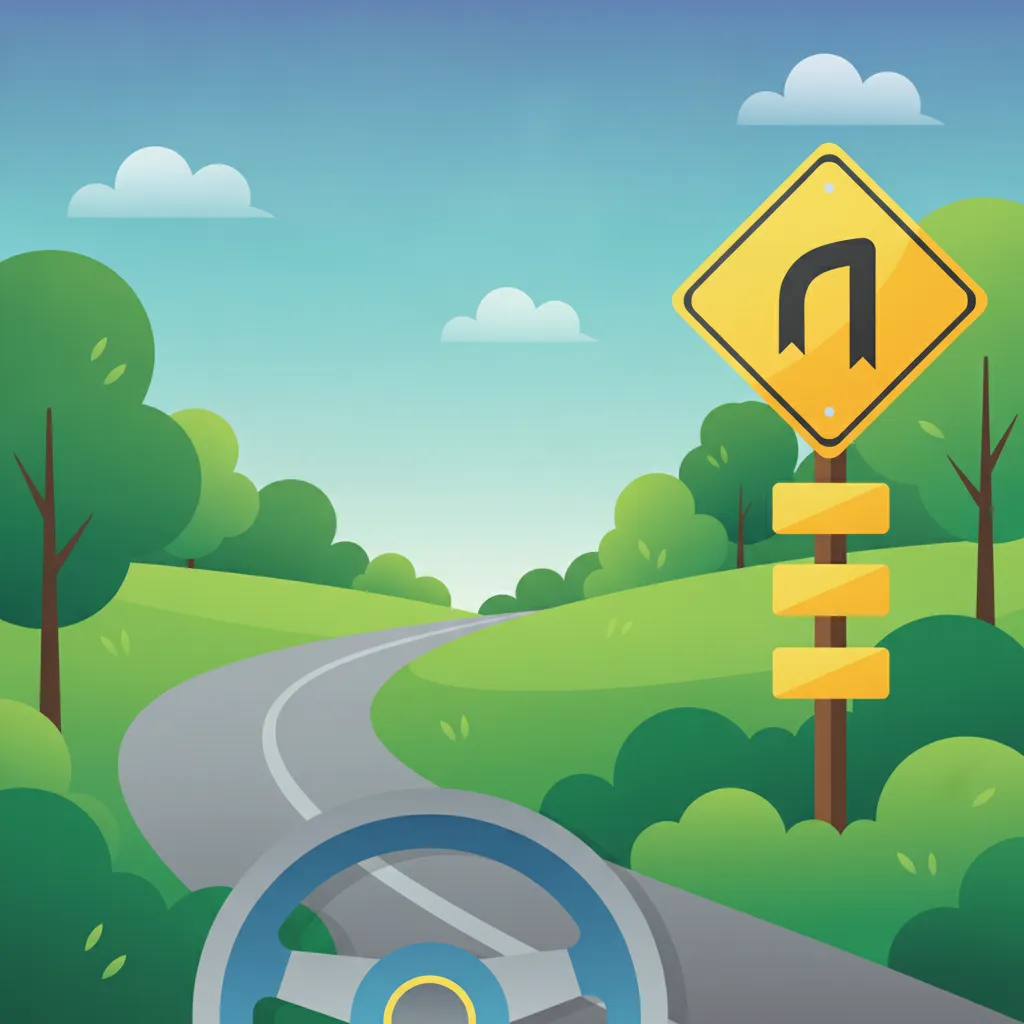
This lesson focuses on French warning signs that alert drivers to potential hazards ahead, such as curves, animal crossings, or slippery surfaces, with particular attention to signs relevant to AM riders. Learners will examine how to interpret these signs, understand the associated risks, and adapt riding behavior accordingly. By mastering warning sign recognition, riders can proactively manage safety risks in diverse road conditions.
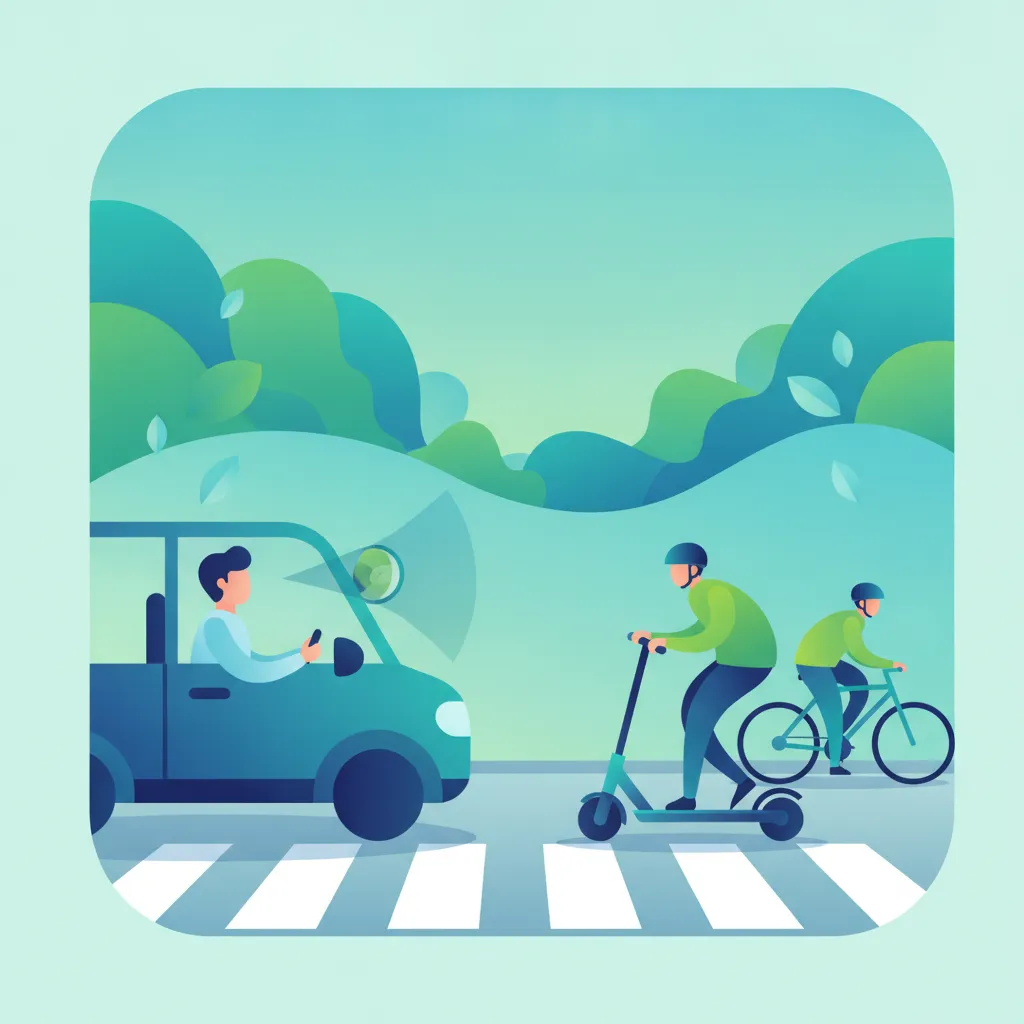
In this lesson, drivers will learn strategies to avoid conflicts with smaller vehicles, such as cars and vans, which may not be as visible in large vehicle blind spots. The content emphasizes maintaining adequate spacing, using proper lane discipline, and being aware of small vehicles' behavior during lane changes and turns. Learners will also be introduced to communication techniques, such as signalling and eye contact.
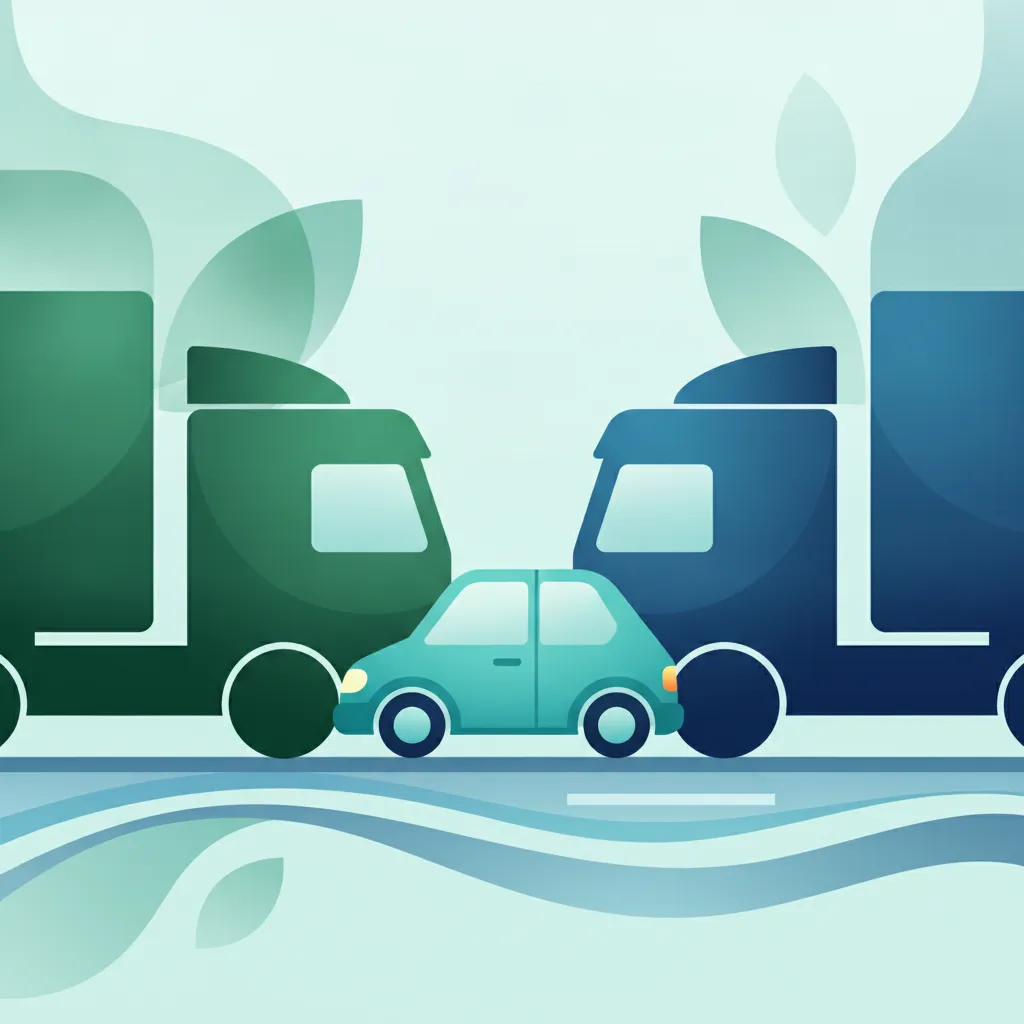
This lesson focuses on the inherent vulnerability of AM vehicles due to their limited mass, exposure, and visibility within mixed traffic flows on French roads. Learners will examine how blind spots, sudden lane changes by larger vehicles, and higher impact severity affect small vehicle safety. The content underscores the necessity for riders to adopt proactive safety measures, maintain safe distances, and be constantly aware of surrounding traffic dynamics.
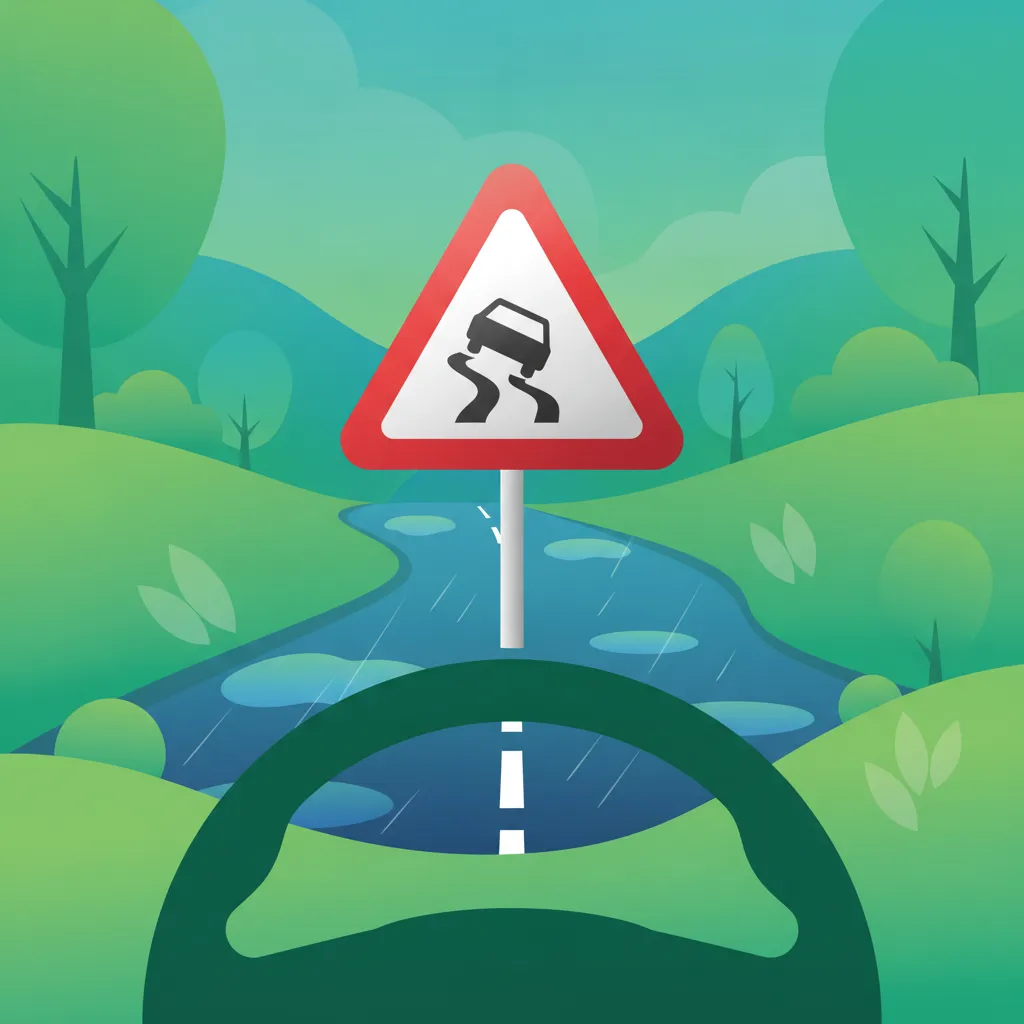
Warning signs on French roads are triangular with a red border, designed to alert drivers to upcoming dangers. This lesson teaches you how to interpret warnings for sharp curves, slippery surfaces, narrowing lanes, and wildlife or animal crossing hazards. You will understand the safety adjustments needed when approaching school zones, active roadworks, or crossings where vulnerable pedestrians are present.
This lesson addresses the challenges of positioning near larger vehicles such as cars, vans, buses, and lorries on French roads. Learners will learn to identify blind spots (angles morts), maintain a safe distance, and position themselves to maximize visibility and predictability. Understanding these dynamics is crucial for AM riders to avoid dangerous situations and ensure safe overtaking and lane sharing.
Find clear answers to common questions learners have about Enhancing Visibility: Lights and Reflectors. Learn how the lesson is structured, which driving theory objectives it supports, and how it fits into the overall learning path of units and curriculum progression in France. These explanations help you understand key concepts, lesson flow, and exam focused study goals.
While modern AM vehicles often come equipped with them, it is vital to know the specific regulations regarding light usage. Ensuring your lights are functioning correctly during the day significantly increases your profile to other road users.
While the focus of the exam is often on vehicle equipment, wearing retroreflective gear is a highly recommended safety practice that aligns with the defensive riding principles taught in the French Code de la route.
Many candidates forget that visibility is not just about being seen at night, but also during the day. Always check for questions regarding light usage in adverse weather conditions like rain or fog.
No, you must stick to the standardized lighting systems defined by French law. Unauthorized or distracting lighting can lead to fines and may be penalized in a practical driving context.
Ready to focus your study? Use the practice search to find exactly the French driving theory questions you need for the Code de la route and permis de conduire ETG. Refine your knowledge on specific topics or challenging rules to boost your confidence and exam readiness.