
This lesson focuses on the critical safety challenge of navigating alongside smaller, less visible vehicles while operating heavy goods vehicles. It builds on previous lessons about vehicle dimensions and lane discipline to prepare you for the real-world risks and exam questions involving urban safety for C1, C, C1E, and CE drivers.

Lesson content overview
Operating a heavy goods vehicle (véhicule de transport de marchandises or poids lourd) on French roads requires a high level of technical skill, acute spatial awareness, and deep understanding of defensive driving principles. One of the most significant challenges a professional HGV driver faces is safely sharing the road network with smaller passenger cars (véhicules légers) and light commercial vans. Because of their compact size, high maneuverability, and rapid acceleration capabilities, small vehicles often occupy HGV blind spots (angles morts) or execute unpredictable actions that can easily lead to catastrophic collisions.
As a candidate preparing for the French Goods Vehicle Licence Theory Course (Category C & CE), mastering conflict avoidance is not just a requirement for passing your exam; it is a fundamental pillar of professional road safety and civil liability. This lesson provides an exhaustive breakdown of the principles, regulations, and driving behaviors needed to mitigate risks and avoid conflicts with smaller vehicles on French highways, rural roads, and urban streets.
The inherent physical and psychological differences between driving a heavy commercial vehicle and a light passenger car create natural friction points in daily traffic.
An HGV, whether a rigid Category C truck or an articulated Category CE semi-trailer, possesses massive physical dimensions and a gross vehicle weight rating (GVWR) often reaching up to 44 tonnes in France. In contrast, a typical passenger car weighs under 2 tonnes and occupies a fraction of the physical road space.
This vast difference in mass means that in any physical collision, the occupants of the smaller vehicle face disproportionately higher risks of severe injury or fatality. Professionally, the HGV driver must assume the burden of "preventative protection," actively managing the surrounding space to shield smaller, less protected road users from danger.
Drivers of small passenger cars often lack an understanding of heavy vehicle dynamics. A typical motorist does not realize:
Consequently, motorists may cut closely in front of a truck, brake abruptly, or linger in areas where the HGV driver cannot see them. Anticipating this lack of awareness is key to preventing accidents.
The primary catalyst for side-impact and rear-end collisions between trucks and passenger cars is the failure to manage blind spots. HGV blind spots are significantly larger and more dangerous than those of passenger cars. Under French law (Code de la route), specific regulations highlight the critical nature of these zones.
To address these hazards, the French Code de la route mandates that all heavy vehicles with a GVWR exceeding 3.5 tonnes must display visible "Angles Morts" warning stickers or signs on the sides and rear of the vehicle. This visual warning is designed to alert light vehicle drivers, motorcyclists, and cyclists of the danger zones they should avoid.
Even with mandatory warning stickers on your vehicle, you must never assume that a passenger car driver is aware of your blind spots or will actively stay out of them. It is always your responsibility to verify clearance before executing any maneuver.
Modern HGVs are equipped with an array of specialized mirrors designed to minimize these blind zones. Understanding how to use and adjust them is essential.
Adjust your main flat mirrors to ensure you can see the horizon in the upper portion and a sliver of your own vehicle body/trailer on the inner edge.
Position wide-angle mirrors downward enough to capture the lanes immediately adjacent to your drive wheels and trailer axles.
Verify the close-proximity mirror covers the entire passenger-side door base and blind zone near the front wheel.
Adjust the front view mirror so the top of the front bumper is fully visible, ensuring clear sight of any low-profile car stopped ahead of you.
Preventing physical conflicts with small vehicles requires proactive management of the space surrounding your truck. Space serves as your primary safety buffer when other drivers make mistakes.
The stopping distance of a heavy vehicle is exponentially greater than that of a passenger car due to its kinetic energy (). Under normal dry conditions, a passenger car traveling at 90 km/h may require around 60 to 70 meters to come to a halt, including reaction time. A fully loaded 40-tonne truck traveling at the same speed requires well over 100 meters, a distance that increases drastically on wet or icy roads.
The longitudinal distance maintained between your HGV and the vehicle in front, which provides sufficient time to react, transition your foot to the brake pedal, and safely bring the vehicle to a stop without colliding.
In France, Article R412-12 of the Code de la route dictates specific safety distance rules for heavy vehicles. Outside of built-up areas, when two vehicles with a GVWR over 3.5 tonnes or a total length exceeding 7 meters are traveling at the same speed, they must maintain a minimum longitudinal safety distance of 50 meters between each other.
When following a small car, professional drivers must maintain a safety buffer of at least 3 seconds under ideal conditions, extending this to 5 or more seconds in poor weather. This gap prevents rear-end collisions if the passenger car brakes suddenly to make an unexpected turn or avoid an obstacle.
When merging onto a highway or changing lanes, HGV drivers must apply strict Gap Acceptance criteria. Because of your vehicle's length and slower acceleration, you cannot simply slip into standard gaps that a passenger car would utilize.
Communication on the road reduces ambiguity. Because passenger car drivers cannot see what you see, you must use your vehicle's signaling systems to make your intentions clear and predictable.
Under French traffic law, failing to signal an intention to turn or change lanes is a serious traffic violation.
Your headlights serve as both a visibility tool and a communication channel. However, incorrect headlight usage can create immediate danger for small vehicle drivers, whose lower seating positions make them highly susceptible to glare (éblouissement).
Hazard lights should only be used to warn other drivers of an immediate danger. This includes:
Do not use your hazard lights as a license to park illegally on urban streets during deliveries, as this blocks lanes and forces small vehicles into risky oncoming traffic maneuvers.
Intersections and roundabouts are prime locations for conflicts between HGVs and small vehicles. Understanding priority laws (priorité) and physical clearance is key to preventing accidents.
French intersection rules are strictly codified, and as a professional driver, you must respect them without exception. Never assume your vehicle’s sheer size gives you natural priority.
When entering a roundabout with a long vehicle, keep a close watch on your right side using your close-proximity mirror. If you must straddle lanes to accommodate your turning radius, do so defensively, blocking the space early so a small car cannot attempt to overtake you on the inside of the curve.
Overtaking is one of the most high-risk maneuvers an HGV can perform due to the length of time your vehicle must spend in the opposite or adjacent lane. Under Article R415-11, overtaking is prohibited at intersections, on sharp curves with limited visibility, and where lane markings indicate a solid line (ligne continue).
Additionally, you should avoid overtaking small vehicles in the following situations:
Professional drivers must adapt their conflict avoidance strategies based on changing external conditions.
| Driving Condition | Specific Risk with Small Vehicles | Required Driver Adaptation |
|---|---|---|
| Heavy Rain / Spray | Water spray from large HGV tires blinds passenger car drivers behind or beside you. | Reduce speed, increase following distance to at least 4-5 seconds, and ensure dipped beams are active. |
| Nighttime / Dusk | Reduced depth perception makes it difficult to judge the speed of approaching small cars. | Ensure clean mirrors to reduce glare. Switch from high beams to dipped beams early when meeting oncoming traffic. |
| Urban Delivery Zones | Frequent stops, pedestrian activity, and passenger cars pulling out of parking spaces. | Maximize use of close-proximity and front mirrors. Use hazard lights only when legally stopped in designated zones. |
| Highway Driving | High-speed merging and lane changes. Small vehicles may cruise in side blind spots. | Perform extended mirror checks. Signal at least 50m in advance and allow a 3-second gap before merging. |
| Mountainous Roads | Brake fade on steep descents; small cars may underestimate your speed. | Use your retarder/engine brake (ralentisseur) to maintain control. Never tail small cars down steep descents. |
Let's look at three practical scenarios that illustrate correct defensive driving decisions.
To round out your knowledge, keep this summary of key safety habits in mind during your daily driving routines:
This lesson covers the critical challenge of sharing French roads safely between heavy goods vehicles and smaller cars. HGV blind spots are exponentially larger, requiring auxiliary mirrors (wide-angle, close-proximity, front view) and frequent mirror checks every 5-8 seconds. French law mandates 50-meter minimum distances for vehicles over 3.5 tonnes and 50-meter advance signaling before maneuvers. At intersections and roundabouts, HGV drivers must yield priority to the right and position defensively to prevent squeeze collisions. The lesson emphasizes that responsibility for preventing conflicts always lies with the HGV driver, requiring proactive space management, early signaling, and anticipation of small vehicle unpredictable behavior.
A short set of high-value points that capture the most important learning from this lesson.
HGV blind spots (angles morts) are significantly larger than car blind spots and require mandatory warning stickers on vehicles over 3.5 tonnes GVWR.
Maintain at least 50 meters longitudinal distance between heavy vehicles over 3.5t outside built-up areas and a minimum 3-second gap when following smaller vehicles.
Signal at least 50 meters before any maneuver on fast roads to give small vehicle drivers time to clear your blind spots.
At roundabouts, anticipate small cars attempting to squeeze past on the inside during turns; use your close-proximity mirror and position defensively.
Gap acceptance criteria for HGV lane changes must account for your vehicle's length and slower acceleration compared to passenger cars.
Explore all units and lessons included in this driving theory course.
The five main blind spot zones around a Category C or CE truck: near front, far rear, left side, right side, and the dynamic blind spots created by articulated trailers during turns.
Auxiliary mirror types: wide-angle (grand angle), close-proximity (d'accostage), and front view (antéviseur) mirrors each eliminate a specific blind zone.
Never assume other drivers know your blind spots or will stay out of them—the law mandates 'Angles Morts' stickers, but you must always verify clearance yourself.
Article R415-1 priority on the right applies to all vehicles; never assume your size gives you natural priority at intersections.
Assuming a passenger car driver will see your truck and stay out of your blind spot based solely on the mandatory warning stickers.
Failing to use all auxiliary mirrors—drivers often neglect the close-proximity mirror, leaving the passenger-side cab steps and front wheel area invisible.
Merging onto highways at significantly slower speeds than traffic flow, forcing small vehicles to brake or make dangerous lane changes.
Using high beams when following or approaching other vehicles, causing glare that can cause smaller vehicle drivers to lose control.
Lesson content overview
A short set of high-value points that capture the most important learning from this lesson.
HGV blind spots (angles morts) are significantly larger than car blind spots and require mandatory warning stickers on vehicles over 3.5 tonnes GVWR.
Maintain at least 50 meters longitudinal distance between heavy vehicles over 3.5t outside built-up areas and a minimum 3-second gap when following smaller vehicles.
Signal at least 50 meters before any maneuver on fast roads to give small vehicle drivers time to clear your blind spots.
At roundabouts, anticipate small cars attempting to squeeze past on the inside during turns; use your close-proximity mirror and position defensively.
Gap acceptance criteria for HGV lane changes must account for your vehicle's length and slower acceleration compared to passenger cars.
Explore all units and lessons included in this driving theory course.
The five main blind spot zones around a Category C or CE truck: near front, far rear, left side, right side, and the dynamic blind spots created by articulated trailers during turns.
Auxiliary mirror types: wide-angle (grand angle), close-proximity (d'accostage), and front view (antéviseur) mirrors each eliminate a specific blind zone.
Never assume other drivers know your blind spots or will stay out of them—the law mandates 'Angles Morts' stickers, but you must always verify clearance yourself.
Article R415-1 priority on the right applies to all vehicles; never assume your size gives you natural priority at intersections.
Assuming a passenger car driver will see your truck and stay out of your blind spot based solely on the mandatory warning stickers.
Failing to use all auxiliary mirrors—drivers often neglect the close-proximity mirror, leaving the passenger-side cab steps and front wheel area invisible.
Merging onto highways at significantly slower speeds than traffic flow, forcing small vehicles to brake or make dangerous lane changes.
Using high beams when following or approaching other vehicles, causing glare that can cause smaller vehicle drivers to lose control.
Explore search topics learners often look for when studying Conflict Avoidance with Small Vehicles. These topics reflect common questions about road rules, driving situations, safety guidance, and lesson level theory preparation for learners in France.
Browse additional driving theory lessons that cover connected traffic rules, road signs, and common driving situations related to this topic. Improve your understanding of how different rules interact across everyday traffic scenarios.
Learn the specific rules for navigating roundabouts as a heavy vehicle driver in France. This guide covers turning dynamics, lane discipline, and the critical importance of monitoring blind spots to prevent side-impact collisions when sharing space with smaller vehicles at circular intersections.

France features a vast network of roundabouts (carrefours a sens giratoire) governed by specific entry and lane-use regulations. This lesson explains that vehicles entering a roundabout must yield to traffic already circulating inside. You will learn how to select the correct lane depending on your exit, use direction indicators properly, and yield to pedestrians and cyclists near roundabout exits.
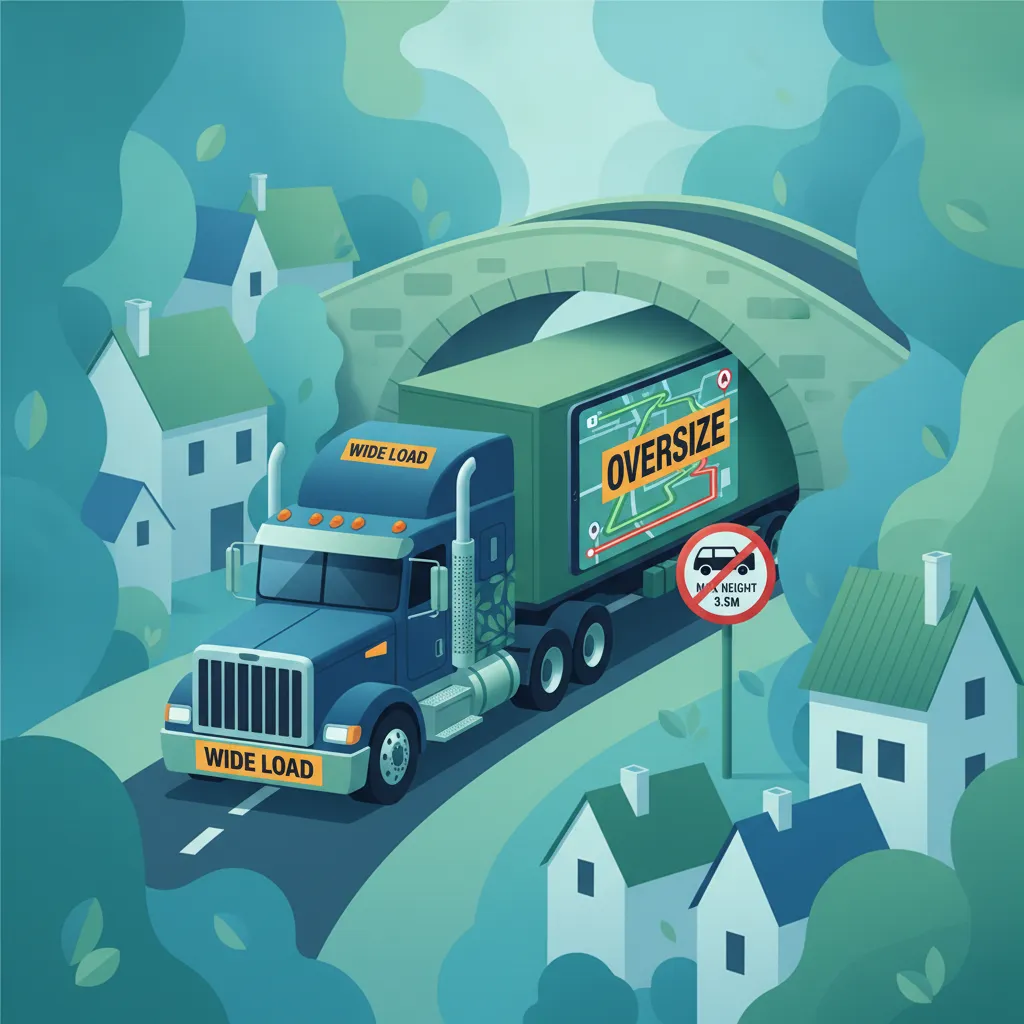
This lesson provides strategies for planning routes that accommodate oversized goods vehicles while complying with French road restrictions. Learners will learn how to identify prohibited routes, evaluate bridge and tunnel limitations, and obtain necessary access permits. The content also addresses the use of specialised GPS systems for heavy vehicle routing and the importance of contingency planning for detours, ensuring safe and efficient transport operations.

This lesson analyzes the technical path a long wheelbase vehicle must take when turning at intersections and navigating roundabouts. Drivers will learn to calculate tail swing and rear-wheel tracking, intentionally swinging wide to clear roadside curbs and poles safely. The lesson emphasizes yielding protocols for pedestrians and cyclists who may be crossing the target street during the turn.

This lesson explains the correct procedures for entering, circulating, and exiting roundabouts, which are highly prevalent throughout France. You will learn the exact lane choice strategies based on your intended exit, and how to use your turn indicators at each stage of the maneuver. The content also addresses the critical task of performing over-the-shoulder blind spot checks to avoid conflicts with overtaking vehicles when exiting.
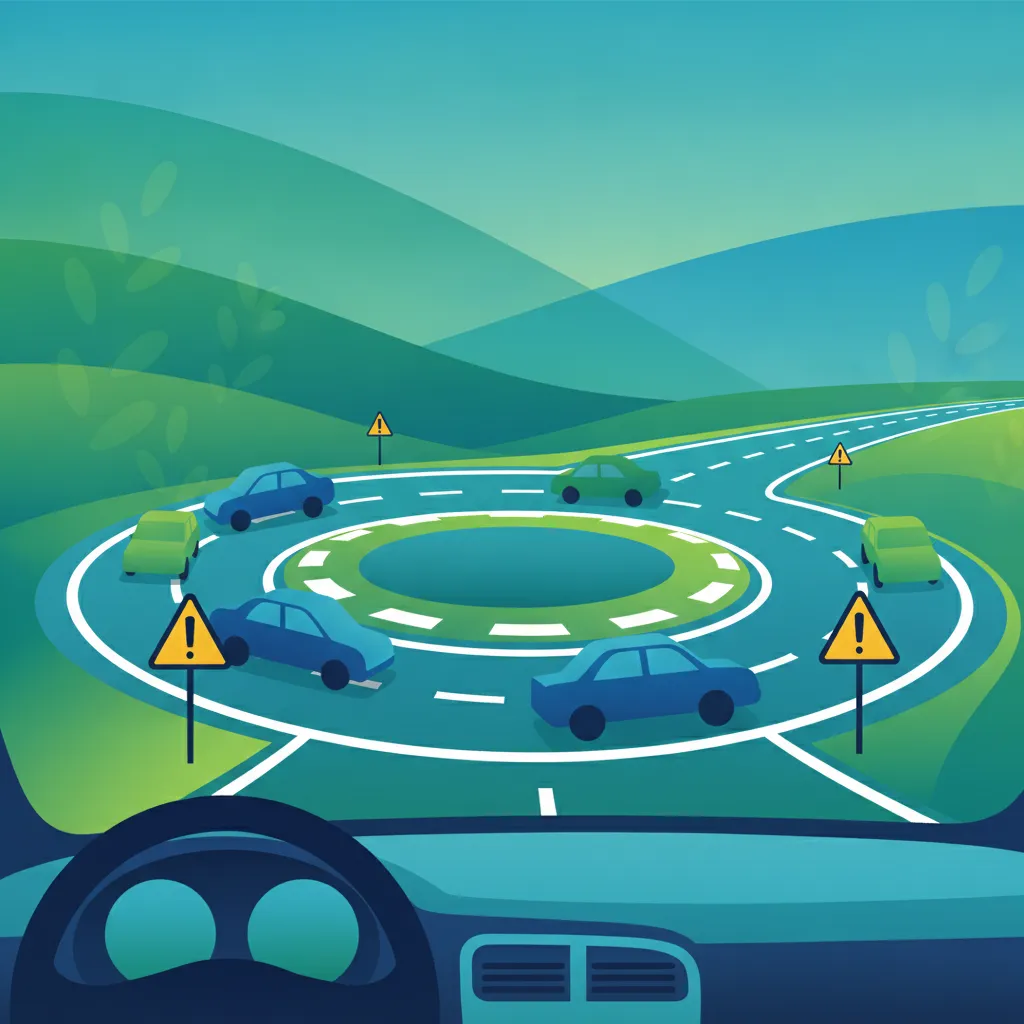
This lesson focuses on the skills required to safely enter, navigate, and exit roundabouts, a common feature in French urban environments. Learners will understand the need to yield to circulating traffic, select the appropriate lane upon entry, and signal intentions when exiting. By mastering these techniques, AM riders can safely integrate into roundabout traffic flow and reduce conflicts with other road users.
This lesson focuses on the specific considerations for operating goods vehicles on French motorways, including lane selection, speed management, and proper merging techniques. Learners will understand the importance of maintaining lane discipline, using appropriate overtaking practices, and respecting motorway-specific speed limits for heavy vehicles. The content also covers the use of emergency lanes and the handling of traffic flow.

This lesson analyzes the various traffic challenges unique to operating large passenger vehicles in historic and modern French urban areas. Drivers will learn to manage narrow street layouts, double-parked delivery trucks, and high-density multi-lane roundabouts safely. The lesson emphasizes defensive driving strategies, route adjustments, and maintaining mental focus under severe schedule and time pressures.

In this lesson, drivers will learn how to plan and execute wide turns with goods vehicles, taking into account turning radius, pivot points, and articulation angles. The content emphasizes the necessity of using the full width of the lane, correctly aligning the vehicle through the turn, and anticipating the movement of the trailer. Learners will also explore road marking guidelines for turning and the importance of giving clear signals to surrounding traffic.

This lesson addresses the challenges of positioning near larger vehicles such as cars, vans, buses, and lorries on French roads. Learners will learn to identify blind spots (angles morts), maintain a safe distance, and position themselves to maximize visibility and predictability. Understanding these dynamics is crucial for AM riders to avoid dangerous situations and ensure safe overtaking and lane sharing.
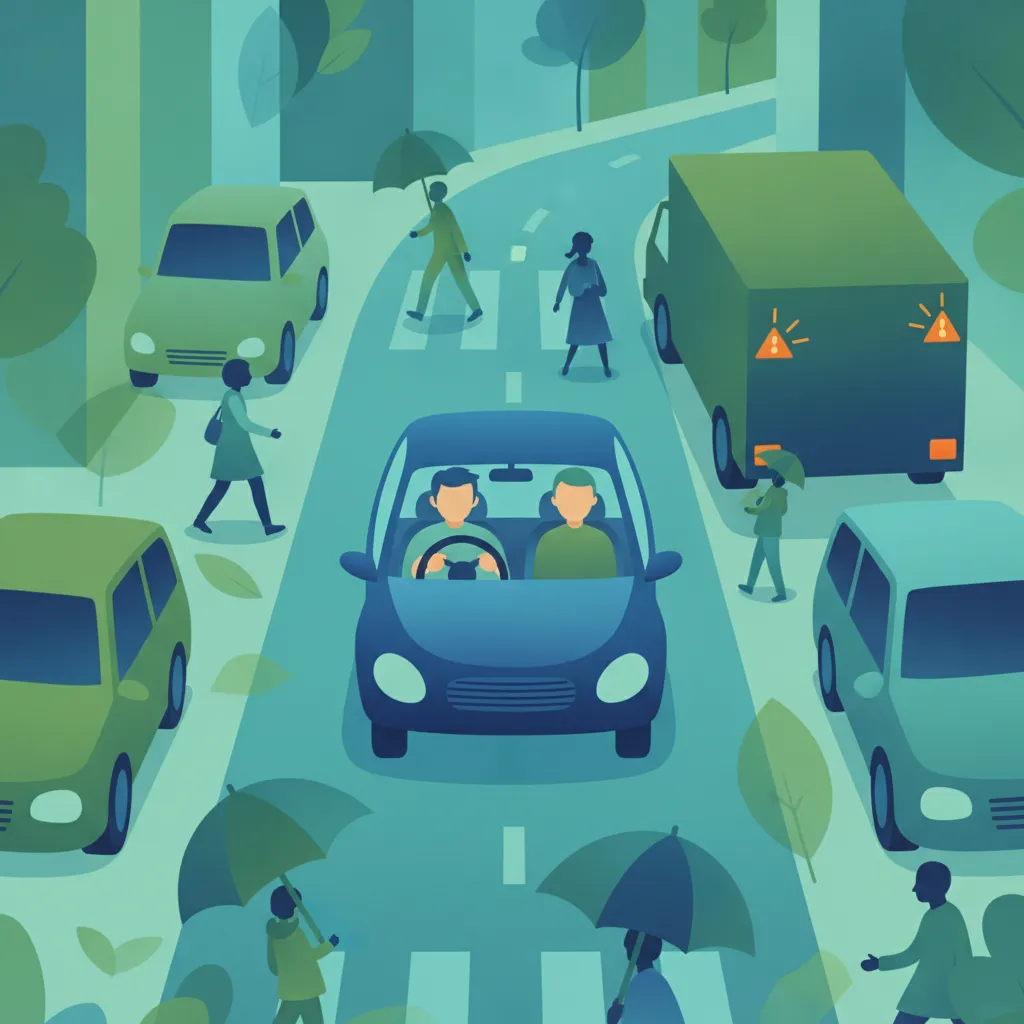
This lesson focuses on maneuvering in extremely crowded areas, passenger terminals, or narrow streets blocked by parked vehicles and obstacles. Drivers will learn to assess clearance distances precisely before committing to narrow pathways. The content teaches steering techniques that maintain stability, optimize space usage, and prioritize public safety during slow-speed, high-difficulty maneuvers.
Understand the unique challenges of urban driving and delivery zones as a professional HGV driver. This lesson explains how to identify hidden hazards, manage tight turning radii in city streets, and mitigate risks when operating near vulnerable road users in dense traffic environments.

This lesson focuses on the unique challenges of performing deliveries in dense urban areas. Learners will explore best practices for loading and unloading safely, navigating traffic congestion, and minimizing risks to pedestrians and cyclists. The content also covers compliance with city regulations for delivery zones, scheduling considerations, and the importance of careful maneuvering to avoid accidents.
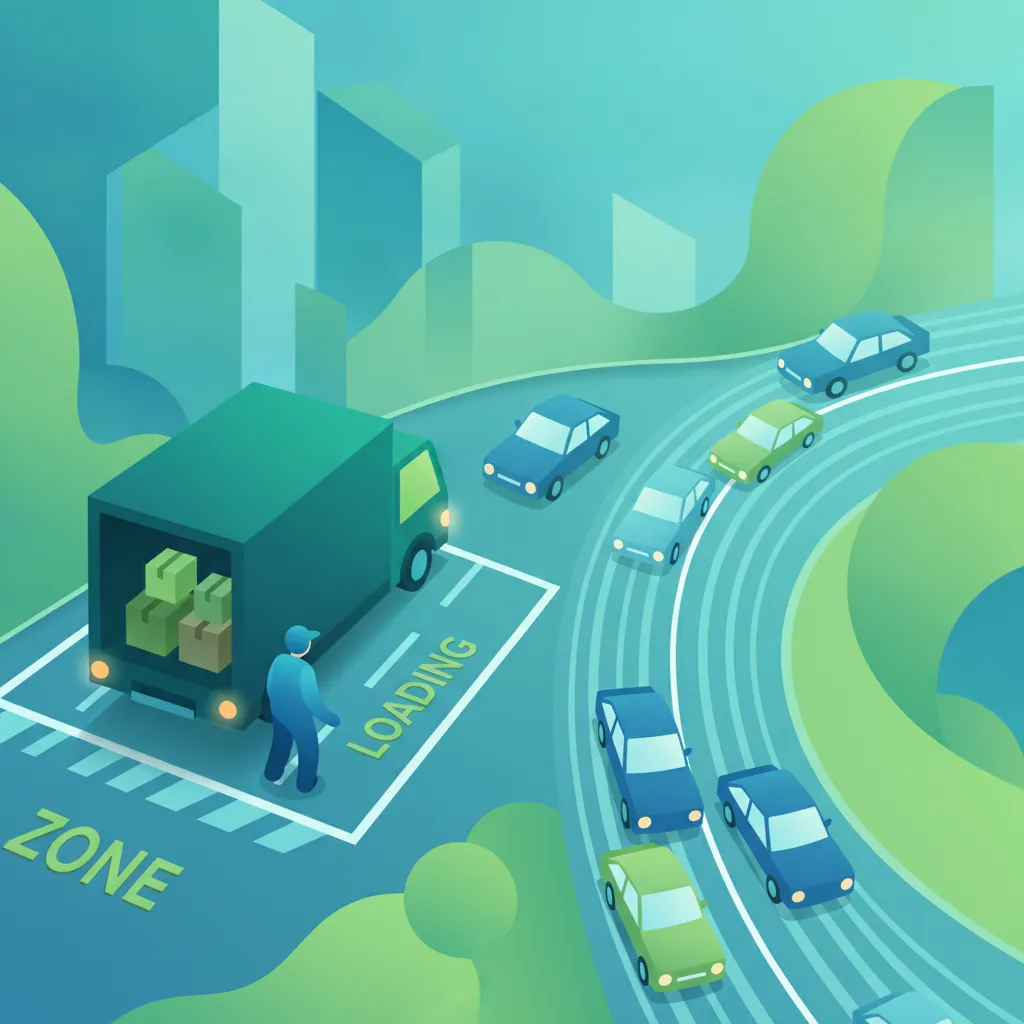
In this lesson, drivers will learn how to navigate urban delivery zones, understanding the rules surrounding loading bays, time windows, and restricted access areas. The content includes the process for obtaining delivery permits, strategies for safe maneuvering in congested city streets, and best practices for minimizing impact on pedestrian traffic. Learners will also be introduced to French city-specific regulations that govern goods vehicle deliveries.
This lesson analyzes the various traffic challenges unique to operating large passenger vehicles in historic and modern French urban areas. Drivers will learn to manage narrow street layouts, double-parked delivery trucks, and high-density multi-lane roundabouts safely. The lesson emphasizes defensive driving strategies, route adjustments, and maintaining mental focus under severe schedule and time pressures.
Find clear answers to common questions learners have about Conflict Avoidance with Small Vehicles. Learn how the lesson is structured, which driving theory objectives it supports, and how it fits into the overall learning path of units and curriculum progression in France. These explanations help you understand key concepts, lesson flow, and exam focused study goals.
Because heavy vehicles have large blind spots that can completely hide a passenger car or motorcycle. Proper adjustment ensures you have the widest possible view to detect small vehicles before they enter your danger zone.
Many candidates underestimate the time and space required for a heavy vehicle to maneuver safely. The exam often tests your ability to predict when a small vehicle might cut into your lane unexpectedly.
In urban environments, space is limited and interactions with pedestrians and cyclists are frequent. Understanding how to manage these conflicts is key to avoiding penalties and ensuring the safety of vulnerable road users.
Yes, using your indicators early and clearly is the primary way to communicate. Additionally, maintaining a consistent road position helps smaller vehicles predict your path through intersections and roundabouts.
Ready to focus your study? Use the practice search to find exactly the French driving theory questions you need for the Code de la route and permis de conduire ETG. Refine your knowledge on specific topics or challenging rules to boost your confidence and exam readiness.