
This lesson teaches you the proactive scanning and anticipation skills required to stay safe on French roads and succeed in the ETG exam. By building on your knowledge of road signs and traffic laws, you will learn to spot potential hazards before they develop into dangerous situations. Mastering these techniques is essential for becoming a defensive Category B driver in France.

Lesson content overview
To pass the French Category B driving theory exam (Examen de l'Éthique Générale or ETG) and become a safe driver on public roads, mastering the physical control of your vehicle is only half the battle. The most critical safety skill you can develop is the cognitive ability to read the road. Proactive drivers do not simply react to emergencies as they occur; instead, they scan their surroundings constantly, decode visual clues, and anticipate potential dangers long before they materialize into critical situations.
This comprehensive guide covers the visual, cognitive, and procedural techniques required to master hazard perception (perception des risques) under the French Code de la route. We will detail scanning patterns, proper mirror utilization, how to eliminate the risk of blind spots (angles morts), and how to safely calculate stopping and following distances across various driving conditions.
Hazard perception is the continuous, active process of evaluating your driving environment to spot potential hazards and predict how they might develop. In defensive driving, a hazard is defined as any physical object, environmental condition, or road user behavior that could force you to change your speed, alter your trajectory, or perform an emergency maneuver.
In France, this proactive approach is not just a safety recommendation; it is legally grounded in Article R412-6 of the Code de la route, which dictates that every driver must constantly maintain their vehicle in a state and position that allows them to perform all necessary maneuvers safely and without delay.
The cognitive process of scanning the road environment, identifying visual cues that indicate potential danger, predicting how those cues might evolve, and taking preemptive action to minimize risk.
Defensive driving relies on the transition from reactive to proactive behavior. A reactive driver brakes hard when a child runs into the road. A proactive driver notices a school zone sign, spots children playing on the sidewalk, reduces their speed beforehand, and prepares to stop, thereby eliminating the need for emergency braking.
Your eyes are your primary tool for gathering safety information. To avoid "tunnel vision"—which commonly occurs under stress, at high speeds, or due to fatigue—you must train yourself to use systematic scanning patterns.
A horizontal scan is a continuous, left-to-right sweep of your visual field. It should extend from your left peripheral vision, across the roadway ahead, to your right peripheral vision. This is especially vital when:
Vertical scanning involves shifting your gaze up and down along your forward path.
To maintain complete situational awareness, you must never fixate on a single point for more than a couple of seconds. Your gaze should move dynamically:
ETG Exam Tip: The French driving theory exam features video-based hazard perception questions. On these questions, you are expected to click the moment a hazard appears or begins to develop, not when it has already blocked your path. Train your eyes to look for the earliest indicators, such as a pedestrian's head turning towards the street or a car's brake lights illuminating far ahead.
Your mirrors provide a continuous stream of information about the traffic behind and alongside you. However, they have mechanical limits. Safe driving requires combining proper mirror checks with physical head checks to eliminate blind spots.
A Category B vehicle is equipped with three standard mirrors: the interior rear-view mirror, the left exterior mirror, and the right exterior mirror. They must be adjusted before you begin driving to ensure the following views:
A blind spot is any area around your vehicle that cannot be seen directly by looking forward or through your mirrors.
To compensate for these blind spots, you must perform a direct shoulder check (glancing over your shoulder through the side window) before any lateral movement. This is a mandatory safety rule under French law.
Check Interior Mirror: Assess the speed and distance of vehicles directly behind you.
Check Side Mirror: Check the lateral lane on the side you intend to move towards to ensure no vehicle is currently overtaking you.
Activate Indicator (Clignotant): Signal your intention to other road users early (at least several seconds before moving).
Perform Blind Spot Check: Turn your head quickly to glance over your shoulder to ensure no motorcycle, bicycle, or low-profile vehicle is hidden parallel to your rear door.
Execute Maneuver: Smoothly steer into the target lane once you have verified the path is clear.
Hazard anticipation relies heavily on your ability to read and interpret non-verbal signs from other road users. People and vehicles often signal their next moves before they actually execute them.
Never rely solely on indicator lights, as drivers sometimes forget to use them or leave them on by mistake. Instead, cross-reference signals with actual vehicle positioning:
Maintaining a safe following distance (distance de sécurité) is your absolute insurance policy against rear-end collisions. It provides you with the spatial buffer necessary to react and bring your vehicle to a complete stop if the vehicle ahead brakes suddenly.
Under Article R412-8 of the French Code de la route, drivers must maintain a safe distance from the vehicle in front of them. This distance must be equivalent to the distance covered by the vehicle in at least two seconds.
A time-based safety margin used to establish a safe following distance. It corresponds to the distance your vehicle travels in two seconds at your current speed, accounting for reaction time and vehicle braking capabilities.
The two-second rule represents the absolute minimum safety margin under ideal conditions (dry asphalt, clear daylight, healthy driver, well-maintained vehicle). You must increase this distance under the following circumstances:
| Condition | Recommended Safety Margin | Rationale |
|---|---|---|
| Wet Roads / Rain | At least 3 seconds | Braking distance on wet surfaces increases by approximately 50%. |
| Fog / Heavy Snow / Ice | 4 to 6 seconds (or more) | Extremely low visibility and drastically reduced tyre grip. |
| Heavy Vehicle Load / Towing | 3 to 4 seconds | Increased kinetic mass extends the vehicle's braking distance. |
| Behind Motorcycles / Cyclists | 3 seconds | Two-wheelers can stop very quickly or fall, requiring a larger reaction zone. |
To appreciate why hazard anticipation and following distances are so critical, you must understand the mathematical physics of bringing a moving vehicle to a halt. The total stopping distance (distance d'arrêt) is divided into two distinct phases.
[--- Hazard Spotted ---]
        |
        v   (Vehicle travels at constant speed)
[=== Reaction Phase (approx. 1 second) ===]
        |
        v   (Brakes applied, vehicle decelerates)
[=== Braking Phase ===]
        |
        v
[--- Vehicle Halts Completely ---]
The reaction distance is the distance your vehicle travels from the moment your eyes perceive a hazard until your foot physically presses the brake pedal.
Factors that increase reaction time include fatigue, alcohol, drugs, distraction (such as using a mobile phone), and illness.
The braking distance is the distance your vehicle travels after the brakes are applied until it stops completely. Unlike reaction distance, braking distance is dictated by vehicle physics and tyre grip.
When the road surface is wet, tyre adhesion is cut in half. While your reaction distance remains identical (since your brain's processing speed does not change based on the weather), your braking distance doubles.
To estimate your stopping distance on wet pavement, calculate the dry stopping distance and add half of the braking distance, or use the standard rule of thumb: multiply the dry stopping distance by approximately 1.5.
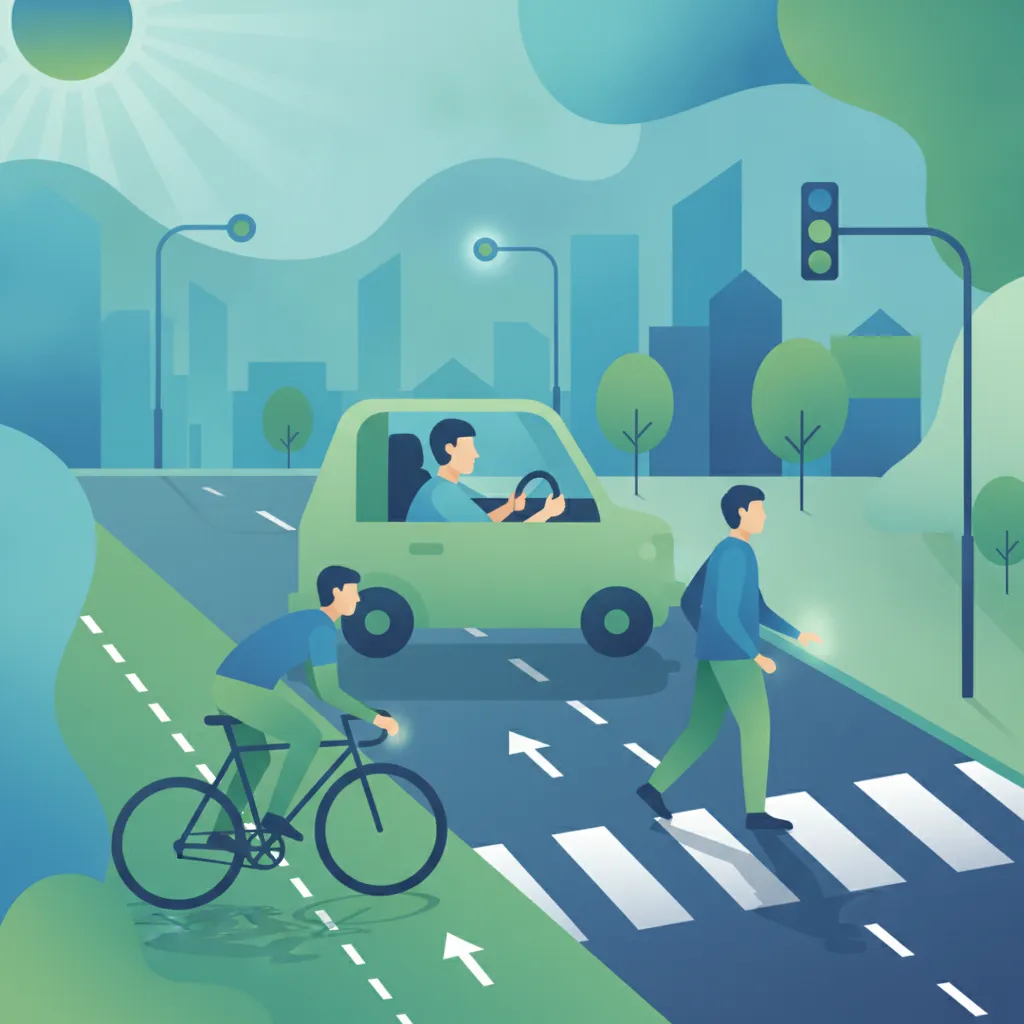
To put these principles into a practical context, let us analyze a common, highly complex driving scenario you will encounter in residential and urban areas.
In this situation, a defensive driver identifies multiple potential hazards simultaneously and prioritizes them based on proximity and severity:
Correct Action Sequence: Decelerate early and drop your speed well below the 30 km/h limit. Check your interior mirror to ensure vehicles behind you are not tailgating. Do not attempt to squeeze past the cyclist while the oncoming car is passing. Instead, wait behind the cyclist, allowing the oncoming car to clear the zone first, then signal and overtake the cyclist while leaving at least 1 metre of lateral clearance (the legal minimum in French urban areas).
Hazard perception is highly contextual. Your scanning patterns and speed must adapt dynamically to your environment, light levels, and weather.
At night, your visual range is restricted to the reach of your headlights (typically 30 metres for dipped beams and 100 metres for high beams).
Failing to apply hazard perception and safety distance rules is not merely dangerous; it carries severe penalties under the French Code de la route.
Hazard perception and anticipation are active cognitive habits that require constant practice. As you prepare for your French Category B driving theory exam (ETG), remember that safe drivers do not rely on fast reflexes to escape dangerous situations. Instead, they rely on visual scanning, proactive mirror checks, clear communication via indicators, and safe following distances to prevent dangerous situations from occurring in the first place.
To deepen your preparation, explore our dedicated modules on calculating stopping distances, speed management, and interacting with vulnerable road users.
Hazard perception for the French Category B ETG exam requires mastering systematic visual scanning across horizontal, vertical, and mirror-check sequences, with particular attention to vulnerable road users and early visual cues from vehicles. The legal framework under Articles R412-6 and R412-8 mandates constant situational awareness and minimum two-second following distances, which must be extended in wet, foggy, or icy conditions. Understanding stopping distance composition—reaction distance based on perception time and braking distance based on physics—is essential for anticipating how much space you need at different speeds. Defensive driving means using indicators, mirrors, and blind spot checks together to communicate intentions and eliminate hidden dangers before executing any maneuver.
A short set of high-value points that capture the most important learning from this lesson.
Hazard perception is a proactive cognitive skill requiring continuous scanning beyond the vehicle directly ahead.
The transition from reactive to proactive driving prevents emergencies rather than just reacting to them.
Mirrors have mechanical limits; a direct shoulder check is mandatory to eliminate blind spots before any lateral movement.
The two-second rule is the legal minimum following distance under Article R412-8 of the Code de la route.
Stopping distance equals reaction distance (tens digit × 3) plus braking distance (tens digit²), both of which increase significantly in wet conditions.
Explore all units and lessons included in this driving theory course.
Check mirrors every 5–8 seconds under normal conditions, and immediately before any change of speed or direction.
On wet roads, braking distance doubles and your safety margin must extend to at least 3 seconds.
A vehicle's front wheels turning outward before a junction or parking spot signal an imminent lateral movement even without an active indicator.
In fog with visibility below 50 metres, the legal maximum speed on any French road is 50 km/h.
Children near roads may run unpredictably; always anticipate unpredictable movement in school zones and near play areas.
Believing mirrors alone are sufficient to check adjacent lanes; blind spots require a physical shoulder check over the side window.
Waiting until a hazard blocks your path before reacting, rather than identifying early indicators like brake lights ahead or a pedestrian's head turning.
Relying on indicator lights alone to predict another driver's actions; always cross-reference with the vehicle's actual positioning within its lane.
Applying the standard two-second rule in adverse conditions like rain, fog, or ice without extending the gap.
Forgetting that braking distance scales with the square of speed; doubling speed quadruples braking distance, not doubles it.
Lesson content overview
A short set of high-value points that capture the most important learning from this lesson.
Hazard perception is a proactive cognitive skill requiring continuous scanning beyond the vehicle directly ahead.
The transition from reactive to proactive driving prevents emergencies rather than just reacting to them.
Mirrors have mechanical limits; a direct shoulder check is mandatory to eliminate blind spots before any lateral movement.
The two-second rule is the legal minimum following distance under Article R412-8 of the Code de la route.
Stopping distance equals reaction distance (tens digit × 3) plus braking distance (tens digit²), both of which increase significantly in wet conditions.
Explore all units and lessons included in this driving theory course.
Check mirrors every 5–8 seconds under normal conditions, and immediately before any change of speed or direction.
On wet roads, braking distance doubles and your safety margin must extend to at least 3 seconds.
A vehicle's front wheels turning outward before a junction or parking spot signal an imminent lateral movement even without an active indicator.
In fog with visibility below 50 metres, the legal maximum speed on any French road is 50 km/h.
Children near roads may run unpredictably; always anticipate unpredictable movement in school zones and near play areas.
Believing mirrors alone are sufficient to check adjacent lanes; blind spots require a physical shoulder check over the side window.
Waiting until a hazard blocks your path before reacting, rather than identifying early indicators like brake lights ahead or a pedestrian's head turning.
Relying on indicator lights alone to predict another driver's actions; always cross-reference with the vehicle's actual positioning within its lane.
Applying the standard two-second rule in adverse conditions like rain, fog, or ice without extending the gap.
Forgetting that braking distance scales with the square of speed; doubling speed quadruples braking distance, not doubles it.
Explore search topics learners often look for when studying Hazard Perception and Anticipation Techniques. These topics reflect common questions about road rules, driving situations, safety guidance, and lesson level theory preparation for learners in France.
Browse additional driving theory lessons that cover connected traffic rules, road signs, and common driving situations related to this topic. Improve your understanding of how different rules interact across everyday traffic scenarios.
Understand the scientific relationship between speed, reaction time, and braking physics on French roads. This guide explains how to calculate reaction distances and total stopping distances for various conditions, helping you apply mathematical safety principles to your driving theory knowledge and ensure safe following gaps in traffic.
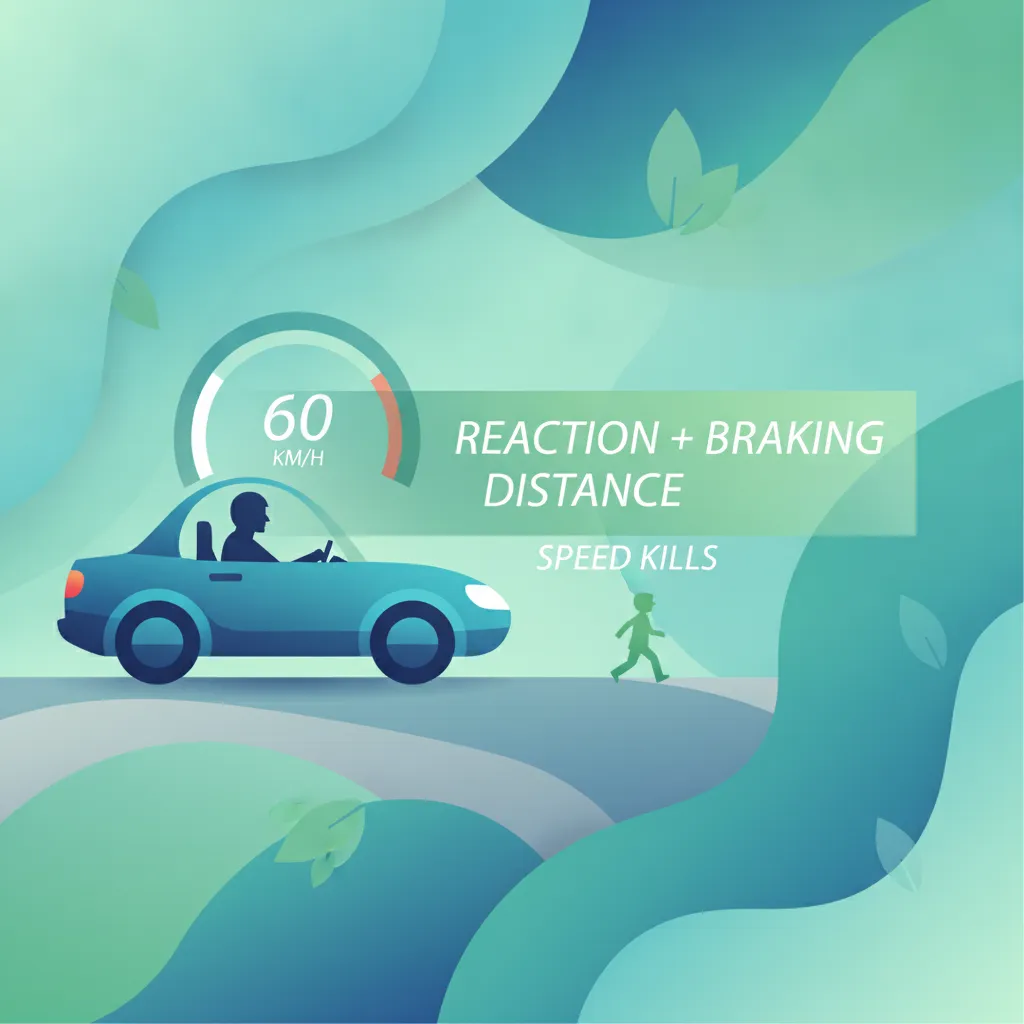
Total stopping distance is calculated as the sum of your reaction distance and the physical braking distance of the car. This lesson explains how reaction time is affected by driver focus and how speed exponentially increases the braking distance. You will learn how tire condition and slippery road surfaces degrade braking adhesion, requiring drivers to recognize and counteract these physical limits.
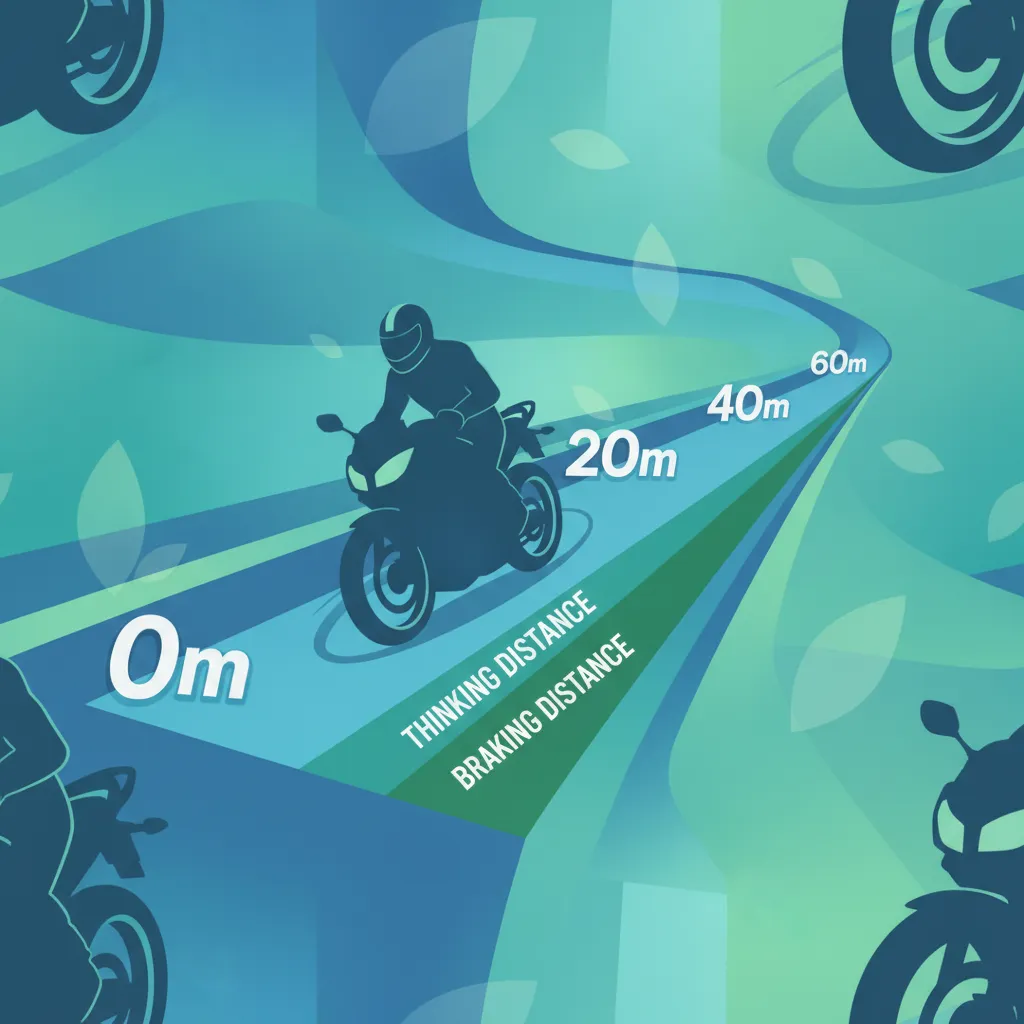
This lesson breaks down the physics of stopping a motorcycle, exploring how kinetic energy varies with the square of your speed. You will learn the mathematical components of total stopping distance, which includes both perception-reaction distance and physical braking distance. The lesson also explains how forward weight transfer during heavy braking increases traction on the front tire while reducing rear-wheel load.
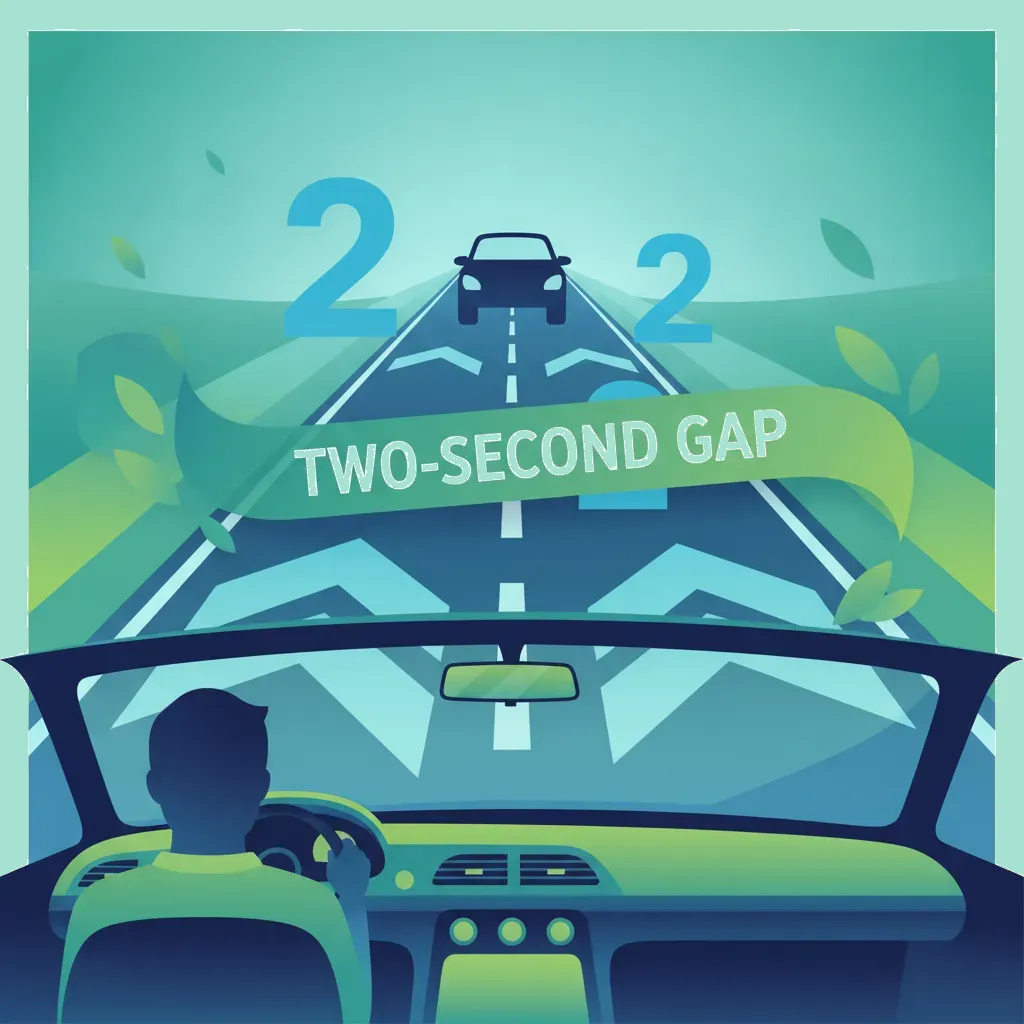
Maintaining a safe distance behind the lead vehicle is essential to prevent rear-end collisions during sudden braking maneuvers. This lesson teaches you the two-second safety rule and how to calculate this gap at different highway speeds. You will also study unique safety margin requirements, such as maintaining minimum distance intervals in road tunnels or doubling your following distance on wet roads.

In this lesson, drivers will learn how to calculate safe following distances based on vehicle speed, load, road conditions, and traffic density. The content explains the components of total stopping distance, including reaction time and braking distance, and how these are affected by factors such as wet road surfaces and heavy loads. Learners will also be introduced to French road safety guidelines for maintaining appropriate gaps to ensure sufficient time to react.

This lesson emphasizes the critical importance of maintaining a safe following distance when carrying dozens of passengers. Learners will study how vehicle weight and passenger load dynamically extend braking and total stopping distances compared to standard passenger cars. The lesson provides concrete spacing rules, such as adjusted safety gaps for highway driving and increased distances on slippery roads.

Adverse weather reduces tyre traction and limits visibility, dramatically raising the risk of multi-car accidents on highways. This lesson details speed reductions required during rainfall, techniques for avoiding aquaplaning, and demisting windshields for visibility. You will learn how to maintain extra stopping distance on snow-covered roads and the correct headlight adjustments to make during fog.
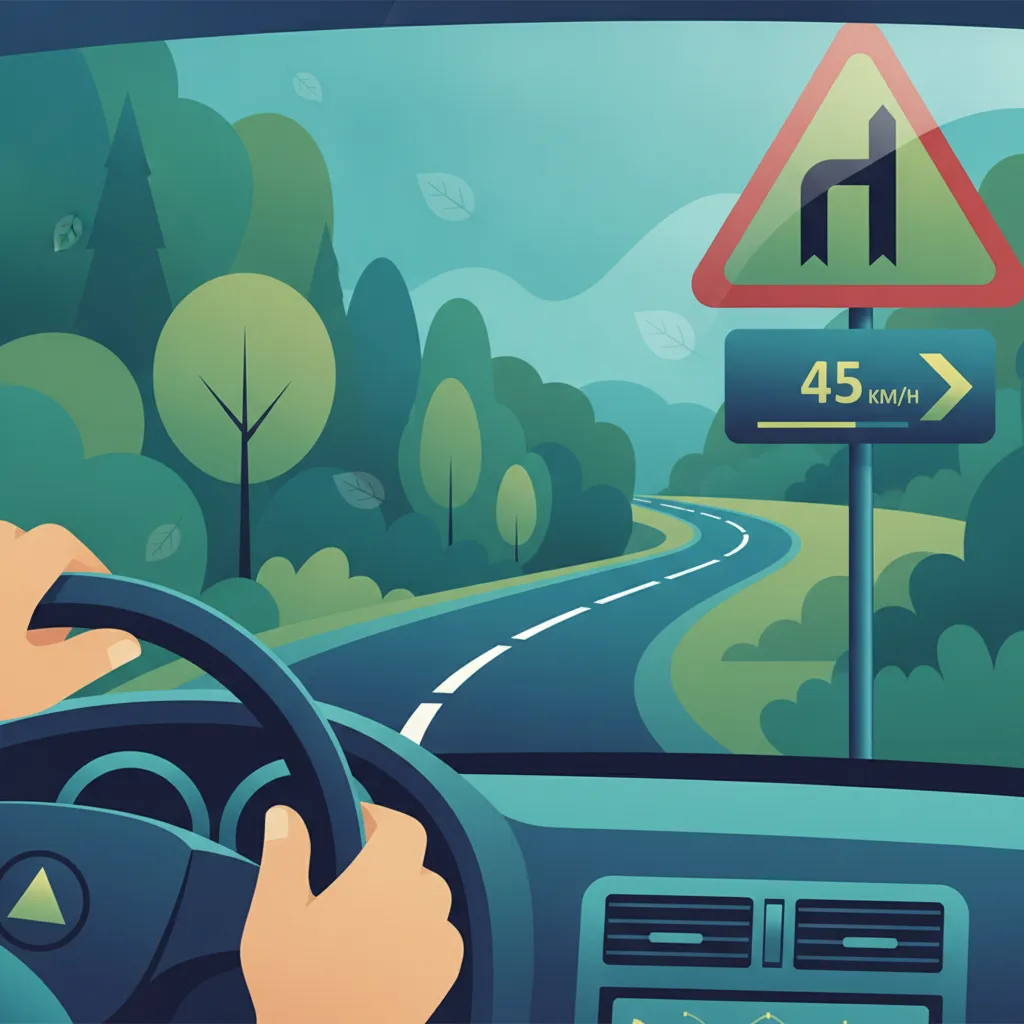
The legal speed limit is a maximum threshold, not a target speed that is always safe to maintain. This lesson teaches you how to select an appropriate, safe speed based on visibility, traffic congestion, and road topography. You will learn how to negotiate blind turns, approach summits with caution, and reduce speeds in heavy traffic to ensure you always maintain complete control of your vehicle.

This lesson teaches you how to establish and preserve a dynamic cushion of safety on all sides of your motorcycle. You will study how to apply the 'two-second rule' to keep a safe following distance, extending it to three or more seconds in adverse weather. Additionally, you will discover how to manage tailgating motorists safely without resorting to dangerous speed increases, ensuring you always maintain a clear escape route.
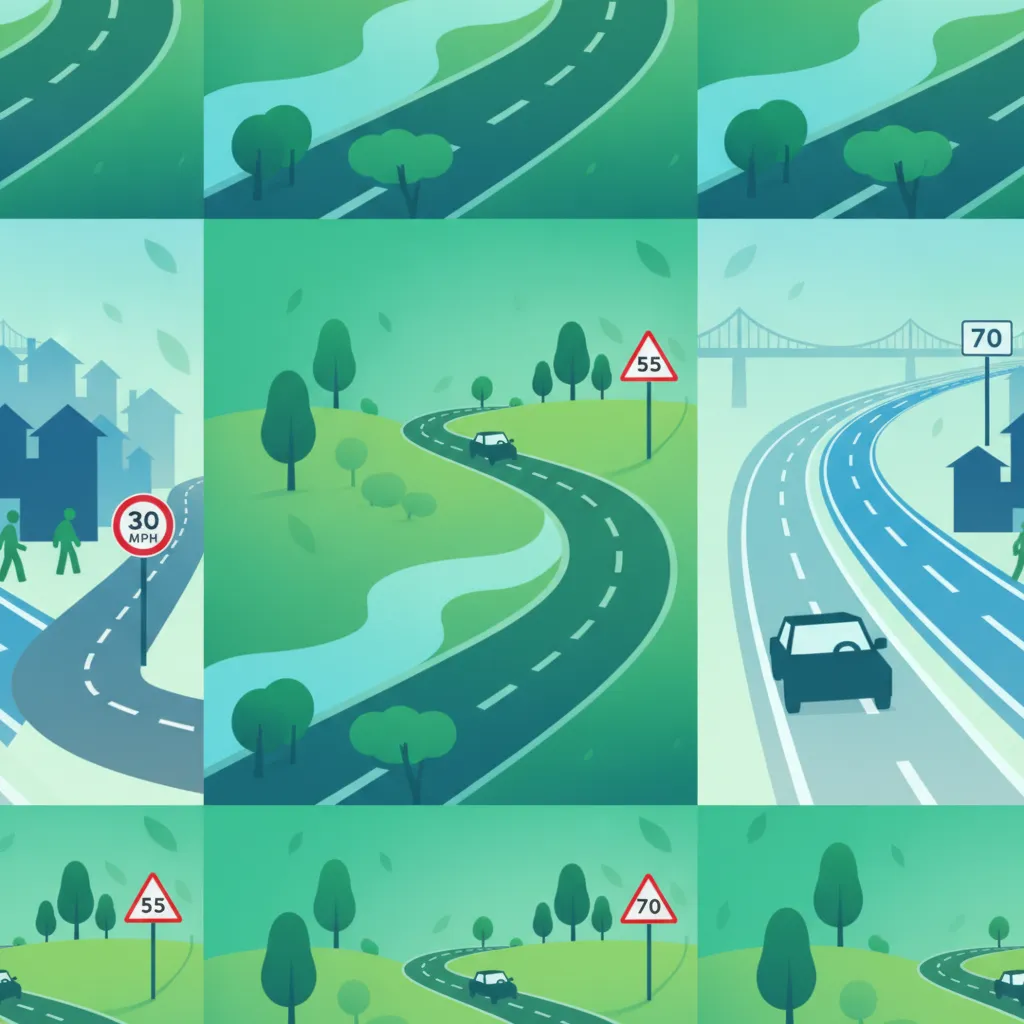
Speed limits in France are strictly regulated based on road category, weather conditions, and the driver's licensing status. This lesson covers standard speeds: 50 km/h in urban areas, 80 km/h on two-lane rural roads, 110 km/h on dual carriageways, and 130 km/h on motorways. You will also learn how these limits drop during rain or fog, and the reduced speed limits applicable to probationary drivers.
Learn the legal requirements and defensive driving techniques for sharing the road with pedestrians, cyclists, and public transport in France. This lesson covers yielding responsibilities at crossings, maintaining safe lateral clearance, and anticipating the movements of vulnerable road users to improve your overall road safety awareness.
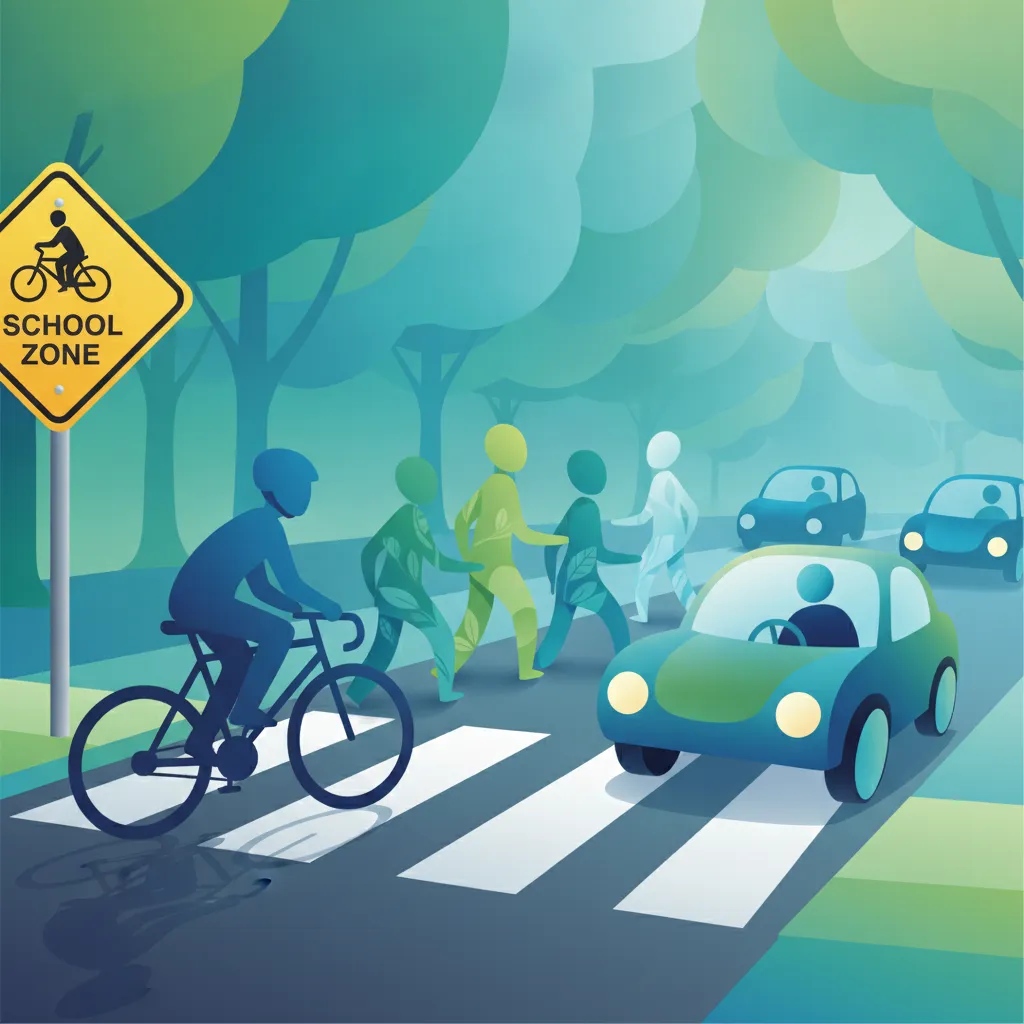
This lesson focuses on the legal requirement to yield to pedestrians on or about to step onto zebra crossings, a major focus of French road safety. You will learn how to approach school zones and pedestrian islands with heightened vigilance and reduced speed. Additionally, the lesson explores shared urban spaces, explaining how to maintain safe lateral distances when overtaking cyclists or personal electric scooters.
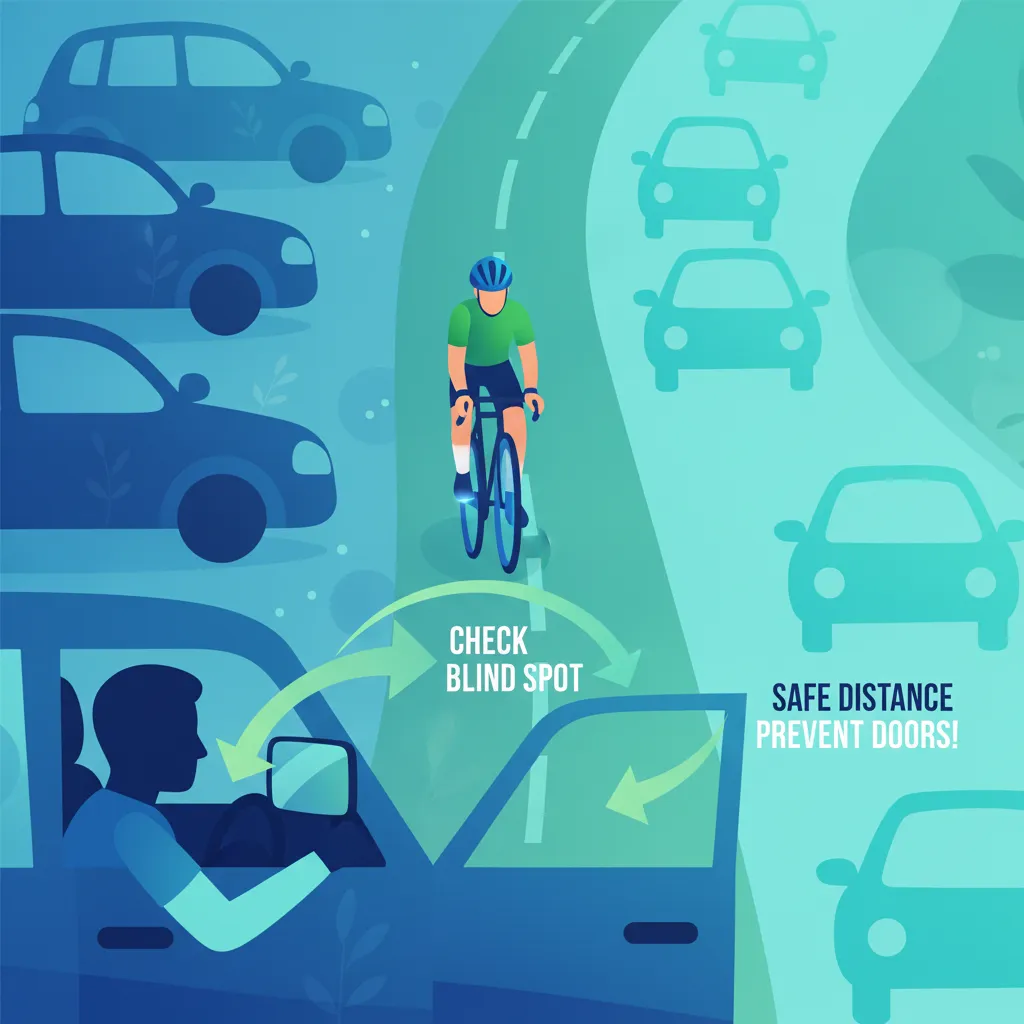
This lesson explains how to share the road safely with cyclists in both urban and rural environments. Drivers will study the legal minimum passing distances when overtaking cyclists, which is one meter in cities and one and a half meters outside urban areas. It also covers recognizing specialized cycling infrastructure, bike boxes at intersections, and preventing blind-spot collisions during right turns.
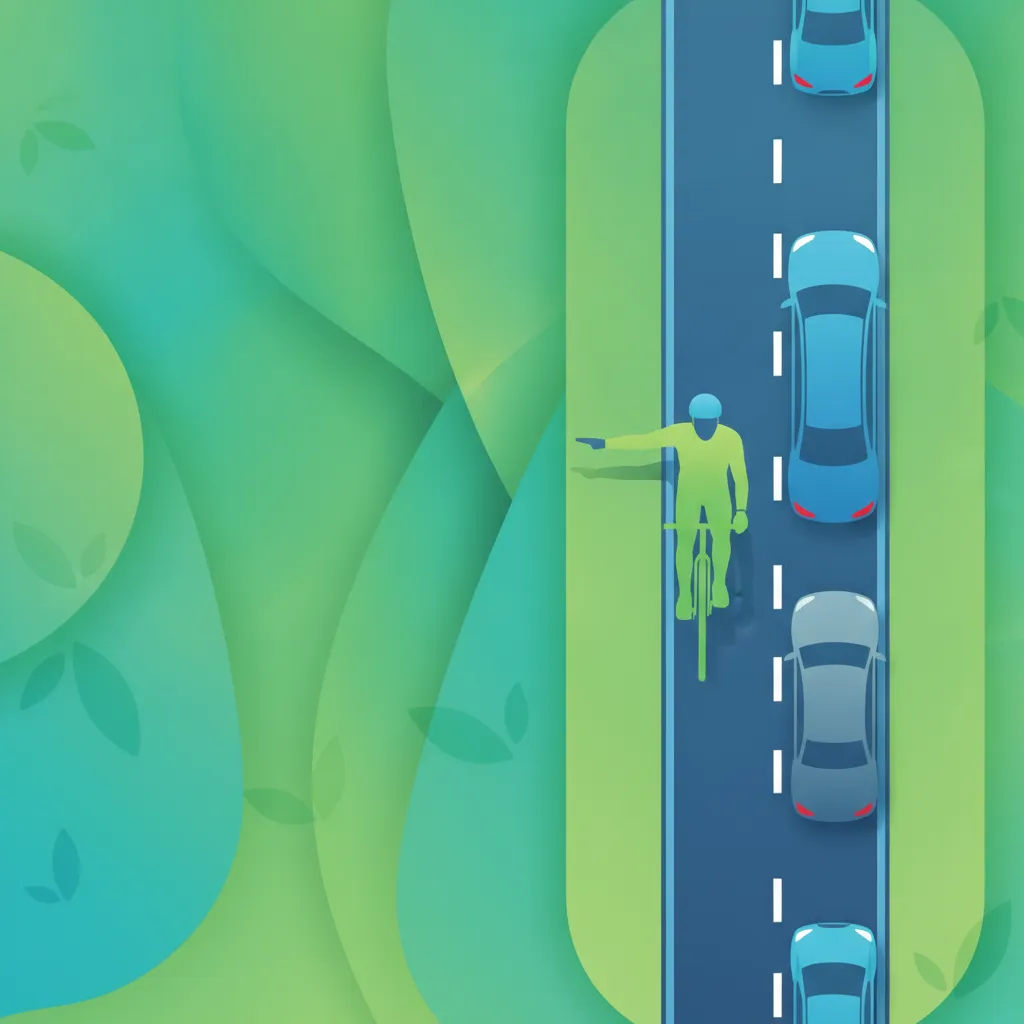
Bicycles represent an eco-friendly transport method with specific rights on French public roadways. This lesson teaches you how to identify dedicated cycle paths, respect bike lanes, and understand cyclist turning privileges at intersections. You will learn the legal minimum safety distance required when overtaking a cyclist: 1 meter in urban areas and 1.5 meters outside city limits.

Learners will focus on the best practices for interacting safely with cyclists and pedestrians in mixed traffic environments. The lesson covers proper lane usage, overtaking protocols, maintaining adequate safety gaps, and non-verbal communication techniques in the French urban landscape. By applying these principles, AM riders can coexist harmoniously with vulnerable road users, reducing the likelihood of accidents.

Learners will explore the rules related to pedestrian crossings, focusing on the obligation to yield to pedestrians at zebra crossings and flashing pedestrian signals. The lesson highlights the importance of stopping before the stop line, reducing speed, and maintaining vigilance for pedestrian movement. Mastery of these practices ensures the safety of both pedestrians and AM riders at crossing points.
This lesson examines the specific challenges and responsibilities goods vehicle drivers face when interacting with pedestrians and cyclists in urban environments. Learners will understand right-of-way rules, the importance of yielding at pedestrian crossings, and safe turning practices that protect cyclists. The content emphasizes heightened driver vigilance, especially when navigating bike lanes and crowded sidewalks.

Certain groups of road users require heightened defensive attention from drivers due to physical limitations or unpredictable behaviors. This lesson covers how to recognize signs of visual impairment (white canes), mobility challenges, and the unpredictability of young children. You will learn to reduce your speed, extend yielding patience, and proactively secure extra space to protect these vulnerable users.

In France, pedestrians have clear legal priority when stepping onto or indicating an intent to use a crossing (passage pieton). This lesson details standard zebra crossings, refuge islands, and pedestrian crossings managed by synchronized traffic light systems. You will learn to scan crossings ahead, anticipate pedestrian movements, and safely come to a stop whenever a pedestrian attempts to cross.

This lesson covers the operational logic of traffic light signals in France, emphasizing the legal implications of the red, amber, and green cycles. You will study how to safely manage the amber phase to avoid rear-end collisions from vehicles behind while maintaining control. Additionally, you will discover the unique challenge of electromagnetic induction loops, which sometimes fail to detect lightweight motorcycles at quiet intersections.

This lesson examines French Code de la route laws regarding pedestrian right-of-way, emphasizing the driver's legal duty to yield to any pedestrian engaged in crossing. It outlines proper approach speeds when approaching zebra crossings with obstructed views. Candidates will learn to maintain a safe physical buffer zone and verify that crosswalks are entirely clear of pedestrians before accelerating.
Find clear answers to common questions learners have about Hazard Perception and Anticipation Techniques. Learn how the lesson is structured, which driving theory objectives it supports, and how it fits into the overall learning path of units and curriculum progression in France. These explanations help you understand key concepts, lesson flow, and exam focused study goals.
The ETG exam often features images or videos requiring you to identify potential risks. Proactive scanning allows you to see these risks early and choose the safest action, which is the primary indicator of a competent driver.
You should check your mirrors every 5 to 10 seconds, especially before changing speed, direction, or when encountering a potential hazard. This habit ensures you always know the position of other road users.
Always look for visual cues such as feet or heads near the crossing, and look for signs of other cars braking or slowing down unexpectedly. In the French theory test, always assume a pedestrian might step out if your view is partially obscured.
Weather conditions like rain or fog reduce visibility and increase stopping distances. Your anticipation must be heightened; you must allow more room and react earlier to potential hazards because your ability to stop or maneuver is significantly compromised.
Ready to focus your study? Use the practice search to find exactly the French driving theory questions you need for the Code de la route and permis de conduire ETG. Refine your knowledge on specific topics or challenging rules to boost your confidence and exam readiness.