
This lesson teaches you how to identify potential dangers early and react appropriately when riding your small vehicle. It is a critical component of your AM licence preparation, ensuring you can navigate French roads safely while anticipating the movements of other traffic participants.

Lesson content overview
Navigating public roads on a Category AM vehicle—such as a light moped (cyclomoteur) up to 50cc or a light quadricycle (voiturette)—requires a high level of vigilance. Because of their compact size and lower maximum speed limit of 45 km/h, these vehicles are highly vulnerable in traffic.
Defensive riding (conduite préventive) is the foundation of safety for any AM rider in France. It relies on your ability to scan the environment, anticipate the mistakes of other road users, assess risks accurately, and react with precision. This lesson covers the cognitive and physical skills required to safely manage hazards under the French Code de la route.
Defensive riding means riding to save lives, time, and money, regardless of the conditions around you or the actions of others. For AM licence holders (often referred to in France as the Brevet de Sécurité Routière or BSR), defensive riding is not just a safety recommendation; it is a survival strategy.
As a moped rider, you have a smaller visual profile than cars or trucks. Other drivers may fail to see you, misjudge your speed, or cut off your right-of-way at intersections. By adopting a proactive mindset, you assume that other road users might make mistakes, and you position yourself and manage your speed to absorb those errors without crashing.
A proactive riding style characterized by anticipating potential road hazards, maintaining safety margins, positioning the vehicle for maximum visibility, and adapting speed to ensure there is always an "escape route" in an emergency.
Many collisions involving light vehicles occur simply because a rider did not look in the right place at the right time. Active visual scanning is the systematic, continuous movement of your eyes to gather critical information from your entire surroundings.
Riders often fall into the trap of staring directly at the road surface just a few metres ahead of their front wheel. While it is important to notice immediate surface hazards like loose gravel or oil spills, you must look far ahead—at least 15 to 20 seconds down the road.
By scanning the far horizon, you detect developing traffic patterns, changing traffic lights, pedestrian crosswalks, and oncoming vehicles early. This gives you ample time to adjust your speed gradually, rather than relying on panic braking.
Your peripheral vision acts as an early warning system. It detects motion to your left and right, such as a dog running toward the street, a parked car door opening, or a vehicle preparing to pull out from a side street (priorité à droite). Whenever your peripheral vision registers movement, turn your eyes briefly to evaluate the potential risk.
Your mirrors provide a continuous feed of what is happening behind you. You should check them every few seconds, especially before you decelerate, stop, or change your lane position.
However, mirrors do not show everything. Every vehicle has blind spots (angles morts)—areas to the rear-left and rear-right that are invisible through mirrors alone. For AM riders, failing to perform a direct head check (contrôle direct) before turning or changing lanes is one of the leading causes of side-impact collisions.
Scan ahead and behind: Check your forward path and consult your rear-view mirrors to assess the speed and distance of trailing traffic.
Signal your intent: Activate your turn signal (clignotant) early to communicate your plans to other drivers.
Perform the head check (Contrôle direct): Turn your head quickly over the shoulder in the direction you plan to move to check your blind spot.
Execute smoothly: If the path is clear, adjust your lateral position or complete the turn without making abrupt movements.
Safe riding requires a fast, continuous cognitive loop: Scan Anticipate Assess React.
[ Active Scanning ] ──> [ Anticipation ] ──> [ Risk Assessment ] ──> [ Decisive Action ]
Anticipation is the process of predicting what might happen next based on the clues around you. It bridges the gap between what you see now and what you must do in a few seconds.
Once you identify a potential hazard, you must evaluate its severity (how bad could a crash be?) and its probability (how likely is it to happen?).
Understanding the physics of stopping is critical for AM riders. The distance your vehicle travels from the moment you spot a hazard to the moment you come to a complete stop is called the total stopping distance (distance d'arrêt). It is divided into two distinct phases:
The average reaction time for a healthy, alert driver is approximately 1 to 1.5 seconds. During this brief window, your brain perceives the hazard, processes the information, decides to brake, and sends a physical signal to your hands to squeeze the brake levers.
During this reaction time, your vehicle continues to travel forward at its current speed.
At the maximum legal AM speed limit of 45 km/h (which is ), an alert rider with a 1.5-second reaction time will travel before the brakes are even applied! If you are fatigued, distracted, or under the influence of alcohol, your reaction time can easily double, pushing your reaction distance over .
Once you physically apply the brakes, the vehicle begins to decelerate. The distance it takes to stop depends on your speed, the vehicle's braking efficiency, tire grip, and the road surface.
The formula for braking distance is:
Where:
On a dry asphalt road, a typical moped can stop from 45 km/h in about 10 to 12 metres of braking. However, on a wet road, the coefficient of friction () drops by half, doubling your braking distance.
| Speed (km/h) | Reaction Distance (1.5s) | Braking Distance (Dry) | Braking Distance (Wet) | Total Stopping (Dry) | Total Stopping (Wet) |
|---|---|---|---|---|---|
| 30 km/h | |||||
| 45 km/h |
As shown above, at 45 km/h on a rainy day in France, it will take you over 40 metres to come to a stop. This is why maintaining a safe following distance is mandated by French law.
To protect vulnerable riders and coordinate traffic flow, the French Code de la route codifies specific safety standards regarding speed adaptation, lane positioning, and following distances.
According to Article R412-12 of the French Code de la route, drivers must maintain a sufficient distance behind the vehicle in front of them to avoid a collision in the event of sudden braking.
The legal standard is a minimum time gap of two seconds. This allows one second for your reaction time and one second of safety margin.
The Two-Second Rule Method: Choose a fixed landmark ahead, such as a traffic sign, tree, or lamppost. When the vehicle in front of you passes that object, count slowly: "One thousand and one, one thousand and two". If your front wheel passes the same landmark before you finish counting, you are following too closely and must back off.
Article R413-17 states that a driver must remain in control of their vehicle's speed under all circumstances. You must reduce your speed significantly below the posted limit in conditions of:
Article R412-9 requires all vehicles to travel near the right-hand edge of the roadway. However, as an AM rider, riding too close to the gutter (caniveau) is dangerous. It exposes you to debris (glass, gravel, oil), storm drains, and makes you invisible to vehicles waiting to pull out from side streets.
Your default position should be in the middle-left portion of your lane (or the third of the lane closest to the center line on two-way streets) when it is safe to do so. This position:
Let us analyze how these principles are applied in real-life driving situations on French roads.
Hazard anticipation requires adapting your riding techniques to the specific environment and conditions.
To pass your French AM licence theory exam and remain safe on the road, memorize these core relationships:
Hazard anticipation for AM riders combines constant visual scanning across three zones, a cognitive loop of anticipation and risk assessment, and an understanding that at maximum AM speed you need over 40 metres to stop on wet roads. French law mandates a two-second minimum following distance and requires speed adaptation to conditions. The lesson emphasizes that defensive riding means actively predicting mistakes from other road users, positioning your vehicle for maximum visibility in the middle-left of your lane, and always performing a physical head check before changing direction to compensate for mirror blind spots.
A short set of high-value points that capture the most important learning from this lesson.
The cognitive loop Scan → Anticipate → Assess → React is the foundation of safe AM riding and must become automatic
At 45 km/h, you travel approximately 18.75 metres during the 1.5-second reaction phase before your brakes engage
Mirrors alone cannot show blind spots; a physical head check (contrôle direct) is mandatory before any lateral movement
The two-second following distance mandated by Article R412-12 provides only one second of reaction margin and one second of safety buffer
Your default lane position should be in the middle-left portion of your lane to maximize visibility to other drivers
Explore all units and lessons included in this driving theory course.
Defensive riding means assuming other road users may make mistakes and always keeping an escape route available
Wet road conditions approximately double braking distance; increase your following gap to at least four seconds
Peripheral vision detects movement first and acts as your early warning system for hazards entering your path
When a pedestrian has stepped onto or clearly intends to step onto a crossing, you must yield by French law (Article R415-11)
Speed must be adapted to conditions—rain, fog, pedestrians, blind corners—regardless of posted limits (Article R413-17)
Staring at the road surface just ahead instead of scanning the far horizon 15-20 seconds ahead
Failing to perform a head check because mirrors show the area behind; mirrors do not cover blind spots
Riding in a large vehicle's blind spot without repositioning to see its mirrors
Assuming a driver has seen you simply because you have priority; always verify wheel movement before proceeding
Not covering brake levers when approaching intersections or pedestrian crossings with obscured visibility
Lesson content overview
A short set of high-value points that capture the most important learning from this lesson.
The cognitive loop Scan → Anticipate → Assess → React is the foundation of safe AM riding and must become automatic
At 45 km/h, you travel approximately 18.75 metres during the 1.5-second reaction phase before your brakes engage
Mirrors alone cannot show blind spots; a physical head check (contrôle direct) is mandatory before any lateral movement
The two-second following distance mandated by Article R412-12 provides only one second of reaction margin and one second of safety buffer
Your default lane position should be in the middle-left portion of your lane to maximize visibility to other drivers
Explore all units and lessons included in this driving theory course.
Defensive riding means assuming other road users may make mistakes and always keeping an escape route available
Wet road conditions approximately double braking distance; increase your following gap to at least four seconds
Peripheral vision detects movement first and acts as your early warning system for hazards entering your path
When a pedestrian has stepped onto or clearly intends to step onto a crossing, you must yield by French law (Article R415-11)
Speed must be adapted to conditions—rain, fog, pedestrians, blind corners—regardless of posted limits (Article R413-17)
Staring at the road surface just ahead instead of scanning the far horizon 15-20 seconds ahead
Failing to perform a head check because mirrors show the area behind; mirrors do not cover blind spots
Riding in a large vehicle's blind spot without repositioning to see its mirrors
Assuming a driver has seen you simply because you have priority; always verify wheel movement before proceeding
Not covering brake levers when approaching intersections or pedestrian crossings with obscured visibility
Explore search topics learners often look for when studying Hazard Anticipation and Reaction. These topics reflect common questions about road rules, driving situations, safety guidance, and lesson level theory preparation for learners in France.
Browse additional driving theory lessons that cover connected traffic rules, road signs, and common driving situations related to this topic. Improve your understanding of how different rules interact across everyday traffic scenarios.
Learn the theory behind navigating intersections and roundabouts safely on a light vehicle. This guide covers priority rules, lane positioning, and how to effectively manage traffic flow while interacting with larger vehicles in urban environments according to the French Code de la route.

This lesson teaches riders how to approach and cross both controlled and uncontrolled intersections in urban settings. You will practice the 'scanning cycle' technique to identify cross-traffic hazards and manage your defensive line of sight around physical obstructions. The lesson also highlights the critical importance of early signaling and positioning to ensure that turning passenger cars do not violate your safety zone.

Learners will learn the critical steps for safely approaching and traversing intersections, emphasizing speed reduction, priority assessment, and adherence to right-of-way rules, including priorité à droite. The lesson covers recognizing stop lines, interpreting road markings, and maintaining a safe distance from other vehicles. By mastering these practices, AM riders can confidently navigate intersections while minimizing collision risk.

This lesson explains the correct procedures for entering, circulating, and exiting roundabouts, which are highly prevalent throughout France. You will learn the exact lane choice strategies based on your intended exit, and how to use your turn indicators at each stage of the maneuver. The content also addresses the critical task of performing over-the-shoulder blind spot checks to avoid conflicts with overtaking vehicles when exiting.
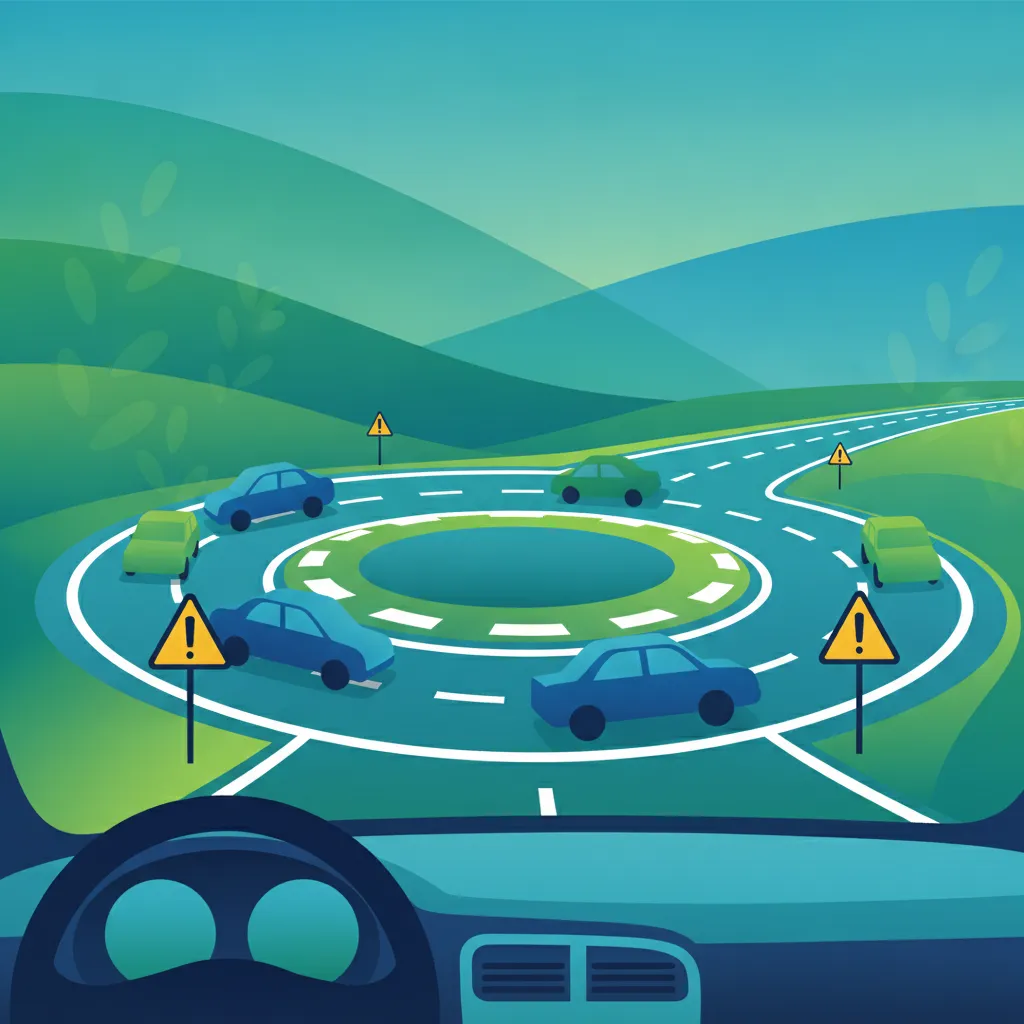
This lesson focuses on the skills required to safely enter, navigate, and exit roundabouts, a common feature in French urban environments. Learners will understand the need to yield to circulating traffic, select the appropriate lane upon entry, and signal intentions when exiting. By mastering these techniques, AM riders can safely integrate into roundabout traffic flow and reduce conflicts with other road users.

This lesson analyzes the technical path a long wheelbase vehicle must take when turning at intersections and navigating roundabouts. Drivers will learn to calculate tail swing and rear-wheel tracking, intentionally swinging wide to clear roadside curbs and poles safely. The lesson emphasizes yielding protocols for pedestrians and cyclists who may be crossing the target street during the turn.

This lesson provides practical strategies for managing the physical demands of slow, heavily congested city traffic. You will learn how to maintain excellent low-speed balance through correct body posture, rear brake modulation, and smooth clutch control. It also emphasizes the importance of preserving an adequate safety buffer when stopping behind other vehicles, allowing an immediate escape route if you face a rear-end threat.

This lesson teaches you how to establish and preserve a dynamic cushion of safety on all sides of your motorcycle. You will study how to apply the 'two-second rule' to keep a safe following distance, extending it to three or more seconds in adverse weather. Additionally, you will discover how to manage tailgating motorists safely without resorting to dangerous speed increases, ensuring you always maintain a clear escape route.

This lesson covers the operational logic of traffic light signals in France, emphasizing the legal implications of the red, amber, and green cycles. You will study how to safely manage the amber phase to avoid rear-end collisions from vehicles behind while maintaining control. Additionally, you will discover the unique challenge of electromagnetic induction loops, which sometimes fail to detect lightweight motorcycles at quiet intersections.

This lesson addresses the social pressures and distractions that can compromise safe riding, such as peer pressure to speed or use mobile devices while riding under French road law. Learners will learn strategies to maintain focus, resist negative influences, and prioritize safety over social conformity. By developing self-awareness, riders can make responsible decisions even in challenging social contexts.
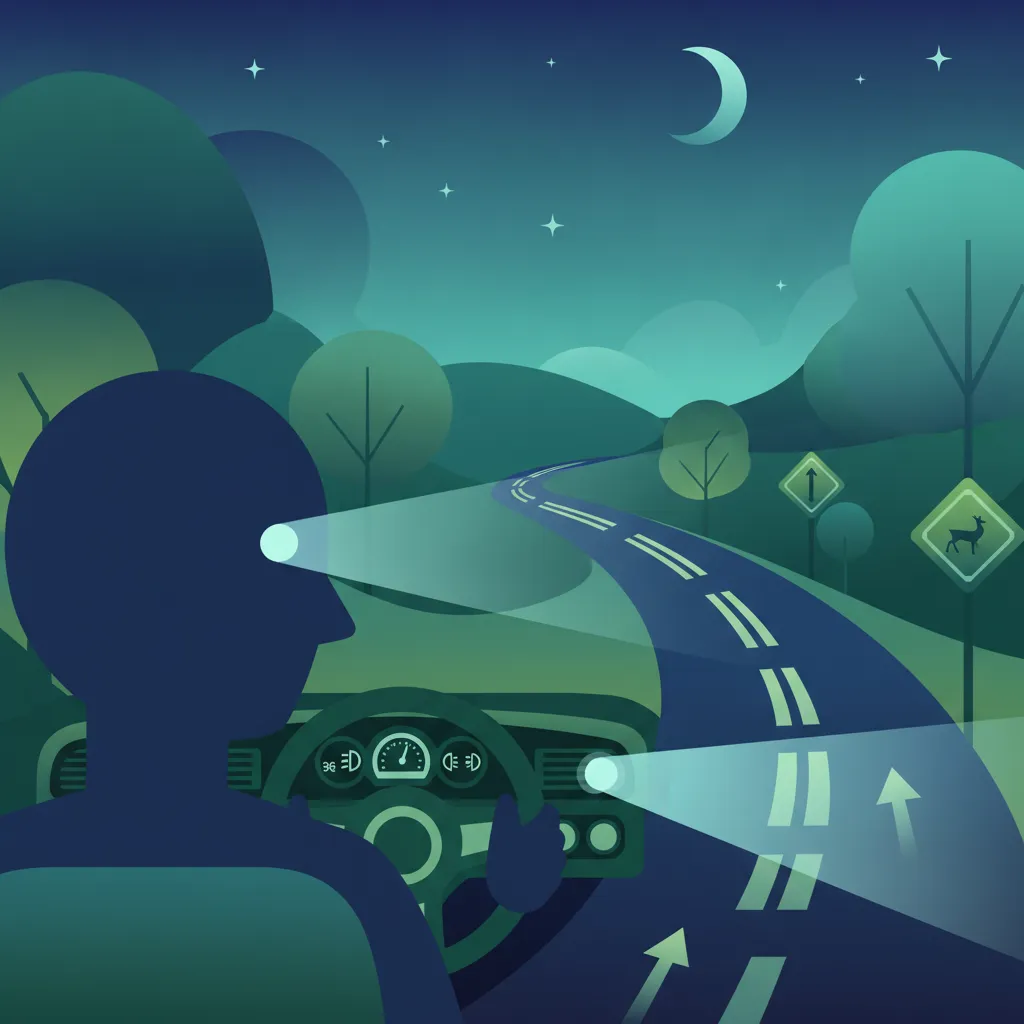
This lesson provides guidance on safe riding practices during nighttime, emphasizing proper headlamp usage, reflective clothing, and strategies to manage glare from oncoming traffic. Learners will learn to compensate for reduced peripheral vision and increased fatigue, as well as to identify common night road hazards in France. By applying these techniques, riders can enhance their visibility and safety after dark.
Explore the cognitive science of active visual scanning and road environment awareness for AM licence holders. Understand how to look beyond the immediate path to identify hazards early and learn the importance of direct head checks when managing blind spots in various traffic conditions.

Proactive drivers scan the road constantly, detecting potential dangers before they turn into real-world emergency situations. This lesson teaches scanning techniques, the use of rear-view mirrors, and the interpretation of visual cues from other road users. You will learn to anticipate hazards like child play near roads, merging vehicles, and sudden lane changes, helping you drive defensively.

This lesson focuses on French warning signs that alert drivers to potential hazards ahead, such as curves, animal crossings, or slippery surfaces, with particular attention to signs relevant to AM riders. Learners will examine how to interpret these signs, understand the associated risks, and adapt riding behavior accordingly. By mastering warning sign recognition, riders can proactively manage safety risks in diverse road conditions.

This lesson focuses on the inherent vulnerability of AM vehicles due to their limited mass, exposure, and visibility within mixed traffic flows on French roads. Learners will examine how blind spots, sudden lane changes by larger vehicles, and higher impact severity affect small vehicle safety. The content underscores the necessity for riders to adopt proactive safety measures, maintain safe distances, and be constantly aware of surrounding traffic dynamics.
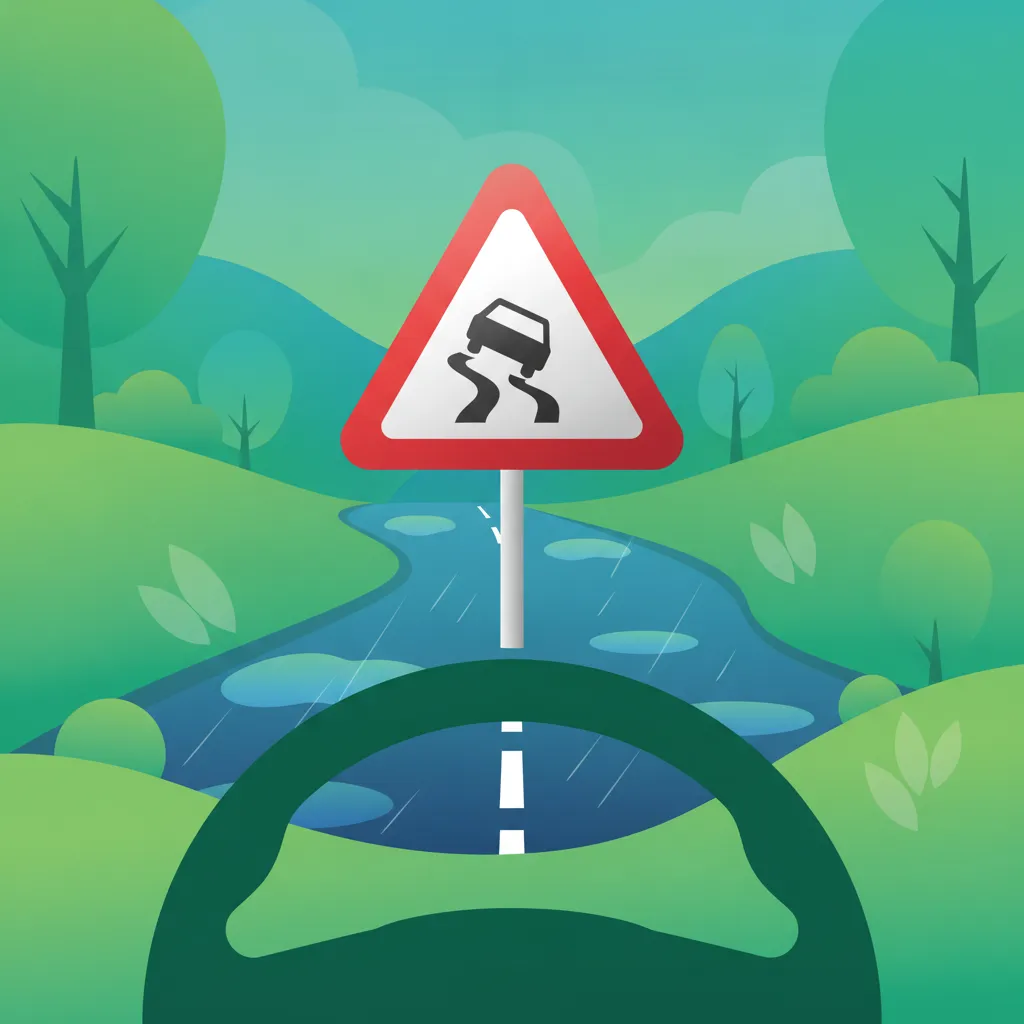
Warning signs on French roads are triangular with a red border, designed to alert drivers to upcoming dangers. This lesson teaches you how to interpret warnings for sharp curves, slippery surfaces, narrowing lanes, and wildlife or animal crossing hazards. You will understand the safety adjustments needed when approaching school zones, active roadworks, or crossings where vulnerable pedestrians are present.

This lesson addresses the challenges of positioning near larger vehicles such as cars, vans, buses, and lorries on French roads. Learners will learn to identify blind spots (angles morts), maintain a safe distance, and position themselves to maximize visibility and predictability. Understanding these dynamics is crucial for AM riders to avoid dangerous situations and ensure safe overtaking and lane sharing.

This lesson details the dangerous blind spots (angles morts) that surround heavy passenger vehicles and explains how to mitigate them. Drivers will master the systematic mirror check sequence (retro-information) before executing any turns or lane changes. It also covers the mandatory French "Angles Morts" warning stickers displayed on the vehicle exterior to alert vulnerable road users of danger zones.
Learners will learn the critical steps for safely approaching and traversing intersections, emphasizing speed reduction, priority assessment, and adherence to right-of-way rules, including priorité à droite. The lesson covers recognizing stop lines, interpreting road markings, and maintaining a safe distance from other vehicles. By mastering these practices, AM riders can confidently navigate intersections while minimizing collision risk.

This lesson addresses the distinct safety considerations for riding during daylight hours versus nighttime, covering topics such as managing glare from the sun and ensuring adequate lighting after dark. Learners will learn strategies to maintain visibility, stay alert, and adapt riding techniques to varying light conditions, including the use of reflective gear. Emphasis is placed on proactive planning to mitigate risks associated with reduced visibility, thereby fostering safe riding practices.

In this lesson, drivers will learn strategies to avoid conflicts with smaller vehicles, such as cars and vans, which may not be as visible in large vehicle blind spots. The content emphasizes maintaining adequate spacing, using proper lane discipline, and being aware of small vehicles' behavior during lane changes and turns. Learners will also be introduced to communication techniques, such as signalling and eye contact.
This lesson focuses on the skill of adjusting speed according to real-time road conditions, visibility, and traffic density. Learners will learn to assess factors such as weather, road surface quality, and pedestrian activity to determine a safe riding speed under French regulatory expectations. By mastering adaptive speed control, riders can enhance safety and reduce the likelihood of accidents caused by inappropriate speed.
Find clear answers to common questions learners have about Hazard Anticipation and Reaction. Learn how the lesson is structured, which driving theory objectives it supports, and how it fits into the overall learning path of units and curriculum progression in France. These explanations help you understand key concepts, lesson flow, and exam focused study goals.
Many riders focus only on the vehicle directly in front of them. Effective hazard anticipation requires scanning further down the road and constantly checking your mirrors to understand the broader traffic flow.
The exam features scenarios where you must quickly assess moving parts of traffic. By practicing early identification, you will be able to answer questions about 'what happens next' or 'what is the safest course of action' with much greater accuracy.
Yes. Because AM vehicles are smaller, they are often less visible to other drivers. You must assume you are not always seen, which means anticipating that a car might pull out in front of you at an intersection even if you have the right of way.
Reaction time is improved through preparation. By keeping your speed appropriate for the visibility and road conditions, and keeping your hands ready on the controls, you reduce the time needed to perform an emergency maneuver.
Ready to focus your study? Use the practice search to find exactly the French driving theory questions you need for the Code de la route and permis de conduire ETG. Refine your knowledge on specific topics or challenging rules to boost your confidence and exam readiness.