This unit provides critical training on handling road emergencies, passenger evacuations, and vehicle breakdowns under French road regulations. It also covers the management of driver fatigue and the serious legal consequences of safety infractions, ensuring you are prepared to maintain professional standards.
Browse all lessons that make up Emergencies, Evacuation, Fatigue, Penalties and Safe Passenger Service. Each lesson focuses on specific topics, learning objectives, and core concepts, helping you build essential knowledge and follow a clear, structured progression toward your study goals in France.
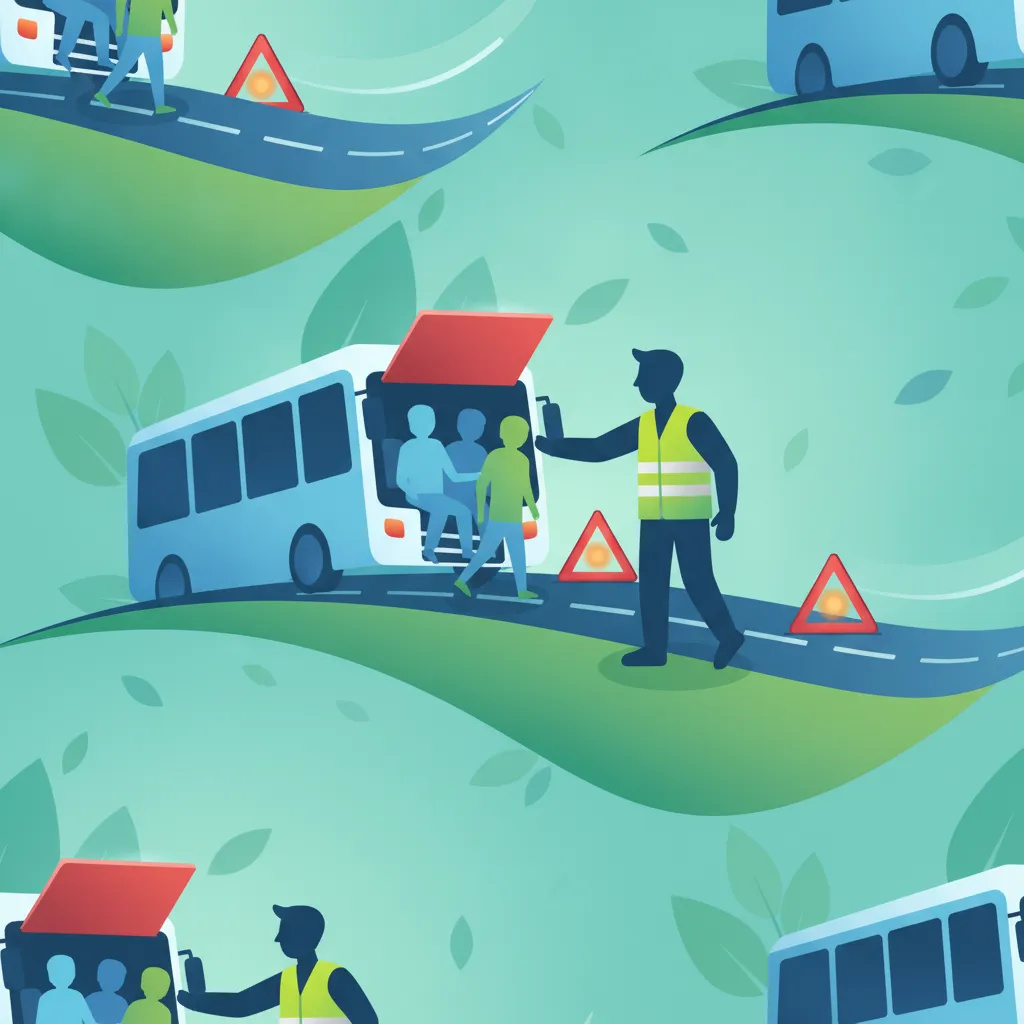
This lesson details the emergency protocols for handling mechanical breakdowns or tire blowouts on public highways and motorways. Drivers will learn how to park the vehicle in the safest possible location, activate hazard warning lights, and deploy the reflective warning triangle. It teaches precise commands and steps for evacuating passengers quickly through safety exits, positioning them behind protective guardrails.
This lesson covers immediate response steps for critical on-board events, including passenger medical emergencies and engine compartment fires. Learners will study the location and proper application of fire extinguishers, safety hammers, and first aid kits. It also explains how to coordinate effectively with French emergency services (SAMU, Fire Brigade) and reassure passengers to maintain calm during an incident.
This lesson addresses the physiological dangers of driver fatigue, a leading cause of severe commercial vehicle crashes. Drivers will learn to spot early physical warning signs of drowsiness, such as micro-sleeps, heavy eyelids, and slow reaction times. The lesson provides practical wellness tips, sleep hygiene guidelines, and structured rest-break strategies to maintain peak alertness throughout a shift.
This lesson examines the legal consequences, heavy monetary fines, and driver's licence point deductions resulting from traffic and transport safety violations. Learners will study specific infractions such as driving over legal hours, vehicle overloading, and ignoring passenger seatbelt laws. Understanding the strict enforcement systems in France ensures drivers actively avoid risky habits that could end their careers.
This final lesson teaches drivers how to cultivate a personal and company-wide culture dedicated to absolute safety and passenger trust. It explains the relationship between smooth, professional driving habits and high customer satisfaction ratings. By committing to continuous safety training, responding constructively to passenger feedback, and performing strict daily pre-trip checks, drivers ensure a top-tier transport service.
Explore high-intent keywords and long-tail search topics learners use when researching Emergencies, Evacuation, Fatigue, Penalties and Safe Passenger Service. These terms reflect how people search for reliable study materials, structured explanations, and unit-level theory preparation support in France.
Find clear answers to the most common questions learners ask about Emergencies, Evacuation, Fatigue, Penalties and Safe Passenger Service. Understand how the unit is organized, what learning goals it supports, and how it contributes to your study progression with structured explanations and practical guidance tailored for learners in France.
The driver must remain calm, secure the vehicle, and prioritize the safe exit of all passengers. You are legally required to guide passengers to a safe location away from traffic and alert emergency services immediately.
Fatigue is a major safety risk and a legal concern. Repeated incidents or accidents caused by driver exhaustion can lead to severe fines, suspension of your professional permit, or legal action depending on the severity of the outcome.
Professional drivers face stricter penalties for traffic violations than private drivers. Infractions involving passenger safety, such as speeding with a load or failing to use seatbelts, can lead to immediate heavy fines and point deductions that threaten your professional standing.
Yes, you must follow official company procedures while adhering to the French Code de la route. This includes placing warning triangles, wearing high-visibility gear, and ensuring passengers are in a secure position while waiting for a relief vehicle.
All included lessons
Lessons in Emergencies, Evacuation, Fatigue, Penalties and Safe Passenger Service
See who benefits most from studying Emergencies, Evacuation, Fatigue, Penalties and Safe Passenger Service. This overview explains how the unit supports different learning needs, what level of knowledge is helpful before starting, and how it fits into the overall study path in France.
This unit is designed for professional drivers preparing for D1, D, D1E, and DE category exams in France. It is also essential for current drivers seeking to refresh their knowledge on safety regulations and legal compliance.

Begin your structured journey towards passing the French ETG exam by exploring our comprehensive driving theory curriculum. Each course is designed to guide you through the Code de la route, ensuring you gain the knowledge and confidence for exam success. Find your ideal study path now.
Explore Theory CurriculumExplore all units and lessons included in this driving theory course.
Begin your structured journey towards passing the French ETG exam by exploring our comprehensive driving theory curriculum. Each course is designed to guide you through the Code de la route, ensuring you gain the knowledge and confidence for exam success. Find your ideal study path now.
Explore Theory Curriculum