
This lesson guides you through critical emergency procedures for professional passenger vehicle drivers operating under French law. You will learn the exact steps to ensure safety when faced with mechanical issues, from signaling for help to orchestrating a safe passenger evacuation.
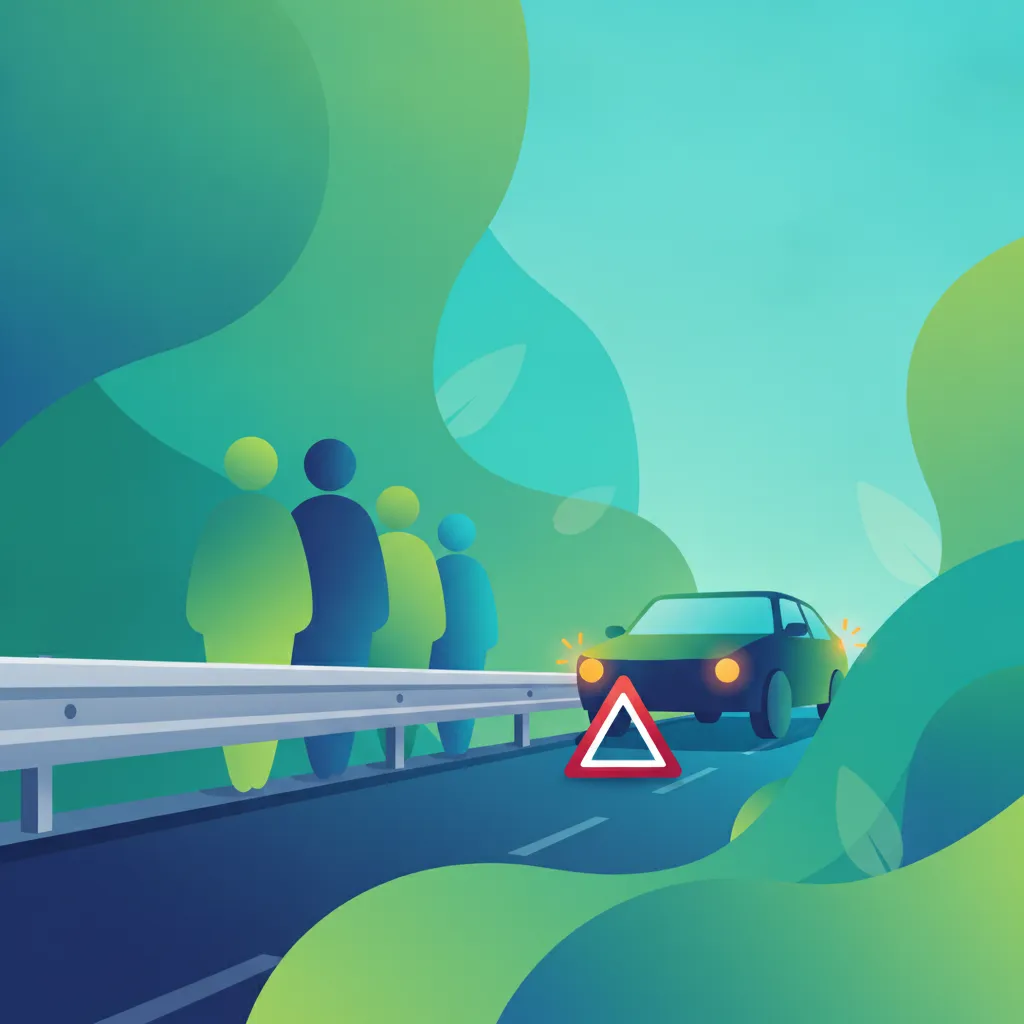
Lesson content overview
Operating a heavy passenger transport vehicle, such as a bus or coach (Category D, D1, DE, or D1E), comes with a high level of responsibility. When a mechanical failure, engine breakdown, or tire blowout occurs on public highways or motorways (autoroutes), the driver's response determines the safety of dozens of passengers.
Unlike a standard passenger car, a large transport vehicle cannot be easily moved, creates a substantial physical obstacle, and carries passengers who may be unfamiliar with emergency procedures. This lesson details the critical protocols for securing a broken-down vehicle, deploying safety equipment, executing a safe and orderly passenger evacuation, and communicating with emergency services in compliance with French road safety laws (Code de la route).
When a passenger vehicle experiences a sudden malfunction on the road, the driver must immediately initiate a structured sequence of safety actions. The core objective is to minimize risk to the vehicle, its occupants, and other road users by maximizing visibility and removing passengers from danger.
The safety logic of emergency breakdown management operates on a strict timeline:
Secure the Vehicle: Safely steer the vehicle to the most secure location possible and immediately activate warning signals.
Protect the Area: Equip yourself with safety gear and place physical warning devices on the road to alert approaching traffic.
Evacuate Passengers: Lead passengers out of the vehicle and guide them to a safe, protected zone away from the flow of traffic.
Alert Authorities: Contact emergency services or roadside assistance with precise details of your location and situation.
Selecting where and how to park during an emergency directly affects the survival rate of your passengers and the likelihood of a secondary collision.
On motorways (autoroutes) and dual carriageways, the emergency lane or hard shoulder (bande d'arrêt d'urgence - BAU) is designed specifically for emergency stops. When a failure occurs, the driver must:
If a breakdown occurs on a narrow rural road or an urban street without a shoulder, the driver may have no choice but to stop on the active carriageway (chaussée). In this scenario:
Heavy vehicles present a massive visual obstruction. At highway speeds, an approaching driver needs sufficient time to recognize a stopped bus and change lanes or decelerate safely.
The first line of defense is the vehicle's hazard warning lights, which flash all turn signals simultaneously to indicate an immediate danger.
Immediate Activation: You must activate your hazard warning lights before the vehicle has come to a complete stop. This alerts drivers behind you that you are slowing down unexpectedly.
These lights must remain active throughout the duration of the breakdown. They are not a substitute for other safety devices, but a continuous indicator of an active hazard.
The reflective warning triangle is a mandatory safety device designed to warn oncoming traffic of an obstruction ahead.
In France, the placement distances for the warning triangle are strictly regulated based on the type of road and prevailing conditions:
| Road Type | Minimum Placement Distance | Key Rationale |
|---|---|---|
| Standard/Rural Roads | 30 metres | Gives drivers traveling at 80 km/h sufficient time to react and stop. |
| High-Speed Roads | 50 metres | Required when local speed limits are higher and stopping distances increase. |
| Motorways (Autoroutes) | 90 to 100 metres | At 130 km/h, a vehicle travels over 36 metres per second; a 90m buffer is vital. |
Motorway Safety Exception: Under French law, the driver is not required to place the warning triangle on a motorway if doing so would place their own life in direct, immediate danger (such as on extremely narrow shoulders with heavy, high-speed traffic and no protective barrier).
The primary duty of a professional driver during a breakdown is the safety of their passengers. Leaving passengers inside a broken-down bus on a high-speed road carries an extremely high risk of catastrophic injury if a secondary collision occurs.
Evacuating a passenger transport vehicle requires clear, authoritative commands to prevent panic and coordinate safe movement:
Once passengers exit the vehicle, they must be moved immediately to a secure location:
Once the vehicle is secured and the passengers are safe behind the guardrails, the driver must promptly report the breakdown to the authorities.
On French autoroutes, using the orange emergency call boxes situated every 2 kilometres is highly recommended.
If an emergency call box is not nearby or if you are on a standard road, use a mobile phone to call the emergency services.
When speaking with emergency dispatchers, provide precise and structured information:
An emergency protocol must adapt to environmental conditions, road geometry, and passenger needs.
Under the French Code de la route, failing to comply with breakdown safety procedures is a serious offense that can result in heavy traffic fines, license point deductions, and civil or criminal liability.
Analyzing real-world scenarios helps reinforce the practical application of breakdown safety concepts.
This lesson covers the critical emergency procedures for professional passenger vehicle drivers (Category D/DE) when experiencing a breakdown on French roads. Drivers must follow a strict sequence: secure the vehicle using hazard lights, protect the scene with a reflective triangle placed at correct distances based on road type, evacuate passengers through traffic-far doors to positions behind safety barriers, and alert emergency services with precise location details. The lesson emphasizes that turning front wheels to the right on hard shoulders prevents secondary collisions, that visibility gear must be worn before exiting, and that passenger safety takes absolute priority. Specific scenarios cover rural blind-curve breakdowns and motorway tire blowouts, while legal consequences for non-compliance include fines and potential prosecution under the Code de la route.
A short set of high-value points that capture the most important learning from this lesson.
Activate hazard warning lights immediately upon recognizing an emergency, before the vehicle comes to a complete stop.
Turn front steering wheels slightly to the right when parking on a hard shoulder; if struck from behind, this prevents the vehicle being pushed into active lanes.
Place the reflective warning triangle at exactly 30m on standard roads, 50m on high-speed roads, and 90–100m on motorways.
Passengers must be evacuated through doors facing away from traffic and positioned behind protective guardrails, never on the hard shoulder.
Contact emergency services using the nearest motorway call box (which transmits exact coordinates) or mobile phone with precise location details.
Explore all units and lessons included in this driving theory course.
High-visibility vest must be worn before exiting the vehicle; this is a strict legal requirement under French Code de la route.
Place the triangle before a blind curve or hill crest, even if this exceeds standard minimum distances.
Emergency numbers in France: 112 (European), 17 (Police/Gendarmerie), 18 (Fire/Rescue).
Passengers must never re-enter the vehicle until emergency services declare the scene fully secure.
If placing the triangle on a motorway would put your life in direct danger, you are legally exempt from doing so.
Assuming the standard 30m triangle placement applies on motorways, where 90–100m is required.
Exiting the vehicle without wearing the high-visibility safety vest, which violates French road law.
Placing the triangle at the standard distance after a blind curve instead of before it, failing to give approaching drivers advance warning.
Leaving passengers on the hard shoulder instead of moving them behind the protective guardrail.
Forgetting to account for the extended length of a vehicle combination (DE category) when positioning the warning triangle.
Lesson content overview
A short set of high-value points that capture the most important learning from this lesson.
Activate hazard warning lights immediately upon recognizing an emergency, before the vehicle comes to a complete stop.
Turn front steering wheels slightly to the right when parking on a hard shoulder; if struck from behind, this prevents the vehicle being pushed into active lanes.
Place the reflective warning triangle at exactly 30m on standard roads, 50m on high-speed roads, and 90–100m on motorways.
Passengers must be evacuated through doors facing away from traffic and positioned behind protective guardrails, never on the hard shoulder.
Contact emergency services using the nearest motorway call box (which transmits exact coordinates) or mobile phone with precise location details.
Explore all units and lessons included in this driving theory course.
High-visibility vest must be worn before exiting the vehicle; this is a strict legal requirement under French Code de la route.
Place the triangle before a blind curve or hill crest, even if this exceeds standard minimum distances.
Emergency numbers in France: 112 (European), 17 (Police/Gendarmerie), 18 (Fire/Rescue).
Passengers must never re-enter the vehicle until emergency services declare the scene fully secure.
If placing the triangle on a motorway would put your life in direct danger, you are legally exempt from doing so.
Assuming the standard 30m triangle placement applies on motorways, where 90–100m is required.
Exiting the vehicle without wearing the high-visibility safety vest, which violates French road law.
Placing the triangle at the standard distance after a blind curve instead of before it, failing to give approaching drivers advance warning.
Leaving passengers on the hard shoulder instead of moving them behind the protective guardrail.
Forgetting to account for the extended length of a vehicle combination (DE category) when positioning the warning triangle.
Explore search topics learners often look for when studying Handling Vehicle Breakdowns and Passenger Evacuation. These topics reflect common questions about road rules, driving situations, safety guidance, and lesson level theory preparation for learners in France.
Browse additional driving theory lessons that cover connected traffic rules, road signs, and common driving situations related to this topic. Improve your understanding of how different rules interact across everyday traffic scenarios.
Learn the essential legal and safety protocols for managing emergency incidents while driving public transport vehicles. This overview covers communication with French emergency services, mandatory reporting requirements for passenger transport, and the systematic approach needed to ensure safety during vehicle incidents or medical emergencies on the road.
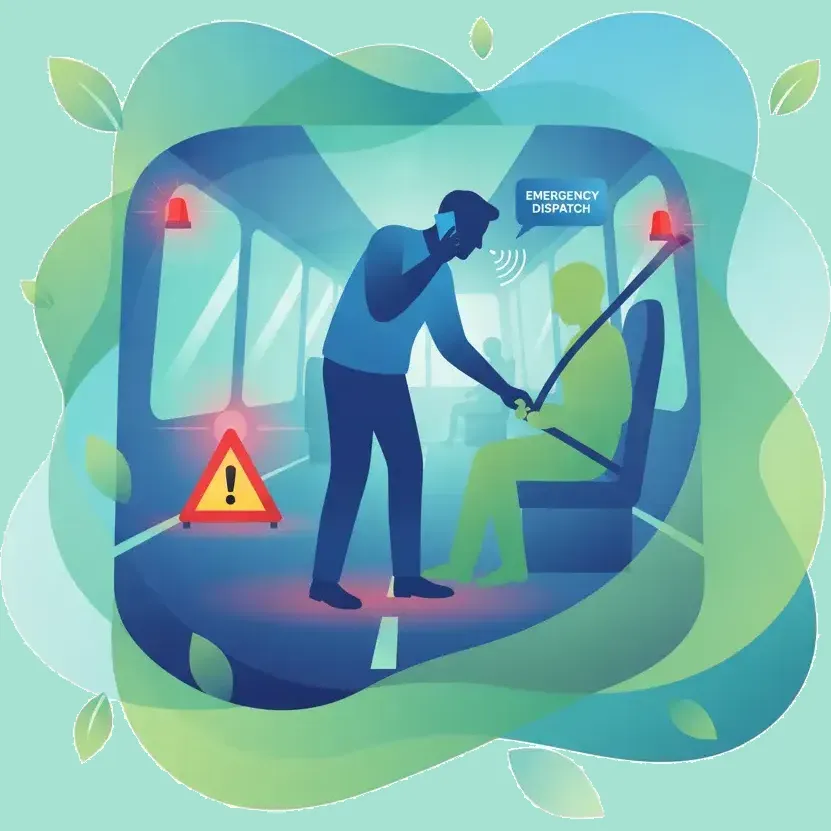
This lesson covers immediate response steps for critical on-board events, including passenger medical emergencies and engine compartment fires. Learners will study the location and proper application of fire extinguishers, safety hammers, and first aid kits. It also explains how to coordinate effectively with French emergency services (SAMU, Fire Brigade) and reassure passengers to maintain calm during an incident.
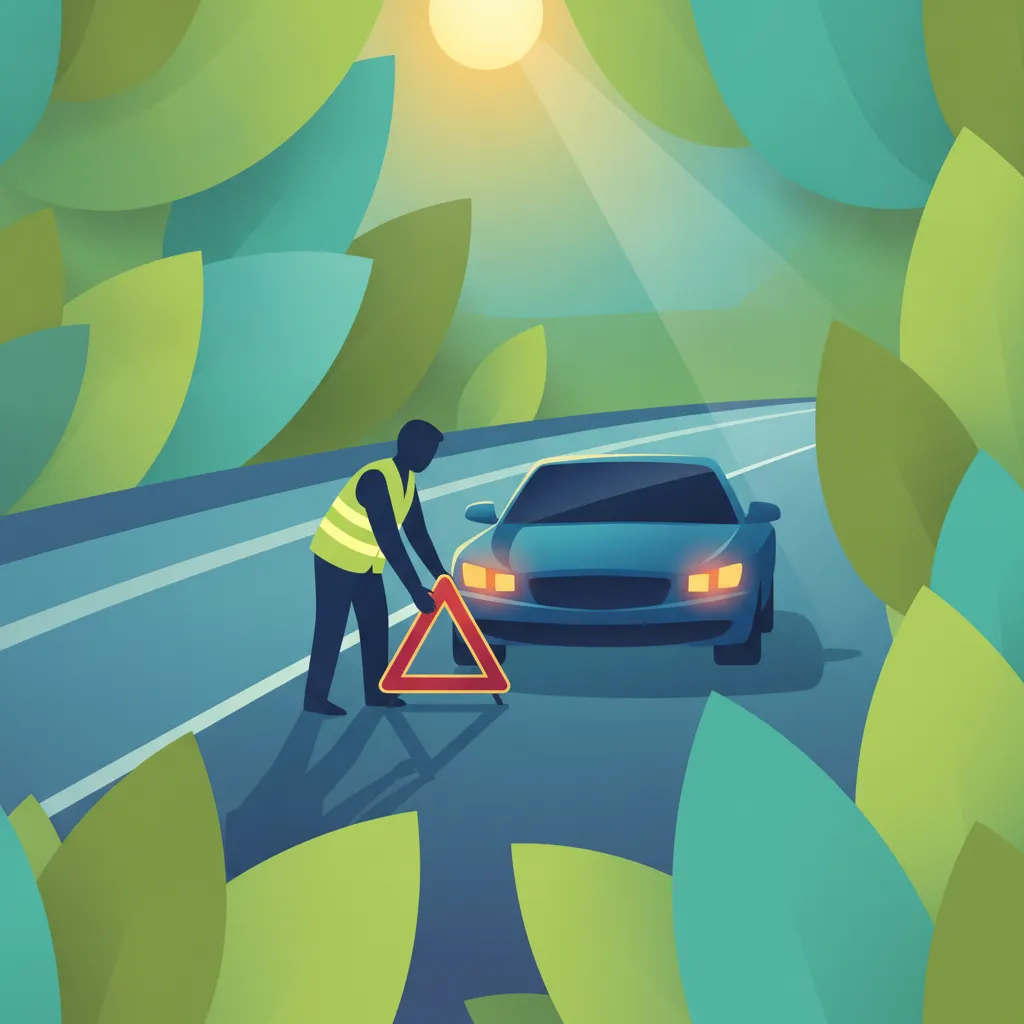
In this lesson, learners will be equipped with the essential steps to take in the event of an emergency involving their goods vehicle, such as accidents, spills, or fires. The content covers the correct usage of the European emergency number 112, immediate safety measures to protect the scene, and the required use of driver emergency equipment like fire extinguishers and spill kits. Additionally, the lesson details the obligatory reporting processes, documentation of incidents, and cooperation with emergency services and law enforcement.

This lesson outlines the core operational roles that drivers must perform, from ensuring safe passenger boarding to maintaining precise vehicle control throughout the journey. It details the active risk assessments required to identify hazards on the road and handle unexpected delays safely. Additionally, candidates will understand the specific procedures for reporting accidents and communicating effectively with both passengers and operations hubs.

This lesson highlights the critical ethical framework governing public and private passenger transport services within the French Republic. Drivers are trained to provide equitable, non-discriminatory assistance to all travelers while fully respecting passenger privacy and dignity. Understanding these moral obligations helps prevent conflicts, enhances service accessibility, and reinforces the high standard of social responsibility expected of professional coach operators.
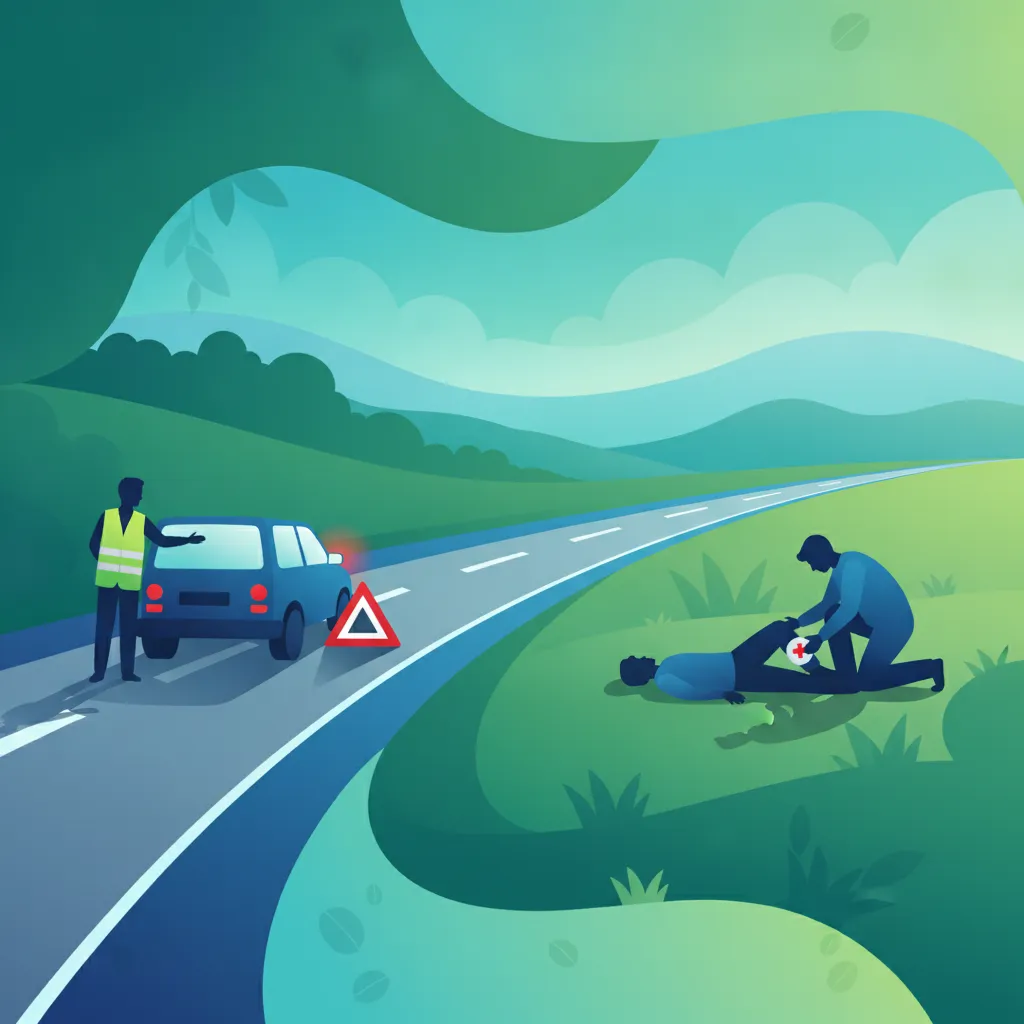
When encountering or participating in a road accident, following a strict safety protocol protects lives and prevents secondary crashes. This lesson covers the essential 'Protect, Alert, Rescue' (PAS) protocol, which involves wearing a yellow high-visibility vest, placing a warning triangle, and calling 112. You will also learn basic first-aid practices, how to secure victims, and the correct way to fill out an accident report.

This lesson provides step-by-step instructions for utilizing vehicle accessibility systems, including wheelchair ramps, lifts, and specialized tie-down restraints. Drivers will study French regulatory frameworks mandating equal access to public transport services for all individuals. Crucially, the lesson covers respectful, safe, and efficient communication methods for guiding passengers with sensory, physical, or cognitive impairments.
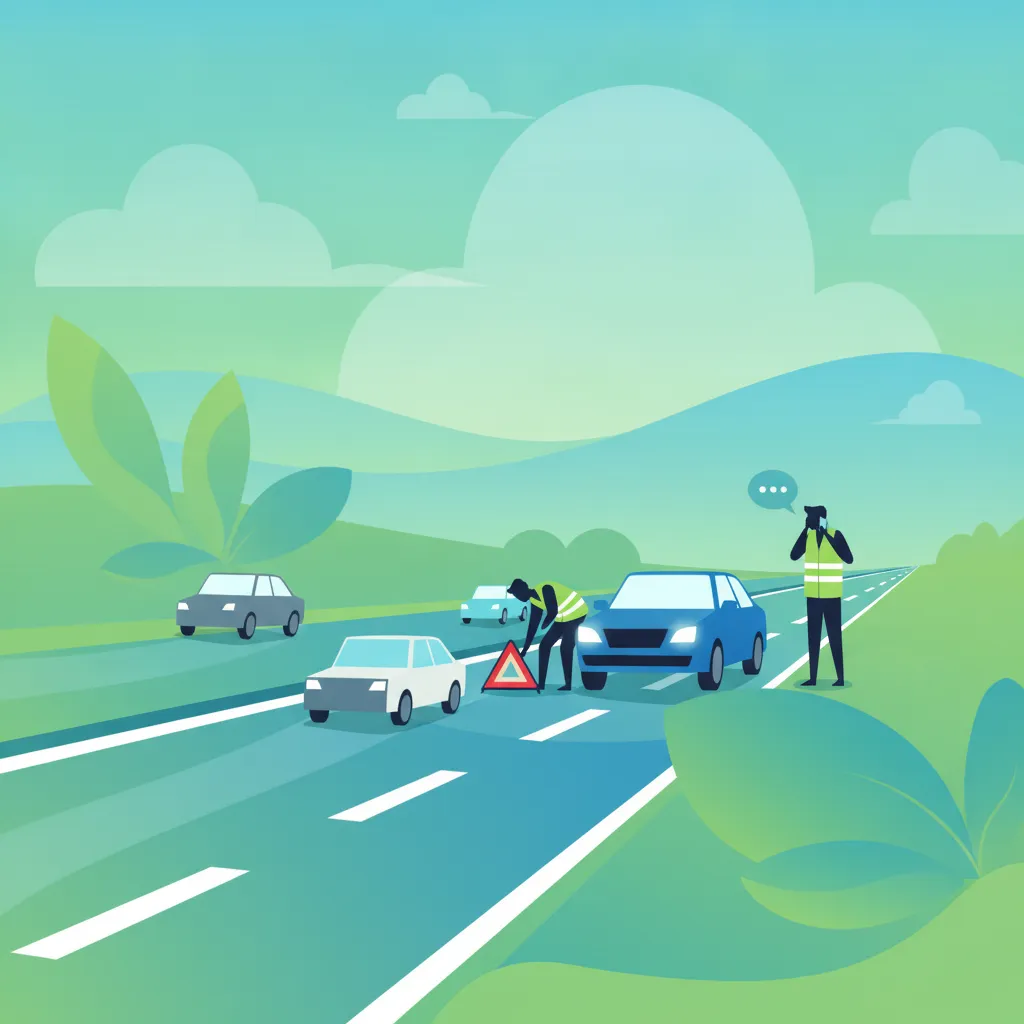
In this lesson, drivers will learn the essential steps to take following an accident involving a goods vehicle. The content covers contacting emergency services via 112, providing first aid, and safely positioning the vehicle to protect other road users. Learners will be instructed on documenting the incident, notifying insurance providers, and fulfilling legal obligations for accident reporting, including gathering witness statements.
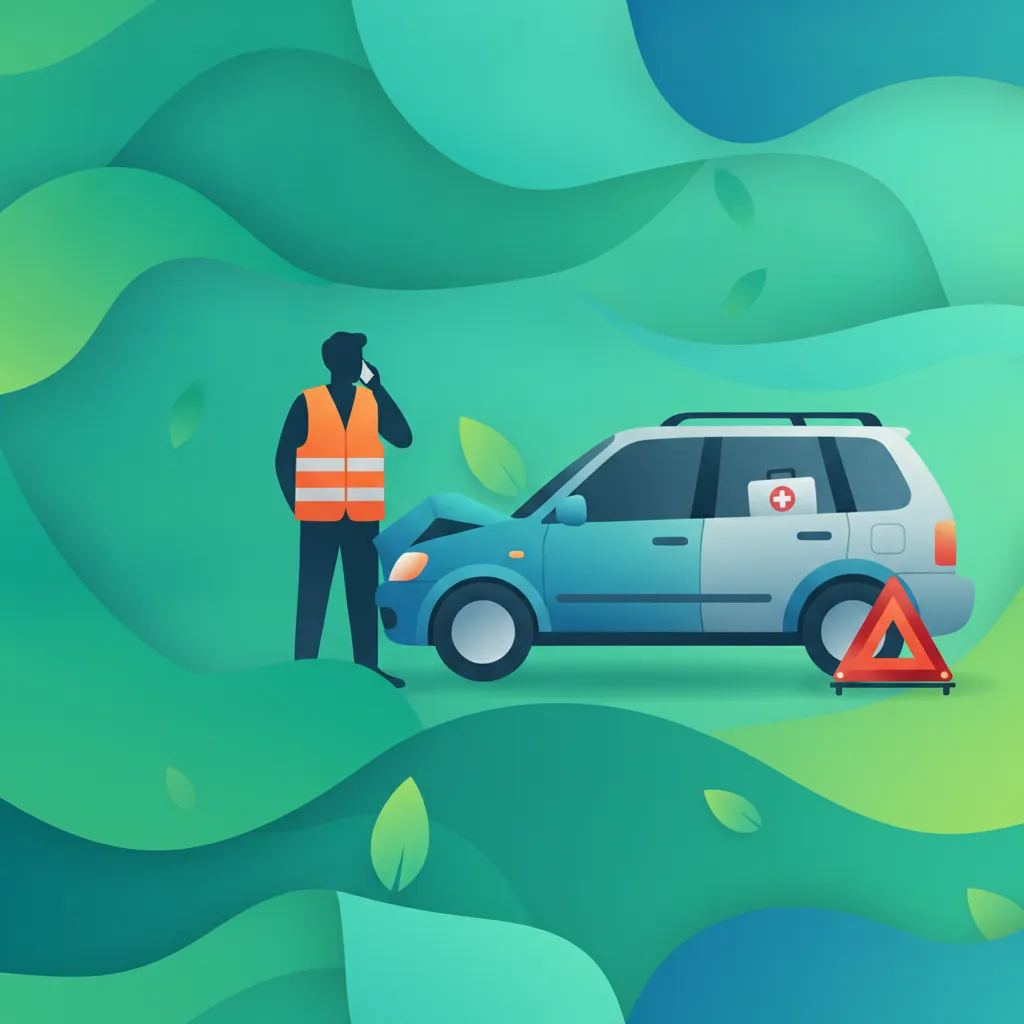
This lesson provides a clear, step-by-step procedure to follow if you witness or are involved in a traffic accident in France. You will learn how to secure the scene using your mandatory hazard triangle and yellow vest to prevent secondary collisions. Crucially, it explains how to contact emergency services via 112 and covers basic first-aid rules, including the absolute ban on removing an injured rider's helmet unless necessary.

This lesson examines the rigorous legal duties imposed on passenger vehicle operators by the French Code de la route and professional transport guidelines. Drivers must balance tight scheduling demands with the absolute priority of passenger safety and general public security. By studying real-world legal scenarios, candidates will learn how to maintain professional conduct, resolve on-board issues, and protect public trust during transit.
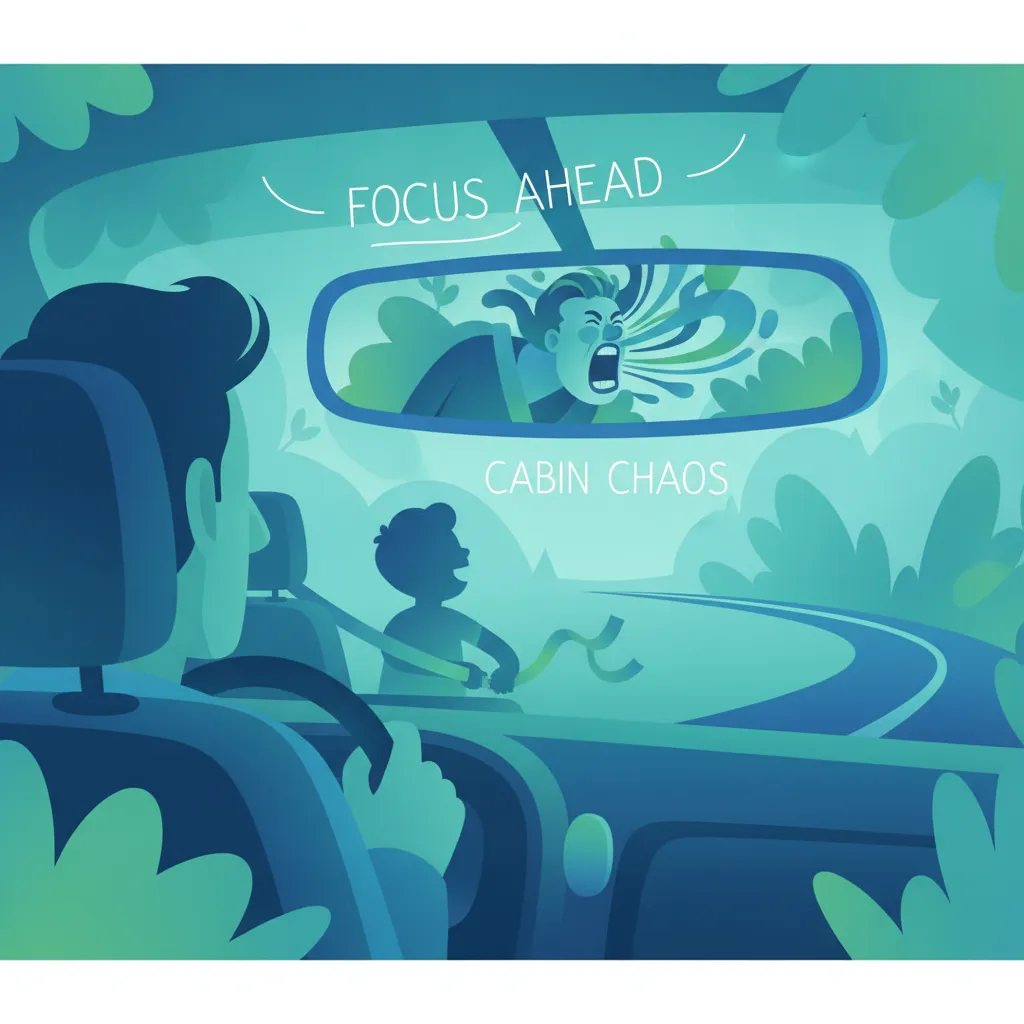
This lesson focuses on techniques for monitoring and managing passenger behavior to maintain a calm and safe environment during transit. Drivers will learn how to enforce seatbelt rules, manage noise levels, and de-escalate verbal conflicts between passengers. Proactive safety announcements and a confident, polite professional demeanor are highlighted as key tools to prevent behavioral issues before they compromise road safety.
Understand the driver's role in maintaining passenger safety and managing onboard behavior according to the Code de la route. This lesson explores the legal obligations, techniques for effective communication during transit, and procedures for assisting vulnerable passengers, ensuring a safe and regulated environment for all transport occupants.
This lesson focuses on techniques for monitoring and managing passenger behavior to maintain a calm and safe environment during transit. Drivers will learn how to enforce seatbelt rules, manage noise levels, and de-escalate verbal conflicts between passengers. Proactive safety announcements and a confident, polite professional demeanor are highlighted as key tools to prevent behavioral issues before they compromise road safety.

This lesson details how to manage high-risk interactions with pedestrians who may step off curbs or cross the road near bus stops. Learners will study French Code de la route laws regarding pedestrian priority at crosswalks and near stopping transit vehicles. Developing heightened spatial awareness around blind zones near the front of the bus is emphasized to prevent tragic pedestrian collisions.

This lesson provides global defensive driving strategies to minimize collision risks for all non-motorized and vulnerable road users. Drivers will learn to systematically lower vehicle speed in dense pedestrian zones, even when no active hazards are visible. By cultivating an anticipatory mindset and maintaining generous safety margins, professional drivers establish a protective safety envelope around their vehicle.

This final lesson teaches drivers how to cultivate a personal and company-wide culture dedicated to absolute safety and passenger trust. It explains the relationship between smooth, professional driving habits and high customer satisfaction ratings. By committing to continuous safety training, responding constructively to passenger feedback, and performing strict daily pre-trip checks, drivers ensure a top-tier transport service.
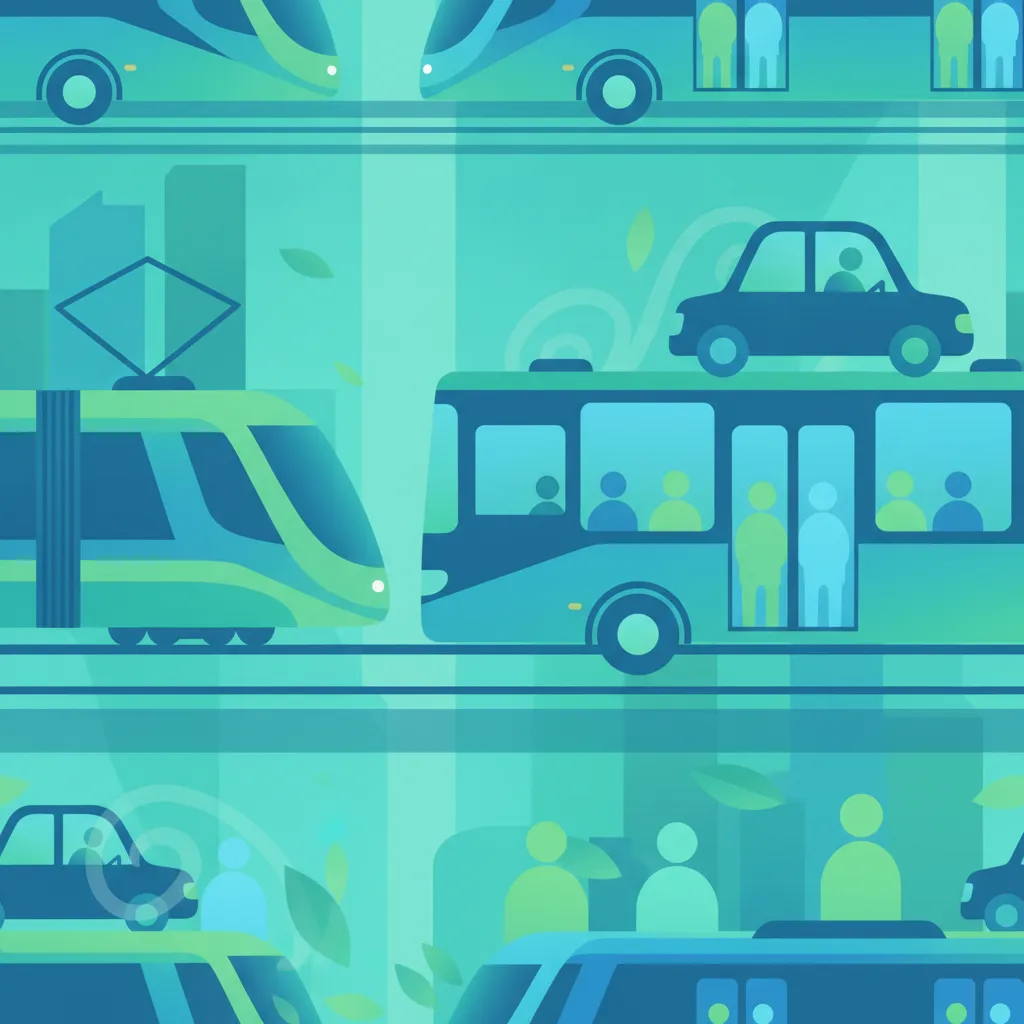
Public transit vehicles like city buses and streetcars (trams) have clear legal priorities and dedicated infrastructure in urban areas. This lesson teaches you to recognize reserved transit lanes and your legal obligation to yield to buses exiting their designated stops. You will also learn safe driving strategies near tram tracks, ensuring you never block public transit lines or risk passenger boarding areas.
This lesson introduces the standard interior signage required in passenger vehicles to communicate critical safety and accessibility information clearly. Learners will learn to verify the visibility of handicap symbols, emergency exit markers, and priority seating notifications. Proper maintenance of these visual and auditory warning systems ensures that all passenger groups can navigate the vehicle confidently and safely under any conditions.

This lesson examines the flow of passengers entering and exiting the vehicle and how to organize this movement to reduce stop delays safely. Drivers will study the operation of door safety interlocks, sensitive edges, and onboard monitoring cameras to prevent boarding accidents. It also covers coordinating priority boarding for elderly, pregnant, or injured passengers in a polite and structured manner.
This lesson covers immediate response steps for critical on-board events, including passenger medical emergencies and engine compartment fires. Learners will study the location and proper application of fire extinguishers, safety hammers, and first aid kits. It also explains how to coordinate effectively with French emergency services (SAMU, Fire Brigade) and reassure passengers to maintain calm during an incident.

This lesson examines French Code de la route laws regarding pedestrian right-of-way, emphasizing the driver's legal duty to yield to any pedestrian engaged in crossing. It outlines proper approach speeds when approaching zebra crossings with obstructed views. Candidates will learn to maintain a safe physical buffer zone and verify that crosswalks are entirely clear of pedestrians before accelerating.
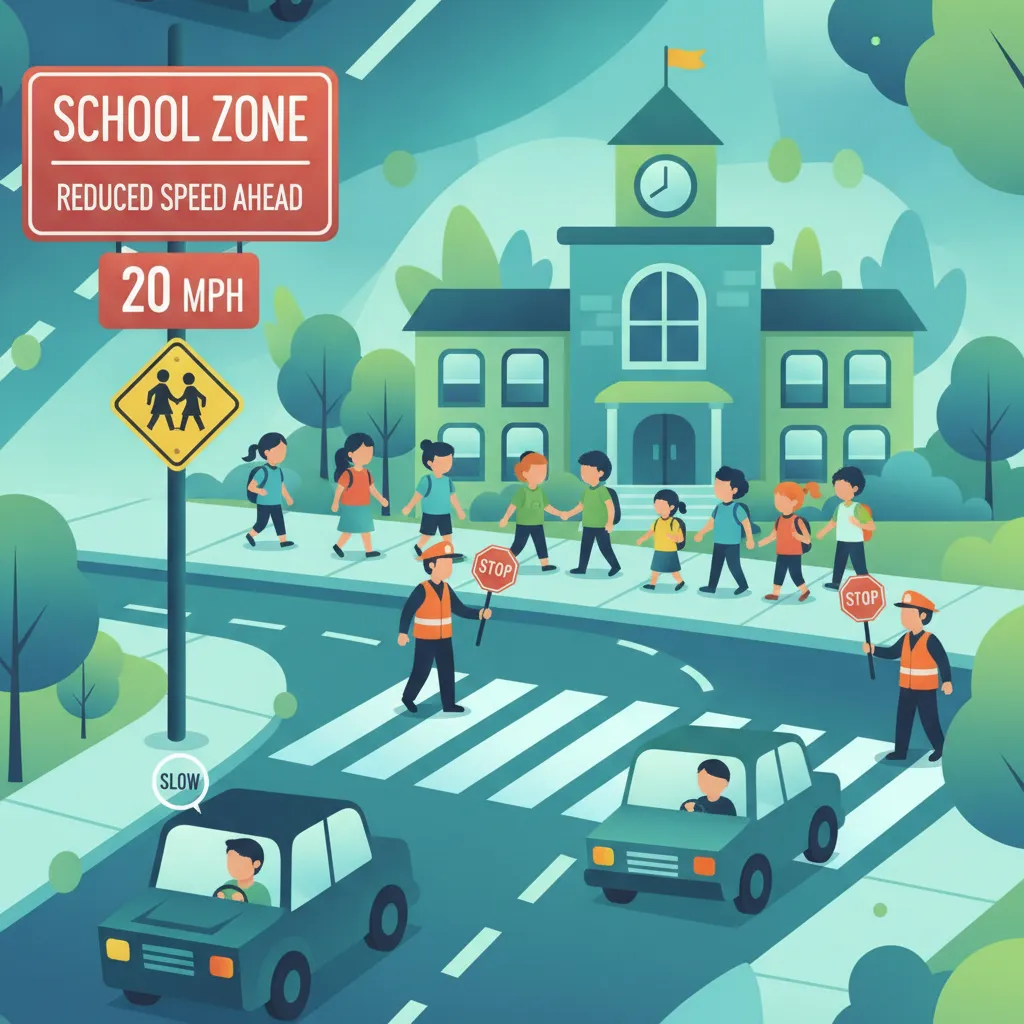
This lesson focuses on the legal rules and safety procedures required within school zones and during school transport (transport scolaire) services in France. Drivers will study strict speed limits, school bus warning sign applications, and mandatory stopping rules when children are boarding. It also details how to respond to official crossing guard signals and ensure students are safely clear before moving.
Find clear answers to common questions learners have about Handling Vehicle Breakdowns and Passenger Evacuation. Learn how the lesson is structured, which driving theory objectives it supports, and how it fits into the overall learning path of units and curriculum progression in France. These explanations help you understand key concepts, lesson flow, and exam focused study goals.
Safety is the absolute priority. You must move the vehicle to the shoulder or a safe area, activate hazard lights immediately, and prioritize getting passengers out of the vehicle and behind the safety barrier before attending to the vehicle or calling for assistance.
Yes, you must remain calm and provide clear instructions. Use the emergency exits according to the vehicle's design and ensure all passengers move well away from the traffic flow, typically behind guardrails, maintaining constant vigilance until help arrives.
The exam focuses on your ability to make safe decisions under pressure. You will likely face questions regarding the exact placement of warning triangles and the specific order of operations for safety during an incident on high-speed roads.
Yes, passenger safety is paramount. Documentation and reporting requirements for commercial transport are more stringent, and you must maintain constant supervision of your passengers until a replacement transport or emergency services take over.
Ready to focus your study? Use the practice search to find exactly the French driving theory questions you need for the Code de la route and permis de conduire ETG. Refine your knowledge on specific topics or challenging rules to boost your confidence and exam readiness.