
This unit provides specialized training on protecting the most vulnerable road users in accordance with the French Code de la route. You will explore critical safety protocols for school zones, bus services, and sharing space with cyclists to prepare for professional driving challenges. Mastering these defensive habits is vital for both your theory exam success and ensuring passenger safety on the road.
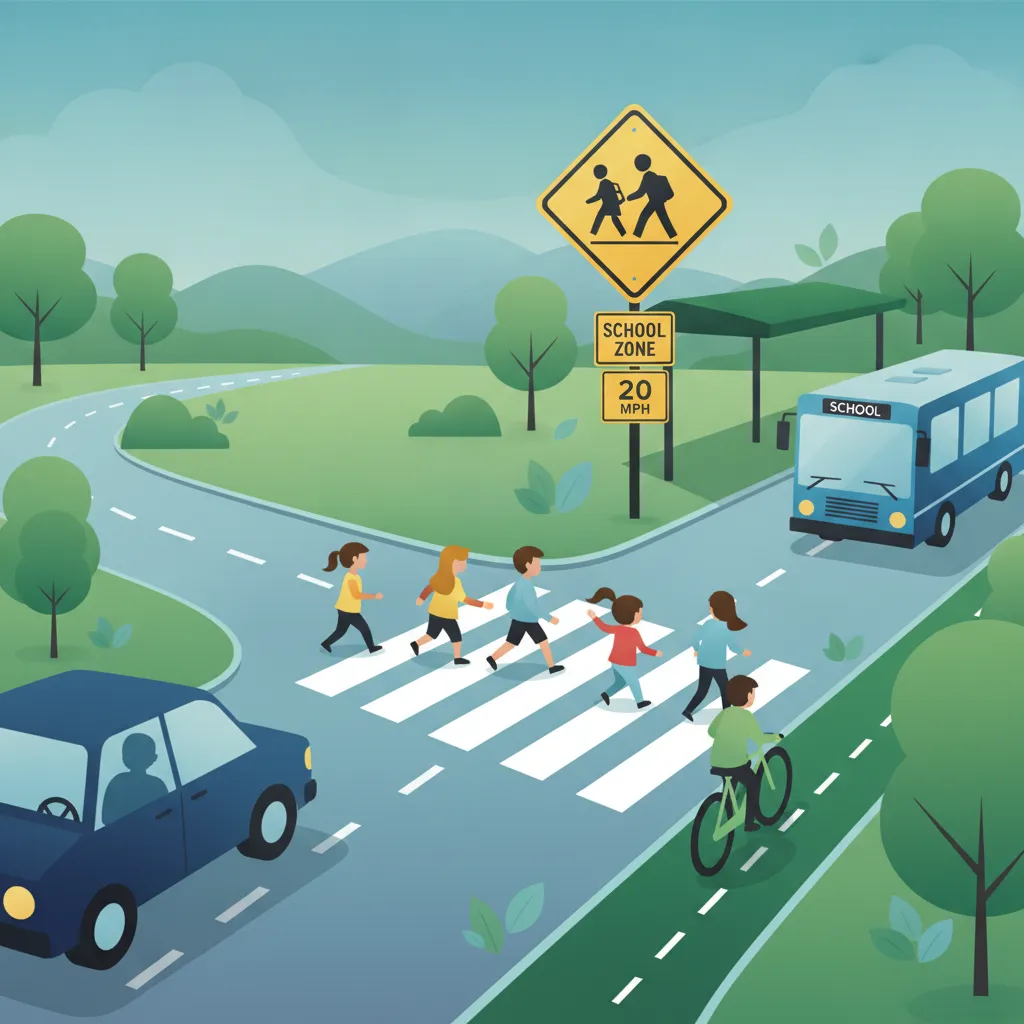
Browse all lessons that make up Vulnerable Road Users, Pedestrians, Cyclists and School Areas. Each lesson focuses on specific topics, learning objectives, and core concepts, helping you build essential knowledge and follow a clear, structured progression toward your study goals in France.
This lesson teaches specific visual scanning methods to detect vulnerable road users, such as children, elderly individuals, and cyclists near stops. Drivers will learn to anticipate sudden movements, like a passenger running to catch a bus or stepping off a sidewalk unexpectedly. Managing the massive blind spots around the front and right-hand sides of passenger vehicles is highlighted as a critical safety duty.
This lesson focuses on the legal rules and safety procedures required within school zones and during school transport (transport scolaire) services in France. Drivers will study strict speed limits, school bus warning sign applications, and mandatory stopping rules when children are boarding. It also details how to respond to official crossing guard signals and ensure students are safely clear before moving.
This lesson explains how to share the road safely with cyclists in both urban and rural environments. Drivers will study the legal minimum passing distances when overtaking cyclists, which is one meter in cities and one and a half meters outside urban areas. It also covers recognizing specialized cycling infrastructure, bike boxes at intersections, and preventing blind-spot collisions during right turns.
This lesson examines French Code de la route laws regarding pedestrian right-of-way, emphasizing the driver's legal duty to yield to any pedestrian engaged in crossing. It outlines proper approach speeds when approaching zebra crossings with obstructed views. Candidates will learn to maintain a safe physical buffer zone and verify that crosswalks are entirely clear of pedestrians before accelerating.
This lesson provides global defensive driving strategies to minimize collision risks for all non-motorized and vulnerable road users. Drivers will learn to systematically lower vehicle speed in dense pedestrian zones, even when no active hazards are visible. By cultivating an anticipatory mindset and maintaining generous safety margins, professional drivers establish a protective safety envelope around their vehicle.
Explore high-intent keywords and long-tail search topics learners use when researching Vulnerable Road Users, Pedestrians, Cyclists and School Areas. These terms reflect how people search for reliable study materials, structured explanations, and unit-level theory preparation support in France.
Find clear answers to the most common questions learners ask about Vulnerable Road Users, Pedestrians, Cyclists and School Areas. Understand how the unit is organized, what learning goals it supports, and how it contributes to your study progression with structured explanations and practical guidance tailored for learners in France.
Under the French Code de la route, drivers must yield to any pedestrian who has engaged or is clearly intending to cross the street at a designated crossing. Failure to stop is considered a serious traffic offense and can lead to significant penalties.
School zones require heightened vigilance, significantly reduced speeds, and readiness to stop instantly. You must watch for children who may be unpredictable and adhere to any specific regulatory signs indicating school proximity.
Yes, drivers must maintain a safe lateral distance when overtaking cyclists, typically 1.5 meters outside of built-up areas and 1 meter within them. You must check your mirrors and blind spots carefully before turning or changing lanes.
When a school bus is stopped with its hazard lights active, it indicates that children are boarding or alighting. You must approach with caution, prepare to stop if necessary, and remain vigilant until it is safe to proceed.
All included lessons
Lessons in Vulnerable Road Users, Pedestrians, Cyclists and School Areas
See who benefits most from studying Vulnerable Road Users, Pedestrians, Cyclists and School Areas. This overview explains how the unit supports different learning needs, what level of knowledge is helpful before starting, and how it fits into the overall study path in France.
This unit is designed for professional drivers preparing for the French passenger vehicle theory exam (D1, D, D1E, DE). It is also highly beneficial for any driver aiming to improve their defensive driving skills and deepen their understanding of safety regulations in dense urban traffic.

Begin your structured journey towards passing the French ETG exam by exploring our comprehensive driving theory curriculum. Each course is designed to guide you through the Code de la route, ensuring you gain the knowledge and confidence for exam success. Find your ideal study path now.
Explore Theory CurriculumExplore all units and lessons included in this driving theory course.
Begin your structured journey towards passing the French ETG exam by exploring our comprehensive driving theory curriculum. Each course is designed to guide you through the Code de la route, ensuring you gain the knowledge and confidence for exam success. Find your ideal study path now.
Explore Theory Curriculum