
This lesson details the critical safety protocols required for professional drivers operating passenger vehicles under the French Code de la route. You will learn to manage medical emergencies, vehicle fires, and passenger evacuations, ensuring you are prepared for both the theory exam and real-world professional driving.
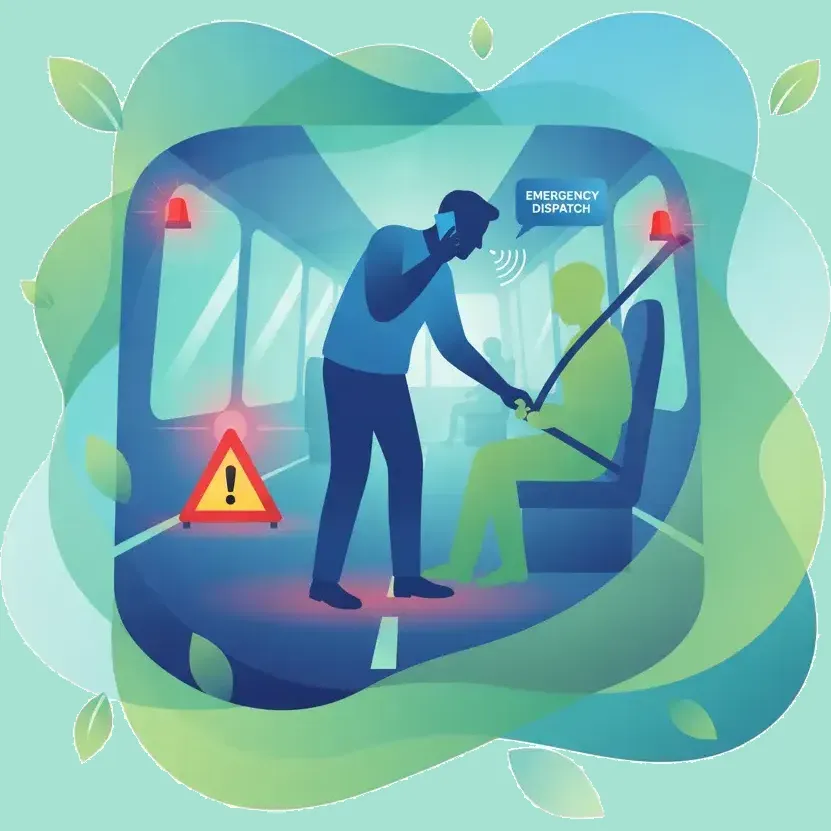
Lesson content overview
As a professional passenger transport driver in France, operating vehicles under Category D, D1, DE, or D1E licenses, you carry the ultimate responsibility for the safety, well-being, and lives of your passengers. Unlike light vehicle drivers, a public transport operator must manage not only the dynamics of a heavy vehicle but also the complex human environment inside the cabin.
During an emergency—whether it is a passenger suffering a sudden cardiac arrest or a fire breaking out in the rear engine compartment—there is no time for hesitation. This lesson provides a deep, textbook-grade analysis of the immediate response protocols, the operation of mandatory safety equipment, coordination with French emergency services, and the management of passenger psychology during a crisis.
In France, the legal framework governing public and passenger transport is stringent. The Code de la Route (French Highway Code) and the Code de la Sécurité Routière dictate exactly what equipment must be on board, how it must be maintained, and the driver's legal duties during an incident.
Under French law, failing to assist a person in danger (Non-assistance à personne en danger, Article 223-6 of the French Penal Code) is a serious criminal offense. As a professional driver, you are legally obligated to render assistance within the scope of your competency without endangering yourself or others.
Medical emergencies can happen without warning. Because public transport vehicles often carry vulnerable demographics—including elderly passengers, young children, and individuals with chronic health conditions—you must be prepared to handle acute medical crises.
As a driver, you are not expected to diagnose medical conditions, but you must recognize life-threatening symptoms and react immediately.
In France, first aid response is structured around the universal three-step PAS protocol, adapted here for passenger transport:
Protéger (Protect): Secure the vehicle. Safely pull over to the right side of the road, hard shoulder, or a designated bus stop. Apply the parking brake, switch off the engine, and activate your hazard warning lights (feux de détresse) to alert other road users. Ensure the environment is safe for you and your passengers before addressing the victim.
Alerter (Alert / Coordinate): Call the French emergency services immediately. Dial 15 for the SAMU (medical emergencies) or 112 (European emergency number). Provide precise details: your exact location (road number, kilometer marker, direction, or street name), the nature of the emergency, the passenger's symptoms, and the approximate number of passengers on board.
Secourir (Rescue / First Aid): Retrieve the first aid kit. If the passenger is unresponsive and not breathing normally, retrieve the Automated External Defibrillator (AED) if equipped. Initiate CPR (cardiopulmonary resuscitation) and follow the AED's vocal prompts. For choking or severe bleeding, apply standard first aid techniques (e.g., abdominal thrusts or direct pressure on wounds) within your capability.
The first aid kit (trousse de premiers secours) must be located in an unlocked, clearly labeled compartment near the driver's station. Under Article R421-41, you must perform regular checks to ensure no items are expired or depleted.
During a sudden cardiac arrest, every minute without intervention reduces the survival rate by roughly 10%. If your coach is equipped with an AED, open the unit and apply the adhesive pads to the patient's bare chest as illustrated on the device. The machine will automatically analyze the heart rhythm and determine if a shock is necessary. Do not touch the patient while the device is analyzing or delivering a shock.
Engine compartment fires are among the most dangerous incidents in passenger transport due to the presence of highly pressurized fuel systems, hot engine oil, electrical wiring networks, and volatile engine components located directly beneath or behind the passenger cabin.
Most vehicle fires involve flammable liquids (such as diesel fuel, lubricants, and hydraulic fluids) or electrical short circuits. These are categorized under Class B (liquids and liquefiable solids) and Class C (gaseous fires, or electrical hazards).
Attempting to extinguish a fuel or oil fire with water is catastrophic. Water is denser than fuel; pouring water on a fuel fire causes the burning fuel to float on top of the water, spreading the fire rapidly across the engine bay and down into the road surface, igniting anything in its path.
[Fuel Leak / Electrical Spark] ──> [Rapid Vaporization of Hydrocarbons] ──> [Ignition]
                                                                                │
   ┌────────────────────────────────────────────────────────────────────────────┘
   ▼
[High-Pressure Build-up in Fuel Tank] ──> [Potential Rupture / Catastrophic Flashover]
Your vehicle must carry at least one certified powder or carbon dioxide () fire extinguisher, which is highly effective against Class B and electrical fires.
Pull the Safety Pin: Pull the metal pin located at the top of the handle to break the plastic tamper seal.
Aim Low: Point the nozzle or hose at the base of the fire, not at the flames themselves. If the fire is inside the engine bay, do not fully open the engine hatch. Opening the hatch completely introduces a sudden rush of oxygen, causing a backdraft or flashover. Instead, open the hatch slightly or discharge the agent through the ventilation grilles.
Squeeze the Trigger: Squeeze the handle to release the pressurized dry chemical powder or gas.
Sweep Side-to-Side: Sweep the nozzle across the base of the fire until it is completely extinguished. Keep a safe distance of 2 to 3 meters.
For passenger vehicles equipped with large fuel capacities (exceeding 1,000 litres), French law (Article R422-13) mandates the carriage of a safety hammer, historically referred to as a pistolet de sécurité.
The term pistolet de sécurité in French commercial driving refers specifically to a heavy-duty mechanical tool or punch designed to safely rupture or bypass the fuel tank's spring-loaded vent cap.
During an intense engine or undercarriage fire, the heat causes fuel inside the tank to vaporize rapidly. If the tank vent is blocked or cannot cope with the pressure, the tank will experience a structural failure, leading to an explosion.
By utilizing the safety hammer to puncture or actuate the pressure relief vent on the fuel tank cap, you safely release these volatile gases into the atmosphere, reducing the risk of a catastrophic explosion and giving passengers precious additional minutes to escape.
When an incident occurs, you must execute a systematic, rapid, and disciplined sequence of actions. Confusion and panic are minimized when you rely on a rehearsed procedural workflow.
| Priority | Action | Operational Detail | Legal / Safety Rationale |
|---|---|---|---|
| 1. Immobilization | Stop the vehicle safely. | Move to the hard shoulder, emergency lane, or off-road area. Apply parking brake and cut the engine. | Prevents runaway vehicle accidents; limits fuel pump activity. |
| 2. Signaling | Activate hazard lights & deploy warning triangle. | Switch on hazard warning lights (feux de détresse). Place the triangle behind the vehicle (where safe and required). | Article R421-36; prevents secondary collisions by oncoming traffic. |
| 3. Assessment | Rapidly evaluate the situation. | Check the source of fire or identify injured passengers. Determine if immediate evacuation is necessary. | Avoids unnecessary panic while preparing for appropriate emergency response. |
| 4. Evacuation | Evacuate passengers to safety. | Direct passengers through emergency exits (issues de secours). Move them at least away, behind safety barriers. | Keeps passengers clear of toxic smoke, potential explosions, or traffic hazards. |
| 5. Communication | Alert emergency services. | Call 18 (Fire Brigade/Sapeurs-Pompiers) or 15 (SAMU). State exact vehicle type, load, and location. | Article L321-3; ensures rapid deployment of correct emergency assets. |
| 6. Mitigation | Contain the threat. | Use fire extinguishers or first aid kits if safe to do so. | Suppresses fire growth or stabilizes critical patients before rescue crews arrive. |
In an emergency, human behavior is highly unpredictable. Fear can lead to panic, selfishness, or freezing. As the professional driver, your voice, posture, and commands represent the single most important factor in keeping passengers calm and organized.
Passengers look to the driver for leadership. If you speak in a panicked voice or display physical agitation, your passengers will mirror that stress, leading to a chaotic, dangerous evacuation.
During evacuation, special care must be taken to assist vulnerable groups:
An emergency does not occur in a vacuum; environmental factors dictate changes in your response strategy.
Once the immediate threat has been contained and emergency services have taken control of the situation, your administrative and legal duties begin. Under Article L321-3, every professional transport incident must be documented thoroughly.
You must fill out a comprehensive incident report for your transport operator, insurance provider, and, if necessary, the French authorities (Gendarmerie or Police Nationale). This report must include:
This document serves as primary legal evidence to protect you and your employer from liability claims, proving that you met all statutory obligations under French transport law.
This lesson covers the critical safety protocols that professional Category D drivers in France must master for both the theory exam and real-world emergencies. The core framework is the PAS protocol (Protect, Alert, Rescue), which structures the driver's response to medical emergencies and vehicle fires. Learners must understand Class B fire suppression using powder or CO2 extinguishers, the safety hammer's role in fuel tank pressure relief, and the mandatory legal obligations under Articles L321-3 and R422-13. Passenger evacuation requires directing people at least 50 meters to safety, prioritizing vulnerable groups, and maintaining calm authority throughout. Environmental factors significantly affect procedures: on motorways passengers must cross safety barriers immediately, while in tunnels the priority is driving out if possible or positioning near the right wall for rescue access.
A short set of high-value points that capture the most important learning from this lesson.
The PAS protocol (Protéger, Alerter, Secourir) is the structured three-step framework for managing any on-board emergency
Fire extinguishers on passenger vehicles must be powder or CO2 types effective against Class B (liquid) fires; water on fuel fires causes catastrophic spreading
Drivers must call 15 (SAMU) for medical emergencies or 18 (Fire Brigade) for vehicle fires; 112 is the European emergency number
Passengers must be evacuated to a safe zone at least 50 meters from the vehicle, behind crash barriers on motorways
Under Article L321-3, drivers have a legal obligation to assist persons in danger and report incidents without delay
Explore all units and lessons included in this driving theory course.
Dial 15 for SAMU (medical), 18 for Sapeurs-Pompiers (fire), and 112 for European emergency services
Article R422-13 mandates a safety hammer on vehicles with fuel tanks exceeding 1,000 litres to vent volatile pressure
Place the warning triangle 30 meters behind the vehicle on regular roads when safe to do so
During tunnel fires, drive the vehicle out if possible; if disabled, park near the right wall and guide passengers to emergency escape niches
First aid kit checks are mandatory daily pre-trip inspections under Article R421-41
Using water to extinguish fuel or oil fires, which causes burning fuel to spread rather than extinguish
Opening the engine hatch fully during a compartment fire, introducing sudden oxygen that causes backdraft or flashover
Standing passengers between the vehicle and safety barriers on motorways where 130 km/h traffic poses lethal danger
Forgetting to activate hazard warning lights immediately when the vehicle becomes a hazard, violating Article R421-36
Failing to provide precise location details (kilometer marker, road number, direction) when calling emergency services
Lesson content overview
A short set of high-value points that capture the most important learning from this lesson.
The PAS protocol (Protéger, Alerter, Secourir) is the structured three-step framework for managing any on-board emergency
Fire extinguishers on passenger vehicles must be powder or CO2 types effective against Class B (liquid) fires; water on fuel fires causes catastrophic spreading
Drivers must call 15 (SAMU) for medical emergencies or 18 (Fire Brigade) for vehicle fires; 112 is the European emergency number
Passengers must be evacuated to a safe zone at least 50 meters from the vehicle, behind crash barriers on motorways
Under Article L321-3, drivers have a legal obligation to assist persons in danger and report incidents without delay
Explore all units and lessons included in this driving theory course.
Dial 15 for SAMU (medical), 18 for Sapeurs-Pompiers (fire), and 112 for European emergency services
Article R422-13 mandates a safety hammer on vehicles with fuel tanks exceeding 1,000 litres to vent volatile pressure
Place the warning triangle 30 meters behind the vehicle on regular roads when safe to do so
During tunnel fires, drive the vehicle out if possible; if disabled, park near the right wall and guide passengers to emergency escape niches
First aid kit checks are mandatory daily pre-trip inspections under Article R421-41
Using water to extinguish fuel or oil fires, which causes burning fuel to spread rather than extinguish
Opening the engine hatch fully during a compartment fire, introducing sudden oxygen that causes backdraft or flashover
Standing passengers between the vehicle and safety barriers on motorways where 130 km/h traffic poses lethal danger
Forgetting to activate hazard warning lights immediately when the vehicle becomes a hazard, violating Article R421-36
Failing to provide precise location details (kilometer marker, road number, direction) when calling emergency services
Explore search topics learners often look for when studying Emergency Response Procedures in Passenger Transport. These topics reflect common questions about road rules, driving situations, safety guidance, and lesson level theory preparation for learners in France.
Browse additional driving theory lessons that cover connected traffic rules, road signs, and common driving situations related to this topic. Improve your understanding of how different rules interact across everyday traffic scenarios.
Learn the essential practices for maintaining passenger trust and professional safety standards. This guide covers the intersection of driver wellness, fatigue management, and regulatory compliance required for passenger transport operators in France to ensure a consistent and reliable environment for all travelers.
This lesson addresses the physiological dangers of driver fatigue, a leading cause of severe commercial vehicle crashes. Drivers will learn to spot early physical warning signs of drowsiness, such as micro-sleeps, heavy eyelids, and slow reaction times. The lesson provides practical wellness tips, sleep hygiene guidelines, and structured rest-break strategies to maintain peak alertness throughout a shift.
This final lesson teaches drivers how to cultivate a personal and company-wide culture dedicated to absolute safety and passenger trust. It explains the relationship between smooth, professional driving habits and high customer satisfaction ratings. By committing to continuous safety training, responding constructively to passenger feedback, and performing strict daily pre-trip checks, drivers ensure a top-tier transport service.
This lesson teaches the fundamental rules of ergonomics to preserve the driver's health and ensure a smooth ride for passengers. Drivers will learn to adjust their seats and steering wheels to prevent physical strain during long shifts, directly reducing fatigue. It also explains how to manage heating, ventilation, and air conditioning systems to maintain an ideal temperature and dynamic stability throughout the cabin space.

This lesson focuses on identifying the signs of driver fatigue and understanding its impact on reaction times, decision-making, and overall safety. Learners will be introduced to legal limits on continuous driving and required rest periods as stipulated by French regulations. The content also provides practical strategies for managing fatigue, such as scheduling regular breaks, employing alertness techniques, and recognizing when to cease driving.
This lesson focuses on techniques for monitoring and managing passenger behavior to maintain a calm and safe environment during transit. Drivers will learn how to enforce seatbelt rules, manage noise levels, and de-escalate verbal conflicts between passengers. Proactive safety announcements and a confident, polite professional demeanor are highlighted as key tools to prevent behavioral issues before they compromise road safety.

This lesson outlines the core operational roles that drivers must perform, from ensuring safe passenger boarding to maintaining precise vehicle control throughout the journey. It details the active risk assessments required to identify hazards on the road and handle unexpected delays safely. Additionally, candidates will understand the specific procedures for reporting accidents and communicating effectively with both passengers and operations hubs.
Understand the specific protocols for managing passenger evacuations in high-risk environments such as motorways and tunnels. This lesson outlines the necessary steps for vehicle positioning, passenger safety on high-speed roads, and coordinating effectively with emergency services to prevent secondary accidents.
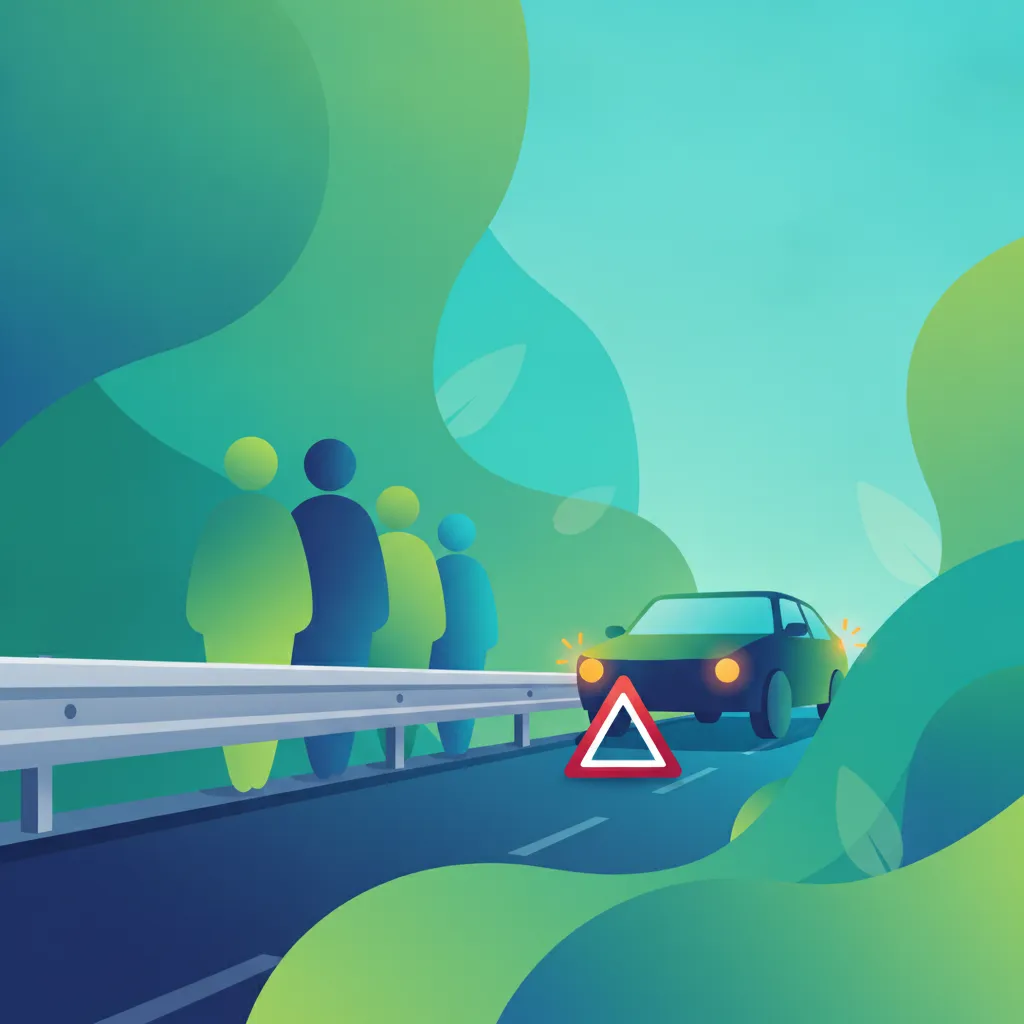
This lesson details the emergency protocols for handling mechanical breakdowns or tire blowouts on public highways and motorways. Drivers will learn how to park the vehicle in the safest possible location, activate hazard warning lights, and deploy the reflective warning triangle. It teaches precise commands and steps for evacuating passengers quickly through safety exits, positioning them behind protective guardrails.
Find clear answers to common questions learners have about Emergency Response Procedures in Passenger Transport. Learn how the lesson is structured, which driving theory objectives it supports, and how it fits into the overall learning path of units and curriculum progression in France. These explanations help you understand key concepts, lesson flow, and exam focused study goals.
Your first priority is to ensure the safety of all passengers by initiating an immediate, orderly evacuation while keeping them away from traffic and the fire source. Simultaneously, alert emergency services and use the appropriate fire extinguisher only if the fire is small and you are not putting yourself or others in danger.
You must provide clear, concise information: your exact location, the nature of the emergency, the number of passengers involved, and any specific medical needs. Be prepared to follow the instructions given by the operator, such as the 15 for SAMU or 18 for the Fire Brigade.
Yes, French law requires specific first-aid equipment to be maintained and accessible on board coaches and buses. You must ensure these kits are stocked and that you are familiar with the contents before starting your route.
Authority and clarity are essential. Use the public address system to provide simple, calm, and direct instructions. Avoid technical jargon and keep passengers informed of what is happening, which helps prevent hysteria and facilitates an organized exit.
Ready to focus your study? Use the practice search to find exactly the French driving theory questions you need for the Code de la route and permis de conduire ETG. Refine your knowledge on specific topics or challenging rules to boost your confidence and exam readiness.