
Trams and some other public transport vehicles operate with unique constraints in traffic, primarily due to their fixed routes and significant size. This means drivers must often give way, even when general priority rules might suggest otherwise. This page details these special priority rules as per the Code de la route, focusing on safe interaction and common scenarios in French urban driving.
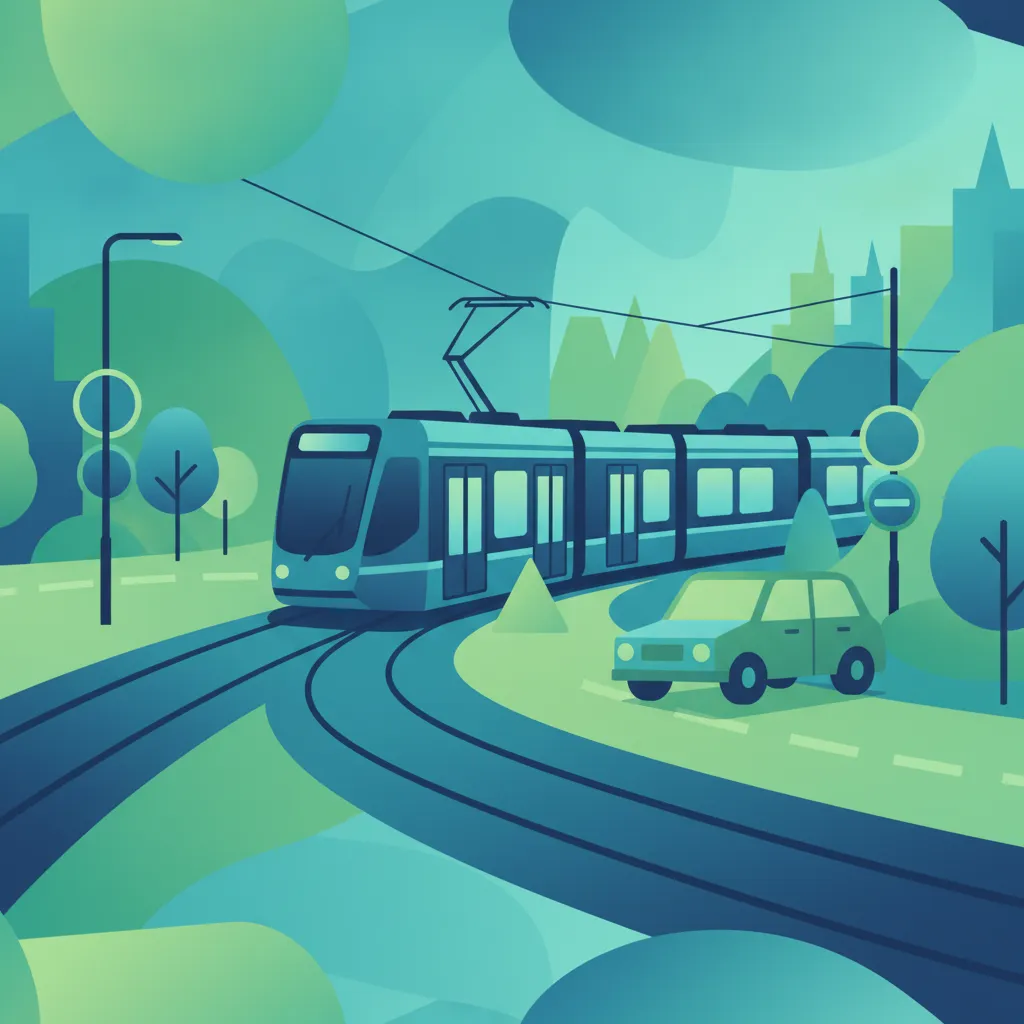
Theory topic content overview
Read the full theory topic guide for Tram Priority Rules with structured, easy-to-scan content built for learners in France. This detailed section explains the exact rule, meaning, traffic context, comparison points, and exam logic behind this French driving theory topic so you can study faster, understand the concept more clearly, and avoid common interpretation mistakes on the theory test.
In French urban environments, trams and certain public transport vehicles operate under special priority rules that drivers must understand and respect. Unlike cars, these vehicles often have fixed routes and limited maneuverability, necessitating specific regulations to ensure safety and efficient traffic flow. Mastering these rules is crucial not only for practical driving in French cities but also for success in the Code de la route (French driving theory exam).
Tram and public transport priority refers to specific instances where these vehicles are legally given precedence over other road users. This means drivers are required to yield right of way, even in situations where general priority rules (like priorité à droite – priority to the right) might otherwise apply. This special status acknowledges their operational constraints and public service role.
Key principles:
The priority given to trams and public transport vehicles is fundamental to road safety and traffic management in French urban areas.
The rules for tram priority in France are specific and require drivers to be highly observant and anticipatory.
Trams generally have priority over other vehicles at intersections, regardless of the direction they are coming from, unless specific road signs or traffic lights indicate otherwise.
While trams have a near-absolute priority due to their fixed nature, certain public transport vehicles, notably buses, receive priority when pulling out from a marked bus stop (arrêt de bus) within an urban area.
Several elements influence how tram and public transport priority rules apply in France:
It's easy for learners to confuse tram priority with other general rules, leading to mistakes.
Consider these practical examples you might encounter while driving in France:
Learners taking the Code de la route and new drivers in France often make these mistakes regarding tram and public transport priority:
The emphasis on tram and public transport priority in France is deeply ingrained in the Code de la route and reflects the design of French urban infrastructure.
The core principle to remember for tram and public transport priority in France is to anticipate and yield. Always be aware of your surroundings in urban areas. Actively look for tram tracks, tram signals, and marked bus stops. When you see a tram approaching or a bus signalling to leave its stop, be prepared to slow down, stop, and give way. Prioritizing these vehicles ensures safety, smooth traffic flow in French cities, and demonstrates your competence as a responsible driver under the Code de la route.
Start with a short, direct summary of Tram Priority Rules before reading the full explanation below.
In France, trams generally have priority because they run on fixed tracks and cannot deviate, making them less maneuverable than other vehicles. Drivers must anticipate tram movements, especially at intersections and crossings, and yield right of way. Certain public transport vehicles, like buses pulling out from a marked stop, also receive priority to ensure smooth urban traffic flow and passenger safety, aligning with Code de la route principles.
Review the most important terms, rule signals, and traffic concepts linked to Tram Priority Rules.
Explore related theory topic pages connected to Tram Priority Rules and continue with the next useful rule explanation.
See the common search queries learners use when trying to understand Tram Priority Rules in France.

Continue your journey by exploring specific French driving theory topics, from road signs and priority rules to vehicle safety and administrative procedures. Deepen your understanding of the Code de la route and prepare effectively for your permis de conduire ETG exam to ensure success and safe driving practices.
French Driving Theory Topics & RulesTheory topic content overview
Start with a short, direct summary of Tram Priority Rules before reading the full explanation below.
In France, trams generally have priority because they run on fixed tracks and cannot deviate, making them less maneuverable than other vehicles. Drivers must anticipate tram movements, especially at intersections and crossings, and yield right of way. Certain public transport vehicles, like buses pulling out from a marked stop, also receive priority to ensure smooth urban traffic flow and passenger safety, aligning with Code de la route principles.
Review the most important terms, rule signals, and traffic concepts linked to Tram Priority Rules.
Explore related theory topic pages connected to Tram Priority Rules and continue with the next useful rule explanation.
See the common search queries learners use when trying to understand Tram Priority Rules in France.
Continue your journey by exploring specific French driving theory topics, from road signs and priority rules to vehicle safety and administrative procedures. Deepen your understanding of the Code de la route and prepare effectively for your permis de conduire ETG exam to ensure success and safe driving practices.
French Driving Theory Topics & RulesUse this exam-focused revision tip to understand how Tram Priority Rules is likely to appear in theory questions for learners in France. This section helps you identify the most testable part of the rule, avoid common traps, and remember the concept more effectively during French driving theory exam preparation.
In your ETG exam, questions about tram priority often involve judging situations where a tram approaches an intersection or crossing. Remember that trams cannot change direction; therefore, drivers are almost always required to yield. Look for specific traffic lights or signs, but assume a tram has priority unless explicitly stated otherwise to avoid common mistakes.
Read direct answers to the most common learner questions about Tram Priority Rules in France. This FAQ focuses on rule confusion, practical meaning, comparison with similar concepts, and the exact uncertainties that appear most often in French driving theory revision and exam preparation.
Trams operate on fixed tracks and cannot maneuver to avoid obstacles. Their size and stopping distance necessitate they be given priority to ensure safety and efficient public transport schedules, a principle reflected in the Code de la route.
Yes, unless specific traffic lights or signs explicitly indicate otherwise, drivers must yield to an approaching tram at an intersection or crossing. Trams have a superior right of way due to their operational constraints.
In France, a public transport bus indicates its intention to leave a marked stop using its indicator, other drivers must allow it to merge into traffic. This priority helps maintain punctual public transport services.
Exercise extreme caution. Avoid driving on tracks unless designated, be aware of turning trams, and leave ample space. Never block tram tracks, as this impedes public transport and can lead to dangerous situations.
While general priority signs apply, specific signals or traffic lights dedicated to trams will indicate their right of way. Drivers should always pay attention to these, especially in urban areas with tram lines.
Drivers must be particularly vigilant for pedestrians boarding or alighting trams, especially when the tram is stopped. Always give way to pedestrians crossing to or from a tram stop, even if there isn't a marked crossing.
A tram's priority is generally constant regardless of its speed, as it's based on its physical and operational characteristics. However, higher tram speeds mean less reaction time for drivers, emphasizing the need to anticipate and yield.
Ready to focus your study? Use the practice search to find exactly the French driving theory questions you need for the Code de la route and permis de conduire ETG. Refine your knowledge on specific topics or challenging rules to boost your confidence and exam readiness.