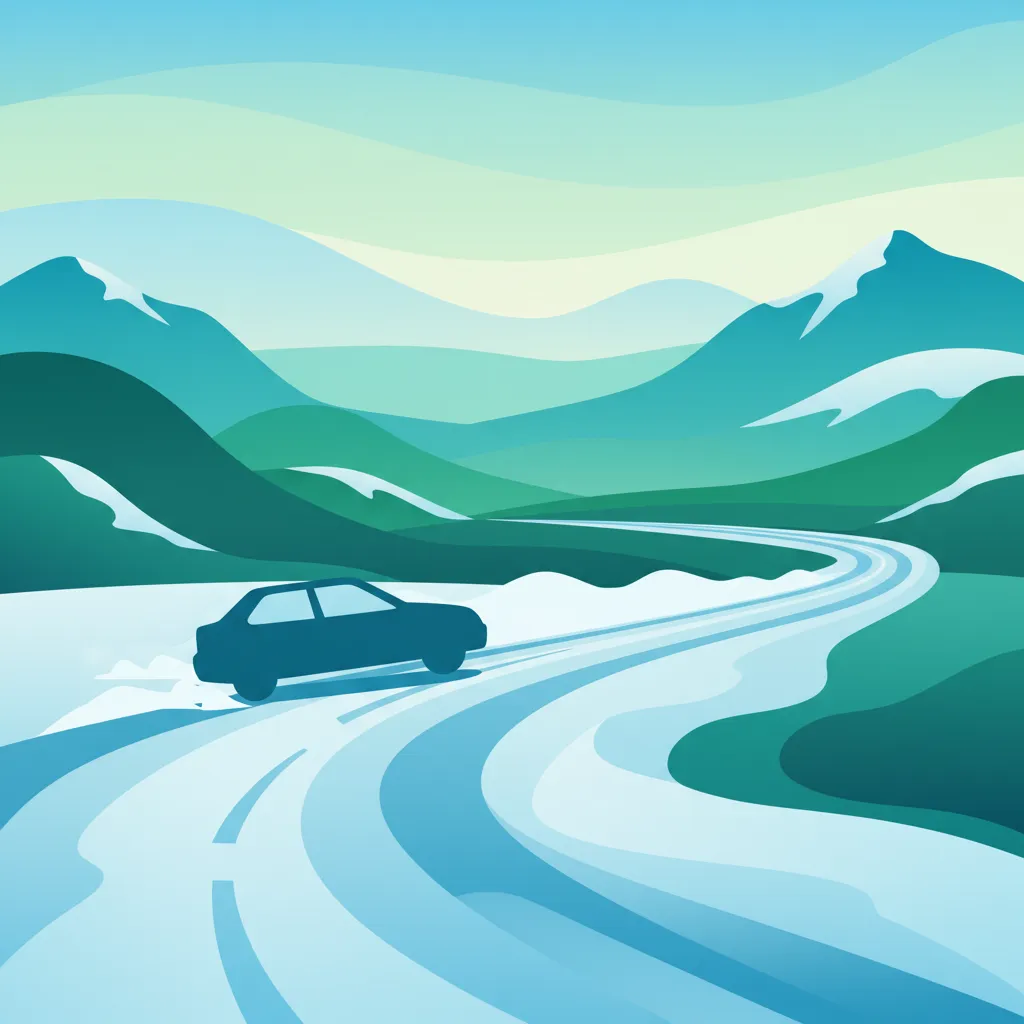
Driving in snow and ice dramatically changes how your vehicle handles, impacting acceleration, steering, and especially braking. In Iceland, where winter conditions are common, understanding how to manage reduced traction is critical for safety. This page details the specific challenges these conditions pose and how to adapt your driving to maintain control and prevent accidents.
Theory topic content overview
Read the full theory topic guide for Driving in Snow & Ice with structured, easy-to-scan content built for learners in Iceland. This detailed section explains the exact rule, meaning, traffic context, comparison points, and exam logic behind this Icelandic driving theory topic so you can study faster, understand the concept more clearly, and avoid common interpretation mistakes on the theory test.
Driving in snow and ice presents one of the most significant challenges for drivers, particularly in Iceland where such conditions are common throughout much of the year. The fundamental issue is reduced traction, which is the grip between your vehicle's tires and the road surface. When snow or ice are present, this crucial friction is severely diminished, impacting every aspect of vehicle control.
Imagine trying to walk on a perfectly smooth, wet floor versus a dry, rough surface – the difference in grip is immediately obvious. Your tires experience a similar loss of grip, meaning your vehicle can no longer accelerate, steer, or brake effectively. This dramatically increases the risk of losing control and skidding.
Understanding how to drive safely in snow and ice isn't just a recommendation in Iceland; it's a critical safety requirement and a central part of the Icelandic driving license theory exam.
Crucially, always check current weather and road conditions before setting out, especially during winter. Resources like Safetravel.is/conditions provide vital, up-to-date information on road closures, ice warnings, and hazardous areas across Iceland.
Reduced traction directly impacts your vehicle's three primary functions: acceleration, braking, and steering.
On snow or ice, the distance required to stop your vehicle safely can increase by ten times or more compared to dry roads. This is because your tires struggle to grip the surface to slow the vehicle down.
Applying too much power to the drive wheels when starting or accelerating can easily cause them to spin pointlessly.
The ability to steer depends entirely on the front tires maintaining grip.
Black ice is arguably the most treacherous of winter hazards because of its deceptive nature. It's a thin, transparent layer of ice that forms on the road surface, often appearing as just wet asphalt. Its invisibility makes it incredibly dangerous, as drivers often don't realise they are on black ice until they begin to lose control.
Black ice typically forms in specific locations that drivers must learn to anticipate:
Since you can't always see it, you must learn to feel for black ice and anticipate its presence:
Safe winter driving in Iceland is all about adaptation and vigilance.
A common and dangerous misconception is that the posted speed limit is always a safe speed. In Iceland, this is emphatically false during winter. The speed limit indicates the maximum legal speed under ideal conditions, not a recommended speed for snow and ice. Your safe speed will almost always be lower than the limit.
Many drivers, even those with winter driving experience, can become overconfident. Conditions can change rapidly, and even familiar roads can become treacherous. Always approach winter driving with caution and respect for the conditions.
As discussed with black ice, a road that merely looks wet when temperatures are freezing or below is likely icy. Always assume the worst in such conditions.
The official guidance from Samgöngustofa and bodies like Safetravel.is consistently emphasizes adaptive driving. Winter conditions in Iceland are not an exception but a regular feature of the driving environment for many months of the year. The expectation from the Icelandic driving license theory is that you understand the profound impact of these conditions and how to proactively adjust your driving to maintain safety. This means being prepared to drive slowly, react smoothly, and make informed decisions based on real-time road information.
When driving in snow and ice in Iceland, remember two core principles: Smooth and Slow.
Anticipate hazards like black ice, continually assess road conditions, and prioritise safety over reaching your destination quickly.
Winter driving in Iceland requires understanding that snow and ice severely reduce tire traction, affecting braking (which can require ten times more distance), acceleration (requiring gentle throttle to avoid wheelspin), and steering (demanding smooth, gradual inputs). Black ice presents the greatest hazard because it is invisible; it typically forms on bridges, in shaded areas, underpasses, and tunnels, and can be detected by unusually light steering or quiet tire sounds. The critical adaptation is driving well below posted limits with increased following distances and exclusively gentle vehicle inputs, encapsulated by the 'Smooth and Slow' principle.
A short set of high-value points that capture the most important ideas from this theory explanation.
Reduced traction in snow and ice impacts every vehicle function: braking, acceleration, and steering must all be adapted
Braking distance can increase by ten times or more on slippery surfaces compared to dry roads
Black ice forms in predictable locations: shaded areas, bridges, overpasses, tunnels, and after snowfall when temperatures drop
Posted speed limits represent maximum speeds under ideal conditions only; safe winter speeds are always lower
The core winter driving principle is 'Smooth and Slow' for all vehicle inputs
Check current road conditions via Safetravel.is before any winter journey
Black ice creates unusually light steering feel and quiet tire noise - learn to sense it
Start in higher gears (2nd gear) on manual vehicles to reduce wheelspin when accelerating
Bridges and overpasses freeze before surrounding road surfaces because cold air reaches them from both above and below
Allow 10-12 seconds of following distance in winter conditions
Assuming the posted speed limit is a safe speed for current conditions
Mistaking a road that looks wet for simply wet asphalt when temperatures are at or below freezing
Applying sudden or heavy braking on ice, which locks wheels and causes uncontrollable skidding
Using cruise control on slippery roads, eliminating direct control of vehicle speed
Overconfidence based on previous winter driving experience - conditions can change rapidly and unpredictably
Start with a short, direct summary of Driving in Snow & Ice before reading the full explanation below.
Driving in snow and ice requires significant adaptation due to reduced tire traction. This means longer stopping distances, slower acceleration, and smoother steering are necessary to prevent skidding. Always check Icelandic road conditions via Safetravel.is and adjust your speed well below the posted limits, as these are set for ideal conditions. Gentle inputs are key to maintaining control.
Review the most important terms, rule signals, and traffic concepts linked to Driving in Snow & Ice.
Explore related theory topic pages connected to Driving in Snow & Ice and continue with the next useful rule explanation.
See the common search queries learners use when trying to understand Driving in Snow & Ice in Iceland.

Ready to master Icelandic driving theory? Explore our comprehensive sections. Review road rules, traffic signs, and critical concepts. Build essential knowledge for confident and safe driving in Iceland. Start studying today.
Explore Icelandic Driving TheoryTheory topic content overview
A short set of high-value points that capture the most important ideas from this theory explanation.
Reduced traction in snow and ice impacts every vehicle function: braking, acceleration, and steering must all be adapted
Braking distance can increase by ten times or more on slippery surfaces compared to dry roads
Black ice forms in predictable locations: shaded areas, bridges, overpasses, tunnels, and after snowfall when temperatures drop
Posted speed limits represent maximum speeds under ideal conditions only; safe winter speeds are always lower
The core winter driving principle is 'Smooth and Slow' for all vehicle inputs
Check current road conditions via Safetravel.is before any winter journey
Black ice creates unusually light steering feel and quiet tire noise - learn to sense it
Start in higher gears (2nd gear) on manual vehicles to reduce wheelspin when accelerating
Bridges and overpasses freeze before surrounding road surfaces because cold air reaches them from both above and below
Allow 10-12 seconds of following distance in winter conditions
Assuming the posted speed limit is a safe speed for current conditions
Mistaking a road that looks wet for simply wet asphalt when temperatures are at or below freezing
Applying sudden or heavy braking on ice, which locks wheels and causes uncontrollable skidding
Using cruise control on slippery roads, eliminating direct control of vehicle speed
Overconfidence based on previous winter driving experience - conditions can change rapidly and unpredictably
Start with a short, direct summary of Driving in Snow & Ice before reading the full explanation below.
Driving in snow and ice requires significant adaptation due to reduced tire traction. This means longer stopping distances, slower acceleration, and smoother steering are necessary to prevent skidding. Always check Icelandic road conditions via Safetravel.is and adjust your speed well below the posted limits, as these are set for ideal conditions. Gentle inputs are key to maintaining control.
Review the most important terms, rule signals, and traffic concepts linked to Driving in Snow & Ice.
Explore related theory topic pages connected to Driving in Snow & Ice and continue with the next useful rule explanation.
See the common search queries learners use when trying to understand Driving in Snow & Ice in Iceland.
Ready to master Icelandic driving theory? Explore our comprehensive sections. Review road rules, traffic signs, and critical concepts. Build essential knowledge for confident and safe driving in Iceland. Start studying today.
Explore Icelandic Driving TheoryUse this exam-focused revision tip to understand how Driving in Snow & Ice is likely to appear in theory questions for learners in Iceland. This section helps you identify the most testable part of the rule, avoid common traps, and remember the concept more effectively during Icelandic driving theory exam preparation.
Theory exams often present scenarios involving winter driving hazards. Remember that the key takeaway is always to reduce speed, increase following distance, and use gentle vehicle inputs (steering, braking, acceleration). Pay special attention to questions about black ice, as its invisibility is a major trick.
Read direct answers to the most common learner questions about Driving in Snow & Ice in Iceland. This FAQ focuses on rule confusion, practical meaning, comparison with similar concepts, and the exact uncertainties that appear most often in Icelandic driving theory revision and exam preparation.
Snow and ice drastically reduce the friction between your tires and the road, leading to decreased traction. This makes it harder to accelerate, steer, and brake effectively, significantly increasing stopping distances.
Black ice is a thin, transparent layer of ice that forms on the road surface, often making it appear wet rather than frozen. It's extremely dangerous because it's nearly invisible, providing almost no traction and catching drivers by surprise.
While posted speed limits remain, the Icelandic Transport Authority (Samgöngustofa) advises that these limits apply only in ideal conditions. In snow and ice, you must drive significantly slower than the posted limit to ensure safety and maintain control.
Brake gently and progressively. Avoid sudden, hard braking, as this can easily lock up your wheels and cause a skid, even with ABS. If your car begins to skid, ease off the brake and steer in the direction you want the front of the car to go.
Accelerate very gently and smoothly. Apply minimal throttle to avoid spinning the wheels, which can cause you to lose control. If your wheels spin, ease off the accelerator until they regain grip.
Ice tends to form first and last longest in shaded areas, on bridges, overpasses, and in tunnels, as these spots are less exposed to sunlight and warmer air. Always be extra cautious when approaching these areas.
Always check official sources like Safetravel.is or gottvedur.is for current weather and road conditions in Iceland. This information is crucial for planning safe winter journeys.
On dry roads, a minimum of a 2-second following distance is recommended. In snowy or icy conditions, this should be increased to at least 4-5 seconds, or even more, to account for significantly longer stopping distances.
Utilize our advanced practice set search to pinpoint the exact Icelandic driving theory topics you need to review. Filter by subject, difficulty, or question type to create a highly effective study plan and ensure you are fully prepared for your official driving licence test in Iceland.