This lesson guides you through the essential system of road signs and markings used in Ireland. By mastering these visual cues, you will gain the knowledge required to navigate roads safely and successfully answer key questions in your Category AM theory test.
Lesson content overview
Mastering the visual language of Irish road signs is a core requirement for passing the Irish Driving Theory Test and riding safely on public roads. For Category AM license candidates—who operate mopeds and light quadricycles restricted to engine capacities of 50cc or maximum design speeds of 45 km/h—the ability to identify and respond to road signs is a matter of both legal compliance and physical safety. Because riders of two-wheeled vehicles are highly vulnerable to changing road surfaces, wind, and the actions of larger vehicles, understanding signs at a glance is critical to defensive riding.
This lesson provides a comprehensive breakdown of the regulatory, warning, and information signs deployed across Ireland. We will explore their distinct shapes, colors, legal authority, and the specific actions they mandate under the Irish Rules of the Road.
Irish road signs are engineered using a standardized system of shapes, colors, and symbols. This color-coded and geometric system allows road users to categorize and comprehend messages instantly, even from a distance or in poor weather conditions.
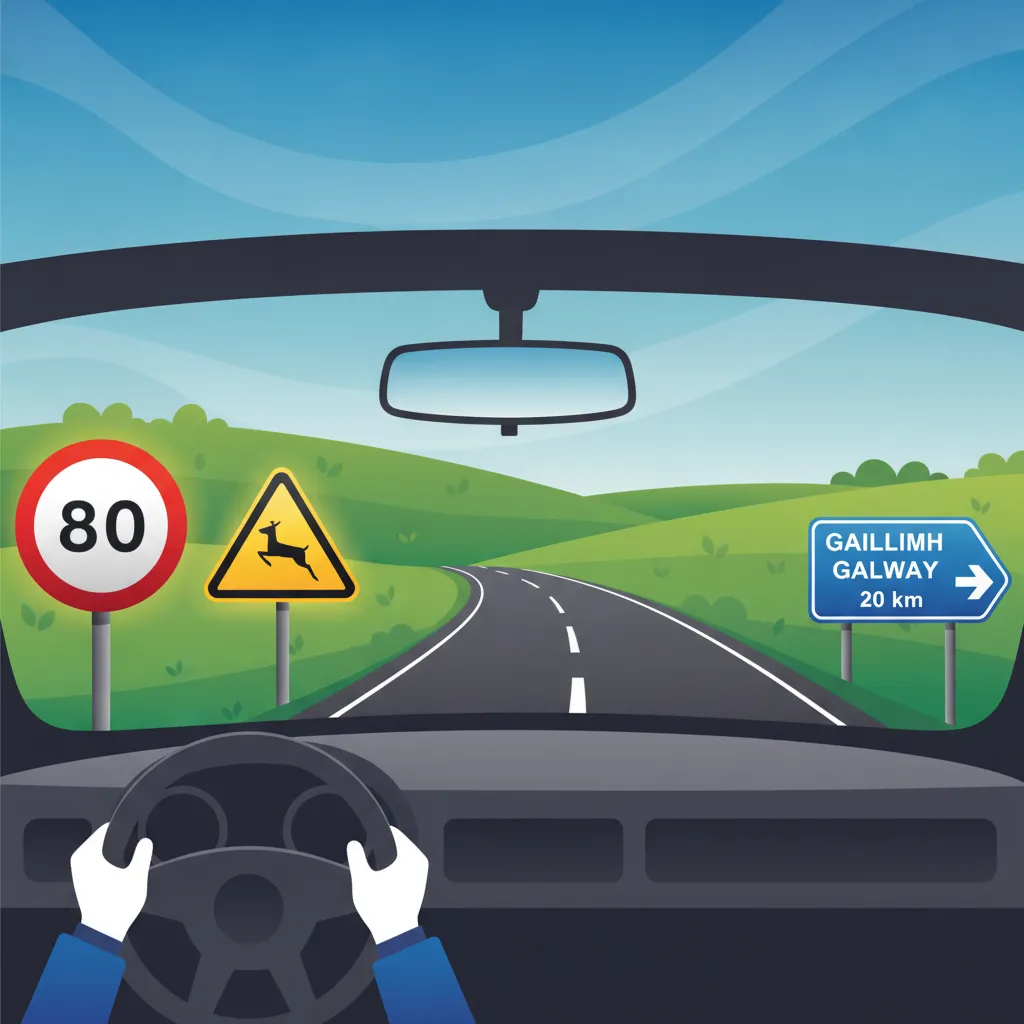
A red border on a circular sign indicates a prohibition. These signs tell you what you must not do. They are legally binding, and ignoring them is a serious traffic offence that can lead to penalty points, fines, or prosecution. For example, a red circle containing a speed limit value dictates the absolute maximum speed allowed on that stretch of road.
In contrast to prohibitory signs, circular signs with a blue background and white symbols indicate mandatory instructions. These signs tell you what you must do. They dictate specific paths of travel, lane requirements, or minimum speeds. Compliance is compulsory.
Unlike most continental European countries that use red-bordered triangles for hazard alerts, Ireland primarily uses yellow-amber, diamond-shaped signs with black borders and black symbols to warn road users of hazards ahead. These signs alert you to changes in the road layout, upcoming junctions, pedestrian zones, or natural hazards.
Rectangular signs provide navigation, route planning, and general information. The background color of these signs indicates the class of road you are traveling on:
Regulatory signs carry the force of law. The Road Traffic (Traffic and Parking) Regulations 1992 (as amended) mandate that all drivers and riders comply with these indicators. For Category AM riders, violating these signs often leads to dangerous conflicts with larger vehicles.
Prohibitory signs use a red circular format to restrict specific actions or vehicle types.
Riding past a No Entry sign on a moped is highly dangerous, as you are likely to face oncoming traffic in a confined space. It is a common mistake for novice riders to confuse "No Entry" with a sign indicating a one-way street; "No Entry" indicates an absolute barrier at that specific intersection point.
While mopeds are narrow and agile, you must never attempt to squeeze past other moving vehicles when a No Overtaking sign is active. Overtaking under these conditions is illegal and highly risky due to poor visibility, oncoming hazards, or narrow lanes.
Other common prohibitory signs include:
Speed limits in Ireland are indicated by numbers inside red circles. These values are in kilometres per hour (km/h).
In built-up, urban areas, the default speed limit is 50 km/h (and increasingly 30 km/h in high-density pedestrian zones or school areas). On regional and local roads, the default limit is 80 km/h, while national roads have a limit of 100 km/h.
Crucial Category AM Speed Restriction: Although regional or national roads may have speed limits of 80 km/h or 100 km/h, Category AM mopeds are limited by law to a maximum design speed of 45 km/h. You must never exceed the capability of your vehicle, and you should ride defensively, positioned safely to allow faster vehicles to overtake when safe.
Mandatory signs dictate actions you are legally required to perform. They feature a blue circular background with white arrows or symbols.
You will frequently encounter the "Keep Left" sign at traffic islands, pedestrian refuges, or road construction zones. Failing to keep to the correct side of the sign can place you in the path of oncoming traffic.
Other mandatory signs include:
Warning signs are designed to give you advanced notice of hazards so you can adjust your speed and road positioning. Because mopeds have less physical stability and braking grip than four-wheeled vehicles, ignoring these alerts can quickly lead to a loss of control.
In Ireland, warning signs are yellow-amber, diamond-shaped signs.
These signs warn of upcoming changes to the road geometry.
When riding a moped, approaching a sharp bend at excessive speed is a major cause of single-vehicle collisions. Two-wheeled vehicles require lateral grip to corner; if the road is wet, greasy, or covered in gravel, your available grip is reduced.
Observe and Assess: Identify the warning sign early and check your mirrors to understand the traffic situation behind you.
Adjust Speed Early: Reduce your speed smoothly using both brakes before you enter the turn, while the moped is still traveling in a straight line.
Select Road Position: Position yourself safely within your lane to maximize your view through the bend, keeping clear of oncoming vehicles that may drift over the centre line.
Smooth Cornering: Maintain a steady, gentle throttle through the bend, avoiding sudden braking or acceleration which can break tyre traction.
Other warning signs highlight physical threats to your moped’s stability:
Warning signs also alert you to the presence of pedestrians, children, and animals.
Information signs are designed to guide you, assist with route planning, and provide details about lane usage or nearby services.
The background color of directional signs identifies the type of road you are on or approaching:
| Background Color | Road Type | Moped Category AM Significance |
|---|---|---|
| Blue | Motorways | Prohibited. Category AM vehicles are legally banned from motorways due to their low design speed (under 45 km/h). |
| Green | National Roads | Permitted. High-volume roads. Watch out for fast-moving traffic and maintain a defensive road position. |
| White | Local / Regional Roads | Permitted. Common routes for urban and rural commuting. Watch for local hazards, junctions, and agricultural machinery. |
Some information signs indicate restricted lanes that directly affect where you may ride your moped.
Signs alone do not govern crossings; they work in tandem with physical installations. You must understand how to interact with these crossings to pass your theory exam and ride safely.
Marked by black and white road stripes and flashing amber beacons (known as Belisha Beacons) on poles.
At light-controlled pedestrian crossings, a flashing amber light sequence has a specific legal meaning:
The actions you take upon viewing a sign directly determine your safety margin. Consider the following relationships:
[Warning Sign Detected: Slippery Road]
       │
       ▼ (Correct Action)
[Rider reduces speed & avoids sudden braking] ──► [Safe transit with maximum grip]
       │
       ▼ (Incorrect Action)
[Rider ignores sign, maintains speed] ──────────► [Loss of control / low-side slide]
Similarly, failing to obey regulatory signs carries immediate legal and physical consequences:
To help consolidate your learning, let us analyze some practical driving scenarios you might encounter on Irish roads.
You are riding your moped on a local road that ends at a junction with a busy national road. You see a red octagonal "STOP" sign ahead.
While riding through an urban area, you encounter a series of temporary yellow-orange warning signs indicating roadworks and a mandatory "Keep Right" sign.
Remember, every sign is placed on the road for a specific purpose: to prevent accidents, keep traffic moving, and protect vulnerable road users. Developing the habit of scanning the road ahead, identifying sign shapes and colors instantly, and adjusting your riding behavior accordingly is key to becoming a safe, licensed moped rider in Ireland.
Explore all units and lessons included in this driving theory course.
Lesson content overview
Explore all units and lessons included in this driving theory course.
Explore search topics learners often look for when studying Regulatory, Warning and Information Signs. These topics reflect common questions about road rules, driving situations, safety guidance, and lesson level theory preparation for learners in Ireland.
Browse additional driving theory lessons that cover connected traffic rules, road signs, and common driving situations related to this topic. Improve your understanding of how different rules interact across everyday traffic scenarios.
Understand the meaning of road surface markings and lane discipline guidelines for Irish drivers. Learn how to correctly interpret stop lines, yield markings, and lane arrows to navigate intersections, bus lanes, and urban traffic safely according to the official Rules of the Road.

Irish driving theory demands that drivers keep to the left-hand side of the road unless overtaking or turning right. This lesson explains how to maintain consistent lane discipline on multi-lane roads, how to perform safe lane changes, and the dangers of drifting. You will learn the safety sequence of checking mirrors, checking blind spots, signalling, and smoothly executing a lane change without disrupting trailing traffic.

This lesson explains the critical meanings of solid, broken, and continuous lines painted on Irish road surfaces. It defines the legal rules surrounding bus lanes, bicycle lanes, and yellow box junctions in urban settings. Riders will learn correct lane discipline to ensure their safety and maintain proper separation from surrounding traffic.
The painted lines on the road surface act as continuous instructions to help drivers steer, position, and pass safely. This lesson explains the strict legal prohibitions of crossing solid white lines compared to broken lines, which indicate it is safe to cross if clear. You will also discover the purpose of coloured reflective road studs, known as cat's eyes, which improve safety during night driving and poor visibility.

This lesson explains the regulatory meanings of various road markings applied to Irish asphalt, including continuous double white lines and yellow boxes. It details how these markings govern overtaking privileges, lane restrictions, and stopping zones at intersections. Riders will learn to recognize specific surface hazards like wet paint markings, which present severe traction risks for motorcycles.
Large passenger vehicles must maintain consistent lane positioning to prevent side-swipe incidents and sustain smooth urban traffic patterns. This lesson covers standard lane selection rules, safe overtaking procedures, and how to use designated public transit corridors correctly. Drivers will learn the importance of checking mirrors continuously and planning lane changes well in advance.
Motorways are designed for safe, high-speed travel, but require strict adherence to lane discipline and specific regulations. This lesson explains that the left lane is for normal driving, while middle and right lanes are strictly for overtaking slower traffic. You will learn how to identify motorway exits, use the hard shoulder during absolute emergencies, and understand the legal restrictions placed on learner permit holders.
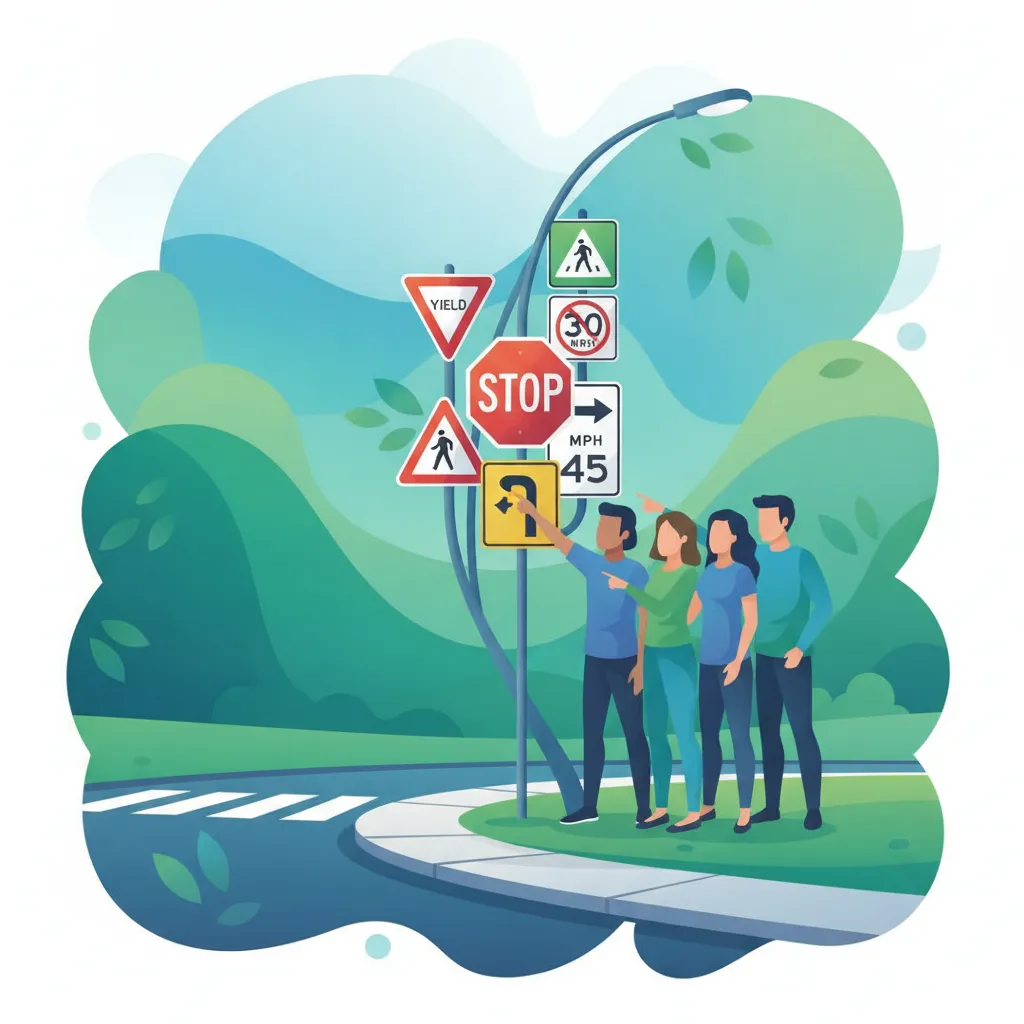
Regulatory signs give clear instructions and legal prohibitions that drivers must obey to prevent accidents and maintain traffic order. This lesson breaks down circular signs with red borders denoting prohibitions, blue circular signs showing mandatory directions, and key safety priorities like stop and yield signs. Failing to obey these specific indicators is a serious traffic offence that can lead to penalty points and immediate fines.

Specific road markings are used to create safety zones for pedestrians and cyclists, requiring extra care from motorists. This lesson explains the markings of zebra, pelican, and toucan crossings, with emphasis on the white zigzag lines that prohibit overtaking and parking. You will also learn about cycle lanes, mandatory versus non-mandatory cycle track markings, and the safety benefits of advanced stop lines at traffic lights.

This lesson outlines the legal and safety requirements for maintaining proper lane discipline on multi-lane roads, roundabouts, and motorways in Ireland. It teaches drivers how to account for lane width, manage trailer off-tracking, and position the cab to prevent encroachment on neighboring lanes. Drivers will master safe lane-changing strategies, signaling protocols, and traffic merging techniques.

Navigating multi-lane roundabouts requires precise lane selection, continuous scanning, and timely signaling. This lesson teaches you the 'clock rule' for determining which lane to enter, how to yield to traffic already on the roundabout from your right, and when to activate your left indicator to exit. Mastering these procedures minimizes lane-drift accidents and ensures a seamless flow of traffic on busy roundabouts.
Explore the fundamental priority rules for navigating junctions, roundabouts, and pedestrian crossings on Irish roads. This guide covers how to assess traffic flow, identify right-of-way, and safely manage your position on the road when interacting with other road users at complex intersection layouts.

Uncontrolled junctions represent a high-risk scenario because they lack physical signs, lines, or lights to dictate priority. This lesson covers the crucial 'priority to the right' principle, where you must yield to any traffic approaching from your right-hand side. You will learn the importance of reducing your speed, preparing to stop, and verifying the intentions of other drivers at these equal-status crossings.
This lesson covers the absolute rules of priority that regulate junctions, roundabouts, and pedestrian crossings in Ireland. It teaches riders when they must yield, who has right-of-way, and how to read Stop and Yield signs correctly. Understanding these priority hierarchies prevents collisions and maintains orderly, predictable movement at busy junctions.
This lesson teaches the fundamental principles of priority and right-of-way at controlled and uncontrolled intersections across Ireland. It explains the legal obligations at yield signs, stop lines, and when meeting oncoming traffic turning across your lane. Motorcyclists will learn to carefully verify other drivers' intentions rather than assuming they will yield the correct right-of-way.
Right-of-way rules establish a clear order of precedence when the paths of two or more vehicles cross. This lesson explains how traffic on a major road has priority over traffic emerging from a minor road, and the general rule of yielding to oncoming vehicles when turning right. You will develop a solid understanding of how to approach intersections defensively, assessing speed and distance to make safe decisions.
Navigating multi-lane roundabouts requires precise lane selection, continuous scanning, and timely signaling. This lesson teaches you the 'clock rule' for determining which lane to enter, how to yield to traffic already on the roundabout from your right, and when to activate your left indicator to exit. Mastering these procedures minimizes lane-drift accidents and ensures a seamless flow of traffic on busy roundabouts.

This lesson details the sequential steps required to approach and exit junctions safely under the Irish driving rules. It teaches riders how to select the correct lane, utilize mirrors, apply early signals, and reduce speed appropriately. Effective observation strategies are highlighted to help riders identify crossing pedestrians or approaching side traffic.

Stop and yield signs require drivers to surrender right-of-way to crossing traffic, but they command different physical actions. This lesson explains that a stop sign mandates a complete, absolute halt behind the line, whereas a yield sign requires you to slow down and stop only if other traffic is approaching. You will learn how to manage restricted visibility at junctions and how to creep forward safely when clear.

This lesson focuses on the safe approach and execution of turns at T-junctions, staggered intersections, and blind crossroads. It explains the critical mirror-signal-manoeuvre routine and how to select the best position for maximum visibility to cross-traffic. Motorcyclists will learn to identify potential hazards like vehicles pulling out suddenly or turning across their direct path.
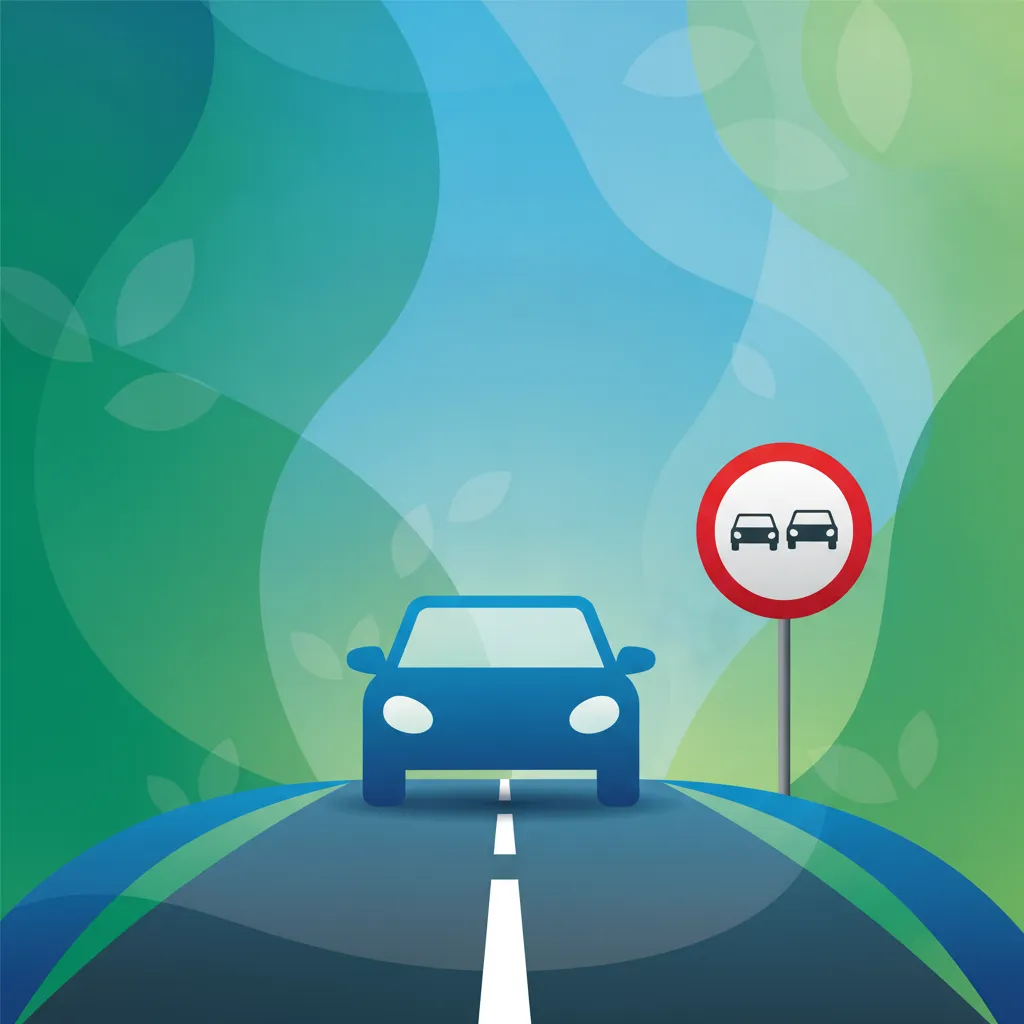
No-overtaking zones are marked in areas with restricted visibility, such as approaching bends, humps, or narrow bridges. This lesson details how continuous solid white lines legally prohibit passing, along with the very narrow exceptions allowed under Irish law. You will learn to identify these high-risk areas from visual markings, ensuring you never initiate a passing manoeuvre that puts oncoming traffic in immediate danger.
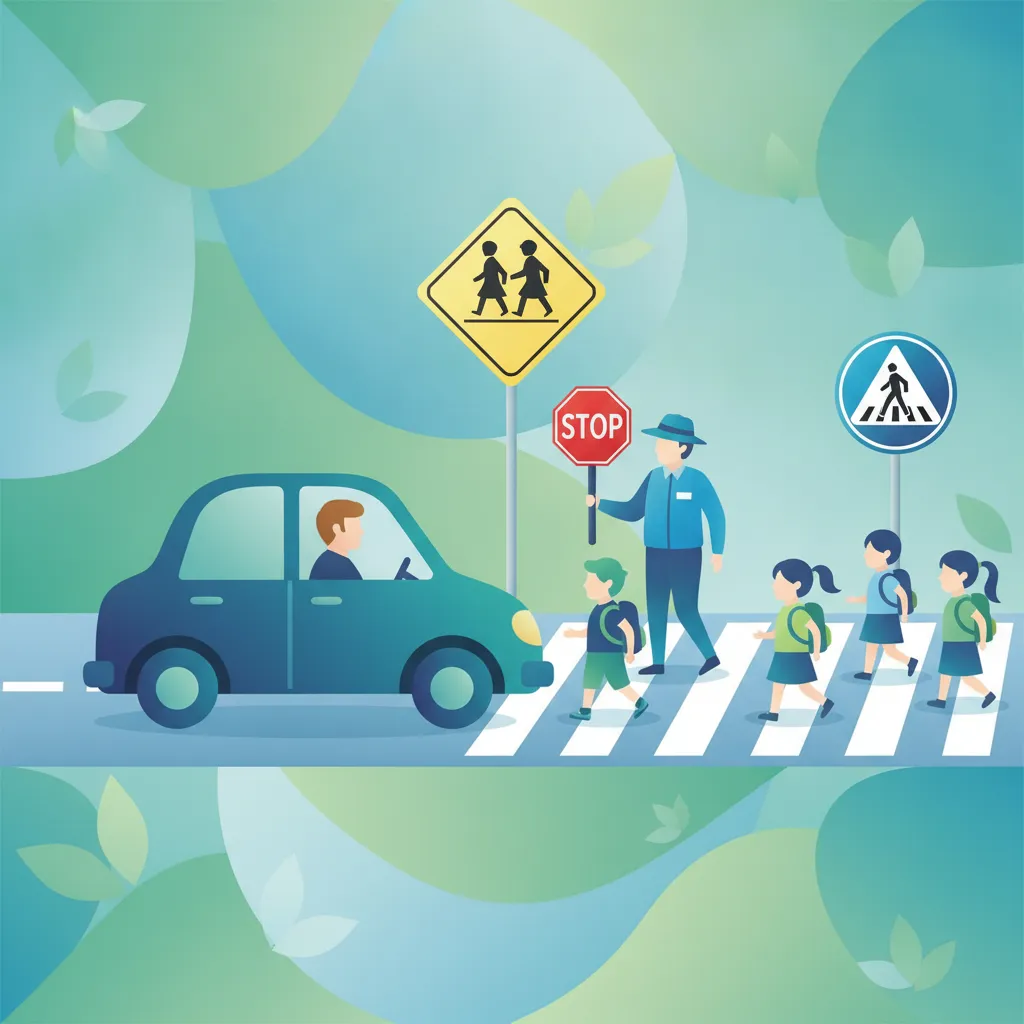
School zones and pedestrian crossings require high driver alertness and strict compliance with local speed limits in Ireland. This lesson details the legal rules of zebra and pelican crossings, explaining driver requirements when amber warning beacons are flashing. Drivers will study safety procedures for dropping off or picking up children, preventing common blind-spot accidents near schools.
Find clear answers to common questions learners have about Regulatory, Warning and Information Signs. Learn how the lesson is structured, which driving theory objectives it supports, and how it fits into the overall learning path of units and curriculum progression in Ireland. These explanations help you understand key concepts, lesson flow, and exam focused study goals.
In Ireland, warning signs are typically diamond-shaped with a yellow background and black border, while regulatory signs are usually circular. Prohibitory signs have a red border, and mandatory signs are often blue.
The test focuses on signs most relevant to your safety and legal compliance. While you should be familiar with all common signs, prioritize those related to speed, priority, and road prohibitions.
All road users, regardless of vehicle size, are subject to the same Rules of the Road. As an AM rider, you are more vulnerable, making it even more critical to react correctly to signals and warnings.
Yes, pay close attention to signs that prohibit certain vehicles or indicate specific lanes for mopeds and bicycles. These are critical for your legal access to specific road sections.
Use the practice question search tool to pinpoint specific topics, road signs, or rules you need to master for your official Driver Theory Test. Refine your study strategy and ensure comprehensive preparation for all aspects of the Irish driving exam. Start your focused revision now and build confidence for your learner permit test.