This lesson guides you through the complexities of navigating multi-lane roundabouts safely and legally in Ireland. It builds upon foundational junction rules to ensure you can confidently select the correct lane and signal appropriately for the Irish Driver Theory Test.

Lesson content overview
Multi-lane roundabouts are highly efficient traffic systems designed to handle large volumes of traffic without the delays associated with traffic lights. However, their complexity requires high levels of driver focus, precise lane discipline, and clear communication. For candidates preparing for the Irish Driver Theory Test (Category B passenger cars), mastering multi-lane roundabouts is essential not only for passing the test but also for safe, collision-free driving on Ireland's busy national and urban road networks.
Improper lane usage, failure to yield to circulating traffic, and poor signaling are major contributors to collisions on roundabouts. This lesson provides an in-depth breakdown of the rules, techniques, and safety strategies mandated by the Road Safety Authority (RSA) for navigating these junctions.
Maintaining strict lane discipline is the single most important factor in preventing side-impact and "lane-drift" collisions on multi-lane roundabouts.
The practice of selecting the correct lane before entering a roundabout and maintaining a consistent lateral position within that designated lane from entry to your intended exit, without drifting across lane markings.
On a multi-lane roundabout, the lanes are laid out concentrically. Drifting or changing lanes mid-way through a roundabout is highly dangerous because drivers in adjacent lanes may be positioned in your blind spots. You must treat the lanes within a roundabout just like lanes on a straight road: you cannot cross the solid or dashed white lines dividing them unless you are legally permitted to do so, it is safe, and you have signaled your intentions clearly.
When drivers fail to maintain their lane, they often "cut the corner" of the roundabout's curve. This action, known as lane-drifting, places the vehicle directly into the path of adjacent traffic.
By choosing your lane early and sticking to it, you reduce the cognitive load on surrounding motorists, creating a predictable driving environment. Predictability is the cornerstone of defensive driving.
The fundamental priority rule at any Irish roundabout is simple: you must yield the right-of-way to traffic already circulating on the roundabout coming from your right.
As you approach the yield line of a multi-lane roundabout, you must carry out a continuous scan of the circulating lanes to your right.
Watch out for "blind spots" created by other vehicles: If a large truck or bus is entering the roundabout on your right, it may block your view of smaller vehicles, such as motorcycles or bicycles, circulating behind or alongside it. Always wait until your view of all lanes is completely unobstructed.
To simplify lane selection, the RSA utilizes a mnemonic system known as the Clock Rule. This rule helps you determine which lane to enter based on a visualization of the roundabout as a clock face, with your entry point always positioned at 6 o'clock.
If your intended exit is located before or directly at the halfway point (the 12 o'clock position), you should generally choose the left-hand lane on approach. This applies to:
If your intended exit is located past the halfway point (beyond the 12 o'clock position, such as a right turn at 3 o'clock or making a full U-turn), you must choose the right-hand lane on approach:
While the Clock Rule is the default standard, local road markings, overhead gantries, and traffic signs can override it. For example, some high-volume roundabouts may dedicate both lanes to going straight ahead, or dedicate the left lane exclusively for turning left. Always scan for road markings (such as arrows painted on the tarmac) as you approach the junction.
Communication on a roundabout is vital. Your indicators tell other drivers where you are going, allowing them to time their entry safely. However, incorrect or poorly timed signals cause confusion and near-misses.
Taking the First Exit (Left Turn): Signal left on your approach to the roundabout. Maintain this signal as you enter and exit the roundabout.
Taking an Exit at the 12 O'Clock Position (Straight Ahead): Do not signal on approach. Enter the roundabout in the left-hand lane. Once you pass the exit immediately preceding your desired exit, activate your left indicator to alert traffic behind you and drivers waiting to enter at your exit point.
Taking an Exit Beyond 12 O'Clock (Right Turn): Signal right on approach. Maintain your right indicator as you enter and navigate the inner lane. As soon as you pass the exit immediately preceding your desired exit, switch your indicator to the left signal to signal your exit path.
Regardless of which exit you take or which lane you started in, you must always use your left indicator to signal your exit.
This signal must be timed precisely: activate it just after you pass the exit before the one you want. If you signal too early, waiting drivers may pull out in front of you, assuming you are exiting earlier. If you signal too late, you fail to give drivers behind you sufficient time to react to your deceleration.
Your approach to a multi-lane roundabout must adapt to changing road conditions, vehicle types, and weather states.
In rain, fog, or nighttime conditions, road markings on roundabouts can become difficult to see due to surface glare.
Multi-lane roundabouts are high-risk zones for pedestrians, cyclists, and motorcyclists.
Long vehicles, such as buses, trucks, and articulated lorries, require extra space due to "rear-wheel off-tracking" (where the rear wheels follow a tighter path than the front wheels).
Give large vehicles space: A lorry taking a right turn may need to enter the left lane on approach or straddle both lanes while circulating to prevent its trailer from hitting the central island. Never drive alongside a large vehicle on a roundabout; instead, stay safely behind it.
Understanding the direct consequences of your actions on a roundabout can help you avoid common driving test faults and real-world accidents:
To solidify your understanding of junction priority and roundabouts, explore the following resources and practice tests:
Explore all units and lessons included in this driving theory course.
Lesson content overview
Explore all units and lessons included in this driving theory course.
Explore search topics learners often look for when studying Navigating Multi-Lane Roundabouts Safely. These topics reflect common questions about road rules, driving situations, safety guidance, and lesson level theory preparation for learners in Ireland.
Browse additional driving theory lessons that cover connected traffic rules, road signs, and common driving situations related to this topic. Improve your understanding of how different rules interact across everyday traffic scenarios.
Understand the fundamental right-of-way concepts for navigating junctions without traffic signals. This guide explains how to identify priority situations, apply the yield rules at stop signs, and handle intersections where road markings are missing or obscured to maintain safety on Irish roads.
Right-of-way rules establish a clear order of precedence when the paths of two or more vehicles cross. This lesson explains how traffic on a major road has priority over traffic emerging from a minor road, and the general rule of yielding to oncoming vehicles when turning right. You will develop a solid understanding of how to approach intersections defensively, assessing speed and distance to make safe decisions.

Uncontrolled junctions represent a high-risk scenario because they lack physical signs, lines, or lights to dictate priority. This lesson covers the crucial 'priority to the right' principle, where you must yield to any traffic approaching from your right-hand side. You will learn the importance of reducing your speed, preparing to stop, and verifying the intentions of other drivers at these equal-status crossings.
This lesson teaches the fundamental principles of priority and right-of-way at controlled and uncontrolled intersections across Ireland. It explains the legal obligations at yield signs, stop lines, and when meeting oncoming traffic turning across your lane. Motorcyclists will learn to carefully verify other drivers' intentions rather than assuming they will yield the correct right-of-way.

This lesson details the sequential steps required to approach and exit junctions safely under the Irish driving rules. It teaches riders how to select the correct lane, utilize mirrors, apply early signals, and reduce speed appropriately. Effective observation strategies are highlighted to help riders identify crossing pedestrians or approaching side traffic.

Stop and yield signs require drivers to surrender right-of-way to crossing traffic, but they command different physical actions. This lesson explains that a stop sign mandates a complete, absolute halt behind the line, whereas a yield sign requires you to slow down and stop only if other traffic is approaching. You will learn how to manage restricted visibility at junctions and how to creep forward safely when clear.

This lesson focuses on the safe approach and execution of turns at T-junctions, staggered intersections, and blind crossroads. It explains the critical mirror-signal-manoeuvre routine and how to select the best position for maximum visibility to cross-traffic. Motorcyclists will learn to identify potential hazards like vehicles pulling out suddenly or turning across their direct path.
This lesson covers the absolute rules of priority that regulate junctions, roundabouts, and pedestrian crossings in Ireland. It teaches riders when they must yield, who has right-of-way, and how to read Stop and Yield signs correctly. Understanding these priority hierarchies prevents collisions and maintains orderly, predictable movement at busy junctions.

Irish driving theory demands that drivers keep to the left-hand side of the road unless overtaking or turning right. This lesson explains how to maintain consistent lane discipline on multi-lane roads, how to perform safe lane changes, and the dangers of drifting. You will learn the safety sequence of checking mirrors, checking blind spots, signalling, and smoothly executing a lane change without disrupting trailing traffic.

No-overtaking zones are marked in areas with restricted visibility, such as approaching bends, humps, or narrow bridges. This lesson details how continuous solid white lines legally prohibit passing, along with the very narrow exceptions allowed under Irish law. You will learn to identify these high-risk areas from visual markings, ensuring you never initiate a passing manoeuvre that puts oncoming traffic in immediate danger.

Overtaking requires rapid judgment, clear visibility, and precise execution to avoid catastrophic head-on collisions. This lesson guides you through checking oncoming traffic, verifying legal passing zones via road markings, and checking mirrors and blind spots before accelerating. You will learn how to signal your intentions, maintain a safe gap, and return to your driving lane smoothly without cutting up the passed vehicle.
Learn the importance of maintaining consistent lane position to avoid collisions and improve traffic flow. This lesson provides an overview of road markings, lane boundaries, and how to position your vehicle correctly in urban and motorway environments while adhering to official Irish Rules of the Road.
Irish driving theory demands that drivers keep to the left-hand side of the road unless overtaking or turning right. This lesson explains how to maintain consistent lane discipline on multi-lane roads, how to perform safe lane changes, and the dangers of drifting. You will learn the safety sequence of checking mirrors, checking blind spots, signalling, and smoothly executing a lane change without disrupting trailing traffic.

This lesson explains the critical meanings of solid, broken, and continuous lines painted on Irish road surfaces. It defines the legal rules surrounding bus lanes, bicycle lanes, and yellow box junctions in urban settings. Riders will learn correct lane discipline to ensure their safety and maintain proper separation from surrounding traffic.

The painted lines on the road surface act as continuous instructions to help drivers steer, position, and pass safely. This lesson explains the strict legal prohibitions of crossing solid white lines compared to broken lines, which indicate it is safe to cross if clear. You will also discover the purpose of coloured reflective road studs, known as cat's eyes, which improve safety during night driving and poor visibility.

This lesson explains how to choose the safest riding position within a traffic lane, considering the standard left-side driving rule in Ireland. It details the concept of dominant positioning to prevent other vehicles from crowding your space, while remaining visible to oncoming traffic. Riders will learn to adjust their track constantly to avoid road surface hazards, oil deposits, and wind currents.

This lesson explains the regulatory meanings of various road markings applied to Irish asphalt, including continuous double white lines and yellow boxes. It details how these markings govern overtaking privileges, lane restrictions, and stopping zones at intersections. Riders will learn to recognize specific surface hazards like wet paint markings, which present severe traction risks for motorcycles.

Specific road markings are used to create safety zones for pedestrians and cyclists, requiring extra care from motorists. This lesson explains the markings of zebra, pelican, and toucan crossings, with emphasis on the white zigzag lines that prohibit overtaking and parking. You will also learn about cycle lanes, mandatory versus non-mandatory cycle track markings, and the safety benefits of advanced stop lines at traffic lights.

Large passenger vehicles must maintain consistent lane positioning to prevent side-swipe incidents and sustain smooth urban traffic patterns. This lesson covers standard lane selection rules, safe overtaking procedures, and how to use designated public transit corridors correctly. Drivers will learn the importance of checking mirrors continuously and planning lane changes well in advance.
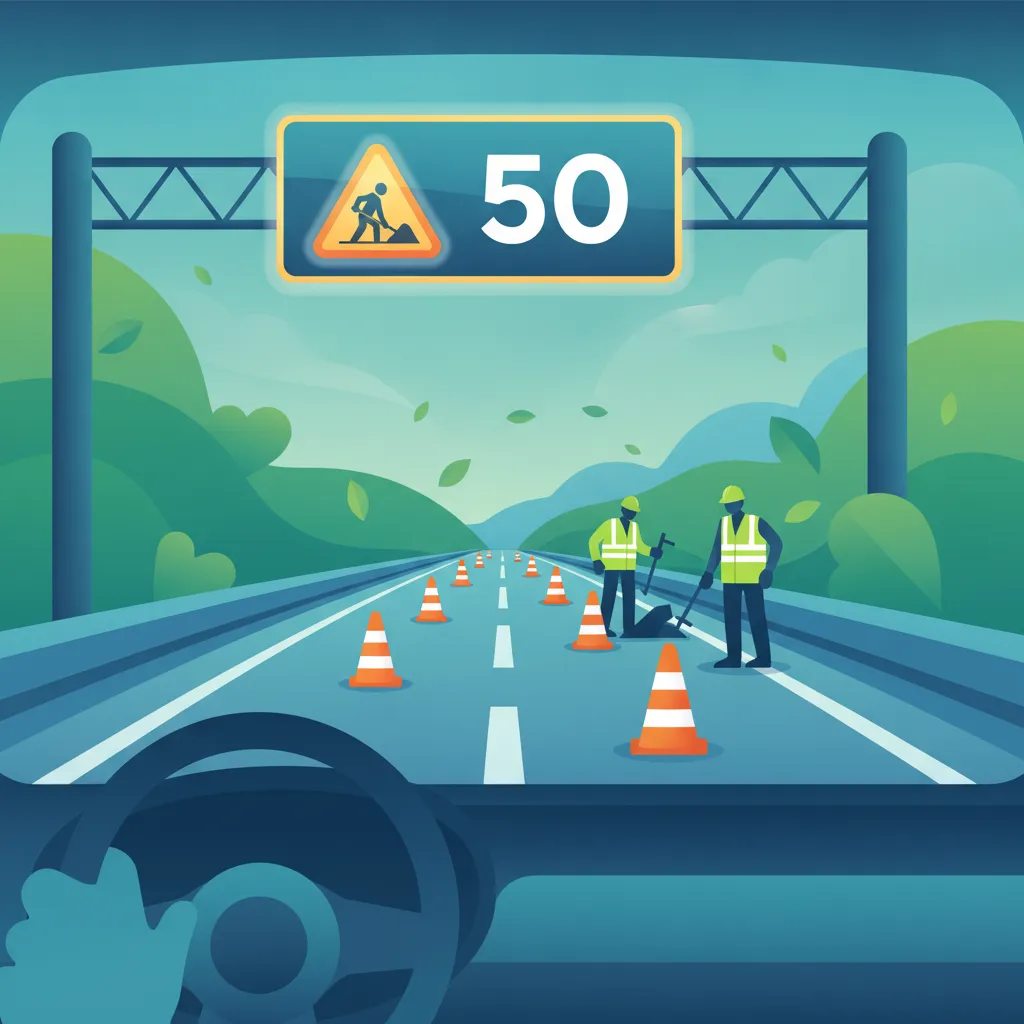
Variable Message Signs and roadwork indicators communicate temporary safety conditions, such as lane closures, heavy delays, or dynamic speed restrictions. This lesson teaches you how to interpret digital overhead gantries, temporary hazard cones, and specific detour layouts often encountered on Irish motorways and regional routes. Adhering to these real-time instructions protects both you and the vulnerable road crews working ahead.
No-overtaking zones are marked in areas with restricted visibility, such as approaching bends, humps, or narrow bridges. This lesson details how continuous solid white lines legally prohibit passing, along with the very narrow exceptions allowed under Irish law. You will learn to identify these high-risk areas from visual markings, ensuring you never initiate a passing manoeuvre that puts oncoming traffic in immediate danger.
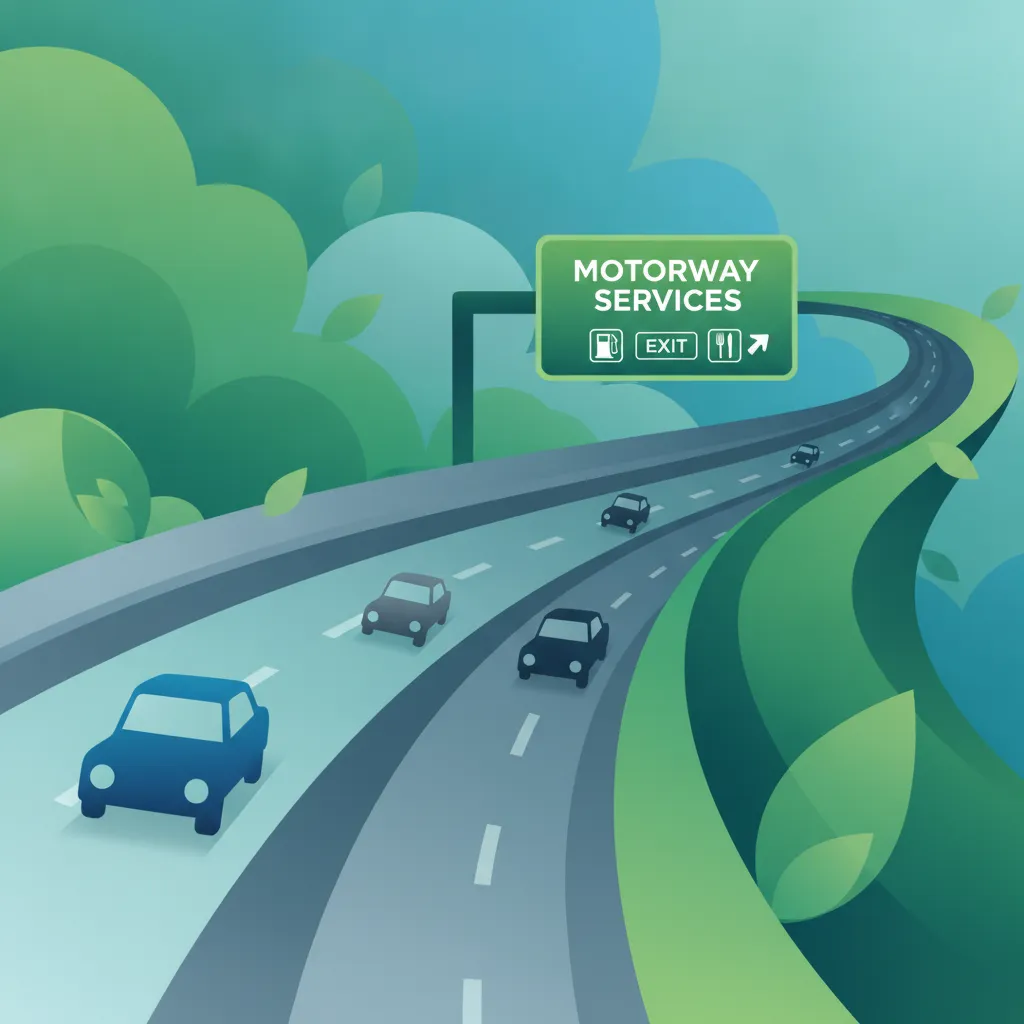
Motorways are designed for safe, high-speed travel, but require strict adherence to lane discipline and specific regulations. This lesson explains that the left lane is for normal driving, while middle and right lanes are strictly for overtaking slower traffic. You will learn how to identify motorway exits, use the hard shoulder during absolute emergencies, and understand the legal restrictions placed on learner permit holders.
Find clear answers to common questions learners have about Navigating Multi-Lane Roundabouts Safely. Learn how the lesson is structured, which driving theory objectives it supports, and how it fits into the overall learning path of units and curriculum progression in Ireland. These explanations help you understand key concepts, lesson flow, and exam focused study goals.
Generally, if you are taking an exit at 12 o'clock or further, you should use the right-hand lane upon approach, unless road markings or signs indicate otherwise. Always check road signs and markings before choosing your lane.
You should signal left just after you have passed the exit immediately before the one you intend to take. This alerts other road users that you are preparing to leave the roundabout at the next opportunity.
Yes. According to the Rules of the Road in Ireland, you must always give priority to traffic already on the roundabout, which will be approaching from your right. Never force your way into the flow of traffic.
The theory test questions are based directly on the Rules of the Road. They test your knowledge of legal positioning, signaling, and priority. The scenarios presented will require you to apply these rules to diagrams of common roundabout configurations.
Use the practice question search tool to pinpoint specific topics, road signs, or rules you need to master for your official Driver Theory Test. Refine your study strategy and ensure comprehensive preparation for all aspects of the Irish driving exam. Start your focused revision now and build confidence for your learner permit test.