
This lesson explores the essential physics behind vehicle control, breaking down how reaction times and mechanical braking distance combine to create your total stopping distance. Understanding these concepts is vital for passing your Category B Theory Test and ensures you can maintain safe distances in real-world Irish driving conditions.
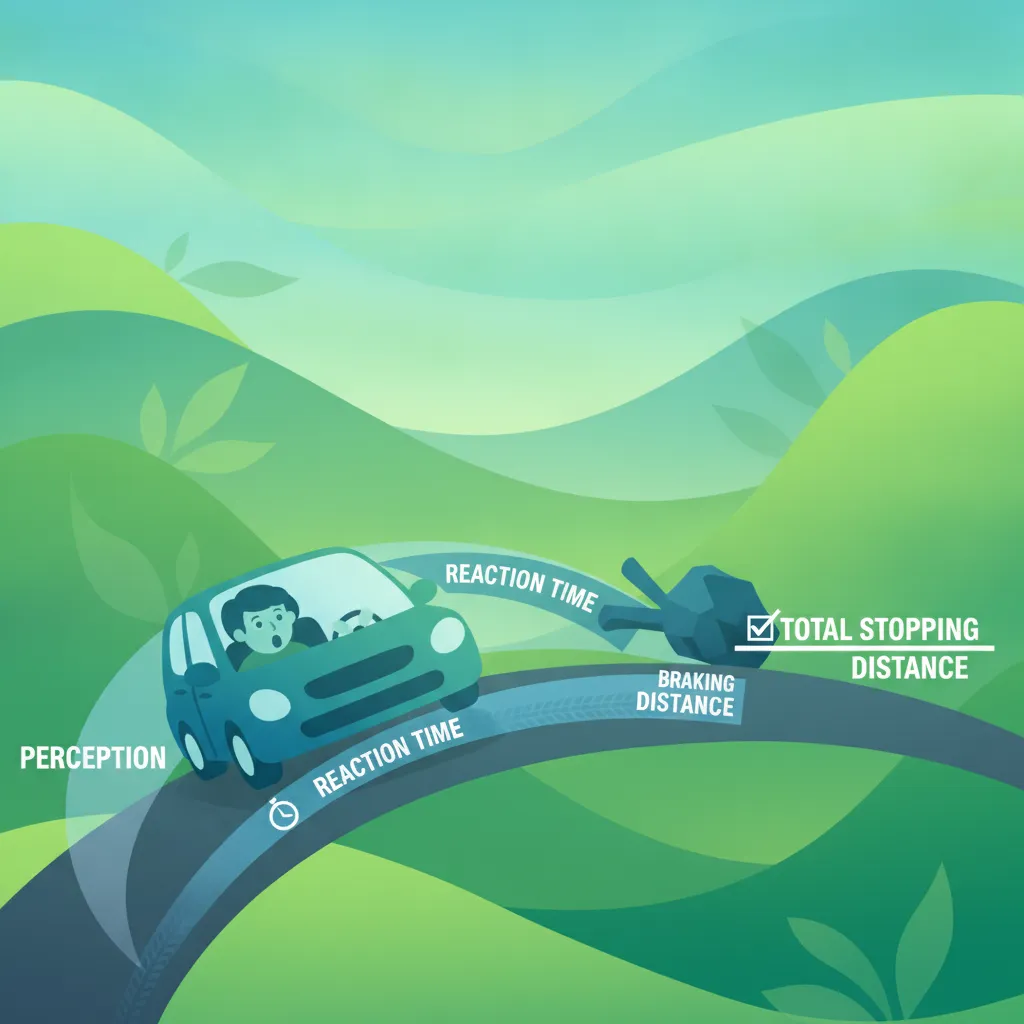
Lesson content overview
Safe vehicle operation requires a deep understanding of the physical and physiological limits that govern how and when a car can come to a halt. When preparing for your Category B driver theory test in Ireland, one of the most critical areas of study is stopping distances.
Many drivers fail to appreciate that stopping a vehicle is not an instantaneous action. It is a dual-phase process that combines human perception and mechanical braking. Misjudging these distances is a leading cause of rear-end collisions, dangerous tailgating, and serious road traffic accidents on Irish roads.
This lesson breaks down the components of total stopping distance, the psychological and physical factors affecting driver reaction times, the mechanical forces influencing braking distances, and the specific rules established by the Road Safety Authority (RSA) to keep all road users safe.
Every time you need to bring your passenger car to a complete stop, your vehicle undergoes a process divided into two distinct phases: the thinking phase and the braking phase. The sum of these two phases is your Total Stopping Distance.
The total distance a vehicle travels from the exact moment the driver perceives a hazard to the exact moment the vehicle comes to a complete standstill. It is calculated using the formula: Total Stopping Distance = Thinking Distance + Braking Distance.
Failing to account for both parts of this equation is a common error for learner drivers. If you only plan your following distance based on how fast your brakes can stop the car, you completely ignore the distance your vehicle travels while you are still deciding to press the pedal.
Thinking Distance (sometimes called reaction distance) is the distance your vehicle travels during your physiological reaction time. This is the interval between your eyes detecting a hazard (such as a pedestrian stepping off a footpath or brake lights illuminating ahead) and your foot physically making contact with the brake pedal.
The distance a vehicle travels while the driver is identifying a hazard, deciding on an action, and physically moving their foot to the brake pedal.
For an alert, sober, and healthy driver, the average reaction time is approximately 1.5 seconds. While 1.5 seconds may sound incredibly brief, a vehicle moving at modern road speeds covers a substantial distance in this window:
Your reaction time is highly variable and heavily influenced by your physical and mental state. Anything that slows your brain’s processing speed or diverts your attention will dramatically increase your thinking distance.
Fatigue and Reaction Times
Driving while fatigued is a major contributor to fatal collisions on Irish roads. Sleep deprivation can extend your reaction time to 2.5 seconds or more. At 50 km/h, this increases your thinking distance from 20 metres to 35 metres, which could be the difference between stopping safely and hitting a hazard.
Once you have physically applied the brakes, the vehicle enters the braking phase. Braking Distance is a mechanical measurement governed by physics, friction, and kinetic energy.
The distance a vehicle travels from the moment the driver applies pressure to the brake pedal until the vehicle comes to a complete stop.
Many learner drivers mistakenly believe that braking distance increases proportionally with speed (e.g., that doubling your speed doubles your braking distance). This is a highly dangerous misconception.
In physics, the kinetic energy of a moving object is calculated as:
Where is the mass of the vehicle and is its velocity (speed). Because velocity is squared (), the kinetic energy of your car increases exponentially with speed:
Because of this physical law, even a minor increase in speed dramatically extends the space you need to stop. For example, on a dry asphalt road with a well-maintained Category B vehicle:
Unlike thinking distance, which is primarily human-centric, braking distance depends entirely on the mechanical interaction between your vehicle and the road surface.
To prevent collisions caused by inadequate stopping distances, the Road Safety Authority (RSA) and Irish Road Traffic Regulations mandate specific safety practices.
In dry, clear conditions, you must maintain a safe buffer zone between your car and the vehicle directly ahead. The standard baseline is the Two-Second Rule.
Choose a stationary reference point ahead, such as a road sign, lamp post, or bridge.
Watch the vehicle in front of you pass that reference point.
Count slowly: "One thousand and one, one thousand and two."
If your front bumper passes the same reference point before you finish counting to two, you are driving too close (tailgating) and must increase your gap.
The beauty of the two-second rule is that it is self-adjusting for speed. At 60 km/h, a two-second gap equates to roughly 33 metres. At 120 km/h on a motorway, a two-second gap automatically scales up to roughly 66 metres.
Water acts as a lubricant between your rubber tyres and the road surface. This reduces tyre grip, causing your braking distance to double.
Adapting to Wet Weather
On wet or damp Irish roads, you must immediately double your following distance. This means upgrading from the two-second rule to the Four-Second Rule.
In extremely severe weather conditions, such as during winter snowstorms or when black ice is present on rural roads, the coefficient of friction drop is even more severe. Braking distances can increase up to ten times compared to dry conditions. In these circumstances, standard gap rules are insufficient, and you must drive at a highly reduced speed with vast following distances.
Irish road traffic law places strict statutory duties on drivers to ensure their vehicles are in a roadworthy condition. Failing to maintain your tyres and brakes can result in failed National Car Tests (NCT), penalty points, heavy fines, and, most importantly, catastrophic brake failure.
Ireland enforces a strict limit on blood alcohol concentration (BAC) for all drivers. For standard Category B driving licence holders, the legal limit is 50 milligrams of alcohol per 100 millilitres of blood. For learner drivers, novice drivers, and professional drivers, the limit is much lower: 20 milligrams of alcohol per 100 millilitres of blood.
The Safest Rule
Even a tiny amount of alcohol or medication affects your brain chemistry, lengthening your reaction time. The safest rule for all drivers is simple: Never, ever drink and drive.
Understanding the mechanics of stopping distances helps you spot and avoid high-risk behaviors that commonly lead to collisions or penalty points on Irish roads.
Tailgating is the act of driving dangerously close to the rear of another vehicle.
A common misunderstanding involves the use of hazard warning lights.
Your required stopping distance changes constantly depending on your driving environment and vehicle load.
Adding passengers, heavy luggage, or towing a trailer (such as a caravan or light utility trailer) alters your vehicle's physical dynamics:
Practice these concepts to ensure you can calculate safe following distances, identify reaction time hazards, and recall key RSA stopping regulations for your theory exam.
Explore all units and lessons included in this driving theory course.
Lesson content overview
Explore all units and lessons included in this driving theory course.
Explore search topics learners often look for when studying Understanding Stopping Distances and Reaction Times. These topics reflect common questions about road rules, driving situations, safety guidance, and lesson level theory preparation for learners in Ireland.
Browse additional driving theory lessons that cover connected traffic rules, road signs, and common driving situations related to this topic. Improve your understanding of how different rules interact across everyday traffic scenarios.
Learn the essential techniques for scanning the road and identifying potential dangers early. This guide covers how to look ahead for risks such as emerging vehicles, pedestrians, and sudden traffic changes to help you build safer driving habits based on official Road Safety Authority standards.
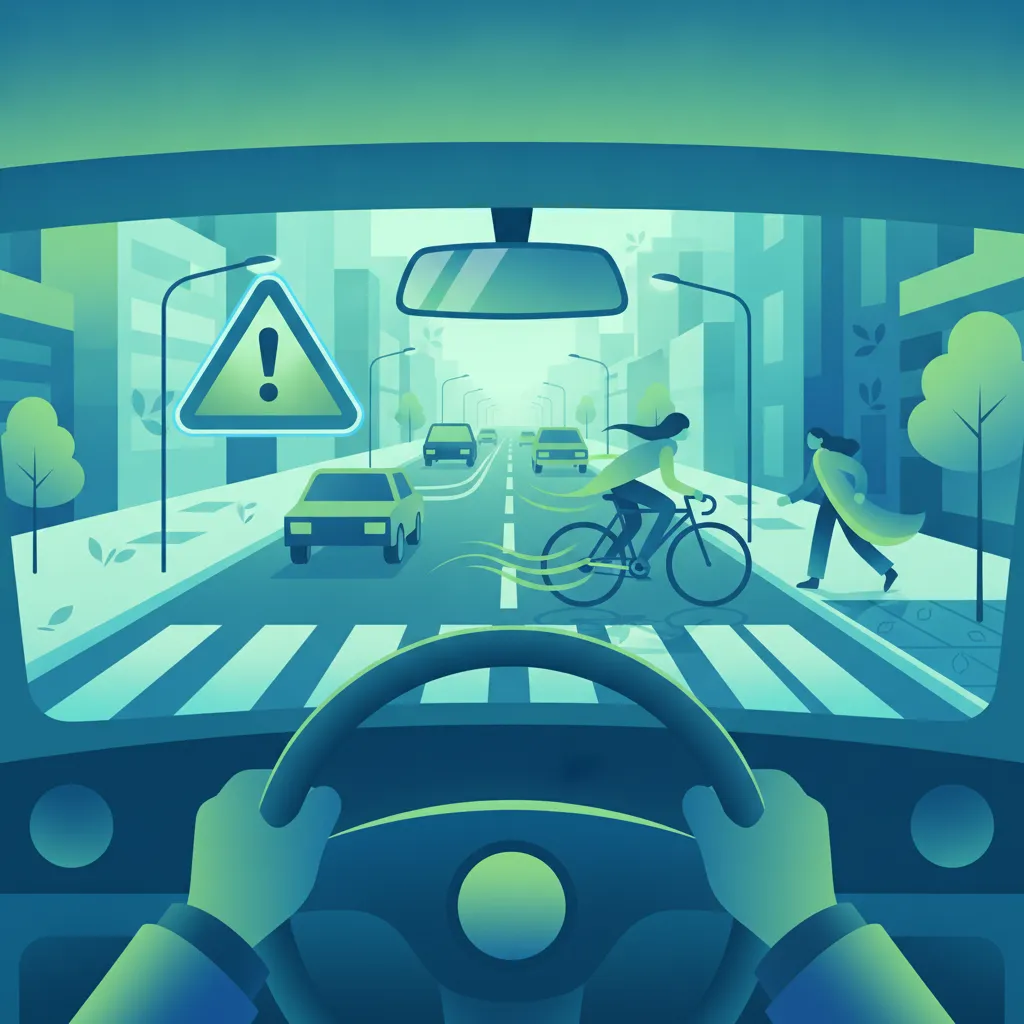
Proactive hazard perception involves constantly scanning the road ahead to identify potential dangers before they turn into actual emergencies. This lesson covers active scanning techniques, helping you look far ahead, check mirrors regularly, and identify subtle risk clues such as exhaust smoke from parked cars or children playing near kerbs. Anticipating these developments gives you the time to adjust speed and position safely.
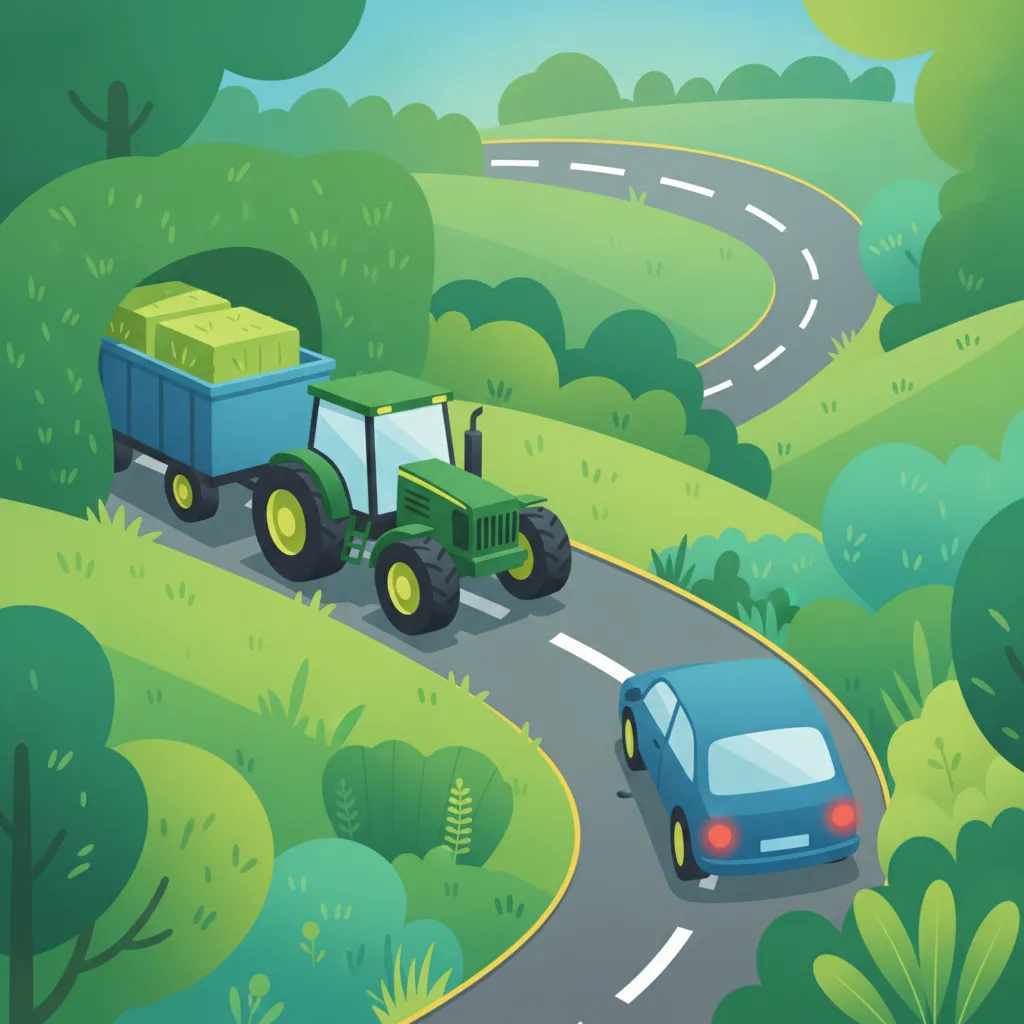
Irish rural roads are often narrow, winding, and bordered by high hedges, presenting unique hazards compared to urban streets. This lesson focuses on scanning for hidden hazards such as slow-moving farm machinery, mud on the road surface, and loose livestock. You will learn how to adjust your speed before entering blind bends, sound your horn at blind crests, and safely share the road with local agricultural traffic.
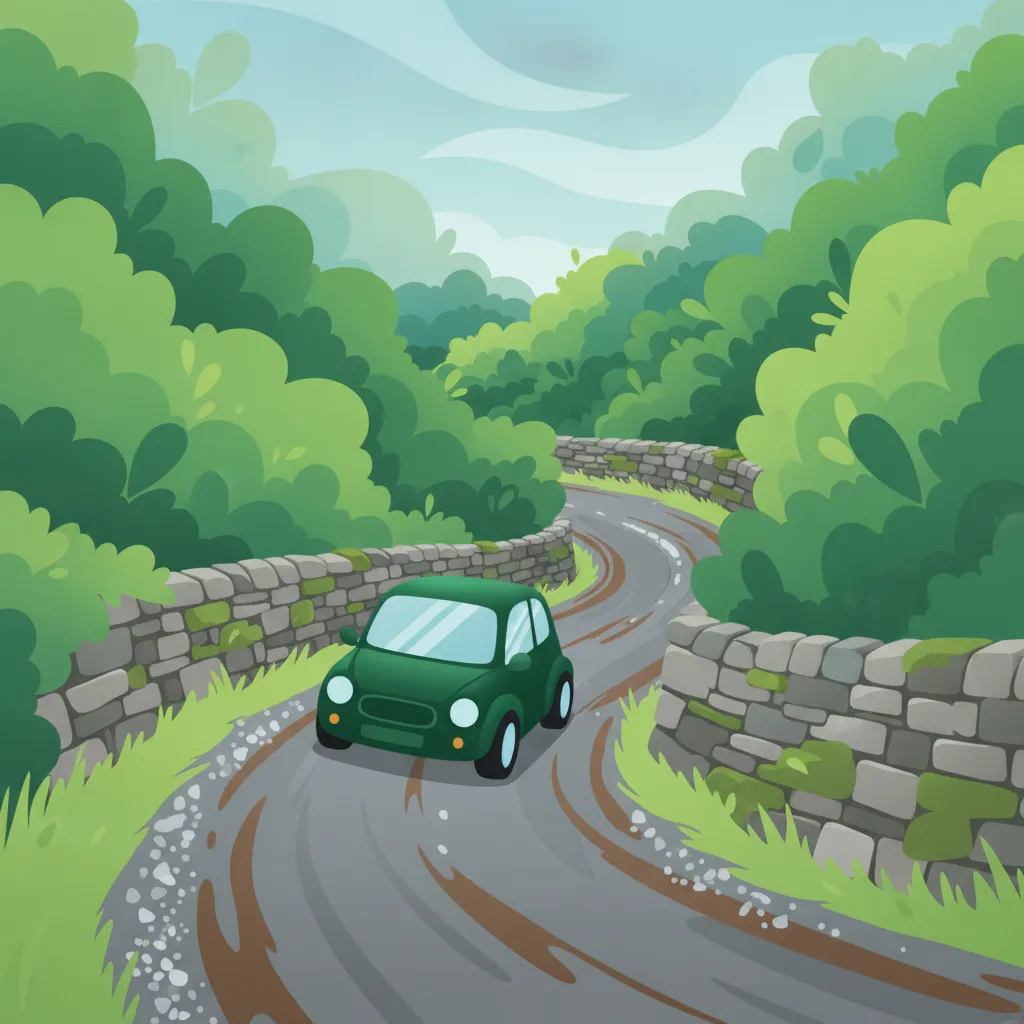
Irish rural routes are often narrow, lacking central markings, and bordered by tall hedges that restrict forward visibility on sharp bends. This lesson teaches drivers how to negotiate blind curves, anticipate slow-moving agricultural machinery, and respond to wandering farm animals. Drivers will learn to regulate vehicle speed proactively, maintaining a safe stopping margin in rural areas.
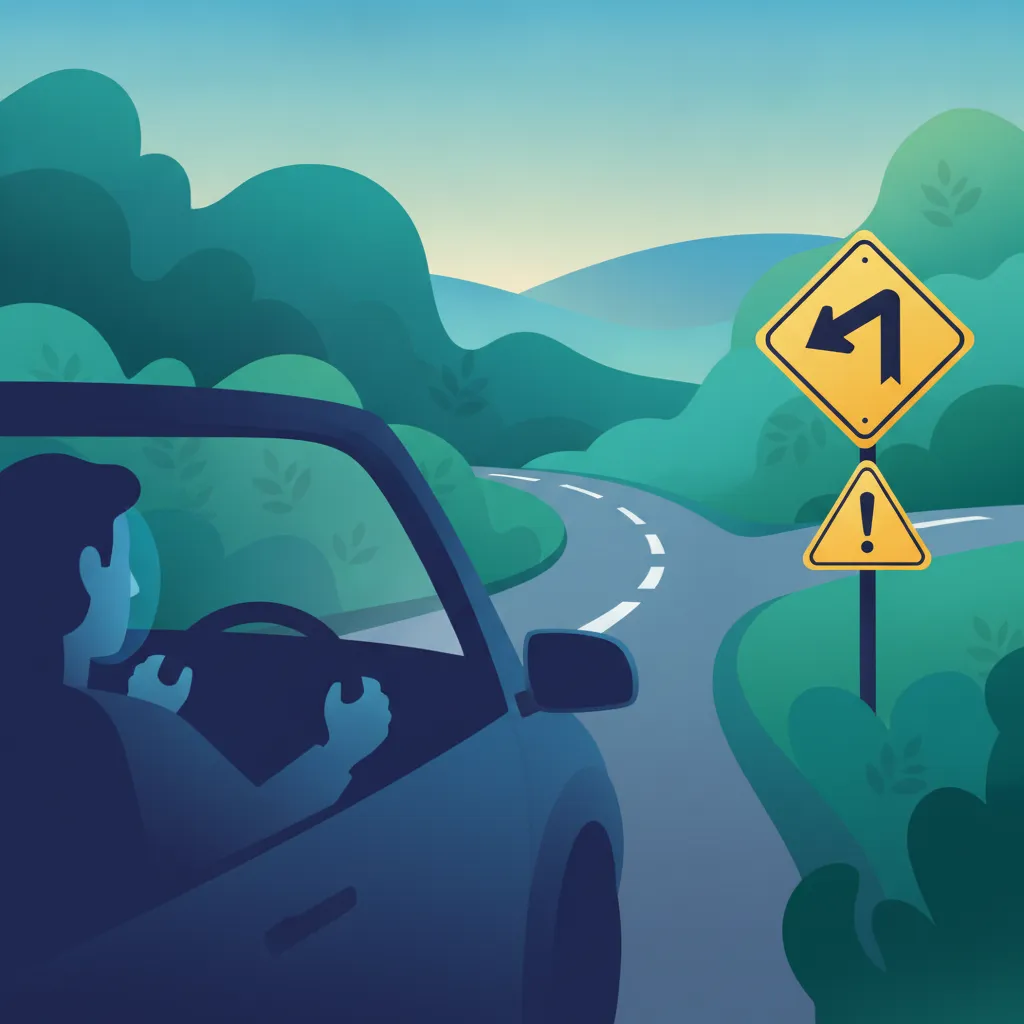
Warning signs in Ireland are typically diamond-shaped with yellow backgrounds and black symbols, indicating potential dangers on the road ahead. This lesson details signs for upcoming sharp bends, narrow roads, steep hills, pedestrian activity, and animal hazards. Learning to spot these warning indicators early allows you to reduce speed safely and adjust your vehicle positioning before encountering the hazard itself.
Heavy vehicles require continuous visual scanning to identify small or slow-moving road users who may enter the path of travel. This lesson explores the typical behaviors of young children, elderly pedestrians, and visually impaired road users. Drivers will build strong hazard perception skills to anticipate sudden movements, ensuring they can brake safely and avoid serious accidents.
Driving at night presents severe challenges due to reduced visibility, driver fatigue, and headlight glare from oncoming vehicles. This lesson teaches you how to manage your headlights, use road edge markers to steer through dark curves, and look away from oncoming bright lights. You will learn to drive within the range of your headlights and remain highly alert for pedestrians or cyclists not wearing reflective gear.
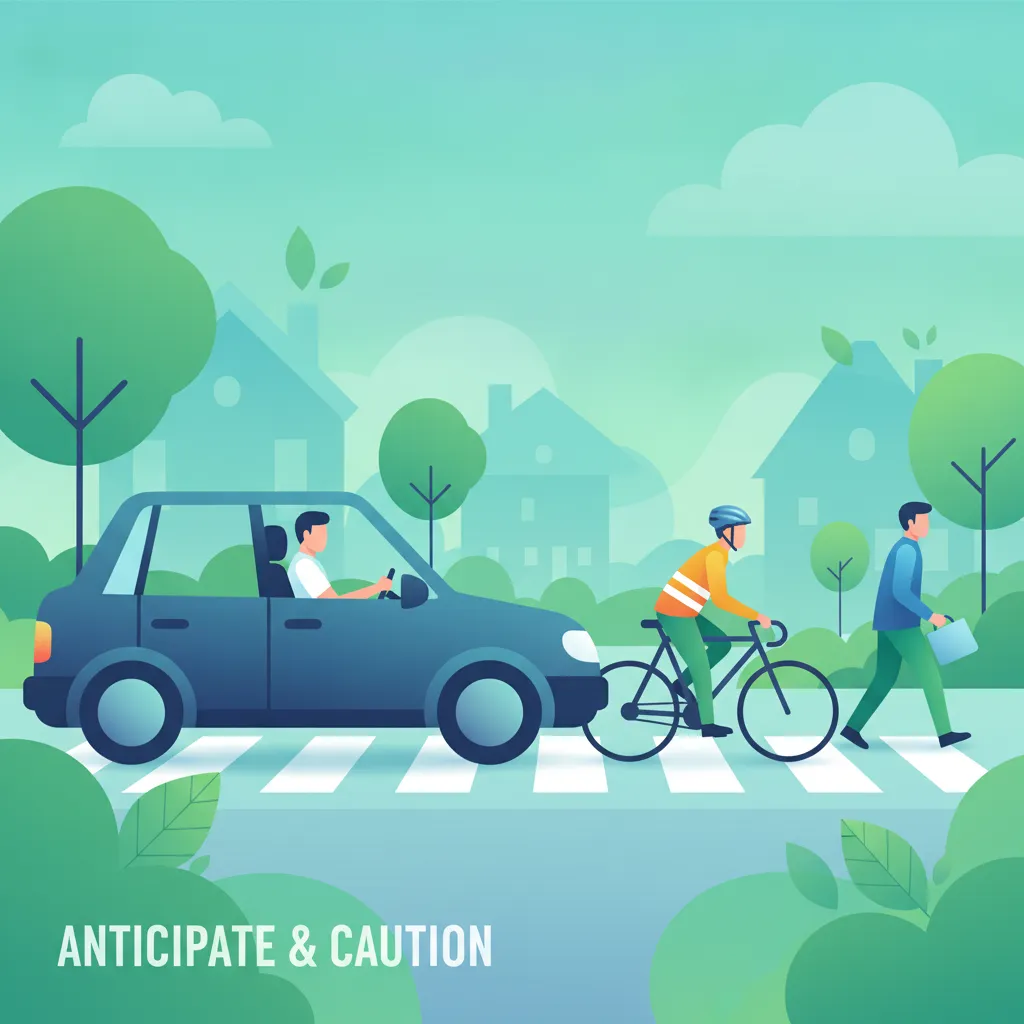
Safeguarding vulnerable road users requires more than simple obedience to traffic signs; it demands a defensive driving mindset. This lesson summarizes safe practices, including scanning far ahead in urban areas, keeping massive safety margins in wet weather, and executing thorough blind spot checks before reversing. By anticipating the unpredictable movements of others, you can prevent accidents and support a safe road culture.
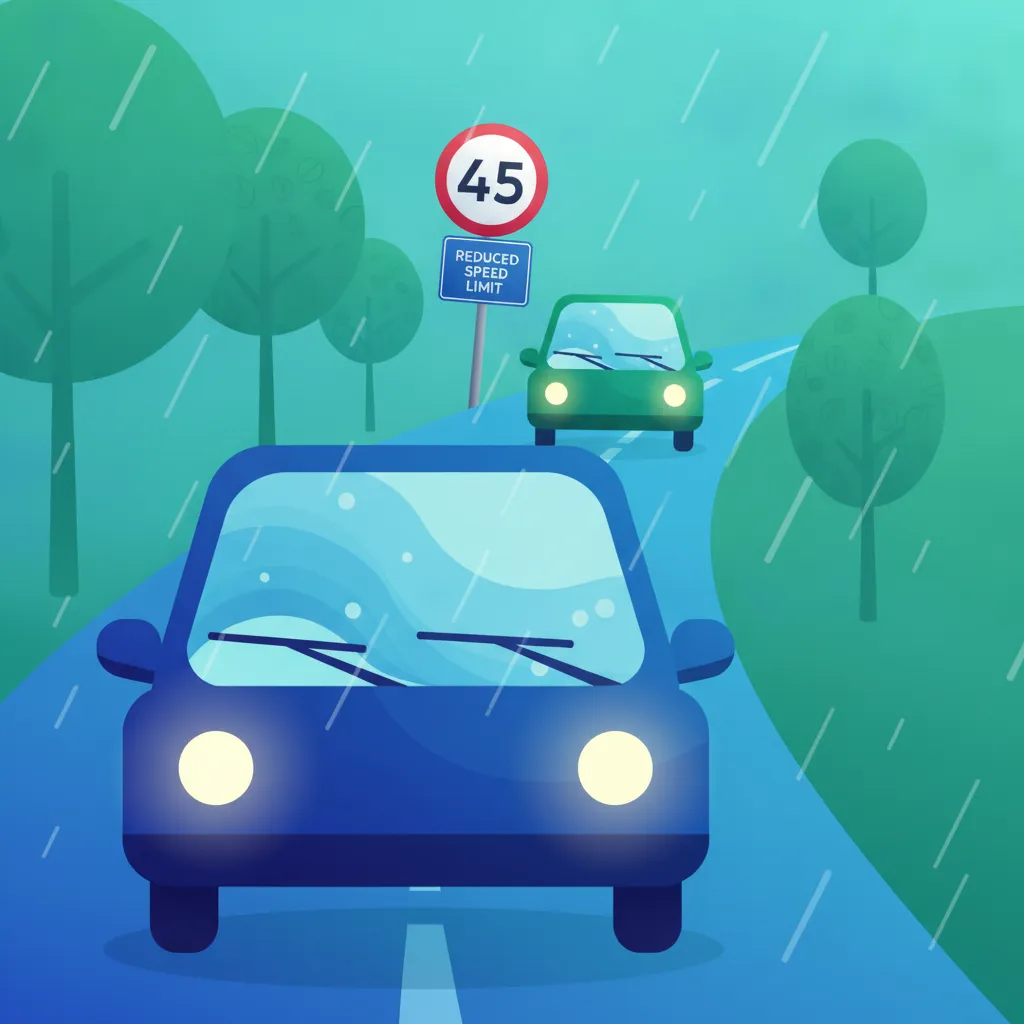
Adverse weather severely compromises tyre traction and forward visibility, demanding immediate speed reductions and extra space. This lesson focuses on the physics of aquaplaning in heavy rain, driving safely on black ice, and navigating thick fog using designated fog lamps. You will learn how to manage your windshield defoggers, adjust wipers, and handle high crosswinds that can destabilise your vehicle.
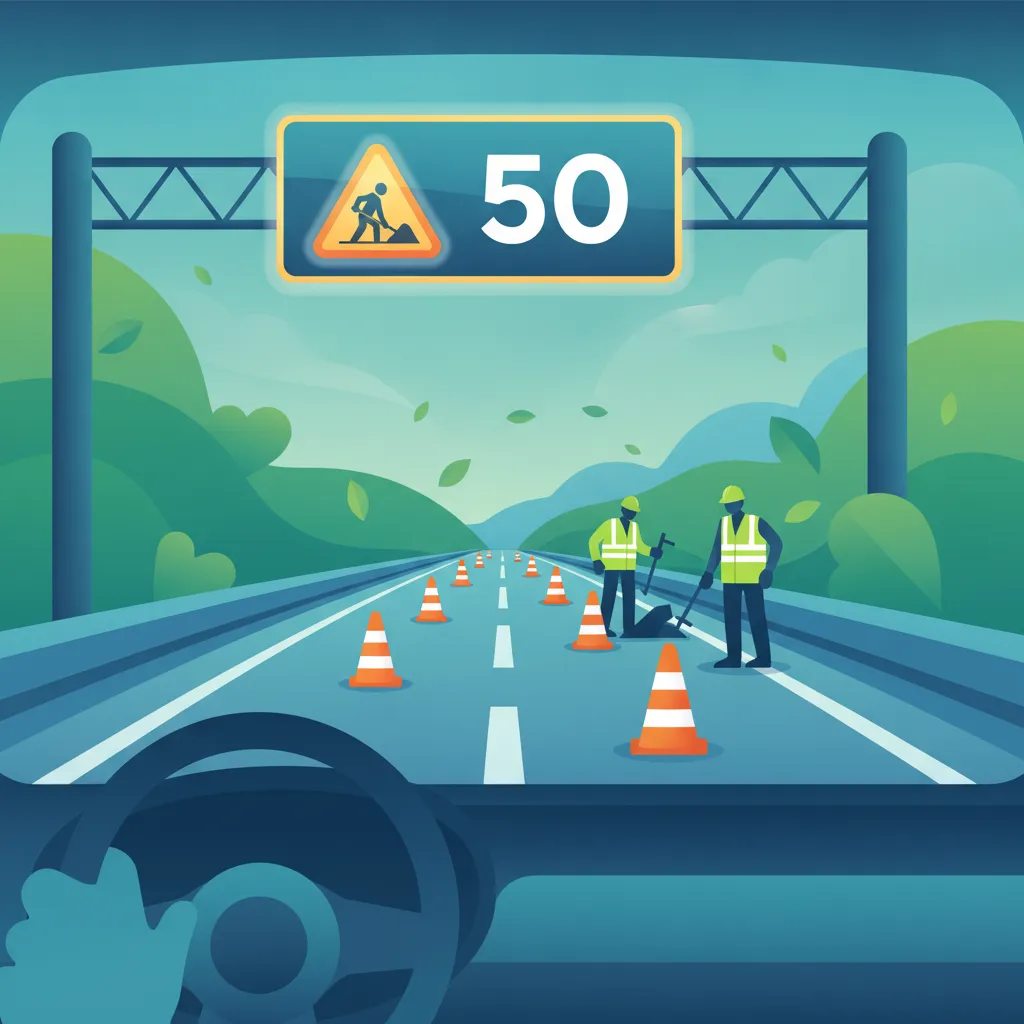
Variable Message Signs and roadwork indicators communicate temporary safety conditions, such as lane closures, heavy delays, or dynamic speed restrictions. This lesson teaches you how to interpret digital overhead gantries, temporary hazard cones, and specific detour layouts often encountered on Irish motorways and regional routes. Adhering to these real-time instructions protects both you and the vulnerable road crews working ahead.
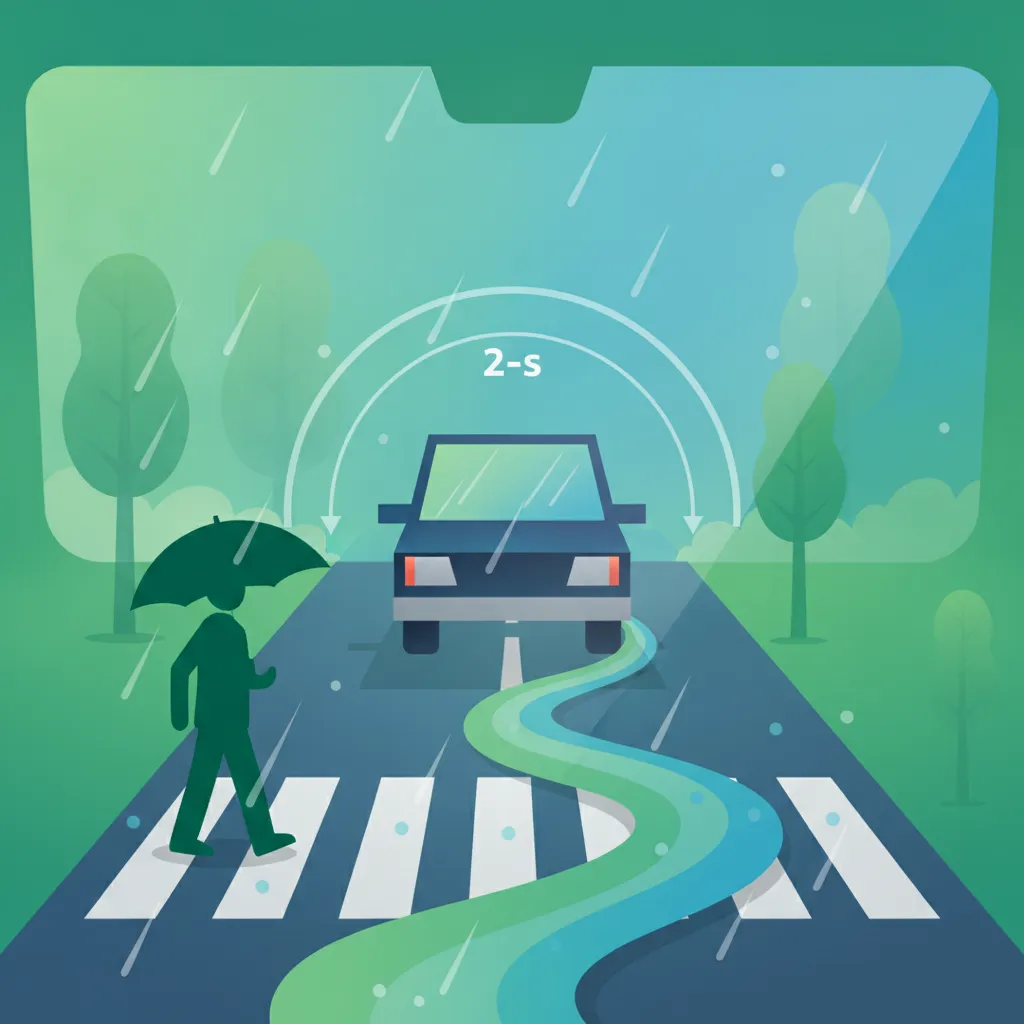
Maintaining an extensive buffer zone ahead of a large passenger vehicle is critical to ensuring enough space for emergency maneuvers. This lesson teaches the time-gap method, detailing how following distances must double on wet roads or increase with full passenger loads. It builds hazard anticipation skills, teaching drivers to read distant traffic cues and react early to hazards.
Understand how rain, fog, and ice affect vehicle handling and visibility on Irish roads. This lesson explains how to adjust your speed, increase your following distance, and adapt your driving style to maintain control when road surfaces are wet or slippery, according to the Rules of the Road.
Adverse weather severely compromises tyre traction and forward visibility, demanding immediate speed reductions and extra space. This lesson focuses on the physics of aquaplaning in heavy rain, driving safely on black ice, and navigating thick fog using designated fog lamps. You will learn how to manage your windshield defoggers, adjust wipers, and handle high crosswinds that can destabilise your vehicle.
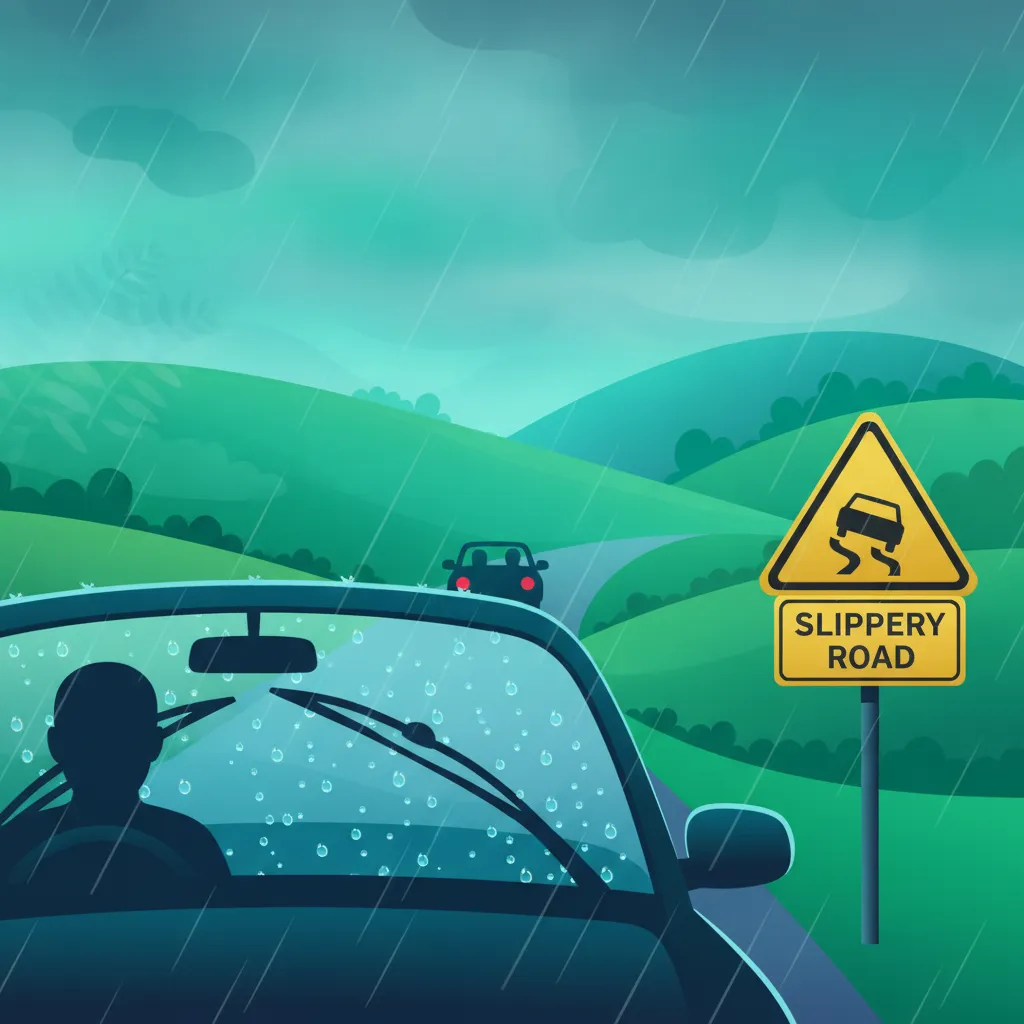
Wet roads, heavy winter fog, and strong lateral winds present major safety challenges for high-sided passenger vehicles in Ireland. This lesson explains how to prevent aquaplaning, double following distances on wet surfaces, and use fog lights correctly to maintain visibility. Drivers will learn handling adjustments to counteract sudden wind gusts when crossing exposed bridges or motorways.

This lesson focuses on the critical techniques required to ride safely during severe rain or heavy fog in Ireland. It teaches riders how to handle aquaplaning risks, use headlights correctly, and significantly increase their following distances. Adapting speed to visibility ensures that riders can brake safely when road conditions deteriorate.
Driving at night presents severe challenges due to reduced visibility, driver fatigue, and headlight glare from oncoming vehicles. This lesson teaches you how to manage your headlights, use road edge markers to steer through dark curves, and look away from oncoming bright lights. You will learn to drive within the range of your headlights and remain highly alert for pedestrians or cyclists not wearing reflective gear.

This lesson explores the safe operation of heavy transport vehicles during severe meteorological hazards typical of the Irish climate. It teaches techniques for adjusting speed and doubling following distances to prevent loss of steering traction and control on waterlogged or icy roadways. Drivers will understand how to manage lateral aerodynamic forces from crosswinds on high-sided goods vehicles.
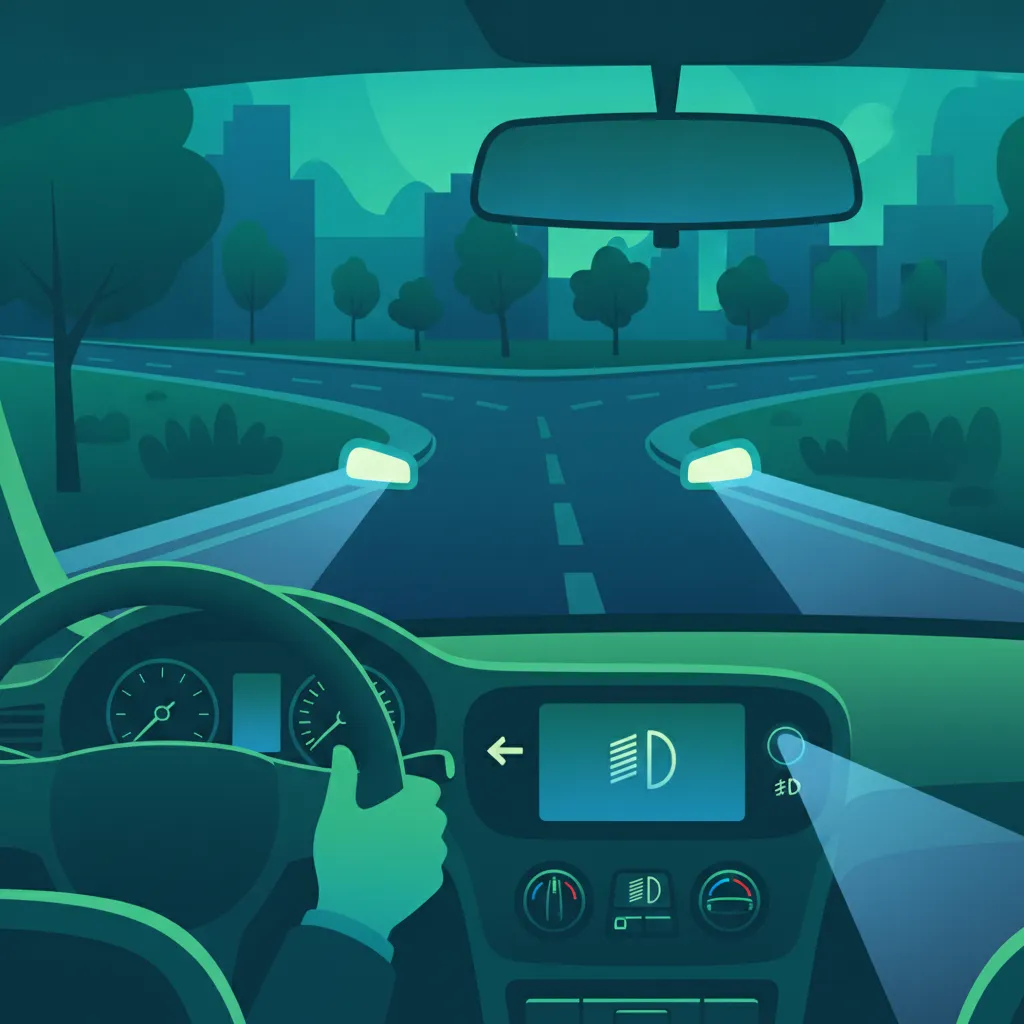
Your vehicle's lighting system is crucial for illuminating your path and making your presence and intentions clear to other road users. This lesson explains the legal requirements for using dipped headlights, full beams, fog lights, and hazard signals in Ireland. You will learn when to switch from full to dipped beams to avoid blinding oncoming drivers, and how to perform simple checks to ensure all bulbs are working.
Irish rural routes are often narrow, lacking central markings, and bordered by tall hedges that restrict forward visibility on sharp bends. This lesson teaches drivers how to negotiate blind curves, anticipate slow-moving agricultural machinery, and respond to wandering farm animals. Drivers will learn to regulate vehicle speed proactively, maintaining a safe stopping margin in rural areas.

This lesson teaches riders how to manage extreme weather conditions such as high crosswinds, thick fog, and low sun glare. It details how wind forces can push a motorcycle off course and how to use minor body adjustments and lane placement to maintain stability. Riders will learn how to manage visibility limits in dense fog, utilizing specialized riding gear and reducing speeds safely.
Safeguarding vulnerable road users requires more than simple obedience to traffic signs; it demands a defensive driving mindset. This lesson summarizes safe practices, including scanning far ahead in urban areas, keeping massive safety margins in wet weather, and executing thorough blind spot checks before reversing. By anticipating the unpredictable movements of others, you can prevent accidents and support a safe road culture.
Irish rural roads are often narrow, winding, and bordered by high hedges, presenting unique hazards compared to urban streets. This lesson focuses on scanning for hidden hazards such as slow-moving farm machinery, mud on the road surface, and loose livestock. You will learn how to adjust your speed before entering blind bends, sound your horn at blind crests, and safely share the road with local agricultural traffic.
Find clear answers to common questions learners have about Understanding Stopping Distances and Reaction Times. Learn how the lesson is structured, which driving theory objectives it supports, and how it fits into the overall learning path of units and curriculum progression in Ireland. These explanations help you understand key concepts, lesson flow, and exam focused study goals.
Reaction distance is the distance your vehicle travels while you see a hazard and physically move your foot to the brake. Braking distance is the distance your car travels once the brakes are actually applied until the vehicle comes to a complete stop.
Because braking distance increases with the square of the speed. If you double your speed, the energy the brakes must dissipate increases fourfold, meaning your stopping distance increases by a factor of four, not two.
Worn tyres reduce the friction (grip) between your vehicle and the road surface, especially in wet conditions. This prevents your brakes from working efficiently, significantly increasing the distance required to stop safely.
Yes, fatigue significantly delays your mental processing and physical reaction time. A longer reaction time means your car covers more distance before you even begin to apply the brakes, increasing your total stopping distance.
Use the practice question search tool to pinpoint specific topics, road signs, or rules you need to master for your official Driver Theory Test. Refine your study strategy and ensure comprehensive preparation for all aspects of the Irish driving exam. Start your focused revision now and build confidence for your learner permit test.