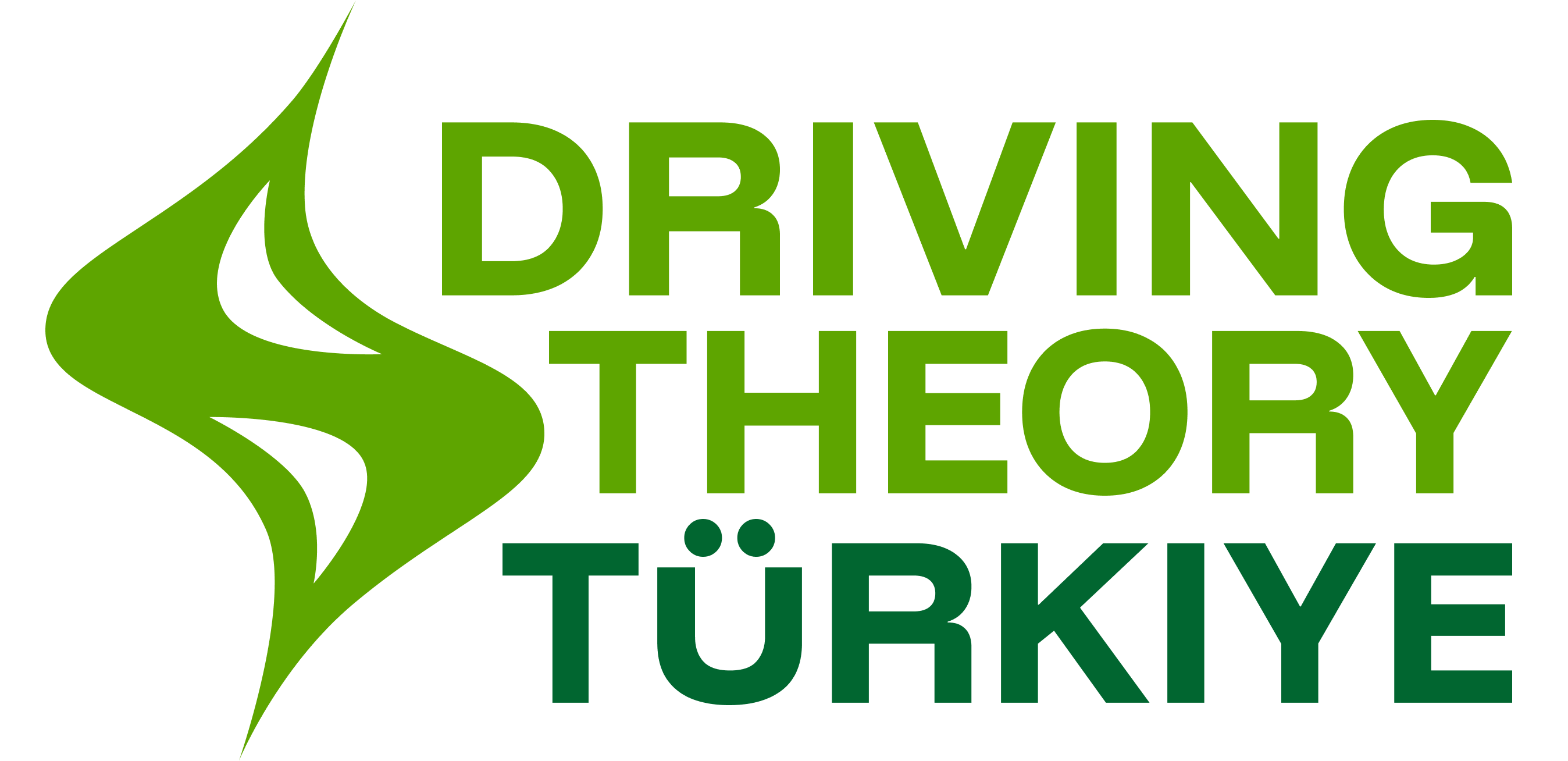
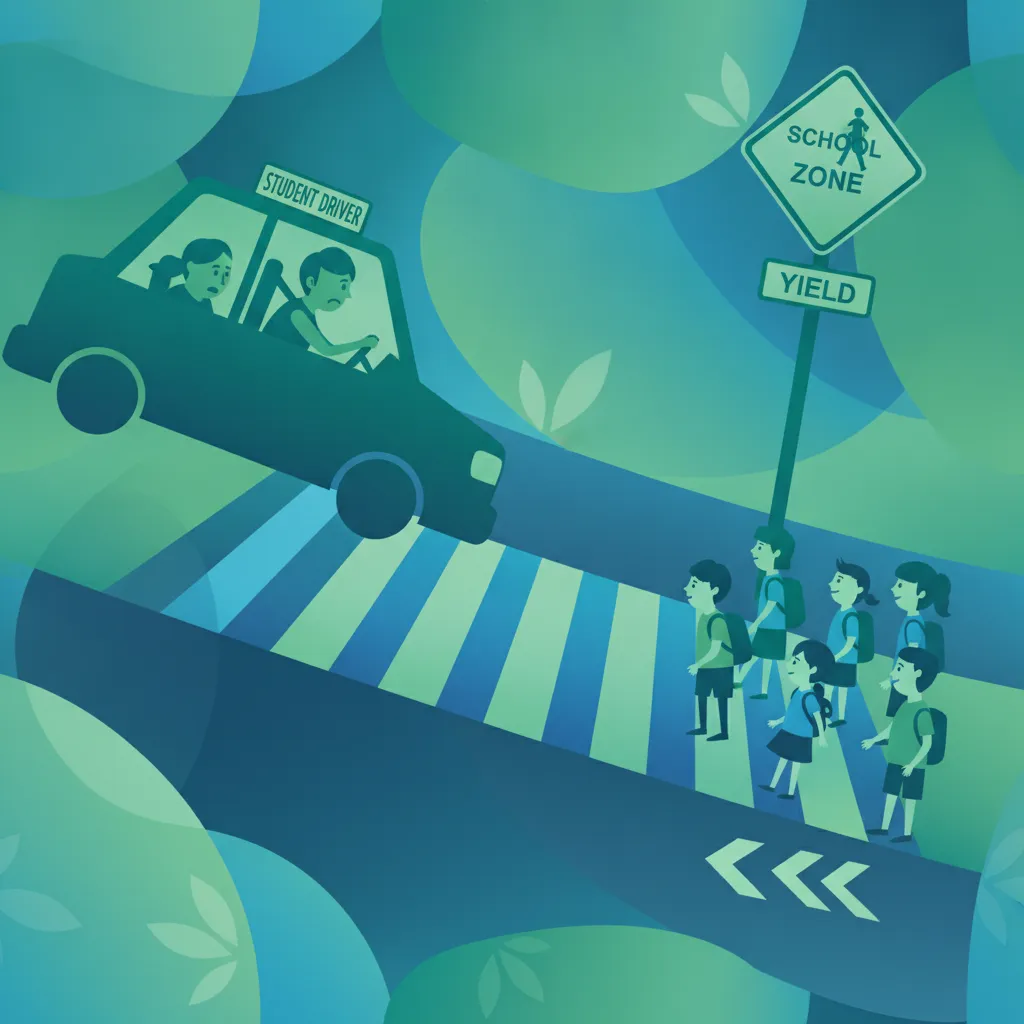
This lesson guides you through the crucial safety rules for navigating pedestrian crossings and school zones on your motorcycle. As part of our motorcycle licensing curriculum, we ensure you understand the legal priority of pedestrians and how to adapt your riding in high-risk zones. Mastering these rules is essential for both your exam success and defensive riding.
Lesson content overview
Navigating urban environments on a motorcycle requires an exceptional level of situational awareness, rapid hazard perception, and a deep understanding of traffic law. Among the most critical areas requiring extreme caution are pedestrian crossings and school zones. For motorcyclists preparing for their Turkish motorcycle driving licence (A1, A2, or A category), mastering the legal requirements and defensive riding strategies in these areas is not just a requirement for passing the theoretical exam—it is a life-saving skill.
Pedestrians are the most vulnerable road users. Unlike occupants of passenger cars, they have no protective steel cage, crumple zones, or airbags. Motorcyclists share this vulnerability, but because a motorcycle is a motorized vehicle capable of high speeds and rapid acceleration, riders bear a strict legal and moral responsibility to protect those on foot. This lesson covers the rules, physical dynamics, and defensive strategies necessary to safely navigate pedestrian and school zones under Turkish traffic legislation.
In recent years, Turkey has significantly updated its traffic regulations to strengthen pedestrian safety. Under the campaign "Yaya Öncelikli Trafik" (Pedestrian-First Traffic), the Turkish Highway Traffic Law (Karayolları Trafik Kanunu) was amended to mandate absolute priority for pedestrians at unsignalized crossings.
According to Article 74 of the Turkish Highway Traffic Law, drivers and riders must slow down when approaching active pedestrian crossings, school crossings, or intersections without traffic lights or officers, and must stop to give the right-of-way to any pedestrian who is currently crossing or preparing to cross.
This legal change shifts the burden of safety onto the vehicle operator. As an aspiring motorcyclist, you must understand that failing to yield to a pedestrian is a severe traffic violation that carries heavy financial penalties, penalty points on your license, and high civil liability in the event of an accident.
Zebra crossings are designated pedestrian pathways marked on the road surface with distinctive parallel white stripes. These markings signal to all road users that pedestrians have the legal right to cross.
In Turkey, zebra crossings are indicated by both road markings and vertical signs. It is crucial to recognize these indicators early to adjust your speed.
When approaching a zebra crossing, motorcyclists face unique physical challenges that car drivers do not encounter:
Scan Ahead: Look at least 50 to 100 meters ahead to identify pedestrian warning signs, road paint, and pedestrians standing near the curb.
Reduce Speed: Roll off the throttle and downshift to lower your speed proactively, even if no pedestrians are immediately visible.
Check Your Mirrors: Be aware of vehicles behind you. A sudden stop on a motorcycle can lead to a rear-end collision if the car behind is tailgating.
Establish Eye Contact: Look directly at pedestrians waiting to cross. Confirm they have seen you before you make final maneuvers.
Stop Completely if Needed: If a pedestrian steps onto the road or shows clear intent to cross, bring the motorcycle to a complete stop before the stop line or crossing markings.
Unlike unsignalized zebra crossings, signal-controlled crossings rely on pedestrian lights and traffic signals to regulate the flow of traffic.
At these crossings, riders must strictly obey the light phases. A red traffic light for vehicles means you must bring your motorcycle to a complete stop behind the white stop line (dur çizgisi). You may only proceed when your light turns green and the crossing is entirely clear of pedestrians.
Even if your traffic light has turned green, you must not proceed if there are still pedestrians in the crosswalk. Pedestrians who entered the crossing legally during their green phase have the right to safely finish crossing the street.
A highly dangerous scenario occurs when a multi-lane road features a pedestrian crossing. If a large vehicle (such as a bus or truck) in the right lane stops at a crossing, a motorcyclist in the left lane might assume the vehicle is just stopping for traffic and try to pass. This is a critical error.
In Turkish traffic law, it is strictly prohibited to overtake any vehicle that has stopped or slowed down at a pedestrian crossing. You must assume the vehicle has stopped to allow a pedestrian to cross. Always stop parallel to or behind the stopped vehicle and verify that the crossing is clear before proceeding.
School zones are highly sensitive areas located near educational institutions. Children are among the most unpredictable road users; they have limited spatial awareness, struggle to judge the speed and distance of approaching vehicles, and are easily distracted.
In Turkey, the standard speed limit in designated school zones is 30 km/h unless otherwise posted. This reduced speed limit is strictly enforced, and speeding violations in these zones carry higher fines and penalty points.
The physical reasoning behind this low speed limit is simple: reaction time and braking distance.
When riding through a school zone, you must exercise heightened defensive riding. Children may suddenly run into the street to chase a ball, catch up with friends, or cross without looking.
A rider's approach to pedestrian crossings and school zones must adapt to environmental shifts. Weather, lighting, and motorcycle condition heavily influence your safety margin.
Rain or damp road surfaces compound the dangers of pedestrian zones. Thermoplastic paint markings and metal utility covers near crossings become slick as ice.
At night, pedestrians in dark clothing are incredibly difficult to spot until they are very close.
Understanding the penalties associated with traffic violations helps reinforce the importance of safe riding habits.
To pass your Turkish motorcycle license theory exam and ride safely on public roads, keep these core principles at the center of your riding philosophy:
| Concept | Legal Rule / Practical Reality | Key Rider Action |
|---|---|---|
| Zebra Crossings | Pedestrians have absolute right-of-way on unsignalized stripes. | Reduce speed early; stop before the line if a pedestrian is near. |
| School Zones | Strict maximum speed limit of 30 km/h is enforced near schools. | Lower gear, maintain 30 km/h, cover brake controls. |
| Wet Crosswalk Paint | Thermoplastic paint becomes slick and hazardous when wet. | Avoid braking directly on the painted lines; keep bike upright. |
| Overtaking Restrictions | Never overtake a vehicle that has stopped at a crossing. | Stop behind or parallel to the vehicle to verify it is safe to proceed. |
| Visually Impaired | Absolute priority is given to pedestrians with white canes. | Stop immediately, anywhere on the road, to allow them to cross. |
By prioritizing the safety of children, elderly citizens, and all pedestrians, you develop the defensive riding mindset required of a licensed, responsible motorcyclist in Turkey.
Explore all units and lessons included in this driving theory course.
Lesson content overview
Explore all units and lessons included in this driving theory course.
Explore search topics learners often look for when studying Pedestrian Crossings and School Zones. These topics reflect common questions about road rules, driving situations, safety guidance, and lesson level theory preparation for learners in Turkey.
Browse additional driving theory lessons that cover connected traffic rules, road signs, and common driving situations related to this topic. Improve your understanding of how different rules interact across everyday traffic scenarios.
Learn the legal priority rules and defensive riding techniques for managing multi-lane intersections and roundabout traffic. This guide clarifies how to maintain lane discipline and handle signalling requirements according to the Turkish Highway Traffic Law when crossing paths with other vehicles in dense urban environments.
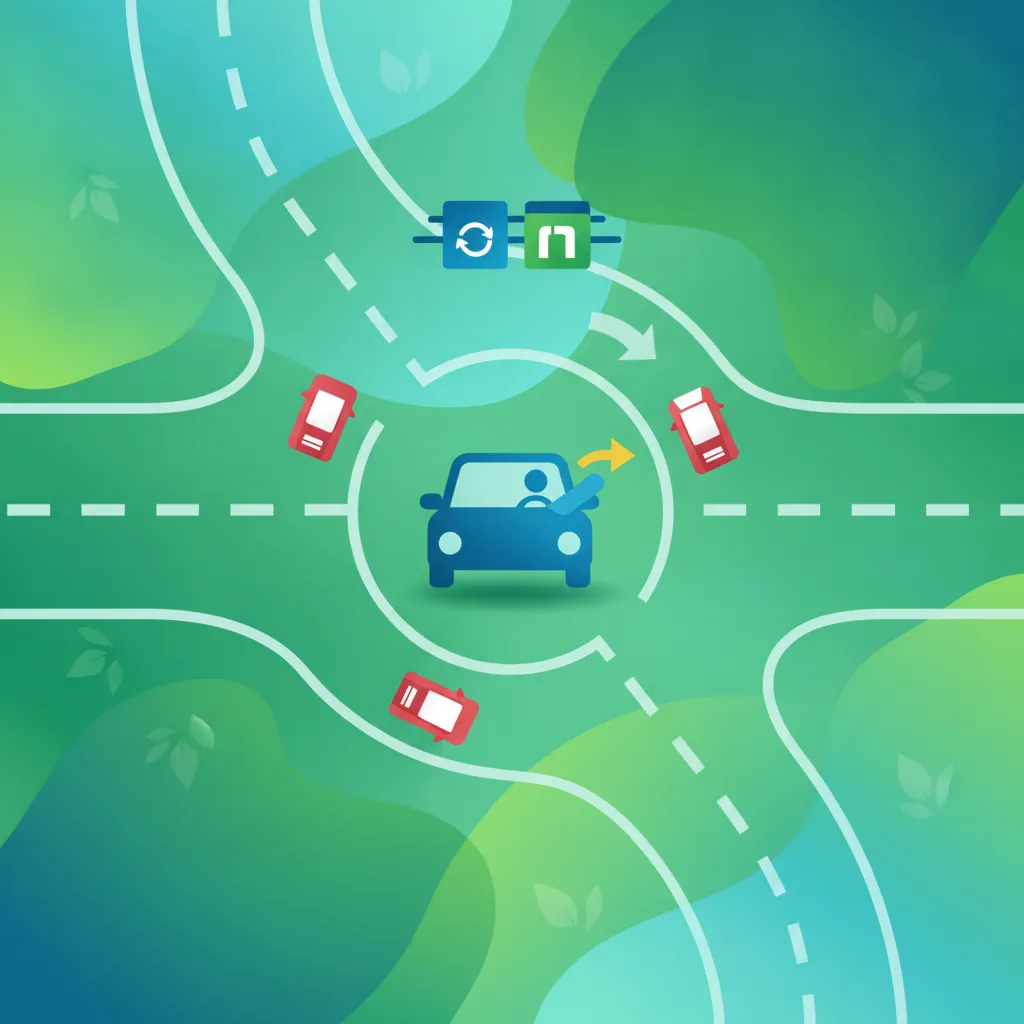
In this lesson, learners explore the specific priority rules and navigation techniques for roundabouts. Topics include yielding to traffic already in the roundabout, proper lane selection upon entry, and safe exit strategies. The lesson also addresses interactions with pedestrians and cyclists near roundabouts and the importance of maintaining appropriate speed.
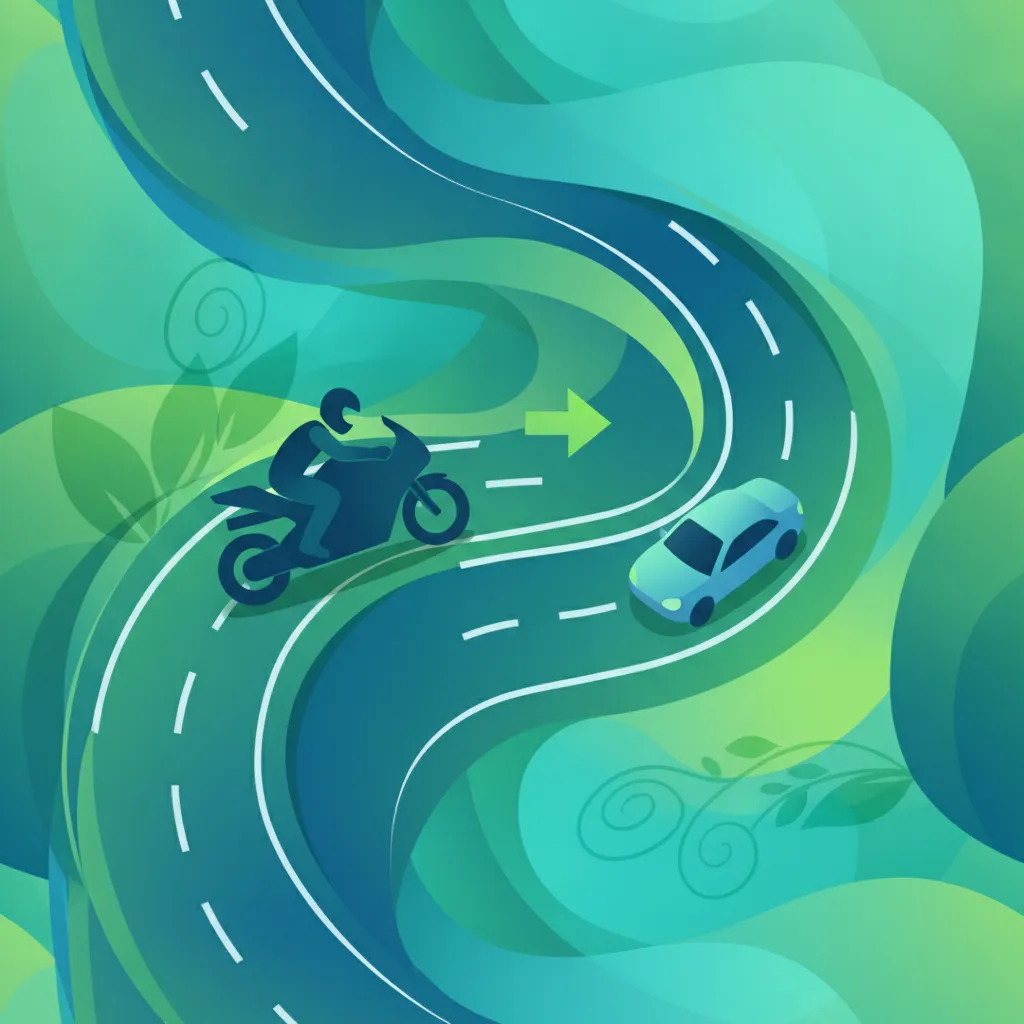
Roundabouts require a clear understanding of yield regulations and precise signaling to avoid conflicts with larger vehicles. This lesson details the legal requirements under Turkish road rules, which demand that entering vehicles yield to traffic already circulating inside the roundabout. You will learn how to select the appropriate lane upon entry, maintain a steady speed, signal your exit intentions clearly with your indicators, and remain alert to drivers who cut across lanes.
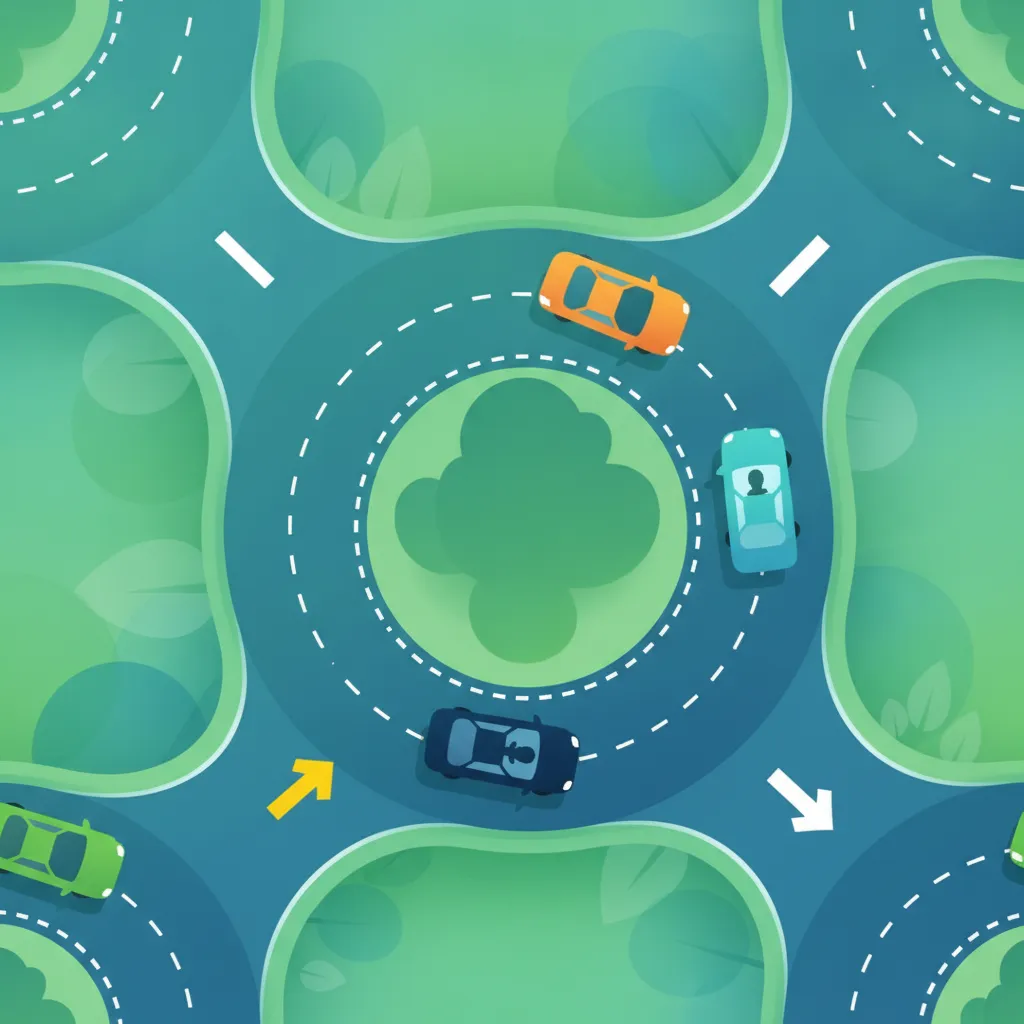
This lesson delves into the specific challenges and procedures associated with navigating roundabouts on a motorcycle. It outlines the importance of approaching at a safe speed, selecting the correct lane, and yielding to vehicles already within the roundabout. The content also covers the proper use of signals when exiting and emphasizes the need for heightened awareness of blind spots, especially when larger vehicles are present.
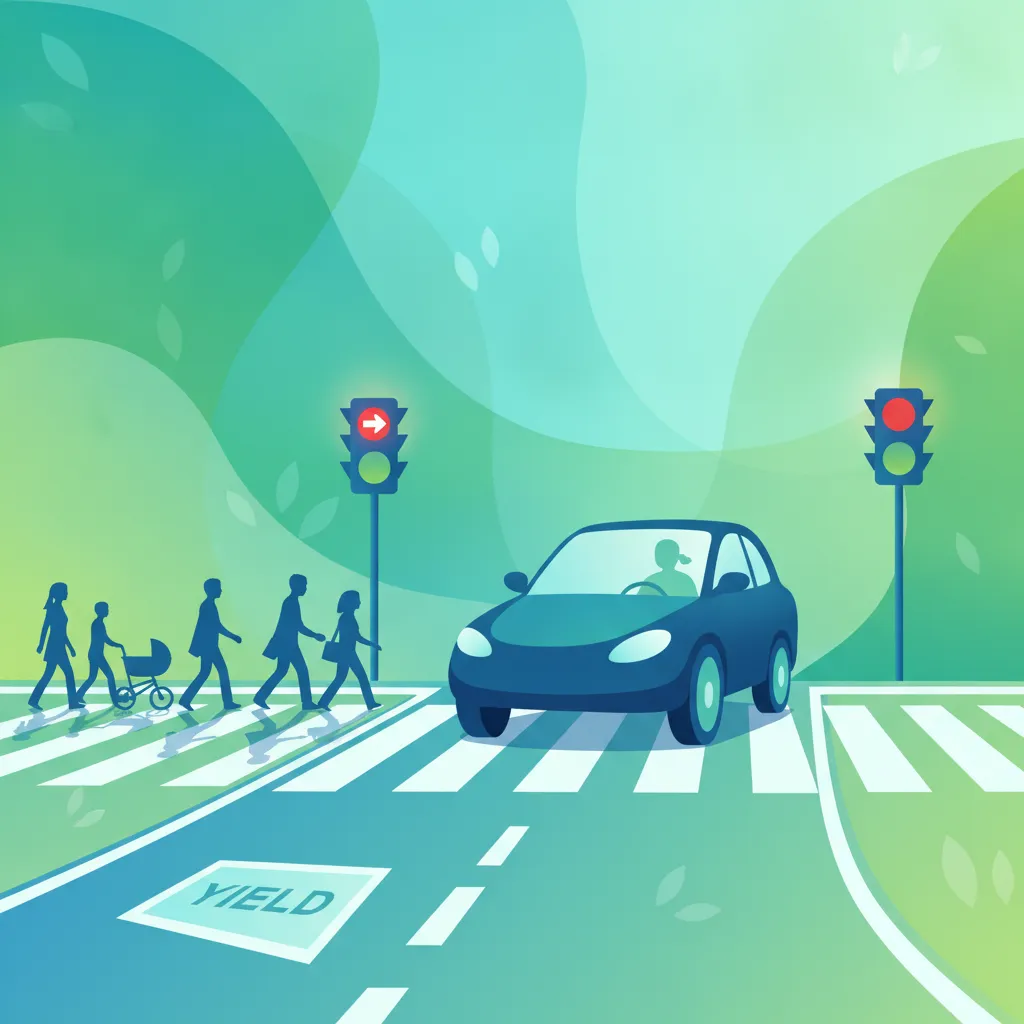
In this lesson, learners will master the skills required to safely navigate various types of intersections encountered in Turkish urban settings. The content covers interpreting traffic signals, understanding right-of-way rules, and executing proper lane positioning. Practical strategies for managing blind spots and ensuring visibility to other road users are emphasized. By the end of this session, participants will be equipped with safe crossing techniques.

This lesson focuses on the safe interaction with other traffic participants at bus stops and traffic intersections. Learners will explore right-of-way rules, signal compliance, and techniques for maintaining safe distances while stopping and departing. Understanding these interactions is vital for preventing accidents in complex traffic environments.
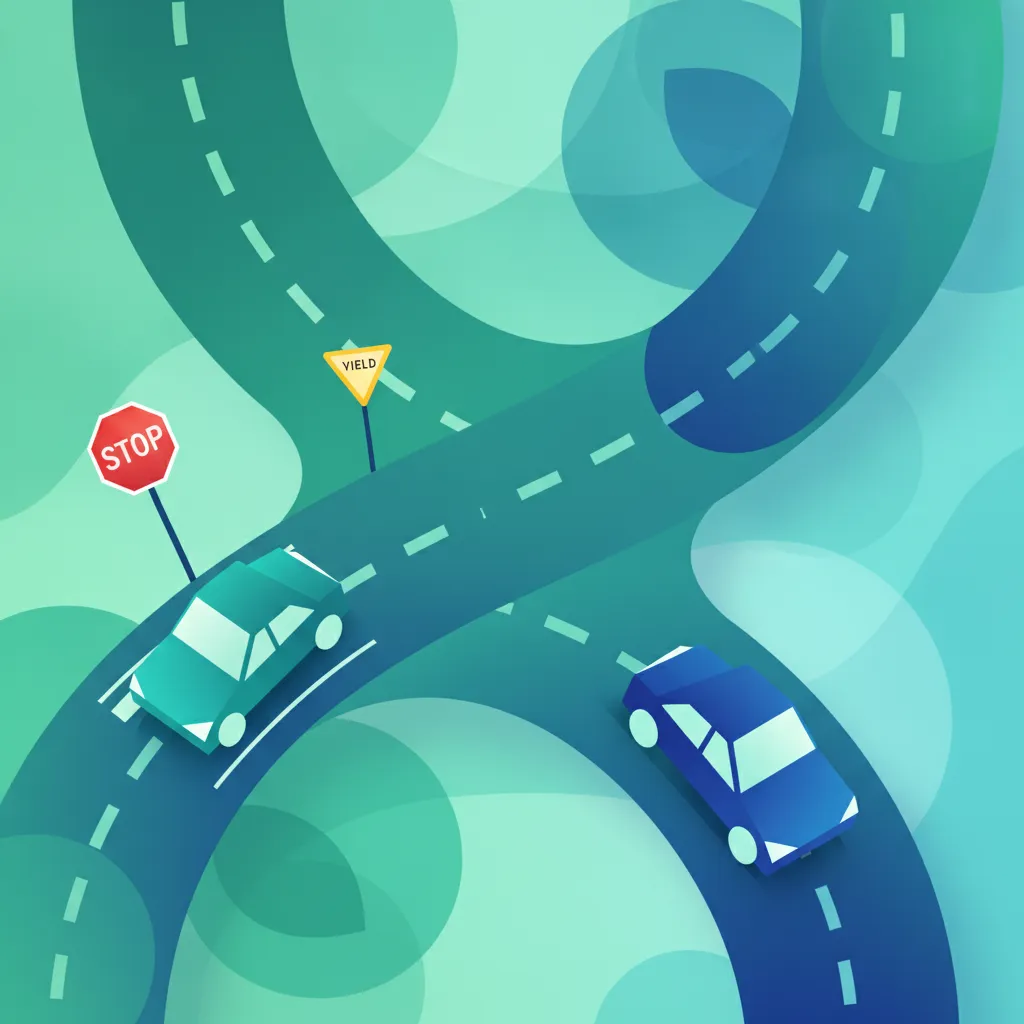
This lesson focuses on priority rules at controlled intersections equipped with traffic signals, stop signs, or yield signs. Learners will understand how to interpret traffic light phases, comply with stop and yield indications, and assess right-of-way at these intersections. The lesson also covers pedestrian and cyclist considerations, as well as emergency vehicle priority.
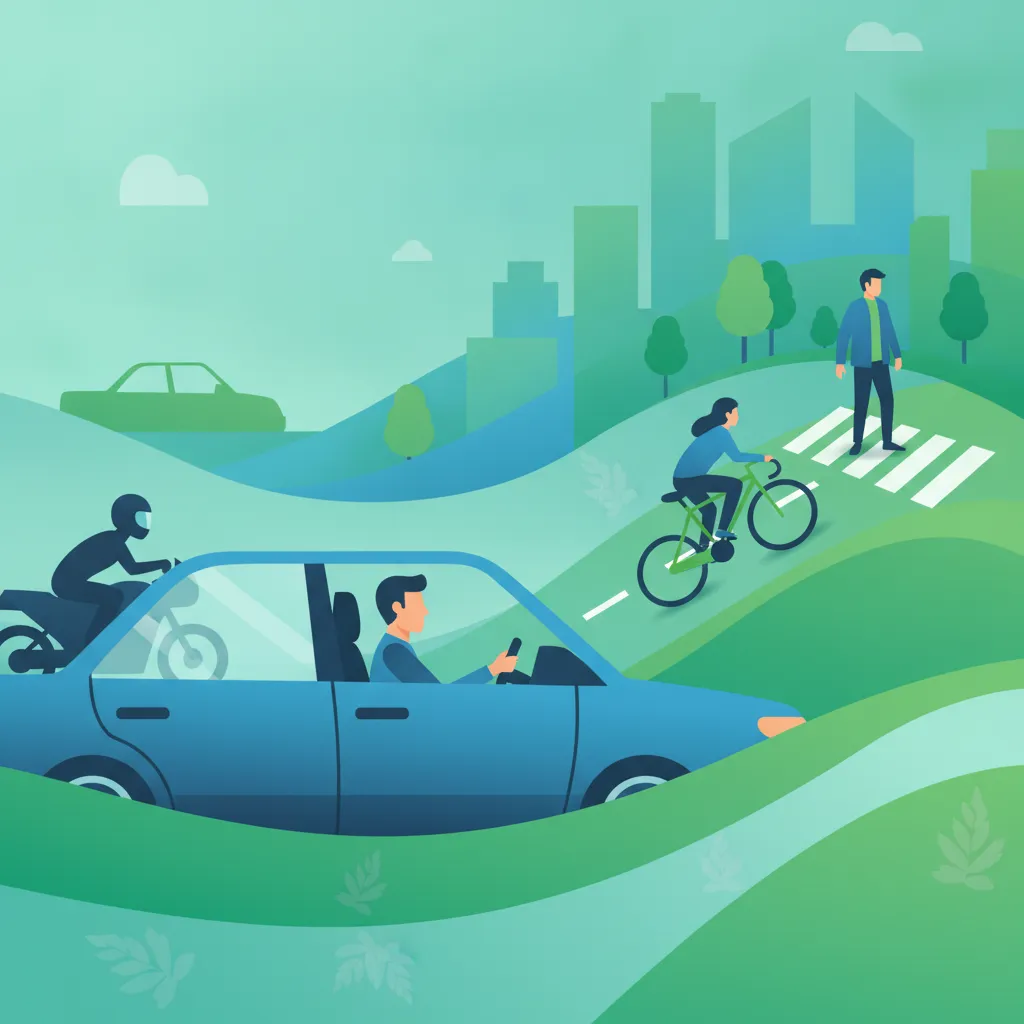
Learners will examine the complexities of operating in environments where various road users, including pedestrians, cyclists, and motorcyclists, coexist. The lesson emphasizes the need for heightened situational awareness, defensive driving techniques, and proactive hazard anticipation. Strategies for navigating mixed traffic safely, especially in congested urban areas, are highlighted.
This lesson outlines the precise legal and safety procedures for overtaking slower vehicles on two-lane and multi-lane roads. It details when overtaking is strictly prohibited by signs or solid road lines, and how to calculate passing distances. Drivers will learn how to communicate their intentions using indicators and pass other vehicles safely.
Intersections represent the highest-risk zones for moped riders due to crossing traffic paths and poor visibility. This lesson teaches you the structured approach method: slowing down, selecting the correct lane early, scanning in all directions, and yielding according to priority laws. You will learn safe techniques for executing left and right turns, maintaining stability, and continuously looking out for oncoming vehicles that might fail to yield or turn unexpectedly across your path.
This lesson explains the specific rules, driving etiquette, and safety protocols for operating a vehicle on high-speed Turkish motorways. It covers correct lane usage, overtaking procedures, emergency lane restrictions, and how to maintain consistent high speeds safely. Drivers will learn to avoid dangerous tailgating and sudden lane changes.
Explore how to identify and mitigate risks posed by blind spots, lane positioning, and unpredictable pedestrian behavior in busy city streets. Understand the physical dynamics of motorcycle control in urban conditions and how to proactively manage space to improve safety as a rider in Turkey.

Defensive riding is the practice of anticipating potential road conflicts and acting early to prevent accidents before they occur. This lesson teaches you how to systematically scan the road ahead for changing conditions, keep an adequate safety cushion around your moped, and pre-plan exit routes in tight spots. You will learn to assume you are invisible to other drivers and adapt your speed and road position proactively to protect yourself against sudden maneuvers.

In this lesson, learners will discover the principles of defensive riding, focusing on hazard anticipation, maintaining safe distances, and practicing proactive avoidance techniques. It emphasizes developing a vigilant riding posture, constantly scanning the environment, and preparing to react to potential dangers from other road users, road conditions, or unexpected traffic events.
Learners will examine the complexities of operating in environments where various road users, including pedestrians, cyclists, and motorcyclists, coexist. The lesson emphasizes the need for heightened situational awareness, defensive driving techniques, and proactive hazard anticipation. Strategies for navigating mixed traffic safely, especially in congested urban areas, are highlighted.
Find clear answers to common questions learners have about Pedestrian Crossings and School Zones. Learn how the lesson is structured, which driving theory objectives it supports, and how it fits into the overall learning path of units and curriculum progression in Turkey. These explanations help you understand key concepts, lesson flow, and exam focused study goals.
Yes, under Turkish traffic law, if a pedestrian is at or approaching a marked pedestrian crossing, you must slow down and allow them to pass safely. Failure to yield is a significant violation that often appears in theory test scenarios.
School zones typically have reduced speed limits, often marked by specific warning signs. You must strictly adhere to these limits to ensure the safety of students and respond effectively to potential hazards.
Yes. At signalized crossings, you follow the traffic lights; however, if the lights are flashing yellow, you must proceed with caution and give way to pedestrians already in the crossing.
Exam questions often present visual scenarios of intersections or crossings where you must identify the correct action—such as stopping, slowing, or checking mirrors—based on the presence of pedestrians.
Use our comprehensive practice search to find exactly the Turkish driving theory questions you need to master. Whether reviewing specific road signs, traffic rules, or first aid scenarios, select your perfect practice set and boost your confidence for the official ehliyet sınavı.