
This lesson introduces the core principles of defensive riding, which is essential for both your theory exam and real-world safety on Turkish roads. You will learn to anticipate hazards, maintain proper space buffers, and adopt a proactive riding posture that minimizes risks from other road users.

Lesson content overview
Earning your A1, A2, or A category motorcycle licence in Turkey requires much more than simply operating the controls of a two-wheeled vehicle. It demands a profound psychological shift from passive driving to active, defensive survival. Because motorcycles lack the protective metal shell, crumple zones, and airbags of passenger cars, you are highly vulnerable to the kinetic forces of any collision.
On Turkish roads—ranging from the high-density, chaotic urban arteries of Istanbul and Ankara to the winding, unpredictable rural mountain passes of the Black Sea or Aegean regions—defensive riding is your primary line of defense. This lesson establishes the cognitive frameworks, physical techniques, and hazard-prediction models required to navigate these environments safely, helping you pass your theoretical examination and survive real-world traffic.
Defensive riding (defansif sürüş) is a systematic approach to operating a motorcycle that reduces risk by anticipating dangerous situations despite the actions of others or the prevailing road and weather conditions.
In a car, a minor fender-bender is an inconvenience; on a motorcycle, the exact same incident can result in severe injury or death. Therefore, the core philosophy relies on a simple premise: Assume you are invisible to other road users, and ride in a manner that proactively manages your space, visibility, and traction.
This philosophy connects directly to every other unit in your curriculum. You cannot practice defensive riding without a flawless understanding of lane positioning, braking dynamics, and vehicle control. It is the practical application of all theoretical knowledge combined into a continuous, real-time decision-making loop.
To ride defensively, you must train your brain to process visual information and execute physical inputs systematically. The industry-standard framework for this is the SIPDE system.
A five-step mental process—Scan, Identify, Predict, Decide, Execute—used by motorcyclists to continuously monitor their environment, assess potential hazards, and take proactive action to avoid collisions.
Scan: Continuously search the road ahead, behind, and to the sides. Look 10 to 15 seconds down the road (about one block in urban areas or 500 metres on highways) rather than focusing solely on the pavement directly in front of your front tyre.
Identify: Look for specific, potential hazards within your scanning zone. This includes stationary hazards (potholes, diesel spills, gravel, construction barriers) and dynamic hazards (oncoming cars turning left, pedestrians stepping off curbs, delivery vans stopping abruptly).
Predict: Anticipate what the hazard might do. Ask yourself: "What is the worst-case scenario?" If an oncoming vehicle is waiting to turn left at an intersection, predict that they do not see you and will turn directly into your path.
Decide: Formulate a precise plan of action. Determine your escape paths, whether you need to adjust your speed (slowing down or accelerating), change your lane position, or prepare to execute an emergency maneuver.
Execute: Carry out your decision smoothly and decisively. Apply the brakes, change lanes, swerve, or sound your horn as planned.
A frequent mistake made by novice riders is "passive scanning" or "staring without seeing." This often leads to target fixation (hedefe kilitlenme), where a rider stares intently at a hazard (such as a pothole or a guardrail) and inadvertently steers directly into it.
To combat this, your eyes must remain dynamic. Keep your gaze moving across three distinct fields of view:
The space surrounding your motorcycle is your safety buffer. Unlike cars, which are wide and occupy almost an entire lane, a motorcycle occupies a narrow footprint. This gives you the unique ability to position yourself within the lane to maximize your space cushion (güvenli mesafe balonu).
Under the Turkish Highway Traffic Regulation (Karayolları Trafik Yönetmeliği), drivers must maintain a safe following distance. For motorcycles, the absolute minimum following distance under ideal, dry conditions is two seconds.
The two-second rule is a minimum standard for dry asphalt. In wet weather, night riding, or when carrying a pillion passenger, you must immediately increase this following distance to four seconds or more to compensate for extended braking distances.
To calculate this, select a stationary object ahead, such as a road sign or bridge support. Once the vehicle ahead passes it, count: "one thousand and one, one thousand and two." If your front wheel reaches that same object before you finish counting, you are tailgating and must back off.
Every standard traffic lane can be divided into three equal sub-paths: the Left Path, the Center Path, and the Right Path. A defensive rider does not simply ride down the middle of the lane; they actively choose a path based on current risks.
Let us explore how these principles are applied in real-life, high-risk scenarios commonly encountered on Turkish roads.
The most common multi-vehicle motorcycle accident is the "Sorry Mate, I Didn't See You" (SMIDSY) collision. This occurs when an oncoming driver turns left across the motorcycle's path at an intersection, misjudging the motorcycle's speed and distance due to size-arrival asymmetry (human brains perceive smaller objects as being further away and traveling slower than they actually are).
Defensive Tactics:
Tailgating is a frequent hazard on high-density Turkish motorways (such as the O-1 or O-4). If a vehicle is following you too closely, do not respond with anger or speed up, as this simply escalates the risk.
Defensive Tactics:
Defensive riding is heavily supported by the Turkish Highway Traffic Law No. 2918 (2918 Sayılı Karayolları Trafik Kanunu). Understanding these laws is essential for your theoretical exam.
A critical legal principle to remember is that under Turkish law, a motorcycle is registered as a motor vehicle and is entitled to the full width of a lane. Other drivers are legally prohibited from squeezing into your lane or forcing you to the shoulder.
When overtaking another vehicle, Turkish law mandates that you must:
Every defensive action you take has a direct, physical cause-and-effect relationship governed by motorcycle dynamics and human biology.
| Action (Cause) | Physical/Psychological Effect | Safety Outcome |
|---|---|---|
| Looking 15 seconds ahead instead of at the front tyre | Gives the brain more time to process visual inputs; lowers cognitive stress. | Extends your available reaction time, reducing emergency braking events. |
| Riding in the "Grease Strip" (Center Path) during first rain | Tires make contact with emulsified engine oils and water slurry. | Severe loss of traction, resulting in low-side crashes when turning or braking. |
| Slightly weaving within your lane when approaching an intersection | Generates lateral visual motion against the stationary background. | Breaks the visual camouflage of the motorcycle, preventing "SMIDSY" pull-outs. |
| Failing to cover brakes near intersections | Adds 0.5 to 0.75 seconds of physical movement time to your stopping sequence. | At 50 km/h, this increases your total stopping distance by approximately 7 to 10 metres. |
Defensive riding strategies are highly dynamic. You must adapt your speed, positioning, and inputs depending on the specific environment:
In rural Turkey, you are highly likely to encounter slow agricultural vehicles (tractors), loose gravel from road repairs (mıcır), and livestock on the asphalt.
Rain mixes with accumulated oil, dust, and diesel on Turkish roads, creating an extremely slick surface.
To fully master defensive riding, you must be familiar with several prior and subsequent topics in your motorcycle theory curriculum:
| Term (English) | Turkish Term | Definition |
|---|---|---|
| Defensive Riding | Defansif Sürüş | The practice of anticipating hazards and managing space to minimize riding risks. |
| Following Distance | Takip Mesafesi | The physical gap maintained between your vehicle and the one directly ahead. |
| Target Fixation | Hedefe Kilitlenme | A dangerous human tendency to steer toward the exact object one is staring at. |
| Lane Split | Şerit Bölme | The illegal practice of riding at speed between lanes of moving traffic. |
| Covering the Brakes | Frenleri Hazır Tutmak | Keeping fingers/foot resting lightly on brake controls to eliminate reaction time. |
| Grease Strip | Yağ Şeridi | The center of a traffic lane where leaking vehicle fluids accumulate. |
To pass your theoretical exam and maintain safety on the road, ensure you have committed this checklist to memory:
Defensive riding is a systematic approach that assumes motorcyclists are invisible to other road users and requires continuous environmental scanning using the SIPDE process. The two-second following distance rule must extend to four seconds in poor conditions, and lane positioning should favor the left path to avoid the center grease strip while maximizing visibility. Key defensive tactics include creating lateral motion at intersections to prevent SMIDSY collisions, covering brake controls to reduce reaction time, and always maintaining escape routes. Understanding these principles is essential for passing the Turkish MTSK e-sınav and surviving real-world traffic in environments ranging from Istanbul's urban chaos to rural mountain passes.
A short set of high-value points that capture the most important learning from this lesson.
Use the SIPDE system (Scan, Identify, Predict, Decide, Execute) as a continuous mental loop for hazard management
Assume you are invisible to other road users and ride to compensate for their blind spots
The two-second following distance is a minimum; extend to four seconds in wet, dark, or heavy-load conditions
Position yourself in Lane Path 1 (left) as your default for maximum visibility and to avoid the center grease strip
Create lateral motion (gentle weave) when approaching intersections where cars may turn across your path to break your visual camouflage
Explore all units and lessons included in this driving theory course.
The SIPDE framework: Scan 15 seconds ahead, Identify hazards, Predict worst-case scenarios, Decide on escape routes, Execute smoothly and decisively
Avoid the center path of any lane - it accumulates oil and becomes extremely slippery, especially during first rainfall
SMIDSY collisions occur because human brains perceive smaller objects as farther away and slower; counteract this by creating lateral motion
Cover your brakes near intersections to save 0.5 to 0.75 seconds of reaction time by eliminating the physical movement needed to reach the levers
In Turkey, motorcycles are legally entitled to full lane width under Law No. 2918; other drivers cannot legally force you to the shoulder
Engaging in passive scanning or staring without actively processing visual information, which often leads to target fixation on hazards
Riding in the center lane path where accumulated grease, oil, and coolant create dangerous traction loss during turns or braking
Performing high-speed lane splitting between moving vehicles, which is highly dangerous because drivers don't expect motorcycles in their blind spots
Failing to modify following distance for adverse conditions - the two-second rule applies only to ideal dry conditions
Lingering in heavy goods vehicle blind spots (No-Zones) on Turkish highways, where trucks cannot see motorcycles beside or behind them
Lesson content overview
A short set of high-value points that capture the most important learning from this lesson.
Use the SIPDE system (Scan, Identify, Predict, Decide, Execute) as a continuous mental loop for hazard management
Assume you are invisible to other road users and ride to compensate for their blind spots
The two-second following distance is a minimum; extend to four seconds in wet, dark, or heavy-load conditions
Position yourself in Lane Path 1 (left) as your default for maximum visibility and to avoid the center grease strip
Create lateral motion (gentle weave) when approaching intersections where cars may turn across your path to break your visual camouflage
Explore all units and lessons included in this driving theory course.
The SIPDE framework: Scan 15 seconds ahead, Identify hazards, Predict worst-case scenarios, Decide on escape routes, Execute smoothly and decisively
Avoid the center path of any lane - it accumulates oil and becomes extremely slippery, especially during first rainfall
SMIDSY collisions occur because human brains perceive smaller objects as farther away and slower; counteract this by creating lateral motion
Cover your brakes near intersections to save 0.5 to 0.75 seconds of reaction time by eliminating the physical movement needed to reach the levers
In Turkey, motorcycles are legally entitled to full lane width under Law No. 2918; other drivers cannot legally force you to the shoulder
Engaging in passive scanning or staring without actively processing visual information, which often leads to target fixation on hazards
Riding in the center lane path where accumulated grease, oil, and coolant create dangerous traction loss during turns or braking
Performing high-speed lane splitting between moving vehicles, which is highly dangerous because drivers don't expect motorcycles in their blind spots
Failing to modify following distance for adverse conditions - the two-second rule applies only to ideal dry conditions
Lingering in heavy goods vehicle blind spots (No-Zones) on Turkish highways, where trucks cannot see motorcycles beside or behind them
Explore search topics learners often look for when studying Defensive Riding Strategies. These topics reflect common questions about road rules, driving situations, safety guidance, and lesson level theory preparation for learners in Turkey.
Browse additional driving theory lessons that cover connected traffic rules, road signs, and common driving situations related to this topic. Improve your understanding of how different rules interact across everyday traffic scenarios.
Learn the mechanics of emergency braking and collision avoidance in Turkish traffic. This lesson explains how to execute swerving maneuvers and controlled stops under high-pressure scenarios, focusing on the physics of motorcycle stability and rider reaction times to safely navigate unexpected dangers on the road.

Defensive riding is the practice of anticipating potential road conflicts and acting early to prevent accidents before they occur. This lesson teaches you how to systematically scan the road ahead for changing conditions, keep an adequate safety cushion around your moped, and pre-plan exit routes in tight spots. You will learn to assume you are invisible to other drivers and adapt your speed and road position proactively to protect yourself against sudden maneuvers.
This lesson delves into the specific challenges and procedures associated with navigating roundabouts on a motorcycle. It outlines the importance of approaching at a safe speed, selecting the correct lane, and yielding to vehicles already within the roundabout. The content also covers the proper use of signals when exiting and emphasizes the need for heightened awareness of blind spots, especially when larger vehicles are present.

In this lesson, learners will gain comprehensive knowledge of safe overtaking maneuvers during riding, emphasizing the importance of assessing traffic flow, checking blind spots, and signaling intentions. The content covers overtaking strategies on both straight roads and curves, considering visibility and speed differentials. By mastering these techniques, motorcyclists can execute overtaking safely.
In this lesson, learners will master the skills required to safely navigate various types of intersections encountered in Turkish urban settings. The content covers interpreting traffic signals, understanding right-of-way rules, and executing proper lane positioning. Practical strategies for managing blind spots and ensuring visibility to other road users are emphasized. By the end of this session, participants will be equipped with safe crossing techniques.
This lesson covers advanced cornering techniques for motorcyclists, focusing on maintaining optimal grip and stability while navigating bends. Topics include proper body positioning, throttle control, lean angle management, and the importance of entering a turn at the correct speed. Learners will also study how different road surfaces and weather conditions affect cornering dynamics.
In this lesson, learners will explore the various forms of risk behaviour that can lead to accidents, such as aggressive riding, speeding, riding under the influence of alcohol or drugs, driving while fatigued, and being distracted. The lesson emphasizes the importance of self-awareness, recognizing personal limits, and adopting a safety-first mindset to mitigate these risks and make safe decisions.
This lesson highlights the critical nature of blind spots for motorcyclists, teaching strategies to recognize and mitigate these hidden areas. Learners will practice techniques for checking blind spots before lane changes and overtaking, ensuring they are fully aware of surrounding traffic. The lesson emphasizes how proper mirroring and head checks can significantly reduce the risk of collisions.

Low-speed riding maneuvers require precise coordination of throttle control, body balance, and subtle steering inputs to maintain vehicle stability. This lesson guides you through techniques for performing tight U-turns, navigating dense traffic queues, and parking your moped safely in designated urban areas. Additionally, you will learn to scan for immediate hazards, allowing you to execute steering corrections smoothly without risking tip-overs or collisions with low obstacles.
A moped's connection to the road is limited to two small tire contact patches, making tyre traction highly sensitive to surface changes. This lesson prepares you to recognize and negotiate hazardous road surfaces such as loose gravel, wet leaves, metal expansion joints, and painted lines. You will learn how to adjust your speed, maintain a vertical riding posture, and avoid sudden steering or braking inputs to prevent low-side falls when traction is severely reduced.

In this lesson, learners will examine the key factors that affect a motorcycle's stability and overall control, including weight distribution, gyroscopic forces, and rider input. The lesson will cover techniques for maintaining balance during both straight and curved riding, as well as strategies for handling sudden maneuvers or adverse road conditions. Understanding these concepts is crucial for safety.
Explore effective lane management techniques to enhance rider visibility and minimize collision risks in dense city environments. This guide covers how to choose optimal path positions at intersections, maintain space cushions near heavy vehicles, and understand the legal framework for motorcycle lane presence under the Turkish Highway Traffic Regulation.

In this lesson, learners will discover the principles of optimal lane positioning that enhance both rider visibility and predictability to other road users. The content focuses on selecting the correct lane within various traffic scenarios, such as approaching intersections, navigating curves, and during overtaking. By maintaining appropriate lane placement, riders can minimize blind spots and improve reaction times.

Proper road positioning is your primary shield against being squeezed, sideswiped, or overlooked by larger motor vehicles in daily traffic. This lesson explains how to ride in the center or slightly off-center of your lane to prevent unsafe overtaking within the same lane. You will study how to identify the massive blind spots of buses and trucks, maintain appropriate following distances, and execute overtaking maneuvers with maximum safety margin and clear signal warning.
This lesson delves into the specific challenges and procedures associated with navigating roundabouts on a motorcycle. It outlines the importance of approaching at a safe speed, selecting the correct lane, and yielding to vehicles already within the roundabout. The content also covers the proper use of signals when exiting and emphasizes the need for heightened awareness of blind spots, especially when larger vehicles are present.
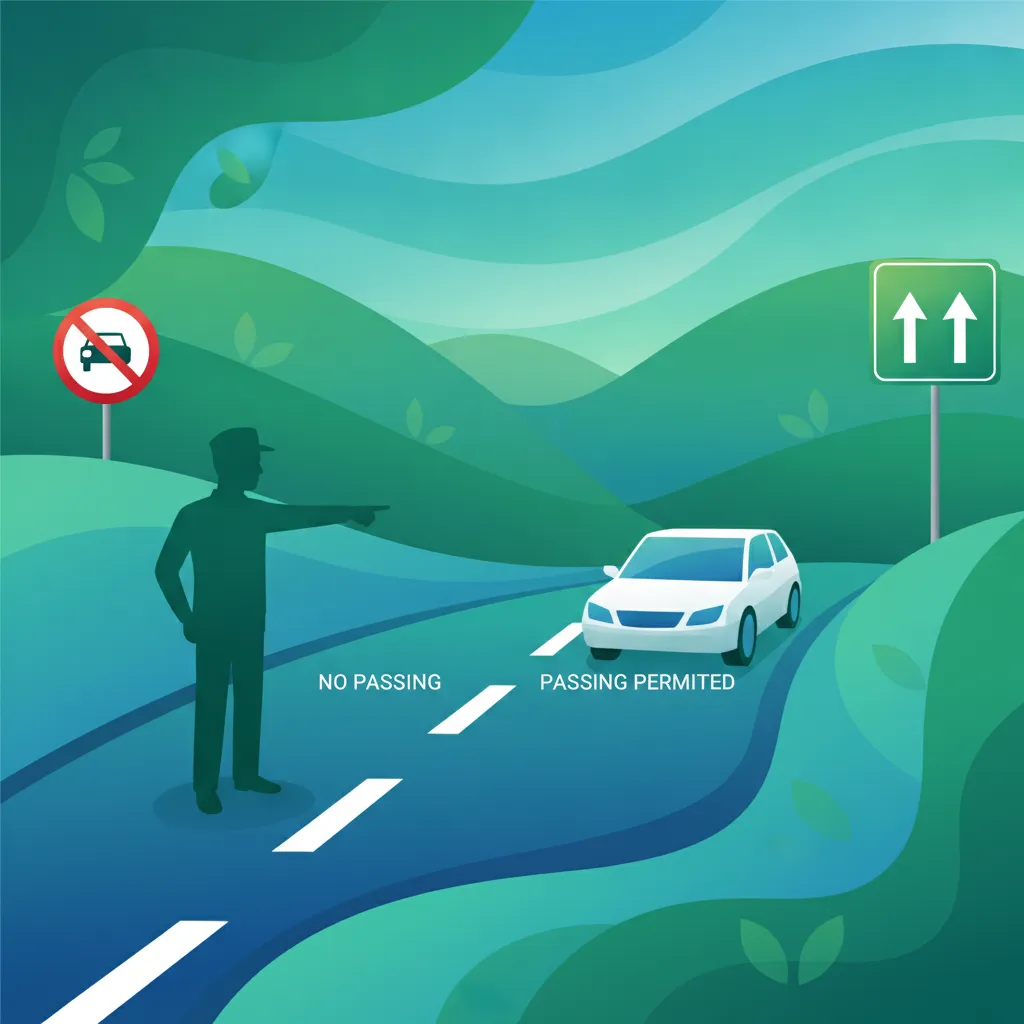
This lesson covers the various road surface markings that motorcyclists must be aware of, such as lane lines, turn arrows, and dedicated bike lanes. It explains how to interpret solid and broken lines, the meaning of specific arrows for turning or lane changes, and the significance of pedestrian crossing markings. Understanding these visual cues is essential for maintaining lane discipline and performing safe road maneuvers.
In this lesson, learners will master the skills required to safely navigate various types of intersections encountered in Turkish urban settings. The content covers interpreting traffic signals, understanding right-of-way rules, and executing proper lane positioning. Practical strategies for managing blind spots and ensuring visibility to other road users are emphasized. By the end of this session, participants will be equipped with safe crossing techniques.

This lesson examines lane division and proper lane usage on multi-lane roads and highways. Learners will understand the purpose of lane markings in guiding drivers to maintain appropriate lane discipline. Topics include correct lane selection for different vehicle types, overtaking procedures, and lane-changing techniques. Real-world examples illustrate the importance of respecting lane usage rules.

In this lesson, learners will focus on the specific considerations and safety practices required when riding motorcycles on high-speed roads and motorways. Topics covered include maintaining appropriate lane discipline, safe overtaking at high speeds, dealing with increased wind resistance, and the importance of accurate speed control and appropriate following distances on faster roadways.

Road markings painted directly onto the asphalt provide continuous guidance and carry the same legal weight as vertical traffic signs. This lesson explains the differences between solid and broken longitudinal lines, channelizing arrows, and restricted zones like dedicated bus or bicycle paths. You will discover how to properly align your moped within your lane, execute lawful line changes, and respect painted buffer zones to prevent dangerous side-swipe accidents in dense traffic.
This lesson highlights the critical nature of blind spots for motorcyclists, teaching strategies to recognize and mitigate these hidden areas. Learners will practice techniques for checking blind spots before lane changes and overtaking, ensuring they are fully aware of surrounding traffic. The lesson emphasizes how proper mirroring and head checks can significantly reduce the risk of collisions.
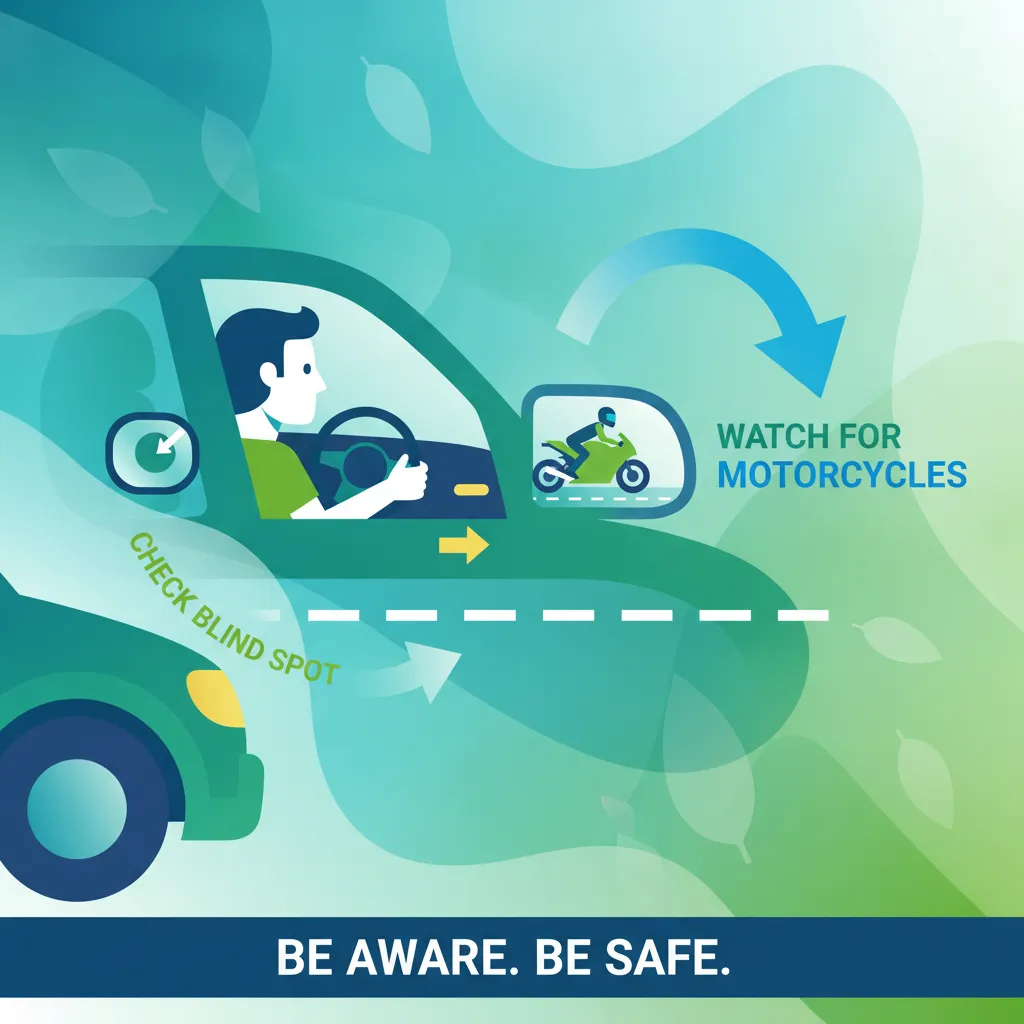
Learners will gain insight into the unique challenges posed by motorcycles and scooters sharing the road with passenger vehicles. The lesson highlights the importance of checking blind spots, maintaining safe following distances, and being aware of the faster acceleration and maneuverability of two-wheeled vehicles. Strategies for anticipating their movements and preventing collisions are discussed.
Find clear answers to common questions learners have about Defensive Riding Strategies. Learn how the lesson is structured, which driving theory objectives it supports, and how it fits into the overall learning path of units and curriculum progression in Turkey. These explanations help you understand key concepts, lesson flow, and exam focused study goals.
The goal is to proactively anticipate and avoid potential hazards before they escalate into dangerous situations, rather than simply reacting to events as they happen.
The exam often features scenario-based questions where you must identify the safest action in a potential accident situation, rewarding candidates who demonstrate foresight and hazard perception.
Choosing the right lane position ensures you are visible to other drivers and provides you with the maximum possible escape route if an emergency occurs.
Yes, it involves keeping a constant scan of your surroundings, avoiding blind spots of large vehicles, and keeping your fingers ready on the brake lever at all times.
Use our comprehensive practice search to find exactly the Turkish driving theory questions you need to master. Whether reviewing specific road signs, traffic rules, or first aid scenarios, select your perfect practice set and boost your confidence for the official ehliyet sınavı.