
This lesson introduces the critical defensive riding strategies required to operate a moped safely within the Turkish traffic system. As part of your Category AM preparation, you will learn to scan the environment, maintain a safety cushion, and anticipate the movements of larger vehicles. These skills are essential for both passing the MTSK e-sınav and protecting yourself in real-world urban traffic.
Lesson content overview
Operating a moped or a light motorized bicycle on public roads requires a heightened level of awareness, strategy, and technical skill. Under the framework of the Turkish Driving Licence Theory for Category AM (MTSK e-sınavı sınıf Moped ve Hafif Motosiklet), small vehicles are uniquely vulnerable due to their low physical profile, lower relative speeds, and limited protective structures.
Defensive riding (defansif sürüş) is not merely a set of rules; it is a proactive philosophy. It is the practice of anticipating potential road conflicts and acting early to prevent accidents before they occur. This lesson provides the deep theoretical foundations and practical strategies required to navigate modern traffic environments safely.
Defensive riding is built on the principle of active risk management. Rather than reacting to hazards as they occur, a defensive rider systematically manages their environment to minimize the probability of a hazard developing into a collision.
In the context of the Turkish Category AM curriculum, the core logic relies on five fundamental pillars:
A proactive approach to operating small vehicles that emphasizes continuous environmental awareness, predictive hazard analysis, dynamic road positioning, and early risk avoidance.
Awareness is the continuous, active monitoring of your physical surroundings, the road surface, weather conditions, and the behavior of other road users. It requires constant visual scanning and the total elimination of cognitive distractions.
Anticipation is the cognitive process of predicting potential hazards based on subtle clues. By reading traffic patterns, vehicle positioning, and even pedestrian body language, a defensive rider reduces their mental reaction time, enabling proactive rather than reactive maneuvers.
Because small vehicles are easily overlooked, clear communication is vital. This involves using directional indicators (turn signals), horn signals, hazard lights, and body language (such as head checks or hand signals) to make your intentions highly predictable to others.
Your position within a lane determines both your visibility to others and your ability to defend your space. Correct positioning neutralizes aggressive driving behaviors from trailing vehicles, optimizes your sightlines, and maximizes your safety cushion.
Road conditions are dynamic. An exceptional rider constantly modifies their speed, lean angle, braking points, and lane position to match shifting environmental factors such as rain, gravel, road geometry, and traffic density.
To build a reliable defensive safety margin, you must master the practical application of these core principles during every journey.
To maintain complete situational awareness, you must train your eyes to scan the road systematically. Do not fixate on the pavement directly in front of your front wheel. Instead, employ a three-tier scanning pattern:
The space surrounding your moped is your "safety cushion" or "space bubble." You must maintain an adequate buffer on all four sides of your vehicle at all times.
Small vehicles have a smaller physical footprint, which often tempts larger vehicles to crowd them or share their lane. You must actively defend your safety cushion and never permit lane-sharing within your designated space.
Under ideal dry conditions, you must maintain a minimum of a two-second following distance behind the vehicle ahead. To calculate this:
Under adverse conditions (e.g., wet asphalt, loose gravel, high winds, or nighttime riding), you must increase this safety cushion to four seconds or more to compensate for reduced tyre traction and increased braking distances.
A primary cause of multi-vehicle collisions involving mopeds is the "Look But Fail To See" phenomenon. Drivers of passenger cars, buses, and trucks often scan the road only for larger profiles (other cars or trucks) and mentally filter out smaller profiles like mopeds and bicycles.
To survive on mixed-traffic roads, you must adopt the Invisible Rider Mindset: Assume that other drivers do not see you, and ride in a manner that actively protects you from their potential mistakes.
Every vehicle has structural pillars (A-pillars, B-pillars, etc.) and mirror angles that create blind spots.
Whenever you approach an intersection, a driveway, or a vehicle waiting to turn across your path, look directly at the driver's eyes or front wheels.
Your lane positioning is a powerful defensive tool. A standard travel lane can be conceptually divided into three equal sub-lanes: the Left Third, the Center Third, and the Right Third.
For Category AM mopeds, the Left Third of the lane is generally the most effective dominant position.
The center of the lane is where cars, trucks, and buses drop fluids. Over time, engine oil, coolant, and grease accumulate in the center third, creating a highly slick path, particularly when it first begins to rain. Avoid riding in the exact center of the lane during or immediately after rainfall.
Riding too close to the right curb or shoulder is a common beginner mistake. While it may feel "safer" to stay out of the main flow of traffic, this position invite several dangers:
The term "Position was Adverse" refers to a scenario where a rider positions their vehicle poorly—either merging too early or too late into traffic—thereby failing to leave adequate room for safe integration.
To prevent an adverse position when merging onto a busier road or navigating a complex roundabout:
In defensive riding, you must prepare not only for the errors of other road users but also for sudden mechanical issues with your own vehicle.
Imagine your moped experiences a sudden Electronic Control Unit (ECU) failure, leading to an unexpected loss of engine power, or you experience a sudden hydraulic pressure drop causing a temporary separation of your front and rear braking capabilities.
Maintain Control and Stay Calm: Avoid panicked steering inputs. Do not immediately throw your feet down to the ground; dragging your feet at speed will destabilize the chassis and can cause severe joint injuries.
Execute Progressive Braking: Apply the front brake progressively (uncurling your fingers smoothly onto the lever) while simultaneously and gradually applying the rear brake. The front brake provides up to 70% of your stopping force. Relying solely on the rear brake in a panic can easily lock the rear wheel and cause a low-side slide.
Keep Your Feet on the Pegs/Floorboard: Keep your feet firmly planted on the vehicle's footrests to maintain a low center of gravity and ensure maximum balance control during deceleration. Only drop your feet to the ground in the final 1-2 km/h before coming to a complete stop.
Steer Toward an Escape Route: Direct your vehicle toward a safe shoulder, emergency lane, or the right-hand edge of the roadway, clear of active traffic lanes.
Operating a Category AM vehicle requires rapid sensory processing and precise motor coordination.
The consumption of alcohol, narcotics, or certain prescription and over-the-counter medications (pharmacology) severely degrades your cognitive processing, visual acuity, and physical reaction times.
To operate safely and remain fully compliant with Turkish road regulations, adhere to these operational mandates:
To help synthesize these defensive concepts, review the table below outlining the direct differences between dangerous riding habits and defensive best practices:
| Danger / Bad Practice | Defensive / Best Practice | Rationale & Safety Benefit |
|---|---|---|
| Tailgating (Riding too close) | Maintaining a minimum 2-second gap (4+ seconds in wet weather). | Prevents rear-end collisions by providing adequate reaction and stopping distance. |
| Riding in the blind spots of other vehicles | Actively adjusting speed to remain visible in drivers' side mirrors. | Prevents side-swipe collisions when other vehicles change lanes without looking. |
| Hugging the right curb/gutter | Riding in the dominant left third of the lane. | Asserts lane ownership, prevents dangerous squeeze-passes, and avoids gutter debris. |
| Using feet to stabilize or brake during stops | Keeping feet on footrests until the vehicle is nearly stationary. | Maintains proper vehicle balance and prevents severe foot/leg injuries. |
| Reacting only to the vehicle directly ahead | Scanning 12 to 15 seconds ahead using a three-tier pattern. | Allows early identification of systemic traffic slowdowns and hazards. |
Defensive riding for Category AM mopeds is built on five pillars: Awareness, Anticipation, Communication, Positioning, and Adaptability. The three-tier scanning rule (12-15, 4-8, and 2-3 seconds ahead) enables proactive hazard detection, while maintaining a Two-Second safety cushion and occupying the dominant left-third lane position protects against the 'invisible rider' problem. Emergency procedures for sudden power loss require progressive front-braking first while keeping feet on pegs until nearly stopped. The Turkish MTSK e-sınav tests not just knowledge of these techniques but the ability to apply defensive riding judgment across varied traffic scenarios.
A short set of high-value points that capture the most important learning from this lesson.
Defensive riding is a proactive philosophy that emphasizes anticipating hazards before they develop into collisions, not merely reacting to them.
Apply the three-tier eye-lead scanning pattern: check 12-15 seconds ahead (far horizon), 4-8 seconds (mid-range), and 2-3 seconds (immediate path) for complete situational awareness.
Always assume you are invisible to other drivers; use eye contact, mirrors, and early signaling to compensate for the 'Look But Fail To See' phenomenon.
Maintain a minimum Two-Second following distance (four seconds in adverse conditions) and defend your safety cushion on all four sides.
Keep feet on footrests during emergency braking; dragging feet at speed destabilizes the chassis and risks severe leg injuries.
Explore all units and lessons included in this driving theory course.
The dominant lane position is the Left Third of the lane: maximizes visibility, prevents dangerous squeezing, and preserves escape routes.
Never ride in the center third after rainfall—engine oil and coolant accumulate there and create dangerous slicks.
If you cannot see the driver's face in their side mirror, they cannot see you; you are in their blind spot.
Front brake provides up to 70% of stopping force; progressive application prevents wheel lockup and low-side slides.
Alcohol, sedatives, and antihistamines severely degrade the rapid sensory processing required for safe moped operation.
Fixating only on the vehicle directly ahead instead of scanning systematically through all three time-distance zones.
Riding too close to the right curb or gutter, inviting dangerous squeeze-passes and exposing the rider to debris and dooring hazards.
Lingering parallel to other vehicles in their side mirror blind spots, risking side-swipe collisions during lane changes.
Placing feet on the ground while decelerating instead of keeping them on pegs to maintain center of gravity.
Assuming a driver has seen you simply because they glanced in your direction; always verify by watching their wheels for any rotation.
Lesson content overview
A short set of high-value points that capture the most important learning from this lesson.
Defensive riding is a proactive philosophy that emphasizes anticipating hazards before they develop into collisions, not merely reacting to them.
Apply the three-tier eye-lead scanning pattern: check 12-15 seconds ahead (far horizon), 4-8 seconds (mid-range), and 2-3 seconds (immediate path) for complete situational awareness.
Always assume you are invisible to other drivers; use eye contact, mirrors, and early signaling to compensate for the 'Look But Fail To See' phenomenon.
Maintain a minimum Two-Second following distance (four seconds in adverse conditions) and defend your safety cushion on all four sides.
Keep feet on footrests during emergency braking; dragging feet at speed destabilizes the chassis and risks severe leg injuries.
Explore all units and lessons included in this driving theory course.
The dominant lane position is the Left Third of the lane: maximizes visibility, prevents dangerous squeezing, and preserves escape routes.
Never ride in the center third after rainfall—engine oil and coolant accumulate there and create dangerous slicks.
If you cannot see the driver's face in their side mirror, they cannot see you; you are in their blind spot.
Front brake provides up to 70% of stopping force; progressive application prevents wheel lockup and low-side slides.
Alcohol, sedatives, and antihistamines severely degrade the rapid sensory processing required for safe moped operation.
Fixating only on the vehicle directly ahead instead of scanning systematically through all three time-distance zones.
Riding too close to the right curb or gutter, inviting dangerous squeeze-passes and exposing the rider to debris and dooring hazards.
Lingering parallel to other vehicles in their side mirror blind spots, risking side-swipe collisions during lane changes.
Placing feet on the ground while decelerating instead of keeping them on pegs to maintain center of gravity.
Assuming a driver has seen you simply because they glanced in your direction; always verify by watching their wheels for any rotation.
Explore search topics learners often look for when studying Defensive Riding Techniques for Small Vehicles. These topics reflect common questions about road rules, driving situations, safety guidance, and lesson level theory preparation for learners in Turkey.
Browse additional driving theory lessons that cover connected traffic rules, road signs, and common driving situations related to this topic. Improve your understanding of how different rules interact across everyday traffic scenarios.
Learn to identify early warning signs of traffic conflicts on the road. This lesson explains how to monitor pedestrian behavior, vehicle movements, and road conditions to proactively anticipate potential hazards and minimize the risks associated with riding a moped or light vehicle in mixed traffic environments.
A moped's connection to the road is limited to two small tire contact patches, making tyre traction highly sensitive to surface changes. This lesson prepares you to recognize and negotiate hazardous road surfaces such as loose gravel, wet leaves, metal expansion joints, and painted lines. You will learn how to adjust your speed, maintain a vertical riding posture, and avoid sudden steering or braking inputs to prevent low-side falls when traction is severely reduced.
Proper road positioning is your primary shield against being squeezed, sideswiped, or overlooked by larger motor vehicles in daily traffic. This lesson explains how to ride in the center or slightly off-center of your lane to prevent unsafe overtaking within the same lane. You will study how to identify the massive blind spots of buses and trucks, maintain appropriate following distances, and execute overtaking maneuvers with maximum safety margin and clear signal warning.
Warning signs alert road users to impending physical conditions, dangers, or layout alterations that require immediate driver attention and speed adjustment. This lesson focuses on indicators of sharp bends, narrowing paths, slippery road surfaces, upcoming pedestrian crosswalks, and school warning zones. You will study how to interpret these yellow-and-red triangular signs to safely modify your approach speed and gear your attention toward potential hazards unique to lightweight mopeds.
Human error and deliberate risk-taking represent the leading causes of traffic collisions among novice moped riders. This lesson analyzes the high dangers of using mobile phones while riding, weaving unsafely between lanes, and tailgating other motorists. It also covers the severe legal limits on alcohol and drug consumption under Turkish law, explaining how even minor impairments can drastically slower your hazard response times and lead to catastrophic accidents.
Low-speed riding maneuvers require precise coordination of throttle control, body balance, and subtle steering inputs to maintain vehicle stability. This lesson guides you through techniques for performing tight U-turns, navigating dense traffic queues, and parking your moped safely in designated urban areas. Additionally, you will learn to scan for immediate hazards, allowing you to execute steering corrections smoothly without risking tip-overs or collisions with low obstacles.
Many moped collisions occur simply because drivers of larger vehicles fail to notice lightweight riders in their path or blind spots. This lesson outlines passive and active techniques to boost your road presence, including the use of retroreflective vests and neon-colored apparel. It also explains the legal requirements for daytime running lights, proper alignment of headlights, and effective lane positioning to ensure you remain clearly visible in heavy traffic and during night rides.
Intersections represent the highest-risk zones for moped riders due to crossing traffic paths and poor visibility. This lesson teaches you the structured approach method: slowing down, selecting the correct lane early, scanning in all directions, and yielding according to priority laws. You will learn safe techniques for executing left and right turns, maintaining stability, and continuously looking out for oncoming vehicles that might fail to yield or turn unexpectedly across your path.
Riding in adverse weather presents significant challenges for open-vehicle operators, including reduced tire grip, obscured vision, and physical fatigue from wind or cold. This lesson covers safety techniques for navigating rainy conditions, avoiding the danger of hydroplaning, and managing strong crosswinds that can destabilize a lightweight moped. You will learn to adjust your speed, increase your following distance, and use high-visibility gear to ensure a safe journey under bad weather.
Riding an exposed lightweight vehicle in busy Turkish cities requires exceptional personal conduct, patience, and absolute control over your emotional reactions. This lesson discusses the psychological aspects of riding, teaching you how to avoid aggressive behaviors and stay calm under stressful traffic situations. It covers proper non-verbal communication, polite road sharing practices, and maintaining safe buffers from other motorists to establish a safe, predictable presence on any public street.
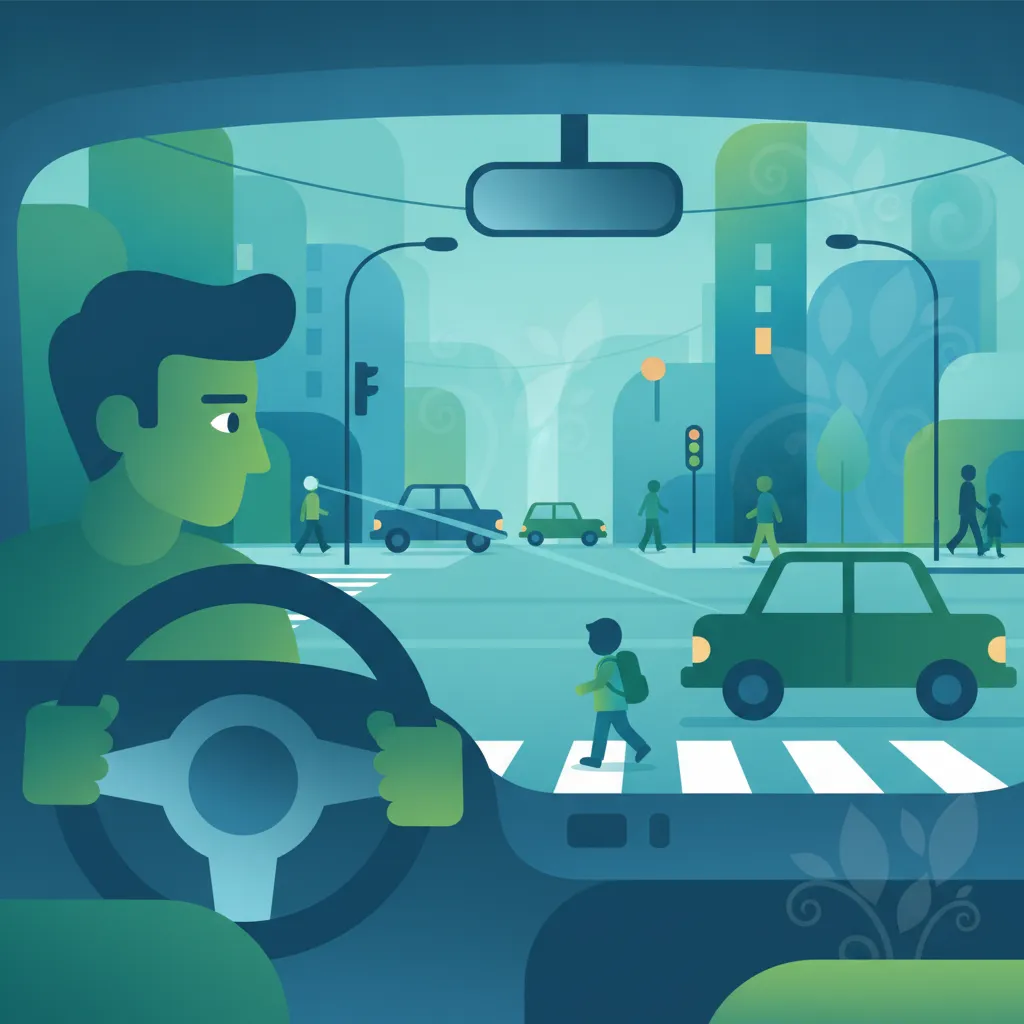
This lesson explores the critical skill of hazard identification and anticipation while driving. Topics include recognizing potential risks in traffic, road conditions, and environmental factors. Learners will develop skills in anticipatory driving to proactively address hazards before they become dangerous. Real-world examples illustrate how to maintain vigilance.
Understand how to occupy the road safely using effective lane positioning to remain visible to other drivers. This guide covers the importance of the dominant lane position, avoiding blind spots, and communicating your intentions clearly to other road users to prevent common accidents caused by visibility issues.
Proper road positioning is your primary shield against being squeezed, sideswiped, or overlooked by larger motor vehicles in daily traffic. This lesson explains how to ride in the center or slightly off-center of your lane to prevent unsafe overtaking within the same lane. You will study how to identify the massive blind spots of buses and trucks, maintain appropriate following distances, and execute overtaking maneuvers with maximum safety margin and clear signal warning.
Many moped collisions occur simply because drivers of larger vehicles fail to notice lightweight riders in their path or blind spots. This lesson outlines passive and active techniques to boost your road presence, including the use of retroreflective vests and neon-colored apparel. It also explains the legal requirements for daytime running lights, proper alignment of headlights, and effective lane positioning to ensure you remain clearly visible in heavy traffic and during night rides.
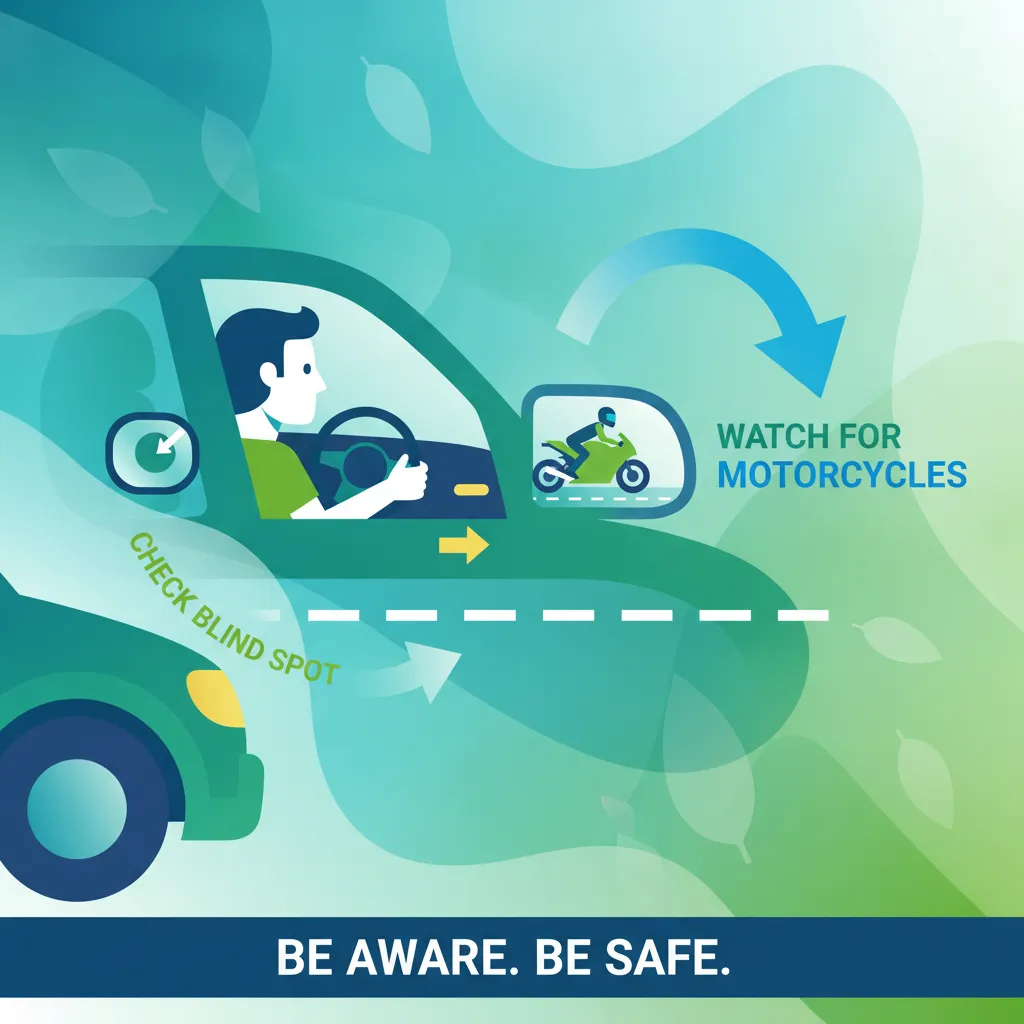
Learners will gain insight into the unique challenges posed by motorcycles and scooters sharing the road with passenger vehicles. The lesson highlights the importance of checking blind spots, maintaining safe following distances, and being aware of the faster acceleration and maneuverability of two-wheeled vehicles. Strategies for anticipating their movements and preventing collisions are discussed.
Roundabouts require a clear understanding of yield regulations and precise signaling to avoid conflicts with larger vehicles. This lesson details the legal requirements under Turkish road rules, which demand that entering vehicles yield to traffic already circulating inside the roundabout. You will learn how to select the appropriate lane upon entry, maintain a steady speed, signal your exit intentions clearly with your indicators, and remain alert to drivers who cut across lanes.

In this lesson, learners will discover the principles of optimal lane positioning that enhance both rider visibility and predictability to other road users. The content focuses on selecting the correct lane within various traffic scenarios, such as approaching intersections, navigating curves, and during overtaking. By maintaining appropriate lane placement, riders can minimize blind spots and improve reaction times.
This lesson covers the primary legal requirements that every moped rider must follow when navigating public traffic systems within Turkey. It focuses on the mandatory application of traffic signals, correct lane selection, appropriate overtaking procedures, and the specific speed limitations set for light motorized vehicles. By understanding these regulatory bounds, you will avoid high traffic fines and licence point deductions while ensuring that your riding practices strictly align with national highway laws.
Low-speed riding maneuvers require precise coordination of throttle control, body balance, and subtle steering inputs to maintain vehicle stability. This lesson guides you through techniques for performing tight U-turns, navigating dense traffic queues, and parking your moped safely in designated urban areas. Additionally, you will learn to scan for immediate hazards, allowing you to execute steering corrections smoothly without risking tip-overs or collisions with low obstacles.
Regulatory traffic signs convey absolute legal commands that riders must obey to avoid heavy fines and ensure safe, orderly movement. This lesson walks through prohibitory indicators, mandatory speed limits, turn restrictions, and specific moped bans on motorways or designated high-speed corridors. You will learn to recognize the distinctive shapes and colors of these signs, enabling rapid, accurate decision-making while operating your lightweight vehicle under Turkish highway laws.
In this lesson, learners explore the unique challenges and safety considerations related to motorcyclists and scooter riders. Topics include the importance of visibility, the use of protective gear, and the need for drivers to be aware of blind spots. The lesson also covers lane discipline for two-wheeled vehicles and safe overtaking practices.
Intersections represent the highest-risk zones for moped riders due to crossing traffic paths and poor visibility. This lesson teaches you the structured approach method: slowing down, selecting the correct lane early, scanning in all directions, and yielding according to priority laws. You will learn safe techniques for executing left and right turns, maintaining stability, and continuously looking out for oncoming vehicles that might fail to yield or turn unexpectedly across your path.
Find clear answers to common questions learners have about Defensive Riding Techniques for Small Vehicles. Learn how the lesson is structured, which driving theory objectives it supports, and how it fits into the overall learning path of units and curriculum progression in Turkey. These explanations help you understand key concepts, lesson flow, and exam focused study goals.
Because mopeds are smaller and less visible than cars, defensive riding is your primary tool to compensate for your physical vulnerability. It helps you assume you are invisible and take extra space to stay safe.
Many exam questions present scenarios where you must decide the safest course of action; applying defensive principles ensures you choose the option that prioritizes caution and accident prevention.
Avoid lingering in blind spots by adjusting your speed slightly or choosing a road position where the driver can see you in their mirrors. Always plan an escape route if the vehicle next to you suddenly changes lanes.
Yes, adjusting your lateral position within the lane is a key defensive skill. It allows you to maximize your visibility to other drivers and avoid hazards like opening car doors or road debris.
Use our comprehensive practice search to find exactly the Turkish driving theory questions you need to master. Whether reviewing specific road signs, traffic rules, or first aid scenarios, select your perfect practice set and boost your confidence for the official ehliyet sınavı.