
In this lesson, you will explore the essential obligations all motorcyclists have under the Highway Code to ensure safety for themselves and others. Understanding these duties is critical for both passing your motorcycle theory test and building safe, responsible habits on the road. This lesson builds on your foundational knowledge of licence categories and prepares you for the more complex road safety topics ahead.

Lesson content overview
Operating a motorcycle on the roads of Great Britain comes with significant responsibilities. The Highway Code, a comprehensive guide to road safety, outlines specific duties that all road users, especially motorcyclists, must adhere to. These duties are not merely suggestions; they are legal obligations designed to ensure safety, promote predictable road behaviour, and protect everyone from potential harm. Understanding these rules is crucial not only for passing your Great Britain Motorcycle Theory Course (A, A1, A2) but also for becoming a safe, confident, and legally compliant rider.
This lesson will delve into the specific obligations that define a motorcyclist's role on the road. We will explore the legal framework, the reasoning behind key rules, and the practical implications for your daily riding. By mastering these duties, you contribute to a safer road environment for yourself and others.
At the core of all rider responsibilities is the fundamental principle of "duty of care." This is a legal requirement stipulating that every road user must act with reasonable care to avoid causing harm to others. This includes fellow motorists, pedestrians, cyclists, and even property. For motorcyclists, this duty is particularly pronounced given their inherent vulnerability and the potential for severe consequences in a collision.
The Road Traffic Act 1988, alongside the Highway Code, reinforces this duty, emphasising that riders must not engage in "dangerous riding." This means actively anticipating potential hazards, maintaining safe distances, and generally avoiding any behaviour that could be deemed negligent. It extends beyond just avoiding collisions; it's about proactively ensuring safety on the road.
Duty of care manifests in two main forms: negligence avoidance and positive duties. Negligence avoidance involves taking proactive steps to foresee and mitigate risks, such as checking mirrors regularly or scanning for potential hazards. Positive duties, on the other hand, require active measures to ensure safety, like using appropriate lighting to make your motorcycle visible or signalling your intentions clearly.
Failing to uphold this duty can lead to serious legal consequences, including fines, penalty points, or even imprisonment in cases of severe negligence. More importantly, it significantly increases the risk of accidents, which can result in severe injuries or fatalities. Therefore, treating the duty of care as a paramount principle is essential for every motorcyclist.
The Highway Code provides a detailed set of rules that translate the broader duty of care into specific actions. For motorcyclists, understanding and applying these rules is key to navigating roads safely and legally.
One of the most critical aspects of safe riding is managing your speed. It's not just about adhering to the posted legal speed limits, but also about choosing a speed that allows you to stop safely within the distance you can see to be clear. This is known as the "limit of visibility" rule (Highway Code Rule 164). This principle is crucial because a motorcycle's stopping distance can be significantly affected by various factors, making it longer than a car's in many situations.
Riders must constantly adjust their speed based on prevailing conditions. Factors such as weather (rain, fog, ice), road surface (wet, gravel, potholes), the motorcycle's load, and the rider's own physical and mental condition all impact safe stopping distances. For example, riding at 30 mph on a dry, clear road might be perfectly safe, but the same speed on a wet, winding street would be highly unsafe, even if within the legal limit.
Always consider the "two-second rule" as a minimum safe following distance in dry conditions. Double this to four seconds in wet weather to account for increased stopping distances.
Proper lane positioning is vital for a motorcyclist's safety, maximising visibility to other road users and reducing exposure to potential hazards. Highway Code Rule 121 advises riders to generally "ride in the centre of your lane" unless overtaking. This central position makes you more prominent to drivers behind you and those emerging from junctions, reducing the chance of being overlooked.
Riding too far to one side of the lane can place you in another vehicle's blind spot or encourage drivers to try and squeeze past you unsafely. By maintaining a central position, you assert your presence in the lane, making it clear that the lane is occupied. This strategy also provides a buffer zone, giving you space to react to sudden dangers from either side of the road.
Clear and timely signalling is fundamental to communicating your intentions to other road users. Whether you're turning, changing lanes, or pulling over, proper signalling ensures that other drivers and pedestrians can anticipate your actions and react accordingly. Highway Code Rule 162 explicitly states that riders should "use signals for turning or changing lanes" and give adequate warning.
While motorcycle-mounted indicators are the primary method of signalling, riders must also be proficient in using hand signals. Hand signals are crucial if your indicators malfunction or if, in bright sunlight, your indicators might not be clearly visible. It's essential to give signals well in advance—a minimum of 2-3 seconds before a manoeuvre—and to keep them on throughout the action until it's complete.
Manual gestures used by a rider to indicate their intended direction or action, essential when vehicle indicators are not visible or functional.
Filtering, also known as lane splitting, involves riding a motorcycle between lanes of traffic moving in the same direction. In Great Britain, the rules surrounding filtering are very specific and often misunderstood. According to the Highway Code Rule 111, riders "should not filter in such a way as to cause danger or surprise to other road users." The blueprint for this lesson explicitly notes that "in GB, filtering is generally prohibited except on very specific dual carriageways where signs allow it."
This strict interpretation means that riders should exercise extreme caution. While filtering through stationary or slow-moving traffic may sometimes be tolerated if done safely and slowly, filtering between moving traffic at speed is generally considered highly dangerous and illegal unless specific signage permits it. Riders must assess the road layout and traffic conditions meticulously, always prioritising safety over convenience.
Do not assume filtering is always permissible, especially on dual carriageways. Always look for explicit signage allowing it; otherwise, maintain your lane position. Unsafe filtering can lead to serious collisions and legal penalties.
Motorcyclists, while vulnerable themselves compared to car drivers, have a critical duty to protect even more vulnerable road users (VRUs). These include pedestrians, cyclists, horse riders, and those using powered wheelchairs. A collision involving a motorcycle and a VRU is highly likely to result in serious injury for the latter. The Highway Code places a higher duty of care on those driving larger vehicles (including motorcycles) towards those who are most at risk.
This duty translates into specific actions. At zebra crossings, riders must give way to pedestrians waiting to cross (Highway Code Rule 171). In residential areas or near schools, it's essential to reduce speed significantly and be prepared for sudden movements. When overtaking cyclists, you must maintain at least a 1-metre lateral clearance (Highway Code Rule 169) to ensure their safety, giving them ample space and avoiding startling them.
Reduce speed and be prepared to stop when approaching pedestrian crossings or areas with high pedestrian activity.
Always give way to pedestrians who are waiting at or on a zebra crossing.
When passing cyclists, ensure a minimum of 1 metre lateral clearance, and more in higher speed conditions.
Be extra vigilant around schools, parks, and residential streets where children or less predictable users might be present.
Riding a motorcycle also comes with an environmental duty. Riders are expected to minimise unnecessary pollution, noise, and road surface wear. This contributes to broader public health goals and sustainability efforts.
This includes avoiding excessive engine revving, especially in residential areas, and ensuring your exhaust system meets legal noise standards. Harsh acceleration and braking increase fuel consumption and emissions, so smooth throttle control is beneficial both for the environment and your riding efficiency. Regular maintenance, including passing the mandatory MOT emission checks, is also part of this responsibility. Adhering to standards like Euro 5 helps ensure your motorcycle is as clean as possible.
Beyond riding behaviour, there are several mandatory legal and regulatory requirements that every motorcyclist in Great Britain must comply with. Failure to meet these can result in severe penalties and can invalidate your insurance.
Every motorcycle on public roads must be road legal. This involves several critical elements:
A certification mark indicating that a helmet or other vehicle component meets European safety and environmental standards, mandatory for road-legal use in the UK.
Riding under the influence of alcohol or drugs is a severe offence under the Road Traffic Act 1988. Any substance that impairs your judgement, reaction time, or ability to control the motorcycle makes you a significant danger to yourself and others. The legal limits for alcohol are strict, and for many illicit drugs, there is a zero-tolerance policy. It is best practice to have zero alcohol before riding.
Never ride a motorcycle if you have consumed alcohol or drugs. Even small amounts can impair your riding ability and lead to severe legal consequences, including fines, penalty points, licence suspension, or imprisonment.
Understanding common violations helps riders to consciously avoid them, preventing accidents and legal repercussions. Many common issues stem directly from a failure to adhere to the core principles discussed.
Safe riding is dynamic, requiring continuous adaptation to changing circumstances. A fixed set of rules is insufficient; riders must apply logic and adjust their behaviour based on the specific context.
Every rule in the Highway Code is rooted in a clear understanding of road safety, human behaviour, and the physics of motorcycle operation. By understanding the 'why' behind the rules, riders can develop a deeper sense of responsibility and apply the principles more effectively.
Understanding your duties under the Highway Code is a foundational element for all future riding skills. This lesson lays the groundwork for more advanced topics in the Great Britain Motorcycle Theory Course (A, A1, A2).
The principles of proper lane positioning and signalling discussed here are crucial for mastering more complex manoeuvres like effective filtering (where allowed), overtaking safely, and managing space around your motorcycle (Lesson 5). Similarly, the concept of duty of care and safe speed directly informs strategies for defensive riding and hazard perception (Lesson 8), where understanding potential risks and reacting proactively is paramount. Your awareness of rider vulnerability (Lesson 1.3) also reinforces the importance of these duties.
Applying the Highway Code's rules in real-world situations is crucial for safe riding. Here are some scenarios demonstrating correct and incorrect applications of rider duties.
Setting: A residential street in a town centre during heavy rain. The posted speed limit is 30 mph, but due to heavy spray and reduced light, the motorcyclist can only clearly see about 15 metres ahead. Rule/Application: Safe Speed & Stopping Distance (Highway Code Rule 164). Correct Behaviour: The rider reduces their speed significantly, perhaps to 15-20 mph, ensuring they can stop well within the 15 metres of visible road length. They maintain a longer following distance from the vehicle ahead. Incorrect Behaviour: The rider maintains 30 mph, believing they are within the legal limit. If a pedestrian suddenly steps out or a car brakes sharply, the rider cannot stop in time, leading to a collision. Explanation: Legal speed limits are maximums, not targets. Riders must always adapt their speed to conditions, prioritising the ability to stop within the visible clear distance, especially in adverse weather.
Setting: A rural road approaching a right-hand turn at a T-junction. The rider discovers their right-hand indicator is not working. Traffic is light but a car is approaching from behind. Rule/Application: Clear Signalling (Highway Code Rule 162). Correct Behaviour: The rider signals their intention to turn right by extending their right arm horizontally, clearly visible to the following driver, several seconds before reaching the junction. They hold the signal until the manoeuvre is complete. Incorrect Behaviour: The rider, assuming the following driver will somehow know their intention or see them slow down, simply begins the turn without any signal. The following driver is unsure of the motorcycle's intent and has to brake sharply. Explanation: Effective communication is paramount. If mechanical indicators fail, hand signals become mandatory to prevent confusion and reduce collision risk. Always provide adequate warning.
Setting: A busy, three-lane dual carriageway during rush hour. Traffic is moving slowly but steadily at around 20-30 mph. There are no signs explicitly permitting motorcycle filtering. Rule/Application: Filtering (Highway Code Rule 111). Correct Behaviour: The rider maintains a central position within their lane, adhering to the flow of traffic. They do not attempt to ride between lanes as there is no specific signage allowing filtering. Incorrect Behaviour: The rider attempts to filter between the lanes of moving traffic at a slightly higher speed than the surrounding vehicles. A car in the adjacent lane decides to change lanes, leading to a dangerous near-miss or collision. Explanation: In Great Britain, filtering between lanes on a dual carriageway is generally prohibited unless a specific sign indicates it is allowed. Filtering between moving traffic is particularly risky due to unpredictable lane changes by other drivers.
Setting: A narrow, two-lane rural road with a posted speed limit of 40 mph. A cyclist is riding ahead on the left side of the lane. Rule/Application: Vulnerable Road Users (Highway Code Rule 169). Correct Behaviour: The rider assesses the road ahead for oncoming traffic and hazards. When safe, they slow down, move fully into the opposite lane, providing at least 1 metre (and ideally more at this speed) of lateral clearance from the cyclist, before completing the overtake and returning to their original lane. Incorrect Behaviour: The rider, impatient, overtakes the cyclist within the same lane, providing less than 1 metre of clearance. The wind blast or close proximity startles the cyclist, causing them to wobble or swerve into the path of the motorcycle. Explanation: Vulnerable road users require extra space and consideration. Rule 169 explicitly mandates a minimum 1-metre clearance when overtaking cyclists, which should be increased at higher speeds to ensure safety and prevent startling them.
Setting: A rural B-road after sunset on a clear night. Visibility is generally good, but the road is unlit. The rider has forgotten to switch on their headlights. Rule/Application: Use of Headlights (Highway Code Rule 112). Correct Behaviour: The rider, upon realising their mistake, immediately switches on their dipped beam headlights. They may also consider wearing reflective clothing for added visibility. Incorrect Behaviour: The rider continues to ride without any lights, believing that the clear night provides enough ambient light or that other drivers will see them. An oncoming vehicle fails to see the motorcycle in the darkness until it's too late, leading to a head-on collision. Explanation: Headlights are mandatory from sunset to sunrise and in low-visibility conditions. They are crucial for both the rider's ability to see the road and, critically, for other road users to see the motorcycle, significantly reducing the risk of collisions.
Explore all units and lessons included in this driving theory course.
Lesson content overview
Explore all units and lessons included in this driving theory course.
Explore search topics learners often look for when studying Rider Duties under the Highway Code. These topics reflect common questions about road rules, driving situations, safety guidance, and lesson level theory preparation for learners in Great Britain.
Browse additional driving theory lessons that cover connected traffic rules, road signs, and common driving situations related to this topic. Improve your understanding of how different rules interact across everyday traffic scenarios.
Explore deeper aspects of rider duties under the Highway Code, focusing on advanced legal interpretations and complex scenarios. Understand the nuances of duty of care and proactive safety measures for UK motorcyclists.

This lesson outlines the fundamental responsibilities of an AM driver on British roads, focusing on adherence to the Highway Code and cultivating a safety-first mindset. You will learn the principles of defensive riding, the importance of being visible to others, and the need to protect vulnerable road users like pedestrians and cyclists. The content also covers legal duties such as vehicle maintenance and conducting risk assessments before every journey to promote responsible road behaviour.

Knowing what to do at an accident scene can save lives. This lesson outlines the critical steps: ensuring your own safety, making the scene safe for others, assessing casualties, and calling the emergency services. It also covers your legal obligations to stop, report the collision, and exchange details with other parties involved.
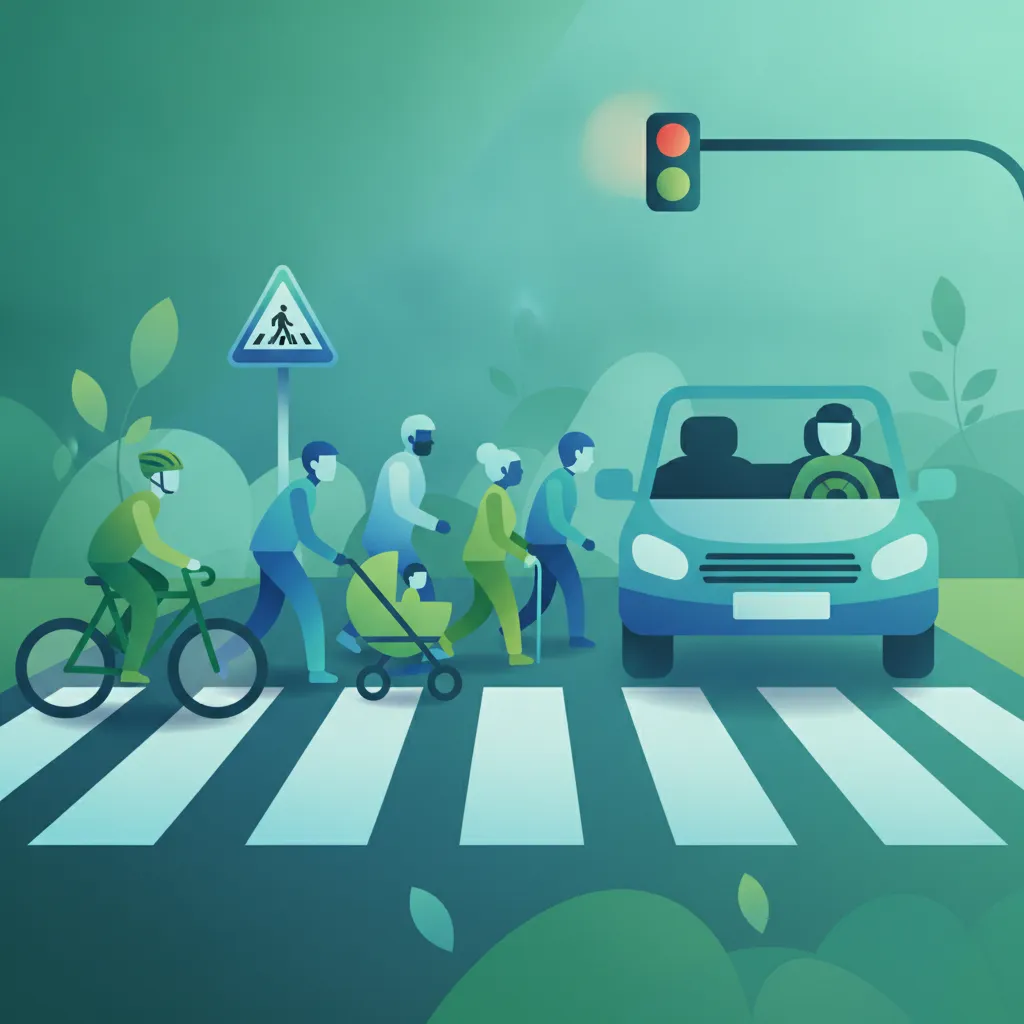
This lesson focuses on a driver's legal and ethical duty of care to all road users. It explains the concept of a road user hierarchy, which prioritizes the safety of vulnerable groups such as pedestrians, cyclists, and motorcyclists. You will learn the principles of defensive driving, anticipating potential hazards, and maintaining a courteous attitude on the road to ensure safety for everyone.

This lesson details the mandatory helmet safety standards in Great Britain, focusing on ECE certification marks and the functional differences between full-face and open-face designs. It provides practical guidance on how to select the correct size and achieve a proper fit, ensuring the chin strap and internal padding provide optimal protection. You will also learn about crucial maintenance, including regular inspection and knowing when to replace your helmet to ensure continued safety and legal compliance.

This lesson clarifies who has priority at junctions, whether they are marked with signs and lines or are unmarked. It covers the fundamental rule for roundabouts in the UK: give priority to traffic approaching from your right. You will learn the correct procedures for approaching, signalling, and choosing the appropriate lane on roundabouts and at other junctions.

This lesson explains the function of warning signs, which are mostly triangular and alert road users to potential dangers ahead. You will learn to identify signs for bends, junctions, slippery surfaces, and other hazards particularly relevant to motorcyclists. Acting on these warnings allows a rider to adjust speed and position proactively, enhancing safety.

This lesson highlights why motorcyclists are considered vulnerable road users. It covers the increased risk of serious injury in a collision due to lack of physical protection compared to car occupants. You will learn about common visibility challenges and how to adopt proactive, defensive strategies to mitigate risks and anticipate potential hazards on the road.
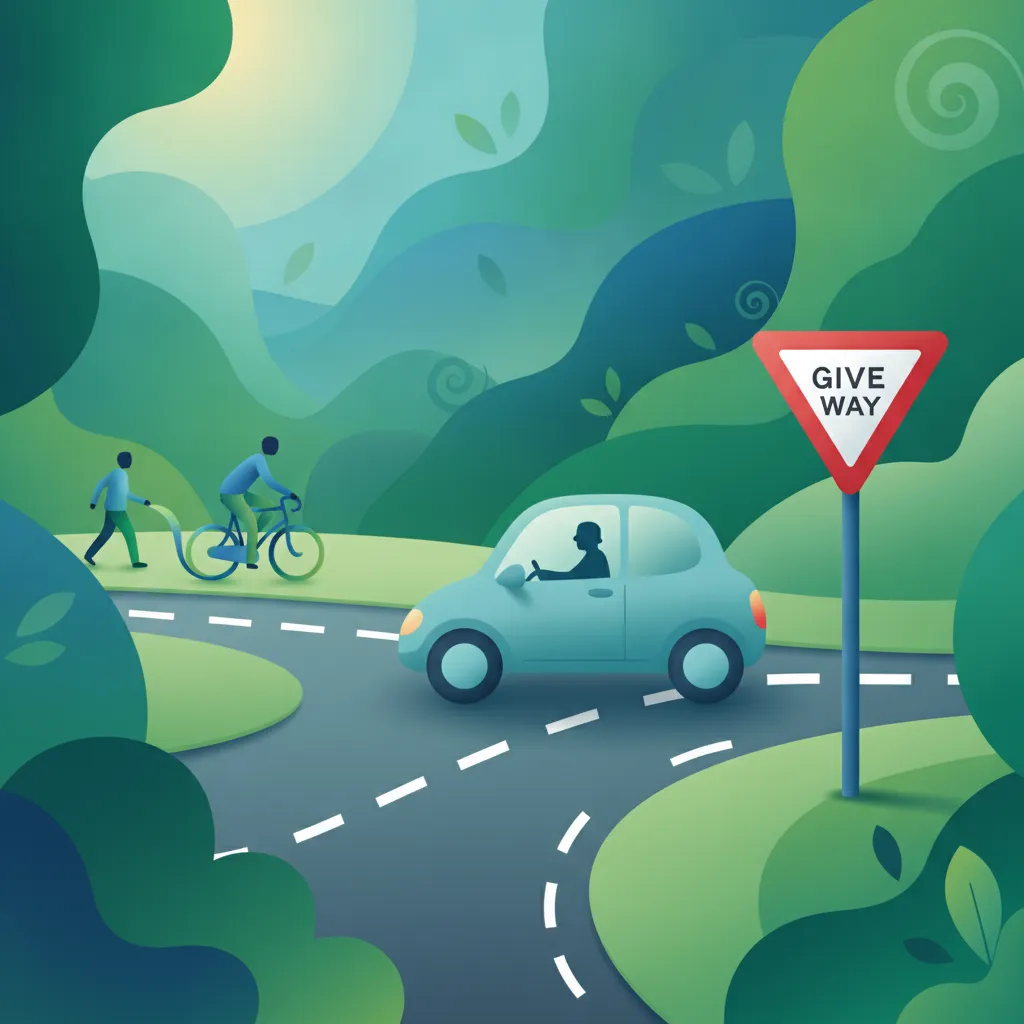
This lesson explains the critical rules of priority that govern traffic flow at junctions, roundabouts, and crossings throughout Great Britain. You will learn how to determine who has right-of-way at both marked and unmarked intersections, and the specific rules for giving way to traffic on roundabouts. The lesson also reinforces the hierarchy of road users from the Highway Code, ensuring you understand when to yield to pedestrians and other vulnerable users.
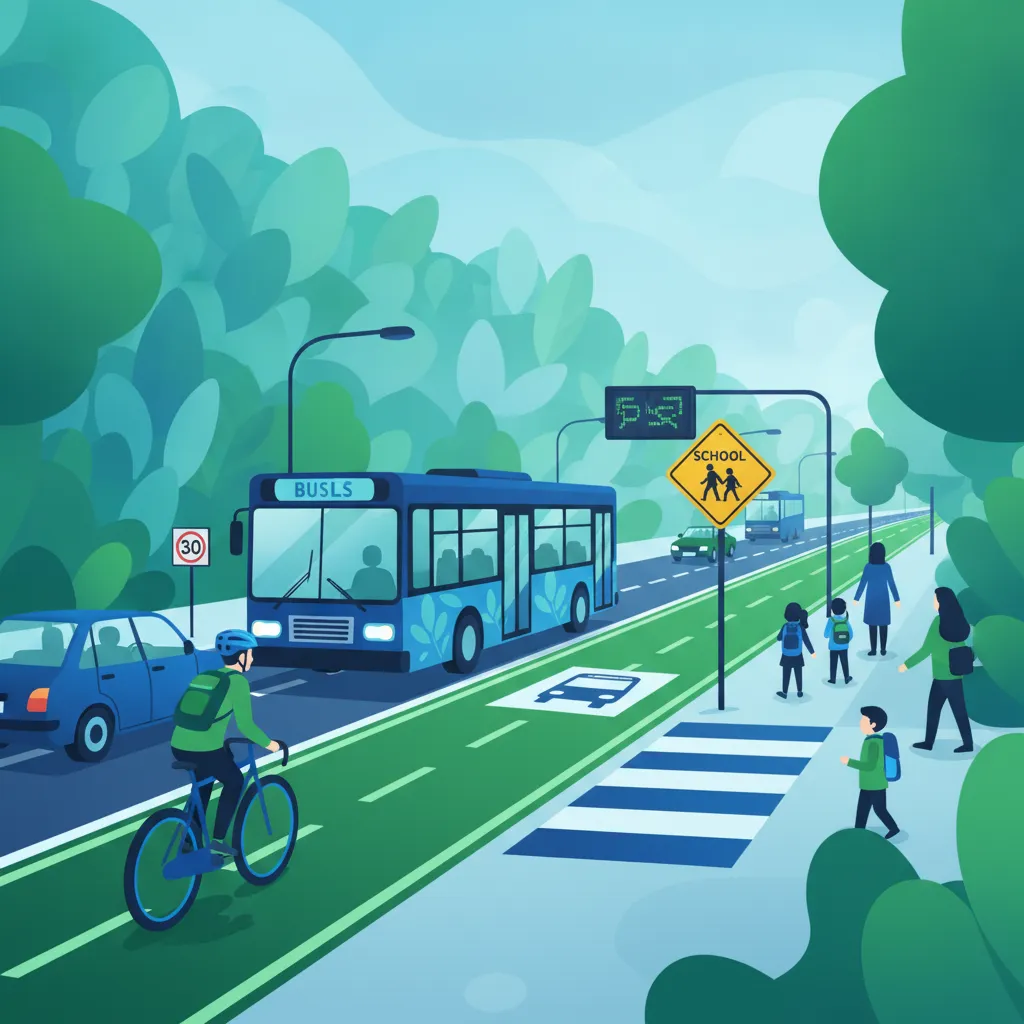
This lesson explains the regulations for special road zones common in urban areas. You will learn about speed restrictions near schools, how to read signs indicating if and when motorcycles can use bus lanes, and how to safely interact with cyclist infrastructure such as advanced stop lines. Compliance with these specific rules is crucial for legal and safe urban riding.

This lesson details the importance of wearing a legally compliant and correctly fitted motorcycle helmet. It explains UK and European safety standards (like ECE 22.06), the different types of helmets available, and how to check for a secure fit. You will also learn about helmet maintenance, visor regulations, and when a helmet should be replaced to ensure it remains effective.
Learn how to apply Highway Code rider duties in various real-world contexts. This lesson covers adapting to different road conditions, weather, and interactions with vulnerable road users for UK motorcyclists.

This lesson decodes the language of road markings painted on the road surface. You will learn the rules associated with solid and broken white lines, double white lines that restrict overtaking, and yellow lines controlling parking. Proper understanding of these markings is crucial for maintaining correct lane discipline and riding legally.
This lesson explains the regulations for special road zones common in urban areas. You will learn about speed restrictions near schools, how to read signs indicating if and when motorcycles can use bus lanes, and how to safely interact with cyclist infrastructure such as advanced stop lines. Compliance with these specific rules is crucial for legal and safe urban riding.
This lesson clarifies who has priority at junctions, whether they are marked with signs and lines or are unmarked. It covers the fundamental rule for roundabouts in the UK: give priority to traffic approaching from your right. You will learn the correct procedures for approaching, signalling, and choosing the appropriate lane on roundabouts and at other junctions.

This lesson contrasts the challenges of different road types. It covers how to handle the hidden bends, poor surfaces, and unexpected hazards of rural roads. It then details the specific procedures for using dual carriageways and motorways, including using slip roads, adhering to strict lane discipline, and safely overtaking at high speeds.

This lesson focuses on the dynamic and often unpredictable nature of urban traffic. It covers how to safely negotiate various pedestrian crossings, anticipate the movement of cyclists and pedestrians, and be aware of hazards like bus stops and car doors opening. You will also learn about the considerations for safe and legal filtering in slow-moving traffic.

This lesson covers the operation of traffic light signals and the rules for approaching them safely. It also provides a detailed explanation of different pedestrian crossings, such as zebra, pelican, and toucan crossings, clarifying the specific rules and priority for each. You will learn to anticipate the actions of pedestrians and other vulnerable road users at these locations.
This lesson explains the function of warning signs, which are mostly triangular and alert road users to potential dangers ahead. You will learn to identify signs for bends, junctions, slippery surfaces, and other hazards particularly relevant to motorcyclists. Acting on these warnings allows a rider to adjust speed and position proactively, enhancing safety.

This lesson explains the legal consequences of committing traffic offences. It covers how the penalty points system works, the number of points for common offences like speeding, and how accumulating 12 points can lead to disqualification under the 'totting-up' procedure. You will also learn about the specific rules for new riders, who can have their licence revoked with just 6 points.

A motorcyclist is particularly vulnerable to imperfections in the road surface. This lesson teaches you how to actively scan the road ahead to spot hazards like potholes, patches of gravel, or slippery diesel spills. You will learn safe techniques for either avoiding these hazards or crossing them with minimal risk if avoidance is not possible.

This lesson covers the unique aspects of motorway driving, from joining and leaving the carriageway to the strict lane discipline of keeping to the left unless overtaking. It explains the features of smart motorways, such as variable speed limits and the meaning of a Red X symbol above a lane. The safe procedure for handling a breakdown is also a key topic.
Find clear answers to common questions learners have about Rider Duties under the Highway Code. Learn how the lesson is structured, which driving theory objectives it supports, and how it fits into the overall learning path of units and curriculum progression in Great Britain. These explanations help you understand key concepts, lesson flow, and exam focused study goals.
Rules that use 'must' are legal requirements; ignoring them is a criminal offence and may lead to prosecution. Rules that use 'should' are recommendations, but if you are involved in an incident, these rules may be used in court to establish liability.
Yes, the fundamental duties regarding road safety, speed, and consideration for others are universal across all motorcycle licence categories. Every rider is expected to adhere to the same standards set out in the Highway Code.
The theory exam tests your understanding that you are a vulnerable road user who must still protect others, such as pedestrians or cyclists. Showing you understand this balance is key to passing your test.
Dive into our comprehensive question bank to find exactly what you need for your Great Britain theory test. Use our advanced filters to pinpoint specific subjects or test your knowledge on challenging areas, ensuring you're fully prepared for success.