This lesson provides a complete guide to understanding the road markings and lane lines you will encounter on Great Britain's roads. Mastering these rules is a critical requirement for your motorcycle theory test and essential for safe, legal riding on your A, A1, or A2 licence. You will learn to decode various markings, ensuring you can navigate junctions and traffic flows with confidence.
Lesson content overview
Road markings are a critical visual language painted directly onto the road surface, providing essential instructions, warnings, and guidance for all road users, including motorcyclists. For those preparing for the Great Britain Motorcycle Theory Course, mastering the interpretation and adherence to these markings is fundamental for safe riding, maintaining lane discipline, making informed overtaking decisions, and ensuring legal compliance. Misreading or ignoring these markings can lead to dangerous situations, collisions, and legal penalties.
This comprehensive lesson will decode the various types of road markings you will encounter across England, Scotland, and Wales, outlining their specific meanings and the rules associated with them. Understanding these visual cues helps motorcyclists predict traffic flow, manage their position, and ride confidently within the framework of the Highway Code and DVSA standards.
Road surface markings are much more than mere paint; they are a vital component of the Great Britain traffic management system. They work in conjunction with road signs and traffic lights to create a cohesive system that minimizes ambiguity and enhances road safety. For motorcyclists, the precise interpretation of these markings is paramount. Motorcycles, due to their smaller footprint and dynamic handling, often have unique considerations when interacting with road lines, particularly regarding lane positioning and filtering.
The Highway Code mandates specific behaviors in response to different markings, and non-compliance can result in fines, penalty points, or worse, serious accidents. Proper understanding allows riders to navigate complex road situations, safely merge, overtake, and park, thereby contributing to orderly traffic flow and reducing conflict points with other vehicles.
Always treat road markings as instructions, not just suggestions. They are legally enforceable and designed to keep you and other road users safe.
White lines painted on the road surface are primarily used to define the edges of the carriageway, separate lanes of traffic, or indicate areas where specific maneuvers are permitted or prohibited. Understanding the difference between solid and broken white lines, especially when riding a motorcycle, is crucial for safe and legal progress.
A solid white line is a continuous, unbroken white line painted along the centre of a carriageway or along the edge of a lane. Its meaning is definitive: it indicates that overtaking or crossing the line is strictly prohibited for all vehicles, including motorcycles. This rule is in place to prevent unsafe maneuvers where visibility might be restricted, or where crossing the line would pose a significant hazard to oncoming traffic.
Motorcyclists must not straddle or cross a solid white line unless it is absolutely necessary to avoid an immediate obstruction or hazard on their side of the road, such as a parked vehicle or debris. Even then, such a maneuver must be executed with extreme caution. A common misunderstanding among some riders is believing that because a motorcycle is smaller, it can filter by riding partially on or over a solid white line; this is illegal and dangerous.
Practical Application: If you encounter a solid white line, you must remain in your current lane. This means no overtaking if it involves crossing the line, and no intentional riding on the line itself. On dual carriageways, a solid white line might separate the main traffic flow from the hard shoulder, which is for emergencies only.
In contrast to solid lines, a broken white line consists of a series of short white dashes with gaps in between. This type of marking allows overtaking, changing lanes, and crossing for all vehicles, provided it is safe to do so and no other signs or circumstances prohibit the action.
When encountering broken white lines, motorcyclists may overtake slower vehicles or change lanes after checking their mirrors, performing a lifesaver glance, and signaling appropriately. It is essential to ensure there is no oncoming traffic and that you have sufficient visibility and space to complete the maneuver safely. Never overtake on a broken line if you are approaching a junction, a bend, or a crest where your view of the road ahead is restricted.
Common Mistake: Overtaking on a broken line without confirming clear sightlines or while approaching a "No Overtaking" sign. Always prioritize safety and supplementary signage over the permissive nature of the broken line itself.
Double white lines consist of two parallel solid white lines painted together. This marking indicates an even stricter prohibition on crossing or straddling the line than a single solid white line. Under normal circumstances, no overtaking or lane crossing is permitted.
Key Rule: If the double white lines are solid on both sides, you must not cross or straddle them. This rule is often found on high-speed roads, at approaches to junctions, or on sections of road with limited visibility, where crossing would be exceptionally dangerous. The only exception is to pass a stationary obstruction (like a breakdown) or a cyclist or horse, provided you can do so safely and without endangering anyone, and you can return to your side of the road before the lines become single solid white lines. Otherwise, crossing is a legal offence.
Important Note: The presence of a broken white line alongside a double solid line means the broken line's rules apply to traffic on that side, while the solid line's rules apply to traffic on the other side. However, if you are on the side of the road with the double solid lines, the prohibition still applies to you.
Maintaining correct and consistent positioning within the boundaries of your designated lane, as defined by road surface markings, to ensure orderly traffic flow and reduce conflict.
Yellow lines, painted along the edge of the road, are specifically used to regulate parking, waiting, and loading restrictions. These lines are critical for maintaining traffic flow, especially in urban and congested areas. Motorcyclists must understand these rules to avoid fines and causing obstruction.
A single solid yellow line painted along the edge of the road indicates that parking or waiting is prohibited during specific hours, which are usually indicated by nearby road signs. These signs will specify the times and days when the restriction applies.
Motorcyclists must not park or stop on the road edge where a single solid yellow line is present during its hours of operation. You may, however, ride over it as part of staying within your lane, provided you remain safely within the carriageway. It is not permissible to use the yellow line area for temporary waiting, even for a passenger, unless specified by an accompanying sign.
Double yellow lines (two parallel solid yellow lines) along the edge of the road indicate a stricter prohibition against stopping, waiting, or loading at any time. This restriction applies 24 hours a day, seven days a week, unless specific signs indicate a seasonal or time-limited exception.
Motorcyclists, like all road users, must not stop, park, or load on double yellow lines under any normal circumstances. The only exceptions are for genuine emergencies, such as a breakdown, or if directed by a police officer. If you must stop due to a breakdown, you should move your motorcycle to a safer location as soon as possible and activate your hazard warning lights to alert other road users.
Common Misunderstanding: Believing that double yellow lines allow for brief waiting or loading. This is generally not the case unless specific signs permit it, which is rare.
Beyond white and yellow, other colours and solid lines can delineate specific lane uses. A solid white line on the edge of a lane, accompanied by a "Bus Lane" sign, indicates a lane reserved exclusively for buses. Generally, motorcycles are prohibited from using these lanes unless explicit signage states "Buses and Motorcycles" or "Buses and Two-Wheeled Vehicles" or similar.
Similarly, cycle lanes are often marked with a solid white line and a bicycle symbol, sometimes with a coloured surface (e.g., green). Motorcyclists must not use lanes designated exclusively for cyclists. Always check accompanying signage; never assume a lane is shared unless explicitly indicated. Ignoring these can lead to fines and dangerous encounters with vulnerable road users.
Beyond standard lane and parking lines, there are several other important road markings that motorcyclists must understand to ensure safe and legal riding.
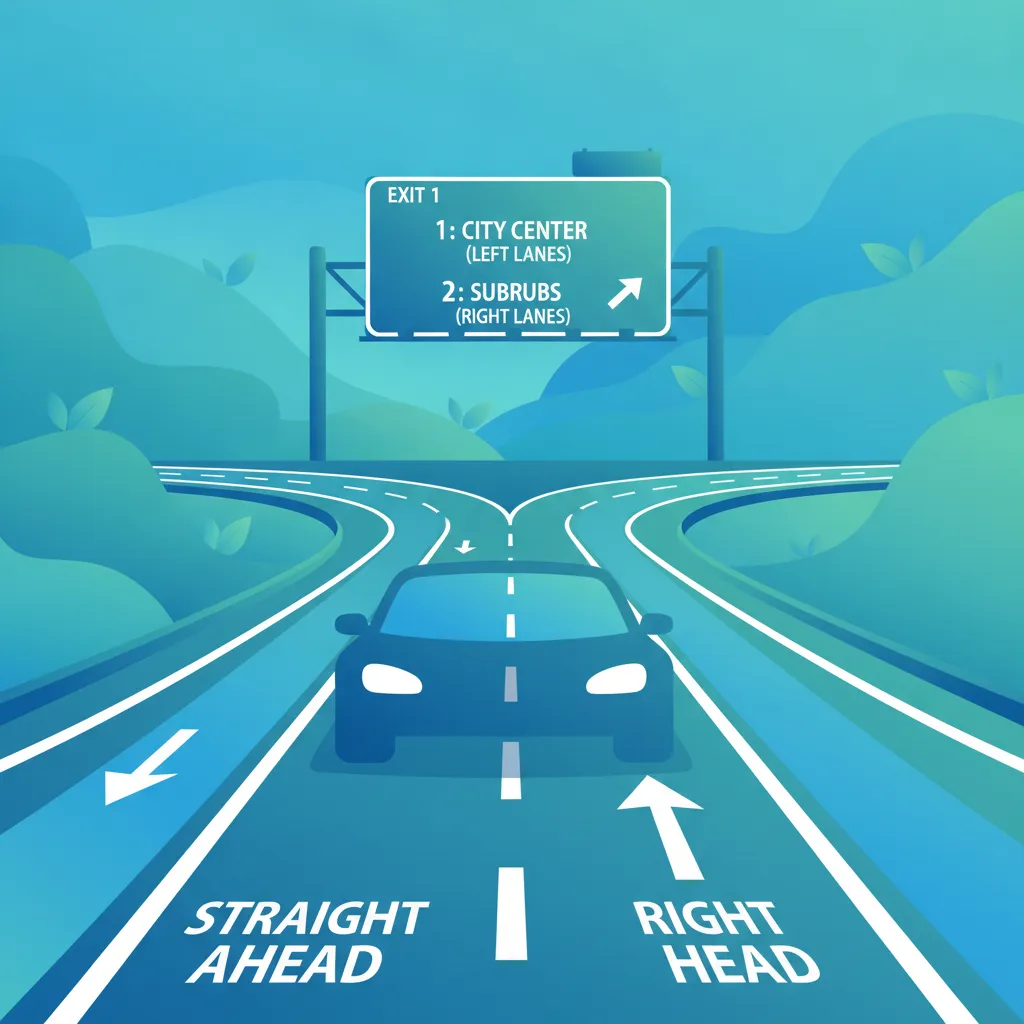
Lane arrows are directional symbols painted directly onto the road surface within lanes, indicating the permitted movements for traffic using that lane. These can include straight-ahead arrows, left-turn arrows, right-turn arrows, or combinations.
Mandatory Compliance: Motorcyclists must obey the direction indicated by the lane arrows. If you are in a lane with a "left turn only" arrow, you must turn left; you cannot proceed straight ahead. Ignoring lane arrows, particularly when approaching intersections, can lead to collisions as other drivers expect you to follow the indicated movement. For motorcyclists, lane arrows often help in urban areas by suggesting optimal positioning before turns.
Zig-zag lines are red or white diagonal markings painted along the approach to certain pedestrian crossings, such as zebra crossings or school crossings. They serve as a crucial warning to drivers about the presence of a crossing and impose strict rules to protect pedestrians.
Key Rule: You must not overtake or park on zig-zag lines. If a vehicle ahead of you has stopped at a pedestrian crossing marked with zig-zag lines, you must not overtake it. This rule is designed to ensure that drivers have a clear view of pedestrians stepping onto the crossing and that pedestrians have a clear view of approaching traffic. Failing to stop or overtaking here is illegal and highly dangerous.
During road construction, maintenance, or other temporary works, temporary surface markings are often used. These can include yellow zig-zag lines, temporary solid lines, or hazard strips. These temporary markings may replace or supplement permanent markings.
Legal Weight: It is critical for motorcyclists to understand that temporary markings have the same legal weight and authority as permanent markings for the duration of the roadworks. You must obey them just as you would permanent lines. They often indicate changes in lane configuration, lane reductions, or hazardous work zones, requiring reduced speed and increased caution. Ignoring temporary markings can lead to collisions with roadworkers or construction equipment.
The width of a lane, defined by its markings, significantly influences a motorcyclist's safe riding position. While there's no strict legal requirement for specific lane centering for motorcycles, safety recommendations provide guidance:
Important Note on Filtering: While filtering between stationary or slow-moving traffic is a common practice for motorcyclists, it must always be done legally and safely. This means staying entirely within legal lane boundaries and never straddling or crossing solid white lines (unless in an emergency to avoid a hazard), double white lines, or other prohibited areas. Misjudging lane width during filtering can lead to accidents or legal penalties for illegal lane use.
The meaning and safe application of road markings can vary significantly depending on external conditions and the specific road environment.
Every road marking discussed holds statutory authority under the Highway Code in Great Britain. Failure to comply with these markings is a legal offence and can lead to significant penalties, including:
More importantly, ignoring road markings dramatically increases the risk of collisions, which can result in serious injuries or fatalities for motorcyclists and other road users. Defensive riding always involves strict adherence to all road markings.
Understanding road markings is a fundamental building block for safe and confident motorcycle riding. This knowledge is crucial for practical riding skills such as advanced lane positioning, effective hazard perception, and safe overtaking maneuvers.
Road markings in Great Britain form a visual language that dictates lane discipline, overtaking permissions, and parking rules. Solid white lines prohibit crossing except to avoid an immediate obstruction, while broken white lines allow lane changes when safe and visibility is clear. Double white lines impose an absolute prohibition with no crossing permitted under normal circumstances. Yellow lines regulate parking, with single lines restricting stopping during specified hours and double lines prohibiting it entirely. Motorcyclists must obey all markings, including temporary markings during roadworks, and must follow lane arrows indicating permitted directions, treating these visual cues as legally enforceable instructions.
A short set of high-value points that capture the most important learning from this lesson.
A solid white line prohibits crossing or straddling for all vehicles, including motorcycles, unless essential to avoid an obstruction on your side of the road.
Broken white lines allow overtaking and lane changes only when it is safe to do so and visibility is not restricted.
Double white lines impose the strictest prohibition on crossing; you cannot cross them except to pass a stationary obstruction like a breakdown or cyclist.
Single yellow lines restrict parking during specified hours shown on nearby signs, while double yellow lines prohibit stopping at any time.
Lane arrows painted on the road surface are mandatory directions that must be followed when riding in that lane.
Explore all units and lessons included in this driving theory course.
Solid white = no crossing; Broken white = crossing allowed when safe; Double solid = absolute prohibition.
Yellow lines control parking and waiting, not riding; motorcycles must not stop on yellow lines during restricted hours.
Zig-zag lines before crossings prohibit overtaking or parking and require you to stop behind a vehicle that has stopped.
Temporary roadwork markings carry the same legal authority as permanent markings and must be obeyed.
On narrow lanes under 3 metres wide, position toward the centre to avoid edge hazards and stay visible.
Assuming a motorcycle can filter by riding over or straddling a solid white line, which is illegal.
Believing double yellow lines allow brief waiting or loading; they prohibit stopping at any time unless signs specify otherwise.
Overtaking on broken white lines without checking for junctions, bends, or crests where visibility is limited.
Ignoring supplementary signs that may override or modify what the road markings alone would suggest.
Failing to obey lane arrows and attempting to go straight in a turn-only lane, creating conflict with other traffic.
Lesson content overview
A short set of high-value points that capture the most important learning from this lesson.
A solid white line prohibits crossing or straddling for all vehicles, including motorcycles, unless essential to avoid an obstruction on your side of the road.
Broken white lines allow overtaking and lane changes only when it is safe to do so and visibility is not restricted.
Double white lines impose the strictest prohibition on crossing; you cannot cross them except to pass a stationary obstruction like a breakdown or cyclist.
Single yellow lines restrict parking during specified hours shown on nearby signs, while double yellow lines prohibit stopping at any time.
Lane arrows painted on the road surface are mandatory directions that must be followed when riding in that lane.
Explore all units and lessons included in this driving theory course.
Solid white = no crossing; Broken white = crossing allowed when safe; Double solid = absolute prohibition.
Yellow lines control parking and waiting, not riding; motorcycles must not stop on yellow lines during restricted hours.
Zig-zag lines before crossings prohibit overtaking or parking and require you to stop behind a vehicle that has stopped.
Temporary roadwork markings carry the same legal authority as permanent markings and must be obeyed.
On narrow lanes under 3 metres wide, position toward the centre to avoid edge hazards and stay visible.
Assuming a motorcycle can filter by riding over or straddling a solid white line, which is illegal.
Believing double yellow lines allow brief waiting or loading; they prohibit stopping at any time unless signs specify otherwise.
Overtaking on broken white lines without checking for junctions, bends, or crests where visibility is limited.
Ignoring supplementary signs that may override or modify what the road markings alone would suggest.
Failing to obey lane arrows and attempting to go straight in a turn-only lane, creating conflict with other traffic.
Explore search topics learners often look for when studying Road Markings and Lane Lines for Motorcyclists. These topics reflect common questions about road rules, driving situations, safety guidance, and lesson level theory preparation for learners in Great Britain.
Browse additional driving theory lessons that cover connected traffic rules, road signs, and common driving situations related to this topic. Improve your understanding of how different rules interact across everyday traffic scenarios.
Learn the specific rules for less common road markings such as zig-zag lines, bus lane markings, and temporary roadworks lines. Understand how to navigate these safely and legally to pass your GB motorcycle theory.
This lesson focuses on the rules conveyed by road markings, such as solid and broken white lines that dictate overtaking rules and lane boundaries. You will learn to interpret waiting and stopping restrictions indicated by yellow and red lines, and understand markings for specific road users like bus and cycle lanes. Maintaining correct lane discipline based on these markings is a fundamental skill for safe navigation and compliance with the Highway Code.
This lesson explains markings found at the side of the road that regulate parking and stopping. You will learn the meaning of single and double yellow lines, and the stricter rules associated with red lines on 'Red Routes'. The lesson also covers markings for parking bays, loading zones, and hatched areas that are designed to separate traffic.
This lesson explains the function of warning signs, which are mostly triangular and alert road users to potential dangers ahead. You will learn to identify signs for bends, junctions, slippery surfaces, and other hazards particularly relevant to motorcyclists. Acting on these warnings allows a rider to adjust speed and position proactively, enhancing safety.
This lesson explains how lines running parallel to the kerb control traffic movement. You will learn that broken white lines divide lanes, while solid white lines generally prohibit crossing them. The specific rules for double white lines, including when you are permitted to cross, are also covered in detail to ensure safe overtaking.

This lesson focuses on regulatory signs, which are legally enforceable and typically circular in shape. You will learn the meaning of signs with red borders that prohibit actions and blue signs that give a mandatory instruction. Understanding these signs, such as speed limits and 'no entry', is essential for lawful and safe riding.
This lesson focuses on regulatory road signs, which convey legally enforceable instructions that all road users must follow. You will learn to identify and understand signs dictating speed limits, prohibited actions like 'no entry' or 'no overtaking', and mandatory directions at junctions. The content explains the distinct shapes and colours used for these signs, ensuring you can comply with their instructions correctly and avoid penalties while riding your AM vehicle.

This lesson explains how to drive safely through areas where roadworks are taking place. It stresses the importance of obeying all temporary signs, especially mandatory speed limits, which are in place for your safety and the safety of road workers. You will learn about navigating narrow lanes, contraflow systems, and how to follow official diversion signs.
This lesson teaches you to interpret warning signs, which are typically triangular and designed to alert you to potential hazards ahead. You will learn the meanings of common signs indicating sharp curves, slippery surfaces, roadworks, or areas with frequent pedestrian or animal crossings. Understanding these signs is crucial for anticipating dangers and adjusting your speed and position defensively, which is especially important for vulnerable riders of AM vehicles.

A motorcyclist is particularly vulnerable to imperfections in the road surface. This lesson teaches you how to actively scan the road ahead to spot hazards like potholes, patches of gravel, or slippery diesel spills. You will learn safe techniques for either avoiding these hazards or crossing them with minimal risk if avoidance is not possible.
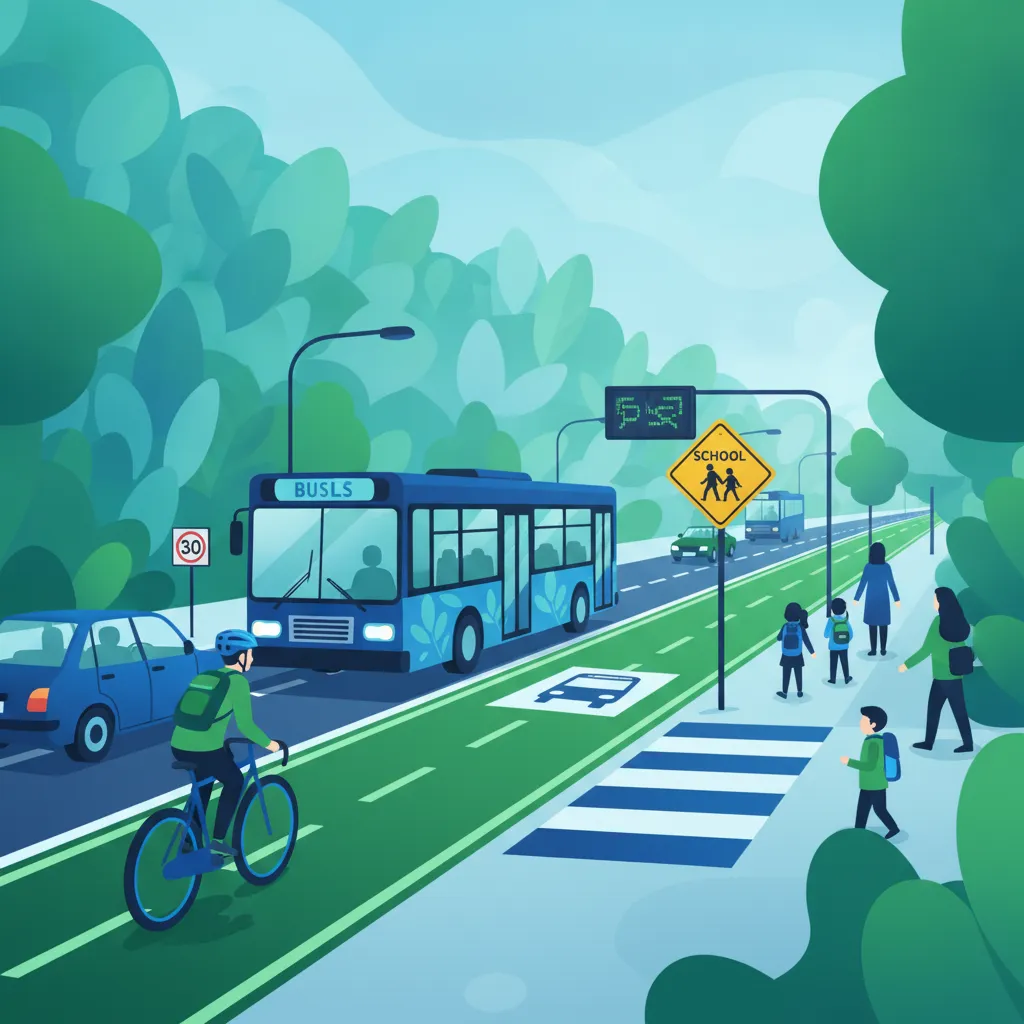
This lesson explains the regulations for special road zones common in urban areas. You will learn about speed restrictions near schools, how to read signs indicating if and when motorcycles can use bus lanes, and how to safely interact with cyclist infrastructure such as advanced stop lines. Compliance with these specific rules is crucial for legal and safe urban riding.
Explore how weather, road type, and lighting conditions affect the visibility and interpretation of road markings. Understand safe riding positions and legal compliance across various UK driving environments.
This lesson focuses on the rules conveyed by road markings, such as solid and broken white lines that dictate overtaking rules and lane boundaries. You will learn to interpret waiting and stopping restrictions indicated by yellow and red lines, and understand markings for specific road users like bus and cycle lanes. Maintaining correct lane discipline based on these markings is a fundamental skill for safe navigation and compliance with the Highway Code.
This lesson explains the function of warning signs, which are mostly triangular and alert road users to potential dangers ahead. You will learn to identify signs for bends, junctions, slippery surfaces, and other hazards particularly relevant to motorcyclists. Acting on these warnings allows a rider to adjust speed and position proactively, enhancing safety.

This lesson contrasts the challenges of different road types. It covers how to handle the hidden bends, poor surfaces, and unexpected hazards of rural roads. It then details the specific procedures for using dual carriageways and motorways, including using slip roads, adhering to strict lane discipline, and safely overtaking at high speeds.
This lesson explains the regulations for special road zones common in urban areas. You will learn about speed restrictions near schools, how to read signs indicating if and when motorcycles can use bus lanes, and how to safely interact with cyclist infrastructure such as advanced stop lines. Compliance with these specific rules is crucial for legal and safe urban riding.
This lesson explains markings found at the side of the road that regulate parking and stopping. You will learn the meaning of single and double yellow lines, and the stricter rules associated with red lines on 'Red Routes'. The lesson also covers markings for parking bays, loading zones, and hatched areas that are designed to separate traffic.
This lesson explains how lines running parallel to the kerb control traffic movement. You will learn that broken white lines divide lanes, while solid white lines generally prohibit crossing them. The specific rules for double white lines, including when you are permitted to cross, are also covered in detail to ensure safe overtaking.
This lesson focuses on regulatory signs, which are legally enforceable and typically circular in shape. You will learn the meaning of signs with red borders that prohibit actions and blue signs that give a mandatory instruction. Understanding these signs, such as speed limits and 'no entry', is essential for lawful and safe riding.
This lesson focuses on the dynamic and often unpredictable nature of urban traffic. It covers how to safely negotiate various pedestrian crossings, anticipate the movement of cyclists and pedestrians, and be aware of hazards like bus stops and car doors opening. You will also learn about the considerations for safe and legal filtering in slow-moving traffic.
A motorcyclist is particularly vulnerable to imperfections in the road surface. This lesson teaches you how to actively scan the road ahead to spot hazards like potholes, patches of gravel, or slippery diesel spills. You will learn safe techniques for either avoiding these hazards or crossing them with minimal risk if avoidance is not possible.
This lesson teaches you to interpret warning signs, which are typically triangular and designed to alert you to potential hazards ahead. You will learn the meanings of common signs indicating sharp curves, slippery surfaces, roadworks, or areas with frequent pedestrian or animal crossings. Understanding these signs is crucial for anticipating dangers and adjusting your speed and position defensively, which is especially important for vulnerable riders of AM vehicles.
Find clear answers to common questions learners have about Road Markings and Lane Lines for Motorcyclists. Learn how the lesson is structured, which driving theory objectives it supports, and how it fits into the overall learning path of units and curriculum progression in Great Britain. These explanations help you understand key concepts, lesson flow, and exam focused study goals.
You should generally avoid crossing a single solid white line unless it is necessary to avoid an obstruction, pass a stationary vehicle, or enter a side road/premises. Always ensure it is safe and legal to do so before moving.
If the line nearest to you is solid, you must not cross or straddle it to overtake unless you need to pass a stationary vehicle or a pedal cycle, horse, or road maintenance vehicle moving at 10 mph or less. Otherwise, you must stay behind the line.
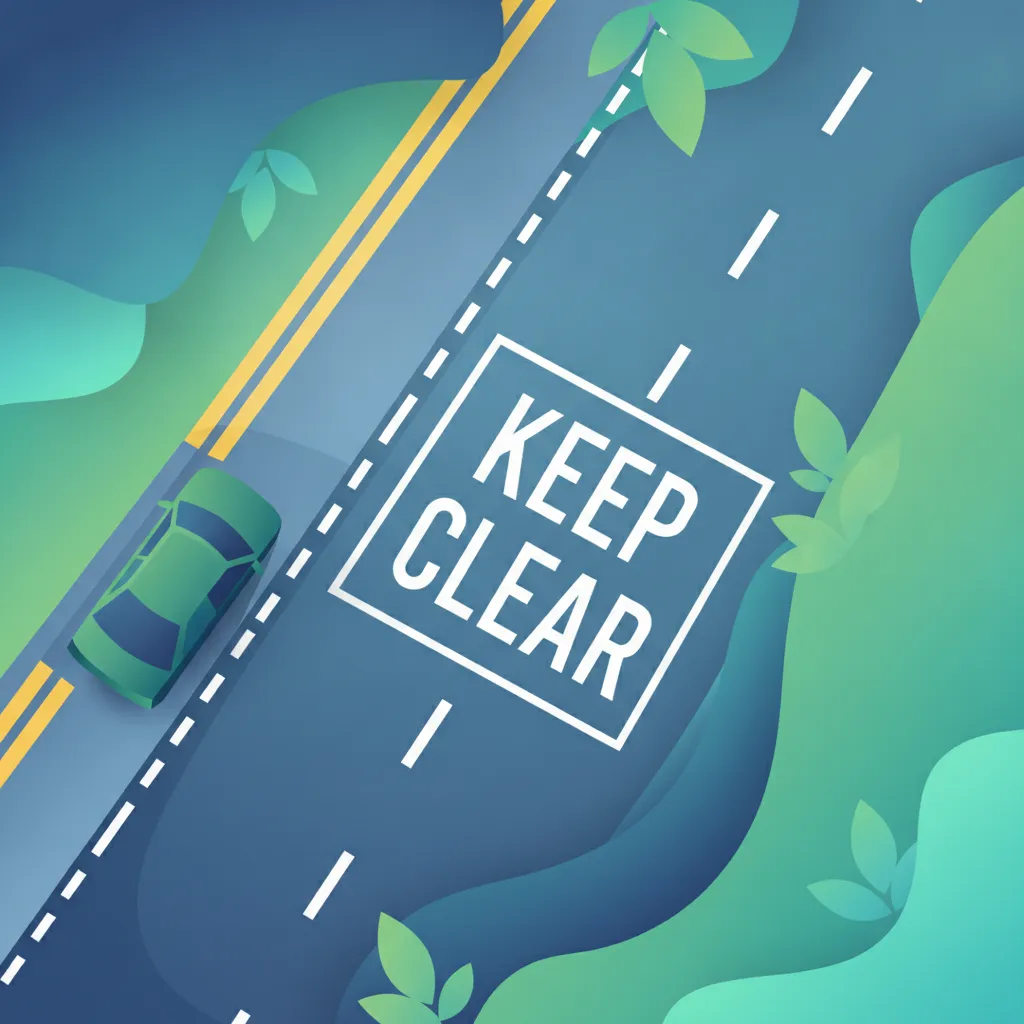
You must not enter a box junction unless your exit is clear. The only exception is when you are waiting to turn right, provided you are not prevented from doing so by oncoming traffic. Always keep a clear space for other road users.
While the road markings apply to all vehicles, motorcycles often use different lane positions to stay visible and avoid surface hazards like oil or gravel. However, you must always respect the lane-demarcating white lines just like any other vehicle.
Dive into our comprehensive question bank to find exactly what you need for your Great Britain theory test. Use our advanced filters to pinpoint specific subjects or test your knowledge on challenging areas, ensuring you're fully prepared for success.