
This lesson prepares you for the complexities of riding in urban environments, focusing on pedestrian crossings, filtering, and hidden dangers. It builds on your knowledge of traffic signals and priority rules to help you stay safe and legal in busy city streets. Successfully mastering these skills is essential for both your theory exam and your practical riding success.
Lesson content overview
Navigating urban environments on a motorcycle presents a unique set of challenges, demanding heightened awareness, precise control, and a thorough understanding of traffic regulations. This lesson, part of your Great Britain Motorcycle Theory Course, focuses on the dynamic and often unpredictable nature of urban traffic, with a particular emphasis on interacting safely with pedestrians and cyclists at various crossings, managing hazards like bus stops and opening car doors, and understanding the legalities of filtering in slow-moving traffic. Mastery of these topics is crucial for reducing collisions with vulnerable road users (VRUs), complying with legal obligations, and maintaining safe spatial awareness in dense urban settings.
Urban traffic environments are characterized by a high density of vehicles, pedestrians, and cyclists, leading to constant changes in road conditions and a greater likelihood of unexpected hazards. As a motorcycle rider, your smaller profile and higher acceleration capabilities mean that other road users may find it harder to predict your actions, placing a greater responsibility on you to ride defensively and anticipate potential dangers. The core principles for urban riding include prioritizing the safety of vulnerable road users, continuously scanning for emerging hazards, understanding the specific legal provisions for filtering, and maintaining safe distances from parked vehicles and bus stops.
Your size and speed as a motorcyclist make it crucial to understand how your presence is perceived by others. You must constantly scan ahead and to the sides, anticipating the actions of cars, cyclists, and pedestrians. This proactive approach allows you sufficient reaction time to manage hazards that appear abruptly, reducing the need for emergency braking and improving your ability to plan safe manoeuvres.
Pedestrian crossings are designated locations where pedestrians have legal priority to cross the road. They are identified by specific markings, signals, or signs and are fundamental to urban road safety. Motorcyclists must be prepared to stop, give a wide berth, and refrain from overtaking if a pedestrian is waiting or crossing.
Zebra crossings are easily identified by their distinctive black and white striped markings across the road, often accompanied by flashing amber beacons (Belisha beacons) on either side. At these crossings, pedestrians have the right-of-way once they have stepped onto the crossing. This means you, as a motorcycle rider, must stop before the stop line if any pedestrian is on or about to step onto the crossing.
It is a legal requirement to give way to pedestrians who are already on the crossing. You must not overtake any vehicle that has stopped at a zebra crossing to allow pedestrians to cross, as this could hide a pedestrian and lead to a serious collision. Always allow the pedestrian to cross safely and completely before proceeding.
Unlike zebra crossings, signal-controlled crossings use traffic lights to manage the flow of both vehicles and pedestrians. Motorcyclists must obey these traffic signals strictly.
Beyond the standard crossings, you may encounter school crossings and shared spaces, which demand even greater vigilance.
Filtering, also known as 'lane splitting' in some regions, is a common manoeuvre for motorcyclists in slow-moving or stationary traffic. It involves moving between lines of vehicles to progress. While often legal, it is conditional and must always be performed safely.
For filtering to be legal and safe in Great Britain, several crucial conditions must be met:
Filtering without adhering to the conditions outlined above is illegal and extremely dangerous. Examples of illegal filtering include:
Consequences of illegal filtering can range from penalty points on your licence and fines to serious accidents resulting in injury or even fatality. Always prioritize safety over making progress in traffic.
The "dooring" hazard is a significant risk for motorcyclists in urban areas. This occurs when a driver or passenger of a parked vehicle suddenly opens a door into the path of a passing motorcycle or cyclist. These incidents can cause severe injuries, as the rider has minimal time to react.
To prevent dooring accidents, you must maintain a safe lateral distance (a "cushion") from parked vehicles.
This buffer zone allows you sufficient time and space to react if a door unexpectedly opens. Always scan parked vehicles for occupants, brake lights, or any signs of movement that might indicate a door is about to open.
Bus stops in urban areas are hotspots for potential hazards. Buses frequently pull in and out, often blocking lanes, and passengers may alight or board, sometimes crossing the road unpredictably.
When approaching a bus stop, be prepared for:
Always reduce your speed, maintain a safe following distance, and be ready to stop. Avoid overtaking a bus that is stationary at a bus stop, as you cannot predict the actions of alighting passengers or other vehicles.
Understanding and anticipating the behaviour of vulnerable road users (VRUs) – pedestrians and cyclists – is fundamental to safe urban riding. They are the least protected and most susceptible to serious injury in a collision.
Pedestrians, especially children, the elderly, or those distracted by phones, may not always follow traffic rules or pay full attention. You must:
Cyclists are increasingly prevalent in urban areas. They often share lanes with motor vehicles and may use dedicated cycle infrastructure.
Your lane positioning is critical for safety and visibility in urban traffic. Riding defensively means choosing a position that maximises your view of the road ahead and your visibility to other road users, while also providing an escape route if needed.
Road markings and signs are your primary source of information on the road. In urban areas, they are particularly important for indicating crossing types, lane usage, filtering allowances, and pedestrian zones.
Misreading or ignoring these visual cues can lead to violations, penalties, and dangerous situations. Always be observant and interpret markings correctly.
Urban riding demands constant adaptation to varying conditions, which significantly impact visibility, grip, and reaction times.
Adhering to the Highway Code and relevant traffic laws is non-negotiable for safe urban riding in Great Britain.
Understanding these rules is not just about avoiding penalties; it's about protecting yourself and others on the road.
Avoiding common pitfalls is key to becoming a safe urban rider.
Explore all units and lessons included in this driving theory course.
Lesson content overview
Explore all units and lessons included in this driving theory course.
Explore search topics learners often look for when studying Urban Traffic Challenges and Pedestrian Crossings. These topics reflect common questions about road rules, driving situations, safety guidance, and lesson level theory preparation for learners in Great Britain.
Browse additional driving theory lessons that cover connected traffic rules, road signs, and common driving situations related to this topic. Improve your understanding of how different rules interact across everyday traffic scenarios.
Learn to identify and manage risks from pedestrians, cyclists, and other urban traffic challenges. Understand how to navigate busy city streets safely, focusing on vulnerable road users and essential GB driving theory principles.
This lesson contrasts the challenges of different road types. It covers how to handle the hidden bends, poor surfaces, and unexpected hazards of rural roads. It then details the specific procedures for using dual carriageways and motorways, including using slip roads, adhering to strict lane discipline, and safely overtaking at high speeds.
This lesson covers the operation of traffic light signals and the rules for approaching them safely. It also provides a detailed explanation of different pedestrian crossings, such as zebra, pelican, and toucan crossings, clarifying the specific rules and priority for each. You will learn to anticipate the actions of pedestrians and other vulnerable road users at these locations.
This lesson explains the regulations for special road zones common in urban areas. You will learn about speed restrictions near schools, how to read signs indicating if and when motorcycles can use bus lanes, and how to safely interact with cyclist infrastructure such as advanced stop lines. Compliance with these specific rules is crucial for legal and safe urban riding.
This lesson highlights why motorcyclists are considered vulnerable road users. It covers the increased risk of serious injury in a collision due to lack of physical protection compared to car occupants. You will learn about common visibility challenges and how to adopt proactive, defensive strategies to mitigate risks and anticipate potential hazards on the road.

Defensive riding is the practice of actively anticipating potential hazards rather than just reacting to them. This lesson teaches you how to scan for clues, predict the actions of other road users, and position yourself to avoid trouble. By developing strong anticipation skills, you can significantly reduce your risk of being taken by surprise on the road.
This lesson focuses on safe interaction with cyclists, a key aspect of urban driving for PCV operators. It details the rules for cycle lanes and advanced stop lines, and the correct procedure for overtaking cyclists, emphasizing the need to provide ample space. The content stresses the importance of frequent mirror checks to manage blind spots where cyclists can be hidden, especially when turning at junctions, to ensure their safety and comply with the Highway Code's road user hierarchy.

This lesson identifies behaviours that significantly increase a rider's risk of being involved in a collision. It explains the dangers of excessive speed, following too closely, and aggressive riding. You will learn how a rider's attitude and choices directly contribute to their safety and the legal penalties associated with these offences.

This lesson explains how to adapt your driving around different vehicles. You will learn to look out for motorcyclists, who are often hard to see, especially at junctions. It also covers the challenges of sharing the road with large vehicles, such as their extended blind spots, wider turning circles, and the wind turbulence they can create.

This lesson focuses on the safe interaction between cars and bicycles. It covers the importance of giving cyclists ample room when overtaking—at least 1.5 metres—and looking for them before turning or changing lanes. You will also learn about cyclist-specific infrastructure like cycle lanes and how to use the 'Dutch Reach' method to open your car door safely.
This lesson teaches drivers how to identify various types of vulnerable road users and anticipate their potential actions to prevent conflicts. It covers the specific risks associated with pedestrians, cyclists, motorcyclists, children, and elderly or disabled individuals. Emphasis is placed on heightened awareness and defensive driving techniques required to share the road safely. Understanding their perspectives and typical behaviours is key to protecting them and maintaining safety for everyone.
Master the specific rules for urban motorcycle riding in Great Britain, including safe filtering techniques, navigating pedestrian crossings, and managing hazards like bus stops and parked cars, all explained for your theory.
This lesson covers the operation of traffic light signals and the rules for approaching them safely. It also provides a detailed explanation of different pedestrian crossings, such as zebra, pelican, and toucan crossings, clarifying the specific rules and priority for each. You will learn to anticipate the actions of pedestrians and other vulnerable road users at these locations.
This lesson explains the regulations for special road zones common in urban areas. You will learn about speed restrictions near schools, how to read signs indicating if and when motorcycles can use bus lanes, and how to safely interact with cyclist infrastructure such as advanced stop lines. Compliance with these specific rules is crucial for legal and safe urban riding.
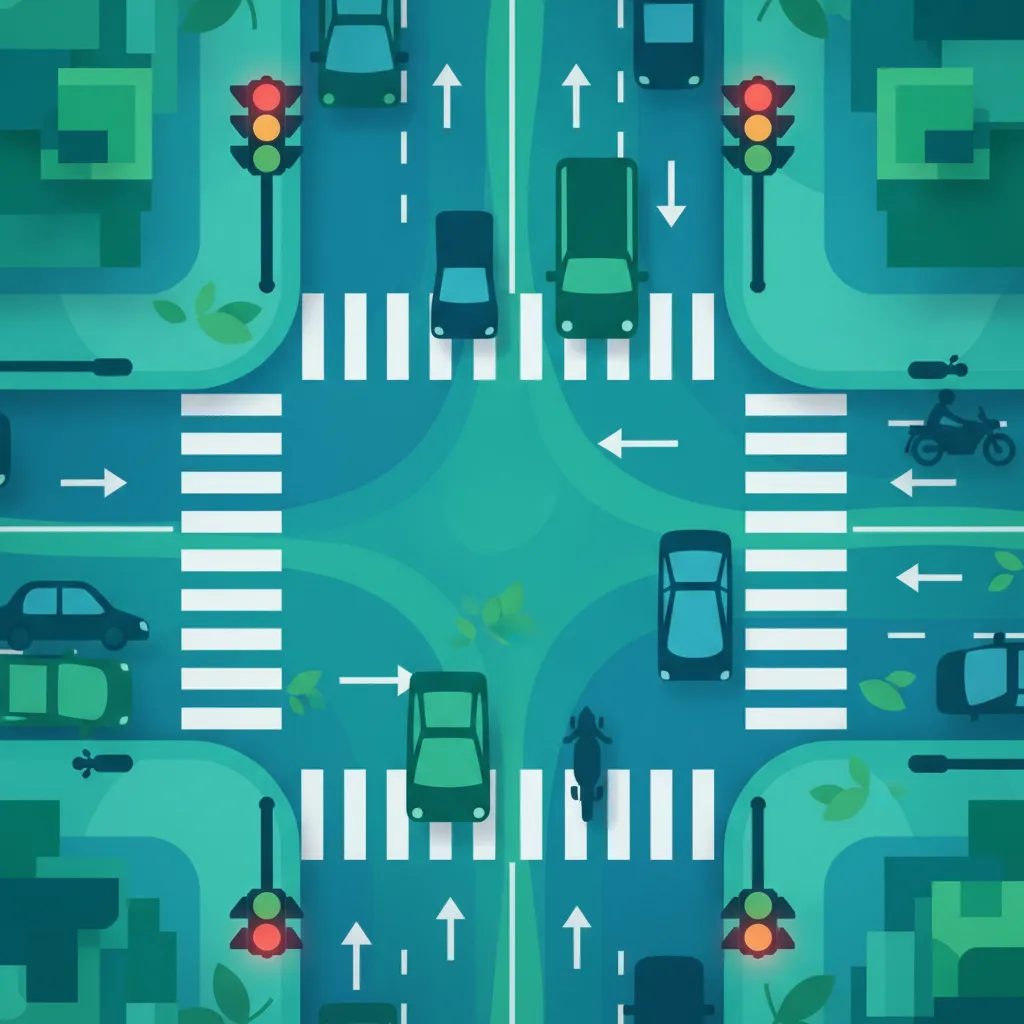
This lesson details how to safely navigate junctions controlled by traffic signals. It explains the meaning of filter arrows, which allow you to proceed in a specific direction even if the main light is red. You will also learn about respecting advanced stop lines for cyclists and how to approach a junction when the traffic lights are not working.
Filtering through traffic can be an efficient way to ride, but it carries risks. This lesson explains when it is appropriate to filter, the importance of maintaining a low speed differential, and how to watch out for potential hazards like changing lanes, opening doors, and pedestrians. Safe filtering requires heightened awareness and excellent machine control.
This lesson provides detailed guidance on protecting pedestrians in high-risk areas like bus stops and formal crossings. It covers the specific rules and driver obligations at zebra, pelican, toucan, and puffin crossings, as well as when approaching a school crossing patrol. The content emphasizes the importance of vigilance, anticipating pedestrian movements, especially those who may be distracted or emerge from behind the bus, and always being prepared to stop to prevent accidents.
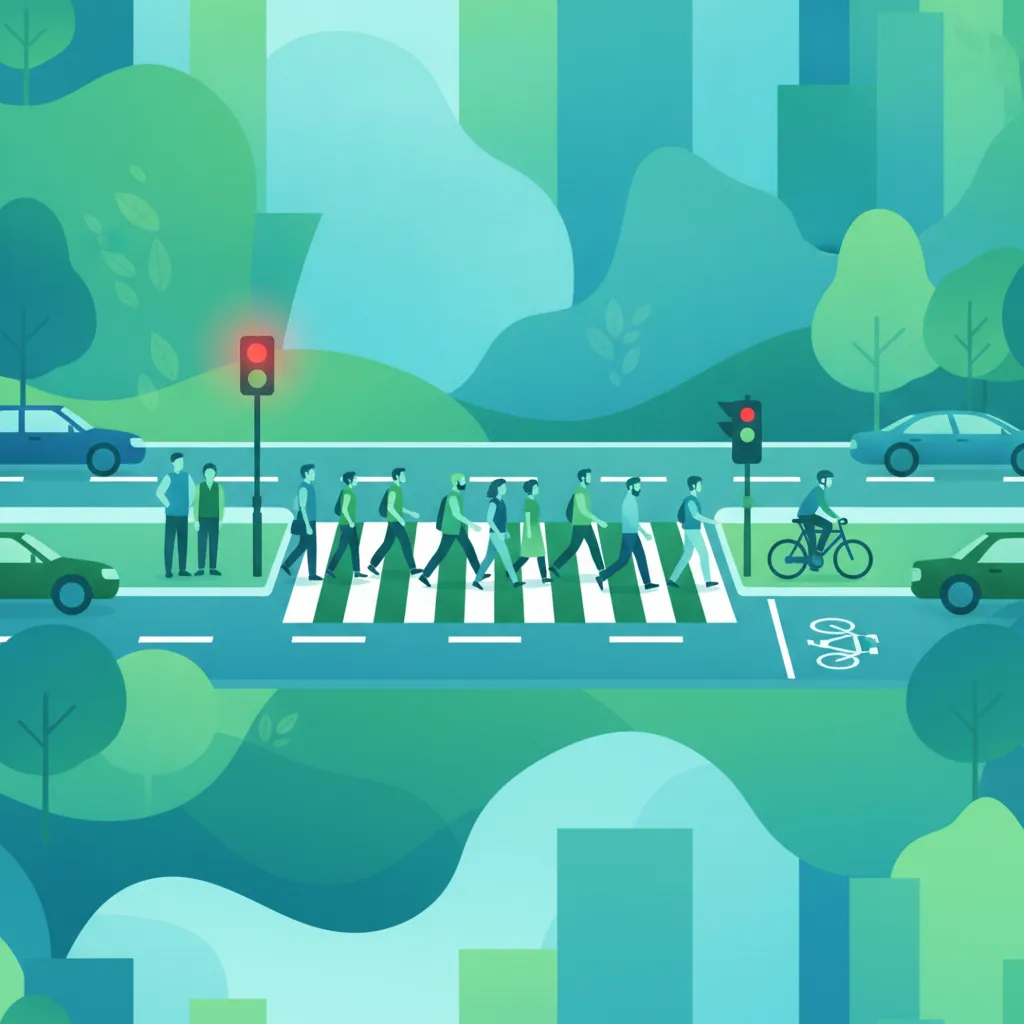
This lesson provides a detailed guide to the various types of pedestrian crossings found on British roads. You will learn the specific rules for each, including the absolute priority of pedestrians at zebra crossings and how to respond to the light signals at pelican, puffin, and toucan crossings. Understanding these rules is essential for protecting vulnerable road users and ensuring you are compliant with the Highway Code.
This lesson provides a detailed guide to various pedestrian crossings and their specific rules. You will learn to identify each type by its markings and signals, from the black and white stripes of a zebra crossing to the sensor-controlled lights of a puffin crossing. The focus is on knowing when and how to stop to ensure pedestrian safety.
This lesson examines the unique rules and restrictions governing buses and coaches, focusing on bus lane priority, time-based restrictions, and loading zone limitations. Learners will explore the criteria for using bus-only routes and understand the legal consequences of non-compliance. The content also reviews signage indicating bus gate operation and areas where passenger vehicles are prohibited from stopping or loading outside of designated zones, ensuring lawful and efficient urban navigation.

This lesson focuses on the markings and rules at designated pedestrian crossing points. It details the legal requirement to give way to pedestrians on a zebra crossing and explains the light sequences at signal-controlled crossings. You will also learn the meaning of the white zig-zag lines on the approach to all crossings.

This lesson decodes the language of road markings painted on the road surface. You will learn the rules associated with solid and broken white lines, double white lines that restrict overtaking, and yellow lines controlling parking. Proper understanding of these markings is crucial for maintaining correct lane discipline and riding legally.
Find clear answers to common questions learners have about Urban Traffic Challenges and Pedestrian Crossings. Learn how the lesson is structured, which driving theory objectives it supports, and how it fits into the overall learning path of units and curriculum progression in Great Britain. These explanations help you understand key concepts, lesson flow, and exam focused study goals.
At a zebra crossing, you must give way to pedestrians who are on the crossing. At a toucan crossing, the signals allow both pedestrians and cyclists to cross, so you must obey the traffic light signals strictly and remain alert for bike riders.
Yes, filtering is generally legal in Great Britain if done safely. You must ensure you are not causing other road users to swerve or brake, and you must never filter if it is prohibited by road markings or signs.
Always scan for movement inside parked cars, such as brake lights or passengers, which indicate a car door might open. Maintain a safe distance and be prepared to stop or steer clear if a door opens unexpectedly.
You must stop safely if you can do so without causing a collision or abrupt braking for traffic behind you. Always anticipate pedestrian behavior when approaching crossings in built-up areas.
Dive into our comprehensive question bank to find exactly what you need for your Great Britain theory test. Use our advanced filters to pinpoint specific subjects or test your knowledge on challenging areas, ensuring you're fully prepared for success.