
This lesson details the vital steps to take at an accident scene, ensuring you are prepared for both the DVSA theory test and real-world emergencies. You will learn the legal requirements for stopping, reporting collisions, and the correct order of priorities to keep yourself and others safe.
Lesson content overview
A road traffic collision is a frightening and potentially life-threatening event for any road user, but especially for motorcyclists who are more vulnerable. Knowing precisely what steps to take immediately after an incident can profoundly impact the safety of everyone involved, reduce the severity of injuries, and ensure you meet your legal obligations. This lesson, part of your Great Britain Motorcycle Theory Course, will guide you through the critical procedures from the moment a collision occurs to reporting the incident to the authorities.
The primary goals are to protect yourself and others from further harm, provide essential first aid, and comply with the law to avoid severe penalties and complications. Understanding these emergency response procedures is not just about passing your theory test; it is about being a responsible, prepared, and safe motorcyclist.
In Great Britain, specific legal obligations are placed upon any driver or rider involved in a road traffic collision. Your immediate actions are critical and dictated by law. Failure to adhere to these duties can lead to significant criminal charges, heavy fines, penalty points on your licence, and even imprisonment.
The first and most fundamental duty after any collision is to stop your vehicle as soon as it is safe to do so. This applies whether the accident is minor or severe, and regardless of who you believe was at fault. The law makes no distinction based on the extent of damage or injury; the duty to stop is absolute.
The legal requirement for any road user involved in a collision to halt their vehicle as soon as safely possible and remain at the scene. This is a statutory obligation under the Road Traffic Act 1988.
Once stopped, you must remain at the scene for a reasonable period to check for injuries, assess damage, and exchange information. "Safely" means considering the immediate environment; for example, moving your motorcycle off a busy carriageway to a safer spot like a hard shoulder or pavement is permissible if it prevents further danger, but you must not leave the general vicinity of the accident. Switch off your engine and secure your bike to prevent it from moving or posing a further hazard.
Failing to stop after an accident, commonly known as a "hit-and-run," is a serious criminal offence. It demonstrates a disregard for the safety and well-being of others and attempts to evade responsibility. The legal consequences are severe and are intended as a strong deterrent.
If found guilty, you could face up to six months imprisonment, an unlimited fine, and between five and ten penalty points on your driving licence. You might also be disqualified from driving, especially if there were serious injuries or fatalities. These penalties are in addition to any civil claims for damages that may arise.
Never leave the scene of an accident. Even if you believe the incident was minor or you are not at fault, failing to stop is a serious criminal offence with severe penalties.
After ensuring your own safety and fulfilling your duty to stop, your next priority is to make the accident scene safe for all involved and for other road users. This proactive approach helps prevent secondary collisions, which can often be more severe than the initial incident, and protects emergency responders.
Your motorcycle's hazard warning lights are a crucial tool for alerting other traffic to a stationary hazard. You must activate them immediately if your vehicle is stopped in a position that could endanger or obstruct other road users. These flashing amber lights signal that there is an unusual situation ahead, prompting other drivers to slow down and exercise caution.
Even if you have moved your motorcycle to the side of the road or a hard shoulder, activating hazard lights remains important, especially on faster roads or in low visibility. It is a simple yet effective way to increase your visibility and communicate potential danger.
A warning triangle is another essential safety device, particularly if your motorcycle is left on the carriageway or hard shoulder. This reflective triangle must be placed at a specific distance behind your vehicle to give approaching traffic sufficient warning.
A reflective, collapsible device placed on the road to warn approaching traffic of a stationary vehicle or hazard, commonly used after a breakdown or collision.
On single carriageways or dual carriageways (not motorways), the warning triangle should be placed at least 15 metres (approximately 50 feet) behind your motorcycle. On motorways, where traffic speeds are much higher, if you must place a warning triangle, you should aim for a greater distance, often recommended around 30 metres, if safe to do so. However, on a motorway, your primary goal should be to get yourself and any passengers over the barrier to safety and await assistance. Always ensure it is safe for you to place the triangle; your personal safety comes first.
Your own safety must always be paramount. After a collision, stay clear of moving traffic as much as possible. If you have high-visibility clothing (such as a reflective jacket or vest), put it on immediately. This greatly increases your chances of being seen by other drivers, especially in poor light or adverse weather conditions.
If possible, move to a safe location away from the immediate scene, such as behind a crash barrier on a motorway or on a wide pavement on a main road, until emergency services arrive. Do not stand between your vehicle and oncoming traffic.
Once the scene is as safe as possible, your attention must turn to any casualties. You have a moral, and in some circumstances a legal, obligation to provide assistance if safe to do so. A rapid and accurate assessment of injuries can be life-saving.
The immediate priority for any casualty is to check their "ABCs": Airway, Breathing, and Circulation. This is known as a primary survey and helps you identify and address life-threatening conditions quickly.
Airway: Gently check if the person's airway is clear. If they are unconscious, their tongue may fall back and block their airway. A head tilt-chin lift can often clear it, but be cautious if a spinal injury is suspected (e.g., in a motorcyclist thrown from their bike).
Breathing: Look, listen, and feel for breathing. Observe their chest for rise and fall, listen for breath sounds, and feel for breath on your cheek.
Circulation: Check for severe bleeding. Apply direct pressure to any obvious bleeding wounds using a clean cloth or your hands.
Do not move a casualty unnecessarily, especially if they are unconscious or complaining of neck or back pain, as this could worsen a spinal injury. Only move them if they are in immediate danger (e.g., from fire or oncoming traffic) or if you need to place them in the recovery position because they are unconscious but breathing.
While you are not expected to be a trained paramedic, basic first aid can make a critical difference.
Remember that providing aid yourself should only be done if you can do so safely, without putting yourself or the casualty at further risk.
The recovery position is a crucial first-aid technique for an unconscious person who is breathing normally. It helps keep their airway open and prevents them from choking on their tongue or vomit.
When placing someone in the recovery position:
Once you have assessed casualties and made the scene safe, contacting emergency services is paramount. Accurate and timely information allows them to dispatch the correct resources promptly.
When you call 999 or 112 (the universal emergency numbers), remain calm and provide clear, concise information. The operator will ask specific questions, so be prepared with the following details:
Your Exact Location: This is the most crucial piece of information. Provide road names, junction numbers, nearby landmarks, and if possible, grid references or what3words address. Motorways often have marker posts every 100 metres; use these.
Nature of the Incident: State clearly that it is a "road traffic collision."
Number of Vehicles Involved: Specify motorcycles, cars, lorries, etc.
Number of Casualties: State how many people are injured or trapped.
Severity of Injuries: Describe what you observe (e.g., "unconscious," "severe bleeding," "trapped under a vehicle").
Hazards Present: Mention any risks like fuel leaks, fire, broken glass, or live wires.
Your Contact Number: The operator may need to call you back.
Do not hang up until the operator tells you to; they may have further questions or provide instructions.
When you dial 999/112, the operator will typically ask which service you require. Often, in a road traffic collision, you may need multiple services:
It is common for the operator to connect you to all relevant services simultaneously, so focus on giving them a complete picture of the situation.
After the immediate emergency has been managed, you have further legal duties regarding information exchange and reporting the accident to the police and your insurance company.
You are legally required to provide specific information to any other party involved in the accident, including other drivers, motorcyclists, cyclists, or pedestrians, and to the police if they attend. This information is crucial for insurance claims and any subsequent investigations.
You should exchange:
You should also request the same details from all other parties involved. If the other party is unavailable or unwilling to provide their details, make a note of this and report it to the police as soon as possible. Take a photograph of their vehicle's registration plate if you can.
Carry a small notebook and pen, or use your smartphone, to record all exchanged details accurately. It's easy to forget crucial information in a stressful situation.
Even if the police do not attend the scene, you may still have a legal obligation to report the accident to them. The requirements are based on the severity of the incident.
You must report an accident to the police within 24 hours if:
Generally, if police do not attend the scene, you should go to the nearest police station to report the incident. They will take a statement and provide you with an incident number.
The 24-hour reporting window is a strict legal requirement under the Road Traffic Act 1988. Failure to report within this timeframe, where legally required, can result in further prosecution for failing to report an accident. This is distinct from the offence of failing to stop.
Even if damage is minor and no one seems injured, if you haven't exchanged details with all relevant parties, you must report it to the police. This prevents any claims of "hit-and-run" against you later.
Thorough documentation of the accident scene can be invaluable. It provides objective evidence that can support your insurance claim, assist police investigations, and clarify liability.
Modern smartphones make it easy to document a scene. Take multiple photographs from different angles.
Overall Scene: Capture the general layout, road conditions, and position of vehicles before they are moved (if safe to do so).
Vehicle Damage: Take close-up photos of all damage to your motorcycle and other vehicles involved.
Road Conditions: Photograph skid marks, debris, traffic signs, road markings, and any relevant road defects.
Weather and Light: Photos can indirectly show the weather conditions (e.g., wet road, bright sun) and time of day.
Injuries: If safe and appropriate, photograph visible injuries, but always respect privacy.
Other Factors: Capture anything else that seems relevant, such as a lack of street lighting, overgrown hedges, or obstructions.
In the immediate aftermath, adrenaline can make it hard to remember details. Jot down notes as soon as possible:
Your responsibilities after an accident are largely governed by two key documents: the Road Traffic Act 1988 and The Highway Code.
The Road Traffic Act 1988 is the primary legislation concerning road traffic offences in the UK. Section 1 of this Act (among others) outlines the duties of a driver/rider involved in an accident, specifically the requirement to stop, provide details, and report to the police. Breaches of this Act carry severe legal penalties, including potential criminal records. It forms the backbone of legal accountability for road users.
The Highway Code provides detailed guidance and rules, some of which are legal requirements (marked with words like "must" or "must not"). Rules 163 to 166 specifically address what to do after an accident:
While not all Highway Code rules are directly legislative, contravening them can be used as evidence in court to establish liability or prove a careless driving charge.
The specific steps you take after an accident may need to be adapted based on the environmental conditions and the type of road.
Being prepared means not only knowing what to do but also understanding common pitfalls and their potentially severe consequences.
| Violation / Edge Case | Why It’s Wrong | Correct Behaviour | Consequence |
|---|---|---|---|
| Fleeing the scene (hit-and-run) | Breaches legal duty to stop and exchange details; hampers assistance. | Stop safely, assess casualties, exchange details, call police. | Criminal charge, up to 6 months imprisonment, licence points, fine. |
| Not activating hazard lights when stuck on a busy road | Fails to warn other users; increases secondary collision risk. | Immediate activation of hazard lights, placement of warning triangle when safe. | Potential liability for secondary accidents. |
| Leaving a motorbike on a lane without a warning triangle | Motorbike is difficult to see, especially at night or in rain. | Move the bike off the carriageway if possible; otherwise, position triangle 15 m back (or more on fast roads). | Increased risk of second collision; may be charged with careless driving. |
| Failure to assess casualties before moving a trapped rider | May exacerbate injuries, especially spinal injuries. | Conduct quick visual assessment; if breathing & pulse are present, move only if safe; otherwise, keep still and call emergency services. | Potential legal liability for aggravated injuries; moral repercussions. |
| Providing incomplete insurance details (e.g., omitting policy number) | Hinders insurance claim processing and legal investigations. | Provide full insurer name, policy number, and contact details. | Claim denial or delayed settlement; possible legal action. |
| Incorrect reporting timeframe (e.g., reporting after 48 h for an injury) | Breaches statutory reporting requirement. | Report to police within 24 h (or as soon as practicable). | Police may issue a fine or pursue offence proceedings. |
| Using a mobile phone while attempting to move the bike off the road | Distracts the rider, increasing risk of secondary accidents. | Secure the scene first, then use hands-free or step aside before handling the phone. | Increased risk of secondary collisions; potential charge for careless driving. |
| Omission of photographs of the scene | Reduces evidential value, may affect insurance settlement. | Photograph damage, road condition, and positioning before moving vehicles (if safe). | Difficulty proving liability; possible insurance disputes. |
| Failing to give first aid to an unconscious rider with airway obstruction | Increases risk of death or severe brain injury. | Perform airway clearance (head tilt-chin lift), monitor breathing, call for ambulance. | Potential criminal negligence if injury worsens. |
Adhering to these procedures is not just about avoiding penalties; it is about saving lives, mitigating injuries, and ensuring a fair and just process for all parties involved. Your actions in the critical moments after an accident reflect your responsibility as a road user and can have long-lasting effects.
Responding effectively to an emergency or accident as a motorcyclist requires a calm head, a clear understanding of legal obligations, and practical knowledge of first aid and scene management. This lesson has covered the essential actions you must take: stopping safely, securing the scene with hazard lights and warning triangles, assessing casualties using the ABCs, making timely calls to 999/112, exchanging information, reporting to the police, and documenting the incident thoroughly.
Remember that while such incidents are hopefully rare, being prepared means you can react competently and responsibly. Your knowledge from this Great Britain Motorcycle Theory Course empowers you to act decisively, protecting yourself, your fellow road users, and any victims.
Explore all units and lessons included in this driving theory course.
Lesson content overview
Explore all units and lessons included in this driving theory course.
Explore search topics learners often look for when studying Emergency Response Procedures and Accident Reporting. These topics reflect common questions about road rules, driving situations, safety guidance, and lesson level theory preparation for learners in Great Britain.
Browse additional driving theory lessons that cover connected traffic rules, road signs, and common driving situations related to this topic. Improve your understanding of how different rules interact across everyday traffic scenarios.
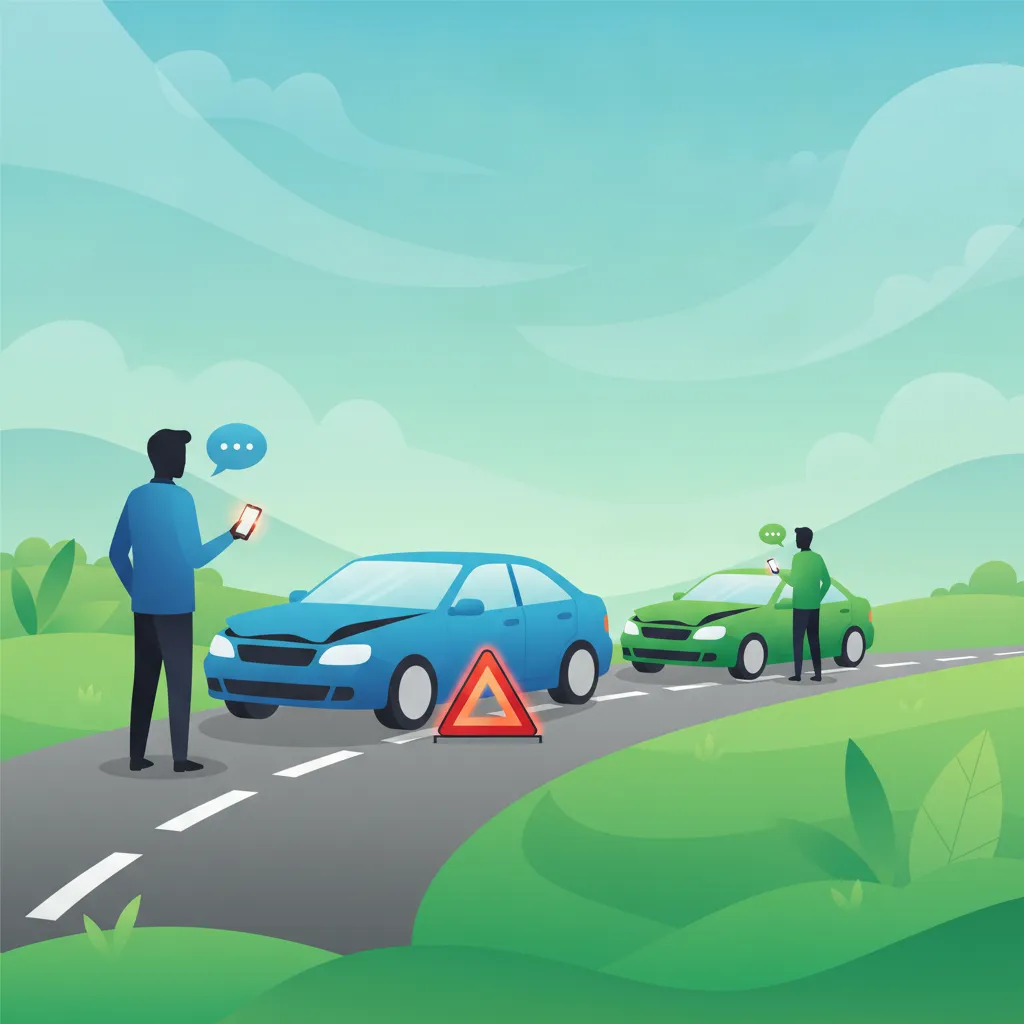
Understand your absolute legal requirement to stop, exchange details, and report accidents in Great Britain. Learn the severe penalties for failing to comply with road traffic law.
This lesson focuses on a driver's legal and ethical duty of care to all road users. It explains the concept of a road user hierarchy, which prioritizes the safety of vulnerable groups such as pedestrians, cyclists, and motorcyclists. You will learn the principles of defensive driving, anticipating potential hazards, and maintaining a courteous attitude on the road to ensure safety for everyone.
This lesson focuses on the specific obligations a motorcyclist has according to the Highway Code. It emphasizes the legal duty of care towards other road users, pedestrians, and the environment. You will learn how to apply key rules on speed, lane positioning, and signalling from a rider's perspective to ensure safety and legal compliance.
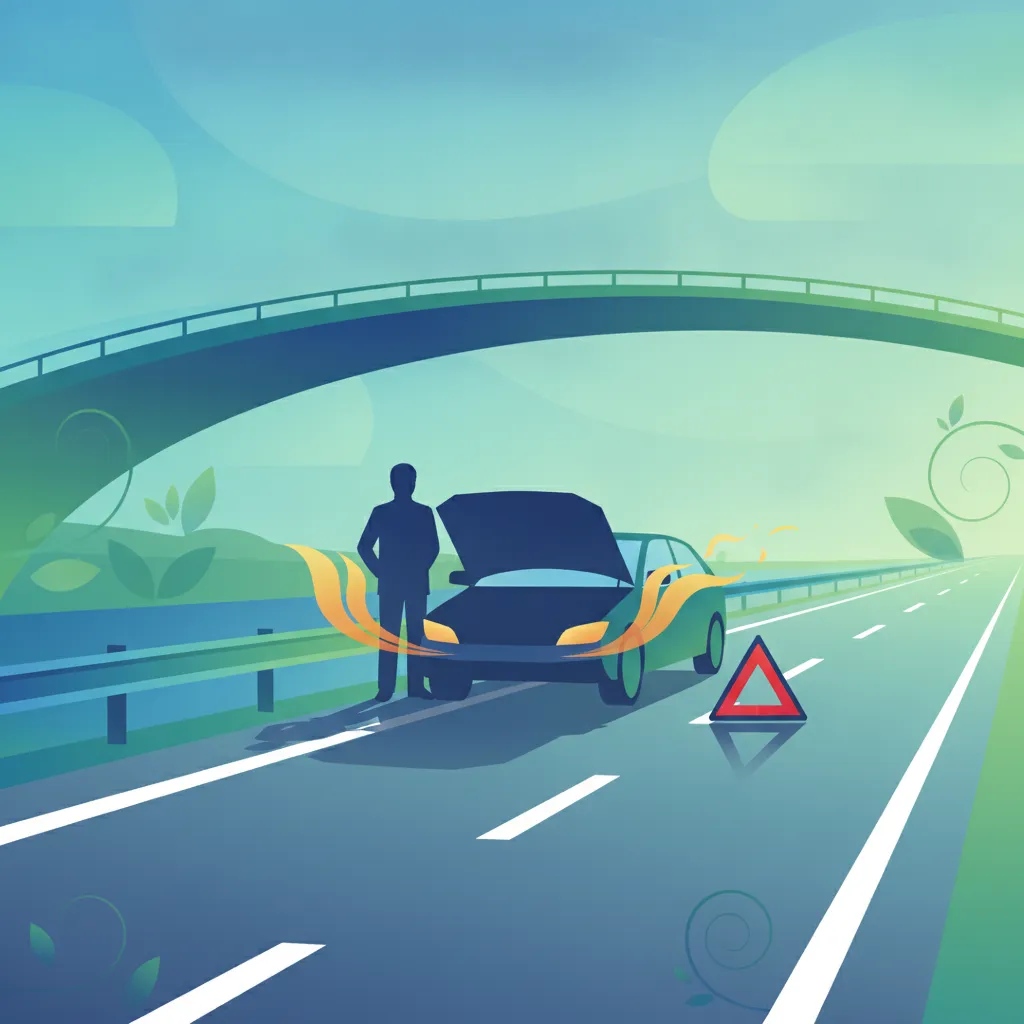
This lesson provides a clear, step-by-step guide for managing an emergency situation like a breakdown or a road traffic collision. You will learn the correct procedures for making the scene safe, when and how to contact the emergency services (999 or 112), and what information to provide. It also covers your legal obligations regarding reporting accidents and exchanging details, ensuring you are prepared to act correctly and calmly under pressure.
The period after an accident can be stressful and confusing. This lesson provides guidance on the practical steps, such as reporting the incident to your insurer and gathering necessary information for any legal proceedings. It also touches upon the importance of looking after your own physical and mental wellbeing and how to regain confidence in your riding.
Explore the critical topics of driver liability, insurance, and legal penalties in Great Britain. This lesson distinguishes between civil and criminal liability in the context of road incidents. It details the compulsory third-party insurance every driver must have and explains the penalty points system for traffic offences, including fines and potential disqualification.

This lesson outlines the fundamental responsibilities of an AM driver on British roads, focusing on adherence to the Highway Code and cultivating a safety-first mindset. You will learn the principles of defensive riding, the importance of being visible to others, and the need to protect vulnerable road users like pedestrians and cyclists. The content also covers legal duties such as vehicle maintenance and conducting risk assessments before every journey to promote responsible road behaviour.
This lesson provides essential guidance for handling on-road emergencies. It outlines the steps to take if your vehicle breaks down, including making yourself visible and getting to a place of safety. You will also learn the basics of what to do at an accident scene, including assessing the situation, calling for help, and providing simple first aid until professional assistance arrives.
Learn essential procedures for securing an accident scene, protecting yourself and others, assessing casualties, and providing basic first aid. Know when and how to call emergency services.
This lesson provides a clear, step-by-step guide for managing an emergency situation like a breakdown or a road traffic collision. You will learn the correct procedures for making the scene safe, when and how to contact the emergency services (999 or 112), and what information to provide. It also covers your legal obligations regarding reporting accidents and exchanging details, ensuring you are prepared to act correctly and calmly under pressure.
The period after an accident can be stressful and confusing. This lesson provides guidance on the practical steps, such as reporting the incident to your insurer and gathering necessary information for any legal proceedings. It also touches upon the importance of looking after your own physical and mental wellbeing and how to regain confidence in your riding.
This lesson provides essential guidance for handling on-road emergencies. It outlines the steps to take if your vehicle breaks down, including making yourself visible and getting to a place of safety. You will also learn the basics of what to do at an accident scene, including assessing the situation, calling for help, and providing simple first aid until professional assistance arrives.
This lesson details the immediate actions a driver must take in the event of an accident or on-board emergency. It covers how to protect the scene, use hazard warning lights, and contact the emergency services via 999 or 112, providing clear and concise information. The content also includes the location and use of the first aid kit and fire extinguisher. It emphasizes the driver's role in calmly assisting passengers and cooperating with emergency responders upon their arrival.
This lesson equips drivers with the knowledge to manage on-road emergencies effectively and safely. It provides clear, step-by-step procedures for vehicle breakdowns, including where to stop and how to use warning devices. It also covers initial actions at the scene of an accident, fire safety protocols including the use of an extinguisher, and the correct way to report incidents to emergency services and the transport office.

This lesson identifies behaviours that significantly increase a rider's risk of being involved in a collision. It explains the dangers of excessive speed, following too closely, and aggressive riding. You will learn how a rider's attitude and choices directly contribute to their safety and the legal penalties associated with these offences.
This lesson highlights why motorcyclists are considered vulnerable road users. It covers the increased risk of serious injury in a collision due to lack of physical protection compared to car occupants. You will learn about common visibility challenges and how to adopt proactive, defensive strategies to mitigate risks and anticipate potential hazards on the road.
This lesson explains the function of warning signs, which are mostly triangular and alert road users to potential dangers ahead. You will learn to identify signs for bends, junctions, slippery surfaces, and other hazards particularly relevant to motorcyclists. Acting on these warnings allows a rider to adjust speed and position proactively, enhancing safety.
A motorcyclist is particularly vulnerable to imperfections in the road surface. This lesson teaches you how to actively scan the road ahead to spot hazards like potholes, patches of gravel, or slippery diesel spills. You will learn safe techniques for either avoiding these hazards or crossing them with minimal risk if avoidance is not possible.
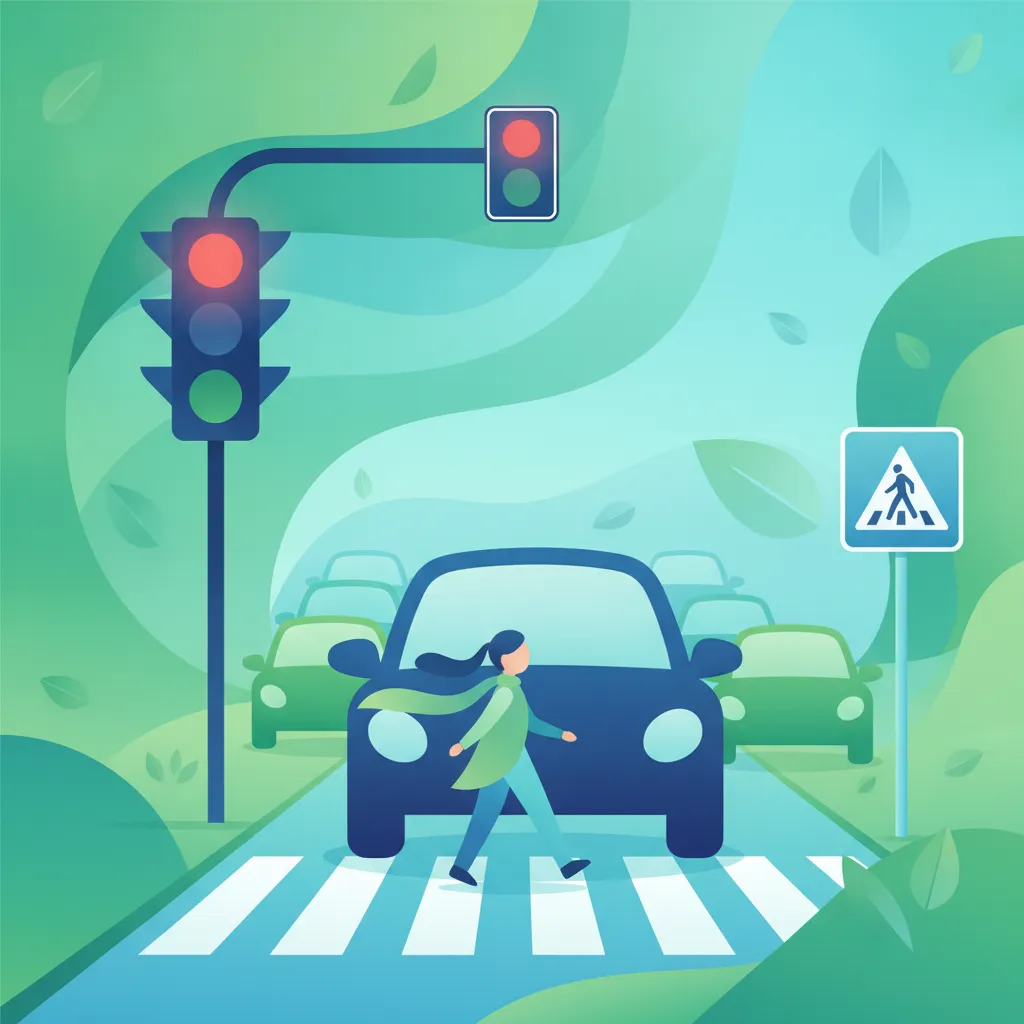
This lesson covers the operation of traffic light signals and the rules for approaching them safely. It also provides a detailed explanation of different pedestrian crossings, such as zebra, pelican, and toucan crossings, clarifying the specific rules and priority for each. You will learn to anticipate the actions of pedestrians and other vulnerable road users at these locations.
Find clear answers to common questions learners have about Emergency Response Procedures and Accident Reporting. Learn how the lesson is structured, which driving theory objectives it supports, and how it fits into the overall learning path of units and curriculum progression in Great Britain. These explanations help you understand key concepts, lesson flow, and exam focused study goals.
Under the Road Traffic Act and the Highway Code, if you are involved in a collision, you must stop. If you witness one, while there is a moral duty to help, you should only stop if it is safe to do so and you can provide assistance without creating further danger or obstructing emergency services.
You must provide your name and address, along with the name and address of the vehicle owner if it is not yours, and the vehicle registration number. It is also common practice to provide insurance details to ensure a smooth claims process.
You should call 999 immediately if anyone is injured, if the road is blocked or dangerous, or if you suspect a serious offence like drink-driving has occurred. If there are no injuries and the road is clear, you may only need to report the collision to the police later if required.
Prioritise your own safety by wearing high-visibility gear and parking your motorcycle where it won't cause further collisions. Use hazard lights if appropriate, warn other traffic, and avoid moving injured people unless they are in immediate, life-threatening danger.
Dive into our comprehensive question bank to find exactly what you need for your Great Britain theory test. Use our advanced filters to pinpoint specific subjects or test your knowledge on challenging areas, ensuring you're fully prepared for success.