
This lesson focuses on the critical skills required to share the road safely with motorcyclists and large vehicles like lorries and buses. It builds upon your understanding of vulnerable road users and prepares you for hazard perception scenarios involving restricted visibility and vehicle dynamics.
Lesson content overview
As a Category B learner driver in Great Britain, mastering the art of sharing the road safely with a diverse range of vehicles is crucial. This lesson focuses on understanding and adapting your driving behaviour around motorcyclists, lorries (heavy goods vehicles), buses, and articulated vehicles. These road users have unique characteristics, including different sizes, manoeuvring capabilities, and specific blind spots, all of which demand your heightened attention and awareness.
Understanding how to interact safely with these vehicles is not only a requirement for passing your driving theory test but is fundamental to responsible and hazard-free driving. By learning to anticipate their actions and providing adequate space, you significantly reduce the risk of collisions and contribute to overall road safety for everyone.
Motorcyclists, including riders of mopeds and scooters, are among the most vulnerable road users. Their smaller size, combined with often less predictable lane positioning, makes them notoriously difficult for other drivers to spot, particularly at junctions or when changing lanes. This section will explore key considerations when driving near motorcyclists.
The slim profile of a motorcycle means it occupies a much smaller visual area compared to a car or lorry. This can make them easy to overlook, especially in cluttered urban environments or against complex backgrounds. They can also be hidden by common road furniture, trees, or even other vehicles. Furthermore, a phenomenon known as "looked but failed to see" means drivers might visually scan an area but not consciously register the presence of a motorcycle.
Always perform thorough visual checks, including shoulder checks, and consciously look for motorcycles, especially before turning, changing lanes, or pulling out of a junction.
Motorcyclists often adjust their lane position for safety and visibility. They might ride slightly to one side of a lane to avoid road hazards like potholes, drain covers, or oil spills, or to increase their visibility in mirrors. In slow-moving or stationary traffic, motorcyclists may also "filter" – riding carefully between lanes of vehicles. While this is legal in many situations, it means they can appear unexpectedly from gaps in traffic.
As a Category B driver, you must be particularly vigilant for filtering motorcyclists. Always check your mirrors and blind spots carefully before moving off, changing lanes, or opening your door when parked. Assume a motorcyclist could be present, even if you haven't seen them immediately.
When overtaking a motorcyclist, you must provide ample lateral (sideways) clearance. Due to their vulnerability and susceptibility to wind turbulence, a minimum distance is legally required.
When overtaking a motorcyclist on any road, you must allow at least 1 metre of lateral space between your vehicle and the motorcycle. This distance increases the safety margin for both riders and drivers.
Always ensure you have a clear view ahead and sufficient time and space to complete the manoeuvre without cutting back in too sharply or creating a hazard for oncoming traffic. Avoid staying in a motorcyclist's blind spot; either overtake safely or drop back to a position where you are clearly visible.
Every vehicle has blind spots – areas around it that cannot be seen in mirrors or directly. For a Category B car, these typically include areas to the side and slightly behind the vehicle, as well as the 'A-pillar' blind spot (the frame between the windscreen and side window). Motorcyclists, due to their small size, are prone to 'disappearing' into these blind spots.
Never rely solely on your mirrors. Always perform a quick shoulder check (a glance over your shoulder) before changing lanes, turning, or pulling out. This quick check can reveal a motorcyclist hidden from your mirrors.
Lorries, often referred to as Heavy Goods Vehicles (HGVs), are substantial vehicles used for transporting goods. They pose different challenges and require specific driving adjustments due to their size, weight, and operational characteristics.
Lorries come in various forms, primarily:
Both types are heavy, have slower acceleration, longer braking distances, and significantly larger blind spots than cars.
Lorries have significantly larger blind spots than cars. These are often referred to as "no-zones" by lorry drivers because if you are in them, they cannot see you. Key blind spot areas for lorries include:
To ensure you are visible to a lorry driver, aim to position your vehicle where you can see their mirrors. If you cannot see their mirrors, it's highly likely they cannot see you.
Due to their length, lorries require a much wider turning circle than cars. When a lorry is preparing to turn, particularly left or right at junctions, the front of the vehicle may swing out in the opposite direction before the turn, or the rear of the trailer may sweep across the road. This is known as "cutting the corner" or "swing out."
Never attempt to pass a lorry on the inside if it is signalling to turn left, or on the outside if it is signalling to turn right, particularly at a junction. Leave plenty of space and assume they will need to use more than one lane to complete their turn safely.
Overtaking a lorry requires careful planning and execution. Given their length and potential for wind turbulence, you need a substantial amount of clear road ahead.
When overtaking a lorry on any road, you must allow at least 1.5 metres of lateral space between your vehicle and the lorry. This provides a crucial safety buffer.
Because of their weight, lorries have significantly longer stopping distances, especially when fully laden. It is essential to maintain a greater following distance behind them compared to other cars.
Under normal, dry conditions, aim for at least a 2-second gap. In adverse conditions like rain, fog, or icy roads, increase this gap to 4 seconds or more. This extra space gives you more time to react if the lorry brakes suddenly and also improves your forward visibility, as a large lorry can obscure your view of the road ahead.
Buses are large passenger-carrying vehicles that frequently stop to pick up and drop off passengers. Understanding how to interact with buses is particularly important in urban environments.
Buses operate on fixed routes, making their movements somewhat predictable. However, their size and frequent stops present specific challenges. Similar to lorries, buses have extensive blind spots, particularly down their sides and directly behind them. Be aware of additional blind spots created by rear doors and windows, which can obscure views of pedestrians or cyclists.
When a bus is at a designated bus stop, certain rules apply to ensure the safety of passengers.
You must not overtake a bus that has stopped at a bus stop and has its doors open. This is a mandatory rule in the UK Highway Code (Rule 170A) designed to protect passengers who may be alighting or boarding and could step directly into the road. Wait until the doors have closed and the bus has indicated its intention to move off.
When a bus signals to pull away from a designated bus stop, the Highway Code (Rule 170) states that you should give way if it is safe to do so. This interaction courtesy helps maintain traffic flow and ensures buses can keep to their schedules. Reduce your speed and allow the bus to merge into the traffic stream before proceeding.
When overtaking a moving bus, similar rules to lorries apply regarding lateral clearance.
When overtaking a bus, you must allow at least 1.5 metres of lateral space between your vehicle and the bus.
Always ensure you have a clear view ahead, and the road markings permit overtaking. Be particularly cautious in urban areas where bus stops are frequent, and pedestrians or cyclists may be present.
Articulated vehicles are distinct because they consist of two or more rigid sections connected by a pivoting joint. This includes articulated lorries (tractor unit and semi-trailer) and articulated buses (bendy buses). Their unique design introduces specific manoeuvring characteristics and blind spots.
The articulation joint allows these vehicles to be longer and carry more cargo or passengers, but it creates unique challenges. The pivot point means the front and rear sections can move independently, particularly during turns.
Articulated vehicle blind spots are even more complex than rigid vehicles. In addition to the side and rear blind spots of the tractor unit, there is a significant diagonal blind spot behind the articulation joint and along the full length of the trailer. A Category B driver can easily be completely hidden in this area, especially when the vehicle is turning.
Articulated vehicles require an extremely wide turning circle. When turning, the trailer will not follow the path of the tractor unit directly. The front of the vehicle may need to swing wide, and the rear of the trailer will "cut in" or "swing out" significantly, often crossing into adjacent lanes or mounting kerbs.
When an articulated vehicle is making a turn, especially a sharp one, assume that it will need to use a substantial amount of road space, possibly including parts of other lanes. Keep well back and to the side, giving them all the room they need to complete their manoeuvre safely. Never attempt to pass on the inside of a turning articulated vehicle.
Overtaking an articulated vehicle requires even greater care than a rigid lorry due to their length and the potential for greater wind turbulence.
Blind spots are a critical safety concern when driving around any vehicle, but especially larger ones and motorcycles. Effective blind spot management is a continuous process.
An area around a vehicle that cannot be seen by the driver through mirrors or direct line of sight without turning their head.
Regular Mirror Checks: Constantly scan your interior and wing mirrors.
Shoulder Checks: Before changing lanes, merging, turning, or pulling away, quickly glance over your shoulder to check the blind spot. This is indispensable.
Adjusting Position: If you find yourself in another vehicle's blind spot, either accelerate safely to move past them or slow down to drop behind them, positioning yourself where you are visible.
Modern vehicles may have blind spot detection systems. While these systems can be helpful, they are not infallible. Always use them as an aid, not a replacement for your own visual checks. Maintain active vigilance and confirm the absence of other road users with your own eyes.
Effective gap management involves judging and maintaining safe distances, both laterally (sideways) and longitudinally (front-to-back), during all driving manoeuvres.
As discussed:
These are minimums; more space should be given if conditions permit (e.g., higher speeds, strong winds, or a vulnerable rider).
Wind turbulence is an aerodynamic disturbance created by large, fast-moving vehicles. It is an often-underestimated hazard for Category B drivers.
When you overtake or are passed by a large lorry or articulated vehicle, the air displaced by its movement creates pressure changes and swirling air currents (vortexes). As you draw alongside the large vehicle, you might feel a push away from it. Then, as you clear its front and pass beyond it, you might feel a sudden pull towards it, or your vehicle could be buffeted from side to side.
Adhering to the Highway Code and practicing defensive driving are essential when sharing the road with these diverse vehicle types.
Your driving must adapt to varying conditions:
To summarise, safe interaction with motorcyclists, lorries, buses, and articulated vehicles requires a proactive and informed approach:
By integrating these principles into your driving, you will enhance your safety and the safety of all road users, especially those who are more vulnerable or operate larger, less agile vehicles.
This lesson covers safe interaction with motorcyclists, lorries, buses, and articulated vehicles for GB theory preparation. Motorcyclists require extra vigilance due to their vulnerability and tendency to hide in blind spots, while large vehicles demand specific minimum overtaking clearances (1m for motorcycles, 1.5m for HGVs and buses) and present extended no-zones where drivers cannot be seen. Key hazards include the wide turning circles of lorries and articulated vehicles, which may cause rear trailer swing across lanes, and wind turbulence that can destabilise smaller vehicles during overtaking. Critical Highway Code rules include the prohibition on overtaking stationary buses with doors open (Rule 170A) and the requirement to give way to buses signalling to pull out from stops (Rule 170).
A short set of high-value points that capture the most important learning from this lesson.
Motorcyclists are highly vulnerable road users due to their small size and are prone to disappearing into vehicle blind spots or being missed in the 'looked but failed to see' phenomenon
When overtaking, maintain at least 1 metre of lateral clearance for motorcyclists and 1.5 metres for lorries, buses, and articulated vehicles
If you cannot see a large vehicle driver's mirrors, they cannot see you, meaning you are likely in their blind spot
Never attempt to pass a lorry, bus, or articulated vehicle on the inside when it is signalling to turn, as these vehicles require significantly wider turning circles that may swing into adjacent lanes
Wind turbulence from large vehicles can destabilise your vehicle, so maintain firm steering control and be prepared for buffeting during and after overtaking
Explore all units and lessons included in this driving theory course.
Rule 170A prohibits overtaking any stationary bus with its doors open at a bus stop to protect boarding or alighting passengers
Use the 2-second rule for following distance, increasing to 4 seconds or more in adverse weather conditions, especially behind large vehicles
Always perform a shoulder check in addition to mirror checks before changing lanes, turning, or pulling out to catch motorcyclists hidden from mirrors
Articulated vehicles have an extreme diagonal blind spot behind the articulation joint where a car can be completely hidden during turns
The rear of an articulated trailer will cut in or swing out significantly during turns, often crossing into adjacent lanes
Relying solely on mirrors without performing shoulder checks, leading to missed motorcyclists in blind spots
Cutting back in too soon after overtaking a large vehicle; you should only return to your lane when you can see the whole front of the vehicle in your interior mirror
Attempting to pass a lorry on the inside when it is turning left, or on the outside when turning right, not accounting for the vehicle's wide swing out
Forgetting that motorcyclists may be filtering through slow traffic and appearing unexpectedly from gaps between vehicles
Underestimating wind turbulence effects and failing to maintain firm steering control after overtaking large vehicles at speed
Lesson content overview
A short set of high-value points that capture the most important learning from this lesson.
Motorcyclists are highly vulnerable road users due to their small size and are prone to disappearing into vehicle blind spots or being missed in the 'looked but failed to see' phenomenon
When overtaking, maintain at least 1 metre of lateral clearance for motorcyclists and 1.5 metres for lorries, buses, and articulated vehicles
If you cannot see a large vehicle driver's mirrors, they cannot see you, meaning you are likely in their blind spot
Never attempt to pass a lorry, bus, or articulated vehicle on the inside when it is signalling to turn, as these vehicles require significantly wider turning circles that may swing into adjacent lanes
Wind turbulence from large vehicles can destabilise your vehicle, so maintain firm steering control and be prepared for buffeting during and after overtaking
Explore all units and lessons included in this driving theory course.
Rule 170A prohibits overtaking any stationary bus with its doors open at a bus stop to protect boarding or alighting passengers
Use the 2-second rule for following distance, increasing to 4 seconds or more in adverse weather conditions, especially behind large vehicles
Always perform a shoulder check in addition to mirror checks before changing lanes, turning, or pulling out to catch motorcyclists hidden from mirrors
Articulated vehicles have an extreme diagonal blind spot behind the articulation joint where a car can be completely hidden during turns
The rear of an articulated trailer will cut in or swing out significantly during turns, often crossing into adjacent lanes
Relying solely on mirrors without performing shoulder checks, leading to missed motorcyclists in blind spots
Cutting back in too soon after overtaking a large vehicle; you should only return to your lane when you can see the whole front of the vehicle in your interior mirror
Attempting to pass a lorry on the inside when it is turning left, or on the outside when turning right, not accounting for the vehicle's wide swing out
Forgetting that motorcyclists may be filtering through slow traffic and appearing unexpectedly from gaps between vehicles
Underestimating wind turbulence effects and failing to maintain firm steering control after overtaking large vehicles at speed
Explore search topics learners often look for when studying Motorcyclists, Lorries, Buses, and Articulated Vehicles. These topics reflect common questions about road rules, driving situations, safety guidance, and lesson level theory preparation for learners in Great Britain.
Browse additional driving theory lessons that cover connected traffic rules, road signs, and common driving situations related to this topic. Improve your understanding of how different rules interact across everyday traffic scenarios.
Learn the essential theory for sharing the road with large vehicles like lorries and buses in Great Britain. Understand their blind spots, wider turning circles, and how to safely overtake and maintain distance.
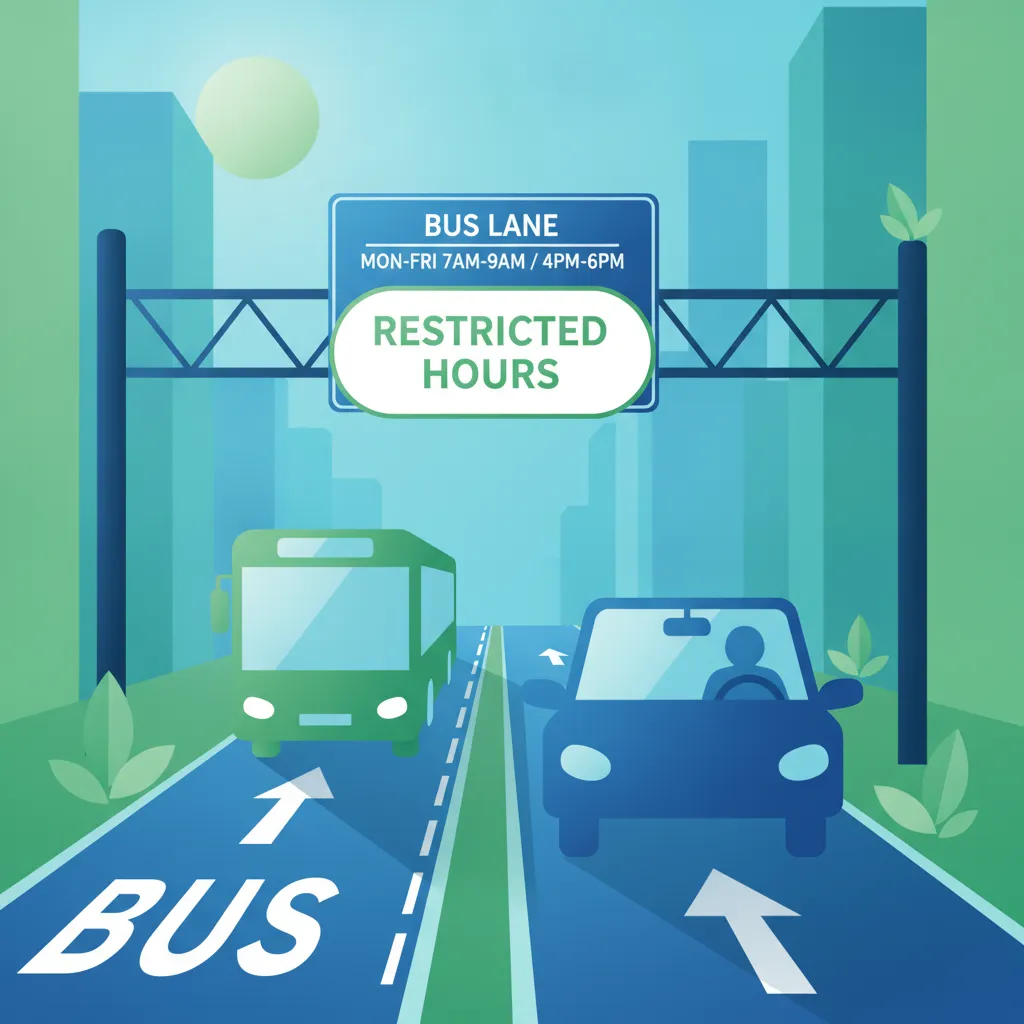
This lesson covers the importance of maintaining correct lane discipline when driving a large passenger vehicle. It details how to position your vehicle safely within a lane on various road types, including multi-lane carriageways and motorways. You will learn the specific rules governing bus lanes, including how to interpret markings, adhere to operating times, and understand the exemptions and penalties associated with their use to ensure legal and efficient driving.

This lesson addresses the unique challenges of driving a large vehicle on rural roads. It provides techniques for positioning the vehicle through sharp bends and on narrow lanes, and for safely navigating unmarked or uncontrolled junctions. Learners will be taught to anticipate hidden hazards common in the countryside, such as slow-moving farm vehicles, animals on the road, and concealed entrances. The correct use of passing places and strategies for meeting oncoming traffic are also covered.
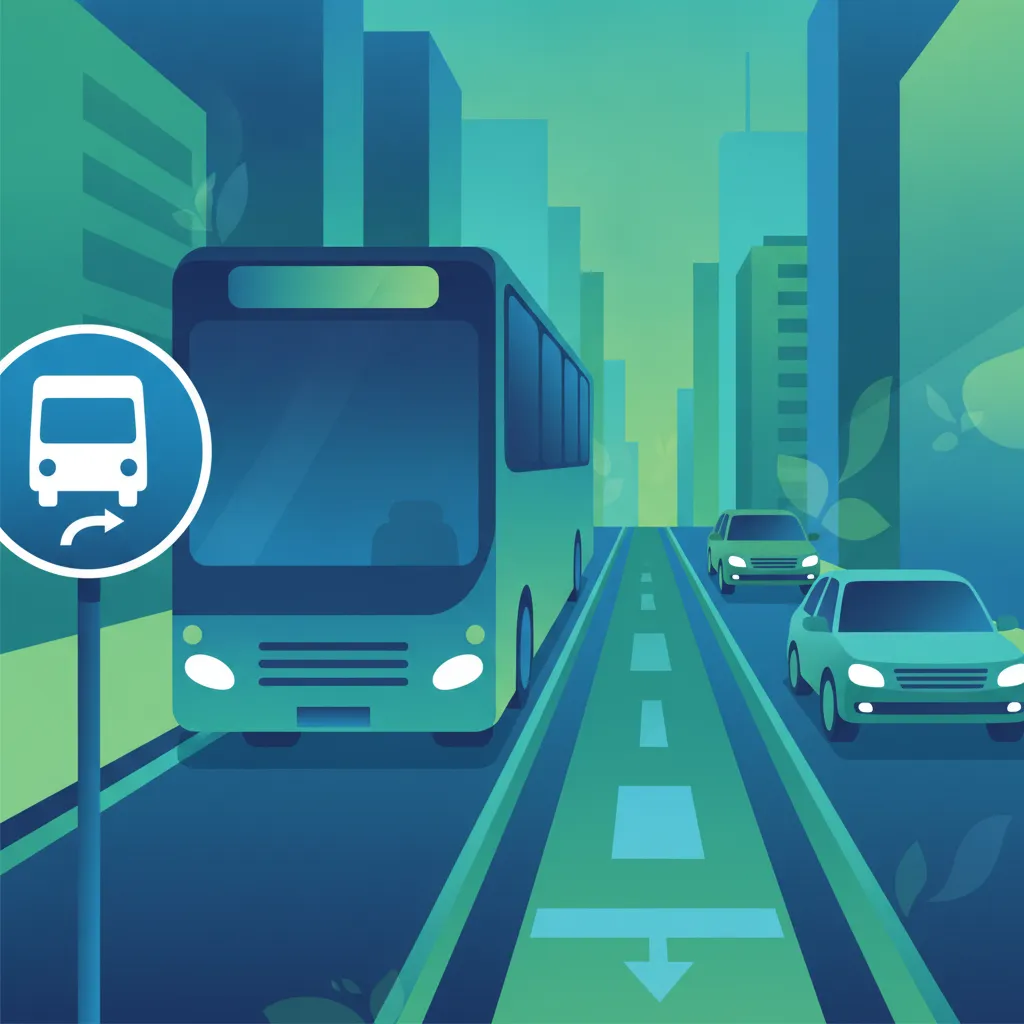
This lesson examines the unique rules and restrictions governing buses and coaches, focusing on bus lane priority, time-based restrictions, and loading zone limitations. Learners will explore the criteria for using bus-only routes and understand the legal consequences of non-compliance. The content also reviews signage indicating bus gate operation and areas where passenger vehicles are prohibited from stopping or loading outside of designated zones, ensuring lawful and efficient urban navigation.
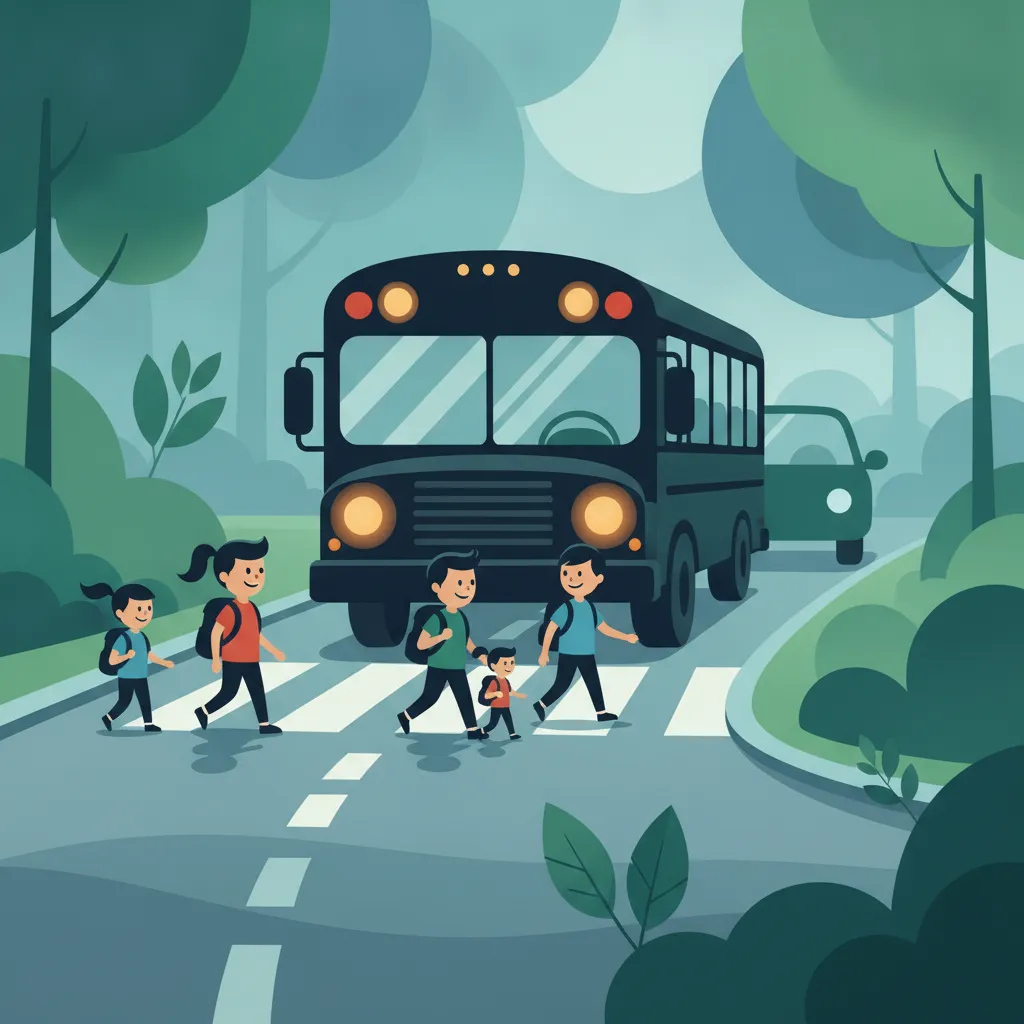
This lesson addresses the critical importance of child safety in school transport zones and around school buses. It covers the specific regulations, such as 20 mph speed limits and stopping restrictions indicated by zigzag lines. Learners will focus on the unpredictable nature of children and the need for heightened vigilance and readiness to stop unexpectedly. The content also includes procedures for the safe transport of pupils, ensuring their security both inside and outside the vehicle.
This lesson covers the principles of safe loading to prevent items from shifting or falling and causing a hazard. It explains that any load must be securely fastened and must not obstruct your view. You will also learn how overloading or distributing weight incorrectly can dangerously affect the vehicle's steering, braking, and overall stability.
This lesson focuses on the regulations and best practices for driving a bus or coach on motorways. It details the specific speed limits applicable to PCVs and reinforces strict lane discipline. The content covers the correct procedures for safely joining from a slip road, overtaking other vehicles, and exiting the motorway. It also explains the features of smart motorways and the correct safety procedures to follow in the event of a breakdown, including the use of the hard shoulder.
This lesson provides detailed guidance on protecting pedestrians in high-risk areas like bus stops and formal crossings. It covers the specific rules and driver obligations at zebra, pelican, toucan, and puffin crossings, as well as when approaching a school crossing patrol. The content emphasizes the importance of vigilance, anticipating pedestrian movements, especially those who may be distracted or emerge from behind the bus, and always being prepared to stop to prevent accidents.
This lesson focuses on safe interaction with cyclists, a key aspect of urban driving for PCV operators. It details the rules for cycle lanes and advanced stop lines, and the correct procedure for overtaking cyclists, emphasizing the need to provide ample space. The content stresses the importance of frequent mirror checks to manage blind spots where cyclists can be hidden, especially when turning at junctions, to ensure their safety and comply with the Highway Code's road user hierarchy.

This lesson explores how to maintain safe following distances specific to large passenger vehicles, accounting for their higher inertia and longer braking distances. It covers time-gap calculations, such as the four-second rule, and dynamic following distance adjustments based on speed and road conditions. Emphasis is placed on avoiding tailgating, ensuring a sufficient safety buffer is always present, and developing an awareness of convoy driving scenarios where multiple large vehicles are present.
This lesson addresses the unique challenges of operating a large goods vehicle in congested urban and city environments. It focuses on techniques for navigating narrow streets, making tight turns, and safely accessing delivery points while being highly aware of vulnerable road users like pedestrians and cyclists. The importance of exceptional observation, low-speed control, and clear communication with other road users is heavily emphasized to minimize risk in these complex settings.
Master how to safely share the road with motorcyclists in Great Britain. This lesson covers their vulnerability, why they are hard to see, filtering, and safe overtaking distances according to the Highway Code.
This lesson teaches strategic road positioning techniques to maximize your visibility and safety in traffic. You will learn how to choose the correct lane position to avoid the blind spots of larger vehicles and how to communicate your intentions through predictable riding. Key skills covered include effective use of shoulder checks, making eye contact with drivers, and maintaining a safe following distance, all of which are crucial for defensive riding on British roads.
A key aspect of motorcycle safety is being seen by others. This lesson teaches techniques to increase your conspicuity on the road. Topics include the strategic use of high-visibility and reflective clothing, correct use of headlights and daytime running lights, and adopting lane positions that place you in the direct line of sight of other drivers.
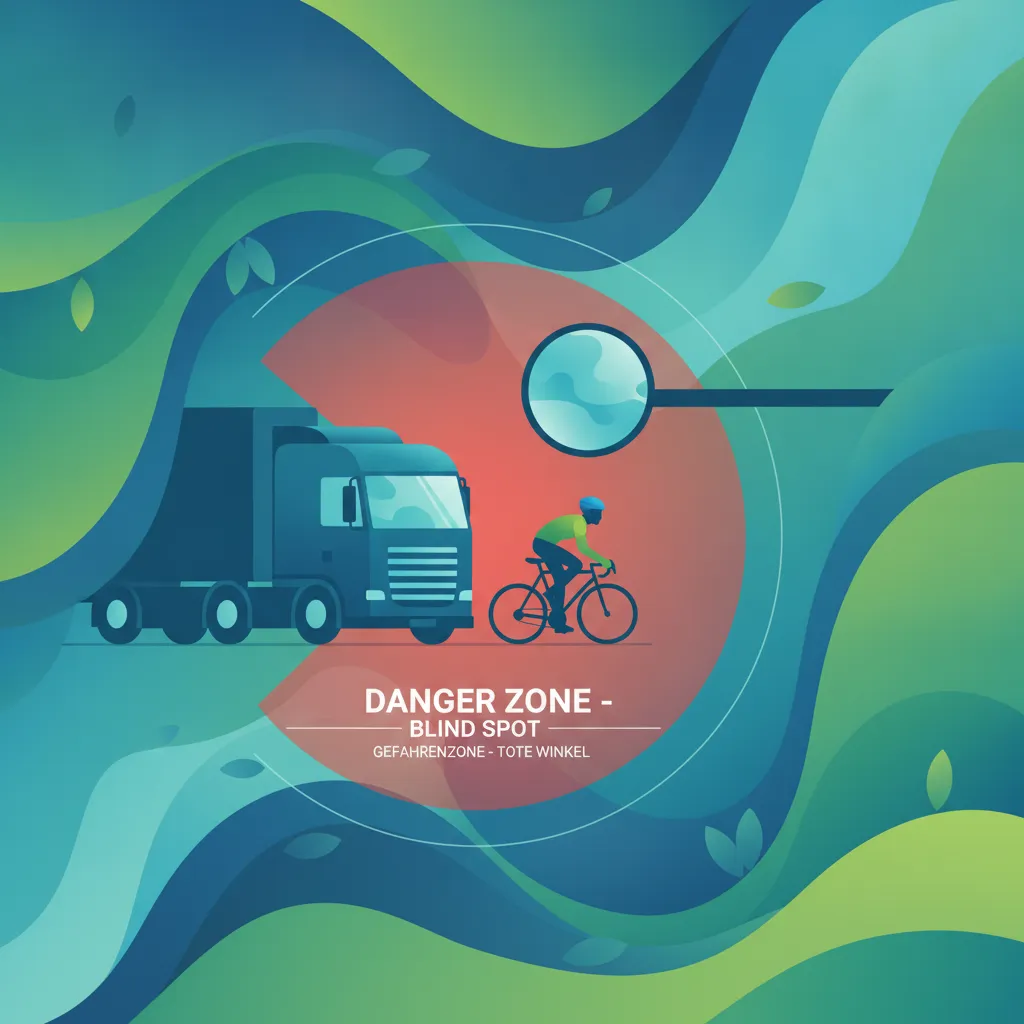
This lesson highlights the significant danger posed by the large blind spots of HGVs and buses. You will learn to identify these hazardous areas around a vehicle where the driver cannot see you. The lesson provides practical strategies for staying out of these zones, especially at junctions and when overtaking, to prevent serious accidents.
This lesson explains that your lane is more than just a single track. You will learn how to move within your lane to a position of safety, whether it's to be more visible in another driver's mirrors, to avoid road surface hazards, or to set up for a corner. This proactive approach to positioning is a key defensive riding skill.
This lesson teaches riders how to be constantly aware of blind spots to prevent collisions. You will learn the importance of the 'lifesaver' shoulder check before changing position, turning, or moving off. The content emphasizes active visual scanning of the road ahead and around you, along with developing the judgment needed to accurately assess traffic speed and create safe gaps for maneuvering in various traffic situations.
Riding at night requires different skills, as visibility is limited to the reach of your headlights. This lesson teaches you how and when to use main beam and dipped beam lights effectively. It also discusses the increased risk from fatigue and nocturnal animals, and emphasizes the importance of a clean visor and reflective gear for safety.
This lesson details the legal requirements and best practices for using lights and reflectors on your moped or light quadricycle. It covers the correct operation of headlamps, daytime running lights, brake lights, and indicators to communicate your intentions clearly to other road users. You will also learn how to enhance your visibility further with strategically placed reflectors and reflective tape, ensuring you remain conspicuous in low-light conditions and compliant with British lighting regulations.

This lesson focuses on the challenges of riding when you can't see or be seen clearly. It covers the correct use of lights in fog, rain, and at night to maximize both your vision and your visibility to others. You will learn why reducing speed is critical, how to use reflective clothing effectively, and strategies for dealing with the glare from other vehicles' headlights to ensure you can navigate safely in all lighting conditions.

This lesson contrasts the challenges of different road types. It covers how to handle the hidden bends, poor surfaces, and unexpected hazards of rural roads. It then details the specific procedures for using dual carriageways and motorways, including using slip roads, adhering to strict lane discipline, and safely overtaking at high speeds.
This lesson provides a step-by-step guide to dealing with roundabouts. It covers how to choose the correct lane on approach based on your destination, when and how to signal your intentions, and how to safely enter and exit the roundabout. Emphasis is placed on maintaining good observation and anticipating the actions of other drivers.
Find clear answers to common questions learners have about Motorcyclists, Lorries, Buses, and Articulated Vehicles. Learn how the lesson is structured, which driving theory objectives it supports, and how it fits into the overall learning path of units and curriculum progression in Great Britain. These explanations help you understand key concepts, lesson flow, and exam focused study goals.
Long vehicles often need to pull out wide to make a turn. If you follow them too closely or attempt to turn into the same road, you may be caught in their path as they swing wide, leading to a collision.
The driver of a large vehicle or HGV has restricted visibility. If you are positioned in a blind spot, the driver may be completely unaware of your presence, which is extremely dangerous if they decide to change lanes or turn.
Motorcyclists are much smaller than cars, making them harder to spot at junctions. They can also accelerate rapidly and may be affected by road surface hazards that you don't notice, so giving them plenty of space is a vital safety precaution.
Large vehicles displace a significant amount of air. When you are overtaking or passing a high-sided lorry, especially in windy conditions, you may feel your car 'buffeted' or pulled toward the vehicle, so always maintain a firm grip on the wheel and a safe distance.
Dive into our comprehensive question bank to find exactly what you need for your Great Britain theory test. Use our advanced filters to pinpoint specific subjects or test your knowledge on challenging areas, ensuring you're fully prepared for success.