
This lesson details the legal consequences of non-compliance with goods vehicle regulations in Great Britain. Building on your understanding of professional responsibility, you will learn how the DVSA and police enforce traffic laws for Category C drivers. This knowledge is essential for passing your theory test and maintaining a clean professional record.

Lesson content overview
Operating a goods vehicle in Great Britain comes with significant responsibilities, underscored by a robust system of liability, penalties, and enforcement. This lesson provides a comprehensive overview of the legal repercussions for violating goods vehicle regulations, which can range from civil penalties to criminal prosecution. Understanding these consequences is crucial for every Category C licence holder, not only to avoid legal sanctions but also to uphold professional standards and ensure road safety.
The legal framework governing goods vehicles aims to deter unsafe behaviour, promote fair competition within the commercial transport sector, and protect all road users. Breaches of these regulations can lead to substantial fines, penalty points, driving disqualifications, and even vehicle seizure. Awareness of how serious offences are handled in court and how repeated infractions can escalate sanctions is vital for protecting both your licence and your professional career.
Liability refers to the legal responsibility for actions or omissions that result in harm or a breach of law. For goods vehicle drivers, this can be categorised into civil and criminal liability, each with distinct implications and enforcement mechanisms.
Civil liability arises when a driver's negligent or reckless actions cause damage or injury to another party. The primary purpose of civil law in this context is to compensate victims for their losses and to encourage safe conduct among drivers. This type of liability is typically enforced through civil courts, where victims can sue for damages.
Negligence is a key component of civil liability, defined as the failure to exercise the reasonable care that a prudent person would have exercised in similar circumstances. For example, if a Category C driver overloads their vehicle, causing an accident, they may be held civilly liable for the damages to other vehicles, property, or injuries sustained by individuals. Beyond direct negligence, employers can also face vicarious liability, meaning they may be held responsible for the actions of their employees while they are working.
It is a common misunderstanding that having vehicle insurance absolves a driver of all civil responsibility. While insurance policies typically cover many civil claims, the driver remains legally liable, and an accident can still lead to increased insurance premiums, excesses, and even future difficulty in obtaining cover. Civil liability cases are primarily governed by the Law of Torts and are often linked to the Road Traffic Act 1988.
Criminal liability applies when a driver's actions constitute a criminal offence, leading to potential punishment by the state, rather than compensation to a private individual. These offences are deemed serious enough to warrant public prosecution because they endanger lives, public safety, or violate fundamental legal statutes.
Examples of criminal offences for goods vehicle drivers include dangerous driving, driving under the influence of alcohol or drugs, and exceeding legal weight limits. These offences are typically heard in Magistrates' Courts or Crown Courts, depending on their severity. Unlike civil cases, which focus on compensation, criminal proceedings aim to punish the offender and deter future transgressions.
A conviction for a criminal driving offence can result in severe penalties, including substantial fines, penalty points on your licence, driving disqualification, or even imprisonment. Such a conviction also leads to a criminal record, which can have long-lasting effects on personal and professional life, including future employment prospects. It is crucial for Category C drivers to understand that driving offences are not limited to minor fines; serious infractions can have life-altering consequences.
To enforce regulations and promote road safety, authorities employ a range of penalties and sanctions. These vary in severity and are applied based on the nature and frequency of the offence.
Administrative penalties are non-court sanctions imposed by authorised enforcement agencies such as the Driver and Vehicle Standards Agency (DVSA), the police, or local authorities. These penalties provide a swift and efficient means of enforcing regulations for less serious offences, reducing the burden on the court system.
The most common administrative penalty is a Fixed-Penalty Notice (FPN), which offers the offender an opportunity to pay a predetermined fine without attending court. Examples include minor speeding offences, certain load security breaches, or failure to display required vehicle documentation. Similarly, Penalty Charge Notices (PCNs) are often issued by local authorities for parking offences or contraventions in bus lanes.
While an FPN allows for a quick resolution, it is important to understand that accepting and paying an FPN does not necessarily equate to an admission of guilt in all circumstances, but it does mean accepting the penalty for the offence. If an FPN is disputed, the case can be taken to court. Ignoring an FPN, however, will typically lead to a court summons and potentially higher fines and costs.
The penalty points system is a crucial mechanism for tracking and penalising repeat driving offences. Points are added to a driver's licence for specific offences, with the number of points reflecting the seriousness of the breach. This system is designed to encourage behavioural change and deter repeat offending through a graduated response.
Points typically remain on a driver's licence for a statutory period, usually four years from the date of the offence. Accumulating a certain number of points within a specified timeframe (e.g., 12 points within three years) can lead to an automatic driving disqualification. For new drivers, who have held their licence for less than two years, the threshold for disqualification is even lower, at 6 points.
For Category C drivers, certain goods vehicle-specific offences, such as serious overloading or dangerous loading, can attract a significant number of penalty points. It is a common misconception that points reset after a year; they remain active for the statutory period, and their accumulation can have serious implications for professional drivers.
Driving disqualification is a legal order that temporarily prevents a driver from operating a vehicle for a specified period. This serious sanction is imposed by courts following convictions for certain offences or automatically triggered by the accumulation of too many penalty points.
Disqualifications can be mandatory, meaning the court must impose a ban for certain severe offences (e.g., causing death by dangerous driving), or discretionary, where the court decides whether to impose a ban based on the circumstances. During a period of disqualification, a driver must surrender their licence and cannot legally drive any vehicle for which they were disqualified. For Category C drivers, this means they cannot operate goods vehicles, which can have profound career implications.
In extremely serious or repeated cases, a court may issue a "sine die" order, which is a permanent ban from holding a driving licence. This is a very rare and severe penalty, typically reserved for individuals deemed a persistent and extreme danger to public safety on the roads. It is crucial not to confuse a disqualification for one vehicle category with all categories; however, most serious offences will result in a disqualification from driving all types of vehicles.
Vehicle seizure and impoundment involve the lawful taking and holding of a vehicle by authorities due to a regulatory breach. This action is primarily taken to remove unsafe vehicles from circulation and to enforce compliance with goods vehicle regulations.
Authorities, such as the police and DVSA, have powers to seize vehicles for various reasons, including:
Once seized, the vehicle is removed from the road and stored at an authorised compound. The driver or operator typically faces additional fees for storage and recovery, in addition to any fines or penalties for the original offence. The vehicle will usually only be released once compliance is achieved (e.g., load reduced, repairs made, documents presented) and all associated fees are paid. A common misunderstanding is that seizure only occurs for criminal offences; it can also be an administrative action for serious safety breaches.
Beyond direct fines and penalties, goods vehicle operators must also be aware of the Vehicle Excise Duty (VED), commonly known as road tax, and other tax implications related to regulatory breaches. VED is an annual tax paid for the use of a vehicle on public roads, and its amount is often linked to vehicle type, weight, and emissions.
An overloaded heavy goods vehicle (HGV) may not only incur immediate fines but could also be re-rated for a higher VED. This means that operators who consistently overload their vehicles, or are caught doing so, may face increased tax liabilities beyond the immediate penalty. This measure ensures economic compliance, aligning road tax contributions with the potential road wear caused by heavier vehicles. Therefore, the financial impact of non-compliance can extend far beyond the initial fines.
Understanding the specific laws and the authorities responsible for their enforcement is fundamental for all professional Category C drivers.
Goods vehicle operations in Great Britain are primarily governed by a few key pieces of legislation, which outline the rules for vehicle construction, use, driver conduct, and enforcement powers.
Road Traffic Act 1988: This comprehensive act covers a wide range of driving offences, including dangerous driving, driving under the influence, and general road safety provisions. It forms the backbone of criminal driving law.
Road Traffic Offenders Act 1988: This act details the penalties and enforcement procedures for various road traffic offences, including the penalty points system and disqualification rules.
Road Vehicles (Construction and Use) Regulations 1986: These regulations set out detailed requirements for the design, construction, and maintenance of vehicles, as well as rules for their use on the road, including weight limits, load securing, and vehicle dimensions.
Road Traffic Act 1991: This act introduced various provisions related to road traffic, including powers for local authorities and the police to issue Fixed Penalty Notices for specific offences.
Vehicle Excise and Registration Act 1994: This act governs the collection of Vehicle Excise Duty and the registration of vehicles.
Compliance with these laws is not optional. Professional drivers are expected to have a thorough understanding of the regulations applicable to their operations.
Several agencies are empowered to enforce goods vehicle regulations, each with distinct roles and responsibilities.
These agencies work collaboratively to maintain high standards of safety and compliance within the goods vehicle industry. Regular checks and enforcement actions are commonplace across Great Britain, making constant vigilance and adherence to regulations essential for all Category C drivers.
Understanding common violations and their specific consequences is vital for preventative driving and compliance.
Two of the most critical and frequently enforced regulations for goods vehicles relate to weight limits and load security.
These violations often relate to operational procedures and administrative compliance, but can have significant safety implications.
These are among the most serious types of violations due to their direct threat to public safety.
The severity of penalties can often be influenced by various conditional factors surrounding an offence. Enforcement agencies and courts consider these circumstances when determining appropriate sanctions.
Environmental and road conditions play a significant role in assessing culpability and potential danger.
The state of the vehicle, the presence of vulnerable road users, and operational pressures can also impact how offences are viewed.
Explore all units and lessons included in this driving theory course.
Lesson content overview
Explore all units and lessons included in this driving theory course.
Explore search topics learners often look for when studying Liability, Penalties, and Enforcement. These topics reflect common questions about road rules, driving situations, safety guidance, and lesson level theory preparation for learners in Great Britain.
Browse additional driving theory lessons that cover connected traffic rules, road signs, and common driving situations related to this topic. Improve your understanding of how different rules interact across everyday traffic scenarios.
Explore the legal consequences for breaching goods vehicle regulations in Great Britain. This lesson details fines, penalty points, disqualification, vehicle seizure, and the roles of enforcement agencies like the DVSA and police.
This lesson outlines the serious legal and professional consequences of committing traffic offences. It covers common issues such as speeding, using a mobile phone, and the strict limits on alcohol, explaining the system of fixed penalty notices and penalty points. The content makes clear how accumulating points can lead to fines, licence suspension or revocation, and the loss of a professional driving career. The importance of understanding and following company policy on incident reporting is also stressed.
This lesson outlines the serious consequences of failing to comply with road transport law. It details the graduated system of fines and penalties that can be issued by the DVSA and police for offences ranging from drivers' hours violations to vehicle defects. The lesson also explains more severe sanctions, such as vehicle prohibition, licence suspension, and referral to the Traffic Commissioner, which can impact both the driver and their employer.

This lesson details the consequences of committing traffic offences. It explains how penalty points are added to your licence for infractions like speeding or using a mobile phone. You will learn about the threshold for disqualification (totting-up) and the specific, stricter rules that apply to new drivers within the first two years of passing their test.

This lesson explains the legal consequences of committing traffic offences in Great Britain. It details the penalty points system, explaining how points are issued for various offences like speeding or using a mobile phone, and the thresholds that can lead to a driving ban. Understanding these penalties, fines, and potential licence revocation reinforces the importance of consistent, lawful riding and helps you appreciate the value of a clean driving record.

This lesson explains the legal consequences of committing traffic offences. It covers how the penalty points system works, the number of points for common offences like speeding, and how accumulating 12 points can lead to disqualification under the 'totting-up' procedure. You will also learn about the specific rules for new riders, who can have their licence revoked with just 6 points.

Explore the critical topics of driver liability, insurance, and legal penalties in Great Britain. This lesson distinguishes between civil and criminal liability in the context of road incidents. It details the compulsory third-party insurance every driver must have and explains the penalty points system for traffic offences, including fines and potential disqualification.

This lesson details the crucial documentation required for legal driving in the UK. It explains the purpose of the V5C registration document, the MOT test certificate, and proof of insurance and road tax (Vehicle Excise Duty). You will learn where to keep these documents and when you might be required to present them to authorities.

This lesson provides a clear overview of the primary goods vehicle licence categories: C1, C, C1E, and CE. It explains the specific vehicle types, weight thresholds, and axle configurations permitted for each classification. You will learn about the DVSA's regulatory framework, including the essential age and medical fitness criteria for eligibility, as well as the steps for obtaining a full licence. Understanding these legal definitions is fundamental for ensuring compliance and safety.
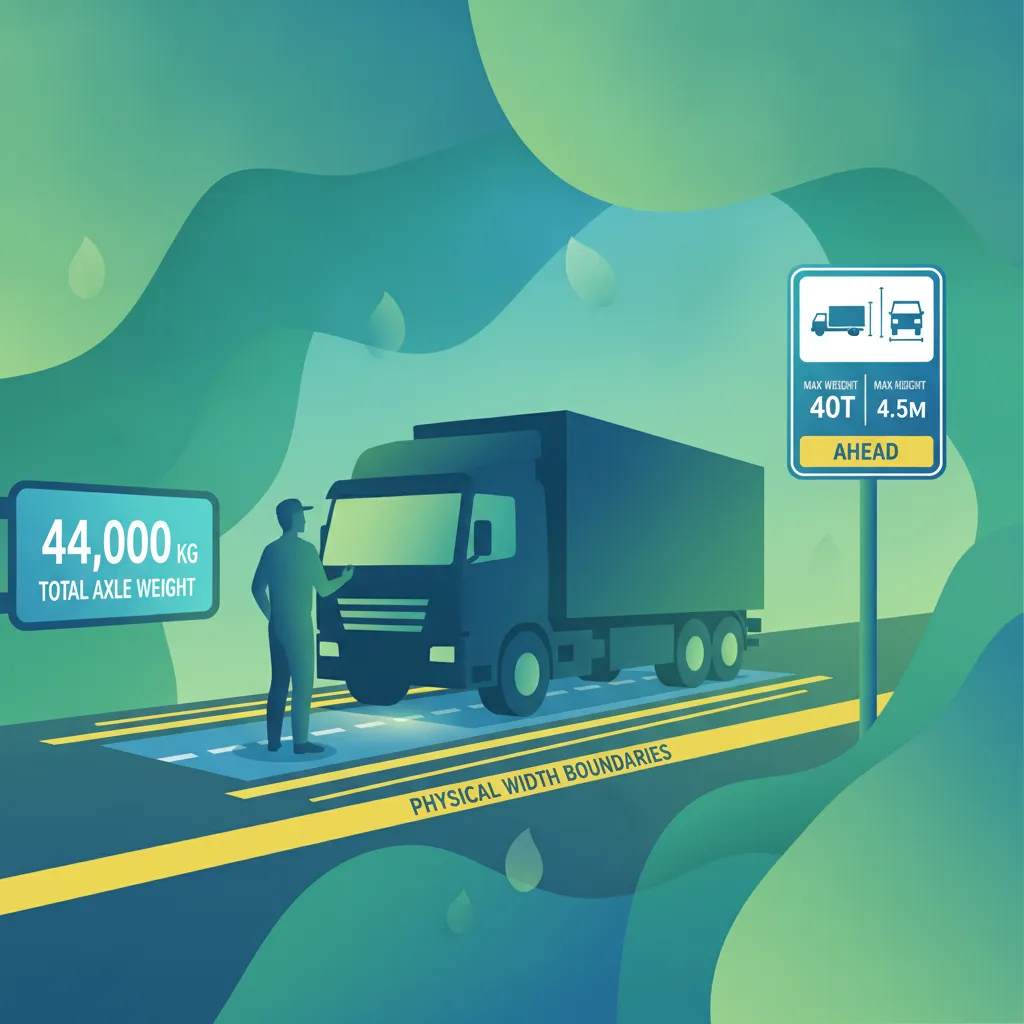
This lesson introduces the statutory limits governing the dimensions and mass of goods vehicles in Great Britain, including gross vehicle weight and individual axle loads. It explains how to calculate a vehicle's loaded weight to ensure it remains within legal parameters, preventing penalties and safety risks. Understanding these regulations is crucial for preventing damage to road infrastructure and ensuring the vehicle's stability and safe operation on every journey.

This lesson outlines the statutory framework governing UK driving licences, focusing on Category B. It details the functions of the Driver and Vehicle Licensing Agency (DVLA) and the Driver and Vehicle Standards Agency (DVSA). Key topics include the various licence categories, age and medical fitness requirements, and the legal standing of the Highway Code.
Understand frequent breaches of goods vehicle regulations, including overloading, unsecured loads, and tachograph offences. Learn the specific penalties and legal ramifications for each violation in Great Britain.
This lesson outlines the serious consequences of failing to comply with road transport law. It details the graduated system of fines and penalties that can be issued by the DVSA and police for offences ranging from drivers' hours violations to vehicle defects. The lesson also explains more severe sanctions, such as vehicle prohibition, licence suspension, and referral to the Traffic Commissioner, which can impact both the driver and their employer.

This lesson addresses the serious danger of driver fatigue, a major cause of incidents involving commercial vehicles. It details the complex EU and GB domestic rules on drivers' hours, including driving limits and required rest periods. Learners will be taught to recognize the physical and mental signs of fatigue and understand the importance of taking quality rest to maintain alertness and ensure their own safety and that of others.
This lesson introduces the statutory limits governing the dimensions and mass of goods vehicles in Great Britain, including gross vehicle weight and individual axle loads. It explains how to calculate a vehicle's loaded weight to ensure it remains within legal parameters, preventing penalties and safety risks. Understanding these regulations is crucial for preventing damage to road infrastructure and ensuring the vehicle's stability and safe operation on every journey.
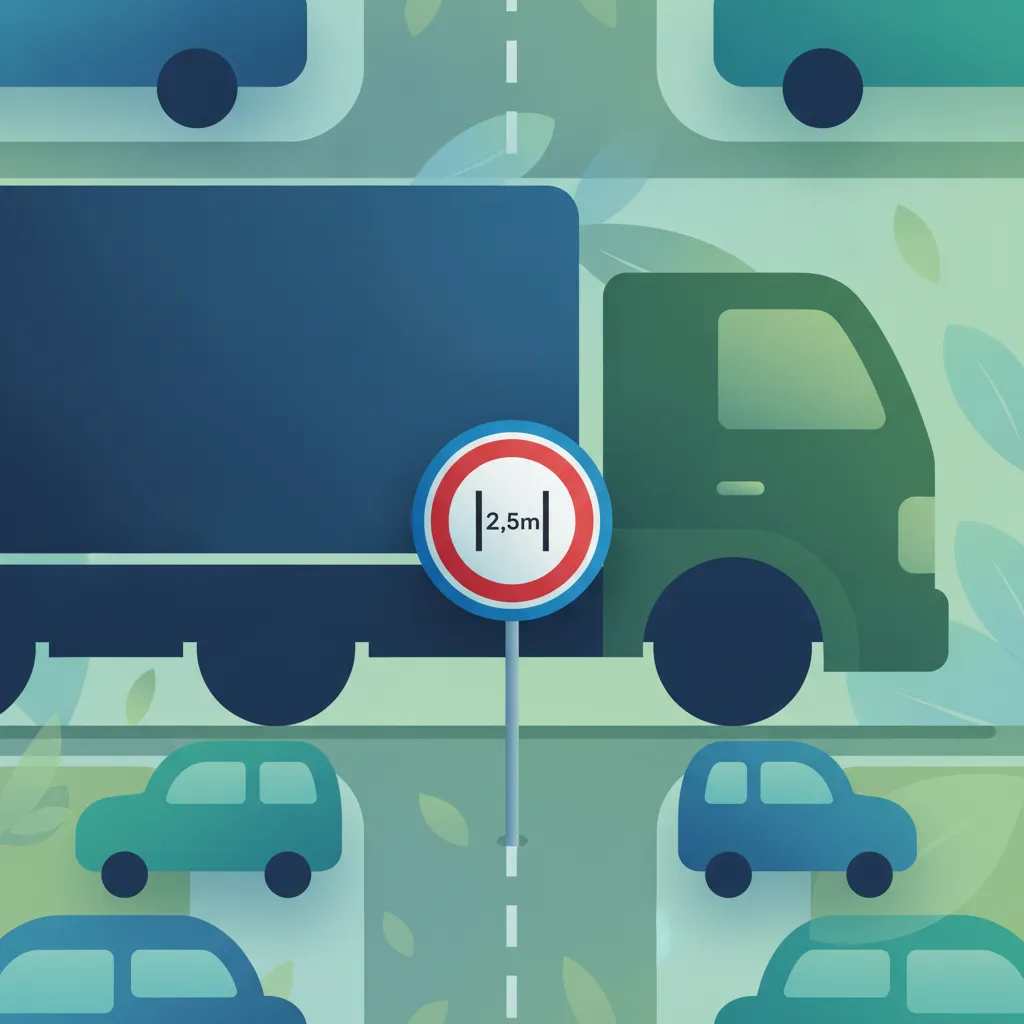
This lesson offers a deep dive into the specific regulations concerning weight, width, and axle load restrictions for goods vehicles. It covers how to read and comply with the associated road signs to avoid overloading weak bridges and entering restricted areas. Learners will understand the importance of correct load assessment and the serious penalties for non-compliance, which are enforced through DVSA roadside inspections and weighbridges.
This lesson outlines the serious legal and professional consequences of committing traffic offences. It covers common issues such as speeding, using a mobile phone, and the strict limits on alcohol, explaining the system of fixed penalty notices and penalty points. The content makes clear how accumulating points can lead to fines, licence suspension or revocation, and the loss of a professional driving career. The importance of understanding and following company policy on incident reporting is also stressed.

This lesson focuses on the specific rules and best practices for driving HGVs on motorways in Great Britain. It covers mandatory speed limits for goods vehicles, lane discipline including restrictions on using the outside lane, and procedures for safely joining and leaving the motorway. The lesson also includes up-to-date information on driving on smart motorways, including understanding the signs and using emergency refuge areas correctly.

This lesson covers the critical legal requirement for accurate record-keeping in the transport industry. It provides detailed instruction on the correct use of both analogue and digital tachographs to record driving time, breaks, and other work. You will also learn about other essential documents that must be carried, such as load manifests and delivery notes, and the importance of keeping these records accurate and available for inspection by enforcement authorities.
This lesson focuses on the principles of effective speed management for heavy goods vehicles, which extends beyond simply obeying the statutory speed limits. It covers how to adapt speed based on vehicle weight, load stability, road gradients, and prevailing traffic and weather conditions. You will also learn about the function of mandatory speed limiters and how intelligent use of speed and cruise control can significantly improve fuel efficiency and safety.
This lesson provides a clear overview of the primary goods vehicle licence categories: C1, C, C1E, and CE. It explains the specific vehicle types, weight thresholds, and axle configurations permitted for each classification. You will learn about the DVSA's regulatory framework, including the essential age and medical fitness criteria for eligibility, as well as the steps for obtaining a full licence. Understanding these legal definitions is fundamental for ensuring compliance and safety.

This lesson examines the unique rules and restrictions governing buses and coaches, focusing on bus lane priority, time-based restrictions, and loading zone limitations. Learners will explore the criteria for using bus-only routes and understand the legal consequences of non-compliance. The content also reviews signage indicating bus gate operation and areas where passenger vehicles are prohibited from stopping or loading outside of designated zones, ensuring lawful and efficient urban navigation.
Find clear answers to common questions learners have about Liability, Penalties, and Enforcement. Learn how the lesson is structured, which driving theory objectives it supports, and how it fits into the overall learning path of units and curriculum progression in Great Britain. These explanations help you understand key concepts, lesson flow, and exam focused study goals.
A fixed penalty is a conditional offer to pay a fine and avoid court for minor offences. More serious or repeat offences are referred to the courts, which can result in unlimited fines, disqualification, or even imprisonment.
Yes, if an officer believes you have committed a serious offence or are unfit to drive, they have the power to seize your vehicle or prohibit it from continuing its journey until the defect or issue is resolved.
Professional drivers are held to higher standards. Excessive penalty points can lead to the loss of your vocational entitlement, which effectively ends your career as a professional goods vehicle driver.
The DVSA conducts targeted roadside checks to inspect vehicles for roadworthiness, secure loading, and tachograph compliance. They have the authority to issue immediate prohibitions if a vehicle or driver does not meet legal standards.
Dive into our comprehensive question bank to find exactly what you need for your Great Britain theory test. Use our advanced filters to pinpoint specific subjects or test your knowledge on challenging areas, ensuring you're fully prepared for success.