
Driving Theory
British Driving Theory Courses

Lesson 2 of the Vehicle Size, Weight, Dimensions and Road Space unit

GB Goods Vehicle Theory: Road Space Occupancy and Maneuvering Clearance

This lesson provides a deep dive into the physical footprint of large goods vehicles and how to maneuver them safely through complex road environments. Building on your understanding of vehicle dimensions, you will learn to manage the risks associated with turning, off-tracking, and maintaining adequate clearance in urban and rural settings.

HGV theoryCategory Cmaneuveringspatial awarenessoff-tracking
GB Goods Vehicle Theory: Road Space Occupancy and Maneuvering Clearance

Lesson content overview

GB Goods Vehicle Theory

Road Space Occupancy and Maneuvering Clearance for Goods Vehicles

Operating a Category C goods vehicle on the roads of Great Britain demands a profound understanding of the physical space the vehicle occupies, both when stationary and, critically, during dynamic manoeuvres. This lesson delves into the intricacies of road space occupancy, providing professional goods vehicle drivers with the knowledge to safely navigate junctions, roundabouts, and confined areas. Mastering these concepts is essential for preventing accidents, maintaining compliance with regulations, and upholding the high standards expected of professional drivers.

Understanding Goods Vehicle Dimensions and Static Occupancy

Before any manoeuvre, a driver must have a clear grasp of their vehicle's fixed, static dimensions. These measurements dictate the fundamental physical footprint of a goods vehicle on the road and form the baseline for all subsequent clearance calculations.

Key Static Vehicle Dimensions for Category C Licences

Every professional goods vehicle driver should be intimately familiar with the following dimensions:

  • Overall Length: This is the distance from the foremost point to the rearmost point of the vehicle, including any fixed parts of the bodywork or equipment. For an articulated vehicle, this includes the full length of the trailer when coupled. In Great Britain, rigid goods vehicles generally have a maximum length of 12 metres, while articulated vehicles are restricted to 16.5 metres.
  • Overall Width: This refers to the widest point of the vehicle, including any permanently attached equipment or mirrors in their operational position, unless they can be retracted. The legal maximum width for Category C vehicles on motorways is 2.55 metres. On other roads, this limit is 2.50 metres. It is crucial to account for side steps, cargo protrusions, or other items that might extend beyond the main bodywork.
  • Overall Height: This is the distance from the road surface to the highest point of the vehicle, including any load. Vehicle height is critical for safely passing under bridges, overhead gantries, and through tunnels. While there isn't a universal maximum height limit for goods vehicles, drivers are legally required to know their vehicle's height and abide by all posted height restriction signs.
  • Wheelbase: The distance between the centres of the front and rear axles. For multi-axle rigid vehicles, it's typically measured from the front axle to the centre point of the rear bogie. This dimension significantly influences off-tracking and turning capabilities.
  • Track Width: The lateral distance between the centres of the tyres on the same axle. This is less commonly used in direct clearance calculations but contributes to the overall width of the vehicle's ground contact.

Tip

Always verify the specific dimensions of your vehicle, especially if you are driving a new or unfamiliar model. These details are often found in the vehicle's manual or on a data plate.

Compliance with legal occupancy limits is non-negotiable for Category C goods vehicle drivers. Exceeding these limits can lead to significant fines, endorsements on your licence, and even vehicle impoundment. Beyond the static maximums, regulations also implicitly guide drivers to ensure their vehicle's dimensions are compatible with the road infrastructure they intend to use. This foresight is a cornerstone of professional route planning and risk assessment.

Dynamic Road Space: The Science of Vehicle Maneuvering

While static dimensions define a vehicle at rest, dynamic dimensions describe the additional space a vehicle needs when it is in motion, particularly when turning. These dynamic forces introduce concepts like sweep path, off-tracking, and tail swing, which are critical for safe goods vehicle operation.

The Vehicle Sweep Path: Total Space Occupied

The vehicle sweep path is the total area a vehicle occupies while executing a manoeuvre. It accounts for the static dimensions of the vehicle, but critically, it also incorporates the dynamic elements of off-tracking and tail swing. This comprehensive spatial envelope must be clear of all obstructions, roadside infrastructure, and other road users to ensure a safe manoeuvre. The sweep path dictates the necessary clearance at junctions, roundabouts, and in any confined space.

Off-Tracking: The Rear Wheel Deviation

Off-tracking is the phenomenon where the rear wheels of a vehicle, or the wheels of a trailer, follow a path that is inside the path of the front wheels during a turn. This happens because the vehicle pivots around a point during a turn, causing the rear axles to describe a tighter radius than the steered front axle.

  • Impact on Maneuvering: Off-tracking effectively increases the required road width for a goods vehicle to complete a turn. This is particularly crucial when negotiating lane changes, tight corners, and roundabouts, as the rear of the vehicle or trailer can easily encroach on pavements, opposing lanes, or fixed obstacles if not properly accounted for.
  • Factors Affecting Off-Tracking: The degree of off-tracking is influenced by the vehicle's wheelbase, the steering angle, and the sharpness of the turn. Longer wheelbases and sharper turns generally result in greater off-tracking.
  • Preventing Collisions: Professional drivers must visualise the off-tracked path of their rear wheels and ensure that this path remains clear of all obstructions. Misjudging off-tracking is a common cause of collisions with kerbs, street furniture, and other vehicles positioned on the inside of a turn.

Tail Swing: The Rear Overhang Movement

Tail swing refers to the angular movement of the rear end of a vehicle or trailer around its pivot point (typically the rear axle for rigid vehicles, or the kingpin for articulated vehicles) when the steering angle changes. Unlike off-tracking, which pulls the rear inward, tail swing can push the rear outward from the initial vehicle path, especially on sharper turns.

  • Impact on Maneuvering: Tail swing is a significant risk, particularly on left turns, where the rear of a long vehicle can swing out into an adjacent lane, onto a pavement, or towards vulnerable road users such as cyclists or pedestrians. It requires clearance beyond the vehicle's static width, especially during tight corner exits.
  • Factors Affecting Tail Swing: The length of the rear overhang (the distance from the rear axle to the very rear of the vehicle) and the steering angle are the primary factors. A longer rear overhang will result in greater tail swing.
  • Mitigation: Drivers must constantly be aware of their vehicle's rear overhang and anticipate its movement, particularly when turning away from the side of the road. Checking mirrors, using spotters if available, and maintaining a slow, controlled speed are vital.

Turning Radius and Turn-in Dynamics

The turning radius (often referred to as the turn-in radius) is the minimum radius of the path described by the centre of the front wheel with the steering at maximum lock. This metric helps determine the feasibility of negotiating roundabouts, junctions, and other curved sections of the road.

  • Practical Meaning: The turning radius is a fundamental characteristic of a vehicle and influences route planning. However, it is crucial not to confuse the turn-in radius with the total space needed for a turn. The actual space required is larger, as it must incorporate the vehicle's full width, off-tracking, and tail swing.
  • Route Planning: Knowing your vehicle's turning radius helps in selecting appropriate routes, avoiding roads or junctions that are too tight, and identifying suitable locations for turning around.

Crucial Clearance and Safety Margins

Combining the understanding of static and dynamic dimensions leads to the concept of total clearance. This isn't just about avoiding contact; it's about providing a safe buffer zone.

The Clearance Envelope: Your 3D Buffer Zone

The clearance envelope is a three-dimensional "buffer zone" around your goods vehicle that must remain clear of all obstacles, other vehicles, and road users during any manoeuvre. It extends beyond the static dimensions to account for dynamic movements (off-tracking, tail swing) and crucial safety margins.

  • Side Clearance: This includes space for mirrors, wheel arch movement, and, critically, tail swing. It ensures the vehicle doesn't encroach on roadside infrastructure, parked vehicles, or vulnerable road users on pavements.
  • Rear Clearance: Essential for reversing and stopping distances, but also for accommodating tail swing when the vehicle turns away from the rear.
  • Vertical Clearance: Absolute critical for bridge heights, overhead gantries, and tunnel entrances. Always know your vehicle's height and obey posted signs.
  • Front Clearance: Space needed for safe stopping, but also for the front of the vehicle to clear obstacles when turning, especially on left-hand turns where the front corner can cut in.

Warning

Always know your vehicle's exact height. Striking a bridge or overhead structure can have catastrophic consequences, including severe injury, death, and massive structural damage.

The Importance of a Safety Margin

A safety margin is an additional distance added beyond the calculated sweep path and clearance envelope. This extra buffer accounts for:

  • Driver Error: Minor misjudgements or slight deviations from the intended path.
  • Vehicle Movement Variability: Factors like suspension compression, load shift, or tyre flex.
  • Environmental Factors: Adverse weather (wind, rain, ice), poor visibility, or uneven road surfaces.
  • Unforeseen Obstacles: Unexpected pedestrians, cyclists, or items on the road.

Typically, a safety margin of 0.3 to 0.5 metres is recommended for heavy goods vehicles, depending on the complexity of the manoeuvre and prevailing conditions. While not always explicitly codified, the Highway Code's emphasis on "maintaining a safe distance" inherently includes this practice. Using a fixed safety margin for all conditions is a common misunderstanding; it should be adjusted based on the situation.

Applying the principles of road space occupancy and clearance is most vital when operating in dynamic, complex environments.

Junction Navigation for HGVs

Turning at junctions requires precise control and spatial awareness. Category C drivers must ensure their vehicle can complete the manoeuvre without encroaching on opposing lanes, pavements, or striking roadside obstacles.

  • Right Turns: Often require positioning the vehicle slightly to the left before turning to allow the rear wheels to clear the kerb on the inside of the turn, compensating for off-tracking. Care must be taken not to mislead following drivers into thinking you are turning left.
  • Left Turns: Pose a significant risk from tail swing. The rear of a long vehicle can swing outwards, potentially sweeping across pavements and into the path of vulnerable road users or roadside furniture. Drivers must ensure ample side clearance before initiating the turn.

Roundabout Strategy for Category C Trucks

Roundabouts present a complex challenge due to their circular nature and often limited space.

  • Entry and Positioning: Approach roundabouts at a reduced speed, yielding to circulating traffic. Position your vehicle to allow for the full sweep path. On larger roundabouts, it may be necessary to take a wider line to accommodate off-tracking and tail swing, even if this means briefly using parts of adjacent lanes or straddling lane markings.
  • Central Island Clearance: For tight roundabouts, the rear of the vehicle, particularly an articulated trailer, can easily strike the central island if the turn is misjudged. Drivers must calculate the combined width of the vehicle, off-track, and tail swing against the island's radius. Sometimes, "cutting the corner" by driving over part of the central island is permitted for long vehicles if specifically indicated by road markings (e.g., a mountable kerb or specific HGV lane markings), but this should never be assumed without clear indication.
  • Exiting: Ensure the sweep path clears any kerbs, signs, or waiting traffic on the exit road.

Urban and Confined Space Maneuvering

Narrow residential streets, loading bays, and industrial estates demand heightened vigilance.

  • Pedestrian and Cyclist Awareness: Urban environments often have high concentrations of vulnerable road users. Tail swing and off-tracking can easily push into pedestrian walkways or cycle lanes. Always anticipate their presence and provide extra clearance.
  • Parked Vehicles and Street Furniture: Parked cars, lampposts, bus stops, and rubbish bins can all fall within a goods vehicle's dynamic clearance envelope. Slow, precise movements and constant mirror checks are essential.
  • Reversing: Reversing a large goods vehicle requires maximum caution. Always check the rear clearance zone thoroughly, use mirrors extensively, and deploy a spotter if available or if visibility is limited. Account for any potential tail swing if reversing around a bend.

Impact of Road Geometry

The structural layout and dimensions of the carriageway, including lane widths, kerb widths, roadside verges, shoulders, and central reservations, directly influence the available space for goods vehicles.

  • Lane Width: Assuming a lane is wide enough for a goods vehicle is a common error. While a lane might be 3.0 metres wide, the usable width for a Category C vehicle after accounting for its own width, off-tracking, and a safety margin can be significantly reduced.
  • Kerbs and Verges: These fixed features often define the absolute limit of available road space. Contact with kerbs can damage tyres and suspension, and mounting a verge can be dangerous, especially if it conceals ditches or soft ground.

Load Distribution and Vehicle Stability

The way cargo is distributed within a goods vehicle significantly affects its centre of gravity (CoG), which in turn influences steering responses, braking, and dynamic swing arcs.

  • High Centre of Gravity: A top-heavy load can elevate the CoG, increasing the likelihood of roll-over, especially when cornering. It can also subtly alter suspension geometry, potentially increasing the radius of the sweep path and accentuating tail swing or off-tracking.
  • Unbalanced Loads: Unevenly distributed loads, particularly those concentrated at the rear, can alter the effective wheelbase and influence how the vehicle behaves in a turn. This can make off-track and tail swing less predictable.
  • Load Securing Regulations: Proper load securing, as mandated by regulations such as DSG 2000/38/EC (retained in GB law), is crucial. It prevents load shift, which could dynamically change the CoG during a manoeuvre, leading to unexpected vehicle behaviour and increasing the risk of exceeding clearance.

Key Regulations and Professional Responsibilities for Road Space

Professional goods vehicle drivers operate under a stringent legal framework that underpins the necessity of mastering road space occupancy.

  • The Highway Code: Contains several rules directly relevant to clearance and safe manoeuvring:
    • Rule 128: Emphasises ensuring sufficient space to complete a turn at a junction without hitting obstacles.
    • Rule 100: Requires giving way to traffic already on a roundabout, part of ensuring safe entry and sufficient clearance.
    • Rule 145: Mandates checking for all traffic hazards before reversing.
  • Vehicle Dimensions Regulations (DVSA): Stipulate the maximum permissible length, width, and weight for Category C vehicles, ensuring compatibility with general road infrastructure. Breaching these limits is a statutory offence.
  • Regulation (EC) No 561/2006 (retained in GB law): Broadly requires drivers not to endanger other road users, which encompasses careful manoeuvring within available road space.
  • Road Traffic Act 1988 (Section 40) – Dangerous Driving: Driving without due care and attention, including significant failures to maintain adequate clearance resulting in dangerous situations, can lead to criminal charges.

Note

The legal requirement to anticipate space requirements and maintain safe distances reinforces the duty of care owed by professional drivers to all road users.

Common Errors and Advanced Considerations

Even experienced drivers can make mistakes, but understanding common pitfalls and factoring in environmental variables can mitigate risks.

Typical Maneuvering Violations

  • Underestimating Off-Tracking: Leading to the rear wheels hitting kerbs or encroaching on the opposite lane.
  • Ignoring Tail Swing on Left Turns: Causing the rear to hit roadside objects or vulnerable road users.
  • Assuming Lane Width Equals Clearance: Neglecting the dynamic space needed during turns.
  • Loading Unbalanced Cargo: Exacerbating swing and reducing stability.
  • Entering Roundabouts at Excessive Speed: Reducing time for adjustments and expanding the sweep path.

Conditional Logic and Contextual Variations

Maneuvering is not static; it changes with conditions:

  • Weather Conditions:
    • Heavy Rain / Wet Roads: Reduced tyre grip can increase lateral movement, potentially widening the sweep path. Increase safety margins and reduce speed significantly.
    • Snow / Ice: Drastically reduces grip. Wheel slip can unpredictable alter the vehicle's trajectory, making off-track prediction extremely difficult. Further increase margins and slow down.
  • Visibility: Fog or night driving reduces visual cues, making accurate judgment of clearance challenging. Rely more on vehicle dimensions and less on perceived space.
  • Vehicle State:
    • Fully Loaded vs. Empty: A loaded vehicle's suspension may sag, subtly altering the effective wheelbase and CoG, impacting turning characteristics. An empty vehicle might feel lighter and more prone to bounce, but still requires the same clearance.
    • Articulated vs. Rigid: Articulated vehicles inherently have greater off-tracking and tail swing due to their pivot points, requiring specific, more complex calculations.
  • Interaction with Vulnerable Road Users: Pedestrians and cyclists are often located within the potential swing envelope of large vehicles. Always anticipate their presence, provide extra clearance, and be prepared to stop.
  • Driver-Assist Systems: While helpful, these systems may not always fully incorporate dynamic swing calculations for heavy goods vehicles. Always treat them as advisory and rely on your own judgement and calculations.

Conclusion: Mastering Spatial Awareness for Goods Vehicle Drivers

Mastering road space occupancy and maneuvering clearance is fundamental to professional goods vehicle driving. It goes beyond merely knowing your vehicle's dimensions; it demands an intuitive and calculated understanding of how those dimensions interact with the road, its geometry, and other road users in dynamic situations.

By diligently calculating sweep paths, understanding off-tracking and tail swing, applying appropriate safety margins, and constantly adjusting for contextual variations, Category C drivers can navigate Great Britain's roads safely and efficiently. This proactive approach to spatial awareness not only prevents accidents and legal infractions but also reinforces the competence and professionalism expected of all goods vehicle operators.

Learn more with these articles

Check out these practice sets


Search topics related to Road Space Occupancy and Maneuvering Clearance

Explore search topics learners often look for when studying Road Space Occupancy and Maneuvering Clearance. These topics reflect common questions about road rules, driving situations, safety guidance, and lesson level theory preparation for learners in Great Britain.

HGV tail swing and off-tracking explainedmaneuvering large goods vehicles safely theory testCategory C turning circle requirements Great Britainhow to avoid hitting curbs in an HGVDVSA theory test HGV spatial awareness questionssafe cornering techniques for goods vehiclesunderstanding vehicle clearance for HGV licence

Related driving theory lessons for Road Space Occupancy and Maneuvering Clearance

Browse additional driving theory lessons that cover connected traffic rules, road signs, and common driving situations related to this topic. Improve your understanding of how different rules interact across everyday traffic scenarios.

Maneuvering Large Goods Vehicles at Complex Junctions and Roundabouts

Explore advanced strategies for navigating complex junctions and roundabouts with Category C vehicles. Understand how off-tracking and tail swing impact these manoeuvres and ensure safe clearance in challenging road layouts across Great Britain.
HGV theoryCategory Cmaneuveringcomplex junctionsroundaboutsspatial awarenessGreat Britain
Large Roundabouts and Multi‑Lane Roundabouts lesson image

Large Roundabouts and Multi‑Lane Roundabouts

This lesson tackles the complexities of large roundabouts, which often have multiple lanes and exits. It stresses the importance of reading signs on the approach to select the correct lane for your destination. You will learn about maintaining lane discipline while on the roundabout and signalling correctly as you pass exits and prepare to leave.

GB Category B TheoryPriority Rules, Junctions and Roundabouts
View lesson
Rural Roads, Curves, and Uncontrolled Intersections lesson image

Rural Roads, Curves, and Uncontrolled Intersections

This lesson addresses the unique challenges of driving a large vehicle on rural roads. It provides techniques for positioning the vehicle through sharp bends and on narrow lanes, and for safely navigating unmarked or uncontrolled junctions. Learners will be taught to anticipate hidden hazards common in the countryside, such as slow-moving farm vehicles, animals on the road, and concealed entrances. The correct use of passing places and strategies for meeting oncoming traffic are also covered.

GB Passenger Vehicle TheoryWeather, Motorways, Rural Routes, Terminals and Long-Distance Service
View lesson
Manoeuvring in Urban Environments lesson image

Manoeuvring in Urban Environments

This lesson addresses the unique challenges of operating a large goods vehicle in congested urban and city environments. It focuses on techniques for navigating narrow streets, making tight turns, and safely accessing delivery points while being highly aware of vulnerable road users like pedestrians and cyclists. The importance of exceptional observation, low-speed control, and clear communication with other road users is heavily emphasized to minimize risk in these complex settings.

GB Goods Vehicle TheoryLane Use, Turning, Reversing, Manoeuvring and Trailer Awareness
View lesson
Turning Techniques for Large Vehicles lesson image

Turning Techniques for Large Vehicles

This lesson provides detailed instruction on turning techniques tailored for long vehicles. It explains the concepts of off-tracking (where rear wheels follow a tighter path than front wheels) and rear swing, and how to compensate for them. Learners will understand how to position the vehicle correctly when approaching and navigating left and right turns at junctions, roundabouts, and tight corners, using mirrors and signals effectively to ensure clearance and safety.
GB Passenger Vehicle TheoryLane Use, Turning, Blind Spots, Reversing and Manoeuvring
View lesson
Mini-Roundabouts and Multi-Lane Roundabouts lesson image

Mini-Roundabouts and Multi-Lane Roundabouts

This lesson provides specific techniques for safely navigating the two main types of roundabouts in Great Britain. For multi-lane roundabouts, it covers how to choose the correct lane on approach, maintain your lane while circulating, and signal your exit correctly. It also explains the unique rules for mini-roundabouts, emphasizing the importance of giving way to traffic from the right and navigating them with caution due to their small size.

GB AM Moped TheoryJunctions, Roundabouts, Crossings and Road Positioning
View lesson
Turning Radii and Cornering Techniques lesson image

Turning Radii and Cornering Techniques

This lesson explains the dynamics of turning a long vehicle, focusing on the concepts of off-tracking, where the rear wheels follow a tighter path than the front wheels, and tail swing. You will learn the correct road positioning on approach to junctions and roundabouts to safely clear obstacles and avoid mounting kerbs or striking street furniture. Managing speed and using mirrors effectively throughout the turn are emphasized as crucial safety techniques.

GB Goods Vehicle TheoryLane Use, Turning, Reversing, Manoeuvring and Trailer Awareness
View lesson
Driving on Motorways with Goods Vehicles lesson image

Driving on Motorways with Goods Vehicles

This lesson focuses on the specific rules and best practices for driving HGVs on motorways in Great Britain. It covers mandatory speed limits for goods vehicles, lane discipline including restrictions on using the outside lane, and procedures for safely joining and leaving the motorway. The lesson also includes up-to-date information on driving on smart motorways, including understanding the signs and using emergency refuge areas correctly.
GB Goods Vehicle TheoryWeather, Motorways, Rural Roads, Roadworks and Emergency Situations
View lesson
Mini‑Roundabouts and Small Junctions lesson image

Mini‑Roundabouts and Small Junctions

This lesson explains how to handle mini-roundabouts, which are common in urban and residential areas. The primary rule is to approach with caution and give priority to any traffic approaching from your right. You will also learn about correct signalling and the importance of being aware of cyclists and motorcyclists who may be harder to see.
GB Category B TheoryPriority Rules, Junctions and Roundabouts
View lesson
Approaching and Navigating Junctions Safely lesson image

Approaching and Navigating Junctions Safely

This lesson teaches the systematic approach to safely navigating junctions, emphasizing the importance of adjusting your speed and position well in advance. You will learn the 'Mirror-Signal-Manoeuvre' routine, how to perform effective all-round observation checks, and when to give way to other traffic. The content focuses on making safe judgments about gaps in traffic, a crucial skill for vulnerable AM riders when turning or emerging from a junction.
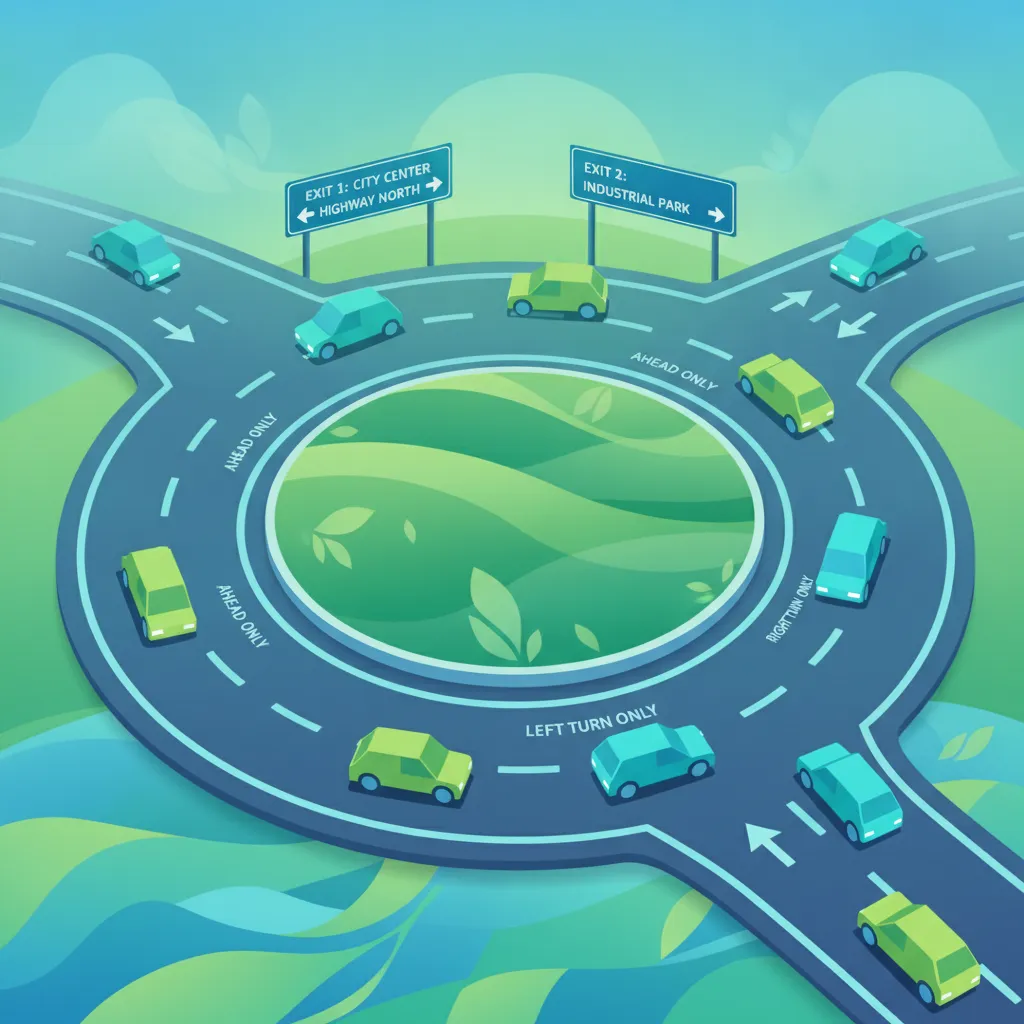
GB AM Moped TheoryJunctions, Roundabouts, Crossings and Road Positioning
View lesson
Mini‑Roundabouts and Multi‑Lane Roundabouts lesson image

Mini‑Roundabouts and Multi‑Lane Roundabouts

This lesson addresses the unique challenges of mini-roundabouts and large, multi-lane or spiral roundabouts. You will learn the subtle differences in rules and approach for mini-roundabouts and the importance of strict lane discipline on larger ones. The lesson stresses the need for advanced planning and awareness when navigating these complex junctions.

Motorcycle Theory GBJunctions, Roundabouts, Crossings and Urban Riding
View lesson

Common Errors and Risks in Goods Vehicle Maneuvering Clearance

Identify typical mistakes made by drivers when assessing road space and maneuvering clearance for large goods vehicles. Learn about the specific risks associated with off-tracking, tail swing, and insufficient safety margins to improve driving safety.

HGV theoryCategory Cmaneuveringspatial awarenesscommon errorsroad safetyrisk assessment
Manoeuvring in Urban Environments lesson image

Manoeuvring in Urban Environments

This lesson addresses the unique challenges of operating a large goods vehicle in congested urban and city environments. It focuses on techniques for navigating narrow streets, making tight turns, and safely accessing delivery points while being highly aware of vulnerable road users like pedestrians and cyclists. The importance of exceptional observation, low-speed control, and clear communication with other road users is heavily emphasized to minimize risk in these complex settings.

GB Goods Vehicle TheoryLane Use, Turning, Reversing, Manoeuvring and Trailer Awareness
View lesson
Identifying and Managing Blind Spots lesson image

Identifying and Managing Blind Spots

This lesson provides a detailed map of the significant blind spots located to the front, sides, and rear of a typical heavy goods vehicle. It explains the purpose of the different classes of mirrors and how to adjust them correctly for maximum visibility. Learners will be taught effective scanning techniques—'mirror-signal-manoeuvre'—to actively check these zones before changing position, ensuring they are aware of any hidden hazards or other road users.

GB Goods Vehicle TheoryBlind Spots, Vulnerable Road Users and Urban Delivery Risks
View lesson
Lane Discipline and Placement lesson image

Lane Discipline and Placement

This lesson focuses on the importance of excellent lane discipline for drivers of large vehicles. It details the rules and best practices for lane selection on motorways and dual carriageways, emphasizing the need to stay in the appropriate lane and signal intentions early. Correct positioning within a lane to maximize safety margins and visibility, especially around vulnerable road users, is a key focus for maintaining professional driving standards.

GB Goods Vehicle TheoryLane Use, Turning, Reversing, Manoeuvring and Trailer Awareness
View lesson
Positioning Around Larger Vehicles and Parked Cars lesson image

Positioning Around Larger Vehicles and Parked Cars

This lesson focuses on the critical skill of positioning your AM vehicle safely in relation to larger vehicles and roadside hazards like parked cars. You will learn to identify and stay out of the extensive blind spots of lorries and buses, especially at junctions. The content also provides strategies for maintaining a safe 'space cushion' around your vehicle and navigating narrow gaps or filtering in traffic without compromising your safety.

GB AM Moped TheoryJunctions, Roundabouts, Crossings and Road Positioning
View lesson
Impact of Vehicle Size on Traffic Flow lesson image

Impact of Vehicle Size on Traffic Flow

This lesson analyzes the significant impact that large goods vehicles have on overall traffic flow, particularly in congested urban areas and on narrow roads. It discusses how their size can contribute to lane blockages, reduced overtaking opportunities, and bottlenecks at junctions. Learners will study strategies to minimize these effects, such as careful lane selection, maintaining steady speeds, and allowing adequate space, to promote safer and more efficient traffic movement for everyone.
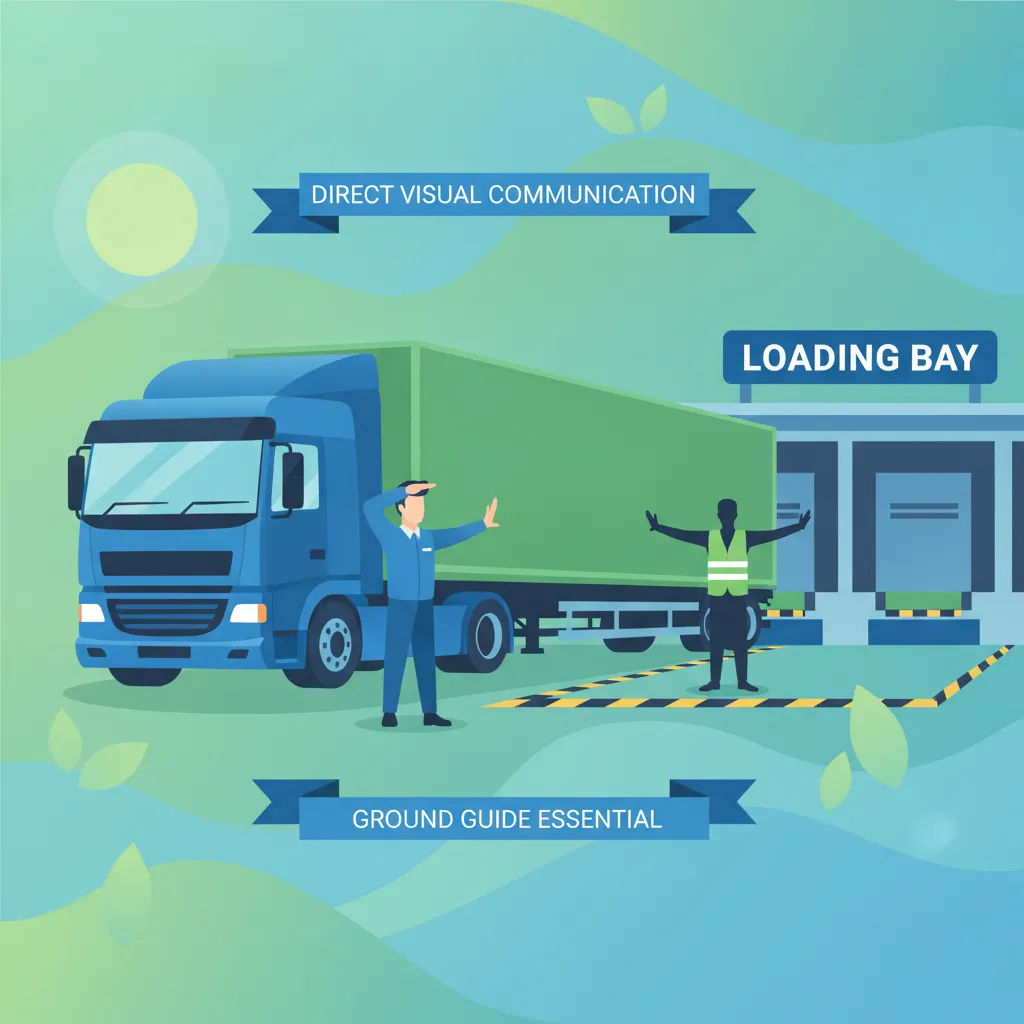
GB Goods Vehicle TheoryVehicle Size, Weight, Dimensions and Road Space
View lesson
Reversing Large Vehicles Safely lesson image

Reversing Large Vehicles Safely

Reversing is one ofthe highest-risk maneuvers for an HGV driver. This lesson provides a structured guide to reversing safely, covering the 'get out and look' principle, effective use of all mirrors, and the use of reversing cameras and alarms. It stresses the importance of using a trained banksman (signaller) whenever possible, using agreed signals, and maintaining a slow, controlled speed throughout the maneuver to prevent accidents.

GB Goods Vehicle TheoryLane Use, Turning, Reversing, Manoeuvring and Trailer Awareness
View lesson
Complex Manoeuvring in Confined Spaces lesson image

Complex Manoeuvring in Confined Spaces

This lesson builds on basic skills to address complex manoeuvres in challenging, confined environments such as bus stations, depots, and service areas. It covers techniques for positioning the vehicle for bay parking and navigating tight, complex routes. Key focus areas include developing precise spatial awareness, using reference points, maintaining extremely slow and controlled movements, and performing continuous observation to navigate safely without causing damage or injury.

GB Passenger Vehicle TheoryLane Use, Turning, Blind Spots, Reversing and Manoeuvring
View lesson
Turning Radii and Cornering Techniques lesson image

Turning Radii and Cornering Techniques

This lesson explains the dynamics of turning a long vehicle, focusing on the concepts of off-tracking, where the rear wheels follow a tighter path than the front wheels, and tail swing. You will learn the correct road positioning on approach to junctions and roundabouts to safely clear obstacles and avoid mounting kerbs or striking street furniture. Managing speed and using mirrors effectively throughout the turn are emphasized as crucial safety techniques.
GB Goods Vehicle TheoryLane Use, Turning, Reversing, Manoeuvring and Trailer Awareness
View lesson
Risks to Motorcyclists and Scooters lesson image

Risks to Motorcyclists and Scooters

This lesson focuses on the unique risks faced by motorcyclists and scooter riders when sharing the road with HGVs. It explains how their small size and rapid acceleration can make them difficult to see, especially when they are filtering through traffic. Drivers will learn the importance of making extra mirror checks—'look twice'—before any maneuver and giving motorcyclists extra space, as they can be more affected by wind buffeting and road surface imperfections.

GB Goods Vehicle TheoryBlind Spots, Vulnerable Road Users and Urban Delivery Risks
View lesson
Safe Following Distances for Large Vehicles lesson image

Safe Following Distances for Large Vehicles

This lesson explores how to maintain safe following distances specific to large passenger vehicles, accounting for their higher inertia and longer braking distances. It covers time-gap calculations, such as the four-second rule, and dynamic following distance adjustments based on speed and road conditions. Emphasis is placed on avoiding tailgating, ensuring a sufficient safety buffer is always present, and developing an awareness of convoy driving scenarios where multiple large vehicles are present.

GB Passenger Vehicle TheoryVehicle Size, Smooth Control, Speed, Braking and Following Distance
View lesson

Frequently asked questions about Road Space Occupancy and Maneuvering Clearance

Find clear answers to common questions learners have about Road Space Occupancy and Maneuvering Clearance. Learn how the lesson is structured, which driving theory objectives it supports, and how it fits into the overall learning path of units and curriculum progression in Great Britain. These explanations help you understand key concepts, lesson flow, and exam focused study goals.

What is off-tracking for an HGV?

Off-tracking occurs when the rear wheels of a long vehicle follow a shorter path than the front wheels during a turn. As an HGV driver, you must account for this by starting turns wider than you would in a passenger car to avoid mounting the kerb.

What is tail swing and why is it dangerous?

Tail swing happens when the rear of a vehicle or trailer swings out in the opposite direction of the turn. This is dangerous because it can strike pedestrians, cyclists, or street furniture that are outside your immediate line of sight near the turning point.

How does road space occupancy affect my test score?

The DVSA test includes scenarios assessing your awareness of large vehicle dynamics. Failure to account for off-tracking or tail swing in your hazard perception or multiple-choice answers shows a lack of professional awareness and will result in lost marks.

Do I need to leave extra room at roundabouts?

Yes. Large goods vehicles often need to occupy more than one lane to complete a turn safely. You must ensure you monitor your mirrors constantly and provide enough space for your vehicle's full length before, during, and after the maneuver.

Start Your Targeted Practice Question Search Now

Dive into our comprehensive question bank to find exactly what you need for your Great Britain theory test. Use our advanced filters to pinpoint specific subjects or test your knowledge on challenging areas, ensuring you're fully prepared for success.

Search Practice Questions

Continue your British driving theory learning journey

British road signsBritish article topicsGB AM Moped Theory courseSearch British road signsMotorcycle Theory GB courseGB Category B Theory courseBritish driving theory homeBritish road sign categoriesBritish driving theory topicsGB Goods Vehicle Theory courseSearch British theory articlesBritish driving theory coursesBritish driving theory articlesBritish driving theory practiceBritish practice set categoriesGB Passenger Vehicle Theory courseBritish driving licence proceduresSearch British driving theory practiceBritish driving theory terminology A–ZBritish driving theory terms and glossaryGB Road Signs and Traffic Signals unit in GB Category B TheoryHelmet, Visibility and Protective Behaviour unit in GB AM Moped TheoryAM Licence Basics and Small Vehicle Responsibility unit in GB AM Moped TheoryMotorcycle Licence Basics and Rider Responsibility unit in Motorcycle Theory GBVehicle Size, Weight, Dimensions and Road Space unit in GB Goods Vehicle TheoryCategory B Licence Basics and Driver Responsibility unit in GB Category B TheoryProtective Equipment, Visibility and Rider Condition unit in Motorcycle Theory GBLoading Bay and Docking Geometry lesson in Vehicle Size, Weight, Dimensions and Road SpaceGoods Vehicle Licence Scope and Professional Responsibility unit in GB Goods Vehicle TheoryDimensions, Mass and Legal Limits lesson in Vehicle Size, Weight, Dimensions and Road SpacePassenger Safety, Comfort, Accessibility and Driver Conduct unit in GB Passenger Vehicle TheoryBridge, Tunnel and Height Restrictions lesson in Vehicle Size, Weight, Dimensions and Road SpaceImpact of Vehicle Size on Traffic Flow lesson in Vehicle Size, Weight, Dimensions and Road SpacePassenger Vehicle Licence Scope and Professional Responsibility unit in GB Passenger Vehicle TheoryRoad Space Occupancy and Maneuvering Clearance lesson in Vehicle Size, Weight, Dimensions and Road Space