
This lesson explores the essential physics of centre of gravity and how it directly influences the stability of your heavy goods vehicle. Building on load distribution principles, you will learn to identify risks that contribute to vehicle rollovers and how to adapt your driving style accordingly. Mastering this knowledge is a critical step in ensuring safe, professional vehicle operation in Great Britain.

Lesson content overview
For professional goods vehicle drivers operating under a Category C Licence in Great Britain, a thorough understanding of vehicle dynamics is paramount. This includes a critical concept known as the centre of gravity (CG) and its direct influence on vehicle stability and the ever-present risk of rollover. This lesson will delve into the physics behind these principles, outline the practical implications for heavy goods vehicles (HGVs), and provide essential techniques for assessing and managing rollover hazards to ensure safe and compliant operation.
The centre of gravity (CG) is a pivotal concept in vehicle stability. It represents the hypothetical point where the entire mass of a vehicle, including its load, is considered to be concentrated and where its total weight acts vertically downwards. The exact position of the CG is crucial because it dictates how a vehicle will react to forces during driving.
We typically consider two main aspects of a vehicle's CG:
For heavy goods vehicles, especially those transporting diverse cargo such as liquid tankers, tipper lorries, or vehicles carrying suspended loads, the CG is not static. It constantly shifts based on the load's characteristics, its placement, and the vehicle's motion. Understanding these changes is fundamental to preventing accidents.
Vehicle stability can be categorised into two main types, both influenced heavily by the centre of gravity:
Static stability refers to a vehicle's ability to resist tipping when it is not in motion. This might occur due to external forces such as strong winds, parking on an uneven surface, or improper load placement before the journey begins. A vehicle with good static stability will remain upright even under reasonable external pressures.
Proper load placement is critical for maintaining static stability. This means distributing weight evenly and keeping the overall centre of gravity as low as possible. Before any journey, Category C drivers must ensure their vehicle's load configuration promotes excellent static stability, providing a safe foundation for dynamic operations.
Dynamic stability is the vehicle's ability to resist tipping while it is in motion, particularly during demanding manoeuvres such as cornering, braking, or sudden evasive actions. This is where the interplay of speed, steering, braking, and load characteristics becomes critical.
When a vehicle is moving, various forces come into play that can affect its stability. Centrifugal force acts outwards on bends, while braking and acceleration cause weight to shift. How the vehicle's centre of gravity reacts to these forces determines its dynamic stability and its susceptibility to rollover. A driver's ability to adjust their speed, steering, and braking in response to the vehicle's dynamic CG is crucial for preventing accidents.
Understanding how a vehicle can roll over requires a closer look at several interconnected physical principles. These principles explain why a high or shifting centre of gravity is so dangerous, especially for large goods vehicles.
Load transfer is the redistribution of weight among a vehicle's wheels caused by acceleration, deceleration, or cornering forces. This phenomenon is a primary factor in dynamic instability.
For Category C vehicles, especially those carrying heavy or liquid loads, these load transfers can be substantial, making smooth and controlled driving essential to mitigate the risk.
The overturning moment is the torque or rotational force that acts around a vehicle’s roll axis (an imaginary line running longitudinally through the vehicle). This force, if strong enough, can cause the vehicle to tip or roll over.
Professional drivers must always be mindful of factors that increase the overturning moment, particularly speed, corner radius, and the height of their vehicle's centre of gravity.
The track width is the lateral distance between the centrelines of the left and right wheels on the same axle. It is a fundamental design feature that significantly impacts a vehicle's lateral stability.
A wider track width provides a larger base of support, effectively increasing the leverage required for an overturning moment to cause a rollover. Conversely, vehicles with a narrow track width are inherently more susceptible to lateral loads and rollover, even with a relatively low centre of gravity.
While the standard track width is fixed by the manufacturer, effective track width can be momentarily reduced by factors such as worn suspension components, under-inflated tyres (which cause excessive sidewall deformation), or extreme load shifts that put undue stress on one side of the vehicle. Drivers of heavy goods vehicles must adhere to maximum permissible widths set by regulations (e.g., 2.55 metres for normal vehicles, 2.6 metres for articulated units) while also being aware of how dynamic forces can compromise stability.
Effective management of rollover risk is a cornerstone of professional goods vehicle driving. It requires a combination of careful planning, adherence to loading principles, diligent pre-journey checks, and skilled driving techniques.
Proper load distribution is the most effective proactive measure against rollover. It involves arranging cargo within the vehicle to ensure the centre of gravity remains as low and as centrally located as possible.
Think "low and central": This fundamental principle should guide all loading decisions for goods vehicles to minimise the centre of gravity height and lateral offset.
Load securing refers to the techniques and devices used to prevent cargo from moving during transit. Unsecured or improperly secured cargo can lead to dangerous load shift events, where the sudden movement of cargo abruptly changes the CG position during travel.
The Goods Vehicles (Loading and Securing) Regulations 1998 explicitly mandate that loads must be secured to prevent such shifts that could compromise vehicle stability. This includes using appropriate restraint straps, lashing, dunnage, and, where applicable, baffles in liquid containers.
A pre-journey inspection checklist is a systematic visual and procedural check that Category C drivers must complete before every departure. This ensures the load is correctly placed, secured, and that the vehicle itself is in a condition to handle the journey safely.
Key checks related to CG and rollover risk include:
Skipping these critical checks, even for seemingly "light" loads, is a common mistake that can lead to unforeseen instability on the road.
Beyond careful loading, the driver's actions behind the wheel are crucial for preventing rollovers. These rollover prevention techniques are directly aimed at mitigating load transfer and controlling the overturning moment.
Do not rely on ABS alone. While Anti-lock Braking Systems (ABS) prevent wheel lock-up, they cannot prevent a rollover if the centre of gravity is too high or if the overturning moment is excessive.
Operating a Category C goods vehicle in Great Britain involves strict adherence to several regulations designed to ensure safety, particularly regarding vehicle stability and load security. Non-compliance can lead to severe penalties, accidents, and fatalities.
Road Vehicles (Construction and Use) Regulations 1986 (UK): This fundamental regulation stipulates that vehicles must be loaded in such a way that their centre of gravity does not exceed the limits specified by the manufacturer. Exceeding these limits compromises structural integrity and drastically increases rollover risk. Drivers are legally obligated to consult the vehicle's manual and load within these guidelines.
Goods Vehicles (Loading and Securing) Regulations 1998: These regulations are specifically designed to prevent load shifts that could affect vehicle stability. They require all loads to be properly secured to prevent movement during normal driving, including braking, acceleration, and cornering. This is particularly crucial for liquid loads, bulk goods, and any cargo prone to shifting.
Driving Licences (Categories) Regulations 2001 – Category C: Holders of a Category C licence are expected to drive professionally and safely, which includes observing all speed limits applicable to loaded goods vehicles, especially on bends and steep gradients. These limits are set lower than for cars to account for increased load transfer and overturning moments.
Road Traffic Act 1988 – Section 78 (Duty of Care): This overarching act places a legal duty of care on all road users, but it has particular weight for HGV drivers due to the increased potential for harm. It mandates that drivers take reasonable care to avoid loss of vehicle control, which directly includes actively managing rollover risk through proper loading and driving.
The Highway Code – Regulation 148 (Speed Limits for Heavy Vehicles): The Highway Code specifies maximum speed limits for goods vehicles, such as 56 mph (90 km/h) on motorways. It also implies that specific lower limits may apply on bends or in adverse conditions, reinforcing the need for speed reduction to manage overturning moments.
Load Documentation – The CIU Regulations: For certain types of loads, documentation such as the Certificate of Fitness (COFC) may be required to include information on the centre of gravity, allowing authorities to verify safe loading practices.
Ignoring these principles and regulations leads to common violations that significantly elevate rollover risk:
The consequences of these violations range from hefty fines and penalty points to vehicle impoundment, licence suspension, and, most critically, severe injuries, fatalities, and extensive vehicle damage in the event of a rollover.
The risk of rollover is not static; it changes dramatically depending on various environmental, road, and vehicle-specific conditions. A professional goods vehicle driver must be adept at assessing these variations and adjusting their driving style accordingly.
When driving near cyclists, pedestrians, or motorcyclists, Category C drivers must exercise extreme caution. Abrupt swerving to avoid a vulnerable road user, while necessary, can be far more destabilising for a high-CG vehicle than for a car. Maintaining safe passing distances and anticipating the movements of vulnerable road users is crucial to avoid sudden manoeuvres that could induce a rollover.
Mastering the principles of centre of gravity and rollover risk is non-negotiable for professional goods vehicle drivers in Great Britain. This lesson has covered the critical aspects necessary for safe and compliant operation.
To reiterate the essential takeaways:
By diligently applying these principles, Category C drivers can significantly reduce the risk of rollover, protecting themselves, their cargo, and other road users.
This lesson explains how the centre of gravity (CG) determines HGV stability and rollover risk, covering both static stability when parked and dynamic stability during motion. Key physics concepts include load transfer during acceleration, braking, and cornering, and how the overturning moment increases with speed and CG height. Practical takeaways include loading cargo low and centrally, using baffles in liquid tankers, completing pre-journey checks for tyres and suspension, and applying smooth driving techniques with reduced speeds on bends. Legal requirements under UK regulations mandate proper load securing and adherence to speed limits for goods vehicles to prevent rollover incidents.
A short set of high-value points that capture the most important learning from this lesson.
The centre of gravity (CG) position, determined by load height and lateral distribution, is the primary factor dictating a vehicle's rollover stability.
Overturning moment is generated by centrifugal force during cornering and braking forces acting above the CG; speed is the most critical factor since doubling speed quadruples the overturning force.
Load transfer redistributes weight between wheels during acceleration, braking, and cornering, with lateral load transfer during turns potentially lifting inside wheels off the ground.
Proper load distribution means placing heavy items low, centred laterally, and spread evenly front-to-rear to keep the CG as low and balanced as possible.
Anti-splash devices and baffles are legally required in liquid tankers to prevent dangerous sloshing that rapidly shifts the lateral CG during manoeuvres.
Explore all units and lessons included in this driving theory course.
A higher vertical CG creates a longer lever arm for centrifugal force, making the vehicle tip more easily during cornering.
Track width provides the vehicle's base of support; under-inflated tyres or worn suspension can reduce effective track width and compromise stability.
ABS prevents wheel lock-up but cannot prevent rollover if the CG is too high or the overturning moment is excessive.
Engine braking on descents reduces reliance on service brakes and helps maintain controlled speed without severe longitudinal load transfer.
Common violations include overloading beyond GVW, high-level heavy load placement, uneven lateral distribution, and abrupt steering or braking.
Assuming a partially loaded vehicle is automatically safer; uneven partial loads can create dangerous lateral CG offsets.
Relying on ABS alone to prevent rollovers, ignoring that it cannot counteract excessive overturning moments from high CG vehicles.
Skipping pre-journey inspections, especially for tyre pressure, suspension condition, and load security checks.
Driving at normal speeds on curves with loaded HGVs, failing to account for the dramatically increased centrifugal forces.
Using fixed hooks instead of swivel hooks for hanging loads, allowing pendulum swing effects that rapidly shift the lateral CG.
Lesson content overview
A short set of high-value points that capture the most important learning from this lesson.
The centre of gravity (CG) position, determined by load height and lateral distribution, is the primary factor dictating a vehicle's rollover stability.
Overturning moment is generated by centrifugal force during cornering and braking forces acting above the CG; speed is the most critical factor since doubling speed quadruples the overturning force.
Load transfer redistributes weight between wheels during acceleration, braking, and cornering, with lateral load transfer during turns potentially lifting inside wheels off the ground.
Proper load distribution means placing heavy items low, centred laterally, and spread evenly front-to-rear to keep the CG as low and balanced as possible.
Anti-splash devices and baffles are legally required in liquid tankers to prevent dangerous sloshing that rapidly shifts the lateral CG during manoeuvres.
Explore all units and lessons included in this driving theory course.
A higher vertical CG creates a longer lever arm for centrifugal force, making the vehicle tip more easily during cornering.
Track width provides the vehicle's base of support; under-inflated tyres or worn suspension can reduce effective track width and compromise stability.
ABS prevents wheel lock-up but cannot prevent rollover if the CG is too high or the overturning moment is excessive.
Engine braking on descents reduces reliance on service brakes and helps maintain controlled speed without severe longitudinal load transfer.
Common violations include overloading beyond GVW, high-level heavy load placement, uneven lateral distribution, and abrupt steering or braking.
Assuming a partially loaded vehicle is automatically safer; uneven partial loads can create dangerous lateral CG offsets.
Relying on ABS alone to prevent rollovers, ignoring that it cannot counteract excessive overturning moments from high CG vehicles.
Skipping pre-journey inspections, especially for tyre pressure, suspension condition, and load security checks.
Driving at normal speeds on curves with loaded HGVs, failing to account for the dramatically increased centrifugal forces.
Using fixed hooks instead of swivel hooks for hanging loads, allowing pendulum swing effects that rapidly shift the lateral CG.
Explore search topics learners often look for when studying Centre of Gravity and Rollover Risk. These topics reflect common questions about road rules, driving situations, safety guidance, and lesson level theory preparation for learners in Great Britain.
Browse additional driving theory lessons that cover connected traffic rules, road signs, and common driving situations related to this topic. Improve your understanding of how different rules interact across everyday traffic scenarios.
Explore the physics behind heavy goods vehicle rollovers. Understand how load dynamics, overturning moments, and load transfer directly impact vehicle stability and the risks involved for Category C drivers in Great Britain.

This lesson delves into the core principles of correct weight distribution within a goods vehicle to ensure safety and stability. It explains how to balance a load evenly across the axles to prevent overloading and maintain optimal braking and steering performance. Learners will understand how incorrect load placement can dangerously affect vehicle dynamics, reinforcing the importance of careful planning before every journey to ensure stability on the road.

This lesson covers the principles of safe loading to prevent items from shifting or falling and causing a hazard. It explains that any load must be securely fastened and must not obstruct your view. You will also learn how overloading or distributing weight incorrectly can dangerously affect the vehicle's steering, braking, and overall stability.

This lesson prepares drivers to recognize and react to a dangerous load shift while the vehicle is in motion. It covers the immediate corrective actions needed to maintain or regain control, and how to bring the vehicle to a safe stop. The procedures for assessing the situation, communicating the hazard to other road users, and correctly reporting the incident are also detailed to ensure safety and proper follow-up action is taken.

This lesson explains the dynamics of turning a long vehicle, focusing on the concepts of off-tracking, where the rear wheels follow a tighter path than the front wheels, and tail swing. You will learn the correct road positioning on approach to junctions and roundabouts to safely clear obstacles and avoid mounting kerbs or striking street furniture. Managing speed and using mirrors effectively throughout the turn are emphasized as crucial safety techniques.
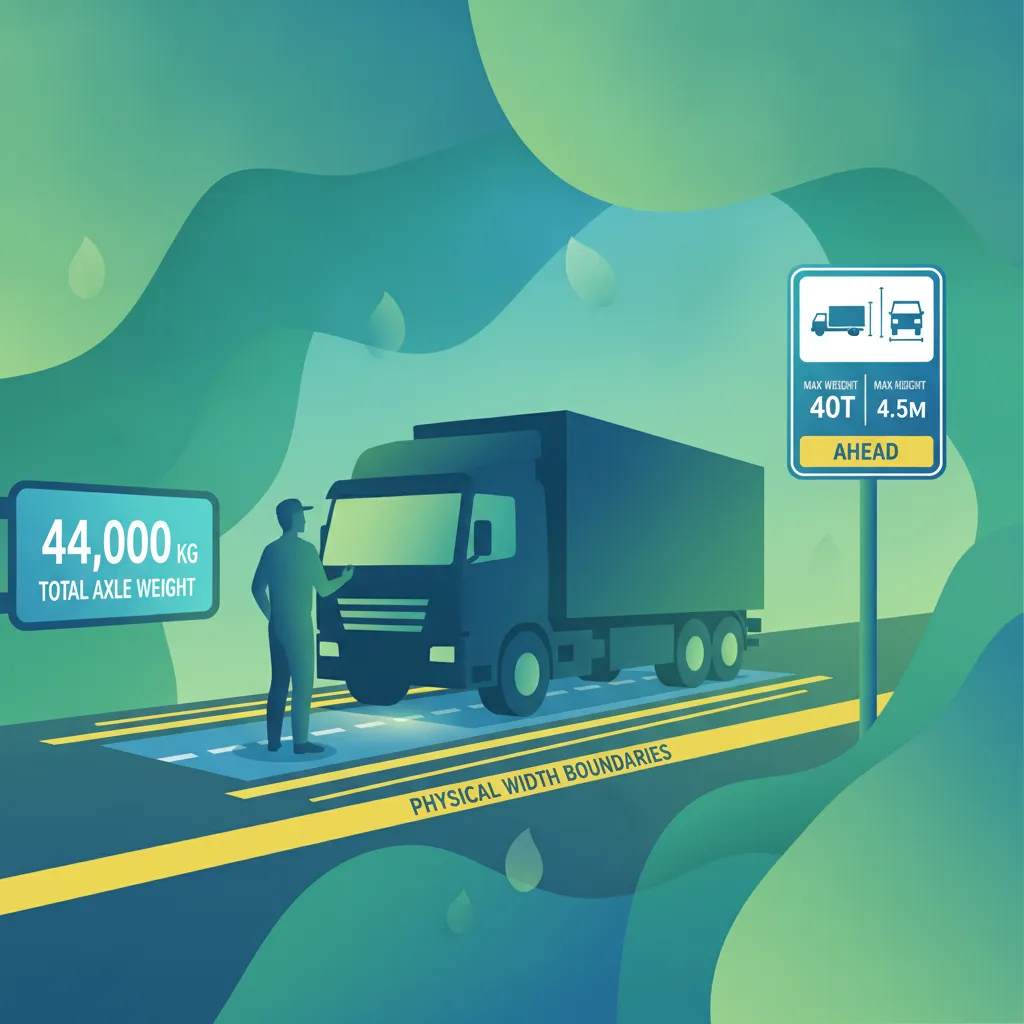
This lesson introduces the statutory limits governing the dimensions and mass of goods vehicles in Great Britain, including gross vehicle weight and individual axle loads. It explains how to calculate a vehicle's loaded weight to ensure it remains within legal parameters, preventing penalties and safety risks. Understanding these regulations is crucial for preventing damage to road infrastructure and ensuring the vehicle's stability and safe operation on every journey.

This lesson explores how a passenger vehicle’s physical dimensions and weight influence its dynamic stability, handling, and manoeuvring capabilities. It covers the impact of length, width, wheelbase, and turning radius on cornering and route choice. The content also examines centre of gravity, load distribution, and the effects of inertia that influence braking and acceleration, which are essential concepts for safe operation in confined urban environments and at tight junctions.

This lesson examines the physical space a goods vehicle occupies on the road and its impact on maneuvering at junctions, roundabouts, and in tight spaces. Learners will understand the concepts of tail swing and off-tracking, and how to calculate the necessary clearance for safe turns. The content emphasizes maintaining safe distances from other road users and infrastructure, which is a key component of professional spatial awareness and accident prevention.
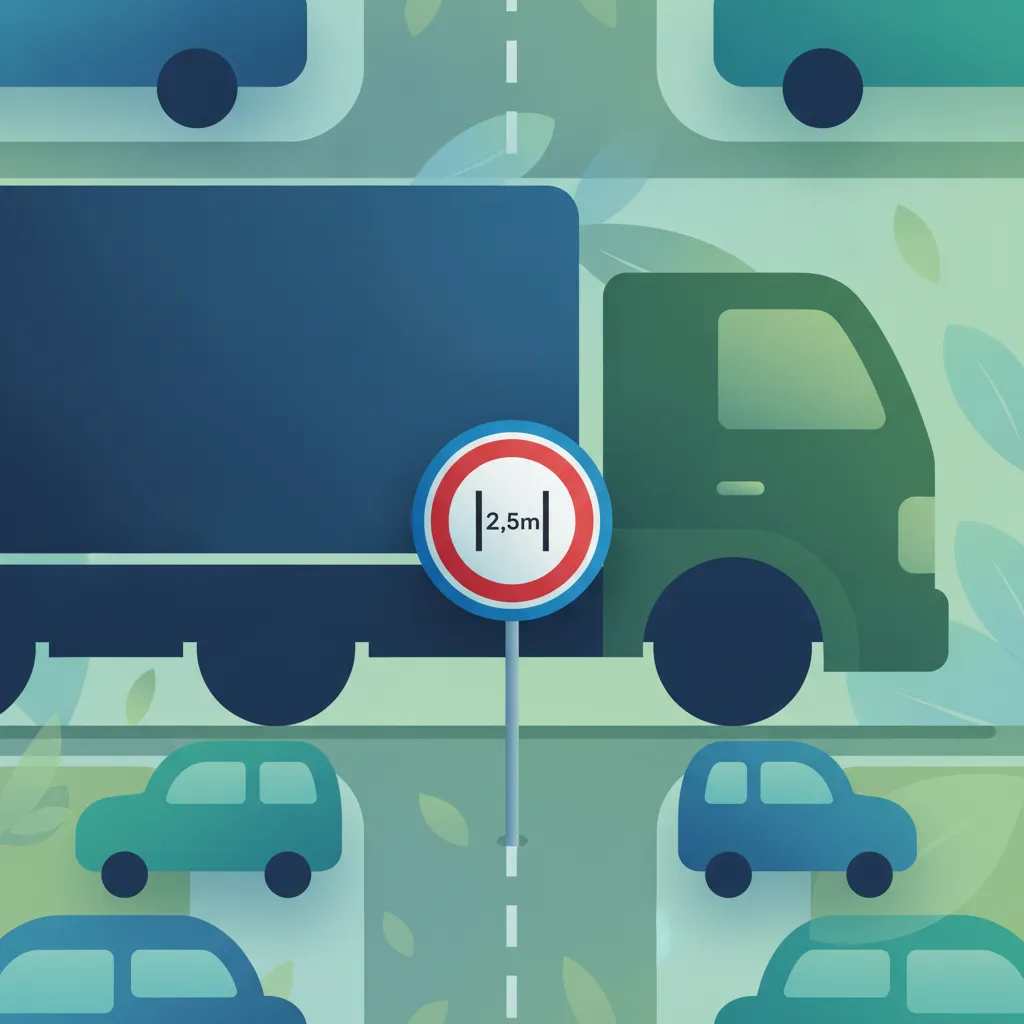
This lesson offers a deep dive into the specific regulations concerning weight, width, and axle load restrictions for goods vehicles. It covers how to read and comply with the associated road signs to avoid overloading weak bridges and entering restricted areas. Learners will understand the importance of correct load assessment and the serious penalties for non-compliance, which are enforced through DVSA roadside inspections and weighbridges.
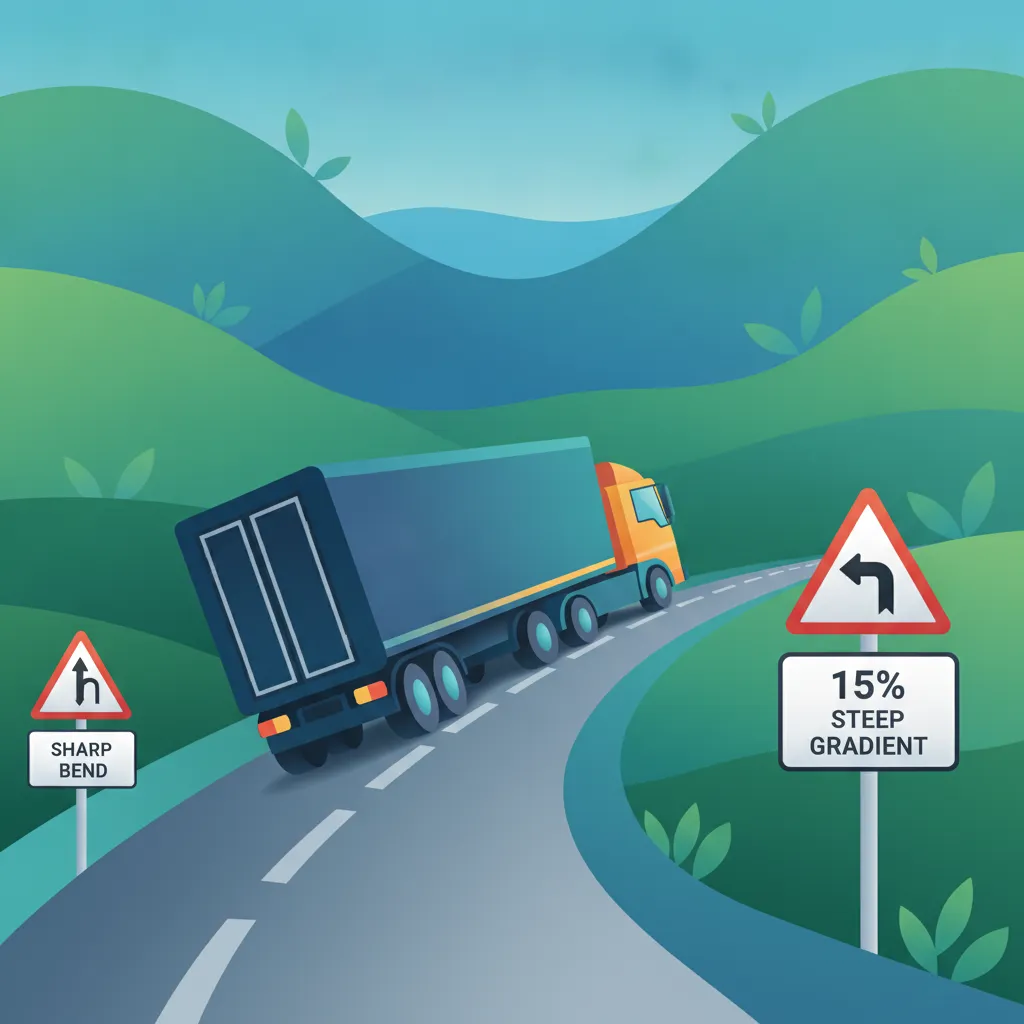
This lesson focuses on the principles of effective speed management for heavy goods vehicles, which extends beyond simply obeying the statutory speed limits. It covers how to adapt speed based on vehicle weight, load stability, road gradients, and prevailing traffic and weather conditions. You will also learn about the function of mandatory speed limiters and how intelligent use of speed and cruise control can significantly improve fuel efficiency and safety.

Reversing is one ofthe highest-risk maneuvers for an HGV driver. This lesson provides a structured guide to reversing safely, covering the 'get out and look' principle, effective use of all mirrors, and the use of reversing cameras and alarms. It stresses the importance of using a trained banksman (signaller) whenever possible, using agreed signals, and maintaining a slow, controlled speed throughout the maneuver to prevent accidents.
Learn essential driving techniques and load management strategies for vehicles with a high centre of gravity. Discover how to mitigate rollover risks and ensure stability when carrying tall or top-heavy cargo in Great Britain.
This lesson covers the principles of safe loading to prevent items from shifting or falling and causing a hazard. It explains that any load must be securely fastened and must not obstruct your view. You will also learn how overloading or distributing weight incorrectly can dangerously affect the vehicle's steering, braking, and overall stability.
This lesson delves into the core principles of correct weight distribution within a goods vehicle to ensure safety and stability. It explains how to balance a load evenly across the axles to prevent overloading and maintain optimal braking and steering performance. Learners will understand how incorrect load placement can dangerously affect vehicle dynamics, reinforcing the importance of careful planning before every journey to ensure stability on the road.

This lesson synthesizes safety concepts into a proactive strategy for collision avoidance. It teaches the principles of defensive driving, which involves anticipating potential hazards created by other road users or road conditions and planning an escape route. Maintaining high levels of situational awareness, managing distractions, and leaving a significant safety margin around the vehicle are presented as fundamental techniques for minimizing risk on every journey.
This lesson prepares drivers to recognize and react to a dangerous load shift while the vehicle is in motion. It covers the immediate corrective actions needed to maintain or regain control, and how to bring the vehicle to a safe stop. The procedures for assessing the situation, communicating the hazard to other road users, and correctly reporting the incident are also detailed to ensure safety and proper follow-up action is taken.

This lesson addresses the unique challenges of operating a large goods vehicle in congested urban and city environments. It focuses on techniques for navigating narrow streets, making tight turns, and safely accessing delivery points while being highly aware of vulnerable road users like pedestrians and cyclists. The importance of exceptional observation, low-speed control, and clear communication with other road users is heavily emphasized to minimize risk in these complex settings.
This lesson explains the dynamics of turning a long vehicle, focusing on the concepts of off-tracking, where the rear wheels follow a tighter path than the front wheels, and tail swing. You will learn the correct road positioning on approach to junctions and roundabouts to safely clear obstacles and avoid mounting kerbs or striking street furniture. Managing speed and using mirrors effectively throughout the turn are emphasized as crucial safety techniques.
This lesson examines the physical space a goods vehicle occupies on the road and its impact on maneuvering at junctions, roundabouts, and in tight spaces. Learners will understand the concepts of tail swing and off-tracking, and how to calculate the necessary clearance for safe turns. The content emphasizes maintaining safe distances from other road users and infrastructure, which is a key component of professional spatial awareness and accident prevention.

This lesson addresses the serious danger of driver fatigue, a major cause of incidents involving commercial vehicles. It details the complex EU and GB domestic rules on drivers' hours, including driving limits and required rest periods. Learners will be taught to recognize the physical and mental signs of fatigue and understand the importance of taking quality rest to maintain alertness and ensure their own safety and that of others.

This lesson reinforces the vital safety rule of maintaining an adequate following distance from the vehicle ahead. It explains why the standard 'two-second rule' must be extended for heavy vehicles, especially in poor weather or when heavily laden, to account for longer stopping distances. You will learn practical methods for judging a safe gap in various traffic situations, creating a crucial safety buffer to react to unforeseen hazards.
This lesson explores how a passenger vehicle’s physical dimensions and weight influence its dynamic stability, handling, and manoeuvring capabilities. It covers the impact of length, width, wheelbase, and turning radius on cornering and route choice. The content also examines centre of gravity, load distribution, and the effects of inertia that influence braking and acceleration, which are essential concepts for safe operation in confined urban environments and at tight junctions.
Find clear answers to common questions learners have about Centre of Gravity and Rollover Risk. Learn how the lesson is structured, which driving theory objectives it supports, and how it fits into the overall learning path of units and curriculum progression in Great Britain. These explanations help you understand key concepts, lesson flow, and exam focused study goals.
Goods vehicles are taller and often carry loads that are stacked or positioned well above the chassis level. Because the centre of gravity is a measure of the vehicle's balance point, placing heavy items higher up shifts this point upward, making the vehicle much more prone to tipping over during cornering.
Liquid cargo can cause 'surge,' where the load shifts suddenly as the vehicle turns, accelerates, or brakes. This movement creates dynamic changes to the centre of gravity that can cause the vehicle to lose balance, requiring the driver to use much smoother and slower inputs.
The DVSA test usually focuses on your understanding of the principles rather than calculating specific speeds. You need to know that even moderate speeds can lead to a rollover if the centre of gravity is high, and that you must reduce speed significantly before approaching sharp bends or roundabouts.
If you feel the vehicle leaning, your speed is already too high for the load and the corner. You should gently ease off the accelerator and steer steadily without making any sharp, sudden corrections, which could further destabilize the load and increase the risk of a rollover.
Dive into our comprehensive question bank to find exactly what you need for your Great Britain theory test. Use our advanced filters to pinpoint specific subjects or test your knowledge on challenging areas, ensuring you're fully prepared for success.