
This lesson provides an in-depth look at the complex air braking systems used in Category C goods vehicles, including the roles of ABS and EBS. You will learn to calculate total stopping distances and understand how vehicle mass and speed influence your control, ensuring you are fully prepared for the professional theory test.
Lesson content overview
Welcome to this comprehensive lesson on braking systems and stopping distances, a critical topic for all professional drivers holding a Category C licence in Great Britain. Operating heavy goods vehicles (HGVs) demands a deep understanding of how these powerful machines stop, the technology that assists braking, and the many factors that influence the distance required to bring them safely to a halt. Mastering these concepts is not only essential for passing your theory test but, more importantly, for ensuring safety on the roads.
This chapter will provide a detailed examination of the air braking systems commonly found on HGVs, including advanced technologies like Antilock Braking Systems (ABS) and Electronic Braking Systems (EBS). We will break down the components of total stopping distance—thinking distance and braking distance—and explore how speed, mass, road conditions, and vehicle maintenance profoundly affect them. Understanding brake fade, its causes, and prevention methods is also crucial for safe HGV operation, along with the legal and practical importance of regular brake inspections.
Heavy Goods Vehicles (HGVs) rely on robust and sophisticated braking systems to manage their substantial mass and momentum. Unlike smaller passenger vehicles, HGVs typically utilise air braking systems, often enhanced with advanced electronic controls. These systems are designed to provide reliable and consistent stopping power under a wide range of operational demands.
Air braking systems are the standard for Category C HGVs due offering powerful and reliable braking capabilities necessary for heavy loads. These systems use compressed air, rather than hydraulic fluid, to actuate the brakes at each wheel. An engine-driven compressor builds up air pressure, which is then stored in reservoirs. When the driver presses the foot pedal, air is released from these reservoirs, travelling through lines to brake chambers at each wheel, where it pushes a diaphragm to apply the brake shoes or pads against the drums or discs.
The primary braking system, known as the service brake, is controlled by the foot pedal and is used for routine slowing and stopping. In addition to the service brake, HGVs are equipped with a secondary braking system, often referred to as the parking or emergency brake. This system typically uses spring brakes, which are held off by air pressure during normal operation. If air pressure is lost, or the handbrake is engaged, these springs apply the brakes automatically, providing a fail-safe mechanism. Regular inspection of the air compressor, reservoirs, hoses, and brake chambers is vital for maintaining the integrity and performance of the entire system, adhering to DVSA ‘Maintenance of Vehicles’ regulations.
The Antilock Braking System (ABS) is a crucial safety feature designed to prevent the wheels from locking up during heavy or emergency braking. When a driver applies the brakes hard, especially on slippery surfaces, wheels can lock, leading to a loss of steering control and potentially a skid. ABS works by automatically sensing when a wheel is about to lock and then rapidly modulating (pulsing) the brake pressure to that specific wheel. This allows the wheel to continue rotating, even if slowly, enabling the driver to maintain steering control while braking.
Modern ABS units in HGVs typically use wheel speed sensors to monitor the rotational speed of each wheel. An Electronic Control Unit (ECU) then processes this data and, if a wheel is decelerating too rapidly (indicating impending lock-up), it temporarily reduces brake pressure to that wheel. As grip is regained, pressure is restored. Drivers operating ABS-equipped HGVs must be aware of the "pump-feel" or pulsation they might feel through the brake pedal during activation, and should resist the urge to pump the pedal themselves, as this interferes with the system's operation. While ABS is excellent for maintaining steering control, it doesn't always guarantee a shorter stopping distance, particularly on loose surfaces like gravel where a small amount of wheel lock can sometimes provide better deceleration.
Building upon the capabilities of ABS, the Electronic Braking System (EBS) represents an even more advanced braking technology in HGVs. EBS uses electronic signals to control brake pressure at each wheel, offering a significantly faster response time than traditional pneumatic (air) or hydraulic lines alone. In a full EBS system, the driver's pedal input is converted into an electronic signal, which the ECU then uses to precisely coordinate and apply brake force across all wheels and axles, including any trailers.
The primary benefits of EBS include improved brake balance across the vehicle and trailer, reduced stopping distances, and enhanced stability, especially during emergency braking or on uneven surfaces. EBS can also integrate with other advanced driver assistance systems (ADAS), such as traction control and electronic stability control, further improving overall vehicle dynamics. Drivers should understand that while EBS provides superior performance, it still relies on the fundamental air pressure generation of the air brake system. Mandatory checks for electronic diagnostics and brake system health monitoring are essential for EBS-equipped vehicles to ensure their sophisticated sensors and communication systems are fully functional.
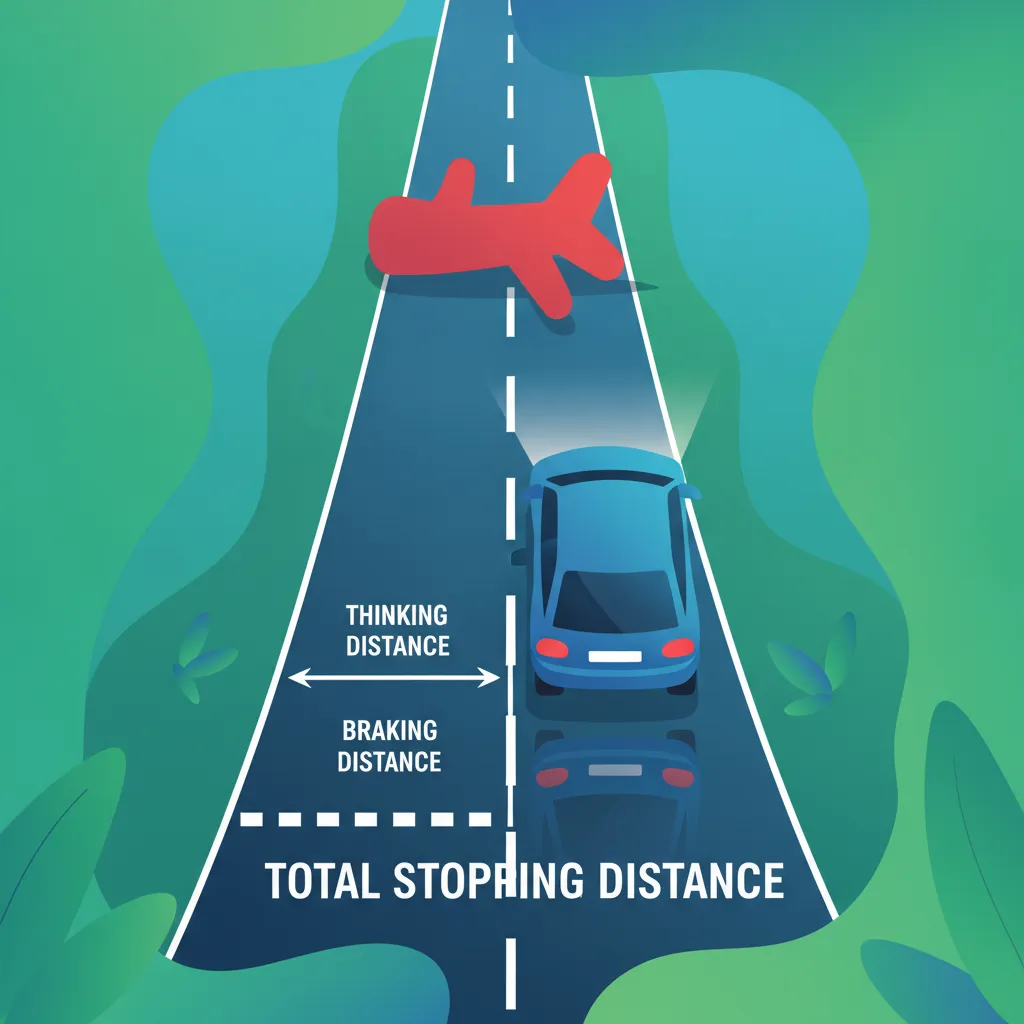
Total stopping distance is arguably one of the most critical concepts for Category C drivers to master. It represents the entire distance your vehicle travels from the moment you perceive a hazard until it comes to a complete and safe stop. This distance is a combination of two distinct components: thinking distance and braking distance. Misjudging total stopping distance is a leading cause of collisions, particularly when operating heavy vehicles which inherently require more distance to stop.
Thinking distance is the distance your HGV travels during the time it takes for you, the driver, to perceive a hazard, process the information, decide to brake, and then physically initiate the braking action. It accounts for the human elements of perception, decision-making, and reaction. This interval, often averaged at about 1.5 seconds for a professional driver, translates directly into distance travelled, which increases proportionally with speed. For example, at 45 mph (approximately 72 km/h), a thinking distance of 1.5 seconds means the vehicle travels approximately 18 metres before the brakes are even applied.
Many factors can influence a driver's thinking distance. These include driver alertness, fatigue, distraction (e.g., from mobile phones or in-cab activities), the influence of alcohol or drugs, and visibility conditions (day, night, fog, rain). Unlike braking distance, which can be influenced by vehicle technology, thinking distance is almost entirely dependent on the driver's state and awareness. Reducing distractions and ensuring adequate rest are paramount to minimising thinking distance and, consequently, total stopping distance.
Braking distance is the actual distance your HGV travels from the moment the brakes are effectively applied until the vehicle comes to a complete stop. This distance is a direct reflection of the vehicle's mechanical braking performance, the grip between the tyres and the road surface, and the environmental conditions. It is important to note that braking distance increases exponentially with speed; if you double your speed, your braking distance quadruples.
Several critical variables influence braking distance:
Memorise the Highway Code Stopping Distances: While HGVs have different characteristics, understanding the general principles and comparative distances from the Highway Code is fundamental. The DVSA provides specific stopping distance tables for HGVs that drivers must be aware of.
Combining thinking distance and braking distance gives you the total stopping distance. For example, the DVSA provides guidance on approximate stopping distances for different speeds on dry roads. For an HGV travelling at 50 mph (approximately 80 km/h), the typical total stopping distance on a dry road might be around 60 metres. This figure combines both the human reaction time and the vehicle's braking capability under ideal conditions.
The implications for safety are profound. By understanding how each factor contributes to total stopping distance, HGV drivers can make informed decisions about appropriate speeds, safe following distances, and the need for rigorous vehicle maintenance. This knowledge forms the basis of proactive hazard management on the road.
Beyond the basic components of stopping distance, several specific phenomena and conditions require particular attention from Category C drivers. These factors can drastically alter braking performance and must be managed effectively to maintain safety.
Brake fade is a critical issue for heavy vehicles, defined as the reduction in braking effectiveness due to the overheating of brake components or a loss of friction. It typically occurs during prolonged or heavy braking, such as on long, steep descents, or when repeatedly braking from high speeds. When brake pads or shoes become excessively hot, the friction material can degrade, and the brake fluid (in hydraulic systems, though less common in pure air systems, overheating can affect mechanical components and seals) can boil, leading to a spongy pedal feel or a significant reduction in braking power.
The causes of brake fade include:
Brake fade dramatically increases braking distance and, in severe cases, can lead to a complete loss of braking ability, a scenario that is extremely dangerous for HGVs. To prevent brake fade, drivers must use engine braking on descents, select a low gear, and apply service brakes intermittently rather than continuously. DVSA guidance strongly recommends temperature monitoring and service brake checks after extended descents. It's crucial to remember that ABS prevents wheel lock-up but does not prevent brake fade; it cannot create friction that has been lost due to overheating.
Recognising Brake Fade: A burning smell from the brakes, a softer or "spongy" brake pedal, or the need to press the pedal harder to achieve the same braking effect are all signs of brake fade. React immediately by reducing speed and preparing to use lower gears.
The gradient, or slope, of the road has a substantial impact on an HGV's braking distance. This is due to the component of gravitational force that acts parallel to the road surface, either assisting or opposing the vehicle's motion.
Drivers must adjust their speed and braking strategy according to the gradient. On steep descents (e.g., those exceeding a 5% gradient), it is mandatory to select a low gear and use engine braking to control speed and prevent brake overheating, as per DVSA guidelines. Speed limits alone may not be sufficient on steep grades; professional judgment and a thorough understanding of your vehicle's capabilities are vital.
Engine braking, also known as compression braking, is a fundamental technique for HGV drivers to manage vehicle speed, particularly on long or steep descents. It involves using the engine's compression resistance to slow the vehicle, thereby reducing the reliance on the service brakes. By downshifting to a lower gear, the engine's RPMs increase, and the engine's natural resistance to turning provides a significant retarding force to the drive wheels.
Using engine braking is crucial for:
For vehicles over 12 tonnes, the mandatory use of engine braking on controlled downhill carriageways is emphasised in DVSA guidance. While engine braking is a powerful tool, it does not eliminate the need for service brakes entirely. Service brakes should still be used intermittently and gently to supplement engine braking and to bring the vehicle to a complete stop when necessary.
Maintaining a fully functional braking system is not just good practice; it is a legal requirement for all Category C HGVs in Great Britain. Adherence to strict regulations, combined with diligent maintenance and inspection, is paramount for road safety and operational compliance.
Several key regulations govern the design, performance, and maintenance of braking systems on heavy goods vehicles:
Compliance with these regulations is not optional. Violations can lead to severe penalties, including fines, penalty points, vehicle prohibitions, or even disqualification, in addition to the inherent safety risks.
Regular and thorough maintenance is the cornerstone of safe HGV braking performance. A proactive approach to inspections can identify potential issues before they compromise safety.
Key Inspection and Maintenance Procedures:
Failing to conduct these checks or to address identified faults can lead to significantly increased braking distances, accelerate brake fade, and result in vehicle prohibition or even accidents. Professional drivers have a legal and ethical responsibility to ensure their vehicle's braking system is in perfect working order before commencing any journey.
The interaction of vehicle, driver, and environment is complex. HGV drivers must continuously adapt their braking strategy based on prevailing conditions to ensure maximum safety.
The underlying physics of braking dictates that kinetic energy ((E_k = \fracmv^2)) is directly proportional to mass ((m)) and the square of velocity ((v)). This means that even a small increase in speed results in a disproportionately larger increase in the energy that the brakes must dissipate, translating directly to longer braking distances. The coefficient of friction between the tyres and the road surface, which varies with road condition, is also a fundamental factor.
Ultimately, safety in HGV braking is about proactive management. This involves selecting appropriate speeds for all conditions, maintaining vehicle brakes to the highest standards, understanding and utilising advanced braking technologies like ABS and EBS correctly, and constantly remaining alert to environmental changes and other road users.
The ability to effectively manage braking systems and accurately judge stopping distances is a cornerstone of safe heavy goods vehicle operation. As a Category C licence holder, you are responsible for understanding the intricacies of air braking systems, including ABS and EBS, and how factors such as speed, vehicle mass, road conditions, and gradient directly influence how quickly your vehicle can stop.
By applying knowledge of thinking distance and braking distance, proactively mitigating brake fade through engine braking, and consistently performing thorough brake maintenance and inspections, you contribute significantly to road safety. Adhering to DVSA regulations and adapting your driving strategy to conditional variations are not just legal requirements but essential practices for preventing collisions and ensuring your professional conduct on the roads of Great Britain.
Explore all units and lessons included in this driving theory course.
Lesson content overview
Explore all units and lessons included in this driving theory course.
Explore search topics learners often look for when studying Braking Systems and Stopping Distances. These topics reflect common questions about road rules, driving situations, safety guidance, and lesson level theory preparation for learners in Great Britain.
Browse additional driving theory lessons that cover connected traffic rules, road signs, and common driving situations related to this topic. Improve your understanding of how different rules interact across everyday traffic scenarios.
Learn essential techniques for managing heavy goods vehicles on uphill and downhill gradients. This lesson focuses on the critical role of engine braking in preventing brake fade and maintaining safe control on descents, crucial for Category C drivers.
This lesson teaches essential techniques for safely navigating steep inclines and descents in a heavy vehicle. It focuses on the correct use of auxiliary braking systems, such as engine brakes and retarders, to control speed without overheating the service brakes. Proper gear selection for both ascending and descending gradients is explained in detail to ensure the driver maintains full control of the vehicle's momentum at all times, preventing dangerous situations.

This lesson focuses on techniques for achieving smooth acceleration and deceleration, which is essential for passenger comfort and safety. Learners will study progressive throttle application, appropriate gear selection, and the use of engine braking and retarders to minimize harsh braking. The discussion includes managing momentum on inclines and declines while balancing fuel efficiency with passenger ride quality. Mastering these skills reduces passenger jolts and maintains vehicle stability.
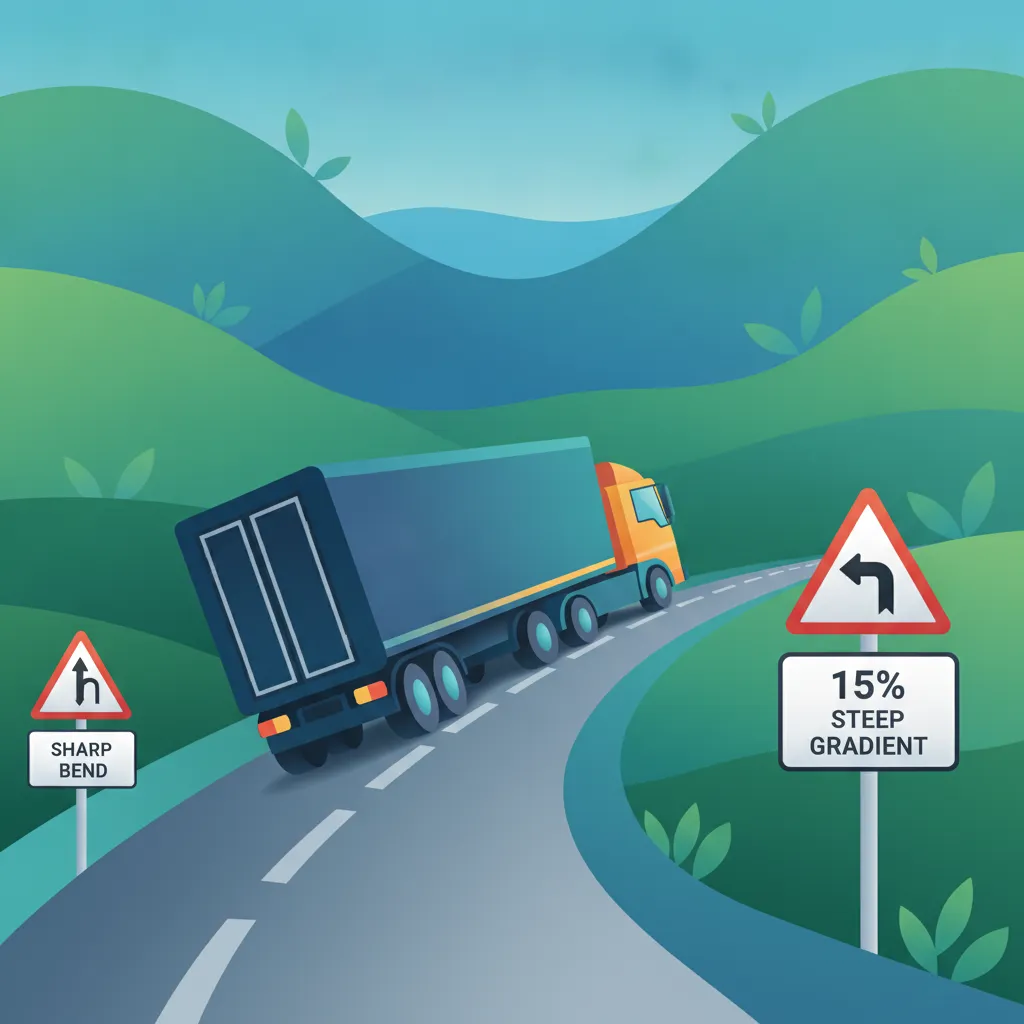
This lesson focuses on the principles of effective speed management for heavy goods vehicles, which extends beyond simply obeying the statutory speed limits. It covers how to adapt speed based on vehicle weight, load stability, road gradients, and prevailing traffic and weather conditions. You will also learn about the function of mandatory speed limiters and how intelligent use of speed and cruise control can significantly improve fuel efficiency and safety.

This lesson provides foundational knowledge on managing the speed of a low-powered vehicle through smooth and deliberate control inputs. You will learn proper throttle control for gradual acceleration, how to decelerate using both brakes and engine braking, and the principles of timely gear selection. Achieving smoothness in these actions is key to maintaining balance, traction, and overall stability, particularly in challenging conditions.
Explore the critical factors that influence total stopping distances for HGVs, including speed, vehicle mass, load distribution, and road conditions. Understand how these elements impact braking distance and overall vehicle safety in Great Britain.
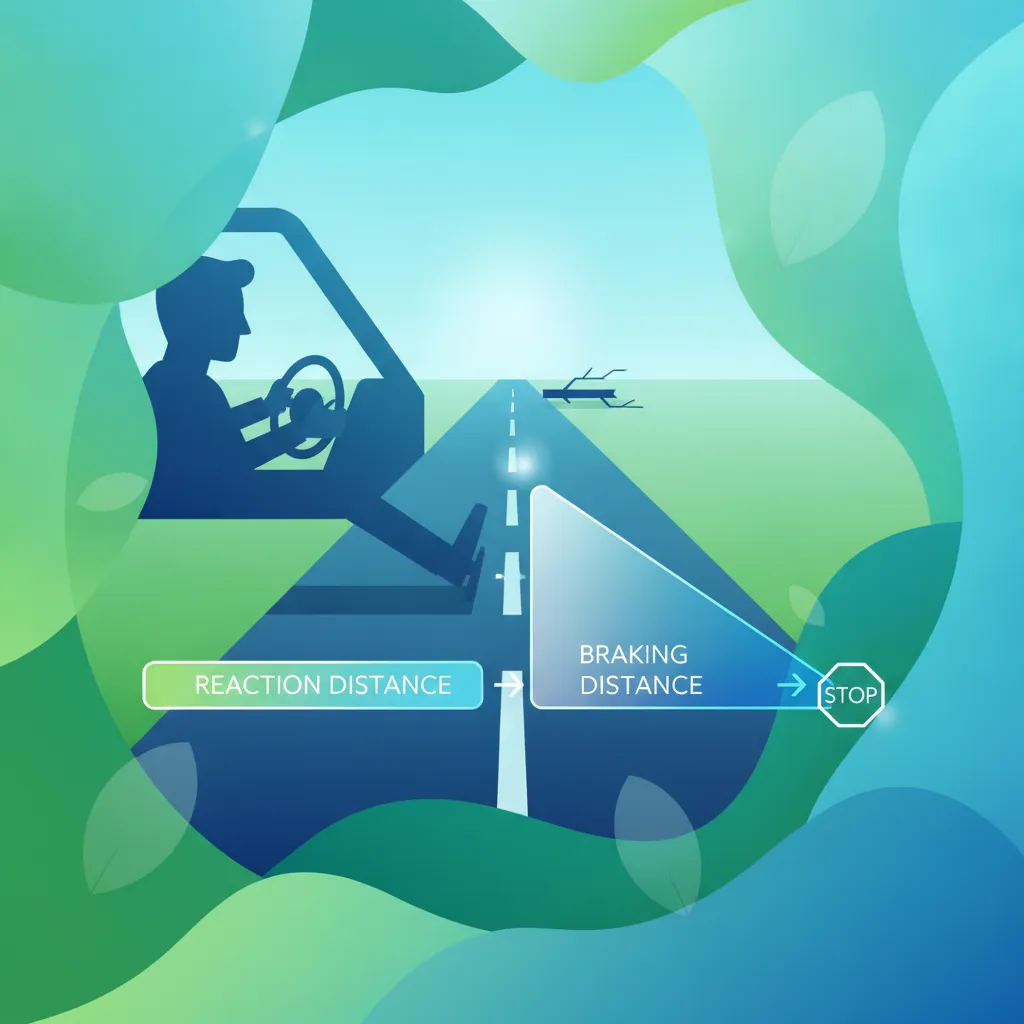
This lesson breaks down the concept of stopping distance into its two key parts. Thinking distance is the distance travelled while you react to a hazard, while braking distance is the distance the car travels after you apply the brakes. You will learn how speed, weather, and vehicle condition influence these distances.
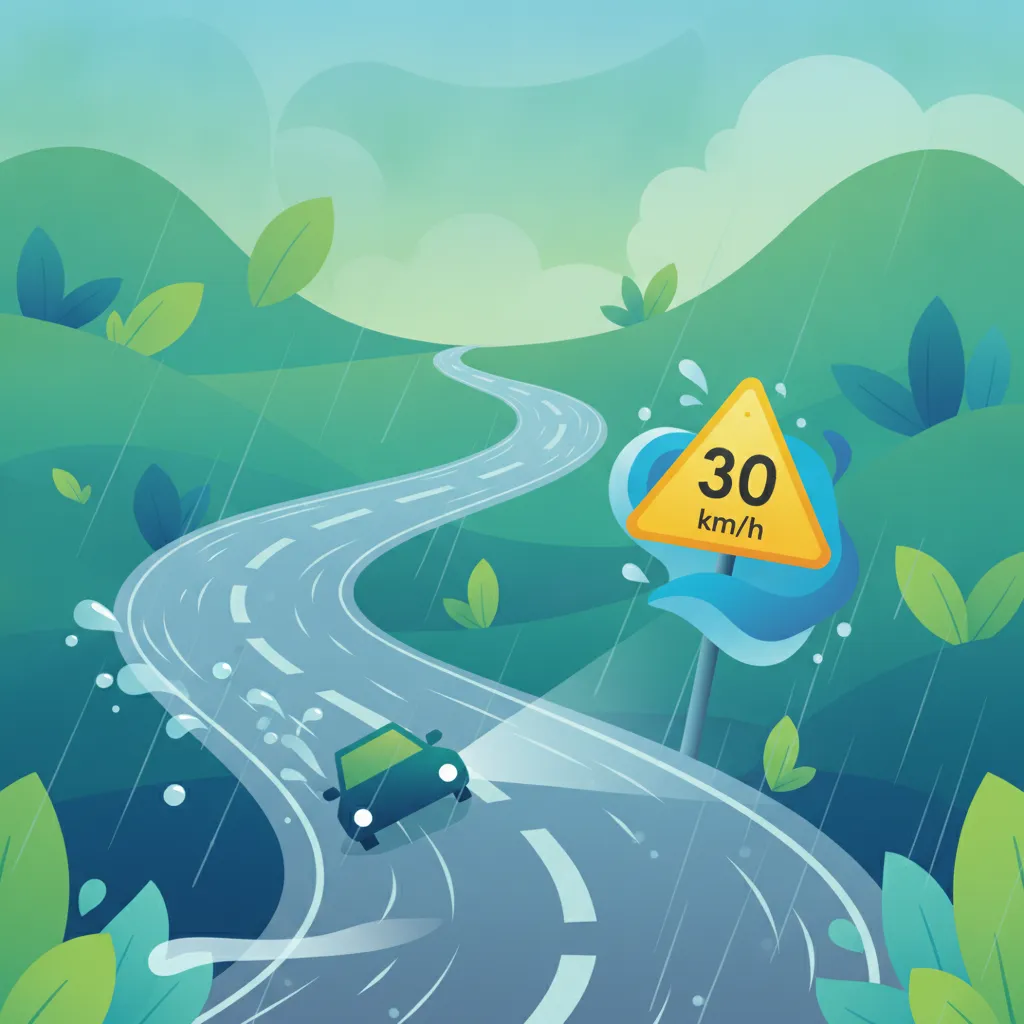
This lesson explains that safe driving often requires travelling at a speed lower than the legal limit. It covers how to adjust your speed for adverse conditions such as rain, which can double your stopping distance, or fog, which severely reduces visibility. The goal is to always be able to stop safely in the distance you can see to be clear.

This lesson reinforces the vital safety rule of maintaining an adequate following distance from the vehicle ahead. It explains why the standard 'two-second rule' must be extended for heavy vehicles, especially in poor weather or when heavily laden, to account for longer stopping distances. You will learn practical methods for judging a safe gap in various traffic situations, creating a crucial safety buffer to react to unforeseen hazards.
This lesson focuses on the principles of effective speed management for heavy goods vehicles, which extends beyond simply obeying the statutory speed limits. It covers how to adapt speed based on vehicle weight, load stability, road gradients, and prevailing traffic and weather conditions. You will also learn about the function of mandatory speed limiters and how intelligent use of speed and cruise control can significantly improve fuel efficiency and safety.
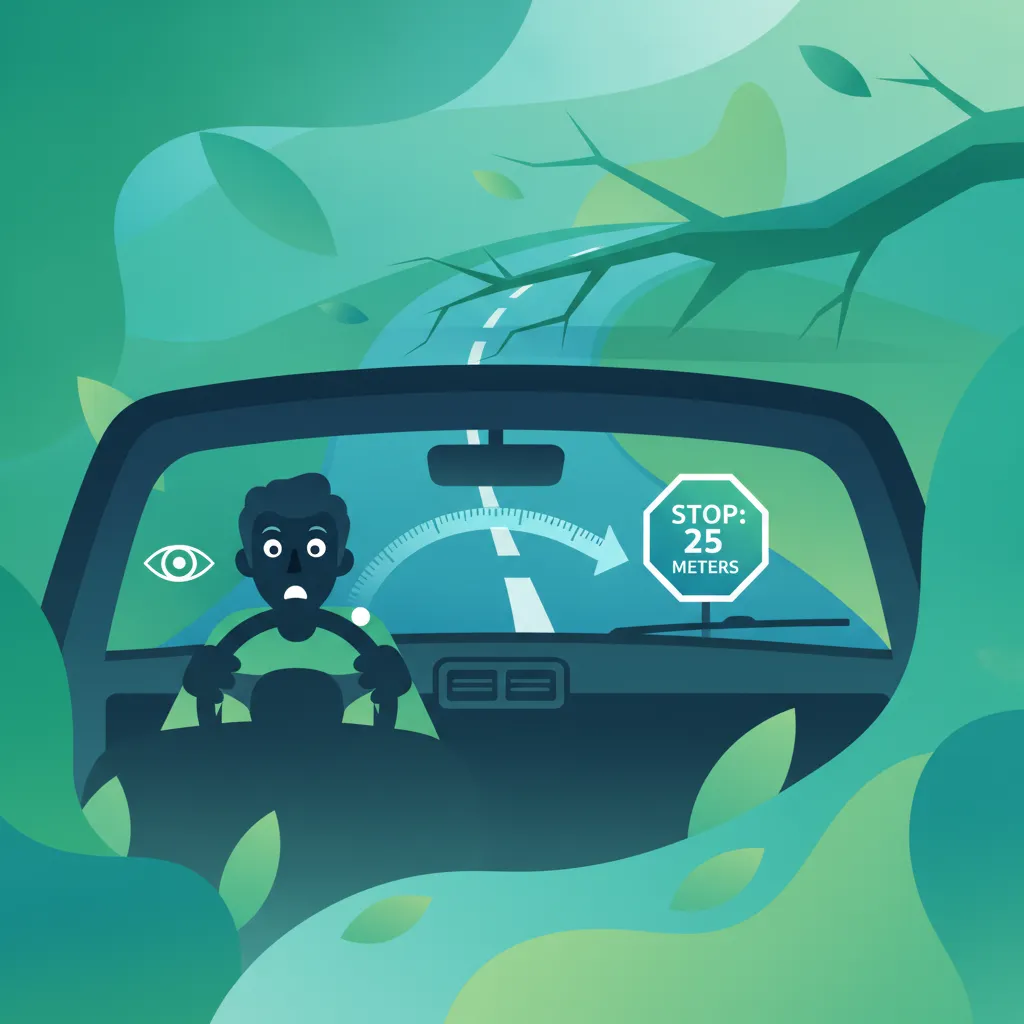
This lesson explains the components of total stopping distance: the distance travelled while you react (thinking distance) and the distance travelled while you brake. You will learn how speed dramatically increases this distance and how adverse weather or poor road surfaces can extend it further. Understanding these factors is crucial for anticipating hazards and avoiding collisions.
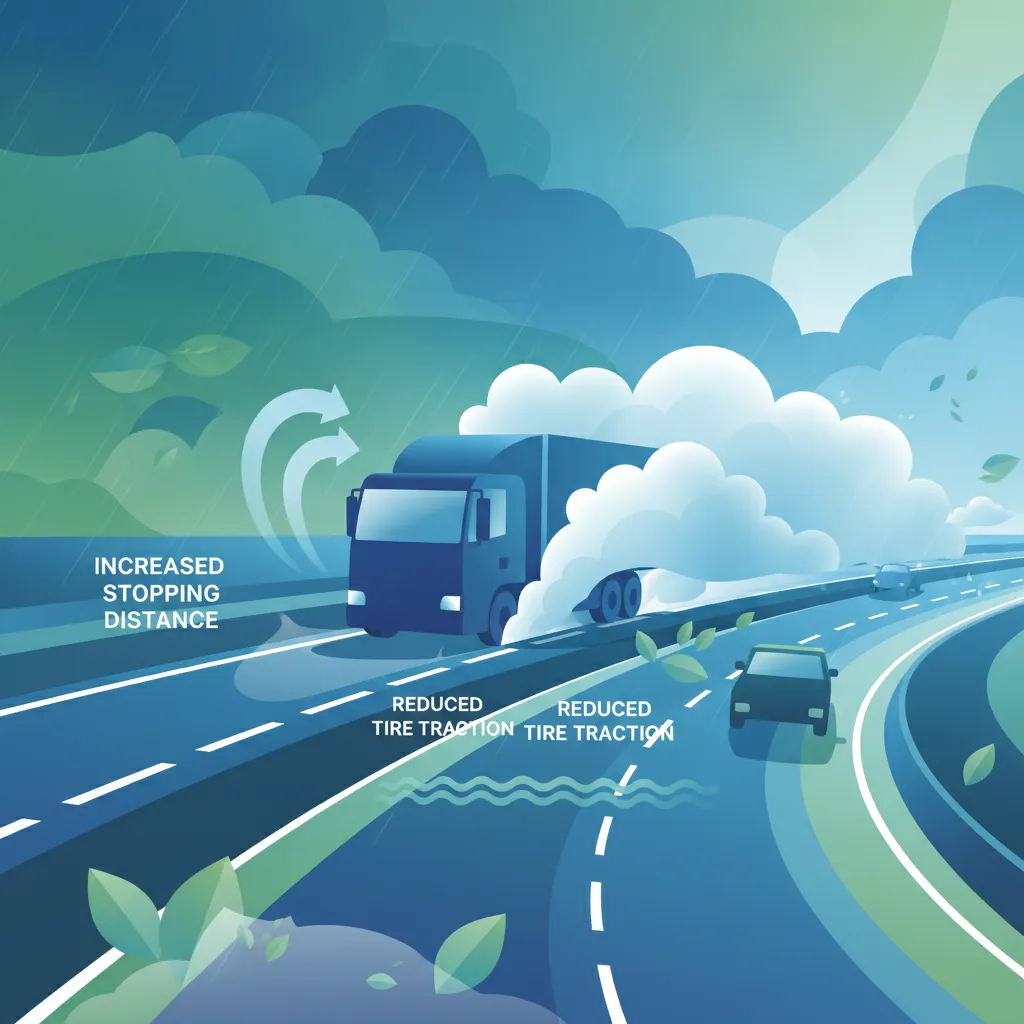
This lesson details how different adverse weather conditions uniquely affect the handling and stability of a heavy goods vehicle. It covers the increased stopping distances in rain, reduced visibility in fog, severe traction loss on ice, and the dangerous effect of strong crosswinds on high-sided vehicles. You will learn specific techniques for adjusting speed, increasing following distances, and using vehicle controls smoothly to maintain safety in challenging weather.
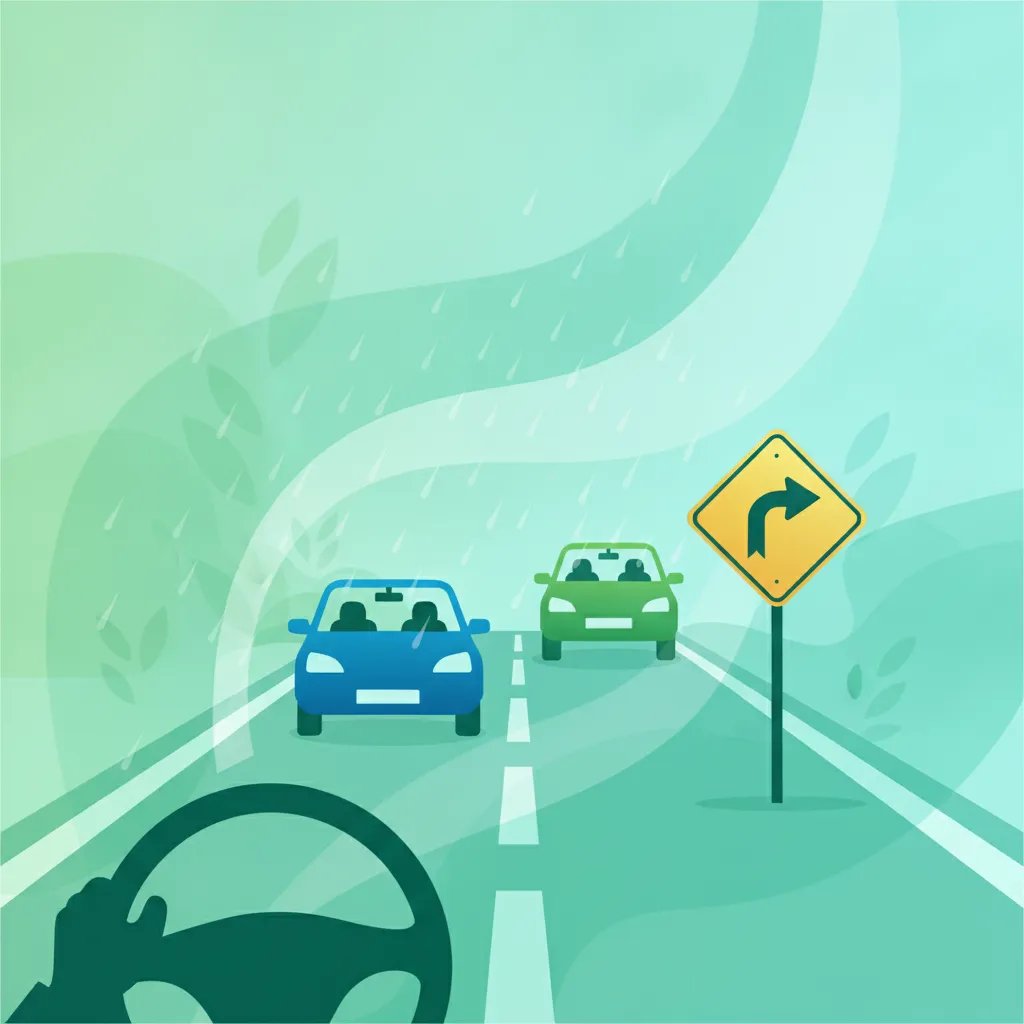
This lesson teaches a practical method for maintaining a safe distance from the vehicle in front. The 'two-second rule' provides a minimum time gap in dry conditions, which should be doubled to four seconds in the wet. Adhering to this rule gives you sufficient time to react and brake safely if the vehicle ahead stops suddenly.
This lesson addresses the unique set of challenges that rural roads present to HGV drivers. It covers how to safely navigate narrow and winding lanes, the importance of anticipating hazards like slow-moving agricultural machinery, mud on the road, and wildlife. You will learn how the national speed limit applies to your vehicle on these roads and why it is often necessary to travel at a much lower speed to ensure safety.
This lesson explores how to maintain safe following distances specific to large passenger vehicles, accounting for their higher inertia and longer braking distances. It covers time-gap calculations, such as the four-second rule, and dynamic following distance adjustments based on speed and road conditions. Emphasis is placed on avoiding tailgating, ensuring a sufficient safety buffer is always present, and developing an awareness of convoy driving scenarios where multiple large vehicles are present.
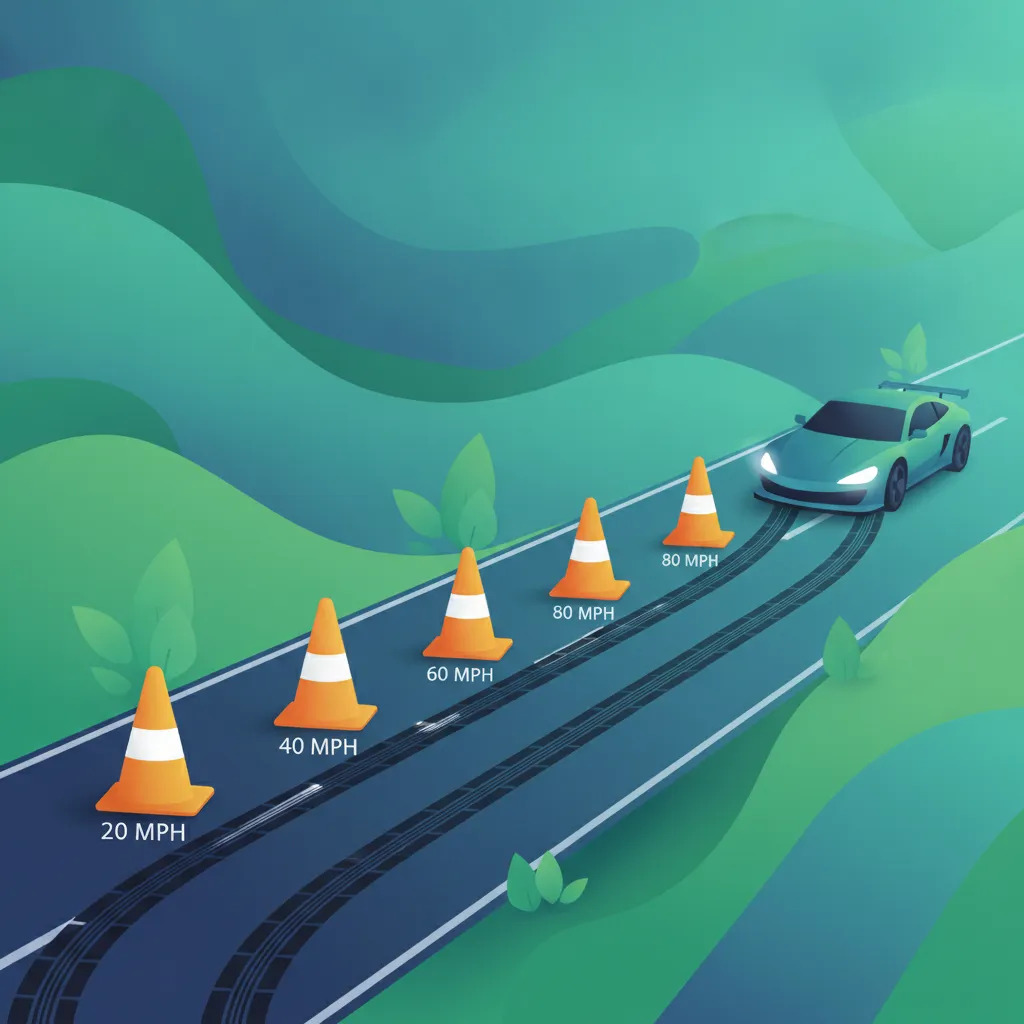
This lesson focuses on effective braking strategies, including brake modulation, ABS usage, and emergency braking procedures for large vehicles. Learners will understand how to calculate total stopping distances, taking into account perception-reaction time, vehicle mass, speed, and road conditions. The discussion also reviews brake wear, proper maintenance, and the effect of passenger load on braking performance. Mastering these concepts is crucial for reducing stopping distances and increasing safety margins.
Find clear answers to common questions learners have about Braking Systems and Stopping Distances. Learn how the lesson is structured, which driving theory objectives it supports, and how it fits into the overall learning path of units and curriculum progression in Great Britain. These explanations help you understand key concepts, lesson flow, and exam focused study goals.
Increased mass significantly increases momentum, which requires more force and distance to bring the vehicle to a halt. In the theory test, remember that a fully loaded vehicle will always have a longer braking distance than an empty one, even at the same speed.
Brake fade occurs when constant braking causes friction surfaces to overheat, significantly reducing their effectiveness. You can prevent this by using engine braking and retarders to control speed on long descents, rather than relying solely on the footbrake.
ABS (Anti-lock Braking System) prevents wheels from locking during emergency stops to maintain steering control. EBS (Electronic Braking System) is a more advanced system that controls braking pressure electronically for faster, more balanced response times across all axles.
Thinking distance is the distance travelled before you apply the brakes, while braking distance is the distance travelled while the brakes are applied. Understanding both is critical for calculating the total stopping distance required to avoid hazards.
Dive into our comprehensive question bank to find exactly what you need for your Great Britain theory test. Use our advanced filters to pinpoint specific subjects or test your knowledge on challenging areas, ensuring you're fully prepared for success.